

When asking, "How long do brakes last?" it's important to understand that there is no single, definitive answer. The lifespan of a vehicle's braking system is influenced by numerous factors, but a general range is typically between 25,000 and 70,000 miles.
The primary variables that determine this lifespan include driving habits, the typical driving environment, and the specific characteristics of the vehicle itself.
Understanding the Lifespan of Your Brakes
A vehicle's braking system is composed of several components working in tandem. The brake pads, which are designed to create friction and slow the vehicle, experience the most significant wear. For most modern vehicles, a set of brake pads will last between 20,000 and 70,000 miles. Many vehicle owners in areas like Plano find that replacing them around the 40,000-mile mark is a common preventative measure.
This wide variance is directly attributable to driving conditions. For instance, a vehicle frequently driven in stop-and-go city traffic may require new brake pads as early as 30,000 miles. Conversely, a vehicle used primarily for highway driving, with fewer instances of hard braking, could see its original pads last for 60,000 miles or more. The automotive experts at Brakes To Go provide further analysis on this mileage range.
Key Components and Their Timelines
To fully grasp brake longevity, it is essential to understand the primary components and their expected service lives. Each part has a specific function, and its durability is directly related to the operational demands placed upon it.
The two components that require the most frequent replacement are the brake pads and rotors. Pads are engineered as consumable parts that wear down to create the necessary friction for stopping. Rotors—the metal discs that the pads clamp onto—are more durable but are also subject to wear and heat-related stress over time.
The following information provides a clearer understanding of what to expect from these essential parts. This should be considered a general guideline, as individual results will vary based on use.
Brake Component Lifespan at a Glance
This table summarizes the average mileage expectancy for brake pads and rotors under different driving conditions.
| Brake Component | Average Lifespan (City Driving) | Average Lifespan (Highway Driving) | Overall Average |
|---|---|---|---|
| Brake Pads | 25,000–40,000 miles | 50,000–70,000 miles | 40,000 miles |
| Brake Rotors | 40,000–60,000 miles | 60,000–80,000 miles | 60,000 miles |
These figures represent industry averages. The most reliable method for determining the condition of your brakes is through regular visual inspection and professional servicing.
Key Factors That Determine Your Brake Lifespan
The significant difference in brake lifespan from one vehicle to another is not arbitrary. Several key factors directly influence how long a braking system will last, many of which can be managed by the driver.
Consider the contrast between an aggressive and a conservative driving style. Aggressive driving, characterized by rapid acceleration and sudden, forceful braking, generates excessive heat and friction. This style subjects brake pads and rotors to extreme stress, accelerating their wear significantly.
In contrast, a defensive driver who anticipates stops, utilizes coasting to slow down, and applies the brakes smoothly and gradually minimizes thermal stress. This conservative approach conserves the energy of the braking system and can substantially extend its operational life.
Your Driving Environment Matters
The environment in which you operate your vehicle is as critical as your driving style. A car used predominantly for urban commuting with frequent stops will degrade its brake pads much more quickly than a vehicle used for long-distance highway travel.
Every braking event contributes to the incremental wear of the brake pads. This is why a city-driven vehicle may need new pads in as few as 25,000 miles, whereas a highway-driven counterpart could achieve 60,000 miles or more from an identical set.
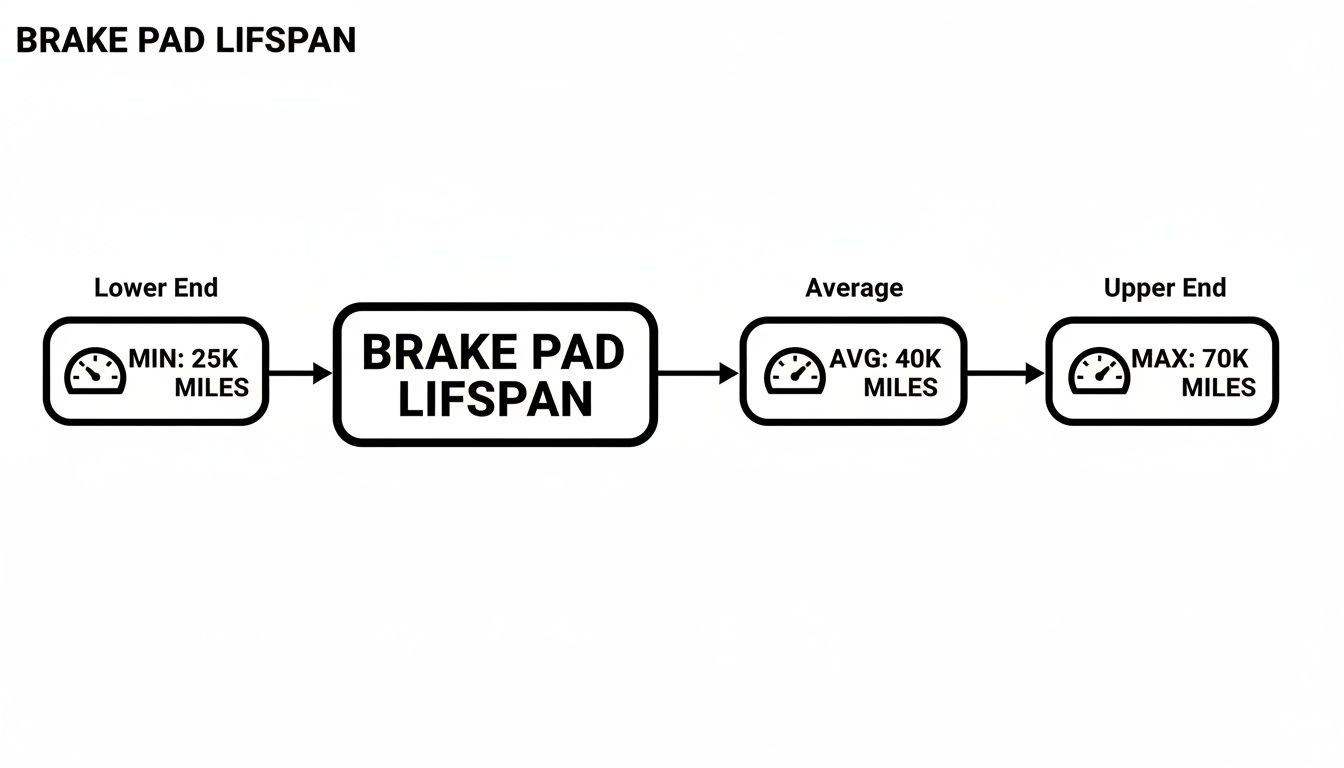
As illustrated, the typical lifespan can be as short as 25,000 miles under demanding conditions or extend to 70,000 miles with optimal driving habits and a favorable environment.
The Impact of Vehicle Weight and Load
Another critical factor is the gross vehicle weight. The principles of physics dictate that a heavier object requires more force to stop its momentum. Consequently, a large SUV or a commercial truck carrying a full payload places significantly more strain on its braking system than a compact sedan.
This increased demand generates greater friction, higher temperatures, and accelerated wear on all brake components. Each time a heavy vehicle stops, its braking system undergoes substantial stress, which contributes to cumulative wear.
Factors that significantly increase strain on the braking system include:
- Towing: Pulling a trailer or boat dramatically increases the total mass the brakes must manage, often reducing their lifespan considerably.
- Hauling Heavy Cargo: Consistently carrying heavy loads in a truck bed or cargo area places additional, continuous stress on the braking system.
- Vehicle Design: Larger vehicles like trucks and SUVs are inherently heavier and are therefore factory-equipped with more robust braking systems to compensate.
Adhering to the vehicle's maintenance schedule is crucial, especially when these factors are present. This is a fundamental principle of our automotive maintenance services.
How Brake Materials Impact Longevity and Performance
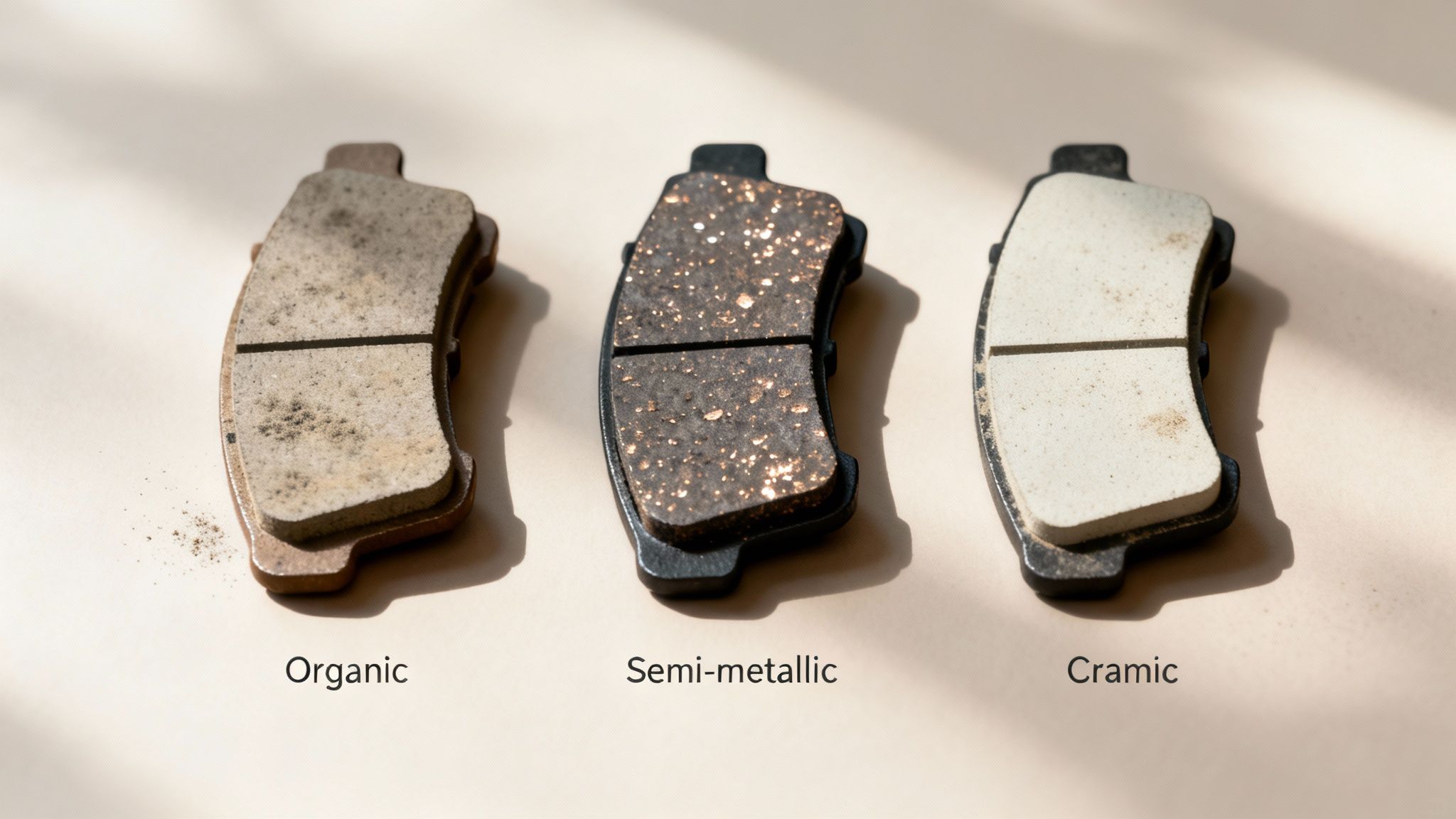
The material composition of brake pads is a primary determinant of their lifespan, performance characteristics, and noise level. The choice of brake pad material should align with the vehicle's intended use and the driver's performance expectations.
Each material type offers a distinct combination of advantages and disadvantages, making it suitable for specific applications.
Organic Brake Pads: The Quiet Commuter
Organic brake pads are the standard on most new passenger vehicles. They are composed of a blend of non-metallic materials such as rubber, glass, and aramid fibers like Kevlar, bonded together with a high-temperature resin.
Their main advantage is their quiet operation, which provides a smooth, silent braking experience for daily driving. However, their softer composition means they wear out more quickly and tend to produce more brake dust than other types.
Semi-Metallic Brake Pads: The Versatile Workhorse
For applications requiring enhanced durability, semi-metallic brake pads are an excellent option. These pads contain between 30% and 65% metal by weight, including materials like steel, iron, or copper. This metal content provides superior durability and heat dissipation compared to organic pads.
While their harder composition can lead to increased noise and faster wear on brake rotors, their effective stopping power makes them a suitable choice for SUVs, trucks, and performance-oriented driving.
Ceramic Brake Pads: The Premium Performer
Ceramic brake pads represent the most advanced option for most passenger vehicles. They are manufactured from a dense ceramic material combined with fine copper fibers to improve friction and heat conductivity. They are known for being extremely quiet, producing minimal dust, and maintaining stable performance under high temperatures.
Ceramic pads offer the longest lifespan of the three main types, delivering consistent, reliable performance. Their superior heat dissipation also reduces wear on brake rotors, contributing to the longevity of the entire braking system.
Although their initial cost is higher, their extended lifespan and superior performance characteristics make them a worthwhile investment for drivers seeking the best in quiet, clean, and dependable braking.
Brake Pad Material Comparison
This table provides a concise comparison of the three most common types of brake pads.
| Pad Type | Average Lifespan | Pros | Cons |
|---|---|---|---|
| Organic | 20,000–40,000 miles | Quiet operation, low initial cost, gentle on rotors | Shorter lifespan, more brake dust, less effective in extreme heat |
| Semi-Metallic | 30,000–60,000 miles | Excellent stopping power, great heat dissipation, durable | Can be noisy, produces more dust, wears rotors faster |
| Ceramic | 40,000–75,000+ miles | Extremely quiet, very low dust, long-lasting, consistent performance | Highest initial cost, not ideal for heavy-duty towing/racing |
The optimal brake pad for a vehicle depends on its design, the driver's habits, and the desired balance between quiet operation, braking power, and maximum longevity.
Warning Signs That Your Brakes Need Attention
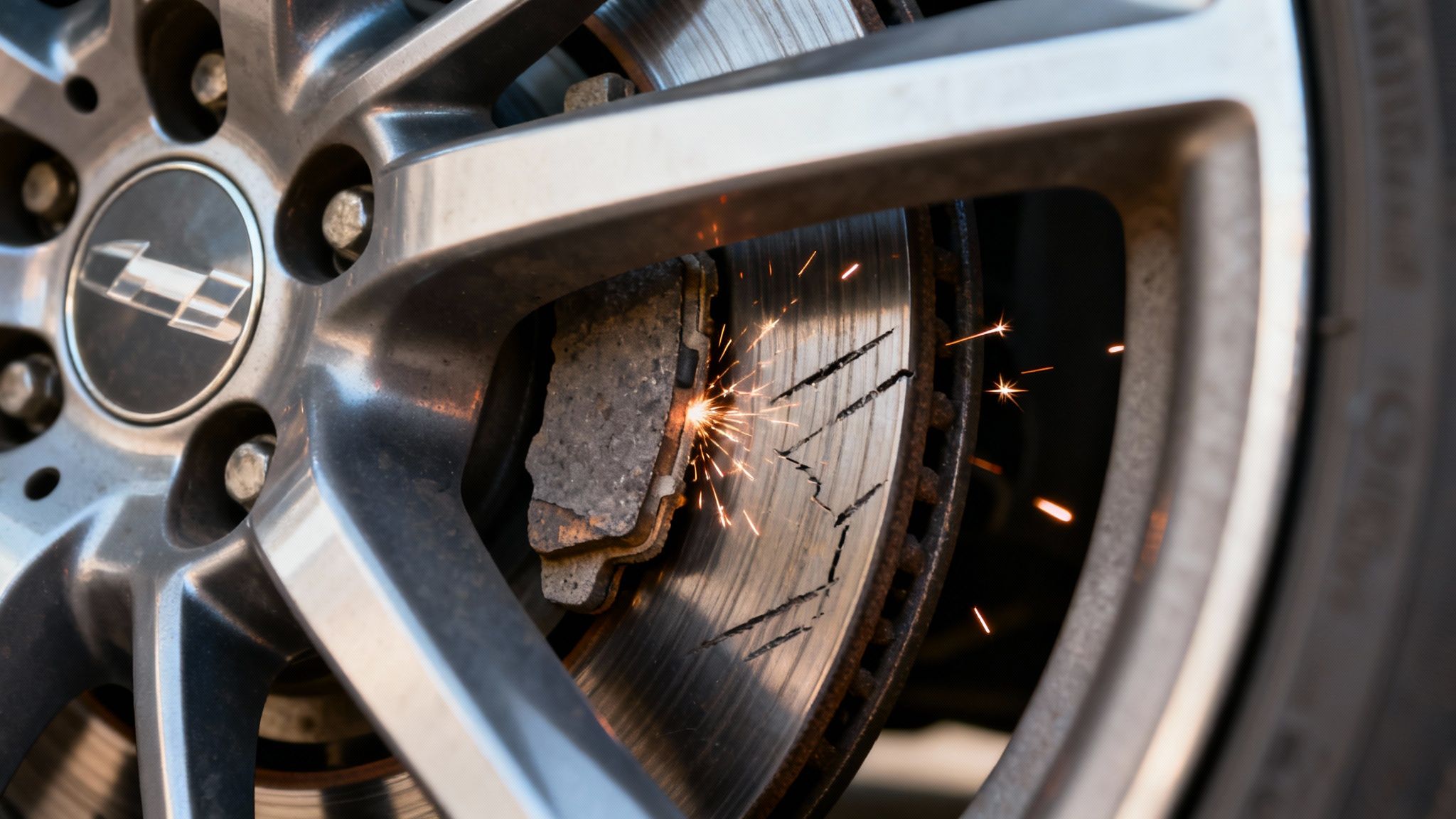
A vehicle’s braking system provides distinct indicators when it requires service. Recognizing these warning signs is crucial for maintaining vehicle safety and preventing more costly repairs.
It does not require mechanical expertise to identify these symptoms; it simply requires paying attention to auditory and tactile feedback from the vehicle.
One of the most common early indicators is a high-pitched squealing or screeching sound during braking. This sound is often caused by a small metal tab called a wear indicator, which is designed to contact the rotor when the brake pad material has worn down to a minimum safe thickness. This audible alert signals that a brake inspection is necessary.
Audible and Physical Alerts You Cannot Ignore
If the initial squealing sound is not addressed, it will progress to a much more severe grinding noise. This sound indicates a critical failure and requires immediate mechanical attention.
A grinding noise signifies that the brake pad's friction material has been completely depleted. The sound is produced by the metal backing plate of the pad grinding directly against the metal rotor. This condition causes rapid, severe damage to the rotor and turns a routine pad replacement into a more complex and expensive repair.
Key Takeaway: A high-pitched squeal is a maintenance reminder, whereas a deep grinding noise signifies an urgent safety issue. Operating a vehicle with grinding brakes compromises safety and guarantees a more significant repair cost.
In addition to sounds, the vehicle may provide physical feedback through the steering wheel or brake pedal. These tactile sensations are equally important and should not be ignored.
- Vibrating or Pulsating Pedal: A pulsation or shudder felt through the brake pedal during braking is a common symptom of warped rotors, which can result from excessive heat buildup.
- Spongy or Soft Pedal: If the brake pedal feels unusually soft or travels further toward the floor than normal, it may indicate air in the hydraulic lines or an issue with the brake fluid.
- Car Pulling to One Side: A vehicle that veers to the left or right during braking may have a malfunctioning caliper or unevenly worn brake pads, creating a dangerous braking imbalance.
These symptoms are clear indicators that the braking system requires professional diagnosis. For more information on general vehicle health, consider our guide on 5 signs your car needs a tune-up.
Understanding Brake Pads vs. Brake Rotors
A comprehensive understanding of a car's braking system requires distinguishing between its two primary wear components: brake pads and brake rotors. These parts function as a system, and the condition of one directly affects the other.
The brake pad is the component that applies friction. It is a consumable part made from a specialized material designed to wear away as it is pressed against the rotor, generating the force needed to stop the vehicle.
The brake rotor is the durable metal disc that the wheel is mounted to. It is engineered to withstand immense heat and pressure, but it is also subject to wear and potential damage.
The Relationship Between Pads and Rotors
The interaction between brake pads and rotors is one of direct cause and effect.
When brake pads are in good condition with sufficient friction material, they apply even pressure against the smooth surface of the rotor, resulting in quiet and effective braking. However, once the pads become excessively worn, they can cause significant damage.
Postponing brake pad replacement is the most common cause of premature rotor failure. When the friction material is depleted, the pad's metal backing plate makes direct contact with the rotor. This metal-on-metal contact scores deep grooves into the rotor's surface, rendering it ineffective and compromising stopping ability.
A timely and affordable brake pad replacement can prevent a much more expensive and labor-intensive repair. Proactive maintenance is the key to preserving both components and minimizing long-term costs.
How Long Do Brake Rotors Last Compared to Pads?
While brake pad lifespan varies widely based on driving habits, brake rotors have a more predictable service life.
On average, rotors can be expected to last between 50,000 and 70,000 miles, which for many drivers equates to four to six years of service. In comparison, brake pads may only last two to three years under similar conditions.
This means a vehicle will typically require two or three sets of brake pads for every one set of rotors. This ratio is only valid, however, if the pads are replaced before they cause damage to the rotors. Neglecting timely pad replacement will necessitate a much earlier rotor replacement.
For a detailed overview of how these critical components are serviced, please review our information on brake and pad services.
Your Top Questions About Brake Life Answered
The following are answers to some of the most common questions vehicle owners have about brake maintenance and longevity.
Do Front Brakes Really Wear Out Faster Than the Rear Ones?
Yes, in the vast majority of vehicles, front brakes wear out significantly faster than rear brakes. During braking, the vehicle's weight and momentum shift forward. This dynamic forces the front brakes to handle a disproportionate amount of the braking force—typically 60-70% of the total.
Because they perform more work, the front brake pads wear down more quickly. As a general guideline, you can expect to replace the front brake pads approximately twice as often as the rear pads.
How Much Should I Expect to Pay for a Brake Job?
Brake repair costs vary widely based on several factors. The final price is determined by the vehicle's make and model, the type of brake pads selected (organic, semi-metallic, or ceramic), and the condition of the rotors—whether they can be resurfaced or require full replacement.
A simple front brake pad replacement may cost a few hundred dollars. A comprehensive service that includes new pads and rotors for all four wheels will be substantially more. It is always advisable to request a detailed estimate from a reputable service center before authorizing any work.
The most effective way to manage brake repair costs is through preventative maintenance. Replacing worn pads before they cause collateral damage to more expensive components like rotors is always the more economical approach.
Is There Anything I Can Do to Make My Brakes Last Longer?
Absolutely. The most significant influence on brake longevity is your driving style. Adopting smoother driving habits can add thousands of miles to the life of your brake pads.
Practice defensive driving by looking far ahead, anticipating changes in traffic, and coasting to slow down rather than braking abruptly. Maintaining a safe following distance reduces the need for hard, sudden stops that accelerate wear.
Additionally, minimizing your vehicle's load can help. Removing unnecessary heavy items from the trunk or cargo area reduces the overall mass the brakes must stop, thereby decreasing stress and wear over time.
When it comes to a safety-critical system like your brakes, trust is paramount. The ASE-certified technicians at Express Lube & Car Care provide honest, expert service for all your brake system needs. Visit our Plano shop for a professional inspection and drive with confidence. Learn more and schedule your appointment at https://www.expresslubeplano.com.