

Checking your transmission fluid is a fundamental diagnostic procedure that reveals critical information about the health of your vehicle's transmission. For most vehicles with a dipstick, the process involves bringing the engine to its normal operating temperature, locating the transmission dipstick, and taking a precise reading.
The standard steps are straightforward: extract the dipstick, wipe it clean with a lint-free cloth, reinsert it completely, and then withdraw it again. This simple check provides a comprehensive snapshot of the conditions inside one of your car's most complex and vital systems.
The Importance of Monitoring Transmission Fluid
Transmission fluid is the lifeblood of your vehicle's powertrain. Its role extends far beyond simple lubrication. This highly specialized fluid is engineered to cool critical components, cleanse the system of microscopic debris, and generate the hydraulic pressure necessary for smooth and efficient gear shifts. When the fluid level is low or its chemical properties degrade, the transmission will exhibit noticeable symptoms.
These signs may seem minor initially, but they are often early indicators of significant mechanical issues. Be observant for these common warning signals:
- Hesitation During Shifting: Does the vehicle seem to pause or struggle before engaging the next gear? This often points to low fluid pressure.
- A Faint Burning Smell: This distinct odor almost always indicates that the fluid is overheating and has lost its capacity to protect internal components.
- Whining or Humming Noises: Atypical sounds frequently suggest low fluid levels, which increases friction and causes components to wear out prematurely.
Learning how to check transmission fluid is one of the most valuable preventative maintenance skills a vehicle owner can possess. It empowers you to identify these issues before they escalate into a catastrophic failure.
The Financial Consequences of Neglect
Neglecting transmission fluid maintenance is one of the most costly errors a car owner can make. Industry experts estimate that improper fluid checks and deferred maintenance contribute to 20-30% of all premature transmission failures. Given that over 80% of passenger cars sold globally are equipped with automatic transmissions, this represents a widespread and preventable problem.
Proactive monitoring helps you avoid repairs that can easily range from $2,500 to $4,000. You can explore more data on automotive fluid trends at MarketsandMarkets.com.
The condition of your transmission fluid tells a story. Healthy fluid is typically bright red and translucent. If it’s dark brown, black, or smells burnt, it’s a clear signal that your transmission is under stress and needs attention.
Ultimately, dedicating a few minutes every couple of months to this check is an investment in your vehicle's longevity and reliability. It can prevent a multi-thousand-dollar repair and provide invaluable peace of mind. For a professional evaluation or service, you can learn more about our complete transmission services at Express Lube & Car Care.
Checking Fluid in Vehicles with a Dipstick
For the majority of vehicles, checking the transmission fluid is a quick procedure that requires only a few minutes and a clean rag. This traditional dipstick method offers a direct view into the health of your transmission. While the process is simple, adhering to specific details is crucial for obtaining an accurate reading.
First, ensure the vehicle is parked on a perfectly level surface, as even a slight incline can alter the fluid level in the pan and lead to an incorrect reading. Next, the transmission fluid must be at its normal operating temperature. The most effective way to achieve this is by driving the car for approximately 10-15 minutes, which allows the fluid to warm up and expand to its correct volume.
Locating and Reading the Dipstick
With the engine running and the parking brake engaged, open the hood. The transmission dipstick is typically located toward the rear of the engine compartment, near the firewall separating the engine from the cabin. Its handle is often brightly colored—look for red, yellow, or sometimes black—to differentiate it from the engine oil dipstick.
Once located, the steps are methodical:
- Withdraw the dipstick. The initial reading is unreliable due to fluid sloshing during operation.
- Wipe it completely clean with a lint-free cloth or paper towel.
- Reinsert the dipstick fully into the tube until it is completely seated.
- Withdraw it a final time to obtain a clear, accurate reading.
Pro Tip: Before taking the final reading, keep your foot firmly on the brake pedal and slowly cycle the gear selector through all positions (Park, Reverse, Neutral, Drive, etc.), pausing for a moment in each. This action circulates the fluid through the entire valve body and torque converter, ensuring the level you read accurately reflects what the system is utilizing.
Interpreting Dipstick Markings
Examine the end of the dipstick closely. You will find markings that indicate the correct fluid level, which vary by manufacturer. Most will feature lines for "FULL" and "ADD," often with a crosshatched area in between. Many dipsticks also include two sets of marks: one for a "COLD" reading and another for a "HOT" reading.
Since you have properly warmed the vehicle, use the "HOT" markings for the most precise measurement. The fluid level should be exactly at the "FULL" or within the designated "HOT" range. If it falls below this mark, you will need to add the correct type of transmission fluid. A significantly low level is a strong indicator of a potential leak that requires professional inspection.
How to Check Sealed Transmissions Without a Dipstick
If you've inspected the engine bay of a newer vehicle and cannot find a transmission dipstick, it is not a missing component. Many modern vehicles are equipped with a "sealed" transmission. Manufacturers have adopted this design to reduce fluid contamination and ensure the system operates exclusively on the precise, factory-specified fluid for its entire service interval.
However, "sealed" does not mean "filled for life," nor does it mean the fluid level cannot be checked.
The procedure is more involved than the traditional dipstick method but is achievable with the correct knowledge and tools. Instead of a dipstick tube, these transmissions have a dedicated check plug (or sometimes a fill plug) located on the side or bottom of the transmission case. Accessing this plug almost always requires raising the vehicle, making a sturdy set of jack stands an essential safety requirement.
Why Temperature Is a Critical Factor
Before attempting to remove the check plug, you must ensure the fluid temperature is within the manufacturer's specified range. This step is non-negotiable. Transmission fluid expands significantly as its temperature increases. Checking it when it is too cold will result in a false low reading, while checking it when it is too hot will yield a false high reading. Either error can lead to overfilling or underfilling, both of which can cause severe transmission damage.
Most manufacturers specify a narrow temperature window for an accurate check, typically between 86°F and 122°F (30°C to 50°C). To achieve this precision, you will need one of two tools:
- An Infrared Thermometer: This device allows you to take a quick and accurate surface temperature reading directly from the transmission fluid pan.
- An OBD-II Scanner: This is the professional method. When connected to the vehicle's diagnostic port, it reads the transmission fluid temperature directly from the onboard computer, providing the most accurate measurement possible.
This visual guide outlines the fundamental workflow for any fluid check, emphasizing that warming the vehicle is a critical first step, regardless of the system type.
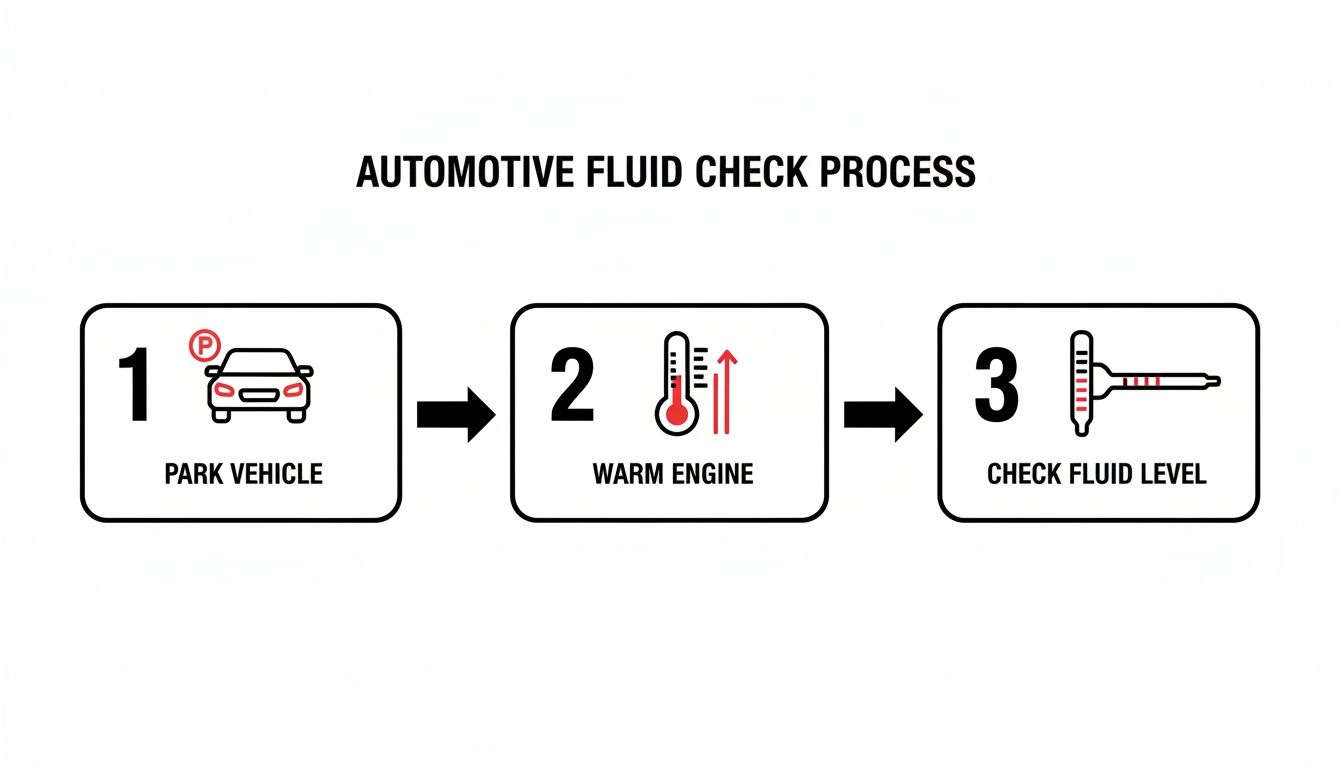
The process is universally based on these three steps: ensure the vehicle is safely parked, bring the engine to operating temperature, and then perform the check. This foundation applies to both sealed and traditional dipstick systems.
To help differentiate the two procedures, here is a quick reference table.
Transmission Fluid Check Quick Reference Guide
| Check Step | Vehicle with Dipstick | Vehicle without Dipstick (Sealed) |
|---|---|---|
| Preparation | Park on a level surface with engine running. | Safely raise the vehicle on a level surface. Keep engine running. |
| Temperature | Warm engine/transmission to normal operating temp. | Fluid must be in a specific range, often 86°F-122°F. |
| Tool for Level Check | Dipstick in the engine bay. | Check plug on the transmission housing. Requires a wrench. |
| How to Read | Check fluid level between "Hot" marks on the dipstick. | A slow trickle of fluid from the check plug hole indicates a correct level. |
| Ease of Access | Very easy; no tools required to access the dipstick. | Difficult; requires lifting the vehicle and specific tools. |
This table illustrates the significant differences between the two methods, highlighting why the sealed system check demands greater precision and preparation.
The Correct Checking Procedure
Once the vehicle is securely elevated and the fluid is within the correct temperature range, you are ready to proceed. Keep the engine running and the parking brake firmly engaged. Now, locate and carefully remove the check plug using the appropriate size wrench.
The result will immediately indicate the fluid level.
If the transmission is filled correctly, you should observe a slow, steady trickle of fluid seeping from the check plug opening. This small stream signifies that the fluid is perfectly level with the bottom of the hole, which is the correct fill point.
If no fluid emerges, the level is low and requires topping off. Conversely, if fluid gushes out forcefully, it is overfilled, and some must be drained to achieve the proper level.
This precise methodology is the only way to ensure the transmission contains the exact volume of fluid it was engineered to use. Given the complexity and potential for error, many drivers in Plano prefer to entrust this task to the ASE-certified technicians at Express Lube & Car Care.
What Your Transmission Fluid Is Telling You
Extracting the dipstick or opening the check plug is only the first step. The true diagnostic value lies in analyzing the fluid's condition. Learning to interpret its color, consistency, and odor can help you identify potential problems long before they escalate into costly repairs.
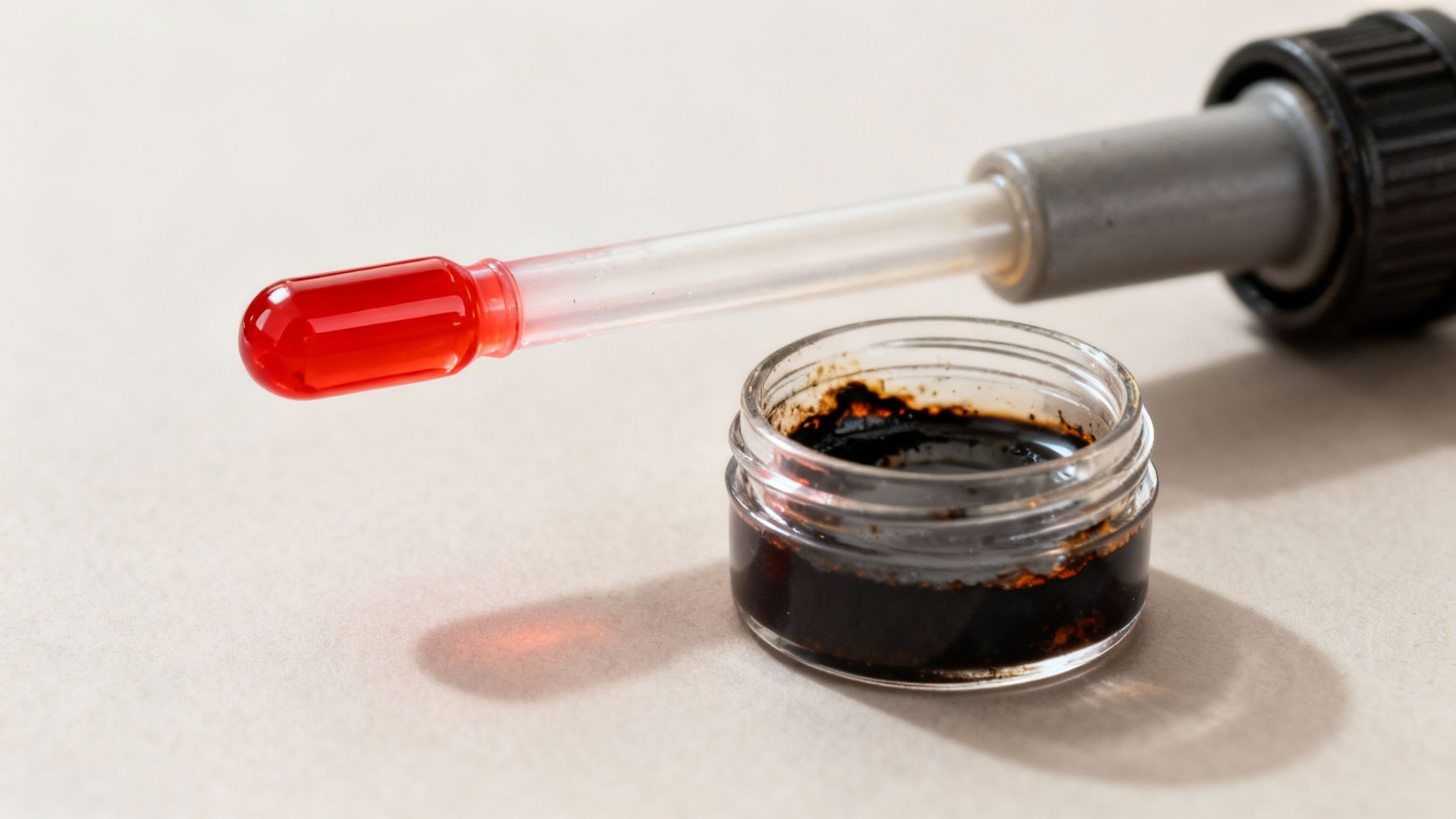
When you check the fluid, perform a thorough visual and sensory inspection. Fresh, healthy automatic transmission fluid (ATF) should be a vibrant, translucent bright red. It will have the slick consistency of light oil and a slightly sweet or neutral scent.
Any deviation from this baseline suggests an underlying issue within the transmission.
Decoding the Color and Smell
The color of your transmission fluid serves as a clear indicator of its health and the condition of the transmission itself. If you observe any of the following signs, further investigation is warranted.
- Dark Brown or Black: This indicates old, oxidized fluid. Excessive heat and time have degraded its protective additives, and it is no longer capable of effectively cooling and lubricating internal components.
- Burnt Smell: This is a significant warning sign. If the fluid is dark and has a burnt odor, it signifies an overheating condition. This is often caused by slipping clutches or excessive internal friction.
- Milky or Pinkish: Fluid with a frothy, pink appearance is a critical issue. It indicates that engine coolant is contaminating the transmission fluid, typically due to a breach in the transmission cooler located inside the radiator. This contamination can rapidly destroy a transmission.
These clues serve as your most effective early warning system, allowing for intervention before a catastrophic failure occurs.
Identifying Debris and Metal Shavings
Color and odor are only part of the diagnostic story. You must also assess the fluid's texture. Wearing a glove, rub a small amount between your thumb and forefinger, or wipe the dipstick on a clean white paper towel to inspect for contaminants.
You are looking for fine, glitter-like metallic shavings or any gritty black material.
The presence of visible metal flakes is a serious concern. It signifies that hard parts, such as gears and bearings, are experiencing accelerated wear and shedding material into the fluid. While a minuscule amount of material is normal over an extended service life, visible particles indicate a component is failing and requires professional diagnosis.
A critical note on fluid level: Both insufficient and excessive fluid are detrimental. An underfilled system can draw in air, causing a loss of hydraulic pressure and accelerated wear. Conversely, overfilling by more than 25% can cause the fluid to aerate (foam), which completely negates its ability to lubricate and cool.
If you identify any of these red flags—discoloration, a burnt smell, or metal particles—simply adding new fluid will not resolve the underlying issue. These are symptoms of a larger problem that requires a proper diagnosis, which often leads to a full fluid exchange. Our team can explain the benefits of a complete fluids exchange service to restore your vehicle's performance.
Common Mistakes to Avoid When Checking Fluid
Checking transmission fluid appears simple, but several common errors can lead to an inaccurate reading. Obtaining a correct measurement is crucial, as an incorrect reading can mask a developing problem or falsely indicate an issue where none exists.
Let's review the most frequent mistakes to ensure you get a true assessment of your transmission's health.
The most common error is checking the fluid when the vehicle is not on a perfectly flat surface. Even a minor incline will cause the fluid to collect on one side of the transmission pan, resulting in a dipstick reading that is either too high or too low. Always park on level ground as your first step.
Incorrect Temperature and Engine Status
Another prevalent mistake is checking the fluid with the engine turned off. For nearly all automatic transmissions, the engine must be running to operate the fluid pump and circulate the fluid throughout the system. If you check it cold with the engine off, the fluid will have settled back into the pan from the torque converter and cooler lines, giving you a falsely high reading.
Temperature is equally vital. For sealed transmissions with a check plug, attempting to check the level outside the manufacturer's specified temperature window (often 86°F to 122°F) will always produce an inaccurate result. This is why professionals use specific tools to measure fluid temperature.
A classic but surprisingly common error is misidentifying the engine oil dipstick for the transmission fluid dipstick. The fluids are fundamentally different, and confusing them can lead to a severe overfill or contamination. Take an extra moment to confirm—the transmission dipstick is typically positioned further back in the engine bay, closer to the firewall.
This is precisely the type of simple mix-up our technicians are trained to avoid. It is why our efficient and thorough oil change services include a multi-point inspection—we double-check these critical fluid levels so you don't have to.
Other Procedural Details That Matter
Beyond these primary points, a few other habits can compromise your results. Keep these in mind:
- Failing to wipe the dipstick clean. On the first pull, the dipstick will be coated with splashed fluid from normal operation. You must wipe it completely clean, reinsert it fully, and then withdraw it again for a clear, precise measurement.
- Using the incorrect type of fluid. If you determine the fluid is low and needs to be topped off, adding the wrong type of transmission fluid is a critical mistake that can cause severe internal damage. Always consult your owner’s manual for the exact fluid specification your vehicle requires.
- Overfilling the transmission. More fluid is not better. If you add too much, the spinning planetary gear sets can churn it into a foam, which destroys its ability to lubricate and transfer heat. Add fluid in very small increments, checking the level after each addition.
Your Top Transmission Fluid Questions Answered
Even after reviewing the correct procedures, you may still have questions. This is perfectly normal. We have compiled the most common questions our technicians in Plano receive to provide you with the clarity needed to manage your vehicle's health confidently.
How Often Should I Check My Transmission Fluid?
A good rule of thumb is to perform a quick check every six months as part of your vehicle's preventative maintenance routine. At a minimum, ensure it is inspected during every other oil change. This simple habit will help you identify most potential problems early.
Your vehicle's owner’s manual is the definitive source for service intervals, so always consult it first.
However, sometimes your vehicle will signal a need for an immediate check.
Do not wait for a scheduled inspection if you notice slipping gears, hesitation during shifting, or any unusual noises. These are urgent symptoms. Your vehicle is communicating that an issue exists now, and the fluid is the first component to inspect.
Can I Use Any Transmission Fluid to Top Off My Car?
No, this is absolutely not advisable. Using the correct fluid is one of the most critical aspects of transmission maintenance, and an error here can have catastrophic consequences.
Using the wrong fluid is a guaranteed way to cause severe, expensive damage. Each transmission is engineered to operate with a specific fluid formulation. You will encounter various types on the market, such as:
- ATF+4
- Mercon V
- Dexron VI
- CVT Fluid
These are not merely brand names; they represent unique chemical compositions designed for specific friction materials, hydraulic pressures, and operating temperatures. Your owner's manual will state exactly which fluid your vehicle requires. Always verify before adding a single drop.
What Should I Do If My Transmission Fluid Is Low?
If the dipstick indicates the fluid is only slightly below the "Full" mark, you can top it off yourself. The key is to add the correct fluid very slowly, pouring in small amounts at a time and rechecking the level frequently to prevent overfilling.
However, if the fluid level is significantly low, this is a major red flag. Transmissions are closed systems and should not consume fluid in the same way an engine consumes oil. A low level means the fluid is leaking from somewhere.
Simply adding more fluid is a temporary solution that does not address the root cause. The correct course of action is to have a professional technician locate and repair the leak before it leads to fluid starvation and a major transmission failure.
When you need a professional eye to check your fluid levels or diagnose a potential leak, the ASE-certified team at Express Lube & Car Care is here to help. We provide honest answers and expert service to keep your vehicle running safely and smoothly. Stop by our Plano shop for a quick, reliable inspection. Find out more at https://www.expresslubeplano.com.