

Your vehicle's braking system is a network of components working in perfect harmony to ensure your safety on the road. Central to this system are the brake calipers, the hydraulic clamps that press the brake pads against the rotors to slow your car down. But what happens when they start to fail? A malfunctioning caliper can seriously compromise your stopping power, leading to dangerous situations on busy Plano roads and beyond. Recognizing the early warning signs of bad brake calipers is not just good for your car; it's essential for your safety and the safety of others.
This guide is designed to be an educational resource, breaking down the 7 key symptoms of a failing brake caliper. We will explore each warning sign, from a spongy pedal feel to strange noises, explaining what's happening mechanically behind the wheel. We'll also provide actionable steps you can take to identify potential problems and understand the urgency of each issue.
By the end of this article, you will be empowered to:
- Identify potential brake problems before they escalate.
- Understand the causes and repair options for caliper failure.
- Know exactly when to seek professional help from certified technicians.
Our goal is to help you drive with confidence, knowing your brakes are in top condition. Let's decode the critical warnings your brakes might be sending you.
1. Soft or Spongy Brake Pedal
One of the most immediate and concerning signs of bad brake calipers is a change in how your brake pedal feels underfoot. A properly functioning brake system provides firm, consistent resistance. If you suddenly notice the pedal feels soft, mushy, or "spongy," it demands your immediate attention. This sensation means the hydraulic pressure needed to stop your car is not being applied effectively.
Instead of engaging with minimal travel, a spongy pedal might sink closer to the floor before the brakes begin to grab. This dangerous condition often points directly to a problem within the brake caliper.
Why a Bad Caliper Causes a Spongy Pedal
Your brake system is a sealed hydraulic circuit that uses pressurized fluid to activate the calipers. When you press the pedal, this pressure forces a piston inside the caliper to extend, pressing the brake pads against the rotor and slowing the vehicle. A spongy feel occurs when this hydraulic integrity is broken.
- Leaking Brake Fluid: The most common cause is a compromised seal around the caliper's piston. Over time, heat, moisture, and road debris can cause these rubber seals to degrade, crack, or tear. When this happens, brake fluid escapes, reducing the pressure in the system.
- Air in the Lines: A leak not only lets fluid out but also lets air in. Air is highly compressible, unlike brake fluid. When air bubbles get into the brake lines, pressing the pedal first compresses the air instead of immediately moving the caliper piston, resulting in that distinct spongy or delayed feeling.
For a commuter in Plano making their way down the Dallas North Tollway, this might feel like a gradual loss of braking power over several weeks. A delivery driver navigating constant stop-and-go traffic near The Shops at Legacy might notice a more abrupt increase in pedal travel needed to make frequent stops.
Crucial Safety Insight: A soft brake pedal is not a minor inconvenience; it's a direct indication that your vehicle's stopping power is compromised. The problem will not fix itself and will almost certainly get worse, increasing your stopping distance and the risk of an accident.
What You Should Do
If your brake pedal feels soft, take these steps right away:
- Test Pedal Firmness: Before starting your daily drive, press the brake pedal while the car is in park. If it feels softer than usual or sinks slowly toward the floor, do not drive the vehicle.
- Check Brake Fluid: Pop the hood and locate the brake fluid reservoir (a small, semi-transparent plastic container). Check if the fluid level is below the "MIN" line. Low fluid is a strong indicator of a leak somewhere in the system, very possibly from a failing caliper.
- Schedule an Immediate Inspection: A spongy pedal is a critical safety issue. Continuing to drive puts you and others at risk. The safest action is to have your vehicle towed. Contact a trusted local shop like Express Lube & Car Care in Plano for an urgent brake system inspection. Our technicians can pinpoint the source of the leak, whether it's a caliper, hose, or master cylinder, and perform the necessary repairs to restore your vehicle's safety.
2. Brake Fluid Leaks Around the Caliper
While a spongy pedal is a sensory warning, visible fluid leakage is one of the most definitive and physical signs of bad brake calipers. If you notice an oily puddle on your garage floor or a wet sheen on the inside of your wheel, it's a clear signal that the hydraulic integrity of your brake system has been breached. Brake fluid is a clear to slightly brownish, slick liquid that is crucial for transferring force from your pedal to the brakes.
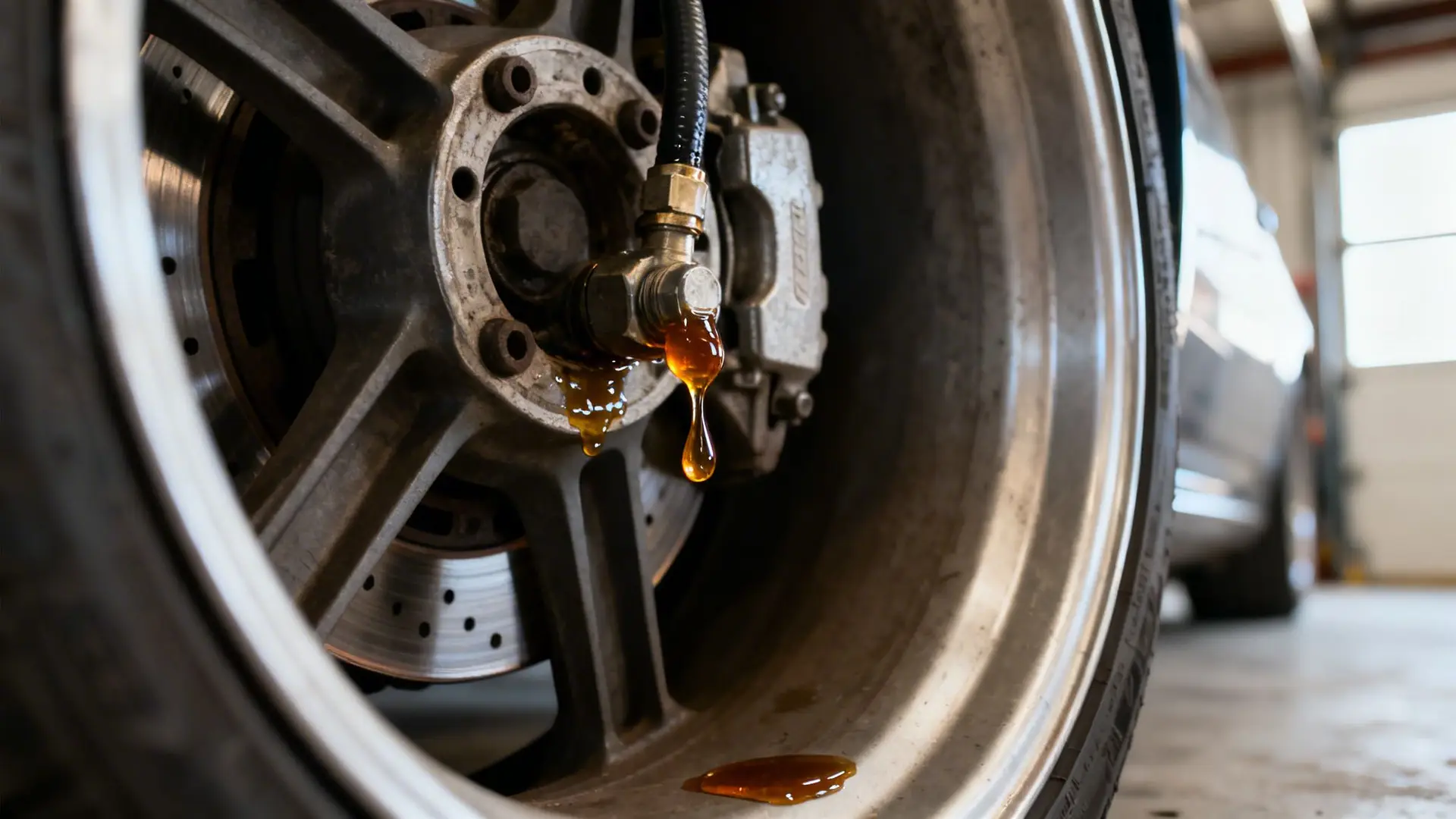
Any leak, no matter how small, reduces the hydraulic pressure needed for effective braking, directly compromising your vehicle's ability to stop safely. This is a critical failure that requires immediate attention.
Why a Bad Caliper Causes Fluid Leaks
Brake calipers operate under immense pressure and heat. Inside each caliper is a piston that pushes the brake pads against the rotor. This piston is protected by a set of rubber seals designed to keep high-pressure brake fluid in and contaminants out. Over thousands of miles, these seals are a common point of failure.
- Piston Seal Failure: The primary seal responsible for containing hydraulic fluid is the piston seal. Constant exposure to heat from braking, moisture, and road salt can cause this rubber seal to become hard, brittle, and cracked. Once the seal fails, pressurized brake fluid will escape every time you press the brake pedal.
- Bleeder Screw Issues: The bleeder screw is a small valve on the caliper used to purge air from the brake lines. If this screw is not tightened correctly after a brake service or if its threads become corroded or stripped, it can become a source of slow leaks.
For a fleet manager in Plano conducting routine vehicle checks, discovering an oily residue on the inner barrel of a wheel is a red flag that points directly to a failing caliper. A local driver might notice recurring dark spots on their driveway under one of the wheels, a tell-tale sign of a slow but persistent brake fluid leak.
Crucial Safety Insight: A brake fluid leak is a direct path to brake failure. As the fluid level drops, air can enter the system, leading to a spongy pedal and significantly longer stopping distances. In a worst-case scenario, a complete loss of fluid will result in a total loss of braking power for that wheel.
What You Should Do
If you see or suspect a brake fluid leak, immediate action is necessary to ensure your safety.
- Identify the Fluid: Confirm the leaking liquid is brake fluid. It will feel oily and is typically clear or tea-colored. It should not be confused with motor oil (darker and thicker) or coolant (often brightly colored and sweet-smelling).
- Check the Reservoir: Inspect the brake fluid reservoir under the hood. A level that is at or below the "MIN" line confirms a leak in the system. Do not simply top it off; the leak must be fixed.
- Schedule an Immediate Inspection: Driving with a known brake fluid leak is extremely dangerous. The safest course of action is to have the vehicle towed to a professional auto repair shop. Contact Express Lube & Car Care in Plano for an emergency brake inspection. Our certified technicians will quickly locate the source of the leak, whether it's a caliper, hose, or fitting, and perform the necessary repairs to restore your vehicle's braking system to safe, reliable working order.
3. Uneven Brake Pad Wear
One of the most telling signs of bad brake calipers is not something you feel or hear at first, but rather something a technician discovers during an inspection: uneven brake pad wear. Your brake pads should wear down at a relatively even rate. When one pad wears down significantly faster than its counterpart on the same wheel, or even across a single pad's surface, it signals a mechanical problem.
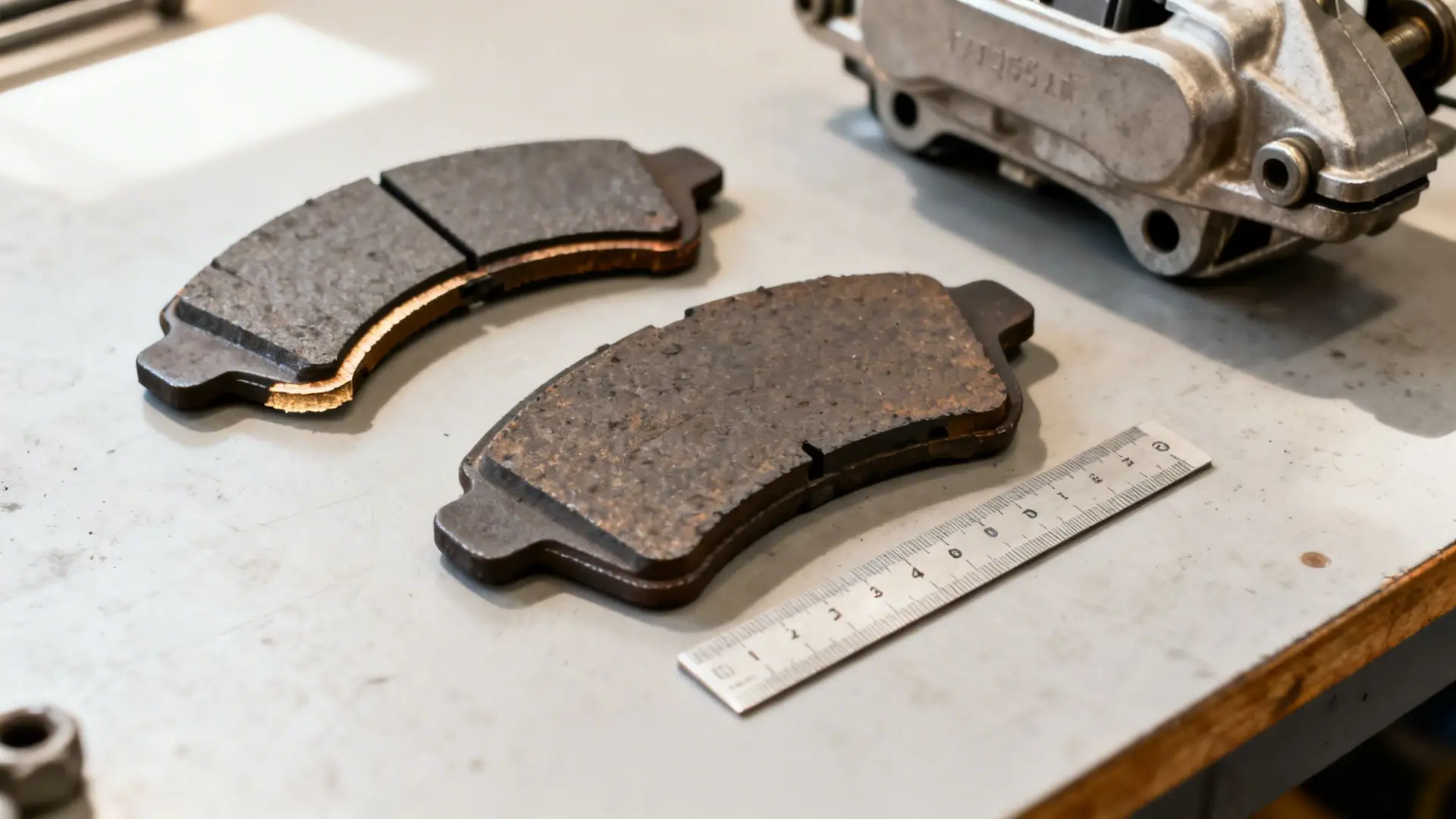
This imbalance indicates the caliper is not applying or releasing pressure correctly. The result is reduced braking efficiency and, over time, a compromised ability to stop safely.
Why a Bad Caliper Causes Uneven Wear
A brake caliper's job is to apply perfectly even force through its piston(s) to press both inner and outer brake pads against the rotor. When this mechanism fails, the force becomes lopsided.
- Sticking Caliper Piston: A common failure point is a caliper piston that becomes seized or "stuck" due to corrosion, debris, or a failed seal. If the piston cannot retract fully, it keeps one brake pad in constant, light contact with the rotor, causing it to wear down prematurely.
- Seized Caliper Slide Pins: Calipers "float" on guide pins to self-center and apply equal pressure. If these pins rust or lose lubrication, the caliper can get stuck on one side. This causes the other pad to do all the work, leading to rapid, one-sided wear.
A small business owner in Plano managing a fleet of delivery vans might notice they are replacing brake pads on certain vehicles far more frequently, a clear sign of underlying caliper issues causing premature wear. Likewise, a driver who gets their brakes checked annually might be shown how one wheel's pads are nearly gone while the others are fine, pointing directly to a faulty caliper.
Crucial Safety Insight: Uneven pad wear is a mechanical red flag. Ignoring it means you are not getting the full performance from your brake system. The worn-down pad will eventually fail completely, and the uneven pressure can cause excessive heat, potentially leading to warped rotors.
What You Should Do
If you or your mechanic discovers unevenly worn pads, it’s time to investigate the calipers.
- Request a Visual Comparison: During routine maintenance like an oil change, ask your technician to show you the brake pads. Seeing the difference in thickness between the inner and outer pads, or from one wheel to another, is the clearest evidence.
- Track Maintenance Intervals: If you find yourself replacing brake pads well before the typical 30,000 to 70,000-mile lifespan, a sticking caliper is a likely culprit.
- Inspect Rotors and Hardware: Uneven wear often goes hand-in-hand with damage to other components. For more information, you can learn how to inspect brake rotors for signs of scoring or heat spots caused by a dragging pad.
- Schedule a Professional Inspection: The only way to confirm the cause is with a thorough brake service. Bring your vehicle to a professional shop like Express Lube & Car Care in Plano. Our ASE-certified technicians can diagnose a sticking caliper piston or seized slide pins, replace the faulty components, and ensure your entire brake system operates safely and evenly.
4. Vehicle Pulls to One Side When Braking
One of the most unsettling signs of bad brake calipers is when your vehicle abruptly pulls or veers to the left or right the moment you press the brake pedal. A properly functioning brake system applies equal force to both wheels on an axle, bringing your car to a straight, controlled stop. If your car suddenly changes direction while braking, it’s a clear signal that this balance has been disrupted.
This dangerous loss of control indicates that the braking force is uneven. One side of your vehicle is braking much harder than the other, forcing it to pivot in that direction. The problem almost always lies with a malfunctioning brake caliper.
Why a Bad Caliper Causes a Vehicle to Pull
Your vehicle’s stability during braking depends on symmetrical pressure. When a caliper fails, it disrupts this symmetry in one of two ways, causing the car to pull toward the side with the properly functioning, or more aggressive, brake.
- Stuck or Seized Caliper (Binding): A caliper can get stuck in the "on" position due to a seized piston or corroded slide pins. This means it fails to retract after you release the brake, causing constant, excessive friction on one rotor. When you apply the brakes again, that side brakes much more aggressively, pulling the vehicle toward it.
- Failed Caliper (Not Engaging): Conversely, a caliper piston can get stuck in the retracted position or fail to apply adequate pressure due to an internal seal failure. In this case, one brake isn't doing its job. The car will pull toward the opposite side, where the functional brake is working correctly and providing all the stopping power for that axle.
A family driving in Plano might notice the car lurching to the left when stopping at a red light on Preston Road. For a delivery driver with frequent stops around Legacy West, this pulling can make the vehicle feel unpredictable and hard to control throughout the day.
Crucial Safety Insight: A vehicle that pulls during braking is a serious safety hazard. It dramatically affects your steering control, especially during an emergency stop or on slick road surfaces, significantly increasing the risk of a collision or losing control of the vehicle.
What You Should Do
If you feel your vehicle pulling to one side when you brake, it requires immediate professional attention.
- Confirm the Symptom Safely: If possible, find a large, empty parking lot. Drive slowly in a straight line and apply the brakes firmly. Note if the car consistently pulls to one side. A pull to the right suggests an issue with the left caliper, and vice versa.
- Check for Other Signs: Pay attention to other symptoms like a burning smell or visible smoke from a wheel after driving, which indicates a severely seized caliper.
- Schedule an Immediate Inspection: Do not ignore this problem or attempt long-distance highway driving. The issue can worsen suddenly. Contact a certified shop like Express Lube & Car Care in Plano for a professional brake system diagnosis. Our ASE-certified technicians can quickly determine if a seized or failed caliper is the cause and perform the necessary repairs to restore your vehicle’s braking stability and safety. While braking systems are the usual suspect, if pulling persists after brake repairs, other issues could be at play. It's wise to investigate professional auto alignment and suspension services as misaligned wheels or worn suspension parts can also cause a vehicle to drift.
5. Brake Caliper Stuck in Engaged Position (Dragging)
Another one of the most serious signs of bad brake calipers is when one gets stuck in the engaged position, a condition known as "brake drag." Instead of releasing fully when you take your foot off the brake pedal, the caliper forces the brake pads to maintain constant, light contact with the rotor. This creates continuous friction, causing the vehicle to fight against its own brakes as you drive.
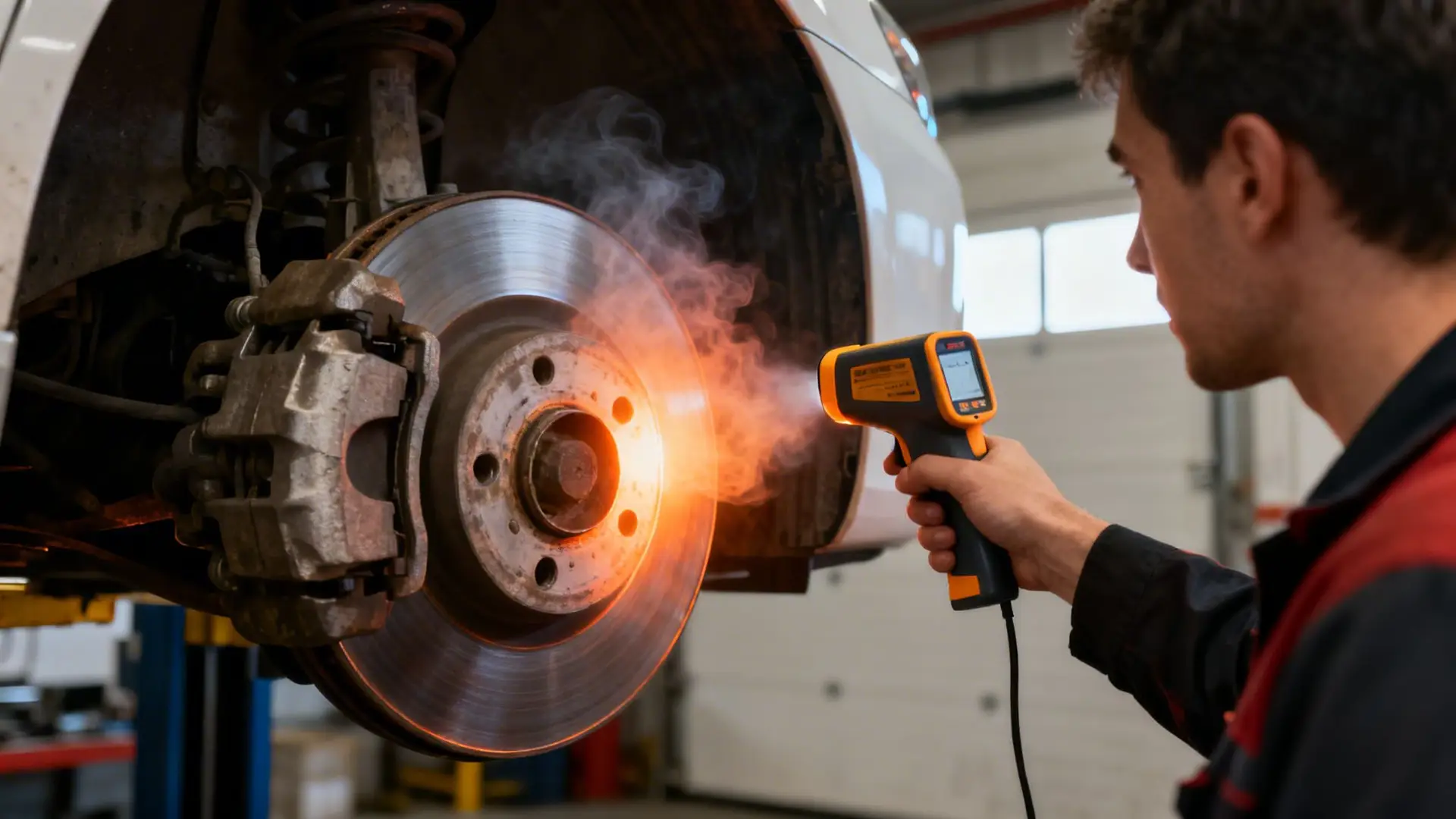
This constant resistance can feel like you're driving with the emergency brake slightly on. It leads to a cascade of problems, from poor performance and reduced fuel economy to dangerous brake overheating.
Why a Bad Caliper Causes Brake Drag
A healthy caliper's piston and slide pins are designed to move freely, applying and releasing pressure with precision. Brake drag occurs when this movement is restricted, preventing the caliper from fully retracting.
- Corroded or Damaged Piston: Moisture and road salt can cause the caliper piston to rust or become pitted. This corrosion prevents it from sliding smoothly back into its bore after the brake pedal is released, leaving the pads pressed against the rotor.
- Frozen Slide Pins: Calipers on many vehicles use slide pins to move back and forth. These pins must be clean and well-lubricated. If the protective rubber boots fail, dirt and water can get in, causing the pins to seize and locking the caliper in place.
- Debris and Contamination: Gunk and debris can build up inside the caliper's hydraulic passages or piston bore, physically blocking the piston from retracting.
A Plano commuter driving on the President George Bush Turnpike might first notice this as a sudden, unexplained drop in their car's fuel efficiency. A fleet manager might see a specific vehicle consuming far more fuel than others in the fleet, signaling a hidden mechanical issue like a dragging brake.
Crucial Safety Insight: A dragging caliper generates extreme heat. This can boil your brake fluid, leading to total brake failure. It can also warp the brake rotor and even cause the wheel bearing to fail, creating a severe safety hazard.
What You Should Do
If you suspect a caliper is sticking, you need to act quickly to prevent further damage and ensure your safety.
- Feel for Heat: After driving for a bit, carefully feel the heat coming from each wheel. If one wheel is significantly hotter than the others, it strongly indicates a dragging brake at that corner. Do not touch the rotor or caliper directly as they can cause severe burns.
- Listen and Smell: Drive with the windows down and the radio off. A continuous grinding or scraping sound that doesn't go away is a telltale sign. You may also notice a distinct, acrid burning smell after coming to a stop, which is the brake pad material overheating.
- Schedule an Immediate Inspection: A stuck caliper is a critical failure that requires professional attention. Continuing to drive will only cause more expensive damage. Contact Express Lube & Car Care in Plano for an urgent brake inspection. Our technicians can perform thermal imaging to confirm which brake is overheating and identify whether the problem is a seized piston, frozen slide pins, or a collapsed brake hose, restoring your vehicle's safety and performance.
6. Brake Pedal Doesn't Return to Normal Position
Beyond how the brake pedal feels when you press it, how it behaves when you release it is just as telling. A healthy brake pedal should snap back to its resting position immediately after you lift your foot. If you notice your pedal returning very slowly, feeling "sticky," or not coming all the way back up without help, it's one of the clearest signs of a bad brake caliper.
This symptom indicates that a component in the brake system is binding, preventing the release of hydraulic pressure. This is not only a functional problem but a serious safety hazard, as it means the brakes are not fully disengaging.
Why a Bad Caliper Causes a Sticky Pedal
The core issue behind a slow-returning pedal is a caliper that fails to retract its piston correctly. When you release the brake pedal, the pressure in the hydraulic lines should drop, allowing the square-cut seal around the caliper piston to pull it back slightly. This small movement is enough to release the brake pads from the rotor. When this doesn't happen, the caliper is essentially stuck.
- Corroded or Seized Caliper Piston: Moisture and road salt can cause the metal piston inside the caliper to rust and corrode. This corrosion creates friction, preventing the piston from sliding freely back into its housing when you release the brake.
- Damaged Piston Seals: The rubber seals that protect the piston can become brittle, torn, or swollen over time. A damaged seal can no longer help retract the piston or can even physically block its movement.
- Blocked Hydraulic System: While less common, a deteriorated flexible brake hose can sometimes collapse internally, acting like a one-way valve. It allows pressurized fluid to reach the caliper but prevents it from flowing back out, keeping the caliper engaged.
A busy professional in Plano might not notice a gradual deterioration in pedal return over several weeks, dismissing it as normal. However, a morning commuter might experience worse symptoms in cold weather, with the pedal feeling especially sluggish before the vehicle fully warms up.
Crucial Safety Insight: A pedal that doesn't return properly means your brakes are still partially applied, even when you're trying to accelerate. This constant drag generates extreme heat, rapidly wearing out your brake pads and rotors, damaging the caliper, and potentially causing your brake fluid to boil, leading to total brake failure.
What You Should Do
If your brake pedal is slow to return, you are actively damaging your brake system with every mile.
- Test the Pedal Return: In a safe, parked location, press and release the brake pedal several times. Observe its return speed. If it's noticeably slow or hangs up, the issue requires professional diagnosis.
- Note Any Other Symptoms: Does the slow pedal coincide with a burning smell, a pull to one side, or squealing noises? Documenting when the problem started and what other symptoms are present will help a technician pinpoint the cause faster.
- Schedule an Inspection Immediately: Do not plan any extended highway driving with this symptom. The continuous friction can lead to catastrophic brake failure. Contact a trusted local expert like Express Lube & Car Care in Plano for a comprehensive brake inspection. Our ASE-certified technicians can identify if the problem is a seized caliper, a bad hose, or another hydraulic issue and perform the right repair to ensure your vehicle operates safely and efficiently.
7. Brake Noise: Grinding, Squealing, or Scraping Sounds
One of the most audible and alarming signs of bad brake calipers is the sudden appearance of strange noises when you press the brake pedal. While some minor brake sounds can be normal, a persistent grinding, high-pitched squealing, or scraping noise is your vehicle's way of telling you that a critical component is failing.
These sounds are often a direct result of issues within the brake caliper and the components it controls. Ignoring them can lead to severe damage and a dangerous loss of stopping ability.
Why a Bad Caliper Causes Brake Noise
Your brake calipers are responsible for applying even, consistent pressure to the brake pads. When a caliper malfunctions, it disrupts this balanced operation, leading to premature wear and direct metal-on-metal contact that generates loud, unnerving sounds.
- Squealing from Uneven Wear: A high-pitched squeal often points to a seized caliper slide pin or a sticking piston. This prevents the caliper from releasing its grip on one of the brake pads, causing it to wear down much faster than the other. The sound comes from the brake pad wear indicator (a small metal tab) making contact with the rotor, or from the pad material vibrating at a high frequency due to uneven pressure.
- Grinding or Scraping Sounds: This is the most severe type of brake noise and indicates a critical failure. It occurs when a stuck caliper has caused one or both brake pads to wear down completely. The sound you hear is the metal backing plate of the brake pad grinding directly against the metal brake rotor. This not only destroys the rotor but severely compromises your ability to stop.
For a driver in a quiet Plano neighborhood, a loud grinding noise in a parking garage can be an embarrassing and clear alert that their brakes have failed. A commuter might hear a persistent squeal at every red light along Preston Road, a sign of uneven pressure from a sticking caliper.
Crucial Safety Insight: Metal-on-metal grinding is not just a noise; it is the sound of your brake system actively destroying itself. This condition presents an imminent brake failure risk and requires immediate professional attention. Your vehicle is not safe to drive.
What You Should Do
If you hear grinding, scraping, or loud, persistent squealing, do not ignore it.
- Listen Carefully: Note when the sound occurs. Does it happen only when braking? Does it happen when turning? Providing these details to a technician can help them diagnose the issue faster.
- Avoid Hard Braking: If you must drive the vehicle to a repair shop, do so with extreme caution. Brake gently and leave significantly more distance between you and the car ahead. Hard braking will only worsen the damage.
- Schedule an Immediate Inspection: These noises signal a serious safety hazard. The safest course of action is to have the vehicle towed. Contact a trusted local shop like Express Lube & Car Care in Plano for an urgent brake system diagnosis. Our ASE-certified technicians can determine if the noise is from a seized caliper, worn-out pads, or a damaged rotor and perform the necessary repairs to make your vehicle safe again.
7-Point Comparison: Brake Caliper Warning Signs
| Symptom | 🔄 Complexity to Diagnose/Repair | ⚡ Resources & Urgency | ⭐ Expected Severity/Outcome | 📊 Typical Impact / When Observed | 💡 Quick Tips |
|---|---|---|---|---|---|
| Soft or Spongy Brake Pedal | Moderate — hydraulic pressure test and caliper inspection required | Moderate resources (bleed, seals) — urgent safety concern | ⭐⭐⭐⭐ — compromised stopping power; repair prevents failure | Mushy pedal, increased travel, worse after repeated braking; often with low fluid | Test pedal firmness regularly; check fluid; avoid driving if severe |
| Brake Fluid Leaks Around the Caliper | Low to moderate — visual inspection and pressure leak test | Varies from seal repair to full caliper replacement — immediate service needed | ⭐⭐⭐⭐⭐ — direct loss of hydraulic pressure; high failure risk | Visible wet spots on caliper/wheel or pooling under vehicle | Inspect wheel interiors monthly; do not drive with active leaks |
| Uneven Brake Pad Wear | Low — visual pad inspection and caliper movement check | Low parts cost (pads/hardware) — schedule preventive service | ⭐⭐⭐ — reduced braking efficiency and increased maintenance cost | Detected during tire rotation or inspection; affects one or two wheels | Inspect pads every 6–12 months; request wear comparison during service |
| Vehicle Pulls to One Side When Braking | Moderate — brake pressure testing and side-by-side caliper check | Moderate resources — urgent due to safety risk | ⭐⭐⭐⭐ — uneven braking force; significant steering control concern | Pulls or veers during braking, pronounced in hard stops; steering correction needed | Test in a safe lot, note pull direction, avoid highway driving |
| Brake Caliper Stuck (Dragging) | High — thermal testing, caliper disassembly and piston/pin service | High resources and urgency — overheating, fuel loss, rapid wear | ⭐⭐⭐⭐⭐ — continuous friction, overheating, potential catastrophic failure | Constant resistance, hot wheels, burning smell, reduced fuel economy | Monitor fuel economy; compare wheel temps (carefully); inspect immediately |
| Brake Pedal Doesn't Return to Normal Position | Moderate — inspect piston retraction and hydraulic lines | Moderate resources — urgent if persistent | ⭐⭐⭐⭐ — risk of ongoing drag and reduced brake responsiveness | Pedal stays depressed or returns slowly; worse in cold/start-up | Test pedal return in parking lot; document onset; schedule inspection |
| Brake Noise: Grinding, Squealing, Scraping | Low to moderate — pad/rotor inspection and test drive evaluation | Resource need ranges from pad replacement to rotor+caliper service — prompt attention | ⭐⭐⭐⭐ — grinding often means metal-on-metal and rotor damage | Audible during braking; squeal for uneven wear, grinding for severe wear | Do not ignore noises; avoid hard braking and get ASE inspection promptly |
Your Next Step for Safer Braking in Plano
Navigating the roads of Plano requires confidence in your vehicle's most essential safety feature: its braking system. Throughout this article, we've explored the seven critical signs of bad brake calipers, from the unsettling feeling of a soft, spongy pedal to the unmistakable sound of grinding metal. Each symptom is a direct communication from your car, signaling that a key component responsible for stopping thousands of pounds of metal is in jeopardy.
Ignoring these warnings is not an option. A vehicle that pulls to one side, a brake caliper stuck in the engaged position, or visible fluid leaks are more than just mechanical quirks. They are active safety risks that can compromise your ability to stop effectively, especially in an emergency. Understanding these signs empowers you to transition from a reactive driver to a proactive vehicle owner, capable of identifying potential dangers before they lead to a catastrophic failure. This knowledge is your first line of defense, transforming abstract mechanical concepts into tangible, life-saving awareness.
From Symptoms to Solutions: Taking Action
Recognizing the problem is only the first step. The true value lies in taking decisive action. Whether you've noticed uneven wear on your brake pads during a tire rotation or a pedal that stubbornly refuses to return to its normal position, the message is clear: your brake system needs professional attention.
Key Takeaway: The symptoms of a failing brake caliper often overlap and can escalate quickly. A spongy pedal one day might be accompanied by a fluid leak the next. Prompt diagnosis is not just about fixing a part; it's about restoring the integrity of the entire braking system and ensuring your safety on the road.
Attempting to diagnose or repair a brake caliper without the proper tools, equipment, and expertise can be dangerous. The brake system is a high-pressure hydraulic circuit, and incorrect service can lead to immediate brake failure or create new, hidden problems. This is where professional diagnostics become invaluable. A certified technician can accurately determine if the issue is a seized piston, a degraded seal, a faulty slide pin, or a problem with the brake line or master cylinder that mimics caliper failure.
Your Plano Partner for Brake System Health
For drivers in and around Plano, Texas, the path to resolving these issues and restoring your peace of mind is straightforward. You don't have to decipher these complex symptoms alone. An expert inspection provides definitive answers and a clear plan for repair. This ensures that the root cause is addressed correctly the first time, preventing repeat visits and, more importantly, ensuring your vehicle stops safely and reliably every single time you press the pedal. Your safety, and the safety of others on the road, depends on the flawless operation of your brakes. Don't leave it to chance.
When you notice any of the signs of bad brake calipers, bring your vehicle to the trusted ASE-certified technicians at Express Lube & Car Care. We specialize in expert brake diagnostics and repair, ensuring your car is safe for the roads of Plano. Visit Express Lube & Car Care or stop by our shop today-no appointment is necessary for a professional brake inspection.