

Your car's cooling system functions as its circulatory system. Coolant, or antifreeze, is the fluid that constantly circulates to absorb intense heat from the engine and transfer it to the radiator for dissipation. Over time, this critical fluid degrades and loses its effectiveness.
A coolant flush is a comprehensive maintenance procedure that goes beyond simply replacing old fluid. It is a deep-cleaning process designed to remove contaminants and restore the entire cooling system to optimal condition, ensuring your engine operates at its correct temperature.
The Core Function of a Coolant Flush for Your Engine
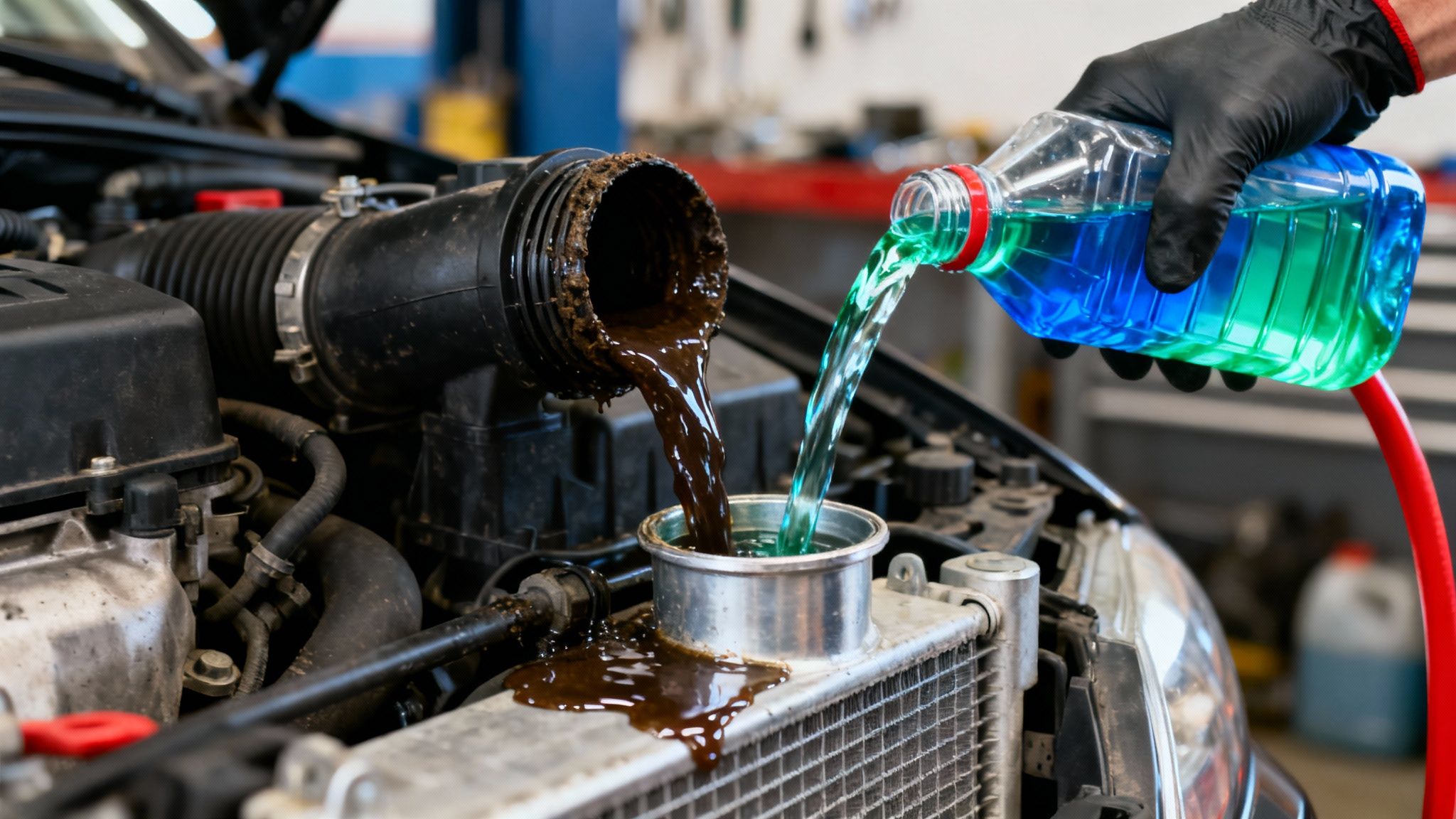
Throughout its operational life, coolant undergoes thermal breakdown. The chemical additives that inhibit corrosion and rust deplete, and the fluid becomes contaminated with particulate matter, scale deposits, and metal shavings. This accumulation of debris, often referred to as sludge, can obstruct the radiator, water pump, and the intricate coolant passages within the engine block.
A professional coolant flush utilizes specialized equipment to circulate a cleaning solution and then new coolant through the system, forcefully expelling nearly 100% of the old, degraded fluid along with the harmful contaminants that have accumulated.
Restoring and Protecting Engine Components
The purpose of a flush is not merely cleaning; it is about restoring the engine's capacity to regulate its temperature under various operating conditions. When sludge accumulates, it acts as an insulator, preventing efficient heat transfer and creating localized hotspots within the engine.
These conditions can lead to overheating. Automotive industry data suggests that approximately 40% of cooling system failures are attributable to this issue, resulting in severe damage like warped cylinder heads or blown head gaskets. These are complex repairs that can cost between $1,500 and $4,000.
By removing corrosive contaminants and replenishing protective additives, a coolant flush serves as a vital form of preventative maintenance. It ensures that all metal components, from the aluminum radiator to the cast iron engine block, are shielded from internal corrosion.
Ultimately, a flush is the most effective defense against an engine's primary adversary: excessive heat. It ensures the engine operates within its ideal temperature range, which is fundamental to maintaining performance, maximizing fuel efficiency, and ensuring long-term reliability.
Coolant Flush vs. a Simple Drain and Fill
It is crucial to distinguish between these two services, as their impact on engine health differs significantly. Understanding the technical differences clarifies why one is a temporary measure while the other is a comprehensive, long-term solution.
| Action | Comprehensive Coolant Flush | Basic Drain and Fill |
|---|---|---|
| Old Fluid Removal | Removes 95-100% of old fluid and contaminants from the entire system. | Only drains about 50-60% of old fluid from the radiator. |
| System Cleaning | Actively flushes the engine block, radiator, and heater core of deposits. | Leaves behind old fluid and built-up sludge in the engine and hoses. |
| New Fluid | Fills the entire system with 100% fresh, undiluted coolant. | Mixes new fluid with the old, contaminated fluid that remains in the system. |
| Long-Term Effect | Restores peak cooling performance and provides maximum corrosion protection. | Offers a temporary improvement but fails to address the root cause of contamination. |
As the comparison illustrates, a basic drain and fill is an incomplete service that leaves a significant amount of degraded fluid in the system. A full flush ensures the entire system is free of contaminants, providing the engine with the clean, effective coolant it requires for proper thermal management.
Maintaining your heating and cooling system is one of the most intelligent investments you can make in your vehicle's longevity.
The Hidden Dangers of a Neglected Cooling System
Postponing a coolant flush allows for a gradual but destructive process to occur within your engine. Over time, the protective additives in the coolant are consumed, causing the fluid's pH to drop and become acidic.
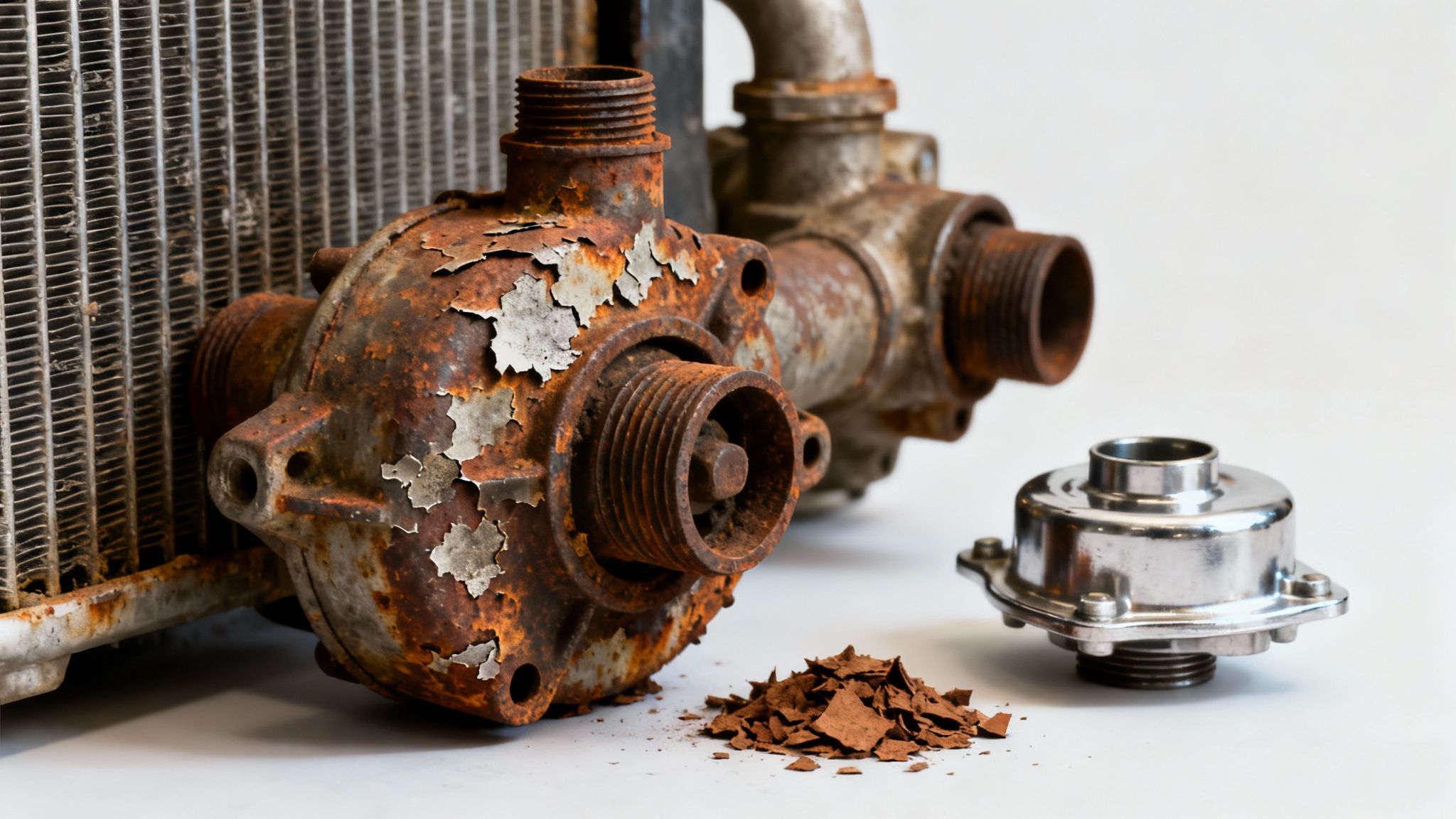
At this point, the fluid transforms from a protector to a corrosive agent. Instead of shielding the metal components of your cooling system, the old coolant begins to chemically erode them. This electrochemical corrosion creates particles of rust and scale, which then circulate through the system, turning the coolant into an abrasive, damaging slurry.
From Corrosion to Catastrophic Failure
This internal degradation is a slow process that invariably leads to major mechanical failures if not addressed. Every component within the cooling system is susceptible, and the failure of one part often triggers a cascade of expensive and highly inconvenient problems.
Consider the mechanical consequences of this neglect:
- Water Pump Seizure: The water pump is the heart of the cooling system. As the abrasive, contaminated coolant circulates, it erodes the pump's seals and bearings. Eventually, the pump can seize, halting all coolant circulation and causing the engine to overheat rapidly.
- Radiator Clogging and Rupture: A radiator contains numerous small passages designed for maximum heat dissipation. Sludge and scale deposits obstruct these passages, rendering the radiator ineffective. The resulting pressure increase can cause leaks or a complete rupture.
- Blown Head Gasket: This is one of the most severe engine repairs. When corrosion creates hotspots or a clogged system leads to severe overheating, the extreme temperature and pressure can destroy the head gasket that seals the engine block to the cylinder head. This is a major repair often costing thousands of dollars.
A cooling system failure is more than an inconvenience; it can result in a breakdown that leaves you stranded. It transforms a preventable maintenance task into a significant emergency.
Why a Coolant Flush is So Critical
Understanding what a coolant flush does means recognizing its role as a preventative measure for your engine. By evacuating all of the old, acidic fluid and the abrasive particulate matter suspended within it, a flush halts the corrosive process entirely.
The system is then refilled with fresh coolant containing a full complement of anti-corrosive additives required for engine protection. This proactive service is a small investment that shields you from the stress, danger, and substantial expense of a complete cooling system failure.
What Are the Real Benefits of a Professional Coolant Flush?
A professional coolant flush should be viewed as a direct investment in your vehicle's long-term health and operational integrity. When an engine maintains its optimal operating temperature, the benefits are tangible: improved performance, component protection, and measurable cost savings.
A clean cooling system with fresh fluid is inherently more efficient at transferring heat. This means the engine operates with less thermal stress, which contributes to smoother operation and better fuel economy.
Boost Your Fuel Efficiency and Performance
Degraded coolant becomes viscous and thick, impairing its ability to transfer heat effectively. This inefficiency forces the engine to work harder to maintain its temperature, and that extra effort directly impacts fuel consumption. In severe cases of internal buildup, fuel efficiency can decrease by as much as 10%.
Data from automotive service centers indicates that vehicles overdue for a coolant flush often exhibit 15-20% higher fuel consumption. Over a year, this can amount to hundreds of dollars in wasted fuel. By removing the insulating sludge, a flush allows the cooling system to manage heat as it was engineered to do.
A coolant flush is a modest investment that provides a tangible return, from improved fuel economy to the prevention of major repair expenses that can render a vehicle inoperable.
Extend the Life of Your Most Important Parts
Beyond performance, the most significant benefit is component preservation. New coolant is formulated with anti-corrosion additives that form a protective barrier on all metal surfaces within the cooling system, preventing premature failure of expensive parts.
A professional flush promotes the health of these critical components:
- Radiator: Fresh coolant prevents the internal corrosion that clogs the small tubes, ensuring it can dissipate heat effectively.
- Water Pump: Clean fluid lubricates the pump’s seals and bearings, preventing abrasive wear that leads to leaks and mechanical failure.
- Hoses and Gaskets: Modern additives maintain the flexibility of rubber and silicone components, preventing them from becoming brittle and cracking.
- Heater Core: Removing blockages via a flush ensures the heater core functions correctly, providing reliable cabin heat and defrosting capabilities.
In summary, a coolant flush is a premier preventative maintenance service. It is a simple, proactive measure that ensures the entire system functions correctly and contributes to your vehicle's overall reliability. You can explore our full range of automotive fluid exchange services to keep your vehicle in peak condition.
Warning Signs Your Car Needs a Coolant Flush
Your vehicle's warning systems are designed to alert you to potential issues. Before a cooling system problem results in a breakdown, it will typically present several warning signs. Recognizing these symptoms is key to preventing a minor issue from escalating into a major repair.
A primary indicator is the engine temperature gauge. If you observe the needle rising above its normal position, particularly in heavy traffic or while driving uphill, it is a clear signal. This indicates the coolant is no longer effectively removing heat from the engine.
Visual and Olfactory Indicators
Often, the most effective diagnostic tools are your own senses. The condition of the coolant in the reservoir or specific odors after driving can provide crucial information.
First, perform a visual inspection (only when the engine is completely cool). Open the hood and examine the coolant in the transparent overflow reservoir. Healthy coolant should be a bright, translucent color, such as green, orange, or pink. If the fluid appears murky, opaque, or rust-colored, it is a definitive sign of internal corrosion.
Another key indicator is a distinct, sweet, syrupy odor around the vehicle after it has been running. This odor is from ethylene glycol, the primary component of antifreeze, and it signifies a leak in the system—perhaps from a hose, the radiator, or the water pump. A flush is part of the corrective action, but the leak must be repaired first.
Have you ever experienced the heater blowing lukewarm or cold air on a cold day? This is a classic symptom of a clogged heater core. The sludge formed by degraded coolant is the leading cause of this obstruction.
This chart illustrates how a fresh coolant flush directly benefits your vehicle's health.
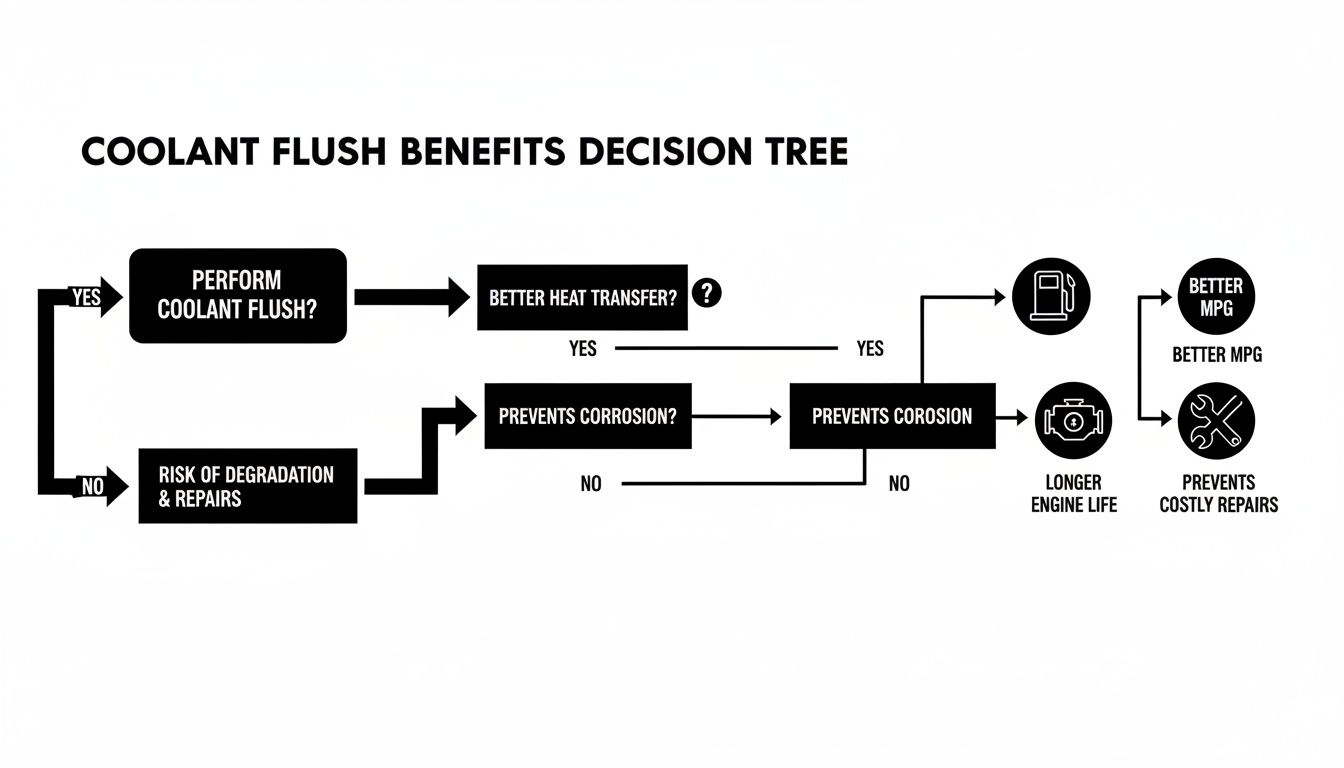
As shown, there is a direct cause-and-effect relationship. Proactive maintenance of the cooling system directly contributes to a longer engine life and fewer expensive repairs.
How Often Does Your Car Actually Need a Coolant Flush?
There is no universal service interval for a coolant flush that applies to all vehicles. While your owner's manual provides a baseline, the optimal frequency depends on your vehicle's age, the specific type of coolant it uses, and your typical driving conditions.
Manufacturer recommendations vary widely. Some older vehicles may require a flush every 30,000 miles, whereas many newer cars using modern long-life coolants can go 100,000 miles or more. The coolant formulation itself is a significant factor, as the lifespan of its anti-corrosion additive package differs greatly between types.
Why Your Driving Environment Matters So Much
The mileage intervals specified in owner's manuals are typically based on "normal" driving conditions, which may not reflect the reality of driving in areas like Plano, Texas. The region's intense summer heat and frequent stop-and-go traffic place significantly more stress on a vehicle's cooling system.
High ambient temperatures force the engine to work harder to maintain its operating temperature, which accelerates the degradation of the coolant's protective additives. Similarly, idling in traffic reduces airflow through the radiator, forcing the coolant to manage a greater thermal load.
Your local climate is a critical factor. The thermal stress from a Texas summer can easily reduce the recommended service interval by half, making proactive inspections more important than relying solely on mileage.
To provide clearer guidance, here is a general table that considers different vehicle types and our local climate.
General Coolant Flush Interval Guidelines
This table summarizes typical service intervals, but always remember that a professional inspection provides the most accurate recommendation for your specific vehicle.
| Vehicle and Coolant Type | Standard Interval (Miles) | Recommended Interval for Hot Climates (Miles) |
|---|---|---|
| Older Vehicles (Pre-2000s) with IAT Coolant | 30,000–50,000 | 20,000–30,000 |
| Modern Vehicles with Long-Life (OAT/HOAT) Coolant | 100,000–150,000 | 75,000–100,000 |
| Heavy-Duty Trucks or Frequent Towing | 50,000–75,000 | 40,000–60,000 |
| Hybrid Vehicles (Specialized Coolant) | Follow Manufacturer | Consider Early Service |
These figures illustrate how significantly a hot climate can accelerate the need for service. This is why a professional, hands-on evaluation is recommended over strict adherence to the manual.
Going Beyond the Manual: A Professional Look
While the manual offers a valid starting point, the most reliable method to determine if your car needs a flush is a professional evaluation. A qualified technician can test the coolant's condition directly, checking its pH level and visually inspecting for evidence of rust, sediment, or other contamination.
This diagnostic approach provides a precise service schedule tailored to your vehicle and driving habits. It is a critical component of any thorough routine car maintenance checklist.
- Coolant Type and Age: Modern long-life coolants (OAT/HOAT) are engineered to last much longer than older Inorganic Acid Technology (IAT) coolants.
- Driving Conditions: Heavy towing, prolonged idling in city traffic, or operating in extreme heat accelerates coolant degradation.
- Vehicle Age: Older cooling systems may be more prone to corrosion or minor leaks, necessitating more frequent attention.
Ultimately, a professional coolant test provides a more accurate assessment than mileage alone, ensuring this essential service is performed precisely when your vehicle requires it.
Got Questions About Coolant Flushes? We’ve Got Answers.
Even after reviewing the technical details, it is common to have further questions about this service. Let's address some of the most frequent inquiries to help you discuss this procedure knowledgeably with a mechanic.
Isn’t a Coolant Flush Just Draining the Old Fluid?
No, the two procedures are fundamentally different. A simple "drain and fill" is an incomplete process that only removes the fluid from the radiator. This method typically only replaces 40-60% of the total coolant volume, leaving a significant amount of degraded, contaminated fluid within the engine block, heater core, and hoses.
In contrast, a professional coolant flush is a comprehensive deep-cleaning service. It utilizes specialized equipment to circulate a cleaning agent and then new coolant through the entire system under pressure. This process evacuates nearly 100% of the old fluid and accumulated sludge, effectively restoring the cooling system to its original, clean condition.
Can I Just Top It Off With Any Coolant from the Auto Parts Store?
This is strongly discouraged and is a common and potentially costly error. Vehicle manufacturers are highly specific about the coolant chemistry required for their engines, using classifications like IAT (Inorganic Acid Technology), OAT (Organic Acid Technology), or HOAT (Hybrid Organic Acid Technology).
Each formulation contains a unique additive package designed to protect the specific metals and materials used in that engine. Mixing coolant types or using an incorrect one can trigger an adverse chemical reaction, causing the coolant to gel and obstruct passages. This can lead to rapid corrosion and damage to the water pump or radiator. Always adhere strictly to the manufacturer's coolant specification.
A professional flush not only cleans the system but also ensures it is refilled with the exact, manufacturer-specified fluid required for proper function and protection, eliminating any guesswork.
What’s a Coolant Flush Going to Cost Me?
The cost for a professional coolant flush typically ranges from $100 to $250, depending on the vehicle model and service location. While it is an additional maintenance expense, it represents a small investment in preventative care.
Consider that this cost is a minor fraction of a repair bill for a warped cylinder head or a failed water pump, which can easily exceed several thousand dollars. Investing in a timely coolant flush is a prudent, proactive measure that helps you avoid these substantial and unexpected repair costs in the future.
Maintaining your cooling system is fundamental to your vehicle's long-term health. If you are in the Plano, TX, area, trust the ASE-certified experts at Express Lube & Car Care for professional service. Visit us for an inspection and service—no appointment is necessary. Learn more at https://www.expresslubeplano.com.