

Understanding and adhering to a car maintenance schedule based on mileage is the most effective strategy for ensuring your vehicle’s longevity and reliability. Manufacturers establish service benchmarks at specific intervals, such as 5,000, 30,000, and 60,000 miles, for a critical reason. Following this schedule is the best way to prevent costly mechanical failures, maintain optimal fuel economy, and ensure your vehicle operates safely and dependably.
Car Maintenance Schedule By Mileage: Why It's Essential
Consider your car’s maintenance schedule as a preventative health plan. Just as you visit a doctor for routine check-ups to detect potential health issues early, your vehicle requires mileage-based maintenance—scheduled service intervals based on miles driven—to prevent costly repairs and ensure your car stays aligned with manufacturer recommendations.
Regular maintenance at these scheduled intervals is essential for vehicle longevity and safety. When these service milestones are ignored, you risk a cascading effect of mechanical problems. A minor, inexpensive issue—like a clogged air filter—can escalate into a major system failure, resulting in significant repair costs. Many car manufacturers recommend following specific maintenance by mileage schedules at key mileage milestones such as 30,000, 60,000, and 90,000 miles. A consistent maintenance plan is the cornerstone of responsible vehicle ownership.
The benefits extend beyond avoiding repairs. A well-maintained engine operates more efficiently, consuming less fuel and saving you money. Furthermore, adhering to a car maintenance by mileage plan is a form of preventative maintenance that helps avoid costly repairs in the long run. A comprehensive service history is a powerful asset when you decide to sell or trade in your vehicle, as it demonstrates a commitment to proper care.
This timeline provides a visual representation of key service milestones, from foundational oil changes to more intensive component replacements later in the vehicle’s life. Maintenance by mileage is typically outlined in the owner’s manual or vehicle’s manual, which are your primary resources for understanding manufacturer-recommended maintenance intervals and vehicle-specific guidelines. Consulting these resources ensures you follow the manufacturer’s recommended schedule.
Many manufacturers use a standard cycle for factory preventative maintenance, and these cycles are especially relevant for modern cars, which often feature digital displays and odometers to help track service intervals.
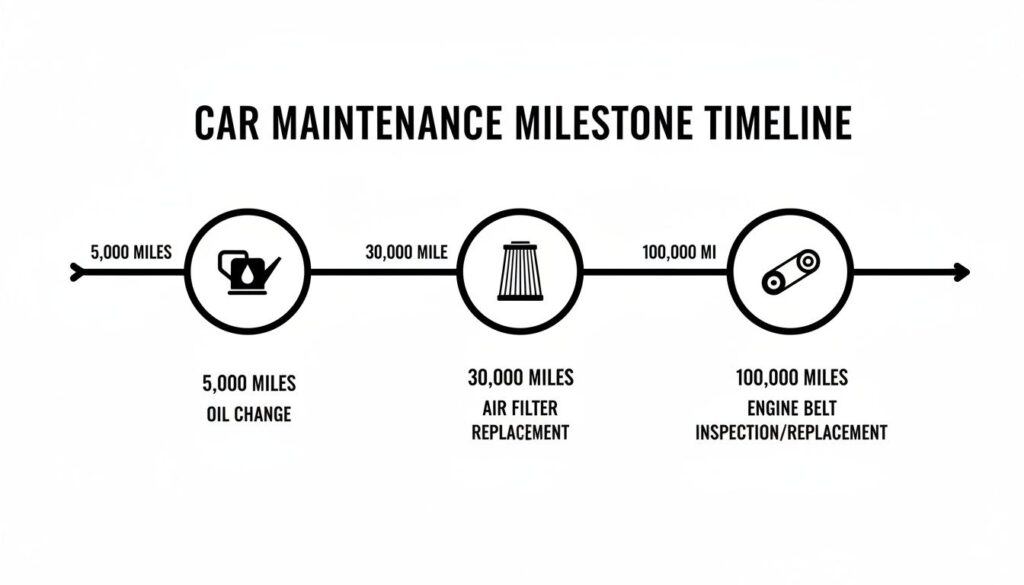
As you can see, maintenance tasks are cumulative, scheduled at specific mileage milestones. The process begins with simple, frequent services and progresses toward replacing more complex, durable components as the vehicle accumulates mileage. Starting maintenance routines early in the vehicle’s life is crucial to maximize longevity and prevent issues down the road.
Key Benefits Of Adhering To The Schedule
Following a regular maintenance plan is the foundation for vehicle longevity, safety, and cost savings. Adhering to a car maintenance schedule by mileage is an investment in your vehicle’s future. The advantages are clear and significant:
Prevents Costly Repairs: Identifying and addressing wear on components early can prevent small issues from becoming catastrophic failures, as routine checks help detect potential issues before they escalate. For instance, replacing a worn belt is far less expensive than repairing the extensive engine damage a snapped belt can cause.
Improves Fuel Efficiency: Simple maintenance tasks like ensuring clean filters, fresh fluids, and proper tire pressure have a direct and positive impact on your vehicle’s fuel consumption, reducing operational costs.
Ensures Vehicle Safety: Safety is paramount. Regular inspections of your braking system, tires, and steering components are absolutely critical to the well-being of you and your passengers.
To better understand the specific tasks involved in these checks, our comprehensive routine car maintenance checklist serves as an excellent resource.
Foundational Care Every 5,000 to 7,500 Miles
The 5,000 to 7,500-mile interval is the most fundamental and frequently repeated stage in your car’s maintenance schedule. It forms the bedrock of your vehicle’s long-term health. Consistent adherence to this initial step is crucial for preventing premature wear and tear on critical engine components. Incorporating routine checks at each service interval helps catch potential problems early, supporting preventative care and saving on costly repairs down the road.
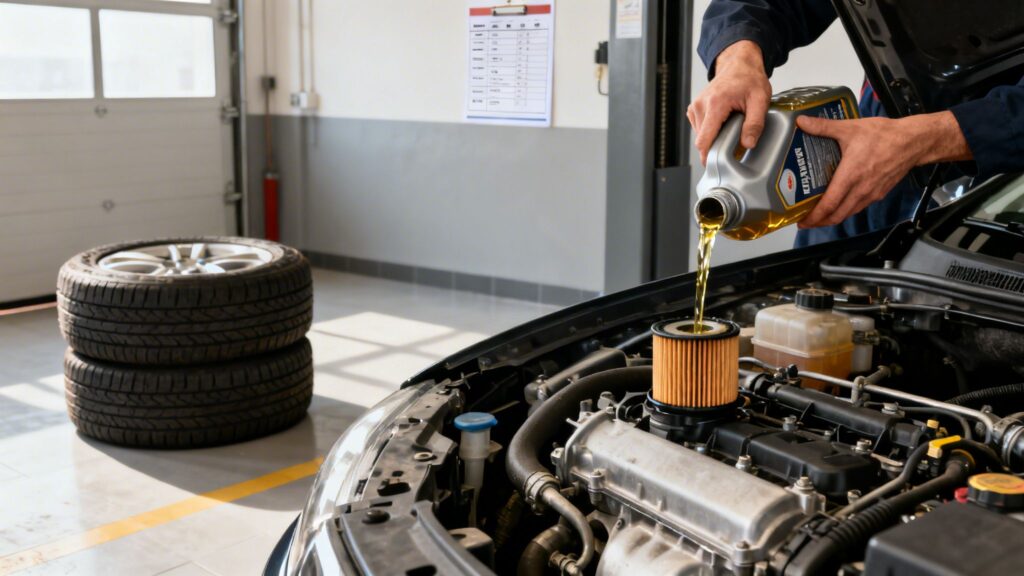
This service interval centers on the engine oil, the lifeblood of your vehicle. It performs three critical functions: lubricating moving parts to reduce friction, cleaning away harmful deposits, and dissipating heat. Neglecting oil changes is one of the most direct paths to severe and expensive engine damage.
Core Services at This Interval
During this service, technicians focus on a few key tasks that address the components subjected to the most daily stress. Each task plays a specific role in maintaining optimal vehicle performance.
Engine Oil and Filter Change: This is the primary service. Over time, engine oil degrades, losing its viscosity and protective qualities, which allows friction and sludge to build up. Replacing the oil filter during every oil change is essential for keeping the engine oil clean and ensuring optimal engine performance and longevity, as the new filter traps contaminants that could otherwise harm your engine.
Tire Rotation: The position of each tire is changed to promote even tread wear. This simple procedure can extend the life of your tires by thousands of miles, improve vehicle handling, and maintain consistent traction.
Fluid Level Inspection: Technicians perform a quick check and top-off of essential fluids, including coolant, brake fluid, and power steering fluid. A low fluid level can be an early indicator of a leak that requires further investigation.
Comprehensive Visual Inspection: A general inspection of belts, hoses, lights, and windshield wipers is also conducted. Identifying a cracked belt or a non-functioning headlight in the service bay is far preferable to discovering it on the road.
A study by AAA found that engine sludge—often a direct result of missed oil changes—contributes to over 40% of engine failures in vehicles under 150,000 miles. At Express Lube & Car Care, our no-appointment-needed service allows our ASE-certified technicians to perform these essential tasks efficiently.
Recognizing Warning Signs
Your vehicle often provides signals that it requires service before the odometer reaches the next milestone. Paying attention to these indicators can prevent a small issue from escalating. For a more detailed explanation, consult our guide on how often you should really change your oil.
Be observant of these common indicators:
Dark or Gritty Oil: Fresh engine oil has a translucent, amber color. If the oil on the dipstick appears black, opaque, or contains particulates, it is past its effective life.
Increased Engine Noise: Clean oil provides a layer of hydraulic cushioning that dampens engine noise. An increase in knocking or rumbling may indicate that worn-out oil is no longer providing adequate lubrication.
“Check Engine” or “Oil” Light: This is a direct alert from your vehicle’s onboard diagnostic system. It can signal various issues, but low oil pressure is a common and critical one that requires immediate attention.
Exhaust Smoke: Blue or gray smoke from the exhaust system often indicates that oil is leaking past internal seals and being burned during combustion.
Burning Oil Smell: A sharp, acrid odor inside the cabin typically points to an external oil leak dripping onto hot engine or exhaust components.
Adhering to this fundamental 5,000 to 7,500-mile service establishes a pattern of proactive care, creating the foundation upon which all future maintenance relies.
The First Major Checkpoint: 15,000 to 30,000 Miles
As your vehicle surpasses the 15,000 to 30,000-mile mark, it’s time for its first comprehensive systems check. This service goes beyond a standard oil change, representing a critical milestone where technicians inspect parts that have completed their initial wear-in cycle. At this mileage, certain items are specifically targeted for inspection or replacement according to manufacturer guidelines, ensuring your vehicle remains reliable and safe.
At this stage, the focus expands to components that directly influence engine performance, fuel efficiency, and the air quality within the cabin. This service can be compared to a vehicle’s first major physical exam—an opportunity to diagnose and address minor issues before they evolve into significant problems.
What to Expect During This Service
The 30,000-mile service is a significant event in nearly every manufacturer’s recommended maintenance schedule. It involves a more detailed inspection of filters, fluids, and core systems to ensure they are performing to specification.
Here is a summary of typical services performed:
Engine Air Filter Replacement: A clogged air filter restricts airflow to the engine, impairing performance and reducing fuel economy. Replacing it is a simple, cost-effective service with a noticeable impact.
Cabin Filter Replacement: The cabin filter plays a key role in maintaining air quality inside your vehicle by removing dust, pollen, and other airborne particulates from the air entering the passenger cabin. Replacing the cabin filter not only improves air quality but also supports overall vehicle health and optimal HVAC system performance.
Fuel System Inspection: A technician will inspect the fuel filter and other key components to ensure the engine is receiving a clean and consistent supply of fuel.
The 30,000-mile service is a crucial checkpoint. Components such as air filters, power steering fluid, and fuel filters often require service to prevent performance degradation. This is also an opportune time to inspect the coolant, radiator hoses, brakes, and suspension.
Key Inspections for Long-Term Health
In addition to replacing parts, this service interval is the ideal time for a thorough inspection of several other critical systems. Detecting early signs of wear can prevent a future breakdown.
The battery is a primary focus. Technicians check the terminals for corrosion (a chalky, white substance) and ensure all connections are secure. A loose connection or a deteriorating battery is a common cause of starting issues. The battery’s charge and health are also tested to verify it can reliably start the vehicle. For additional information, our guide on changing your car air filter offers further insights.
The coolant and brake systems also receive close scrutiny. We check the coolant’s level and condition to ensure the engine is protected from overheating. Regular fluid checks at this interval are essential for preventing overheating and brake failure. The brake inspection is even more critical; technicians measure the thickness of the brake pads and inspect the rotors for signs of wear or warping. A high-pitched squeal or grinding noise during braking is an audible indicator that the pads are nearing the end of their service life. Finally, continuing with tire rotations is essential. Performing regular rotations every 5,000-8,000 miles can extend tire life by 20-30% and enhance vehicle safety.
Mid-Life Vehicle Care at 45,000 to 60,000 Miles
As your vehicle surpasses the 45,000-mile mark and approaches 60,000, its maintenance requirements evolve. The focus shifts from basic inspections to proactive component replacement. This stage represents a mid-life assessment, a critical step in any car maintenance schedule by mileage designed to prevent major system failures before they occur.
By this mileage, the vehicle has endured thousands of thermal cycles, stop-and-go driving conditions, and daily operational stresses. Components that only required a visual check at 30,000 miles may now be approaching the end of their engineered lifespan. Parts wear and required service intervals can vary depending on driving habits, vehicle type, and whether you drive a modern car with advanced features, so it’s important to follow manufacturer guidelines and adjust your schedule as needed. Replacing them proactively is a strategic decision that can save you from the inconvenience and higher costs of a roadside breakdown.
Replacing Key Ignition and Electrical Components
The ignition and electrical systems, which are central to your car’s operation, have been working continuously. This mileage interval is the optimal time to replace key components to ensure reliable engine starting and smooth performance.
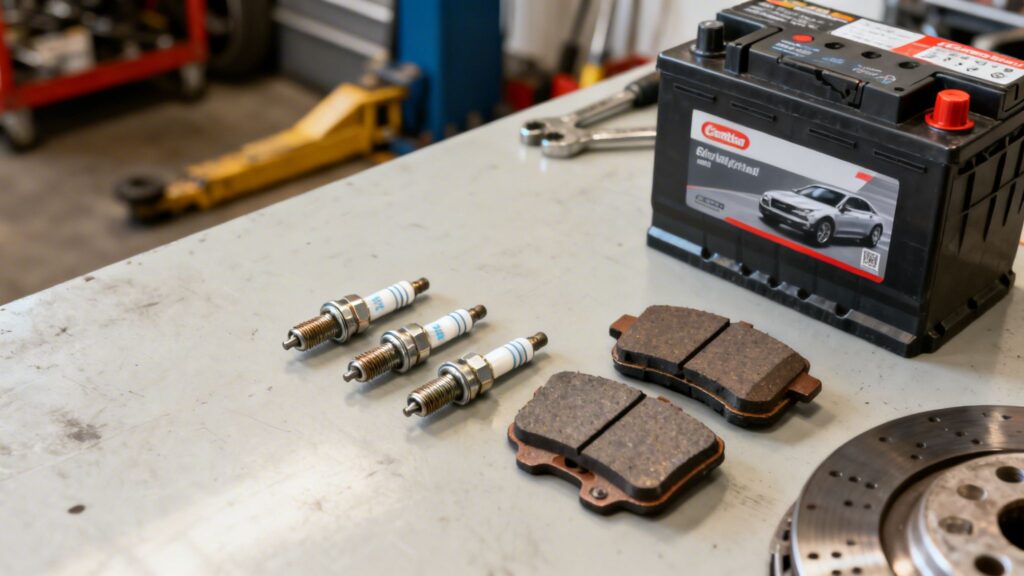
Spark Plug Replacement: Spark plugs are responsible for igniting the air-fuel mixture in the engine’s cylinders. Over tens of thousands of miles, their electrodes erode, resulting in a weaker spark. Worn spark plugs can cause engine misfires, decreased fuel efficiency, and even potential engine damage if not replaced at the recommended mileage interval. This can lead to a range of issues, including rough idling, poor acceleration, engine misfires, and a measurable decrease in fuel economy.
Battery Inspection and Potential Replacement: The typical lifespan of a car battery is three to five years. Around 60,000 miles, a professional assessment of its health is recommended. We test its ability to hold a charge and inspect for any signs of physical degradation. Replacing a battery on your own terms is always preferable to being stranded by an unexpected failure.
Here at Express Lube & Car Care, we simplify this process. We offer a $20 discount on new batteries with our Express Lube Signature battery service, making this preventative measure an easy choice.
Comprehensive Brake System Service
While your brakes were likely inspected during earlier services, this mileage is often when replacement of wear components becomes necessary. Your safety depends on the brake system, making this an area where maintenance cannot be deferred.
Common brake services around this mileage include:
Brake Pad Replacement: The friction material on brake pads is designed to wear away with use.
Rotor Resurfacing or Replacement: Brake rotors can become warped from heat or worn too thin, which is often felt as a vibration or pulsation through the brake pedal.
Brake Fluid Flush: Brake fluid is hygroscopic, meaning it absorbs moisture from the atmosphere over time. This moisture can cause internal corrosion and lower the fluid’s boiling point, leading to a dangerous loss of braking effectiveness known as brake fade.
We strongly advocate for a complete fluid flush rather than a simple top-off. Old, contaminated fluid will continue to circulate, potentially damaging expensive components like the master cylinder or ABS module. A full flush removes all contaminants and protects the entire system with fresh, high-quality fluid.
Crucial Fluid Flushes for System Longevity
Similar to engine oil, other vital fluids in your vehicle degrade over time and lose their protective properties. This is the ideal mileage to flush and replace several key fluids to prevent heat-related damage and internal wear.
Transmission Fluid Exchange: Old, broken-down transmission fluid can lead to harsh shifting, overheating, and ultimately, transmission failure—one of the most expensive automotive repairs.
Coolant Flush: Depleted coolant loses its anti-corrosive properties, which can lead to rust and scale buildup, causing blockages in the radiator and engine that can result in severe overheating.
Brake Fluid Flush: As noted, removing moisture-contaminated fluid from the brake lines is absolutely essential for maintaining safe and reliable stopping power.
Following this mid-life service schedule is a direct investment in your vehicle’s future. These replacements and fluid services are designed to counteract the wear from the first half of your car’s operational life, preparing it for another 60,000 miles of dependable performance.
Hitting the Big Miles: Your 75,000 to 100,000-Mile Service Guide
Once your vehicle surpasses 75,000 miles and approaches the 100,000-mile threshold, you enter a pivotal maintenance phase. This is more than a routine check-up; it is one of the most comprehensive and critical services your car will undergo. The focus shifts from basic wear items to major components that are integral to engine operation and vehicle safety. At 90,000 miles, comprehensive inspections and replacements—including new tires, catalytic converter checks, and water pump inspections—are recommended to ensure your vehicle’s reliability and performance in the long run.
Consider this service a significant investment in your car’s long-term viability. It often distinguishes a vehicle that will reliably provide another 100,000 miles of service from one that becomes prone to expensive, catastrophic failures. The objective is to replace parts that are nearing the end of their designed service life before they fail. At this high-mileage interval, the timing chain should also be inspected or replaced to prevent engine damage.
Time for Belts and Hoses
After years of exposure to heat, vibration, and environmental factors, many of the rubber components in the engine bay become brittle and lose their flexibility. They have fulfilled their duty but now represent a potential point of failure. Proactive replacement is essential.
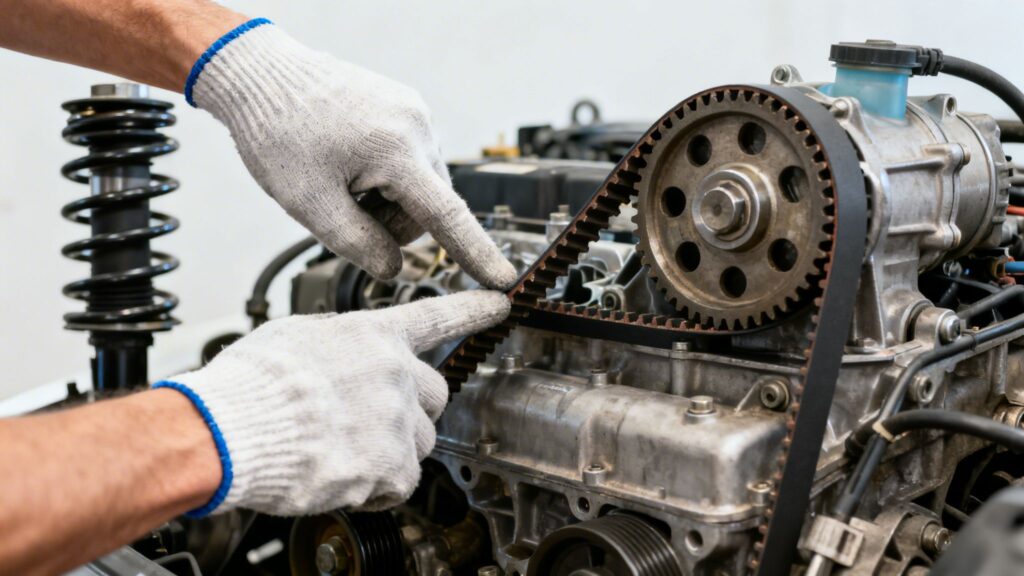
Timing Belt: This is the most critical belt. The timing belt synchronizes the rotation of the engine’s crankshaft and camshafts, ensuring internal components move in perfect harmony. If it fails, the consequences can be catastrophic.
Serpentine Belts: These belts drive essential accessories, including the alternator, power steering pump, and air conditioning compressor. A snapped serpentine belt will cause an immediate loss of these functions and leave you stranded.
Coolant Hoses: The radiator and heater hoses can develop internal weaknesses or external cracks over time. A ruptured hose results in a rapid loss of coolant, which can cause an engine to overheat in a matter of minutes.
A Critical Note on Interference Engines: If your vehicle is equipped with an interference engine, a broken timing belt is a terminal event. In this design, the pistons and valves occupy the same space in the cylinder at different times. When the belt snaps, this timing is lost, causing the pistons to strike the valves, resulting in extensive and often irreparable engine damage.
Checking the Suspension for a Smooth, Safe Ride
Consider the cumulative impact of every pothole, speed bump, and sharp turn your vehicle has negotiated over tens of thousands of miles. This stress takes a toll on the suspension system. Worn components not only lead to a harsh ride but also compromise the vehicle’s handling, stability, and overall safety.
This mileage interval is the prime opportunity for a thorough inspection of all key suspension parts. We look for any signs of wear that indicate your vehicle’s handling is no longer as precise and responsive as it should be.
Key components we scrutinize include:
Shocks and Struts: These components absorb road imperfections and keep the tires in firm contact with the pavement.
Ball Joints and Tie Rods: These are critical pivot points in the steering and suspension systems that allow the wheels to turn and articulate.
Control Arm Bushings: These rubber or polyurethane components absorb vibration and ensure suspension movement is controlled and predictable.
Does Your Suspension Need Help?
Your vehicle typically provides clear signals when its suspension components are worn. Ignoring these signs can lead to accelerated tire wear, diminished braking performance, and a loss of vehicle control in emergency maneuvers.
Symptom Checklist:
Excessive Bouncing: If your car continues to oscillate after hitting a bump, it is a classic symptom of worn-out shocks or struts.
Uneven Tire Wear: Wear on the inside or outside edges of the tires often indicates a suspension alignment issue caused by worn parts.
“Nose Dives” During Braking: If the front of the vehicle dips excessively when you apply the brakes, the front shocks are likely compromised.
Drifting or Pulling in Turns: A feeling of instability or the need to constantly correct the steering through a corner can be caused by worn suspension components.
At Express Lube & Car Care, our ASE-certified technicians possess the expertise to perform these major services, ensuring your high-mileage vehicle remains safe, reliable, and prepared for the road ahead.
Hitting 100,000 Miles and Beyond
Reaching 100,000 miles is a significant achievement for any vehicle, reflecting a commitment to consistent maintenance. Establishing a maintenance routine early in the vehicle’s life is key to keeping your car running reliably for years to come. As your vehicle ages, it’s especially important to consult the vehicle’s manual for ongoing maintenance procedures and schedules, as it provides specific instructions for tasks like brake fluid replacement and coolant flushing within recommended mileage ranges. At this point, the maintenance strategy transitions from a fixed, by-the-book schedule to a more dynamic and proactive approach.
The primary goal now is to identify and address potential problems before they result in a breakdown. The diligent care you’ve already provided—the regular oil changes and timely fluid services—has built a strong foundation. Now, it’s about being attuned to the subtle changes in your vehicle’s behavior.
Listen, Look, and Feel: A Proactive Approach
For high-mileage vehicles, owner vigilance becomes a key component of maintenance. Do not wait for a dashboard warning light. Integrating quick, personal inspections into your routine can prevent significant expense and inconvenience.
Look for Leaks: Periodically check the ground where you park your vehicle. Dark brown or black fluid is likely engine oil. Brightly colored (green, pink, orange) puddles usually indicate a coolant leak.
Keep an Eye on Oil Levels: It is not unusual for older engines to consume a small amount of oil between changes. Check the dipstick every few fuel fill-ups to ensure the level remains within the safe range.
Listen for New Noises: A vehicle that sounds different is often communicating a problem. A sharp squeal on startup could be a worn belt. A clunk or rattle over bumps frequently points to a failing suspension component.
These simple checks are your first line of defense against major repairs.
Preventative care is paramount for a vehicle with six figures on the odometer. Specialized products, such as high-mileage oil, can be highly beneficial. These oils contain seal conditioners designed to rejuvenate aging gaskets and prevent leaks, as well as extra detergents to clean sludge that can accumulate over many years.
Smart Habits for a Long-Lived Vehicle
Beyond inspections, your driving habits can significantly impact your vehicle’s longevity. Operate the car more gently. For example, allow the engine to warm up for a minute before driving, especially on cold days. This ensures proper oil circulation, protecting internal components from premature wear.
Using products formulated for older engines is also a sound strategy. High-mileage oils are specifically engineered for engines with over 75,000 miles. They help recondition seals and gaskets that have become hard and brittle, addressing one of the most common sources of oil leaks in older vehicles.
Most importantly, do not abandon the fundamental practices that brought your car this far. Adhering to your oil change, fluid check, and tire rotation schedule is as crucial now as it was at 30,000 miles. This consistent professional attention, combined with your own vigilance, is the key to keeping your vehicle on the road for another 100,000 miles and beyond.
Common Questions About Car Maintenance Schedules
Even with a detailed mileage-based schedule, specific questions often arise. Since every vehicle, driver, and set of conditions is unique, let’s address some of the most common uncertainties. Always consult your owner’s manual, as it is the key resource for understanding manufacturer-recommended maintenance intervals and vehicle-specific guidelines. If you have questions about your specific car maintenance schedule by mileage, your local service department can provide expert guidance tailored to your vehicle.
Do I Still Need Service if I Don't Drive Much?
Yes, absolutely. While mileage is an excellent indicator of wear from use, time itself also degrades your vehicle’s fluids and components.
Engine oil, coolant, and brake fluid can break down and absorb moisture over time, regardless of whether the car is driven. Rubber components like belts and hoses also become brittle with age. This is why manufacturers’ schedules typically include both a mileage and a time interval (e.g., 7,500 miles or 12 months), advising that service be performed based on whichever comes first. A simple rule is to follow the interval that occurs first—whether it’s the mileage or the time—so you don’t miss essential maintenance.
A common misconception is that a low-mileage car is immune to maintenance needs. In fact, short, infrequent trips can be particularly hard on an engine, as it may not reach a sufficient operating temperature to burn off condensation and other contaminants within the system.
Can I Go to Any Shop for Maintenance?
While you have the freedom to choose your service provider, the quality of service varies significantly. Selecting a reputable auto center with ASE-certified technicians, like our team at , ensures your vehicle is serviced by professionals who understand manufacturer specifications. It also helps you build a consistent and verifiable service history, which increases resale value.
It is also important to know that you are not required to return to the dealership for service to maintain your new car warranty. The Magnuson-Moss Warranty Act protects your right to have maintenance performed at any qualified shop, as long as you adhere to the factory schedule and keep detailed records.
How Much Should I Budget for Maintenance?
Proactively budgeting for vehicle maintenance is a wise financial practice that helps avoid the stress of unexpected repair bills. A general guideline is to set aside between $50 and $100 per month for routine services and future repairs. Preventive maintenance at 30,000, 60,000, and 90,000 miles is essential for avoiding major repairs. This creates a fund that easily covers oil changes and tire rotations while accumulating for more significant 30,000 or 60,000-mile services.
Several factors can influence your maintenance budget:
Vehicle Age: Older vehicles generally require more frequent attention and are more likely to need unscheduled repairs.
Make and Model: Parts and labor costs for luxury or imported vehicles are often higher than for domestic models.
Driving Conditions: Predominantly stop-and-go city driving places greater stress on brakes and fluids than consistent highway driving.
Following a predictable car maintenance schedule by mileage is the most effective way to manage and control your vehicle’s operating costs. It transforms maintenance from a reactive expense into a proactive investment in reliability and longevity. Scheduling preventive maintenance at 60,000 and 90,000 miles is especially important for long-term vehicle health.
At Express Lube & Car Care, our ASE-certified technicians are ready to answer your questions and help keep your vehicle in optimal condition. We provide efficient service and expert advice with no appointment necessary. Stop by today and experience how simple car care can be. Visit us online at https://www.expresslubeplano.com.
Related posts:
- Your Ultimate 2026 Routine Car Maintenance Checklist: 10 Essential Services
- Your 2026 Vehicle Safety Inspection Checklist: 7 Essential Educational Resources
- Car Leaking Transmission Fluid: An Educational Guide to Diagnosis and Prevention
- Battery Replacement Plano: A Comprehensive Guide for Vehicle Owners