

Discovering a reddish-brown puddle under your car is a clear indication of a problem. If you observe this, your car is leaking transmission fluid, a critical issue that demands immediate attention. This fluid is essential for your transmission's operation, and a leak puts the entire system at risk of severe, and often costly, damage.
Understanding the Red Puddle Under Your Vehicle
Finding an unexpected stain on your driveway can be concerning. However, that reddish spot is more than a cosmetic issue—it is a signal from your vehicle that it requires inspection.
Transmission fluid functions as the hydraulic medium that facilitates gear shifts. It performs several critical roles within the transmission system:
- It lubricates the intricate moving components within the gearbox, preventing damaging friction.
- It cools the system, which generates significant heat during operation.
- It transmits power from the engine to the wheels, enabling smooth gear changes.
When the fluid leaks, all of these functions are compromised. This is a prevalent automotive issue, contributing to a global transmission fluids market estimated at USD 15.67 billion in 2024. A portion of this market is driven by repairs in older vehicles, a common scenario for many car owners. You can learn more about these statistics in this transmission fluid market analysis.
While some commercial trucks may operate up to 500,000 miles between fluid services, a typical passenger vehicle requires new fluid every 60,000 to 100,000 miles to maintain optimal performance.
The Significance of a Minor Leak
It can be tempting to dismiss a few drips as insignificant. However, the transmission is a sealed system, meaning any fluid loss indicates a component failure.
A slow, consistent leak can deplete fluid levels sufficiently to cause gear slippage, transmission overheating, and eventual catastrophic failure. Early detection is the most effective strategy for avoiding a repair bill that can amount to thousands of dollars.
Ignoring a small puddle is analogous to placing a bucket under a roof leak and hoping the problem resolves itself. Procrastination will inevitably lead to a more substantial issue. Understanding the warning signs is the first line of defense.
How to Identify a Transmission Fluid Leak
The moment you spot a puddle under your car can be unsettling. The first step is to identify the fluid, and transmission fluid has distinct characteristics that aid in its recognition.
The primary identifier is its color. Fresh automatic transmission fluid is typically a bright, translucent red. As it ages and circulates through the system, it naturally darkens to a brownish-red or even a very dark brown.
The fluid also has a slick, oily texture, similar to a light cooking oil. Leaks are most commonly found under the front or middle section of the car, where the transmission is housed.
The Simple Cardboard Test
If you suspect a leak but require confirmation, the "cardboard test" is a cost-free and effective diagnostic method.
- Prepare the Area: Park your vehicle on a flat, clean surface, such as a garage floor or level driveway.
- Position the Cardboard: In the evening, place a large, clean piece of cardboard or several sheets of white paper under the front half of the vehicle.
- Wait and Inspect: Allow the car to sit overnight. In the morning, retrieve the cardboard for examination.
Any fluid spots provide a clear sample for analysis. You can check the color and texture without needing to get under the vehicle. This simple process helps you move from observation to action.
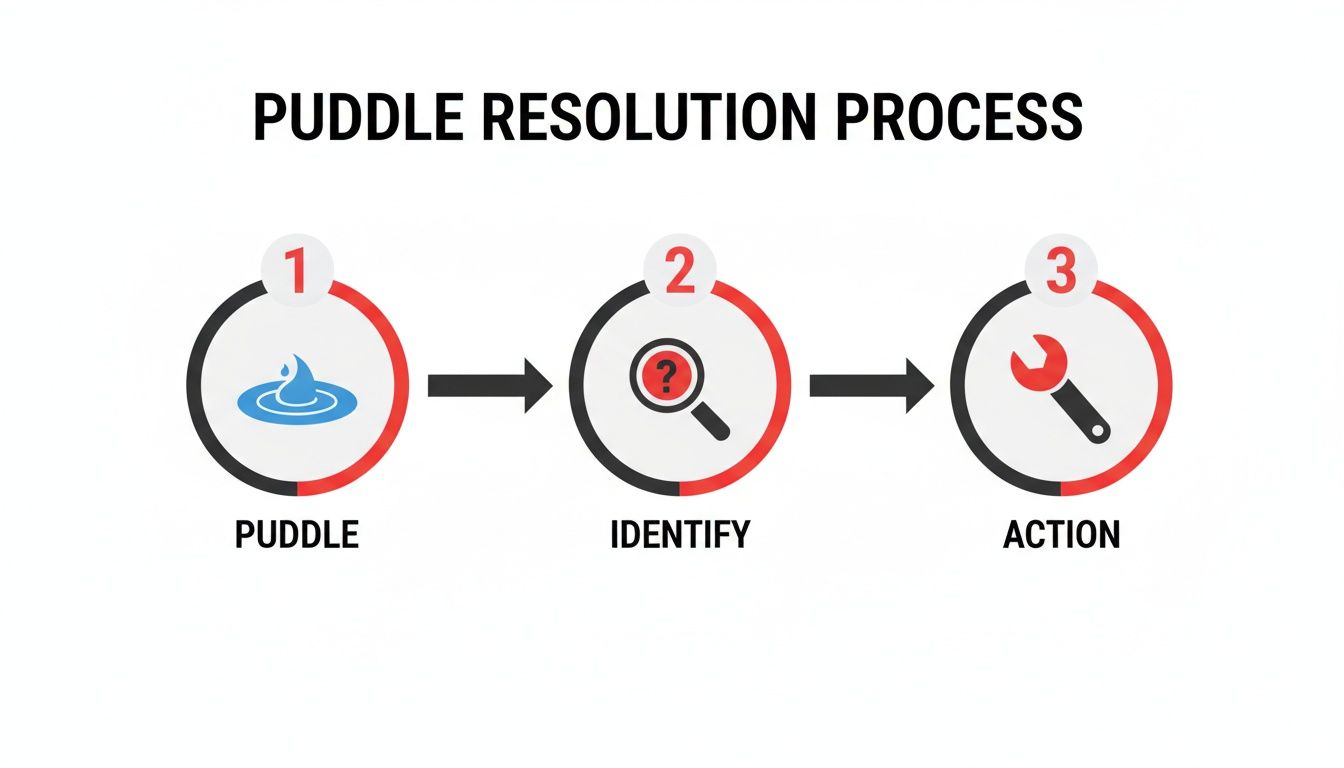
Differentiating Between Fluid Leaks
Your vehicle contains several fluids that can leak. This reference table will help you distinguish between them.
Common Fluid Leaks: A Color and Location Guide
| Fluid Type | Color | Common Location | Potential Cause |
|---|---|---|---|
| Transmission Fluid | Bright Red or Dark Brown | Front/Middle | Failure of a seal, gasket, or fluid line. |
| Engine Oil | Light Brown or Black | Front of Engine | Worn gasket or seal. Most common leak. |
| Coolant | Green, Pink, or Orange | Front of Engine | Leak in the radiator, a hose, or water pump. |
| Brake Fluid | Clear to Yellowish-Brown | Near Wheels/Under Pedal | Critical safety risk. Cease driving immediately. |
| Power Steering Fluid | Reddish or Light Brown | Front of Engine | Leak in the power steering pump or hoses. |
This table allows for a quick assessment based on the physical evidence you collect on the cardboard.
Checking Your Transmission Fluid Level
Another definitive sign of a leak is a low fluid level. If your vehicle is equipped with a transmission fluid dipstick (many modern cars have sealed systems), checking the level is an excellent way to confirm fluid loss.
For an accurate measurement, the engine must be warm and running, with the vehicle in Park on level ground. Locate the dipstick—often marked with a red or yellow handle—remove it, wipe it clean with a cloth, and reinsert it fully. Remove it a second time to read the level.
The dipstick will have markings for "Hot" and "Cold" ranges. If the fluid is below the "Hot" mark while the engine is warm, a leak is present. For a more detailed walkthrough, consult our guide on how to check transmission fluid level. Early detection can prevent the need for major transmission repair.
Common Causes of Transmission Leaks and Their Consequences
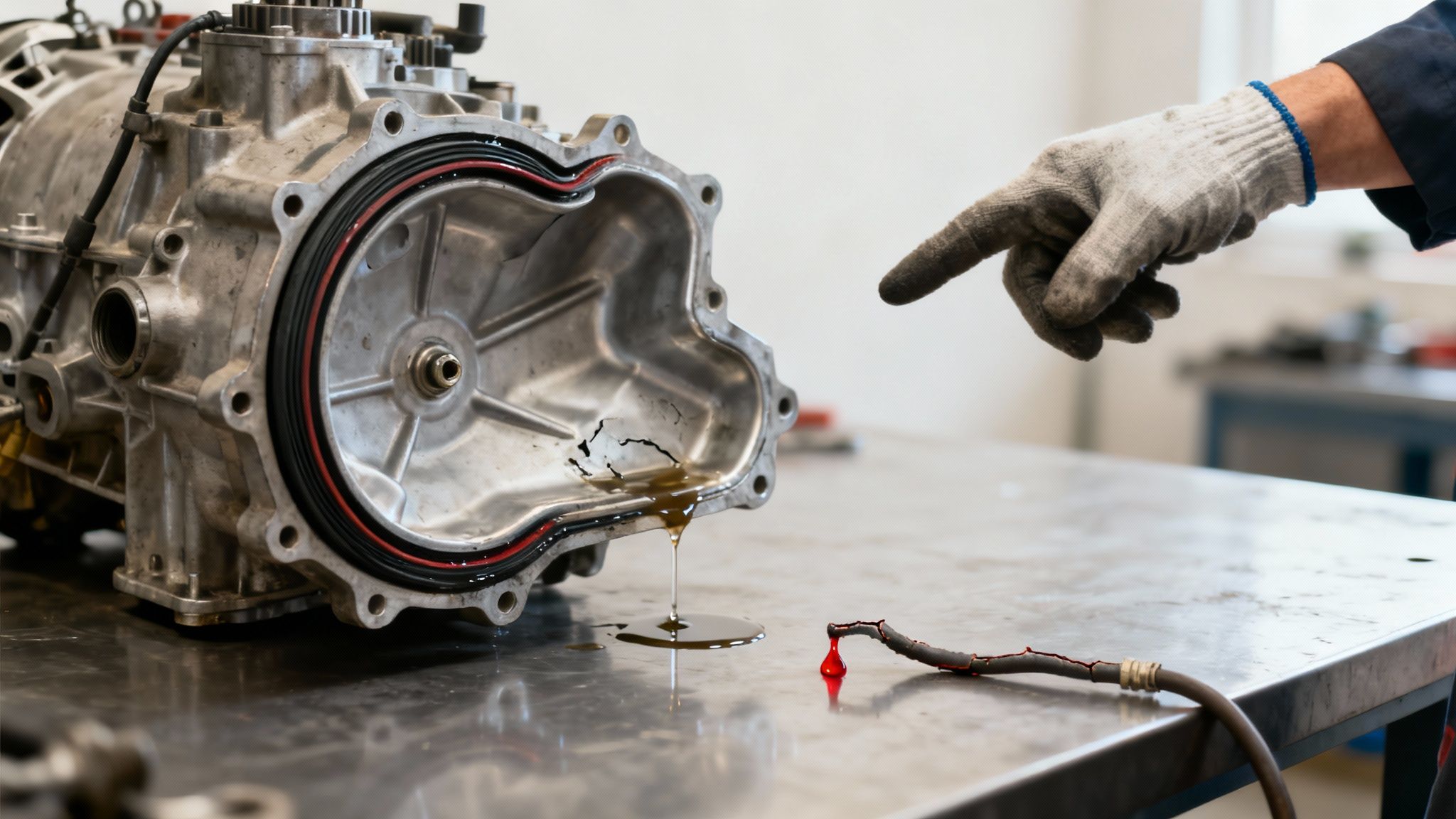
You have identified a puddle of reddish fluid. The next crucial question is determining its origin. Most transmission leaks can be traced back to a few common points of failure.
A transmission functions as a sealed hydraulic system, much like residential plumbing, with lines, seals, and a pan designed to circulate fluid precisely. A breach in this system, however small initially, will inevitably lead to significant damage if not addressed.
Degradation of Seals and Gaskets
The most frequent cause of transmission fluid leaks is the natural degradation of materials over time. Your transmission contains numerous rubber and cork seals and gaskets that form a barrier between metal components. After years of exposure to heat, high pressure, and vibration, these materials become brittle, crack, and shrink.
When a seal fails, pressurized fluid finds an escape path. A slow drip will invariably worsen. The primary seals to inspect are:
- Pan Gasket: This seals the transmission fluid pan at the bottom of the unit.
- Output Shaft Seal: This prevents fluid leakage where the driveshaft connects.
- Input Shaft Seal: This seals the connection point between the transmission and the engine.
Failure of any of these components will result in the tell-tale red stain on your driveway.
Physical Damage to Transmission Components
Another prevalent cause is physical impact. Driving over a speed bump too quickly, hitting a deep pothole, or striking road debris can crack the transmission pan—the metal reservoir at the bottom of the transmission.
Such impacts can also damage the fluid lines, which function like arteries, carrying fluid to and from the radiator for cooling. A cracked pan or a ruptured fluid line is a serious breach that requires immediate repair.
A Malfunctioning Torque Converter
In an automatic transmission, the torque converter connects the engine's power to the transmission. It contains its own internal seals and can develop micro-cracks in its housing due to stress or manufacturing defects. Leaks originating from the torque converter typically appear at the very front of the transmission, directly behind the engine.
Neglecting a transmission leak leads directly to catastrophic failure. Low fluid levels cause intense friction and heat, which can warp metal components, burn out clutch packs, and destroy the transmission internally. A simple seal replacement costing a few hundred dollars can escalate into a complete rebuild costing thousands.
The issue of a car leaking transmission fluid is so common that it has spawned a large market for temporary solutions. The transmission stop leak market is valued at USD 1.29 billion in 2024, as vehicle owners seek short-term remedies. You can review the global impact of transmission fluid leaks to appreciate the scale of this problem.
However, this is not merely a financial concern; it is a matter of safety. A failing transmission can unexpectedly slip out of gear or cause a complete loss of power while driving, creating a hazardous situation. Proactive maintenance ensures your vehicle remains reliable and, most importantly, safe.
Repair Options: DIY Solutions vs. Professional Service
Having confirmed that your car is leaking transmission fluid, you must decide on a course of action. The appropriate choice depends on the severity of the leak and your mechanical aptitude.
A DIY repair may seem appealing for a minor issue. For instance, if the leak originates from the transmission pan, the pan bolts may have loosened due to engine vibration. In this case, carefully tightening the bolts to the manufacturer's specified torque might resolve the issue.
Another common DIY approach for very small leaks is using a stop-leak additive. These products are formulated to recondition and swell old, brittle seals, potentially closing a small gap. However, it is crucial to understand that these are temporary measures and will not fix a cracked seal or a damaged pan.
When to Engage a Professional Technician
While a simple fix is ideal, most transmission leaks require professional expertise. A certified technician utilizes advanced diagnostic equipment to pinpoint the exact source of the leak, ensuring an accurate and effective repair.
A professional repair provides a level of assurance that a DIY fix cannot match. It guarantees the use of correct, high-quality parts and adherence to industry standards, safeguarding your transmission's long-term health and your personal safety.
Attempting a complex repair without the proper tools or knowledge can exacerbate the problem, turning a minor issue into a major, costly failure. For example, improper seal installation or over-tightening a bolt can cause more damage than the original leak.
The Importance of Expert Diagnostics
Identifying the true source of a transmission fluid leak is often a process of elimination where experience is invaluable. A professional mechanic can distinguish between a simple gasket failure and a more severe internal problem.
Professional service offers several advantages:
- Specialized Equipment: Technicians have access to vehicle lifts, pressure testers, and diagnostic scanners not found in a typical home garage.
- Accurate Diagnosis: They possess the expertise to correctly identify the failing component, whether it is a pan gasket, an axle seal, or a cracked torque converter.
- Correct Fluid Application: They ensure your vehicle receives the exact type of transmission fluid specified by the manufacturer. Using the wrong fluid can cause catastrophic damage.
Ultimately, diagnosing transmission issues can be complex. While understanding the signs is a valuable first step, which you can learn more about in our guide on how to diagnose transmission problems, consulting a professional is always the safest and most reliable course of action.
Maintaining a Healthy, Leak-Free Transmission
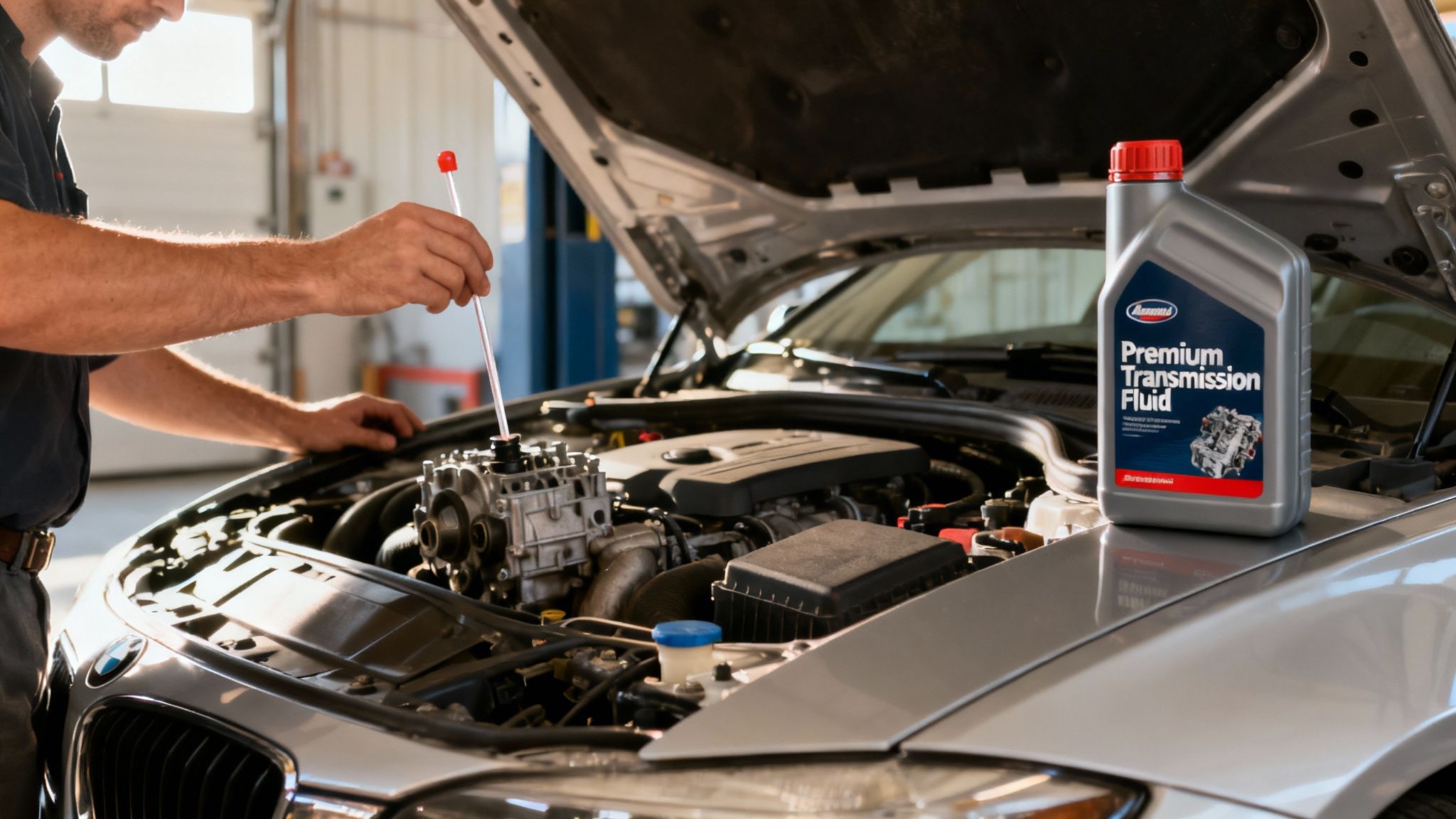
The most effective way to manage a transmission fluid leak is to prevent one from occurring. Proactive maintenance is essential for protecting this complex system and avoiding significant repair costs.
Think of it as preventative healthcare for your vehicle. Consistent, simple maintenance keeps seals, gaskets, and internal components in optimal condition, ensuring the system remains sealed and operates as designed.
The Role of Regular Maintenance in Prevention
Regarding leak prevention, nothing is more effective than routine fluid service. Over time, the heat and friction within the transmission degrade the fluid, reducing its ability to lubricate and cool effectively. Old, contaminated fluid can cause seals to harden and become brittle, leading to cracks and failure.
For most modern vehicles, a transmission fluid and filter change is recommended every 60,000 to 100,000 miles. Adhering to this service interval ensures your transmission is always protected by fresh, clean fluid. If you are unsure of your vehicle's requirements, our guide on when to change transmission fluid provides detailed information.
Using the specific type of transmission fluid recommended by your vehicle's manufacturer is not merely a suggestion—it is a requirement. The wrong fluid can cause severe internal damage and can lead to premature seal failure.
Additionally, avoid overfilling the system. Excess fluid creates high internal pressure that can force its way past even healthy seals, creating a new leak.
Smart Driving Habits to Minimize Wear
Your driving style significantly influences your transmission's longevity. Aggressive maneuvers, such as rapid acceleration from a stop, place immense stress on the system, generating excess heat that accelerates component wear.
Consider adopting these simple habits to extend transmission life:
- Accelerate Smoothly: Avoid sudden, hard acceleration, which puts a heavy load on the transmission.
- Stop Completely Before Shifting: Always bring the vehicle to a full stop before shifting between Drive and Reverse.
- Adhere to Towing Limits: Never tow more weight than your vehicle is rated for. Overloading can cause the transmission to overheat and potentially blow a seal.
Implementing these driving practices reduces the daily wear and tear on your transmission. It is the best defense against leaks and will contribute to your vehicle's long-term reliability.
Frequently Asked Questions About Transmission Leaks
Discovering a red fluid leak often leads to many questions. Here are clear, educational answers to the most common concerns.
Is It Safe to Drive with a Leaking Transmission?
Driving with a known transmission leak is a significant risk. While a very minor seep might allow you to drive a short distance to a repair shop, continued operation is ill-advised. The transmission is being deprived of the fluid it requires for cooling and lubrication.
This can quickly lead to overheating, gear slippage, and severe internal damage, transforming a small repair into a multi-thousand-dollar transmission replacement. For reasons of both safety and cost-effectiveness, it is not safe to continue driving.
What is the Typical Cost to Repair a Transmission Leak?
The repair cost is directly related to the source and complexity of the leak.
- Minor Adjustments: A simple fix like tightening a loose pan bolt could cost under $100.
- Common Repairs: Replacing a leaking transmission pan gasket or an external seal typically costs between $150 and $400.
- Major Repairs: If the leak originates from a cracked torque converter or a front pump seal, which requires removing the transmission, the cost can exceed $1,000.
Is it Economically Viable to Fix a Leak on an Older Vehicle?
In nearly all scenarios, yes. Repairing a leak is invariably more cost-effective than replacing the entire transmission, a procedure that can easily cost $2,500 to over $5,000.
Preserving the operational health of your existing transmission is a prudent investment, even in an older vehicle. It maintains the car's reliability and helps preserve its resale value.
Ignoring a leak only guarantees that a more catastrophic and expensive failure will occur in the future. The most logical step is to obtain a professional diagnosis to understand the available repair options.
If you have detected a leak or have concerns about your transmission's health, do not postpone action. Bring your vehicle to the ASE-certified technicians at Express Lube & Car Care in Plano for a prompt, accurate diagnosis and expert repair service. Learn more at https://www.expresslubeplano.com.