

A dead car battery is a common issue, but the solution involves more than just a simple fix. Understanding the principles of how to properly and safely charge your car battery is an essential piece of automotive knowledge. This guide provides a detailed, step-by-step process to ensure you can manage this task effectively, protecting both yourself and your vehicle's complex electrical systems.
The Critical Role of the 12-Volt Battery in Modern Vehicles
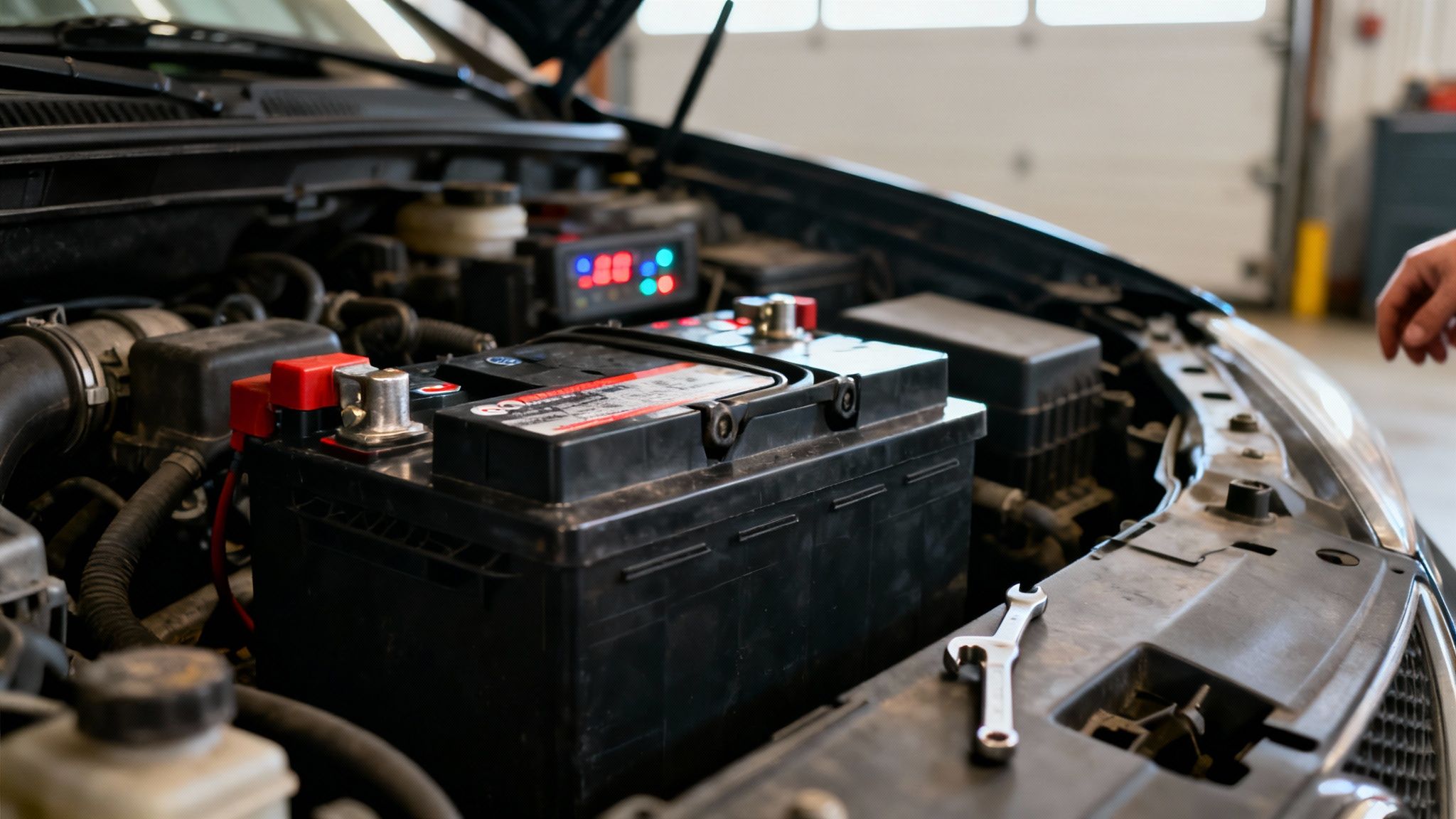
The 12-volt battery serves as the foundational power source for your vehicle's entire electrical architecture. Its primary function is to provide the high current needed to turn the starter motor, but its responsibilities extend far beyond ignition. It powers the engine control unit (ECU), fuel injectors, onboard diagnostics, and all critical safety systems like airbags and ABS. When the battery fails, the entire vehicle becomes inoperative.
Environmental factors, such as the intense Texas heat common in the Plano area, can accelerate battery degradation and shorten its operational lifespan. While a jump-start provides a temporary solution, it can introduce a sudden voltage surge that may damage sensitive electronics. For modern vehicles, a controlled, steady charge is the recommended method for restoring a depleted battery.
The Shift Toward Advanced Charging Methodologies
The automotive industry has seen a significant shift away from rudimentary jump-starts toward more sophisticated, controlled charging protocols. Between 2018 and 2023, battery-related issues became a leading cause of roadside assistance calls, representing 28% of all breakdowns. This trend has driven a greater focus on proactive battery maintenance.
With the proliferation of electric vehicles and complex start-stop systems, even the conventional 12-volt lead-acid battery requires a precise charging approach. It is a known fact that overcharging by as little as 0.2–0.3 volts can reduce a battery's service life by up to 50%. This risk is amplified in high-temperature environments. You can explore more about the evolution of vehicle power systems to understand these changes.
This guide is structured to provide the technical knowledge needed to manage your battery's health, safeguard its intricate systems, and recognize when professional intervention is required.
A dead battery is not merely an inconvenience; it is a diagnostic indicator. Performing regular battery maintenance, including proper charging, is a key preventative measure for ensuring vehicle reliability.
Correctly charging your battery not only restores its function but also contributes to the longevity of this crucial component, preventing premature replacement costs and the disruption of an unexpected breakdown.
Establishing a Safe Workspace: Essential Pre-Charging Protocols
Before connecting any charging equipment, a thorough preparation of the battery and the surrounding environment is the most critical phase of the process. This preparatory work ensures safety and effectiveness. A car battery contains corrosive sulfuric acid and can emit flammable hydrogen gas during charging, making adherence to safety protocols paramount.
Begin with a detailed visual inspection of the battery itself. Scrutinize the casing for any structural anomalies.
A bulging or swollen battery case indicates a dangerous internal pressure buildup, often from overheating or an internal short. Similarly, any cracks or signs of leakage present an immediate hazard due to the corrosive nature of the electrolyte. If any of these conditions are observed, do not proceed with charging. The battery is compromised and requires professional replacement.
Preparing the Battery and Your Environment
If the battery casing is intact, the next step is to ensure a clean, low-resistance electrical connection. The battery terminals—the positive (+) and negative (-) posts—are prone to corrosion, which appears as a white or greenish crystalline deposit. This corrosion acts as an insulator, impeding the flow of current and preventing an effective charge.
This buildup can be neutralized and removed using a simple paste of baking soda and water applied with a stiff wire brush. Achieving a clean, metallic surface on the terminals is essential for optimal electrical contact. For a detailed procedure, consult our guide on how to properly clean car battery terminals.
Safety is not an option; it is a requirement. Allocating 60 seconds to don proper Personal Protective Equipment (PPE) can prevent serious injury. Always handle a battery with the assumption that it is live.
Finally, assess your work area. Charging must be conducted in a well-ventilated space, such as an open garage or outdoors. The electrochemical reaction during charging produces hydrogen gas, which is highly flammable. Adequate ventilation is crucial to disperse this gas and prevent the creation of a hazardous, combustible atmosphere.
Your safety equipment checklist should include:
- Safety Glasses: Essential for protecting eyes from potential acid splash or sparks.
- Gloves: Use acid-resistant, insulated gloves to protect hands from both chemical exposure and electrical current.
- Well-Ventilated Area: Ensure a constant flow of fresh air to dissipate hydrogen gas.
By completing these steps, you establish a controlled, safe environment, ready for the charging process to begin.
Proper Procedure for Connecting and Charging a Car Battery
With the preliminary safety checks complete, you can proceed to the core task: connecting the charger and initiating the charge. Adhering to the correct connection sequence is mandatory to prevent electrical arcing and ensure a successful charge.
First, identify the positive (+) and negative (-) terminals on the battery. These are typically marked with corresponding symbols and often color-coded, with red for positive and black for negative. Ensure these markings are clean and clearly visible.
This diagram illustrates the fundamental safety workflow—inspect, clean, ventilate—which must be completed before any charging equipment is attached.
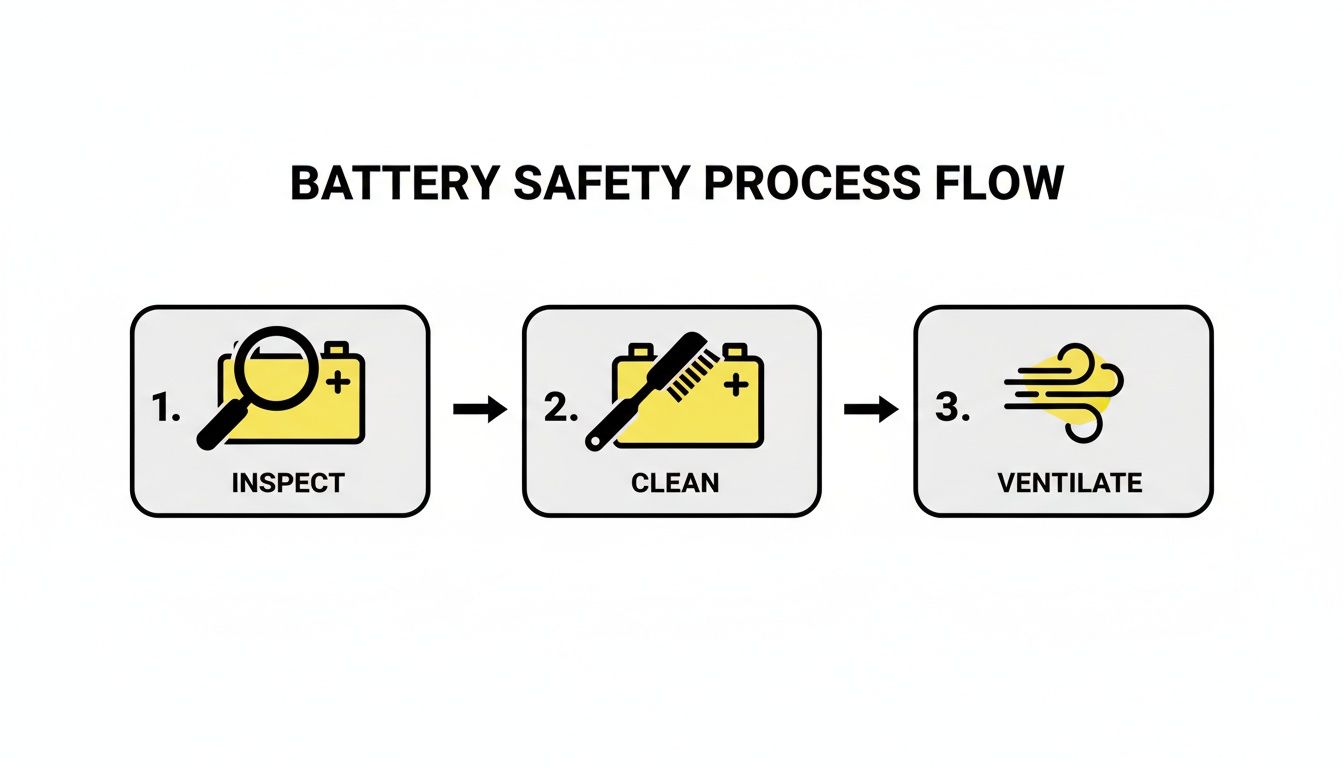
This systematic approach reinforces that a successful charge is predicated on establishing a safe and prepared foundation.
The Professional Connection Sequence
With the charger unplugged from the AC outlet, follow this precise sequence to eliminate the risk of sparks. As car batteries vent flammable hydrogen gas, this order of operations is a critical safety measure.
-
Positive Clamp to Positive Terminal: Connect the red (positive) clamp from the charger securely to the positive (+) terminal of the battery. Ensure a firm, metal-to-metal connection.
-
Negative Clamp to Chassis Ground: Connect the black (negative) clamp to a solid, unpainted metal point on the vehicle's chassis or engine block. A large bolt head is an excellent choice. This action is known as grounding the connection.
The reason for grounding the negative connection away from the battery is to isolate the final point of circuit completion. Any small spark that may occur upon connection will happen far from the hydrogen gas venting from the battery, significantly mitigating the risk of ignition.
Grounding the negative clamp to the chassis instead of the negative battery terminal is a foundational safety practice. This detail is crucial for preventing accidents and protecting the sensitive electronic control modules in modern vehicles.
Setting Charger Parameters and Monitoring the Process
Once the clamps are securely connected, you may plug the charger into a wall outlet and turn it on. At this stage, you must select the appropriate settings. Most chargers offer options for voltage (typically 12V for passenger vehicles) and amperage, which determines the charging rate.
For optimal battery health and longevity, a low-amperage, slow charge is always preferable. A high-amperage "fast charge" can generate excessive heat, causing stress to the battery's internal lead plates and potentially shortening its life. A controlled charge rate of 2 to 4 amps is much healthier for the battery's chemistry, even though it requires more time.
Modern "smart" chargers automate this process by monitoring the battery's state of charge and automatically transitioning to a maintenance or "float" mode to prevent overcharging. If using a manual charger, you must monitor it periodically to avoid damaging the battery.
Disconnecting in Reverse Order
After the charging cycle is complete, the disconnection process is simply the reverse of the connection sequence. This ensures the final disconnection, which could also create a spark, occurs away from the battery.
- Turn off and unplug the battery charger from the AC wall outlet.
- Remove the black (negative) clamp from the chassis ground point.
- Finally, remove the red (positive) clamp from the positive battery terminal.
By following these precise steps, you can execute a safe and effective battery charge consistently.
Diagnosing Common Battery Charging Complications
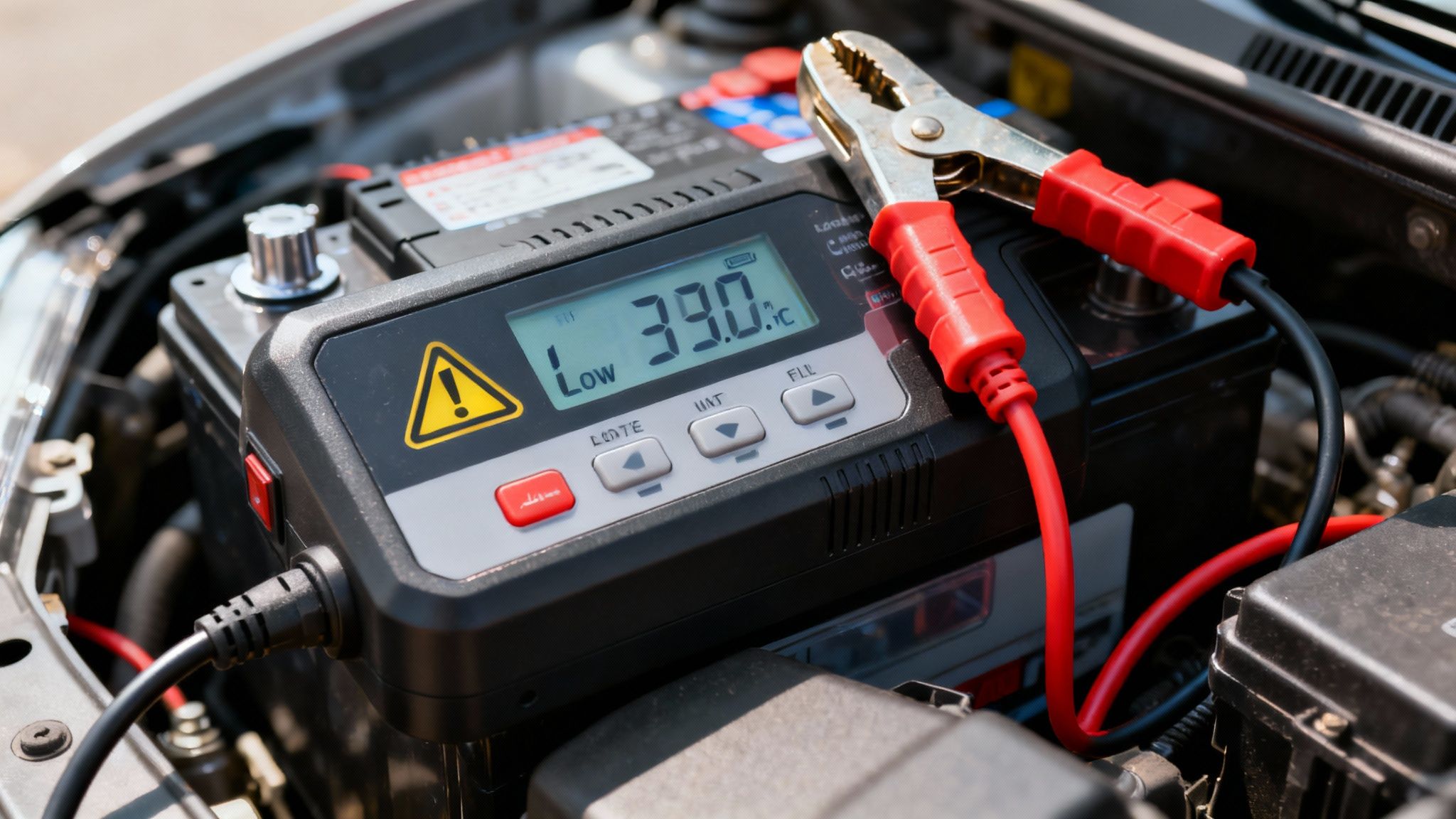
It is not uncommon to encounter issues during the charging process. A charger that fails to initiate or displays an error code is often the first indication of a deeper problem with the battery or charging system.
A frequent cause for a charger's failure to engage is a deeply discharged battery. If the battery's voltage has dropped below a certain threshold—often under 10.5 volts—many modern smart chargers will not recognize that a battery is connected as a safety precaution. Another common cause is an internal failure, such as a shorted or dead cell, which renders the battery physically unable to accept a charge.
The Battery Fails to Retain a Charge
A particularly common scenario involves charging a battery to full capacity, only for it to be depleted again within hours or a day. This is a definitive symptom of a battery that is no longer viable or an issue within the vehicle's electrical system.
When a battery cannot hold a charge, one or more of the following is typically the cause:
- Sulfation: The formation of hard lead sulfate crystals on the battery's plates, which inhibits the electrochemical reaction necessary to store energy.
- Age: In a high-heat climate like Plano, a battery's typical lifespan is 3-5 years. Beyond this point, its ability to hold a charge diminishes rapidly.
- Parasitic Drain: A component in the vehicle is drawing current when the ignition is off, such as a faulty module or a stuck relay.
- Alternator Malfunction: The battery may be healthy, but the vehicle's alternator is failing to recharge it while the engine is running.
If a battery repeatedly requires recharging, the issue has transitioned from a simple power loss to a more complex diagnostic problem.
When a battery consistently fails to hold its charge, the situation requires a system-level diagnostic approach. Continually recharging a failing battery is a temporary measure that can mask a more significant underlying electrical fault.
Recognizing the Dangers of Overcharging
Overcharging is a hazardous condition that can permanently damage a battery and create a significant safety risk. While modern chargers have built-in safeguards, the risk remains with manual chargers or if the battery has an internal defect. The warning signs are distinct and require immediate action.
Listen for an audible hissing or bubbling sound from within the battery, which indicates the electrolyte is boiling. You may also detect a pungent, "rotten egg" smell; this is hydrogen sulfide gas, which is both toxic and flammable.
If you observe either of these phenomena, immediately disconnect the charger and ventilate the area thoroughly. The battery is critically compromised and should not be charged again. It requires professional handling and disposal.
Knowing When to Consult a Professional Technician
While the ability to charge a car battery is a valuable skill, it is equally important to recognize the limitations of a DIY approach. Certain symptoms indicate that a simple recharge is insufficient and that professional diagnostic service is necessary.
Any visible physical damage to the battery—such as a cracked case, leaking electrolyte, or a distorted, bulging shape—is a clear sign of internal failure. A battery in this condition is unsafe and must be handled by a professional.
Furthermore, a battery that repeatedly fails to hold a charge is no longer a power storage device; it is a failed component that requires replacement and further investigation into the vehicle's charging system.
Identifying the Root Cause
When these signs are present, expert diagnosis is essential. At Express Lube & Car Care, our ASE-certified technicians perform a comprehensive electrical system analysis to determine the root cause of the battery issue.
This is not a superficial inspection. Our diagnostic service includes:
- Battery Load Test: To verify the battery's ability to deliver sufficient cranking amperage under load.
- Alternator Output Test: To confirm the charging system is functioning correctly while the engine is running.
- Starter Draw Test: To ensure the starter motor is not drawing excessive current, which can prematurely drain a battery.
A dead battery is frequently the symptom, not the cause. A common misdiagnosis is to replace the battery when the actual fault lies with a failing alternator, leading to a recurring problem.
The complexity of modern automotive electronics, with vehicles containing upwards of 50 control modules, means that an improper charge or a failing battery can trigger numerous fault codes or even engage a "limp-home" mode. The demanding conditions in Texas, with high ambient temperatures and frequent stop-and-go driving, place additional stress on these systems, making accurate testing imperative.
For a precise diagnosis and professional battery replacement service, our Plano-based team has the specialized equipment and expertise required. We are currently offering $20 off batteries with our Express Lube Signature battery service. Avoid guesswork and ensure your vehicle's entire electrical system is operating correctly.
Frequently Asked Questions About Car Battery Charging
It is natural to have questions before undertaking this procedure. Below are answers to the most common inquiries we receive from drivers in the Plano area.
How Long Does It Take To Charge A Car Battery?
The charging time is a function of two main variables: the battery's state of discharge and the charger's amperage output. While there is no universal answer, we can provide general timeframes.
For optimal battery longevity, a slow charge at a low rate of 2-4 amps is recommended. For a fully discharged battery, this process can take 12 to 24 hours. This method generates minimal heat, reducing stress on the battery's internal components, which is particularly beneficial in hot climates.
For a faster charge, a higher setting of 10 amps can typically restore a battery in 3 to 6 hours. However, frequent use of high-amperage charging can contribute to a shorter overall battery lifespan.
Can The Battery Remain Connected To The Vehicle During Charging?
Yes, it is standard and safe practice to charge the battery while it is installed in the vehicle, provided you use a modern smart charger and follow the correct connection protocol.
The critical factor for protecting the vehicle's electronics is the connection sequence:
- Connect the red (positive) clamp to the positive battery terminal first.
- Then, connect the black (negative) clamp to a chassis ground point—a solid, unpainted metal part of the frame.
This grounding procedure ensures that any potential electrical arc is isolated from the battery and the vehicle's sensitive electronic modules.
What Is The Difference Between A Battery Charger And A Battery Maintainer?
These terms are often confused, but the tools serve distinct purposes. A charger is designed for recovery, while a maintainer is designed for preservation.
A battery charger is engineered to deliver a substantial electric current to recharge a depleted or dead battery. In contrast, a battery maintainer (or "trickle charger") supplies a very low, regulated current (typically 1-2 amps) to offset the natural self-discharge of a healthy, fully charged battery during long-term storage.
A maintainer lacks the power to revive a dead battery, but it is the ideal tool for preserving the charge in a vehicle that is used infrequently.
Is It Harmful To Repeatedly Jump-Start My Vehicle?
Yes, repeated jump-starting is detrimental to your vehicle's health. A jump-start should be considered an emergency measure only. The sudden influx of high voltage can shock and damage sensitive electronic components, including the ECU and infotainment systems.
Crucially, a jump-start does not recharge the battery; it only provides enough power to start the engine. This forces the alternator to work excessively hard to try and replenish a deeply discharged battery, placing significant strain on the component and potentially causing premature failure.
Frequent reliance on jumper cables is a clear indicator of a systemic issue—either the battery has failed, the alternator is faulty, or there is a parasitic electrical drain that requires professional diagnosis.
If you are experiencing persistent battery issues or prefer professional service, the team at Express Lube & Car Care is here to assist. Our technicians in Plano will perform a complete diagnostic analysis to identify the true source of the problem, ensuring a reliable and lasting solution. Visit us for prompt, expert service or learn more at https://www.expresslubeplano.com.