

A high-pitched squeal on startup or acceleration almost always means the belt is slipping or glazed, while a rhythmic chirp at idle points to pulley misalignment or a failing bearing. A grinding or slapping sound is more serious and often signals a seized pulley or a belt starting to delaminate. Squeals and chirps usually allow a short drive to a shop like Express Lube & Car Care; grinding or slapping does not, according to guidance from Dayco and Gates.
TL;DR:
- A high-pitched squeal indicates slipping or glazing, usually from a worn or contaminated belt, and can often be fixed with a simple belt replacement.
- Rhythmic chirping at idle typically signals pulley misalignment or bearing wear, which requires detailed inspection of pulleys and tensioners.
- Grinding or slapping sounds suggest more severe issues like seized pulleys or belt delamination and demand immediate inspection or towing.
- Proper diagnosis involves checking conditions during specific engine loads, performing a water spray test, and inspecting pulley alignment, tension, and belt wear visually and manually.
- Regular visual belt inspections, avoiding belt dressings, and addressing pulley or tensioner issues early can prevent sudden failure and costly repairs.
Table of Contents
- Squeal, Chirp, or Grind? Learning to Read Belt Noise
- What’s Actually Causing the Noise
- Diagnosing the Belt Noise Step By Step
- Fixing It Yourself vs. Calling in a Professional
- When to Stop Driving and When You Can Wait
- Keeping Belt Noise From Coming Back
- What Express Lube & Car Care Checks Under the Hood
- A Mechanic’s Honest Take on Belt Noise Calls
- Get Your Belt Noise Checked Without an Appointment
- Sources
- FAQ
Squeal, Chirp, or Grind? Learning to Read Belt Noise
Every serpentine belt noise has a signature, and once you learn to hear the difference, half your diagnostic work is already done. A squeal is a high, sustained tone, the sound most drivers associate with belt trouble in general. It shows up most on cold starts or under a sudden load, like flooring the accelerator or cranking the wheel to full lock with the A/C compressor engaged.
A chirp behaves differently. It is short, repetitive, and often most noticeable at idle, then it speeds up as engine RPM climbs. That rhythm is the tell: a chirp that matches engine speed almost always traces back to a pulley, not the belt itself. Dayco notes that squealing tends to correlate with load events like acceleration, while chirping is common at idle and scales with RPM.
Grinding or a heavy slapping sound is in a different category entirely. This usually means metal on metal, a seized bearing, or a belt that has started separating.
- Squeal on startup or acceleration: points to slip or a glazed belt surface
- Chirp at idle that speeds up with RPM: points to a misaligned pulley or worn bearing
- Squeal only with steering at full lock: often power steering pump load, sometimes power steering fluid contamination on the belt
- Grinding or slapping under the hood: pulley bearing failure or belt delamination, treat as urgent
What’s Actually Causing the Noise
Pulley misalignment is one of the most common root causes of chirping. When a pulley sits even slightly out of plane, the belt ribs scrub against the pulley wall instead of riding smoothly in the groove. That asymmetric contact creates the vibration you hear as a chirp, and Gates TechZone identifies it as a leading driver of accessory belt drive noise.
Tensioner problems create a different failure pattern. A weak spring or a tensioner that has lost its damping can’t hold consistent pressure on the belt, so the belt slips under load and eventually glazes. Glazing hardens the belt’s rubber compound, giving it a shiny, glassy look and killing the grip it needs against the pulleys, which produces that classic squeal.
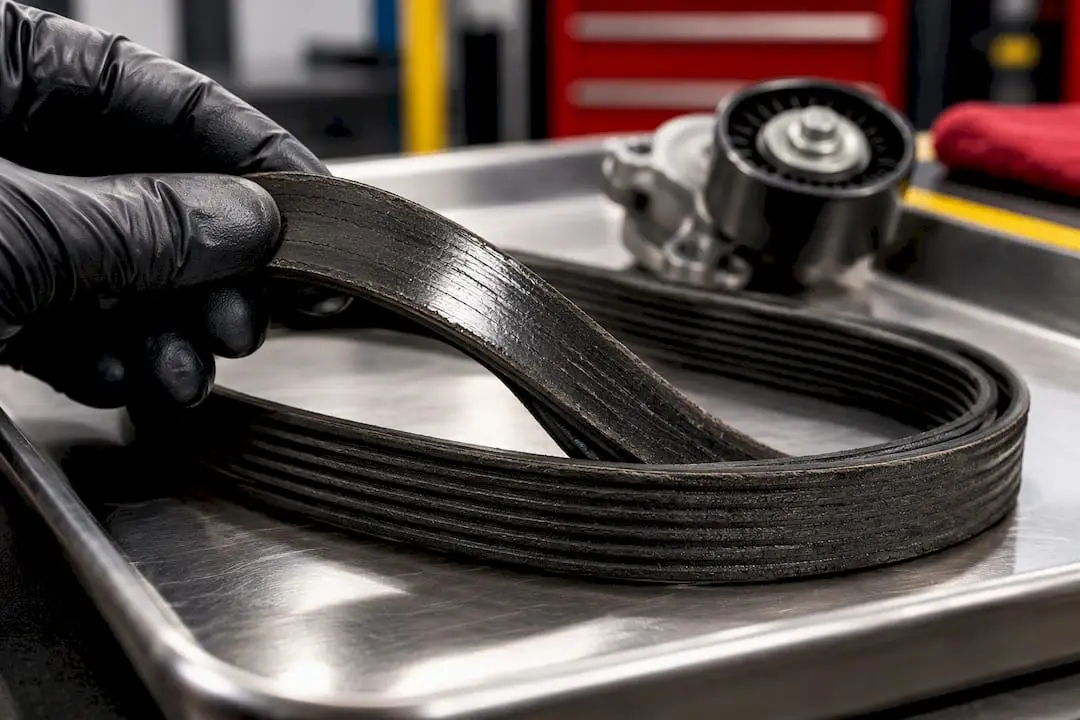
Bearing wear inside the alternator, water pump, or A/C compressor clutch shows up as chirping or grinding depending on severity. These bearings spin constantly whenever the engine runs, and once they start to fail, the noise usually gets worse quickly rather than staying stable.
Contamination matters too. Oil, coolant, or power steering fluid on the belt kills traction and often causes a slipping squeal that sounds a lot like simple wear.
- Pulley misalignment: rib scrubbing, usually a chirp
- Tensioner degradation: slipping and glazing, usually a squeal
- Bearing wear: chirp progressing to grind
- Fluid contamination: slip-related squeal, belt should be replaced, not cleaned
Pro Tip: Never reach for belt dressing spray to quiet a squeal. Gates notes that dressings mask the real problem and accelerate compound failure, leaving you with a belt that’s both noisy and weaker than before. Modern EPDM belt material also resists the visible cracking older belts showed, so a belt can be failing without looking obviously worn, which is why functional checks matter more than a visual glance.
Diagnosing the Belt Noise Step By Step
Before you do anything with the engine running, keep hands, hair, and loose clothing away from the belt and any spinning pulley. Start by noting exactly when the noise happens: cold start, full acceleration, steering lock, A/C on, or a mix. That detail alone narrows the list of suspects significantly.
- Confirm the conditions. Idle only, under load, or both? Does A/C or steering input change it?
- Run the water-spray test. With the engine idling, lightly mist the belt ribs with a spray bottle. Rick’s Free Auto Repair Advice outlines this as a core step in a practical diagnostic workflow: if the noise briefly quiets, you’re looking at a belt surface or tension issue.
- Watch the tensioner arm. With the hood open and engine running, observe whether the tensioner moves smoothly or flutters and bounces. Erratic movement suggests a worn tensioner.
- Look for visible belt jump or wobble on any pulley, which often means a bent bracket or a bearing that’s lost its precision.
- Remove the belt and spin each pulley by hand. Roughness, wobble, resistance, or grinding under manual rotation points straight to a bad bearing, independent of belt condition.
- Check for glazing, missing rib chunks, or fluid residue on the belt itself once it’s off the vehicle.
If the noise doesn’t change at all during the spray test, or gets slightly louder, the problem usually sits in a pulley or bearing rather than the belt. Belts that have logged over 50,000 miles show a meaningfully higher chance of glazing, so mileage is worth factoring into your read on the results.
Fixing It Yourself vs. Calling in a Professional
Swapping a serpentine belt is a reasonable DIY job for a lot of owners, provided you do three things right: match the exact part number for your engine, follow the routing diagram (usually on a sticker under the hood), and inspect every pulley the belt touches before you install the new one. Installing a fresh belt over a bad pulley just buys you a few quiet weeks before the noise comes back.
Tensioner and pulley replacement is a different story. These jobs often call for specific tools to compress spring-loaded tensioners safely, and they carry torque specs that matter more than they look like they should. Get the tension wrong and you’ll either shred the new belt early or leave it slipping just enough to squeal again. On manual-tension setups, the correct approach is to set initial tension, run the engine a few minutes to let the belt seat, then re-check and adjust per the manufacturer’s specified tension range rather than guessing by feel.
- Reasonable DIY: belt swap alone, with pulleys already confirmed good
- Better left to a shop: tensioner replacement, pulley bearing replacement, alignment correction
- Never do: spray belt dressing to quiet a noise temporarily
Pro Tip: If a belt squeals right after a fresh install, don’t assume it’s defective. A brand-new belt squealing under load is often a tensioner that never fully seated, which is worth a second look before you blame the part.
If you need to drive short distances to reach a shop, keep RPM low, avoid full steering lock, and skip the A/C if that’s when the noise is worse. That reduces load on the exact components most likely to be struggling.
When to Stop Driving and When You Can Wait
Grinding, slapping, or any sound that suggests the belt itself is coming apart means stop driving and arrange a tow or immediate inspection. A shredded serpentine belt can take out power steering, engine cooling, and charging all at once, since it’s the belt that drives all three, per Dayco.
- Stop now: grinding, slapping, or visible belt fraying
- Get inspected same day: repeated squeal under load, or squeal from a belt installed within the last week
- Schedule soon, drive gently meanwhile: a mild chirp at idle that isn’t getting worse, avoiding long highway trips until checked
Express Lube & Car Care’s inspections typically start with a visual belt and pulley check, a look at tensioner action, and pulley spin tests by hand, the same fundamentals outlined above.
Keeping Belt Noise From Coming Back
A quick visual check at every oil change catches most belt problems early, before they turn into a roadside issue. Depending on the vehicle, replacement intervals commonly fall somewhere in the 90,000 to 100,000 mile range, though driving conditions and belt material shift that window.
Watch for any fluid leaks near the belt path, since a small oil or coolant seep will contaminate a belt long before it fails outright. Checking tensioner movement and pulley runout during routine service catches the slow degradation that eventually turns into a squeal or chirp. Keeping a simple record of belt inspections and replacements makes the next technician’s job faster, and it’s worth reviewing our serpentine belt replacement guide for interval specifics tied to your driving pattern.
- Visual check at every oil change
- Watch for leaks near the belt path
- Confirm tensioner and pulley condition during service
- Track replacement history
What Express Lube & Car Care Checks Under the Hood
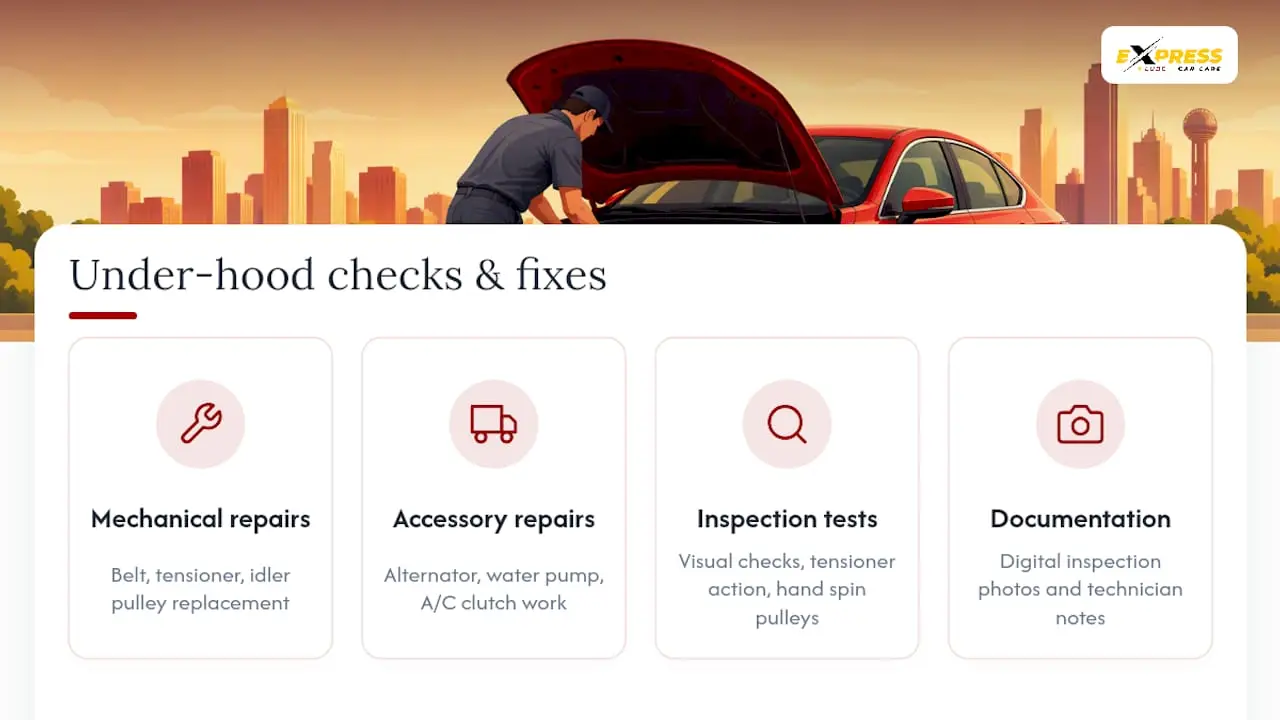
Technicians handle belt replacement, tensioner service, idler pulley work, and the accessory repairs tied to noisy belt drives, including alternator, water pump, and A/C clutch issues. Inspections include visual belt and pulley checks, tensioner action, and pulley spin tests by hand. Visual findings are provided through digital inspection photos and technician notes before any work begins.
A Mechanic’s Honest Take on Belt Noise Calls
The most common mistake we see isn’t a missed diagnosis, it’s a rushed one. Plenty of belts get replaced when the real problem was a tensioner or a bad pulley bearing all along, and the noise comes right back within weeks. Check the pulleys and tensioner first, every time, before you swap the belt. If something under the hood sounds wrong right now, our no-appointment service means you don’t have to wait to find out what it is.
— Express Lube & Car Care
Get Your Belt Noise Checked Without an Appointment
This shop offers no-appointment service as an alternative to scheduling repair visits days in advance, helping customers avoid long waits for diagnosis when belt noise occurs.

Technicians provide belt, tensioner, pulley, and accessory repairs with same-day service in most cases, supported by digital inspection photos that show what is causing the noise before any work begins. Browse our full engine and accessory repair services or head straight to our oil change and service page if you’re due for routine maintenance anyway. If the sound has you worried, stop by or book your visit at Express Lube & Car Care in Plano and get a straight answer the same day.
Sources
- Dayco | How to Fix Serpentine Belt Noise – North America | EN
- Gates TechZone | Diagnosing a noisy accessory belt drive
- Rick’s Free Auto Repair Advice | How to find the cause of serpentine belt noise
- UnderhoodService | Tech tip: Diagnosing a squealing serpentine belt
FAQ
What Does a Bad Serpentine Belt Sound Like?
A failing belt usually produces a high-pitched squeal on startup, acceleration, or when the A/C engages, caused by slipping or a glazed surface. A rhythmic chirp that speeds up with RPM more often points to a pulley or bearing problem rather than the belt itself, per Dayco.
Can I Drive With a Noisy Serpentine Belt?
A mild squeal or chirp usually allows a short, careful drive to a shop, keeping RPM low and avoiding full steering lock. Grinding, slapping, or any sign the belt is fraying means you should stop driving and arrange a tow instead.
What Is the Average Cost to Replace a Serpentine Belt?
Express Lube & Car Care doesn’t publish set repair pricing since costs depend on the vehicle and what else needs attention, like the tensioner or pulleys. Current service pricing is available directly through the Express Lube & Car Care site or during your visit.
Can I Spray WD-40 or Belt Dressing on a Serpentine Belt?
No. Belt dressings and similar sprays can quiet a squeal briefly, but they harden the belt compound, attract dirt, and shorten belt life, according to Gates TechZone. Any belt contaminated with oil or dressing residue should be replaced rather than treated.