
A lot of Plano drivers know this feeling. You’re heading down the Dallas North Tollway, the traffic is stop-and-go, the AC is working hard against the Texas heat, and then a warning light comes on. Or maybe you hear a squeal at the next light, feel a shudder when you brake, or notice the engine doesn’t sound quite right when you pull into your driveway.
That’s usually the moment people start searching for “complete auto service” and wondering what that means. Is it just an oil change with a fancy name? Is it a dealership package? Is it something you only need when the car is already in trouble?
The answer is simpler than it might seem. Complete auto service means looking at your vehicle as one connected machine instead of treating each problem like an isolated annoyance. That matters more today because vehicles are staying on the road longer. The average age of vehicles in the U.S. climbed to 12.6 years in 2024, which has increased the need for routine maintenance and repairs for the cars families and commuters drive every day, according to U.S. automotive service market analysis.
Your Guide to Navigating Car Care in Plano
A Plano commute can be rough on a vehicle. Short trips, long idling, sudden braking, potholes, summer heat, and packed parking lots all add wear in small ways that build up over time. Most drivers don’t notice that wear until the car starts asking for attention.

Why the term confuses so many drivers
People hear “full service,” “factory maintenance,” “inspection,” and “complete auto service” and assume they all mean the same thing. They don’t. An oil change handles one important need. A state inspection checks specific legal and safety items. A diagnostic visit focuses on a symptom.
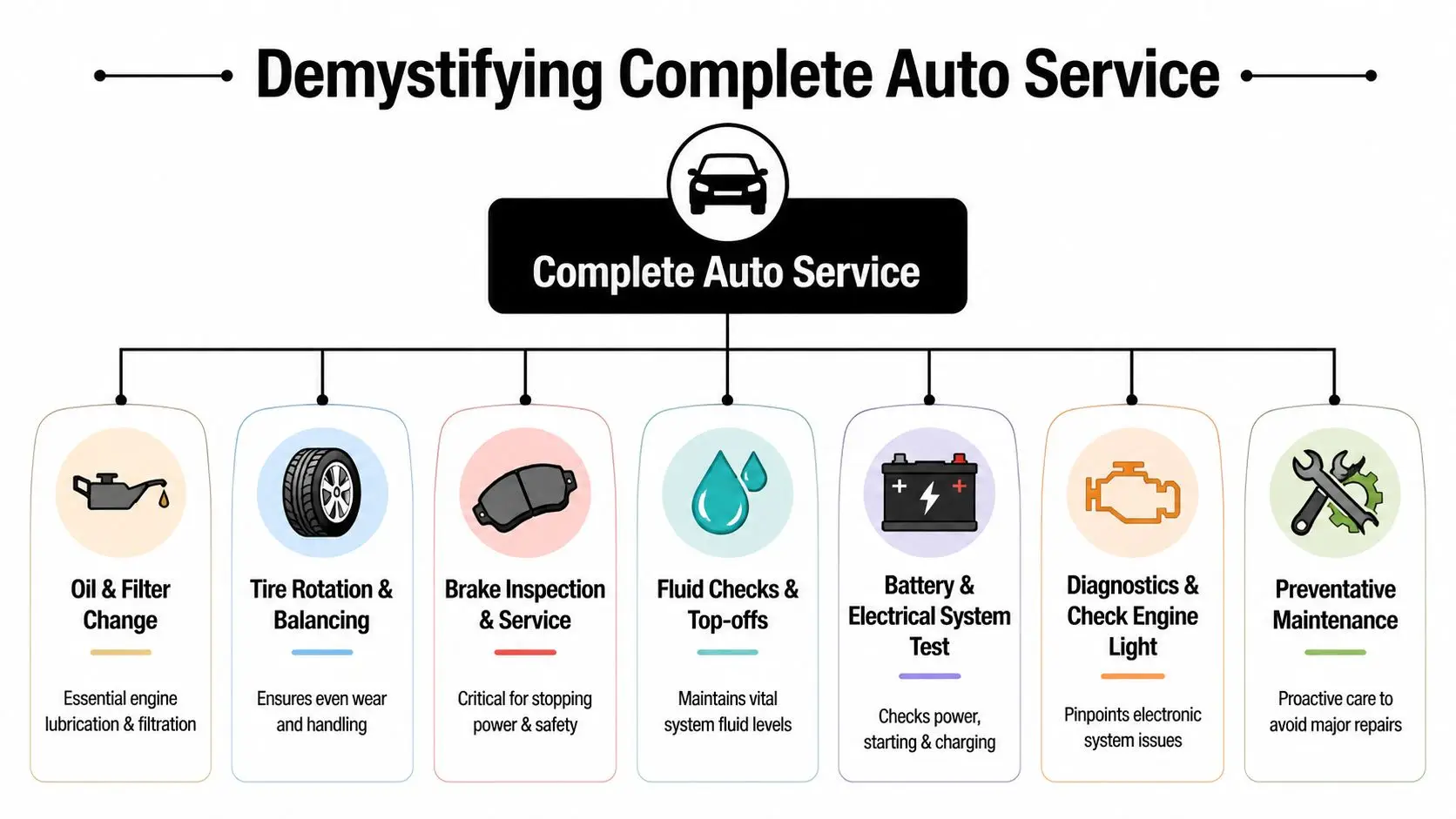
Complete auto service is broader. It’s closer to a full checkup for your vehicle. A technician looks at the systems that keep the car safe, cool, shifting properly, stopping properly, and running smoothly. That includes basics like oil and filters, but also brakes, battery condition, fluid levels, belts, hoses, and the warning signs of bigger trouble.
That’s why one small symptom shouldn’t be ignored. A light on the dash might point to something minor, but it can also signal a problem that affects fuel delivery, ignition, emissions, or transmission behavior. If you’re also sorting out what damage your insurance may or may not handle after a storm, break-in, or falling debris, this plain-English guide to coverage details for comprehensive insurance is useful because insurance and maintenance often get mixed up by accident.
A good shop doesn’t just clear a warning light. It explains what caused it, whether it’s urgent, and what happens if you wait.
What Plano drivers usually need most
Around here, drivers often want three things at once. They want the work done correctly, they want a straight explanation, and they don’t want to lose half a day over routine maintenance.
That’s reasonable. Modern vehicles have more sensors, tighter engine tolerances, and more specialized fluid requirements than older cars did. Even basic services matter because one neglected item can affect another. Old coolant can contribute to overheating. Dirty oil can increase engine wear. Worn brake components can affect stopping distance and rotor condition. Weak batteries can create strange electrical symptoms that feel bigger than they are.
For everyday drivers, complete auto service takes the mystery out of ownership. It turns “something feels off” into a checklist, a diagnosis, and a practical plan.
Demystifying Complete Auto Service What It Really Includes
The easiest way to understand complete auto service is to compare it to a thorough physical exam. A doctor doesn’t only listen to your heartbeat and send you home. They check several systems because the body works as a whole. Your car works the same way.
The engine basics that keep everything moving
Oil and the oil filter are the first things most drivers think about, and for good reason. Oil lubricates moving metal parts and carries heat away. The filter traps debris so it doesn’t keep circulating through the engine. If oil breaks down or gets contaminated, internal wear increases.
Air intake parts matter too. A complete auto service often includes checking the air filter, fuel delivery condition, and ignition components such as spark plugs. These systems work together. A clogged air filter can reduce oxygen flow by up to 10%, and worn spark plugs can cause misfires that increase fuel consumption by 3% to 5%, according to this explanation of full car service components.
If you want a good companion read for planning the right maintenance by vehicle and mileage, this guide on what maintenance your car may need lays out the common service categories drivers ask about.
A short visual can make this easier to picture:
The systems drivers forget until there’s a problem
Brakes are a big one. People usually notice brake service only after they hear grinding, squeaking, or feel vibration. But a complete auto service checks brake pad wear, rotor condition, brake fluid, and how evenly the vehicle stops. Brake fluid is hydraulic. If it’s low or contaminated, pedal feel and braking performance can suffer.
Battery and charging checks matter more than many drivers realize. A weak battery doesn’t always fail all at once. Sometimes it causes slow starts, dim lights, strange warning lights, or erratic electronic behavior. Testing the battery and charging system can prevent a no-start surprise on a busy morning.
The cooling system also deserves attention in Plano. Radiator condition, coolant level, hoses, clamps, fans, and the water pump all help control engine temperature. In summer traffic, that system has to work hard. If coolant is neglected or a hose starts failing, overheating can happen fast.
The bigger-ticket items hidden inside a routine visit
A true complete auto service also includes fluids beyond engine oil. That can mean transmission fluid, brake fluid, coolant, and power steering fluid where applicable. Technicians also inspect belts, hoses, suspension parts, and tire condition because these parts directly affect ride quality, steering feel, and safety.
Here’s a simple way to think about the major areas:
- Oil and filtration keep internal engine parts lubricated and cleaner.
- Brakes and tires control stopping, grip, and stability.
- Battery and electrical checks make sure the car starts and sensors communicate properly.
- Cooling and transmission service protect two of the most expensive systems in the vehicle.
- Diagnostics help identify what a warning light or unusual symptom means.
Practical rule: If one service affects heat, friction, or fluid pressure, it’s never “just a small thing” for long.
When drivers hear “complete auto service,” they sometimes worry it means a bundle of work they don’t need. A good service process does the opposite. It separates what needs immediate attention from what should be watched.
The Smart Driver Maintenance Schedule
Most car problems don’t start as emergencies. They start as delayed maintenance. That’s why a schedule helps. It removes guesswork and gives you a calm way to stay ahead of wear.
The exact timing depends on your make, model, engine, driving habits, and whether you spend a lot of time in stop-and-go Plano traffic. Your owner’s manual always comes first. After that, a technician can adjust the plan based on how you drive. For a broader planning tool, this routine car maintenance checklist is a helpful reference.
A simple maintenance rhythm
Some services come up often because they protect the systems that wear every day. Others are spaced farther apart but matter just as much because they keep the engine and driveline healthy over the long haul.
Here’s a practical overview many drivers can use as a starting point.
| Service Interval (Miles) | Key Services to Perform |
|---|---|
| Every 5,000 to 7,500 miles | Oil and filter change, tire rotation, fluid level check, visual brake inspection, battery and charging check if starting seems weak |
| Every 15,000 to 30,000 miles | Air filter inspection or replacement, cabin filter service if equipped, brake system review, tire condition check, belt and hose inspection |
| Every 30,000 to 60,000 miles | More thorough fluid inspection, cooling system review, transmission service evaluation based on manufacturer guidance, spark plug check where applicable |
| Every 60,000 miles and beyond | Deeper inspection of suspension, steering, cooling system components, ignition components, driveline condition, and higher-mileage wear items |
Why this matters more than people think
A schedule does two jobs. First, it helps prevent breakdowns. Second, it helps you spread repairs out in a manageable way instead of getting hit with several issues at once.
Drivers often get tripped up by one detail. They assume “the car feels fine” means everything is fine. That’s not always true. Fluids can degrade imperceptibly. Brake pads can wear gradually enough that you adapt to them. Filters can restrict airflow long before the engine feels obviously weak.
Use this checklist mindset when you think about maintenance:
- Listen for changes: New noises, delayed shifting, rough idle, or vibrations are all worth checking.
- Watch the small warnings: A low fluid level or weak battery test today is easier to handle than a roadside failure later.
- Match service to use: Frequent short trips, heavy AC use, long idling, and packed commutes can justify closer monitoring.
The best maintenance plan is the one you’ll actually follow. Simple, regular visits beat heroic catch-up repairs every time.
What to Expect During Your Service Visit
A lot of people aren’t worried about the repair itself. They’re worried about the process. They don’t want to be talked over, rushed, or handed a vague estimate with parts they don’t understand.
A professional visit should feel more like a conversation than a sales pitch. You pull in, explain what you’ve noticed, and the technician starts with your concerns before anything else. If the issue is a dashboard light, they scan for codes and compare that data with symptoms. If it’s a drivability issue, they road-test or inspect the relevant systems.
The first few minutes matter
Good service starts with listening. “It only squeals on cold mornings.” “The light came on after I filled up.” “It shifts hard after I’ve been driving for a while.” Those details help the technician narrow down the cause.
After the initial check-in, the vehicle gets inspected based on both the complaint and routine wear items. That’s where a complete auto service visit differs from a narrow one-item visit. The technician isn’t just chasing one symptom. They’re checking whether related systems are contributing to it.
If your visit includes oil service, this overview of a full service oil change in Plano gives a good picture of what a more complete inspection should feel like.
What a clear explanation should sound like
Once the inspection is done, you should get plain language. Not jargon. Not pressure. Just a breakdown of what was found, what needs immediate attention, and what can reasonably wait.
That might sound like this:
- Urgent safety concern: Brake pads are worn low and need attention soon.
- Maintenance item: Engine air filter is dirty and restricting airflow.
- Monitor for later: Belt has wear but isn’t yet at replacement condition.
- Diagnostic recommendation: Transmission fluid condition suggests further evaluation.
Transmission work is one area where precision really matters. Degraded transmission fluid can lose its cooling and lubricating ability, which can contribute to repairs costing $1,500 to $4,000, and proper service depends on exact manufacturer fluid specifications and torque settings, as described in this guide to professional transmission service standards.
Before you approve the work
You should know three things before any work starts:
- What the shop found
- Why it matters
- What the next step will cost
That’s the whole game. If a shop can’t explain those three points clearly, slow down and ask more questions.
Ask the technician to separate “needs now” from “keep an eye on it.” Honest shops are comfortable doing that.
A smooth service visit leaves you with fewer surprises, better understanding, and a car that feels more predictable when you head back onto Plano roads.
Choosing a Trustworthy Shop Red Flags to Avoid
Most drivers aren’t trying to become mechanics. They just want to know they’re getting straight answers. That starts with knowing what to avoid.
Some red flags show up before a wrench ever touches the car. If the estimate is vague, the explanation is rushed, or every recommendation is framed as an emergency, step back. A trustworthy shop can explain the problem without trying to scare you into saying yes.

Red flags that should make you pause
A few patterns come up again and again:
- Pressure without explanation: If someone says a part is bad but won’t show wear, symptoms, or test results, that’s a problem.
- Confusing paperwork: Estimates should identify the service clearly enough that you know what you’re approving.
- One-size-fits-all recommendations: Different cars need different fluids, parts, and schedules.
- Cheap-first language: If the whole pitch is based on being the lowest price, ask what parts are being used and what standards the work follows.
These aren’t small details. The parts and procedures used in routine service affect reliability later.
Green flags that build confidence
A good shop usually shows its quality in ordinary moments. The advisor listens. The technician can explain the “why.” The recommendation fits the car, not a script. The estimate is readable. The answers stay consistent when you ask follow-up questions.
One area where quality matters is parts selection. According to a 2025 NAPA study, vehicles maintained with premium parts had 25% fewer breakdowns and 18% lower ownership costs over three years, which translated to an average savings of $1,200 compared with vehicles using discount alternatives, based on the discussion in this maintenance cost comparison.
That doesn’t mean every expensive part is automatically better. It means the lowest upfront price can turn into repeat failures, shorter service life, and more inconvenience.
Questions worth asking before you approve anything
You don’t need advanced car knowledge to ask strong questions. Start with these:
- Can you show me what you found? A worn pad, leaking hose, dirty filter, or test result should be explainable.
- Is this urgent, preventive, or something to monitor? That helps you prioritize.
- Are you using parts that match manufacturer requirements? This matters for fluids, filters, batteries, and ignition parts.
- What happens if I wait? The answer tells you whether it’s a real risk or a future planning item.
Worth remembering: Honest service feels calm. If you feel cornered, confused, or rushed, that feeling usually means something.
Drivers in Plano have choices. The smart move isn’t picking the loudest promise. It’s choosing the shop that treats clear communication as part of the repair.
The Express Lube Advantage for Plano Drivers
Plano drivers often need more than technical skill alone. They need a place that fits real life. That means handling routine maintenance and larger repairs in one stop, without making a busy weekday harder than it already is.
That’s where the local value becomes practical, not theoretical. A shop that offers no-appointment service, experienced technicians, modern diagnostics, and everyday savings solves a different problem than a place that only handles one narrow category of work.
Convenience that respects your schedule
For commuters, parents, rideshare drivers, and people managing more than one vehicle, time matters almost as much as price. A no-appointment model helps because you don’t have to reorganize your whole day just to get basic maintenance handled.
That matters for services people often postpone:
- Oil changes
- Brake checks
- Battery replacement
- Cooling system service
- Diagnostic checks for warning lights
When those services are easy to access, drivers are more likely to handle them before a small issue grows into a disruptive one.
Expertise across routine and advanced repairs
Some shops are built for quick basics but not for deeper problems. Others handle major repairs but make routine maintenance feel slow and inconvenient. The advantage here is having both under one roof.
Plano drivers need that flexibility because symptoms don’t announce themselves neatly. You might come in thinking you only need fresh oil and learn that the battery is weak, the brakes need attention, or a sensor issue needs diagnosis. Having ASE-certified technicians and modern diagnostic capability in the same place makes those transitions smoother and less stressful.
Savings that are easy to understand
Affordability matters most when it’s straightforward. Ongoing discounts give drivers a simple reason not to delay needed work.
Current savings highlighted by the shop include:
- $20 off oil change for new customers
- Discounts for military, first responders, and healthcare workers
- $20 off batteries
- $25 off oil changes on Ladies Day every Wednesday
Those offers matter because maintenance works best when it stays routine. If the price feels manageable, drivers are more likely to keep up with the services that protect the engine, brakes, battery, and transmission over time.
Taken together, the overall advantage isn’t one single feature. It’s the combination of speed, certified repair capability, and pricing that makes maintenance feel doable for ordinary drivers in Plano.
Drive with Confidence Mile After Mile
Complete auto service isn’t about doing everything all at once. It’s about understanding how the car works, paying attention before small issues become big ones, and using regular maintenance to protect the systems you depend on every day.
That matters financially as much as mechanically. Annual U.S. vehicle maintenance costs average 9.83 cents per mile, or about $1,424 per year for a typical driver, according to automotive service market data from Fortune Business Insights. When you look at it that way, preventive care isn’t a luxury. It’s part of managing what vehicle ownership already costs.
The big takeaway for everyday drivers
If you remember only a few things, make them these:
- Warning lights and new noises deserve attention early
- Routine service protects expensive systems
- A clear maintenance schedule reduces surprise repairs
- A trustworthy shop explains the why, not just the price
Confidence comes from understanding what’s happening with your vehicle. You don’t need to know every torque spec or diagnostic code. You just need enough clarity to make good decisions and enough support from your shop to trust the work being done.
Why this matters in Plano
Local driving puts real stress on a car. Heat, traffic, short trips, hard stops, and daily commuting all add up. That’s why complete auto service makes sense here. It’s a practical way to keep your vehicle safe, smooth, and dependable whether you’re driving to work, school pickup, or a weekend trip across town.
The right maintenance approach also makes ownership less stressful. Instead of waiting for a breakdown, you’re working from a plan. Instead of guessing, you’re asking better questions. Instead of dreading the shop, you know what a good visit should look like.
Keep the goal simple. A car that starts when it should, stops when it should, and gets you home without drama is what good maintenance is for.
If your car is due for maintenance, making noise, showing a warning light, or just doesn’t feel right, Express Lube & Car Care gives Plano drivers a practical place to get help without the usual hassle. You can stop in without an appointment, get honest guidance from ASE-certified technicians, and take advantage of savings that make routine care easier to keep up with.