

You’re backing out of the driveway, coffee in hand, and that yellow tire-shaped warning pops on. Most drivers have the same reaction. Is it just low air, or is something wrong?
A tpms light on condition isn’t a mystery once you sort the basics from the electronics. In the shop, the fastest way to avoid wasted time is to start with pressure first, then move to resets, then move to sensor testing only if the simple fixes don’t solve it. That order matters.
For Plano drivers, this warning shows up a lot during weather swings, after a curb hit, or after a tire service when the system hasn’t relearned correctly. The good news is that many cases are simple. The not-so-good news is that some are not, and guessing can turn an easy fix into a comeback.
That Glowing Light on Your Dash What Your TPMS is Telling You
That symbol matters more than people think. A 2018 survey found that 39% of U.S. drivers could not correctly identify the TPMS warning light, and the same source notes that underinflation increases crash risk by up to 3 times and is a factor in 11% of tire-related crashes.
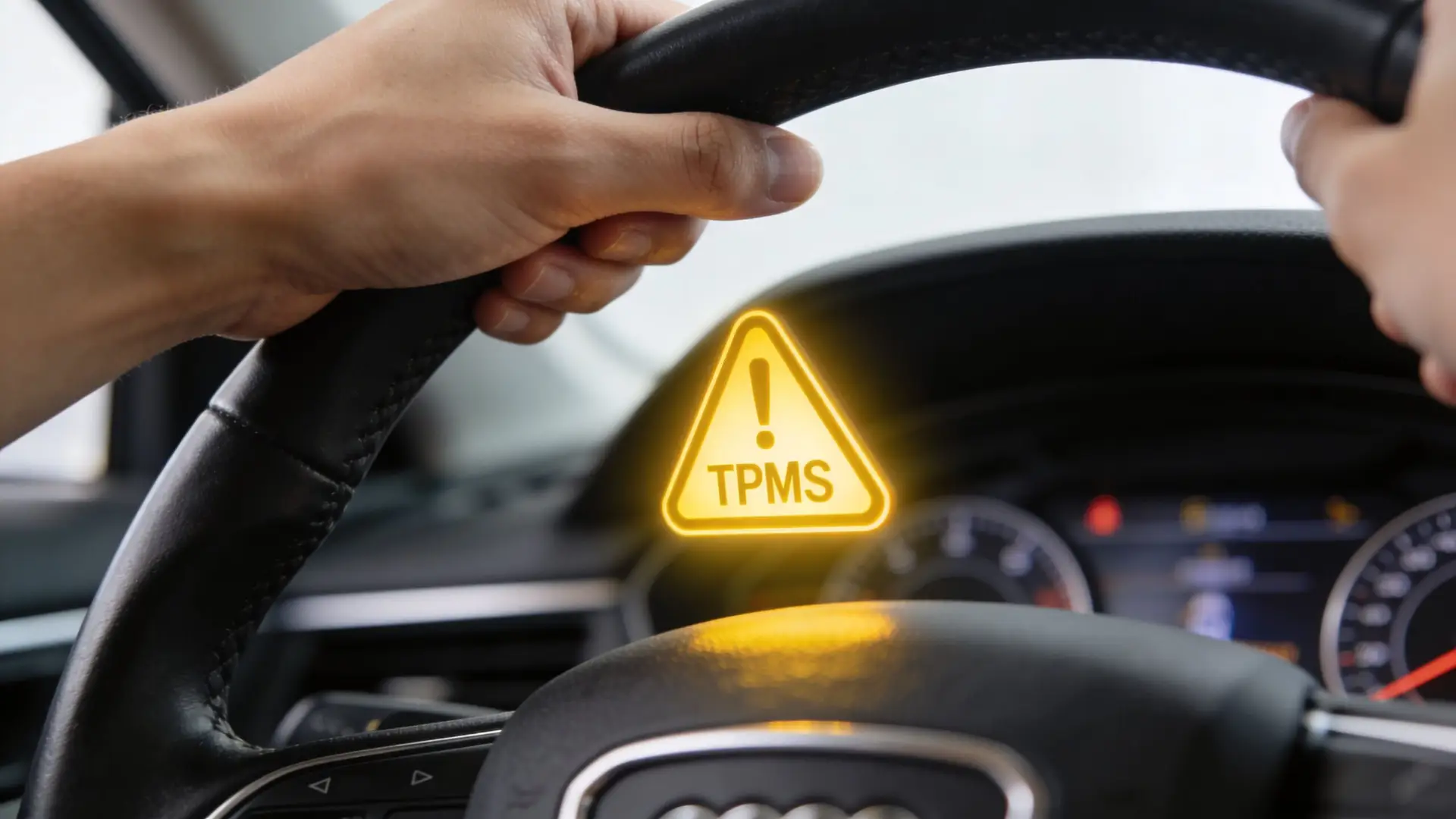
The icon looks like a horseshoe-shaped tire cross-section with an exclamation point in the middle. When it comes on, your car is warning you that tire pressure or the monitoring system itself needs attention.
Quick read: A solid TPMS light points to low pressure in one or more tires. A flashing TPMS light points to a system fault, such as a bad sensor or communication problem.
What a solid light usually means
A solid light is the common one. In plain terms, the car thinks at least one tire is low enough that it’s outside the safe range.
You may not feel a dramatic change right away. That’s why people ignore it. But underinflated tires can hurt handling, build extra heat, wear unevenly, and cost you fuel mileage.
What a flashing light usually means
A flashing light is a different conversation. That’s when I stop thinking “add air first” and start thinking “something in the TPMS system may not be talking correctly.”
That can mean a failing sensor, a dead internal sensor battery, a relearn issue after tire work, or a fault the control module has stored. Air pressure still gets checked first, but flashing means the problem won’t be solved with a quick top-off alone.
Don’t treat a flashing light like a low-priority annoyance. It means the warning system itself needs diagnosis.
Your First Response Checking and Adjusting Tire Pressure
Start with the simplest fix. The TPMS warning is designed to activate when tire pressure drops 25% or more below the manufacturer’s recommended level, a threshold required on new U.S. light vehicles starting in 2007.
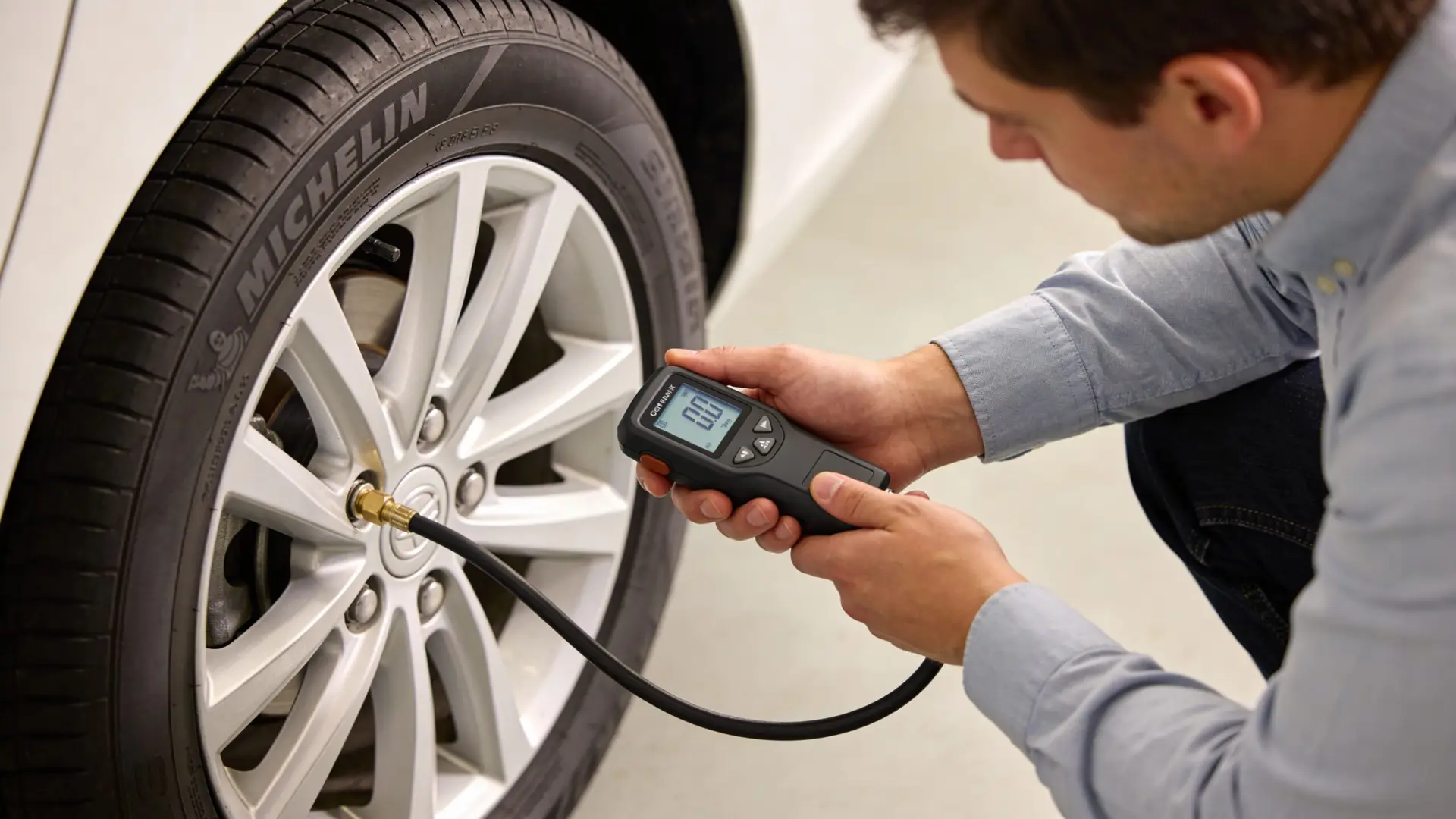
Check the placard, not the tire sidewall
The pressure you want is on the driver’s door jamb sticker. Sometimes it’s on the fuel door or in the owner’s manual, but the door placard is the first place to look.
Do not use the maximum PSI molded into the sidewall as your target. That number is not your normal operating pressure. It’s one of the most common mistakes I see.
Use a gauge when the tires are cold
Check pressure before driving if possible. If the tires are hot from running errands or commuting, the reading will be higher than the true cold setting.
A simple routine works well:
- Find the recommended PSI on the door placard.
- Check all four tires with a reliable gauge.
- Don’t forget the spare if your vehicle uses a monitored spare.
- Add air in small steps and recheck after each short burst.
- Reinstall the valve cap so dirt and moisture stay out.
What works and what doesn’t
A gas station air hose works fine if the gauge on the machine is accurate enough. A handheld digital gauge is better for confirming final pressure.
What doesn’t work is eyeballing the tire. A modern radial can look acceptable and still be low enough to trigger the warning.
If your tires are wearing unevenly, it’s also smart to keep rotation intervals on schedule. If you want a quick refresher, this guide on tire rotation explains the basics well: https://www.expresslubeplano.com/blog/how-often-should-i-rotate-my-tires/
Here’s a simple visual walk-through if you want to see the pressure-check process before heading to the air pump.
Practical rule: Set the tires to the vehicle placard specification, then drive and let the system update. Don’t chase the sidewall max number.
The Light Is Still On Simple Resets and Visual Checks
You aired up the tires. The numbers are right. The light is still there.
That doesn’t automatically mean you need parts. Some vehicles need time or a reset procedure before the warning clears.
Common reset paths
Many systems will turn the light off after a short drive once the car sees correct pressure again. Others need a manual reset through a dash button, steering wheel controls, or the infotainment menu.
Check the owner’s manual for the exact method because the sequence varies by make. If you guess, you can waste time doing the wrong procedure over and over.
A practical order looks like this:
- Drive the vehicle normally: Some systems need a short drive cycle before the warning clears.
- Use the built-in reset option: Look for a TPMS reset button or menu item if your car has one.
- Shut the car off and restart it: A key cycle sometimes helps after the reset has been accepted.
Look for a real leak
If the light comes back soon after inflation, stop thinking reset and start thinking leak. Walk around the car and inspect each tire closely.
Look for these clues:
- Embedded debris: Nails and screws are common slow-leak causes.
- Sidewall damage: Cuts, bubbles, or cords showing mean the tire needs professional attention.
- Valve stem problems: Cracks, looseness, or damage around the stem can let air escape.
- Uneven stance: One corner sitting lower than the others is still useful information, even before a gauge check.
If the tire keeps losing pressure after you set it correctly, the system may be doing its job perfectly. The problem is the tire, wheel, or valve.
When It Is Not the Air Understanding TPMS Sensor Issues
Once tire pressure and resets are ruled out, the hardware becomes the next suspect. TPMS sensors live in a rough environment. Heat, moisture, road shock, and time all work against them.
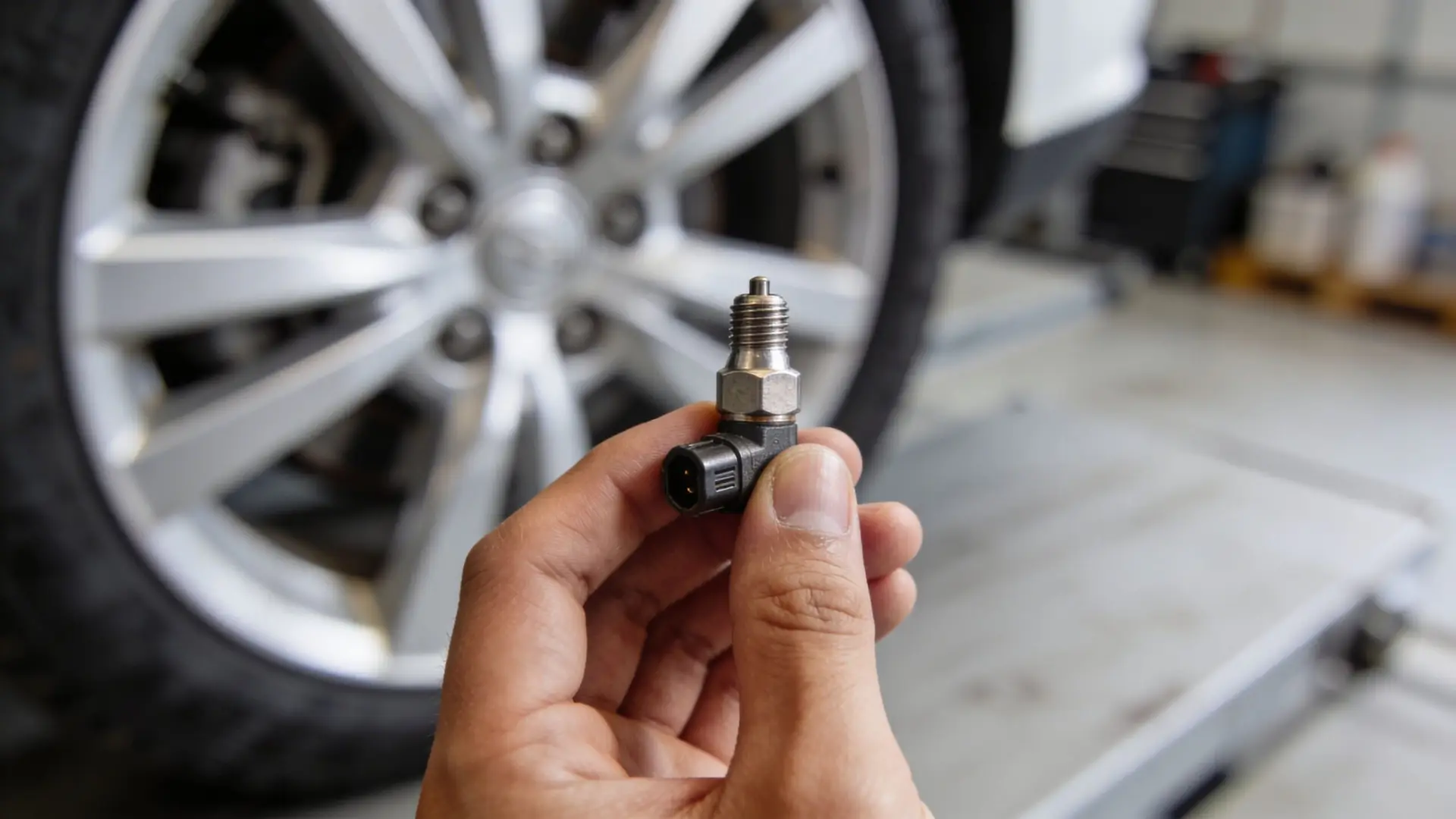
A key point many drivers never hear is this: TPMS sensors have internal batteries that typically last 5 to 10 years, and a common reason for a persistent TPMS light on an older vehicle is a dead sensor battery; damage from potholes or curbs can also knock a sensor out and requires a professional scan to identify the failed unit.
What the sensor does
In a direct TPMS system, each wheel has its own sensor. That sensor reports pressure and sends data to the vehicle.
When one sensor stops transmitting or sends bad data, the car can’t trust the reading. That’s when you get a warning that won’t go away even though the tires are set correctly.
Common failure patterns I watch for
Not every bad reading means the tire is bad. Sensor faults have their own patterns.
- Older vehicle with original sensors: Battery age becomes a likely cause.
- Light came on after a pothole hit: Physical damage to the sensor or valve area moves up the list.
- Tire shop recently replaced or rotated tires: The system may need a proper relearn.
- Pressure display looks wrong on one wheel only: That single sensor may be weak or offline.
A lot of people confuse TPMS sensors with wheel speed sensors. They are not the same part and they do different jobs. If you want the distinction, this overview of a wheel speed sensor helps clear that up: https://www.expresslubeplano.com/blog/what-is-a-wheel-speed-sensor/
Why DIY usually stops here
At this point, guessing gets expensive. You need a TPMS scan tool that can activate each sensor, read its signal, and confirm whether the fault is in the wheel sensor, the relearn process, or the vehicle side of the system.
That’s the difference between replacing the right part once and replacing parts because the dash light was annoying.
Texas Weather and Plano Roads Special TPMS Considerations
Plano drivers deal with a version of this problem that generic articles skip. Weather and road conditions here can make a healthy TPMS system look suspicious.
Plano’s swing from 30°F winters to 100°F summers can move tire pressure by 7 PSI or more, which can trigger a TPMS warning without a leak. That’s why the light shows up on the first cold morning after a warm stretch.
Why the seasons matter here
Cold air drops tire pressure. Hot pavement can push it the other direction. Both affect how the tire carries the vehicle and how it wears.
If the light appears after a front blows through North Texas overnight, check pressure before assuming you picked up a nail. If it appears after a long highway run in summer, don’t bleed air out of a hot tire just because the number looks higher than it did that morning.
Seasonal TPMS alerts are common in North Texas. The key is checking cold pressure against the placard before you decide there’s a leak or a bad sensor.
Why local roads matter too
Plano-area commuting means expansion joints, construction zones, curbs, and the occasional pothole hit that was impossible to avoid. Impacts don’t just damage tires. They can also damage the valve area or the sensor mounted inside the wheel.
A few habits help:
- Check pressure before longer drives: Especially before running up Central or heading out on a highway trip.
- Recheck after a cold snap: Morning readings tell you more than afternoon guesses.
- Pay attention after an impact: If the light comes on after hitting debris or a pothole, inspect the tire and wheel closely.
- Watch tire wear patterns: Uneven wear tells the story before a warning gets worse.
When to See the Pros at Express Lube & Car Care
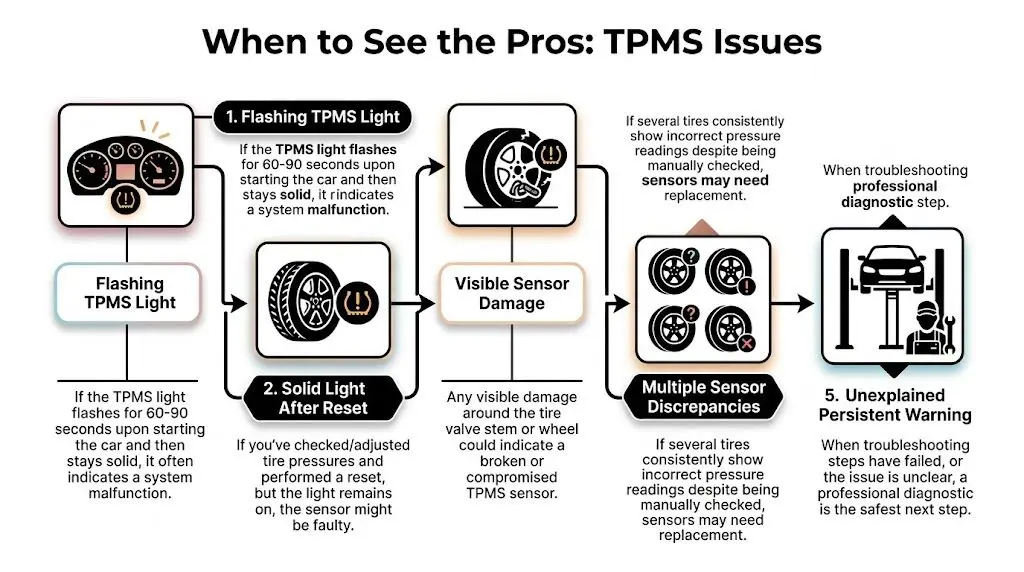
If the TPMS light is flashing, or it stays on after you set all four tires to the door-placard pressure, it is time for a professional diagnostic. At that point, guessing gets expensive. A slow leak, a damaged sensor, a failed sensor battery, or a relearn issue can all trigger the same warning.
A good shop confirms the fault before recommending parts. A professional TPMS diagnostic follows a test-before-you-touch process, using a dedicated tool to activate each sensor and verify battery life, pressure reading, and signal strength before checking the system through the OBD-II port for vehicle-side faults.
What a real diagnostic looks like
In the bay, an ASE-certified tech should do more than top off the tires and clear the warning. A proper check includes:
- Manual pressure verification: Confirm actual PSI at each tire first.
- Sensor activation: Use a TPMS tool to trigger each sensor and see which one responds.
- Data comparison: Compare sensor readings to the measured tire pressure.
- Vehicle scan: Check for stored codes and communication faults.
- Relearn if needed: Register the sensor positions correctly after tire or wheel service.
What usually deserves shop time
Some TPMS problems are worth bringing in right away.
- Flashing warning at startup: That points to a system fault, not simple low pressure.
- Correct pressure but warning stays on: The problem may be in the sensor, relearn, or control side of the system.
- Repeated pressure loss in one tire: That needs a leak check, not another quick fill.
- Recent tire or wheel work: In the shop, we find TPMS warnings caused by a missed relearn after rotation, replacement, or sensor service.
- Impact damage: A pothole, curb hit, or road debris can damage the tire, wheel, valve stem, or sensor.
That last point matters in Plano. Summer heat, construction zones, and expansion joints around North Texas are hard on tires and wheels. If the light came on after a rough hit or right after service, that timing helps narrow the diagnosis fast.
Express Lube & Car Care is set up for these checks with no appointment required, which helps because TPMS problems rarely show up on a convenient day. If you prefer to plan ahead, you can book a TPMS diagnostic appointment online.
One practical tip before you approve any repair. Ask whether the fault is pressure-related, sensor-related, or module-related, and ask what testing confirmed it. That keeps you from paying for a sensor when the actual issue is a leak or a relearn.
If your tpms light on warning will not clear, if it is flashing, or if you want a technician to sort it out without guesswork, Express Lube & Car Care in Plano offers fast, no-appointment service with ASE-certified technicians, modern diagnostics, and honest recommendations. They also offer savings for military, first responders, and healthcare workers, plus Wednesday specials that can help you bundle a TPMS check with routine maintenance.