

Most car owners have sat in a service waiting room and nodded along when a technician mentioned a conventional oil change, without fully knowing what that actually means. The term gets used interchangeably with “regular oil change” or “standard oil change,” but understanding what a conventional oil change involves, how it differs from a synthetic service, and what happens to your engine during each step can help you make smarter decisions about your vehicle. This guide walks you through everything, from the oil itself to the process, intervals, and real benefits.
Table of Contents
- Key Takeaways
- What is a conventional oil change, and what’s in the oil?
- How the conventional oil change process works, step by step
- Choosing the right oil and knowing when to change it
- The real benefits of conventional oil changes
- Our take on conventional oil changes
- Ready for a conventional oil change in Plano?
- FAQ
Key Takeaways
| Point | Details |
|---|---|
| Conventional oil is mineral-based | It comes from refined crude oil, making it affordable and widely available for most passenger vehicles. |
| The process goes beyond drain and fill | A proper service includes filter replacement, gasket lubrication, torque checks, and an oil-life reset. |
| Intervals are shorter than synthetic | Conventional oil typically requires a change every 3,000 to 5,000 miles under normal driving conditions. |
| Your owner’s manual is the authority | It specifies the correct viscosity grade and API certification your engine actually needs. |
| Regular changes protect your engine | Consistent oil changes prevent wear, overheating, and deposit buildup that can shorten engine life. |
What is a conventional oil change, and what’s in the oil?
A conventional oil change is the process of draining your engine’s used mineral-based motor oil, replacing the oil filter, and refilling the engine with fresh conventional oil to the correct level. The industry standard term for this product is “mineral oil” or “conventional motor oil,” refined directly from crude petroleum with minimal molecular alteration. That origin story matters, because it shapes everything from how the oil performs to how often you need to replace it.
Conventional motor oil starts as crude oil extracted from the ground and goes through a refining process to remove impurities. The result is a base stock that still contains a natural mix of hydrocarbon molecules. Additive packages are then blended in to improve performance characteristics like viscosity stability, corrosion resistance, and foam control.
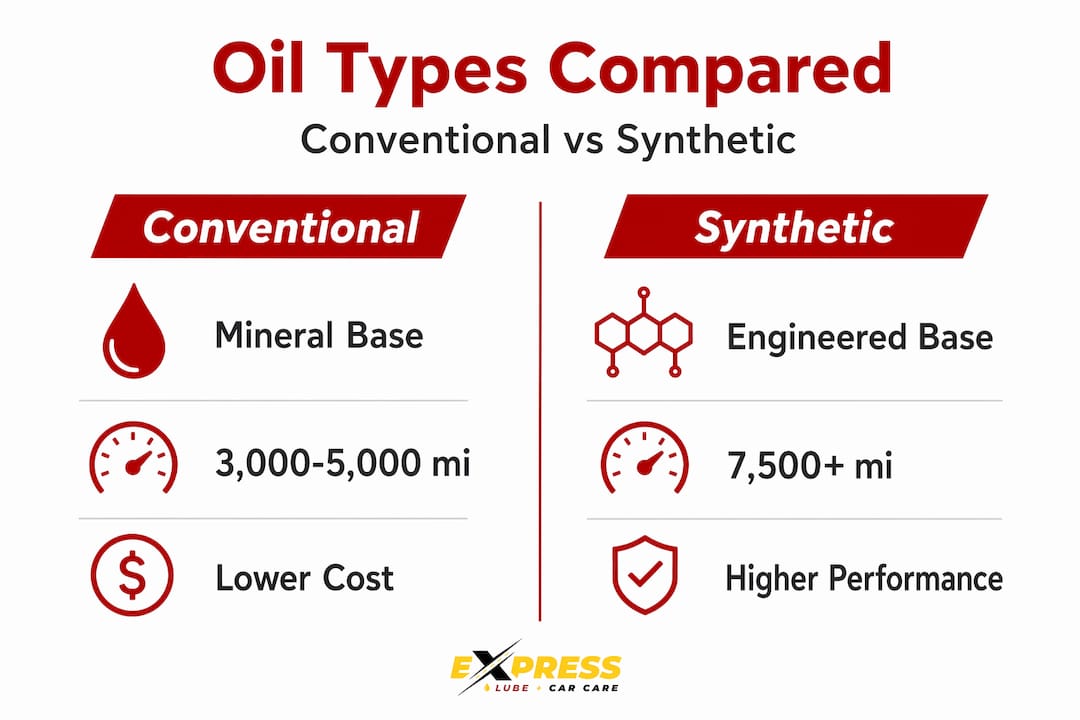
Here is how conventional oil compares to synthetic at a glance:
| Feature | Conventional oil | Synthetic oil |
|---|---|---|
| Base stock | Refined crude petroleum | Engineered molecules (Group IV/V) |
| Molecular consistency | Variable | Uniform |
| Typical price per quart | Lower | Higher |
| Change interval | 3,000 to 5,000 miles | Up to 7,500 to 15,000 miles |
| Performance in extreme temps | Moderate | Superior |
| Best suited for | Older engines, normal driving | High-performance, extreme conditions |
The mineral base stocks used in conventional oil fall under API Groups I through III, which are less consistent than the fully synthesized Group IV and V stocks in full synthetics. That molecular variability is why conventional oils require shorter change intervals, particularly under demanding usage like frequent short trips, towing, or extreme heat. For drivers with older or higher-mileage vehicles running in moderate conditions, conventional oil still delivers reliable protection at a lower cost per service.
Key characteristics of conventional motor oil include:
- Viscosity grades: Common grades include 5W-30, 10W-30, and 10W-40, matching a wide range of engine designs
- API certification: Look for the API starburst symbol on the container, confirming the oil meets tested performance standards
- Additive packages: Include detergents, dispersants, anti-wear agents, and viscosity index improvers
- Availability: Sold at virtually every auto parts store, service center, and large retailer
For a deeper look at how the two oil types stack up over time, the synthetic vs conventional comparison from Express Lube & Car Care covers lifespan, cost, and intervals in detail.
How the conventional oil change process works, step by step
Understanding how an oil change works removes the mystery and helps you evaluate the quality of any service you receive. Think of a professional oil change bay like a commercial kitchen. The ingredients matter, but so does the execution. Miss a step or rush a detail, and the result suffers.
Here is what a complete conventional oil change service includes:
-
Warm the engine briefly. A short warm-up of two to three minutes allows oil to thin slightly, which helps it drain more completely. The engine should be warm, not hot, before you begin.
-
Drain the old oil. The technician positions a drain pan, removes the drain plug from the oil pan, and allows the used oil to flow out completely. The drain plug is inspected for wear and reinstalled with the correct torque to prevent leaks.
-
Remove the old oil filter. The filter housing is unscrewed and the old filter is removed along with its gasket. Old gasket material must be completely cleared from the mounting surface. A leftover gasket piece is one of the most common causes of post-service oil leaks.
-
Prepare and install the new filter. A thin layer of fresh oil is applied to the new filter’s rubber gasket before installation. Lubricating the new gasket prevents the rubber from tearing under pressure and helps form a proper seal. The filter is threaded on by hand until snug, then tightened according to specifications.
-
Refill with fresh conventional oil. The technician checks your owner’s manual or a service database for the correct grade and quantity. Most four-cylinder engines take between four and five quarts. Overfilling can damage seals; underfilling starves the engine of lubrication. Correct viscosity and quantity are non-negotiable details.
-
Run the engine and check for leaks. After filling, the engine runs for 30 seconds to one minute. This circulates fresh oil through the system, pressurizes the filter, and reveals any leaks at the drain plug or filter housing.
-
Rest, then recheck the dipstick. After running the engine briefly, the oil is allowed to settle back into the pan for five to ten minutes before the dipstick is rechecked. This step catches any discrepancy between the amount poured in and the actual oil level registered.
-
Reset the oil-life monitor. Most modern vehicles have an onboard oil-life indicator. Resetting it after service keeps your maintenance schedule accurate and prevents unnecessary early warnings.
-
Perform a basic vehicle inspection. Reputable service centers use the oil change as an opportunity to check tire pressure, inspect wiper blades, and note any visible fluid leaks or wear items.
Pro Tip: Never skip the post-run dipstick check. Oil filters hold residual oil, and the system needs time to equalize after a fill. A quick recheck prevents the two most common post-change problems: overfilling and underfilling.
The full DIY oil change guide at Express Lube & Car Care covers safety steps and proper post-change verification for anyone considering doing this at home.
Choosing the right oil and knowing when to change it
Knowing what grade of oil to use and when to schedule your next service is where a lot of drivers make costly mistakes. The good news is your vehicle’s owner’s manual already has the answer. It specifies the required viscosity grade (such as 5W-30), the minimum API certification level, and the manufacturer’s recommended change interval.

Oil change intervals for conventional oil generally fall between 3,000 and 5,000 miles, though some manufacturers with newer engine designs allow intervals up to 7,500 miles with conventional oil under ideal conditions. The old universal rule of “every 3,000 miles” originated decades ago and is now considered conservative for many modern engines. Your driving conditions, however, can shift that number significantly.
Factors that shorten your change interval include:
- Short trips under five miles where the engine rarely reaches full operating temperature, leaving moisture and combustion byproducts in the oil
- Towing or hauling heavy loads that put sustained stress on the engine and heat the oil faster
- Extreme climate conditions including very hot summers or very cold winters, both of which affect oil viscosity performance
- Stop-and-go city driving where the engine cycles frequently between idle and working load
- Dusty or dirty environments that accelerate filter clogging and contaminate the oil supply
The oil change frequency guide at Express Lube & Car Care breaks down how different driving patterns affect your actual service needs.
Always consult your owner’s manual and look for the API certification mark on oil containers before purchasing. That starburst symbol confirms the oil has been independently tested and meets the performance standard your engine requires.
Pro Tip: Change the oil filter at every single oil change. A clean filter protecting dirty oil accomplishes nothing, and a clogged filter can trigger the bypass valve, sending unfiltered oil directly through your engine. Details on filter replacement intervals are worth reading before your next service.
Proper used oil disposal is also something every driver should understand. Used motor oil is a regulated material and cannot be poured down drains or into trash. Auto parts stores and service centers accept used oil for recycling at no charge.
The real benefits of conventional oil changes
Conventional oil changes often get dismissed as the “cheaper option,” but that framing misses the point. For many drivers and vehicles, a properly timed conventional oil change is exactly the right service. Here is what it actually delivers:
- Engine lubrication and wear prevention. Fresh oil coats metal surfaces, reducing friction between moving parts like the crankshaft, camshaft, and pistons. Without it, metal-to-metal contact causes rapid and expensive wear.
- Heat management. Motor oil absorbs heat generated by engine combustion and friction, then transfers it away from critical components. Degraded oil loses this capacity, increasing the risk of overheating.
- Deposit and sludge prevention. Over time, oil oxidizes and accumulates combustion byproducts, forming deposits that restrict oil passages. Regular changes remove this contamination before it settles into the engine.
- Cost-effectiveness. Conventional oil costs less per quart than synthetic, making the overall service more affordable. For older vehicles not requiring synthetic, this is smart, not cheap.
- Adequate protection for normal driving conditions. Most daily commuters driving moderate distances in moderate climates get reliable protection from conventional oil changed on schedule.
- Extended engine life through consistency. No single oil change transforms engine health. It is the pattern of regular maintenance over years that keeps an engine running well past 150,000 miles.
Our take on conventional oil changes
I’ve seen more engine problems caused by neglected oil changes than by almost any other single maintenance failure. What surprises most people is how quickly things go wrong when oil is left past its service life. Oil doesn’t just get dirty. It breaks down chemically and loses the ability to protect the surfaces it’s supposed to coat. By the time you see symptoms like engine noise or sluggish performance, the damage is already done.
What I’ve learned from years of working with customers is that the biggest mistake isn’t choosing conventional over synthetic. It’s assuming the oil is “probably fine” and skipping a change because nothing feels wrong yet. Preventive maintenance doesn’t announce itself. You just keep driving without problems, which is exactly the point.
My honest advice is this: know your manual, stick to your interval, and treat the oil change as a complete service, not just a fluid swap. Check the filter, verify the level after the engine runs, and reset that oil-life indicator. Every step matters. A quick, well-executed conventional oil change from a certified technician protects your engine better than an expensive synthetic done carelessly or too infrequently.
— Express Lube & Car Care
Ready for a conventional oil change in Plano?
Express Lube & Car Care makes routine maintenance easy for busy drivers. No appointment is needed. Walk in, and our certified technicians handle the complete conventional oil change process including filter replacement, torque checks, and a post-service inspection, all done efficiently without cutting corners.
Right now, Express Lube & Car Care is offering oil change service specials that make staying on schedule even more affordable. Whether you need a standard conventional service or want to explore additional maintenance, you will find savings worth using. You can also browse current oil change promotions designed for cost-conscious drivers who want quality without overpaying. Military and healthcare providers receive special discounts as our way of giving back to the community.
FAQ
What does a conventional oil change include?
A conventional oil change service includes draining the old oil, replacing the oil filter, refilling with the correct grade and amount of fresh conventional oil, and resetting the oil-life monitor. Many shops also perform a basic vehicle inspection as part of the service.
How often should conventional oil be changed?
Most vehicles using conventional oil need a change every 3,000 to 5,000 miles, though your owner’s manual is the most reliable reference. Severe driving conditions like frequent short trips, towing, or extreme temperatures can shorten that interval.
What’s the difference between conventional and synthetic oil?
Conventional oil comes from refined crude petroleum and has a less consistent molecular structure, while synthetic oil uses engineered molecules for greater stability and longevity. Synthetic oil typically lasts longer between changes but costs more per service.
Why does the oil filter need to be replaced every time?
The oil filter traps contaminants, and a saturated filter can bypass the filtration system entirely, sending dirty oil through your engine. Replacing the filter at every change protects the fresh oil you just put in from being immediately contaminated.
Can I switch from conventional to synthetic oil?
Yes, most modern vehicles can transition between oil types without issue. Check your owner’s manual first, and consult a certified technician if your engine has high mileage or existing wear, as some older engines perform better staying on conventional oil.