
We've all been there. You're driving along, and a thought pops into your head: "What maintenance does my car actually need right now?" It's easy to get lost in the details of owner's manuals and service schedules, but understanding the fundamentals of vehicle care is the key to keeping your car reliable and safe.
Your Essential Car Maintenance Checklist
Think of your car's maintenance schedule as its personal health plan. Just as an annual physical exam helps catch minor health issues before they become major problems, regular vehicle check-ups serve the same preventive purpose. It's all about understanding your car's needs to prevent costly, unexpected failures down the road.
Proactive care is always more effective and less expensive than reactive repairs. Following a consistent maintenance schedule not only extends your car's operational life but also preserves its resale value. A well-maintained vehicle is a safer vehicle, providing peace of mind on every journey.
The Core Three Maintenance Areas
To simplify the complexities of automotive care, we can break it down into three fundamental categories. By focusing on these core systems—your engine, brakes, and tires—you cover the most critical aspects of vehicle health. Each one plays a massive role in your car's performance, safety, and longevity.
A study from the Car Care Council found that a staggering 77% of vehicles on the road needed at least one repair or service. This statistic highlights how easy it is to overlook basic maintenance requirements.
This image helps visualize the three pillars of vehicle care every driver should understand.
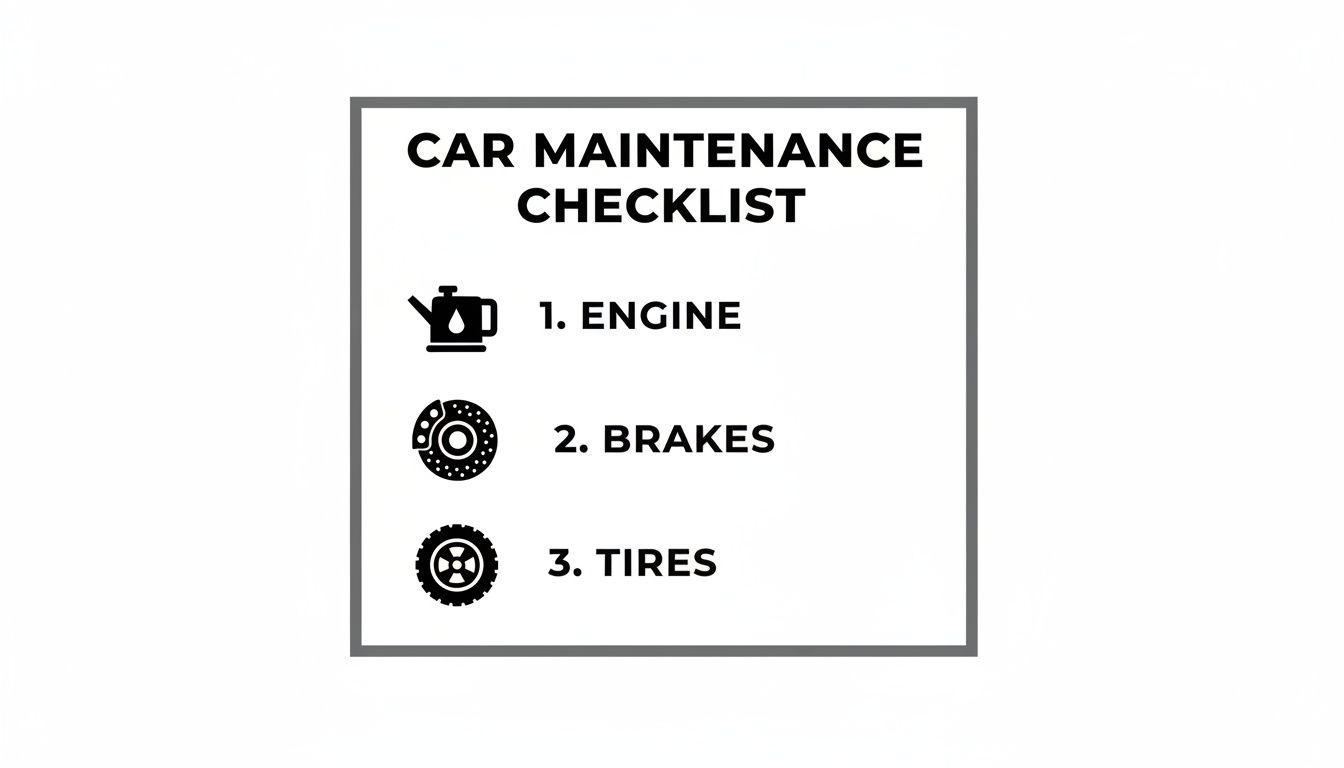
Mastering these three areas provides a solid foundation for understanding what your car needs, putting you ahead of potential mechanical problems. Here is a breakdown of what falls under each category, which we will explore in greater detail.
- Engine & Fluids: This is the lifeblood of your car. This category includes engine oil, coolant, and transmission fluid—all working in concert to lubricate moving parts and regulate operating temperatures.
- Brakes & Safety: This system is non-negotiable for safety. Regular inspection of brake pads, rotors, and brake fluid is essential to ensure your vehicle can stop effectively and safely.
- Tires & Alignment: As the sole point of contact with the road, tires are critical. Proper tire pressure, sufficient tread depth, and correct wheel alignment ensure optimal handling, safety, and fuel economy.
Understanding Your Engine's Lifeblood: Oil Changes
Consider your engine's oil as its circulatory system. It is constantly in motion, lubricating high-speed metal components, cleaning away contaminants, and dissipating intense heat to prevent mechanical seizure. Without clean, effective oil, an engine would rapidly suffer catastrophic failure.
Like any hardworking element, engine oil degrades over time. It becomes saturated with contaminants and loses its viscosity, reducing its ability to protect vital components. Postponing this fundamental service is one of the most direct paths to causing severe, irreversible engine damage.
Conventional Versus Synthetic Oil
A frequent question from vehicle owners is, "Should I use conventional or synthetic oil?" The correct choice depends on your vehicle's make, age, and your typical driving patterns.
Conventional oil is the traditional standard, refined directly from crude oil. It has performed effectively for decades and remains a suitable, cost-effective option for many older vehicles with less complex engine designs.
Synthetic oil, in contrast, is chemically engineered in a laboratory. Its molecular structure is pure and uniform, providing significant performance advantages, particularly under high-temperature conditions—a common scenario during a Plano summer.
Key Takeaway: Synthetic oil offers superior protection against wear, excels at maintaining engine cleanliness, and has a longer service interval between changes. For modern engines or any vehicle subjected to demanding conditions like stop-and-go city traffic, it is a wise investment in engine longevity.
For most drivers in our region, the superior thermal stability and extended lifespan of synthetic oil justify its higher initial cost. You can learn more about determining the ideal service schedule for your car in our detailed guide on oil change frequency.
Signs Your Car Is Due for an Oil Change
Your vehicle is designed to provide indicators when it requires service. When it comes to knowing what maintenance does my car need, recognizing these oil-related symptoms is an excellent starting point.
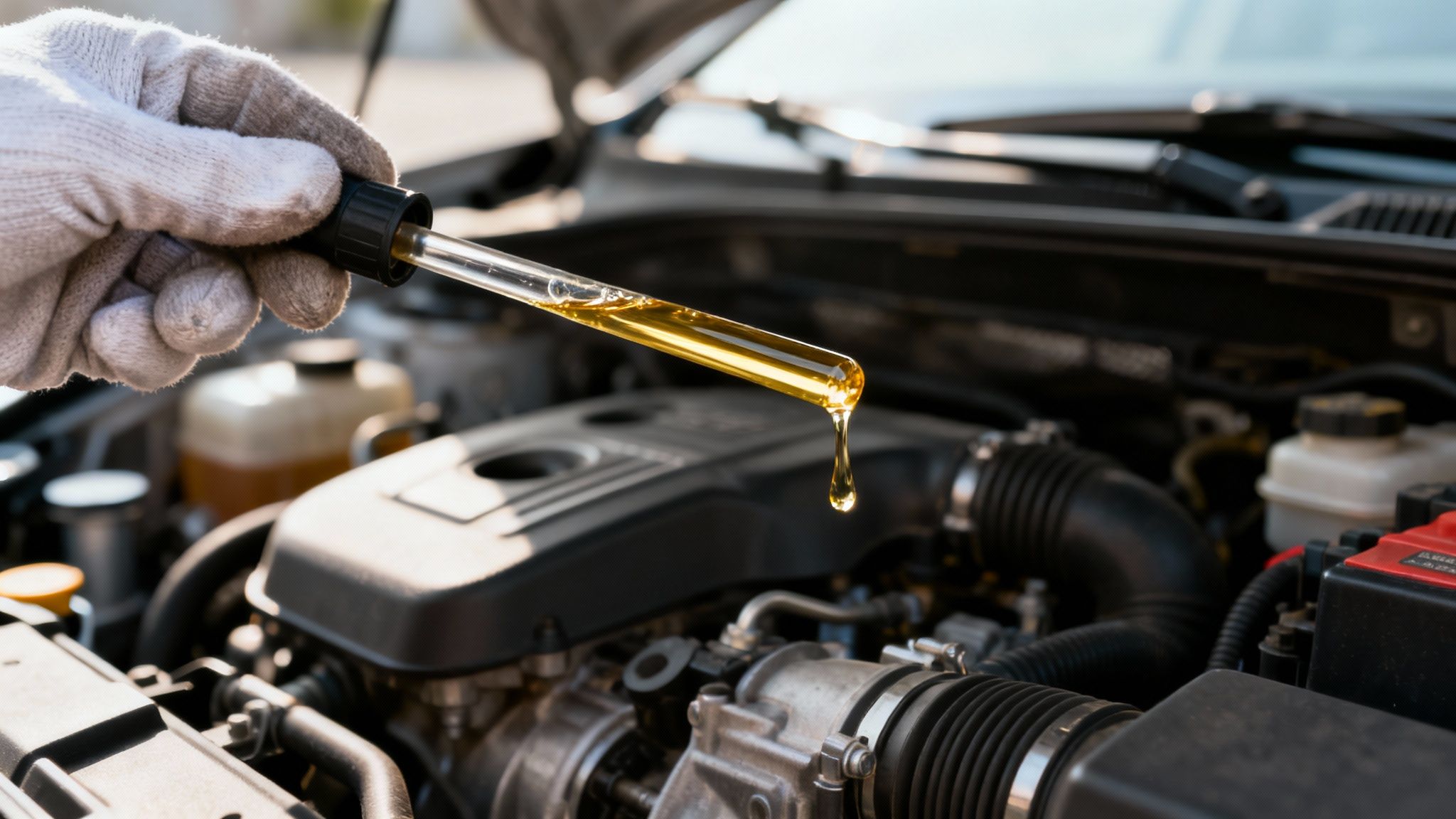
- Dark and Gritty Oil: Remove the dipstick and examine the oil. Fresh oil has a clean, amber appearance. If the oil is black, thick, or feels gritty between your fingers, it is saturated with contaminants and has exceeded its effective lifespan.
- Engine Noise or Knocking: A knocking or rumbling sound from the engine is a cause for concern. Clean oil creates a thin, protective film between moving parts. As oil degrades and thins, metal-on-metal contact can occur, generating these noises.
- Dashboard Warning Lights: An illuminated oil pressure light or check engine light is your vehicle's most urgent signal. It indicates that the oil level is critically low or a serious pressure issue exists that requires immediate professional diagnosis.
Ignoring these warnings can lead to severe consequences. Neglecting routine oil changes is a primary cause of premature engine failure—in fact, well-maintained engines fail 30-50% less frequently. The global vehicle maintenance market, valued at a staggering USD 936.33 billion in 2024, underscores just how critical these services are to modern transportation.
Mastering Your Brakes for Ultimate Road Safety
Among your car's safety systems, none is more critical than the brake system. While the engine provides propulsion, the brakes are responsible for the safety of you, your passengers, and others on the road by enabling controlled deceleration. Understanding basic brake maintenance is not just advisable—it is essential.
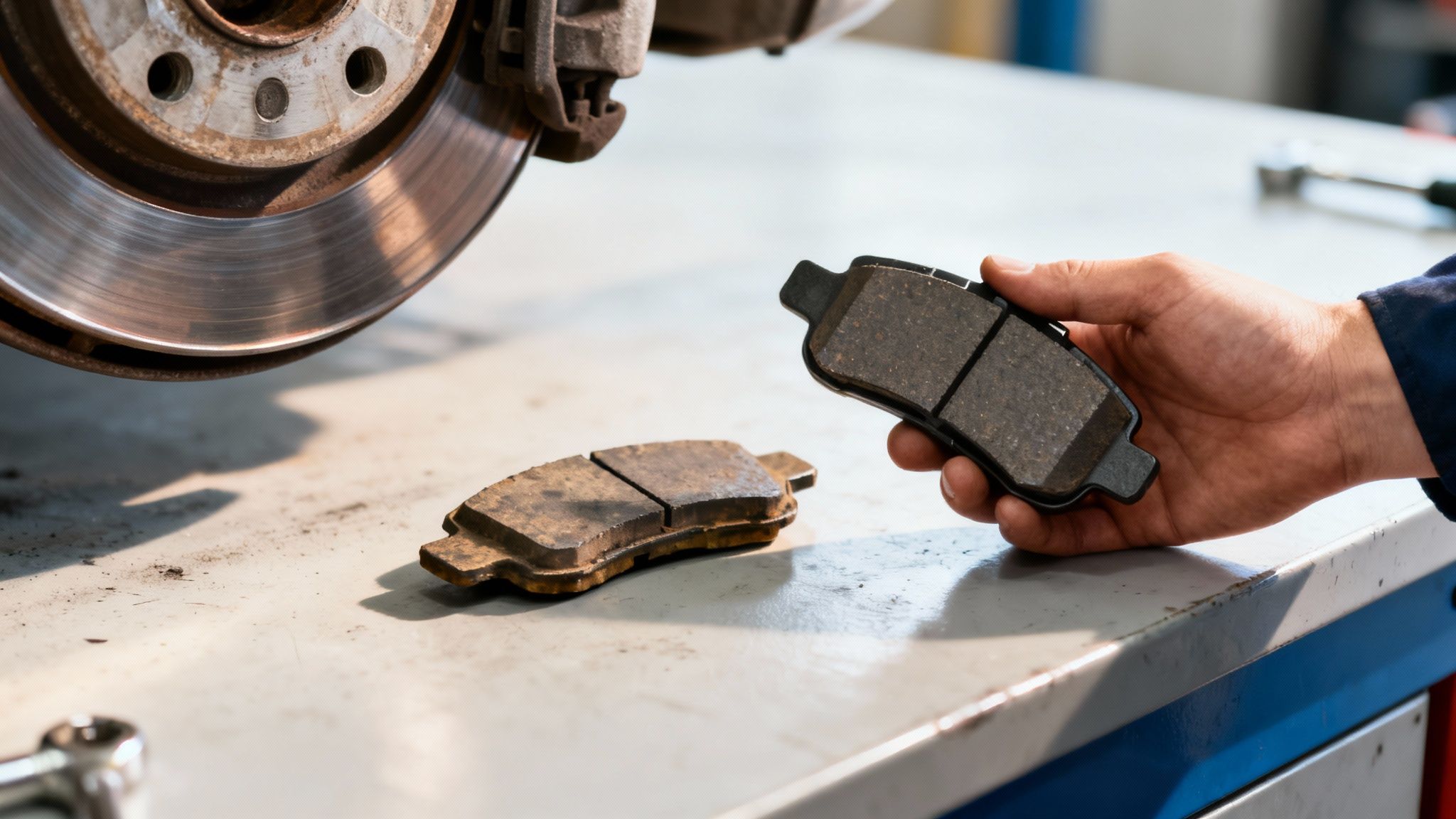
Each time you depress the brake pedal, you initiate a powerful hydraulic chain reaction. Brake fluid transfers force to a caliper, which then squeezes brake pads against a spinning disc, known as a rotor. The resulting friction is what brings your multi-ton vehicle to a smooth, controlled stop.
This process inherently creates wear and tear. Over time, the high-friction material on the pads is abraded with every stop. The rotors themselves can become thin or warp from intense heat and pressure. The brake fluid can also absorb atmospheric moisture, which reduces its effectiveness and can lead to internal corrosion of brake components.
Listening for Trouble
Your auditory senses are one of your best tools for early brake problem detection. Vehicle manufacturers design brake systems to provide audible warnings when they require attention. Learning to recognize these sounds is a crucial skill for any driver.
- A High-Pitched Squeal: This is typically the first indication of wear. Most brake pads are equipped with a small metal tab called a wear indicator. When the pad material wears down to a specific thickness, this tab contacts the rotor and creates a high-frequency squeal. It is engineered to be noticeable enough to prompt a service visit.
- A Deep Grinding Noise: This sound signifies a much more serious condition. If you hear a harsh, metallic grinding, you should cease driving as soon as it is safe to do so. This almost always means the brake pads are completely worn away, and you are hearing the sound of the metal backing plate grinding against the rotor. This is extremely dangerous and can cause severe, costly damage to your brake system.
Your tactile senses are also important. If the brake pedal feels "spongy," soft, or travels further toward the floor than usual, you may have an issue within the hydraulic system, such as a fluid leak or air in the brake lines.
Ignoring these signs poses a significant safety risk. Worn brakes contribute to about 2% of all vehicle accidents in the U.S. annually. While a set of brakes can last anywhere from 25,000 to 65,000 miles, local driving conditions—such as the frequent stop-and-go traffic in Plano—can shorten that lifespan. The good news? Regular inspections can prevent up to 80% of brake-related failures.
DIY Checks Versus Professional Service
There are several checks you can perform in your own driveway. Periodically inspect the area under your car for fluid leaks and check the brake fluid level in the reservoir under the hood. It is a simple and effective diagnostic step.
However, when it comes to the technical aspects of brake service, this is a job best left to professionals.
An ASE-certified technician possesses the specialized tools and training to measure brake pad thickness with precision, check rotors for warping and runout, and safely bleed and replace your brake fluid. Given the critical safety function of your brakes, this is one area where professional expertise is paramount. For a deeper dive, check out our guide on how long brakes typically last.
The Unsung Heroes: Tires and Essential Fluids
While the engine and brakes often receive the most attention, a host of other components work tirelessly to ensure your safety and your vehicle's proper operation. These include your tires and the various vital fluids that circulate throughout your vehicle's systems.
Your tires are the only part of your vehicle that makes direct contact with the road surface. Their condition profoundly impacts everything from handling dynamics and fuel efficiency to your ability to stop quickly in an emergency.
Tire Care: Your Connection to the Road
Proper tire maintenance is non-negotiable for vehicle safety. It primarily involves three simple yet crucial practices: monitoring air pressure, performing regular rotations, and inspecting tread depth.
A monthly check of your tire pressure can improve your fuel efficiency by up to 3%. It also promotes even tire wear, extending their service life and saving you money over time.
Rotating your tires every 5,000 to 7,500 miles is equally important. This service ensures that all four tires wear at a similar rate, which is key to maintaining predictable handling and maximizing the lifespan of the tire set. We explain the entire process in our guide on how often to rotate your tires.
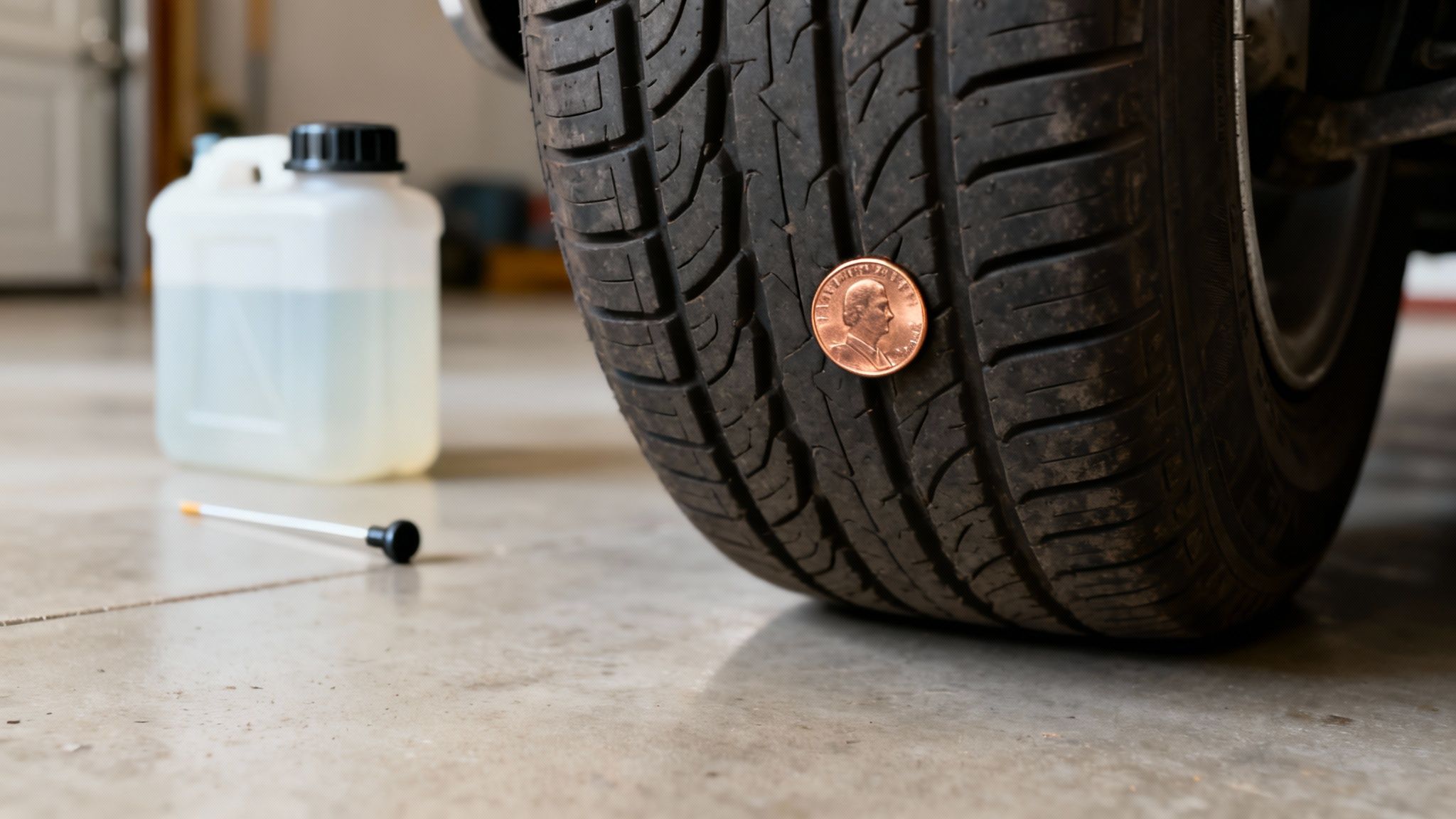
Finally, monitoring tread depth is critical. The grooves in your tires are designed to channel water away from the contact patch to prevent hydroplaning. A classic, simple method can be used to check them at home:
- The Penny Test: Take a U.S. penny and insert it into a tread groove with Lincoln's head facing down. If you can see the top of Lincoln's head, your tread depth is at or below the legal minimum of 2/32 of an inch. This is a clear indicator that it is time to replace your tires.
Your Car's Other Vital Fluids
While engine oil is widely recognized, several other fluids are equally critical to your vehicle's health. Each performs a specific and important function.
- Coolant (Antifreeze): This fluid regulates engine temperature. It circulates through the engine to absorb excess heat, preventing overheating in the summer and freezing in the winter.
- Transmission Fluid: This fluid acts as both a lubricant and a hydraulic fluid, ensuring smooth gear shifts. When it degrades, you may experience rough shifting or gear slippage—symptoms of a potentially expensive transmission problem.
- Power Steering Fluid: This hydraulic fluid reduces the effort required to turn the steering wheel. A low fluid level is often indicated by a distinct whining noise during turns.
- Brake Fluid: As mentioned previously, this fluid is responsible for transferring the force from your foot on the brake pedal to the brake calipers. Old, moisture-contaminated fluid can result in a spongy pedal feel and significantly reduced stopping performance.
Establishing a habit of checking these fluids is a wise practice. Most vehicles have easy-to-read reservoirs with "full" and "add" markings, making a quick visual inspection under the hood straightforward. If you notice a fluid level that is consistently low or appears dark and contaminated, it is a clear sign that a professional inspection is needed.
Keeping the Spark Alive: Battery, Belts, and Hoses
Some of the most critical components of your vehicle are not within the engine block itself but are part of the support systems that provide power and circulate fluids. Your battery, belts, and hoses are easy to overlook, but monitoring their condition is a key aspect of responsible car ownership.
Your car's battery provides the initial electrical charge to start the engine. Its performance is highly sensitive to temperature, and the intense summer heat common in Plano can significantly shorten its lifespan by accelerating internal degradation.
The Power Behind the Start
The first sign of a failing battery is often subtle. You might notice the engine cranks slightly slower than usual, or perhaps the headlights dim momentarily when the car is idling. These are early warnings that the battery is struggling to hold a full charge.
Another clear indicator is corrosion—a crusty, white or bluish powder that can accumulate around the battery terminals. This buildup can impede the flow of electricity and eventually prevent the car from starting. A simple visual check can identify this issue before it leaves you stranded.
A dead battery is a major inconvenience, stranding millions of drivers annually. A startling 40% of these failures occur due to inadequate maintenance in extreme weather conditions. With the average vehicle on U.S. roads now 12.8 years old, staying on top of service is more important than ever. You can find more details on the growing auto care industry from this industry report.
The Engine's Relay Race
If the battery provides the initial spark, the engine belts are what sustain the operation of other systems. The main serpentine belt acts as a workhorse, transferring rotational power from the engine's crankshaft to a variety of critical components.
This single belt typically powers:
- The Alternator: Recharges the battery while the engine is running.
- The Water Pump: Circulates coolant to prevent the engine from overheating.
- The Power Steering Pump: Assists in turning the steering wheel.
- The Air Conditioning Compressor: Powers the A/C system.
If this single belt fails, all of these systems cease to function instantly. Your car will shut down almost immediately, which is why a periodic visual inspection for cracks, frays, or a glazed appearance is so vital.
Finally, your car's hoses function as its arteries and veins, transporting essential fluids like coolant and power steering fluid. Over time, the rubber material degrades—it can become brittle, soft, or develop bulges. A ruptured hose can lead to a rapid loss of fluid, potentially causing engine overheating or a loss of steering control. Identifying a worn component before it fails is the essence of preventive maintenance.
Your Trusted Partner for Plano Car Maintenance
Knowing what your car needs is the first step; ensuring the work is done correctly is what keeps you on the road. Consistent, proactive maintenance is unequivocally the best method to ensure your vehicle remains safe, reliable, and retains its value throughout its lifespan.
Consider regular service not as an expense, but as an investment in your vehicle's future. It is the practice that prevents minor issues from escalating into major, costly repairs. Partnering with a trusted local expert who understands the unique demands of driving in Plano—from our intense summer heat to our stop-and-go traffic—can make a significant difference.
Why Choose a Local Expert?
When selecting an automotive service center, a few key factors ensure the best care for your vehicle:
- ASE-Certified Technicians: This certification is your assurance that the mechanics working on your vehicle have met rigorous industry standards for knowledge and competence.
- Transparent Pricing: You should always receive a clear, detailed estimate before any work begins, with no hidden fees or surprises.
- Convenience and Quality: A reputable shop respects your time with efficient service but never compromises on the quality of parts or workmanship.
At Express Lube & Car Care, we provide dealership-level expertise with the honest, fair pricing of a neighborhood facility. Our primary goal is to ensure you drive with complete confidence in your vehicle's condition.
We also strive to make essential maintenance more accessible through our ongoing specials and discounts, tailored for our Plano community. Feel free to visit us at your convenience—no appointment is necessary—and let our team demonstrate what professional, customer-focused service truly means.
Got Car Maintenance Questions? We’ve Got Answers.
Even with the best intentions, automotive care can seem complex. Understanding the why behind the what empowers you to make smarter decisions for your vehicle. Here are some of the most common questions we hear from drivers in Plano, with clear, educational answers.
How Often Should I Really Change My Oil?
The old 3,000-mile guideline is largely outdated. Modern engines and advanced oil formulations have changed the standards. For vehicles using conventional oil, a 3,000 to 5,000-mile interval remains a safe recommendation.
However, for vehicles using full synthetic oil, it is common to go 7,500 miles or more between services. The definitive source of information is always your vehicle's owner's manual. Remember, driving habits also play a role—frequent short trips or heavy city driving in Plano are more demanding on oil and may necessitate shorter change intervals.
What's the Difference Between a Check Engine Light and a Maintenance Light?
This is a critical distinction. A "Maintenance Required" light is a simple, pre-programmed reminder. It is your vehicle's way of indicating that a routine service interval, such as for an oil change, has been reached. It is not an alert for a problem.
In contrast, the "Check Engine" light is an alarm. It signifies that the vehicle's onboard diagnostic system has detected a fault with the engine, emissions system, or another critical component. Do not ignore it. Prompt diagnosis can prevent a minor issue from evolving into a major, expensive repair.
Can I Do Some of This Maintenance Myself?
Absolutely. Performing basic checks is an excellent way to stay informed about your vehicle's condition and can save money. Here are a few tasks most owners can perform:
- Check your tire pressure using a simple gauge.
- Top off your windshield washer fluid.
- Perform a quick walk-around to verify the function of headlights, brake lights, and turn signals.
- Visually inspect belts and hoses for obvious signs of cracking or wear.
For more complex tasks—such as oil changes, brake repairs, or transmission service—it is best to rely on a professional. These jobs require specialized tools, knowledge, and procedures to be completed correctly, ensuring both the integrity of your vehicle and your personal safety.
When you need professional, reliable answers to what maintenance does my car need, trust the ASE-certified team at Express Lube & Car Care. We offer dealership-level expertise with the honesty and convenience of a local Plano shop. Stop by today—no appointment needed—and let us keep your car running safely and smoothly. Find our latest deals at https://www.expresslubeplano.com.