

When reviewing your vehicle's maintenance schedule, the cabin air filter is an item that's easy to overlook. Most vehicle manufacturers recommend replacing it every 12,000 to 15,000 miles, or approximately once per year. However, it's important to understand that this is a general guideline based on idealized driving conditions.
The cabin air filter functions as the primary filtration system for your vehicle's interior. It is the sole barrier preventing dust, pollen, exhaust fumes, and other airborne contaminants from entering the passenger cabin. A standard replacement interval that works for a driver in a mild, rural climate is often insufficient for the unique environmental conditions we experience in North Texas.
A More Realistic Interval for Plano Drivers
So, how often should you actually change your cabin air filter? The 15,000-mile rule serves as a baseline, but it does not account for the realities of driving in the Plano area. We contend with heavy traffic on major arteries like the Dallas North Tollway, constant construction projects that generate airborne dust, and extended allergy seasons. These factors cause a filter to become saturated with contaminants much faster than the manufacturer's estimate.
A clogged filter does more than just create a musty odor. It significantly increases the workload on your vehicle's entire HVAC (Heating, Ventilation, and Air Conditioning) system by restricting airflow. This strain can lead to premature failure of components like the A/C compressor—and a functional air conditioner is not a luxury, but a necessity for navigating a Texas summer.
Why Local Conditions Are a Critical Factor
To maintain optimal HVAC performance and ensure high-quality interior air, it is advisable to inspect your filter more frequently than the owner's manual suggests. This proactive approach ensures you and your passengers are breathing cleaner air while protecting your car's ventilation system from preventable wear and tear.
A clean filter provides several key benefits:
- Improved Air Quality: It effectively traps allergens, dust, and harmful exhaust fumes.
- Enhanced HVAC Performance: Unrestricted airflow allows your air conditioning and heating systems to operate at peak efficiency.
- Odor Prevention: A fresh filter helps prevent the growth of mold and mildew within your ventilation system.
This flowchart illustrates how different driving environments impact the recommended replacement schedule.
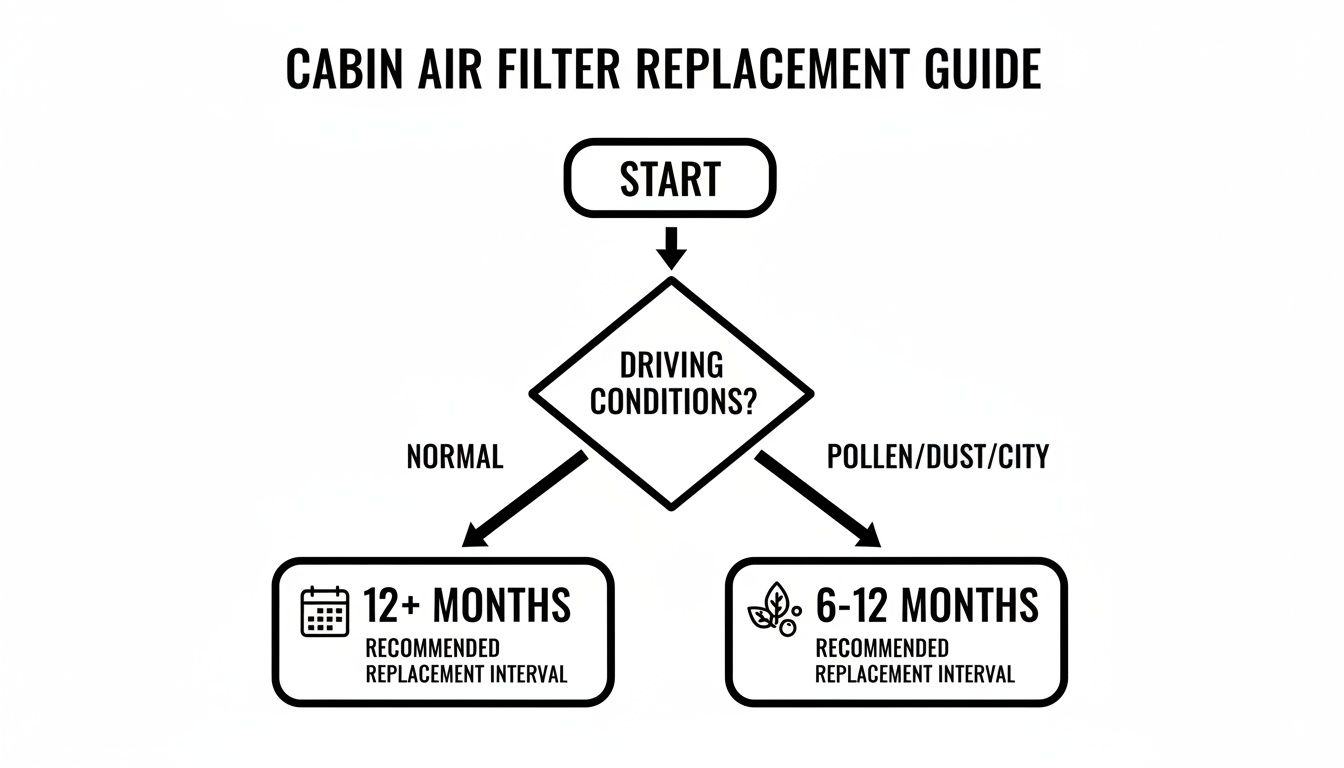
As the graphic demonstrates, driving in a high-pollen area like Plano necessitates a more frequent replacement interval, typically every 6 to 12 months. This is a minor maintenance task that yields a significant improvement in both comfort and in-cabin air quality.
Understanding Your Cabin Air Filter's Vital Role
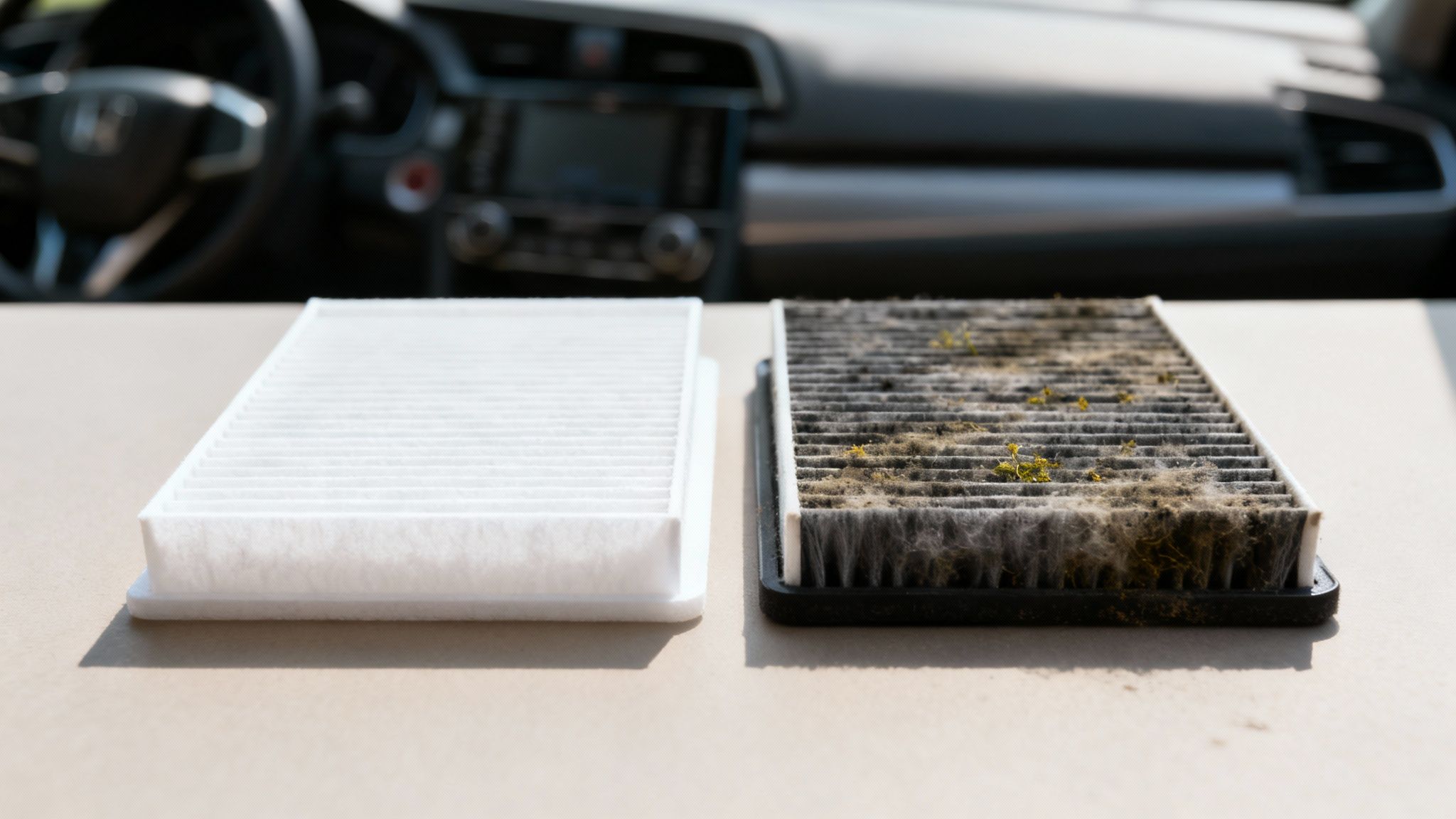
What is the precise function of this often-forgotten component? The cabin air filter is an essential part of your vehicle's ventilation system. It acts as a gatekeeper, trapping a substantial volume of dust, pollen, soot, and other particulate matter before they can enter your car's interior and, consequently, your respiratory system.
Its operation is analogous to the HVAC filter in a home. Just as a residential filter captures pet dander and dust to maintain indoor air quality, your car's cabin filter performs the same duty for the much more confined space of your vehicle.
A Component with Two Critical Functions
Your cabin air filter performs two crucial jobs simultaneously. Its primary function is to protect the health of the driver and passengers by ensuring the air they breathe is as clean as possible.
Its secondary role is equally important: it protects the vehicle's entire heating and air conditioning system. When a filter becomes clogged, debris such as leaves, dirt, and road grime can be drawn into sensitive internal components. This can lead to costly damage to parts like the blower motor fan or the A/C evaporator core.
A clean cabin air filter isn't just about fresh air—it's essential for keeping your car's entire climate control system running efficiently and avoiding bigger repair bills down the road.
A new filter effectively traps this debris, protecting your investment and ensuring the system operates smoothly. This is why knowing how often to change a cabin air filter is not merely about comfort; it is a key aspect of preventative maintenance.
The Direct Link to Your Comfort and Safety
Have you ever noticed your A/C system seems less powerful than it used to be? A clogged filter is frequently the underlying cause. When the filter medium is saturated with contaminants, air cannot pass through freely. This forces the entire system to work harder to deliver even a weak stream of air through the vents.
This has a direct impact on essential vehicle functions:
- Weak A/C: During a hot Plano summer, a clogged filter can severely diminish your air conditioner's cooling capacity.
- Poor Heating: In winter, the same obstruction reduces the flow of hot air, extending the time it takes to warm the cabin.
- Ineffective Defroster: Restricted airflow can significantly impair your windshield defroster's ability to clear fog or ice, creating a serious safety hazard.
Maintaining this single component has a profound effect on your entire HVAC system's performance. For more complex issues, you can learn more about our professional heating and cooling services. Ultimately, this small filter plays a massive role in your daily comfort and your vehicle's long-term health.
Signs Your Cabin Air Filter Needs Replacing
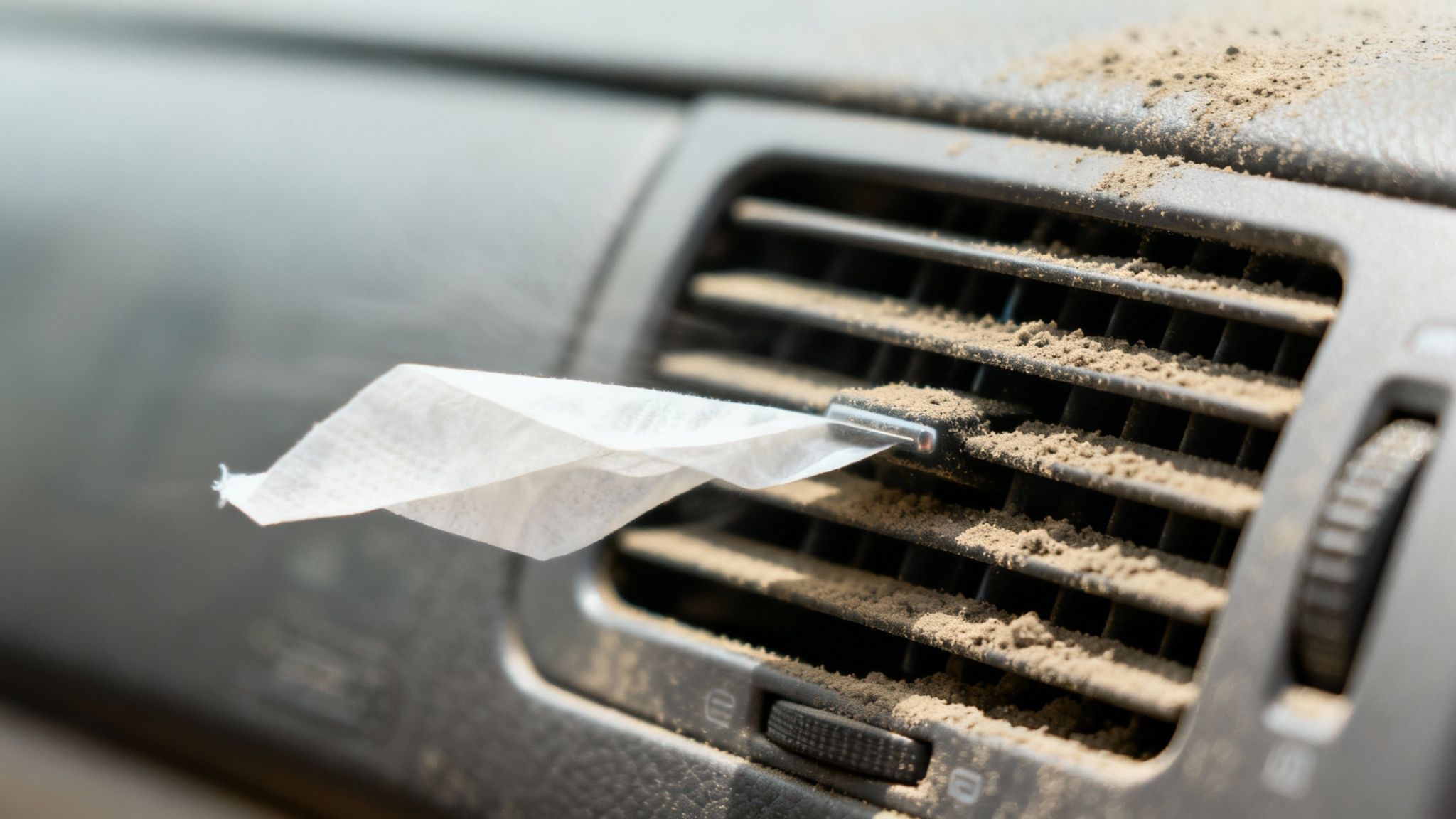
Your vehicle has several ways of indicating when a component requires attention, and a clogged cabin air filter is no exception. Well before you reach a specific mileage milestone, your car will exhibit clear symptoms that its filtration system is compromised. Learning to recognize these signs is key to timely maintenance.
These indicators are more reliable than the calendar or odometer alone. The most effective way to diagnose a failing filter is to pay close attention to your vehicle's climate control performance, interior air quality, and cabin odor.
Weak Airflow From Your Vents
This is typically the most noticeable symptom. When you set the fan to its highest speed on a hot day, you only receive a weak, insufficient flow of air from the vents. This is not a sign of a failing fan motor; rather, it's the motor struggling to push air through a dense barrier of accumulated dirt, dust, and debris.
The effect is similar to trying to breathe through a thick, dirty cloth. The fan motor is forced to work overtime, placing significant strain on the entire HVAC system. If left unaddressed, this can lead to more substantial and costly repairs in the future.
A clogged cabin air filter can slash your HVAC system’s efficiency by 20% or more. That means weaker A/C and a blower motor that’s working way too hard—a perfect recipe for premature failure.
This reduction in airflow directly impacts your vehicle's ability to cool, heat, or defrost effectively when you need it most.
Unpleasant Odors and Worsening Allergies
Another definitive sign is a persistent musty odor emanating from the vents. This smell is typically caused by mold and mildew that have colonized the moisture and organic matter trapped within the old filter. No air freshener can effectively mask this underlying issue.
If you or your passengers experience a sudden increase in allergy symptoms during a drive, the filter is a likely cause. A saturated filter can no longer effectively trap pollen, dust, and other irritants, allowing them to circulate freely within the cabin.
Be observant for these key symptoms:
- Persistent Musty Odors: A smell that is present whenever the ventilation system is active.
- Reduced Airflow: The fan motor sounds loud, but the volume of air from the vents is low.
- Excessive Dust: An unusual accumulation of dust on the dashboard and interior surfaces shortly after cleaning.
- Increased Allergy Symptoms: More frequent sneezing, itchy eyes, or other allergic reactions while in the vehicle.
Did you know most car manufacturers suggest changing your cabin air filter every 15,000 to 30,000 kilometers? At Express Lube & Car Care, our ASE-certified technicians can tell you that’s often not nearly enough for real-world driving. Here in Plano, with significant highway miles, construction dust, and heavy pollen, filters get clogged much faster than the owner’s manual predicts.
Why Plano Conditions Shorten Your Filter's Lifespan
Your car's manufacturer may recommend a cabin air filter replacement every 15,000 miles, but this should be considered a starting point. This figure is based on "average" driving conditions—a standard that does not accurately reflect the typical environment in Plano.
Our unique Texas climate and urban landscape place an exceptional amount of stress on your car's cabin air filter, essentially forcing it to operate at maximum capacity from day one. A filter in a quiet, low-pollen region might last for a full year without issue. Here in North Texas, however, that same filter is in a constant battle against airborne particulates that can saturate it completely in just a few months. This is why a universal approach to determining how often to change a cabin air filter is ineffective here.
The North Texas Pollen Problem
If you reside in Plano, you are familiar with our intense allergy seasons. From tree pollen in the spring to ragweed in the fall, the air is often saturated with contaminants you do not want to breathe. Your cabin air filter is the only defense between these allergens and your respiratory system.
This constant bombardment of pollen quickly clogs the filter, reducing the flow of clean air into your vehicle and allowing more allergens to bypass the filtration system. In a high-pollen market like Texas, where ragweed season can affect 1 in 4 residents, many experts now recommend changing the filter twice a year. Replacing it before pollen season can block up to 80% of allergens, and changing it again before winter eliminates any harmful bacteria buildup. You can learn more about how our climate affects your car on Kwik Kar's blog.
Urban and Lifestyle Factors at Play
Environmental factors are not the only consideration. Our daily driving habits and urban setting contribute additional strain. Frequent stop-and-go traffic on the Dallas North Tollway or Central Expressway means your vehicle is often situated in a concentrated cloud of exhaust fumes, forcing your filter to work harder to keep them out of the cabin.
Other lifestyle choices can also significantly reduce your filter’s effective lifespan:
- Pets in the Car: Animals shed dander and hair, which are drawn directly into the ventilation system and clog the filter.
- Smoking in the Vehicle: Smoke and tar create a sticky residue that rapidly obstructs a filter's pores, trapping odors permanently inside the system.
- Frequent Off-Road or Rural Driving: Driving on gravel or unpaved roads introduces a massive amount of dirt and debris into the filter in a very short period.
A cabin air filter is like a personal bodyguard for your lungs and your HVAC system. In a tough environment like Plano, that bodyguard gets overworked and needs to be relieved of duty more frequently to remain effective.
To provide a clearer understanding, this table outlines how specific factors impact your filter's life, helping you develop a more realistic maintenance schedule for your vehicle.
How Your Driving Habits Affect Filter Life
This table shows how various environmental and lifestyle factors can reduce the effective lifespan of your cabin air filter, requiring more frequent replacements.
| Factor | Impact on Filter Lifespan | Recommended Change Frequency |
|---|---|---|
| Heavy Pollen/Allergies | Clogs quickly with allergens, reducing airflow and air quality. | Every 6 months or 5,000 miles |
| Urban Stop-and-Go Traffic | Absorbs high concentrations of exhaust fumes and pollutants. | Every 7,500-10,000 miles |
| Driving with Pets | Dander, hair, and odors get trapped, restricting airflow. | Every 6-9 months or 7,500 miles |
| Smoking in the Car | Tar and smoke particles create a sticky clog, trapping odors. | Every 3-6 months or 5,000 miles |
| Dusty/Rural Roads | Rapidly fills with dirt, dust, and debris. | As needed, check every 3,000-5,000 miles |
As you can see, your personal habits and our local Plano environment have a huge say in how often you should be swapping out that filter. Paying attention to these signs is key to keeping the air inside your car fresh and your A/C system running strong.
DIY or Professional Service? A Technical Breakdown
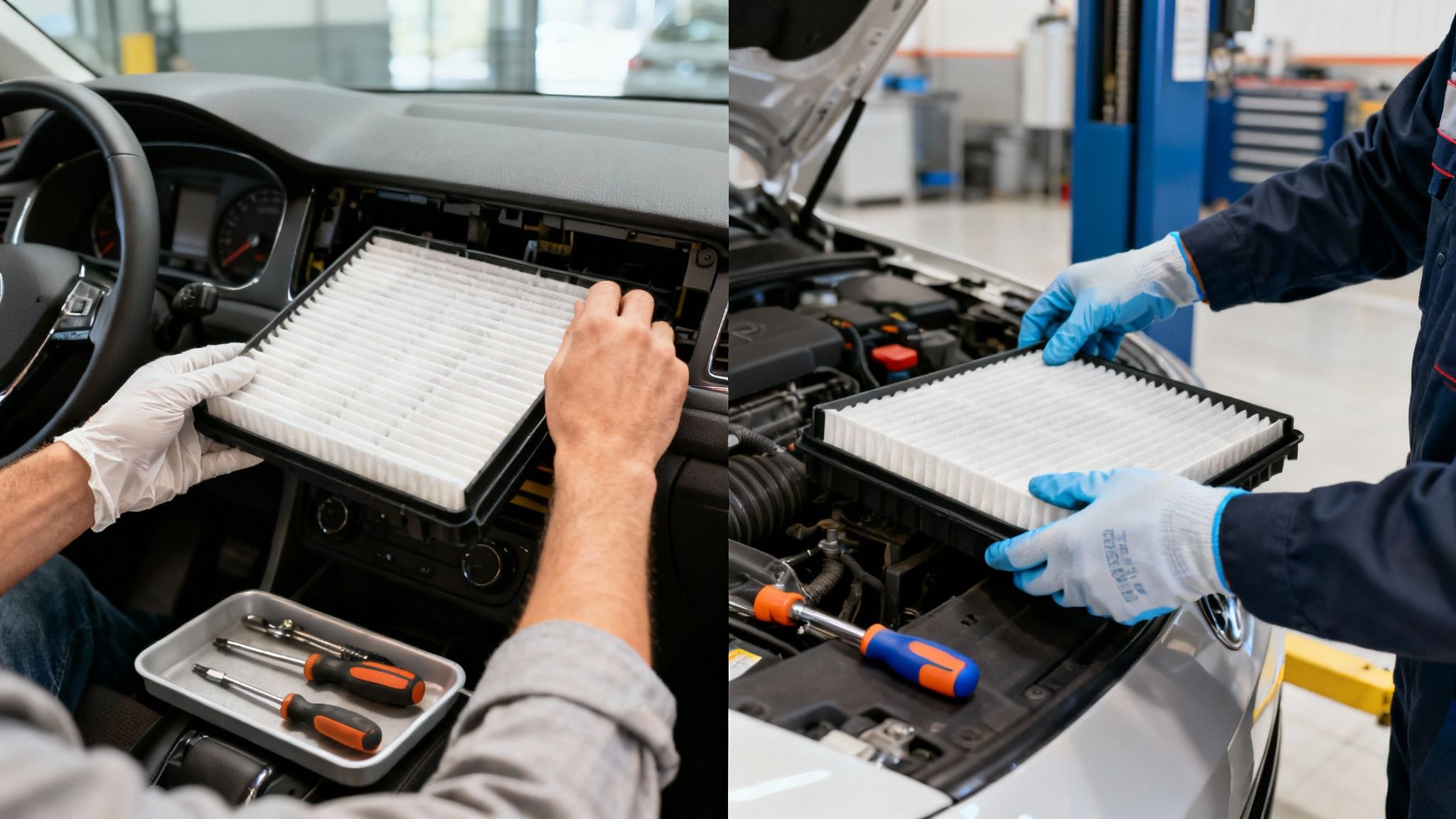
Should you replace your cabin air filter yourself or entrust it to a professional? The decision depends on your vehicle's design, your available time, and your mechanical aptitude. For some vehicle owners, it is a straightforward and rewarding task.
In many cars, the filter is conveniently located behind the glove compartment. The process involves releasing a few clips, removing the old filter, and inserting the new one. This can often be completed in as little as 10 minutes. However, this is not the case for all vehicles. Some manufacturers place the filter deep within the dashboard, making it difficult to access without specialized tools and considerable patience.
The Risks of a DIY Replacement
While a do-it-yourself approach can save money on labor, it presents several potential pitfalls. It is surprisingly easy to purchase the incorrect size or type of filter, and even a minor discrepancy in dimensions can render it completely ineffective.
A filter that isn’t seated perfectly creates gaps, letting dust, pollen, and all that gunk bypass it completely. You end up with all the hassle and none of the fresh, clean air you were hoping for.
An improperly installed filter means you are still breathing the same contaminated air as before, negating the entire purpose of the replacement.
The Value of Professional Service
Bringing your vehicle to Express Lube & Car Care eliminates all guesswork from the process. Our ASE-certified technicians have the expertise to locate the filter in any make or model, including those with challenging placements. We ensure that the correct, high-quality filter is installed perfectly, with no gaps or errors.
A 2020 J.D. Power study found that a staggering 55% of vehicle owners wait until something goes wrong before even thinking about their cabin filter. This reactive approach often leads to more significant HVAC problems that can cost anywhere from $200 to $500 to repair. We can perform the service correctly in minutes, often during a routine oil change. Explore our expert filter replacement services and gain peace of mind knowing the job is done right.
Why Plano Drivers Trust Express Lube
When your car requires service in Plano, you have numerous options. For fast, honest service without complications, drivers choose Express Lube & Car Care. We understand that your time is valuable, which is why our business model is built on a core principle: no appointments necessary.
This straightforward approach is a significant convenience for busy professionals and families. Whether it's a quick oil change or a new cabin air filter, our team is equipped to get you back on the road efficiently without requiring you to schedule a visit days in advance. We combine speed with genuine expertise, ensuring every job is completed correctly the first time.
Expert Service and Quality Parts
Our technicians are not just fast—they are ASE-certified professionals who are part of this community and understand the demands placed on vehicles in North Texas. When we replace your cabin air filter, we use premium parts specifically selected to handle Plano’s high levels of pollen, dust, and humidity. This means superior protection for your car's HVAC system and, more importantly, cleaner air for you and your family.
Your time is valuable, and your car is essential. At Express Lube, we respect both with efficient, trustworthy service that takes the guesswork out of maintenance and gives you peace of mind every time you stop by.
A poorly performing AC system during a Texas summer is more than just an inconvenience. If you are experiencing weak airflow or unusual odors even after a filter change, it may indicate a deeper issue. You can learn more about our complete Plano AC repair services to ensure your vehicle remains cool and comfortable throughout the year.
A Commitment to Our Community
We are a local business, deeply invested in our community. We are proud to support the people who make Plano a great place to live. We demonstrate our appreciation through special discounts and programs designed to give back and make essential car care more accessible.
Here’s how we support our neighbors:
- Ladies Day: Every Wednesday, we offer $25 off an oil change to make maintenance more affordable.
- Support for Heroes: We have special offers for our military members and first responders to thank them for their service.
It’s this commitment to value and community that keeps drivers coming back for everything from routine work to bigger repairs. Swing by today and see the Express Lube difference for yourself.
Common Questions About Cabin Air Filters
Let's address a few frequently asked questions we receive from drivers. Here are clear, straightforward answers to help you understand this important maintenance task.
Can a Clogged Filter Affect My Gas Mileage?
This is an excellent question that highlights a common point of confusion. While a dirty engine air filter will negatively impact your fuel economy, a clogged cabin air filter does not directly affect your MPG. Its function is to filter the air entering the passenger cabin, not the air used by the engine for combustion.
However, it is still a critical component. A severely blocked cabin filter forces your HVAC system to work much harder to circulate air. This places excessive strain on the blower motor, which can lead to premature failure. So, while it won't affect your fuel costs, neglecting it can result in a significantly more expensive repair bill.
What Is the Difference Between Standard and Premium Filters?
Selecting the appropriate filter is as important as replacing it at the correct interval. You will typically encounter two main types: standard and premium.
- Standard Filters: These are basic particulate filters, generally constructed from a paper-based medium. They are effective at trapping larger particles such as dust, pollen, and leaves.
- Premium Filters: These advanced filters often incorporate a layer of activated carbon or charcoal. This material does more than just block particles—it actively absorbs odors, exhaust fumes, and other gaseous pollutants from the air.
For individuals with allergies, chemical sensitivities, or those who simply wish to minimize exposure to exhaust fumes in heavy Plano traffic, upgrading to a premium filter provides a noticeable improvement in in-cabin air quality.
How Long Does a Cabin Air Filter Replacement Take?
The speed of this service is often surprising. For most vehicles, our ASE-certified technicians at Express Lube can replace your old cabin air filter in just 10 to 15 minutes.
It's such a quick service that you can easily add it to your regular oil change without making your visit any longer. No appointment is ever needed, making it one of the most convenient ways to keep your car's air fresh and clean.
This simple maintenance step has a significant impact on your driving comfort and is one of the easiest and most effective ways to care for your vehicle.
Stop by Express Lube & Car Care today for a quick filter check and replacement. We'll help you breathe easier on every drive. Visit us online to learn more at https://www.expresslubeplano.com.