

Your car starts fine one morning, but at the first light it shakes a little. Later, pulling onto the Dallas North Tollway, it hesitates before it goes. Maybe the check engine light pops on. Maybe it doesn’t. Most drivers jump straight to “bad fuel injector,” but that guess can get expensive fast.
I’ve seen plenty of Plano drivers replace the wrong part because several engine problems feel almost the same from the driver’s seat. A bad spark plug, a weak ignition coil, carbon buildup, low compression, and a bad fuel injector can all show up as a rough idle or a misfire. The smart move is to narrow it down in order, starting with the easy checks.
That’s what this guide is for. If you’re worried about a bad fuel injector, I’ll walk you through what the injector does, how the symptoms show up, what usually causes trouble, and how to decide what you can check yourself versus when a shop needs to step in.
What a Fuel Injector Does and Why It Matters
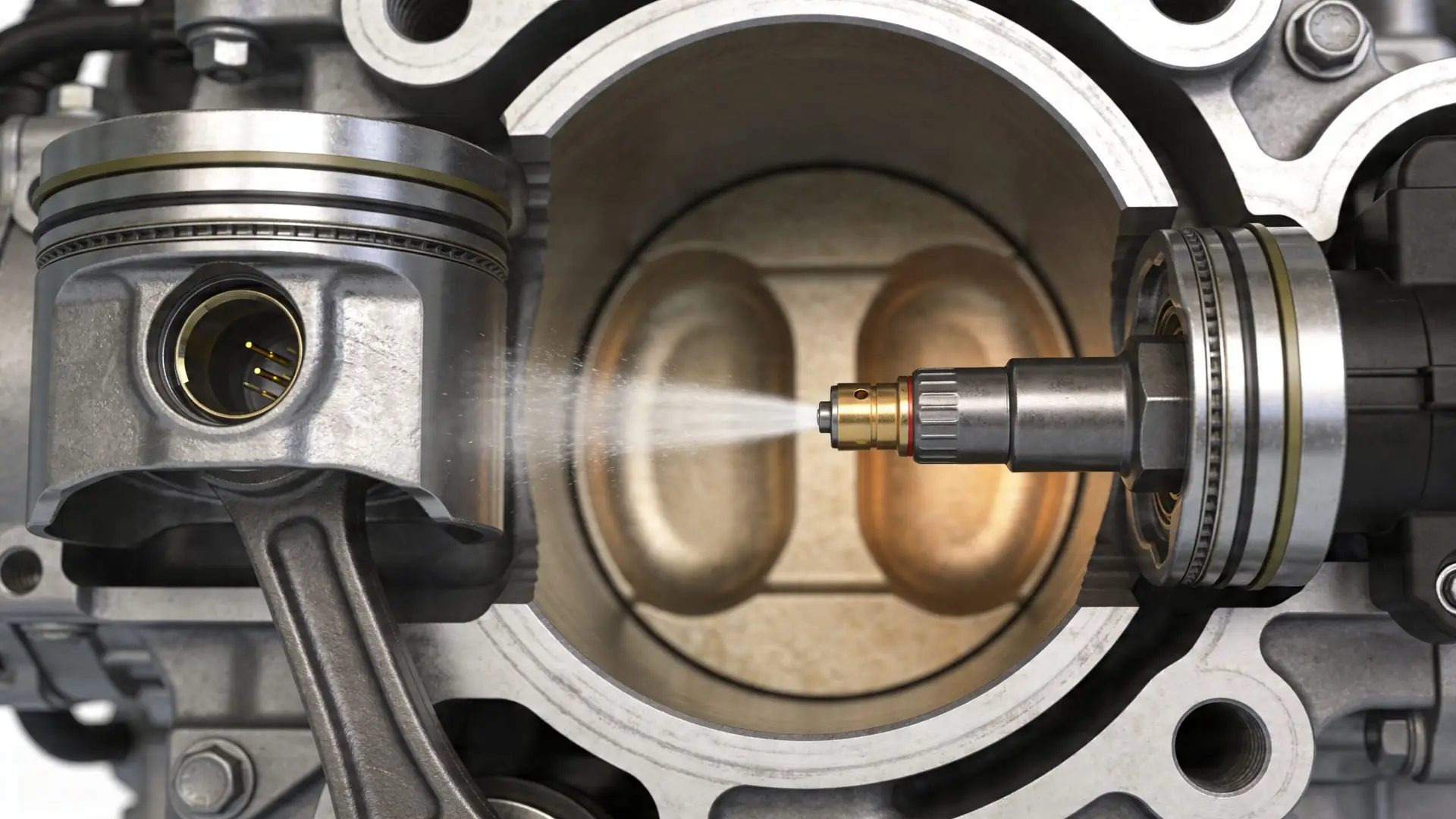
A fuel injector has one job, but it has to do that job with very tight timing. It meters fuel into the engine in a fine spray, at the right moment, in the right amount, so that cylinder can burn the air and fuel charge cleanly.
A garden hose nozzle is a good comparison. A proper mist mixes evenly. A dribble does not. Your engine depends on that same difference every time you turn the key and pull into Plano traffic.
Inside each injector is a small valve controlled by the engine computer. The computer commands it to open for a split second, then close again. If that timing is off, or if the spray pattern is poor, combustion in that cylinder changes right away. The result can feel bigger than the part itself because one weak cylinder can make the whole engine seem rough.
What makes an injector “bad”
“Bad” is a catch-all term, and that is where a lot of diagnostic mistakes start.
An injector can be clogged by deposits, which reduces fuel flow or distorts the spray pattern. It can have an electrical problem, which means it may not open consistently or at all. It can also leak, which sends in fuel when it should stay shut. Those are three different failures, and they do not point to the same repair.
That distinction matters for your wallet. A clogged injector may respond to cleaning. An injector with an internal electrical fault usually needs replacement. A leaking injector can create hard starting, fuel smell, or diluted engine oil if the problem is severe enough.
Why this part gets confused with spark plugs and coils
From the driver’s seat, a fuel problem and an ignition problem can feel almost identical.
If a spark plug fails, the fuel in that cylinder may not burn. If an injector fails, the spark may be fine but the cylinder still will not burn the mixture correctly. Either way, you may feel a shake, stumble, or loss of power. That overlap is why so many Plano drivers guess wrong and replace plugs or coils first, or blame the injector when the underlying problem is ignition-related.
The injector’s role is simple. It feeds the cylinder. If the feed is wrong, everything downstream is affected.
Why such a small part matters so much
A weak injector can affect the engine in a few different ways at once:
- Engine smoothness: One cylinder may run lean, rich, or not contribute evenly.
- Fuel economy: Poor fuel delivery can waste gas and force the engine computer to make constant corrections.
- Emissions: Fuel that is not atomized well does not burn as cleanly.
- Starting and drivability: A leaking or restricted injector can make the engine harder to start or slower to respond.
That is why injector problems can seem random. At idle, the engine may shake. Under light acceleration, it may hesitate. Under heavier load, it may fall flat. Those signs can overlap with plugs, coils, vacuum leaks, or carbon buildup, which is exactly why diagnosis has to be done in order instead of by guesswork.
For Plano drivers, that matters in real life. A car that only acts up in school pickup lines, stop-and-go on Preston, or while merging onto the Tollway may still have a real injector issue, but the symptom alone does not prove it. The injector matters because it sits at the center of combustion, and when combustion is off, the whole engine tells on itself in ways that can be easy to misread.
Key Symptoms of a Bad Fuel Injector
You are sitting at a light on Preston Road, and the engine starts to shiver just enough to make you notice the steering wheel. Later that same day, the car hesitates pulling into traffic, then seems almost normal again. That pattern is what throws people off. Injector problems often act like spark plug or ignition coil problems, especially in the early stages.
A fuel injector issue usually shows up as a combustion problem first. From the driver’s seat, that means the engine may feel uneven, lazy, or unpredictable instead of obviously “fuel-related.” One bad injector can make a single cylinder fall behind, and the whole engine feels less balanced, like one person on a rowing team missing strokes.
What drivers usually notice first
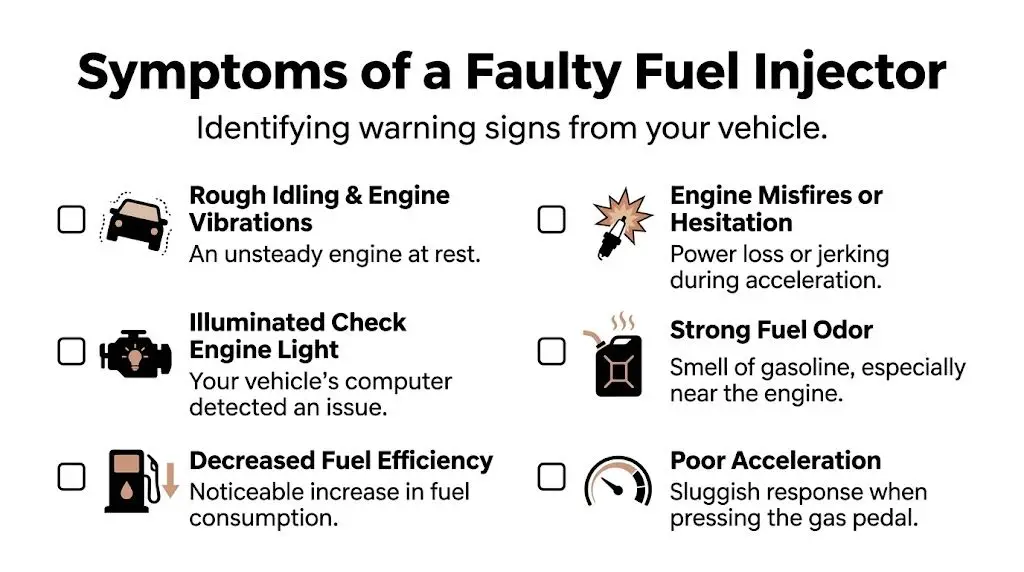
The first clues are usually drivability changes, not a dramatic failure. You may notice:
- Rough idle: The engine shakes or has an uneven rhythm while stopped in gear.
- Hesitation on acceleration: You press the pedal and the response feels late, weak, or jerky.
- Poor fuel economy: You start using more gas without changing your route or driving habits.
- Hard starting: The engine cranks longer than normal before it fires up.
- Check engine light: Misfire-related trouble codes can show up because that cylinder is not burning fuel normally.
- Fuel smell or darker exhaust: A leaking or poorly spraying injector can leave fuel partly unburned.
The tricky part is that spark plugs and coils can cause many of those same symptoms. A misfire code points to the affected cylinder or a general misfire condition. It does not automatically prove the injector is the bad part.
One symptom that points more strongly to an injector
Some injector symptoms are more specific than others.
If you smell raw fuel around the car, notice blacker-than-normal exhaust, or find that the oil level on the dipstick seems to be rising while the oil smells like gasoline, a leaking injector moves much higher on the suspect list. This overview of leaking injector symptoms explains that leaking injectors can let excess fuel wash past the cylinder walls and contaminate the oil.
That matters because fuel-thinned oil does a worse job protecting engine parts.
Practical rule: If the engine runs rough and the oil level is climbing instead of dropping, stop driving it more than necessary and have it checked.
A quick way to separate injector symptoms from common look-alikes
Here is the simple framework we use in the shop. Ask whether the symptom points to fuel delivery in one cylinder, ignition in one cylinder, or fuel supply to the whole engine.
| Symptom | Bad Fuel Injector | Bad Spark Plug or Coil | Clogged Fuel Filter |
|---|---|---|---|
| Rough idle | Common | Common | Possible |
| Hesitation on acceleration | Common | Common | Common |
| Check engine light | Common | Common | Possible |
| Fuel smell | More suggestive | Less common | Uncommon |
| Hard starting | Possible | Common | Possible |
| Gas smell in oil or rising oil level | Strong clue | Not typical | Not typical |
| Misfire that stays with one cylinder after basic ignition parts check out | More suspicious | Less likely | Less specific |
| Power loss under heavier load in all cylinders | Less specific | Possible | More suspicious |
When basic checks make sense, and when they do not
If you are comfortable doing a few simple checks, start with the easy and inexpensive items people commonly confuse with injector trouble. Look at maintenance history. Ask whether the spark plugs are overdue. If your scan tool shows a cylinder-specific misfire, that is useful, but it is only the starting point.
DIY checks make sense when you are confirming basics:
- Is the gas cap on and the fuel fresh?
- Are the plugs overdue?
- Is there an obvious loose coil connector?
- Did the problem start right after a tune-up or other repair?
Professional testing makes more sense when the symptom is intermittent, the check engine light keeps returning, or the car has signs of a leaking injector. At that point, guessing gets expensive. We may need to compare fuel trim data, inspect plug condition by cylinder, test injector operation, and rule out ignition and air-fuel issues in a specific order.
That step-by-step approach saves Plano drivers money because it helps prevent the common mistake of replacing plugs, then coils, then an injector, when only one of those parts was at fault.
Common Causes of Fuel Injector Failure
Fuel injectors live in a dirty, hot, high-demand environment. They handle fuel constantly, open and close over and over, and rely on tiny passages staying clean. It doesn’t take much contamination to upset that process.
In day-to-day Plano driving, short trips, stop-and-go traffic, and plenty of idling can make deposit buildup more likely. Dusty conditions don’t help either. None of that means your injector is doomed. It means injector problems often build gradually, not all at once.
The most common cause is clogging
The most common bad fuel injector problem is a clogged injector. Contaminants from low-quality fuel, weak filtration, and carbon or varnish deposits can restrict flow. When that happens, the injector’s normal mist can turn into larger droplets, which upsets clean combustion and contributes to incomplete burning, as outlined in the earlier cited injector reference.
That chain reaction matters:
- Contaminants collect on the pintle or orifice.
- Fuel flow changes and atomization gets worse.
- Combustion becomes uneven in that cylinder.
- The engine computer reacts and may try to compensate.
- Performance symptoms show up like rough running, hesitation, and poor mileage.
Driving habits that make buildup worse
Some vehicles spend most of their lives on short errands. The engine warms up, but not always long enough to operate in the cleanest conditions for long periods. Add lots of idling and repeated low-speed driving, and deposits have more opportunity to stick around.
That’s common for family vehicles in Plano. Quick school runs, grocery stops, local commuting, and waiting in traffic can be harder on injectors than people realize.
Not every injector failure is a clog
Electrical faults create a different problem. The injector contains components that must respond to electrical commands from the engine computer. If that electrical side fails, the injector may not open correctly, may stay open too long, or may stop responding altogether.
That distinction matters because cleaning helps with dirt and deposits. It doesn’t fix a failed electrical circuit inside the injector.
If an injector is dirty, cleaning may help. If the injector can’t respond to the computer’s command, cleaning won’t solve the root problem.
Secondary damage can follow
When combustion stays wrong long enough, extra heat and unburned fuel can stress other parts. The catalytic converter and oxygen sensors can suffer if raw fuel keeps reaching the exhaust. That’s one reason it’s smart to address misfire symptoms early instead of waiting until the car becomes nearly undrivable.
A bad fuel injector often starts as a fuel delivery problem. Left alone, it can turn into an engine performance problem and then an emissions-system problem too.
How to Diagnose a Bad Fuel Injector
Diagnosis is where people either save money or waste it. The mistake I see most often is replacing an injector because the engine has a misfire, even though the actual cause is a spark plug or ignition coil. Those parts can produce the same basic complaint.
A common diagnostic error is replacing a fuel injector when the root cause is a bad spark plug or ignition coil, and modern GDI engines add another layer because carbon buildup on intake valves can mimic injector symptoms in over 60% of new vehicles, according to this discussion of injector look-alikes.

Start with simple checks
Before anyone breaks out advanced equipment, start with what you can observe safely.
- Listen to the engine: A rough idle, stumble, or rhythmic miss gives useful clues.
- Notice the smell: Raw fuel around the engine bay or in the oil is a warning sign.
- Check the oil level: If it’s rising unexpectedly, that points toward a leaking injector problem.
- Think about timing: Did the issue start after overdue maintenance, poor fuel, or after another repair?
These checks won’t confirm a bad injector, but they help frame the next step.
Use an OBD-II scanner before buying parts
If you have access to a scan tool, use it. Even a basic code reader is more useful than guessing. Misfire codes can point you to a cylinder, but they don’t automatically identify the failed part.
A simple way to think about it:
- P0300 points to a random or multiple-cylinder misfire.
- P0301 through P0308 indicate a misfire on a specific cylinder.
That information helps narrow the search. If one cylinder is acting up, you can inspect the spark plug and coil for that cylinder first before assuming injector failure.
For a closer look at what scan results and shop testing involve, this guide to a car diagnostic test process is useful background for drivers who want to understand what happens after the warning light comes on.
Rule out the common impostors first
If I were advising a friend in a driveway, I’d use this order:
- Check maintenance basics first. Worn spark plugs are common and can mimic injector trouble.
- Consider the ignition coil. A weak coil can create a single-cylinder misfire that feels just like a fuel issue.
- Think about airflow and carbon. On GDI engines, intake valve deposits can cause rough running too.
- Only then focus hard on the injector.
That order keeps you from jumping straight to a more expensive part.
The code tells you which cylinder is unhappy. It does not tell you which part made that cylinder unhappy.
What professional testing adds
When basic checks don’t settle it, a shop moves from clues to proof. Professional diagnostics may include fuel pressure testing, circuit checks, and an injector balance test. That last test compares how each injector delivers fuel so the technician can see whether one injector is falling behind.
If you’re curious about the bigger picture, this article on diagnostic technology used in auto repair shops gives a good overview of the kinds of tools modern shops rely on to separate overlapping symptoms.
For visual learners, this video helps make the process less mysterious.
When diagnosis moves beyond DIY
Bring in a professional when any of these apply:
- The check engine light is flashing
- The car is actively misfiring
- You smell strong fuel
- The oil smells like gasoline
- You already changed ignition parts and the issue remains
- You need confirmation before paying for injector replacement
That last point matters most. Injector repairs can be worthwhile, but only after the diagnosis is solid.
Repair and Replacement Options and Costs
Once a bad fuel injector is confirmed, the next question is simple. Do you clean it, repair part of it, or replace it?
The answer depends on the failure type. A deposit problem and an electrical failure may produce similar driving symptoms, but they don’t call for the same fix. The most expensive mistake isn’t always replacing an injector. Sometimes it’s paying for a cleaning when the injector never had a chance of recovering.
Option one is professional cleaning
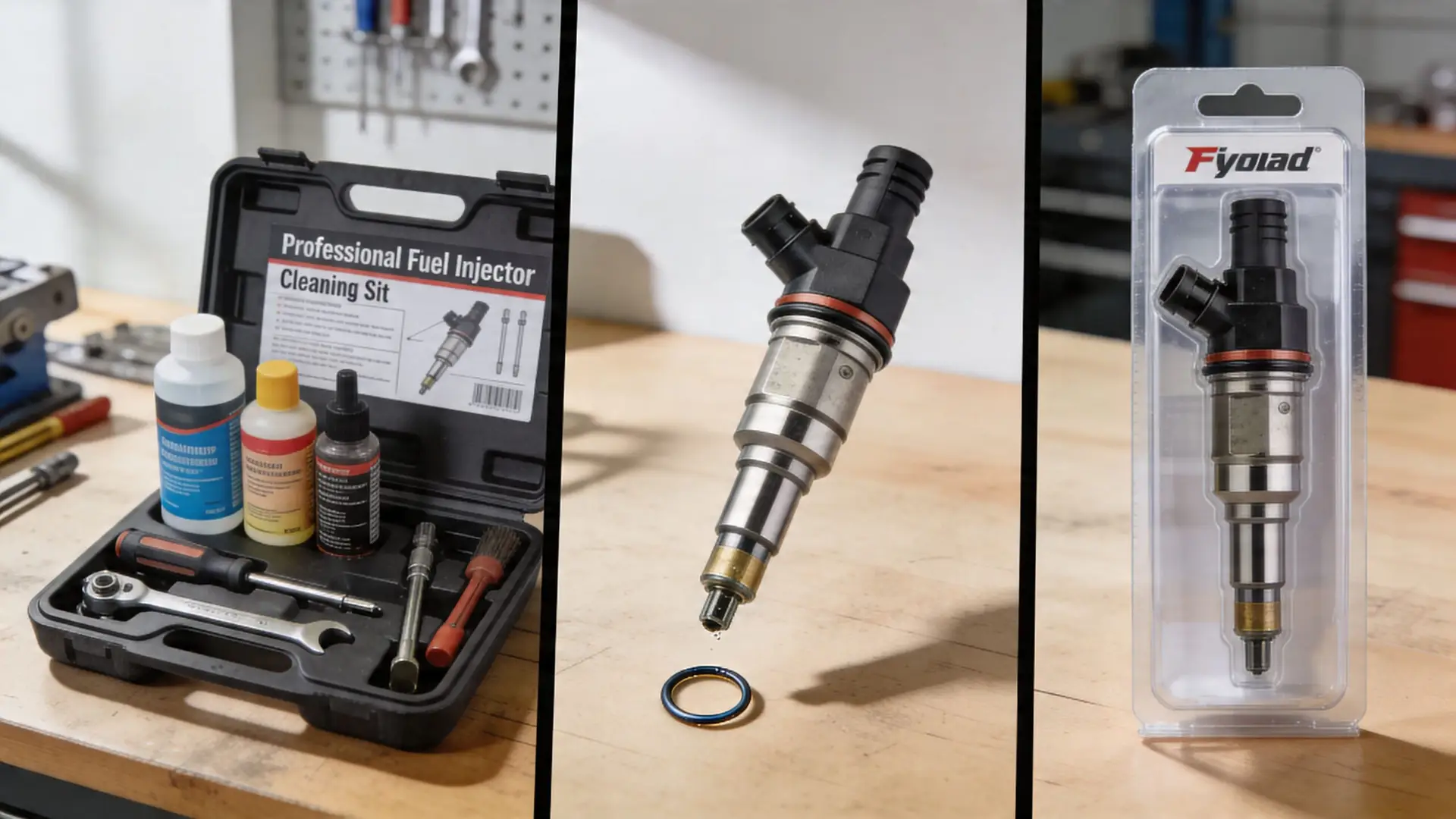
If the injector is clogged but still electrically sound, cleaning is often the first move. The verified data for this article notes that ultrasonic cleaning restores 80 to 95% of flow in many cases based on Bosch service benchmarks, and fuel system flushes using PEA additives in the 100 to 300 ppm dosage range are used to help prevent recurrence in contaminated systems, as summarized in the previously cited injector source.
That makes cleaning a good fit when:
- The issue is deposit-related
- The injector still responds electrically
- The spray pattern can be improved
- The problem was caught early
If you want to understand what that service typically includes, this overview of what a fuel system cleaning is helps explain the process.
Option two is limited repair
Sometimes the injector itself isn’t the only thing under consideration. Related seals or serviceable pieces may be involved, depending on the design and what the technician finds during testing and inspection.
This is the middle-ground option. It’s more targeted than full replacement, but it only makes sense when the failed area is clearly identified and the injector body remains serviceable.
Option three is replacement
Replacement is the most direct answer when the injector has an internal electrical fault, severe leakage, or damage that cleaning won’t correct. It’s also the more reliable path when the injector has progressed beyond a simple clog.
That’s especially important when leaking injectors raise concern about oil dilution. In that situation, trying to “clean your way out of it” can waste time and expose the engine to more risk.
Shop-floor reality: Cleaning is for contamination problems. Replacement is for failed hardware.
About repair costs
The title of this article includes repair costs because that’s what drivers search for, but precise pricing varies too much by engine design, injector location, labor time, and whether one injector or multiple injectors need attention. Since no verified shopwide pricing data is provided here, it’s more accurate to think in ranges of complexity rather than made-up dollar numbers.
A practical way to budget is to ask for a written estimate that separates:
| Repair path | Best for | Main upside | Main downside |
|---|---|---|---|
| Professional cleaning | Mild to moderate clogging | Lower cost than replacement, less invasive | Won’t fix electrical faults or severe leaks |
| Limited repair | Specific related component issue | Targeted solution | Not possible on every injector design |
| Full replacement | Electrical failure, severe leak, major damage | Most definitive fix | Higher parts and labor cost |
When you’re comparing estimates, ask these questions:
- Was the injector tested, or is this an educated guess?
- Is the recommendation based on clogging, leakage, or electrical failure?
- Is one injector affected, or should others be evaluated too?
- If cleaning is recommended, what happens if symptoms return?
Those questions keep the conversation grounded in diagnosis instead of assumptions.
Preventing Fuel Injector Problems
The cheapest injector repair is the one you never need. Most bad fuel injector issues don’t appear out of nowhere. They build up through fuel contamination, deposit formation, overdue maintenance, and driving patterns that let those deposits stick around.
That’s good news for drivers because prevention is practical. You don’t need to be a technician to reduce the odds.
Start with better fuel habits
The verified data behind this article recommends TOP TIER™ fuel and notes it helps deter low sulfur conditions associated with injector deposit concerns, while also highlighting 30,000-mile fuel filter swaps as a preventive benchmark for commuters and fleets in Plano in the same source previously cited.
For most drivers, that turns into a simple routine:
- Buy fuel from reputable stations: High-volume stations usually give you fresher fuel turnover.
- Use quality gasoline consistently: Switching randomly to the cheapest option every fill-up can work against deposit control.
- Don’t ignore the fuel filter: A restricted or overdue filter leaves the system with less protection.
If you’re not sure when your vehicle’s fuel filter should be serviced, this guide on how often to change a fuel filter gives a solid maintenance baseline.
Match prevention to Plano driving
Plano driving often means short hops, traffic lights, idling, and long waits with the A/C running. That pattern isn’t ideal for keeping deposits down. If your routine is mostly local driving, it helps to give the engine a longer, fully warmed-up drive from time to time so it isn’t always living in stop-and-go conditions.
That’s especially relevant for households with one vehicle that rarely leaves town. The engine may run fine for months while deposits slowly build.
Use additives carefully and intentionally
A quality cleaner with PEA can be helpful when used appropriately, especially as part of preventive maintenance for a system that’s dirty but not mechanically failed. The key is using it as maintenance, not as a magic fix for every rough idle.
If the injector is leaking or has an electrical fault, additive bottles won’t solve that. At that point, prevention has given way to diagnosis and repair.
Good fuel and on-time filter service are boring habits. They’re also the habits that often keep injectors out of trouble.
Pay attention to small changes
Prevention also means noticing early signs. If the engine starts idling rougher than normal, fuel economy drops, or the oil smells like gas, acting early gives you more options. Wait too long, and a problem that might have been manageable can spread to other systems.
Your Next Steps in Plano DIY vs Express Lube
The smartest approach is to separate what you can check yourself from what really needs shop equipment. That keeps you from doing too little, but it also keeps you from replacing parts based on a hunch.
Here’s the basic rule. If you’re gathering clues, DIY is fine. If you’re proving the cause, that usually takes professional testing.
DIY steps that make sense
These are reasonable first checks for a concerned driver:
- Scan for codes if you have a reader: Misfire information helps narrow the problem.
- Check for fuel smell: Around the car or in the engine oil.
- Watch idle behavior: Is it rough only at stops, or also under acceleration?
- Review recent maintenance: Old spark plugs and neglected tune-up items are common troublemakers.
- Try a quality cleaner only if symptoms are mild: That’s for possible deposit buildup, not major drivability issues.
These steps are low-risk and useful. They can help you describe the problem clearly and avoid blind guesses.
Signs it’s time for a shop
Some symptoms cross the line from “watch it” to “get it diagnosed.”
Bring it in when:
- The check engine light is flashing
- The engine is shaking hard or stalling
- You smell raw fuel consistently
- The oil level is rising or smells like gasoline
- The same misfire keeps coming back
- You replaced plugs or coils and nothing changed
Those signs suggest you need more than driveway-level troubleshooting.
A practical decision framework
Use this simple split:
| Situation | DIY is reasonable | Professional diagnosis is the better move |
|---|---|---|
| Mild roughness, no warning light | Yes | Maybe later if it continues |
| Single episode after bad fuel suspicion | Yes, monitor and scan if possible | If symptoms return |
| Repeated hesitation or misfire | Limited | Yes |
| Strong fuel odor | No | Yes |
| Gas smell in engine oil | No | Yes |
| You’re about to buy injectors online | Stop first | Yes |
That last row matters. If you’re one click away from ordering injectors because a code said “misfire,” pause. Misfire codes identify the unhappy cylinder, not the failed component. That’s the confusion that costs people money.
Why local drivers benefit from a clear process
Busy Plano schedules make it tempting to keep driving and hope the problem clears up. Sometimes a mild stumble stays mild for a while. Sometimes it doesn’t. A rough idle can turn into a converter problem, sensor problem, or oil-dilution problem if the underlying issue is ignored.
The goal isn’t to panic. It’s to be methodical. Start with the simple checks. Rule out the obvious impostors. Get a proper diagnosis before authorizing injector work.
If your vehicle is acting up and you want answers without guesswork, Express Lube & Car Care offers no-appointment service, ASE-certified technicians, and clear diagnostic help for Plano drivers who need a reliable answer before spending money on repairs.