

Your vehicle's engine relies on a tiny but mighty component for every single combustion cycle: the spark plug. This small device creates the high-voltage spark needed to ignite the air-fuel mixture, powering your car. But when spark plugs wear out or become fouled, they can't perform their function effectively, leading to a cascade of performance issues that range from mildly annoying to potentially damaging.
Ignoring these symptoms not only impacts your daily drive but can also lead to more expensive repairs. A failing spark plug can reduce fuel efficiency, increase harmful emissions, and in severe cases, cause catalytic converter damage. Recognizing the early signs of bad spark plugs is crucial for understanding engine health and avoiding costly breakdowns.
This guide provides a comprehensive overview of the eight most common symptoms, helping you identify problems early. We'll explore the technical reasons behind each sign, what to look for, and why a professional diagnosis is a critical next step. Understanding these indicators allows you to take proactive steps, ensuring your engine runs smoothly, powerfully, and efficiently. Let’s decode what your engine might be trying to tell you.
1. Engine Misfiring and Hesitation
One of the most noticeable signs of bad spark plugs is a misfiring or hesitating engine. This phenomenon occurs when a cylinder fails to combust its fuel-air mixture at the correct moment, causing a stumble in the engine’s rhythm. You might feel this as a sudden jerk, a brief loss of power, or a stuttering sensation, especially during acceleration. A worn-out or fouled spark plug is a primary cause, as it can no longer produce the strong, consistent spark required for efficient combustion.

Why It Happens
The function of a spark plug is to ignite a highly compressed mixture of air and fuel inside the engine's cylinders. Over time, the electrodes on a spark plug can erode, or they can become coated with carbon, oil, or fuel deposits. This degradation increases the electrical resistance and widens the gap the spark must jump, thereby weakening the spark. A weak or inconsistent spark leads to incomplete combustion, which the driver experiences as a misfire or hesitation.
Real-World Examples in Plano
- Highway Merging: A Plano commuter heading onto the President George Bush Turnpike notices their car struggles to get up to speed. It feels sluggish and "jerks" as they press the gas pedal, making a smooth merge difficult.
- Stop-and-Go Traffic: A family driving through the busy Shops at Legacy area experiences a rough, lurching sensation every time they accelerate from a stoplight.
Expert Insight: Ignoring engine misfires is a costly mistake. An unburned fuel-air mixture gets pushed into the exhaust system, where it can overheat and melt the internal components of your catalytic converter. This can turn a simple spark plug replacement into a four-figure repair.
Actionable Steps to Take
If you suspect your spark plugs are causing misfires, pay close attention to the conditions under which it happens. Is it more common on cold starts, during hard acceleration, or at steady highway speeds? This information is valuable for a technician.
Because a misfire can also be caused by other issues like a faulty ignition coil or a clogged fuel injector, professional diagnosis is key. At Express Lube & Car Care in Plano, our technicians can run diagnostic tests to pinpoint the exact cause. We’ll confirm if worn spark plugs are the problem and recommend the right solution to restore your engine's smooth performance and prevent further damage.
2. Difficult Engine Starting
Another one of the most common signs of bad spark plugs is an engine that struggles to start. If you find yourself turning the key for longer than usual, or needing multiple attempts to get the engine running, failing spark plugs are a likely cause. This issue often becomes more pronounced in cold weather, as a weak spark has an even harder time igniting the cold, dense fuel-air mixture.
Why It Happens
A healthy spark plug creates a powerful, hot spark with minimal electrical effort, reliably igniting the fuel to start the engine. As plugs wear, the gap between their electrodes widens, requiring more voltage from the ignition coil to create a spark. This increased demand can strain the ignition system, resulting in a weak or delayed spark that fails to initiate the combustion process on the first try.
Real-World Examples in Plano
- Cold Winter Mornings: A Plano family preparing for the school run notices their minivan needs two or three attempts to start on chilly winter mornings, cranking over but failing to catch.
- After a Long Day: A commuter leaving their office near Legacy West finds their sedan struggles to turn over after sitting in the parking lot all day, even on a mild afternoon.
Expert Insight: Don't automatically assume a hard start is a battery problem. While a weak battery is a common culprit, worn spark plugs can produce identical symptoms. Repeatedly cranking the engine with bad plugs can also flood it with unburned fuel, making it even harder to start and potentially causing other issues.
Actionable Steps to Take
If your car is difficult to start, document the occurrences. Note how many times you need to turn the key and whether the problem worsens in colder temperatures. This data helps a technician diagnose the issue more efficiently.
While you might suspect the battery, it's wise to rule out all possibilities. A hard start can be caused by spark plugs, the battery, or the fuel system. At Express Lube & Car Care in Plano, we can perform a quick diagnostic to identify the true source of the problem. We can easily test your battery's health to see if that's the issue or if it's time to inspect your spark plugs, preventing you from being stranded.
3. Increased Fuel Consumption
If you find yourself visiting the gas station more often than usual, it could be one of the subtle but costly signs of bad spark plugs. Poor fuel economy occurs when your engine must work harder to produce the same amount of power, burning more gasoline in the process. When spark plugs are worn or fouled, they cannot ignite the fuel-air mixture efficiently, leading directly to wasted fuel and a noticeable drop in your miles per gallon (MPG).
Why It Happens
Complete combustion is fundamental to fuel efficiency. A healthy spark plug creates a powerful, well-timed spark that ignites the entire fuel-air mixture in the cylinder, converting its chemical energy into mechanical force. When a spark plug degrades, the spark becomes weaker. This results in an incomplete burn, meaning not all the fuel is used to power the vehicle. Your engine’s computer senses this performance dip and compensates by injecting more fuel to restore the expected power level. This cycle of inefficient combustion and compensation directly hurts your MPG.
Real-World Examples in Plano
- Daily Commute: A commuter who drives from East Plano to their office near Legacy West used to get around 28 MPG. They notice their average has dropped to just 22 MPG, forcing them to refuel every week instead of every ten days.
- Business Fleet: A local Plano business owner notices their fleet of delivery vans is consuming about 15% more fuel than the previous quarter, significantly increasing their operational costs.
Expert Insight: A drop of just a few miles per gallon might not seem like much, but it adds up quickly. Over the course of a year, bad spark plugs can cost you hundreds of dollars in extra fuel costs, which is far more than the price of a professional spark plug replacement service.
Actionable Steps to Take
Start by tracking your fuel economy. Use your car's trip computer or manually calculate the miles driven between fill-ups divided by the gallons of fuel added. Do this for a few tanks to establish a reliable baseline. This data is extremely helpful for a technician.
Because decreased fuel efficiency can also be linked to issues like dirty air filters, underinflated tires, or faulty oxygen sensors, a professional diagnosis is the best way to confirm the cause. At Express Lube & Car Care in Plano, our certified technicians can inspect your ignition system, check your spark plugs, and determine if they are the source of your fuel economy problem. We'll help you restore your vehicle's efficiency and save money at the pump.
4. Check Engine Light Activation
An illuminated Check Engine light is one of the most common signs of bad spark plugs, serving as your vehicle's primary alert system. While this warning, also known as the Malfunction Indicator Lamp (MIL), can point to a wide range of issues, failing spark plugs are a frequent trigger. Your car's onboard computer constantly monitors engine performance, and when it detects misfires or inefficient combustion caused by a worn plug, it activates the light to warn you.

Why It Happens
Modern engines utilize a network of sensors to ensure they run efficiently and cleanly. When a spark plug becomes too old, fouled, or damaged to ignite the fuel-air mixture properly, it causes a misfire. The crankshaft position sensor detects this slight hesitation in the engine's rotation, and oxygen sensors in the exhaust may detect unburned fuel. The engine control unit (ECU) registers these anomalies as a problem, logs a specific diagnostic trouble code (like P0300-P0308 for misfires), and turns on the Check Engine light.
Real-World Examples in Plano
- Daily Commute: A Plano professional driving down Dallas North Tollway on their way to work sees their car's dashboard suddenly light up with the orange Check Engine symbol, even though the car seems to be running fine at the moment.
- Fleet Maintenance: The manager of a local delivery service in Plano notices that several of their high-mileage vans have the Check Engine light on, and a quick scan reveals misfire codes across the fleet, pointing to overdue spark plug service.
Expert Insight: A flashing Check Engine light indicates a severe, active misfire. This is a critical warning. Unburned fuel is entering the exhaust system, which can rapidly destroy the catalytic converter. Pull over safely and have your vehicle towed to prevent catastrophic and expensive damage.
Actionable Steps to Take
Never ignore a solid or flashing Check Engine light. While it might seem minor, it’s a direct warning of an underlying problem that could worsen. Pay attention to any other symptoms, such as rough idling or poor acceleration, that appeared when the light came on.
The only way to know the true cause is with a professional diagnostic scan. There are many reasons what causes a Check Engine light to come on, from a loose gas cap to a serious transmission issue. At Express Lube & Car Care, our Plano technicians use advanced scanning tools to read the specific trouble codes from your vehicle's computer. This allows us to accurately diagnose whether bad spark plugs are the issue and perform the right repair to get you back on the road safely.
5. Rough Idle and Unstable RPMs
Another one of the common signs of bad spark plugs is a rough or shaky idle. When your vehicle is stopped but the engine is running, its operation should feel smooth and steady. If you notice excessive vibration through the steering wheel, seat, or gear shifter, or if the RPM needle on your tachometer fluctuates erratically, failing spark plugs are a likely cause. This instability happens because inconsistent spark leads to uneven combustion across the cylinders, disrupting the engine's balance at low speeds.
Why It Happens
At idle, your engine operates at its lowest speed, making it highly sensitive to combustion quality. A worn, fouled, or damaged spark plug struggles to produce a spark strong enough to reliably ignite the fuel-air mixture. This results in incomplete or staggered combustion across different cylinders. The engine's computer attempts to compensate by adjusting fuel and air, but the underlying weak spark creates an unstable, rough-running condition that you feel as vibration.
Real-World Examples in Plano
- Waiting in a Drive-Thru: A Plano resident waiting for their coffee on Coit Road notices their sedan is vibrating more than usual. The whole car seems to be shuddering slightly, and the feeling stops as soon as they accelerate.
- Stopped at an Intersection: A driver stopped at the busy intersection of Parker and Independence feels a noticeable tremor through their steering wheel. They see the RPM needle bouncing slightly instead of holding steady.
Expert Insight: A rough idle isn't just an annoyance; it's a sign of engine inefficiency that can strain engine and transmission mounts over time. Addressing it early prevents the vibration from causing premature wear on other critical components.
Actionable Steps to Take
Pay close attention to when the vibration occurs. Is it worse when the engine is cold, or does it happen consistently even after a long drive? This detail helps a mechanic diagnose the issue faster. A rough idle can also be a symptom of a vacuum leak, dirty fuel injectors, or a failing sensor, which is why a professional check is so important.
At Express Lube & Car Care in Plano, our technicians can accurately diagnose the source of your rough idle. We’ll check the spark plugs and the entire ignition system to confirm the cause. Knowing the other signs your car needs a tune-up can also help you decide when it's time to bring your vehicle in for a comprehensive inspection.
6. Spark Plug Physical Condition and Visual Inspection
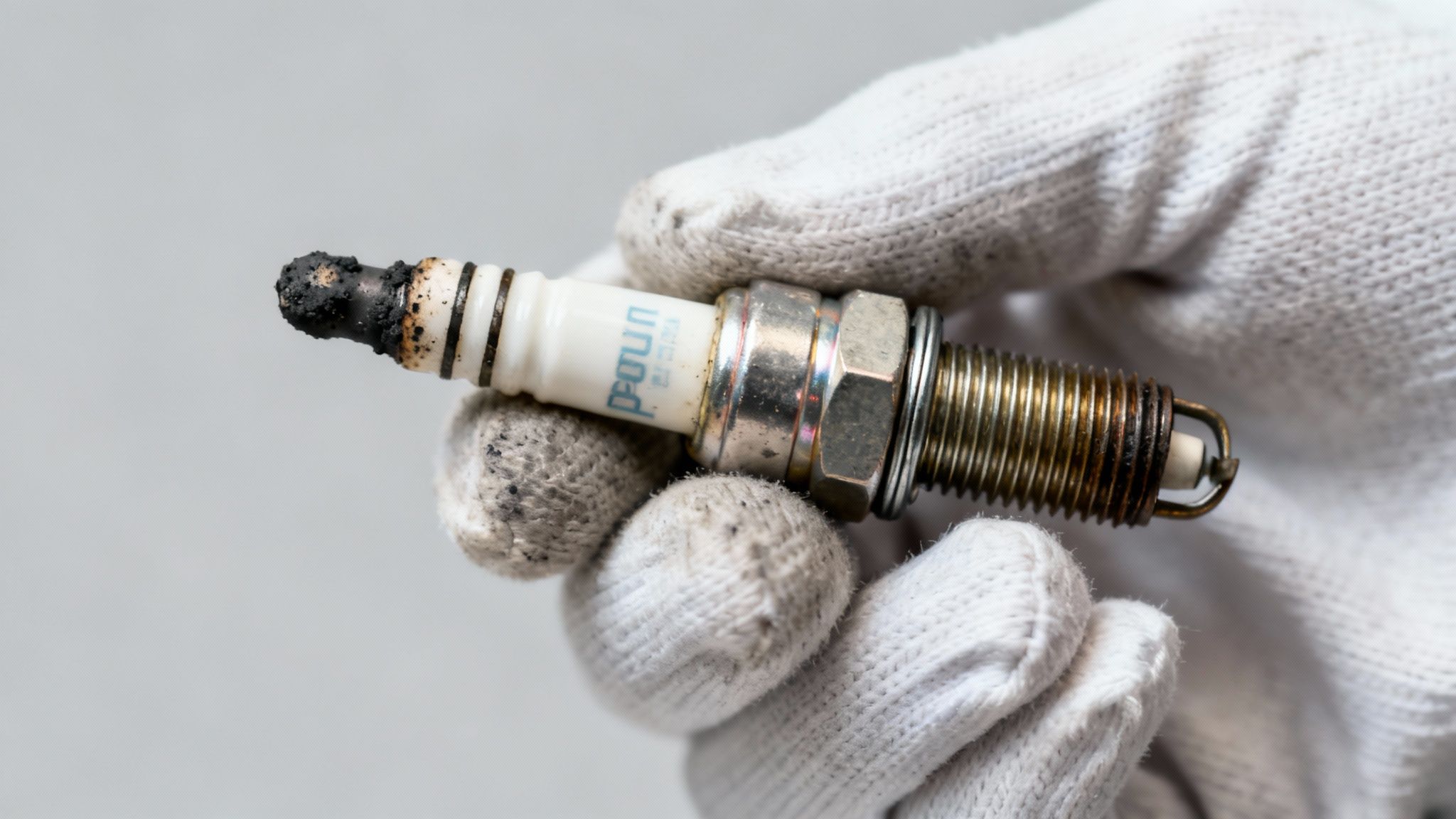
Beyond performance issues, one of the most definitive signs of bad spark plugs is their physical appearance. A direct visual inspection provides conclusive evidence of what is happening inside your engine. Examining the firing end of a spark plug can reveal signs of carbon fouling, oil deposits, electrode erosion, or even physical damage, confirming that it's time for a replacement.
Why It Happens
A healthy spark plug should have a light tan or grayish deposit on its insulator tip. However, various engine conditions alter this appearance. For instance, a rich fuel mixture can leave a dry, black, sooty carbon coating (carbon fouling). An internal oil leak may result in wet, oily black deposits (oil fouling). Over time, the high voltage and intense heat simply erode the sharp edges of the electrodes, making them rounded and increasing the gap, which weakens the spark.
Real-World Examples in Plano
- Proactive Maintenance: A Plano vehicle owner performing a routine oil change at home decides to pull a spark plug for inspection and discovers it's heavily fouled with carbon, prompting an immediate replacement.
- Fleet Management: A local business manager asks for a review of spark plug conditions across their delivery vans and uses the findings to schedule preventative maintenance, avoiding costly downtime from unexpected breakdowns.
Expert Insight: The condition of your old spark plugs is like a diagnostic report for your engine. Black, sooty plugs could point to a fuel system issue, while oily plugs might indicate worn piston rings or valve seals. Showing you the old plugs isn't just a sales tactic; it's a crucial part of a transparent and thorough vehicle health check.
Actionable Steps to Take
Incorporate visual inspection into your routine maintenance. Ask your technician to check your spark plugs during every other oil change. When they are replaced, request to see the old ones so you can understand their condition and what it indicates about your engine's health.
At Express Lube & Car Care, our technicians understand that a spark plug tells a story. We don’t just replace parts; we diagnose the root cause. If we find fouled plugs, we'll investigate why and advise you on any related issues, ensuring your vehicle runs efficiently and reliably for miles to come.
7. Reduced Engine Power and Performance
One of the most frustrating signs of bad spark plugs is a noticeable loss of engine power and overall performance. When spark plugs are failing, they cannot ignite the fuel-air mixture efficiently. This incomplete combustion directly translates to less power being generated by the engine, making your vehicle feel sluggish, unresponsive, and weak.
Why It Happens
Your engine's power originates from a series of rapid, controlled explosions in the cylinders. A healthy spark plug creates a powerful spark that ensures a complete and forceful combustion event, pushing the piston down with maximum energy. When a spark plug is worn or fouled, it produces a weak spark. This leads to a slower, less complete burn of the fuel, generating significantly less power and making your engine work harder to achieve the same results.
Real-World Examples in Plano
- Freeway On-Ramps: A Plano family in their minivan struggles to get up to speed when merging onto the LBJ Freeway. The engine feels like it's straining, and they have to push the gas pedal much further than usual to keep up with traffic.
- Towing and Hauling: A local contractor notices their pickup truck, which normally tows a trailer with ease, is now struggling to pull the same load up the slight inclines on Preston Road.
Expert Insight: Reduced power isn't just an annoyance; it’s a symptom of an inefficient engine. This inefficiency forces other components to work harder, leading to increased wear and tear over time. Addressing the root cause, like bad spark plugs, can restore performance and protect your engine's long-term health.
Actionable Steps to Take
If your car feels underpowered, try to note specific situations where it is most obvious. Does it struggle more when going uphill, carrying passengers, or trying to pass another vehicle? This information helps narrow down the cause. While a clogged air filter or fuel system issue can also cause power loss, old spark plugs are a very common culprit.
For a definitive diagnosis, bring your vehicle to Express Lube & Car Care in Plano. Our technicians can test your ignition system to see if weak spark is the problem. A new set of spark plugs can often restore your vehicle’s lost power, making it feel responsive and capable once again.
8. Fouled or Dirty Spark Plugs with Visible Deposits
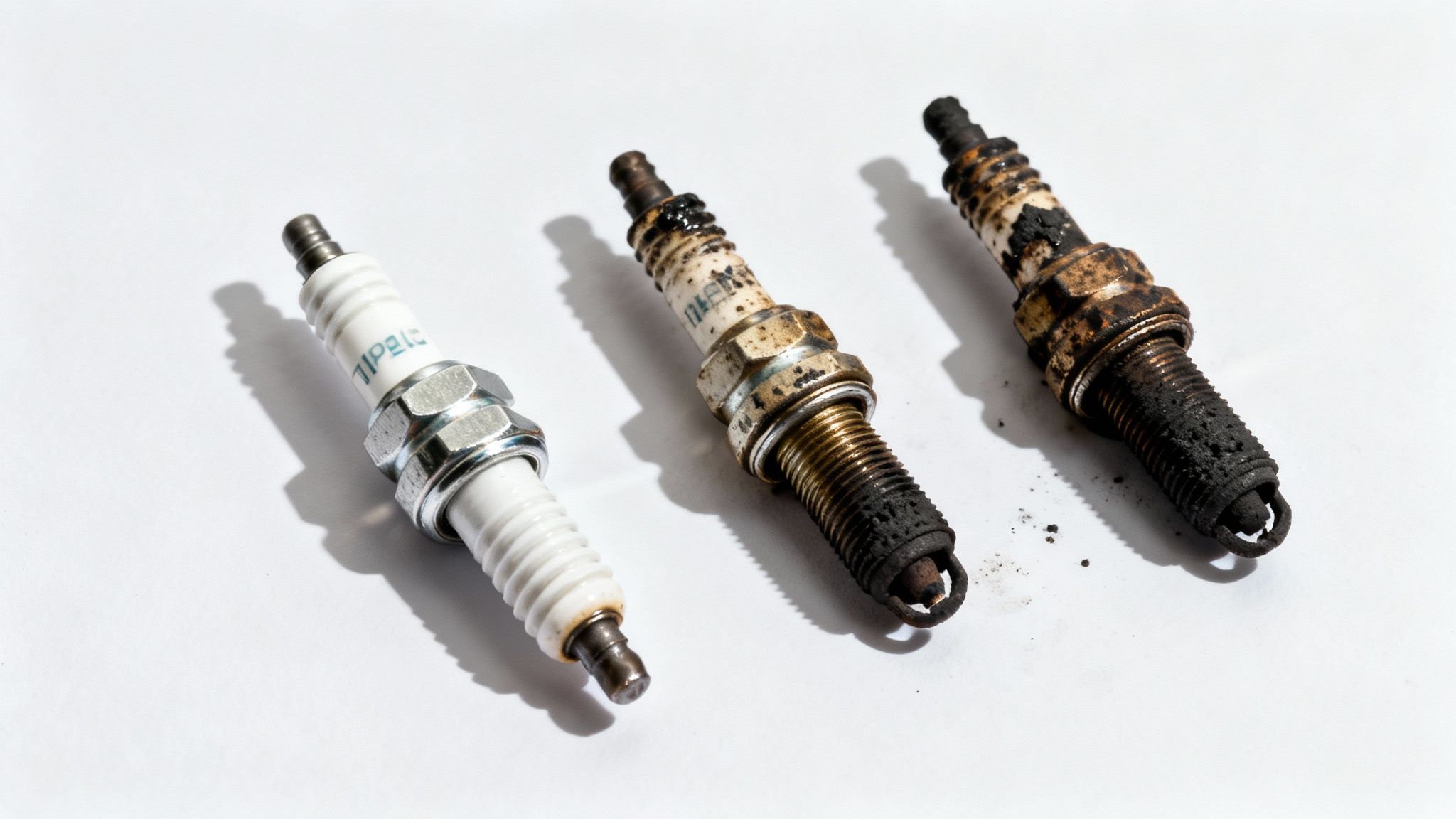
Sometimes, the most direct evidence of a problem is one you can see. If your spark plugs are removed for inspection, visible deposits are a clear sign of trouble. These coatings on the electrodes and insulator are one of the most definitive signs of bad spark plugs, as they physically obstruct the spark, leading to many of the other symptoms on this list.
Why It Happens
Spark plug fouling occurs when substances like carbon, oil, or fuel additives build up and coat the firing end of the plug. This buildup creates an alternative, lower-resistance path for the electrical current, preventing it from jumping the electrode gap to create a strong spark. Different types of fouling point to different underlying engine issues. Black, sooty carbon fouling often indicates a rich fuel mixture, while oily, wet deposits suggest internal oil leaks past worn piston rings or valve seals.
Real-World Examples in Plano
- Older Sedan Issues: The owner of an older sedan in Plano notices blue smoke from the exhaust and brings it in for service. Upon inspection, the technician finds the spark plugs are coated in a wet, oily film, indicating worn piston rings are allowing oil into the combustion chamber.
- Fleet Vehicle Patterns: A local Plano business with a fleet of delivery vans experiences recurring misfires. The plugs show heavy, dry carbon fouling, a result of excessive idling and frequent short-trip driving patterns that don't allow the engine to reach optimal operating temperature.
Expert Insight: Simply cleaning or replacing a fouled spark plug is only a temporary fix. The deposits are a symptom of a deeper problem. Unless the root cause is diagnosed and repaired, the new spark plugs will quickly become fouled as well, leading to a cycle of repeated performance issues.
Actionable Steps to Take
If a technician shows you a fouled spark plug, ask them to explain what type of deposit it is and what it means for your engine's health. Understanding the difference between carbon, oil, or fuel fouling is the first step toward a permanent solution.
Because the underlying cause could range from a simple sensor adjustment to more significant engine work, a professional diagnosis is non-negotiable. At Express Lube & Car Care, our Plano technicians can "read" your spark plugs to understand your engine's condition. We can perform fuel system cleaning to address carbon fouling or recommend a compression test to investigate oil fouling, ensuring we fix the problem at its source.
8-Point Comparison: Signs of Bad Spark Plugs
| Sign / Indicator | 🔄 Implementation Complexity | ⚡ Resource Requirements | 📊 Expected Outcomes | ⭐ Key Advantages | 💡 Ideal Use Cases |
|---|---|---|---|---|---|
| Engine Misfiring and Hesitation | Medium — diagnostic scan and cylinder checks | Moderate — OBD-II scan, spark plug/coil inspection, tech time | Restored smooth acceleration; reduced misfires; prevents catalytic damage | Clear symptom that prompts timely repair | Jerking or hesitation when accelerating or merging |
| Difficult Engine Starting | Low — starter and ignition checks, cold-start focus | Low — battery/starter test, plug inspection/replacement | Quicker cold starts; fewer start attempts | Immediately noticeable to owner; quick inexpensive fix | Multiple key turns needed, worse in cold weather |
| Increased Fuel Consumption | Low — track MPG and inspect ignition | Low–Moderate — fuel-economy logs, plug replacement | Improved MPG over a few fill-ups | Fast ROI; measurable cost savings | Sudden drop in miles-per-gallon or frequent fill-ups |
| Check Engine Light Activation | Medium — requires OBD-II code read and follow-up tests | Moderate — scan tool, tech diagnosis, possible further testing | Identifies root cause; clears DTCs after repair | Early warning with diagnostic codes for precision | Amber CEL lit or blinking during acceleration |
| Rough Idle and Unstable RPMs | Medium — idle diagnostics plus ancillary checks | Moderate — plug check, vacuum/engine-mount inspection | Stable idle, reduced vibration and RPM wavering | Highly noticeable symptom; often quickly resolved | Vibration at stops, RPM needle bouncing at idle |
| Spark Plug Physical Condition & Visual Inspection | Low — remove & visually inspect plugs | Low — technician time during routine service | Immediate confirmation of wear; enables preventive replacement | Direct, low-cost evidence; prevents surprises | Routine oil change or scheduled maintenance inspections |
| Reduced Engine Power and Performance | Medium — performance testing and system checks | Moderate — test drives, plug replacement, tune-up | Restored acceleration, towing ability, hill performance | Restores safety and drivability efficiently | Sluggish acceleration, poor hill climbing or passing |
| Fouled or Dirty Spark Plugs with Visible Deposits | Medium — inspection plus root-cause diagnostics | Moderate — visual inspection, fuel/compression tests | Identifies fouling type and underlying causes; targeted repairs | Diagnostic clues to fuel/oil issues beyond plugs | Visible carbon/oil deposits or recurring fouling issues |
Don't Wait for a Breakdown: Your Next Steps for a Healthy Engine
Recognizing the signs of bad spark plugs is more than a mechanical skill; it's a fundamental part of responsible vehicle ownership. Throughout this guide, we've explored the critical symptoms your engine displays when its ignition system is compromised. From the subtle vibration of a rough idle and a gradual drop in fuel economy to more alarming issues like engine misfires and a persistent check engine light, these indicators are your vehicle's primary way of communicating a problem.
Ignoring these warnings doesn't make them disappear. Instead, it allows a relatively minor and inexpensive issue to escalate. A single fouled spark plug can strain your ignition coils, damage your catalytic converter with unburnt fuel, and leave you stranded. Proactive maintenance is not just about preventing a breakdown; it's about preserving your engine's power, maximizing its efficiency, and saving you from costly, complex repairs down the line.
From Symptoms to Solutions: A Clear Path Forward
The value of understanding these symptoms lies in your ability to take swift, informed action. You are now equipped to connect the dots between poor acceleration and a potential ignition problem or understand why your car is suddenly so hard to start on cold mornings. This knowledge transforms you from a passive driver into an empowered owner who can address issues before they dictate your schedule and your budget.
Your next steps are crucial. While a visual inspection can offer clues, the definitive diagnosis and replacement of spark plugs require precision, the right tools, and an expert understanding of your vehicle's specific needs. This is where professional guidance becomes indispensable.
Key Takeaway: The symptoms of failing spark plugs are progressive. What begins as a minor annoyance, like a slightly rough idle, can evolve into significant engine damage and compromised vehicle safety if left unaddressed.
Why Expert Diagnosis Matters in Plano
For drivers in the Plano area, deciphering these signs is only half the battle. The other half is finding a trusted partner to provide an honest, accurate diagnosis and a reliable repair. An experienced technician can determine if the issue is truly just a worn-out spark plug or a symptom of a deeper problem, such as an oil leak or a faulty fuel injector. This distinction is vital for a lasting solution.
At Express Lube & Car Care, our ASE-certified technicians specialize in engine diagnostics. We use advanced tools to pinpoint the exact cause of your vehicle's performance issues, ensuring we fix the problem correctly the first time. We believe in transparent service, explaining our findings clearly and providing you with straightforward options. By entrusting your vehicle to us, you are not just getting a repair; you are investing in the long-term health and reliability of your engine, ensuring you can navigate your daily commute with confidence and peace of mind.
Don't let failing spark plugs compromise your engine's performance or leave you stranded. Visit Express Lube & Car Care in Plano today for a comprehensive diagnostic and expert service, no appointment necessary. Let our trusted technicians restore your vehicle's power and efficiency, so you can drive with confidence.