

The sudden appearance of a glowing engine symbol on your dashboard can be unsettling for any driver. So, what causes the check engine light? It is your vehicle's primary method for communicating that its onboard computer has detected a potential malfunction. This signal can indicate anything from a minor, easily correctable issue to a more significant problem requiring professional attention.
Decoding Your Car's Communication: Understanding the Check Engine Light

The check engine light is an integral part of your vehicle’s onboard diagnostics (OBD-II) system. This sophisticated network of computers and sensors continuously monitors hundreds of vehicle functions, from engine performance parameters to exhaust emissions.
When the system detects a reading that falls outside of the manufacturer's specified operational range, it logs a diagnostic trouble code (DTC) in its memory and illuminates the check engine light. A single light can represent dozens of potential faults, which is why understanding its behavior—whether it is steady or flashing—is the first step in assessing the situation's severity.
Steady vs. Flashing: A Critical Distinction
A steady check engine light is the most common scenario. This indicates that the OBD-II system has identified a non-critical fault. While it does not represent an immediate emergency, it should not be disregarded. Continuing to operate the vehicle for an extended period with the light on could lead to more significant component damage, reduced fuel efficiency, or a failed emissions inspection.
Consider it a notification that your vehicle requires inspection. You can likely continue your drive and schedule a diagnostic appointment at your convenience.
Conversely, a flashing check engine light signals a severe and urgent issue. This is your vehicle’s most critical alert. A flashing light almost universally indicates a significant engine misfire, a condition where unburned fuel is being passed into the exhaust system. This raw fuel can rapidly overheat and destroy expensive components like the catalytic converter, transforming a manageable issue into a costly repair.
If your check engine light is flashing, it signifies an automotive emergency. It is crucial to reduce your speed, pull over to a safe location, and shut off the engine as soon as possible. We strongly recommend having the vehicle towed to a qualified repair facility like Express Lube & Car Care in Plano to prevent catastrophic engine or exhaust system damage.
The Diagnostic Process
Whether the light is steady or flashing, the necessary next step is a professional diagnosis. The trouble code stored in the vehicle's computer provides a technician with a starting point. It is important to understand that the code identifies the system where the fault occurred—it does not explicitly name a failed part.
From that starting point, an experienced technician will use the code to initiate a methodical investigation, which typically involves:
- Visually inspecting all related components for signs of wear, damage, or disconnection.
- Testing sensors and electrical circuits to confirm they are functioning within specifications.
- Utilizing advanced scan tools to analyze live data streams from the vehicle's computer.
This systematic diagnostic process is the only reliable method for identifying the true root cause, preventing unnecessary parts replacement and ensuring a safe, effective repair.
The Most Common Reasons Your Check Engine Light Is On
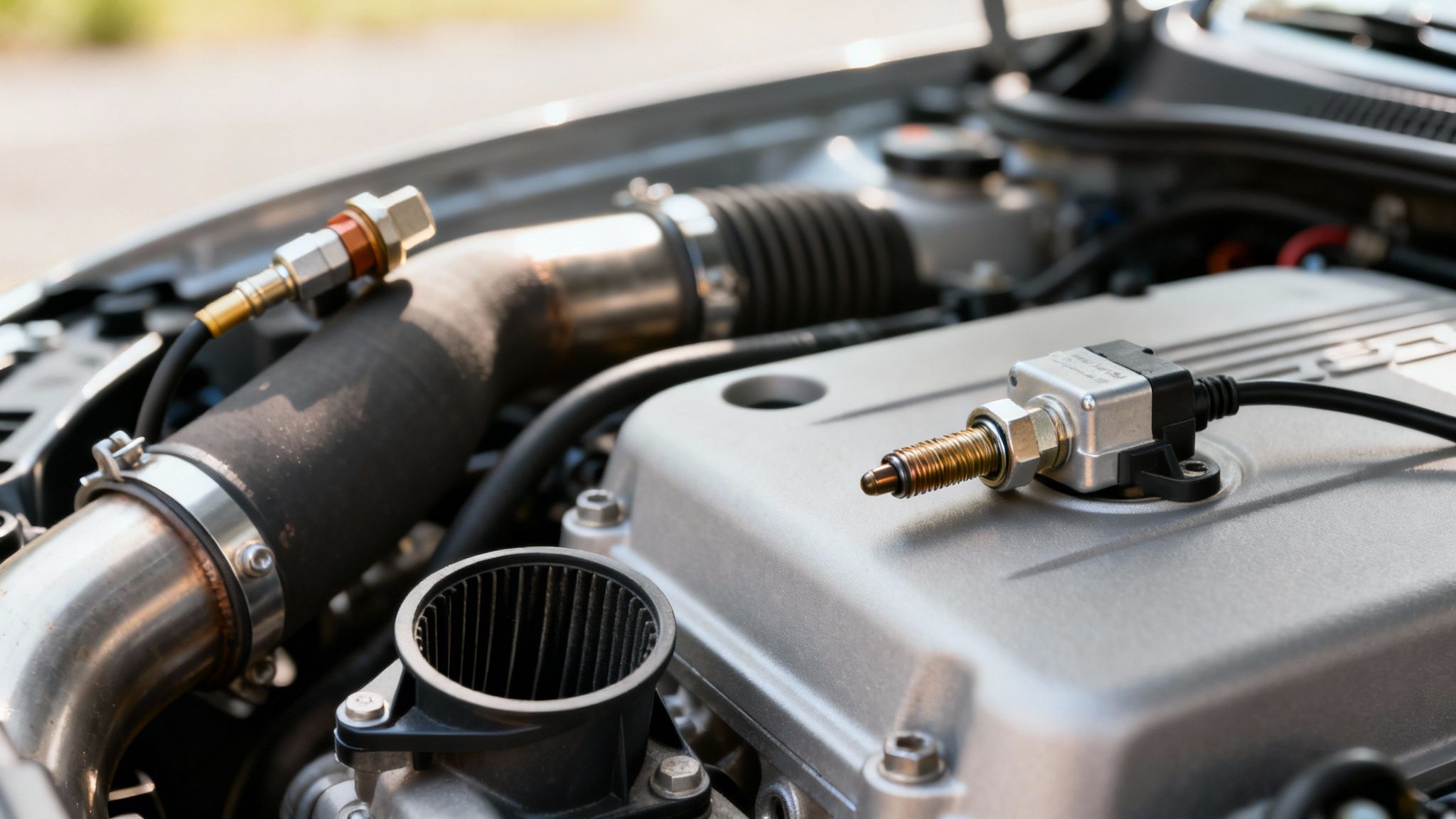
When the amber engine light illuminates, it may seem like an unsolvable mystery. However, while numerous potential faults exist, a small number of common issues are responsible for the majority of these warnings.
Most of these problems originate from small but critical components that monitor your engine's performance, fuel consumption, and emissions output. When one of these components begins to fail, it triggers a sensor, and the vehicle's computer activates the light to alert the driver.
A Failing Oxygen Sensor
One of the most frequent culprits is a component known as the Oxygen Sensor, or O2 sensor. This sensor is positioned in the exhaust stream and measures the amount of unburned oxygen. This data is critical for the engine's computer to determine if the air-fuel mixture is optimal (stoichiometric).
When an O2 sensor fails, the computer receives inaccurate data and may compensate by enriching the fuel mixture. This not only significantly reduces fuel economy but can also lead to premature failure of expensive components like the catalytic converter. A study of over 5.3 million vehicles identified failing O2 sensors as the leading cause of check engine light illumination.
A Faulty Mass Airflow Sensor
Working in conjunction with the O2 sensor is another vital component: the Mass Airflow (MAF) sensor. Its function is to measure the precise volume and density of air entering the engine. The vehicle’s computer uses this information, along with data from the O2 sensor, to calculate the exact amount of fuel to inject for efficient combustion.
When the MAF sensor becomes contaminated or fails, this calculation is compromised. The result is a range of noticeable drivability issues:
- Rough Idling: The engine may vibrate or run unevenly when the vehicle is stationary.
- Stalling: The engine may shut off immediately after starting.
- Poor Acceleration: The vehicle may feel hesitant or underpowered when the accelerator is pressed.
A faulty MAF sensor is a common trigger for a check engine light because the computer immediately recognizes the illogical data. Maintaining a clean engine air filter is a simple preventative measure that helps protect this sensitive component. Our guide on the importance of changing your car's air filter explains how routine maintenance can prevent more significant problems.
Worn Spark Plugs and Ignition Coils
For an internal combustion engine to operate, it requires three elements: air, fuel, and a spark. The spark is generated by the spark plugs, which ignite the compressed air-fuel mixture within each cylinder. The ignition coils provide the high-voltage electrical energy required for the spark plugs to fire.
Over time, these components wear out. When this occurs, a cylinder may not fire correctly, a condition known as an engine misfire. A misfire is a serious mechanical issue that is often perceptible to the driver.
You might notice a distinct shuddering or jerking sensation while driving, particularly during acceleration. This is a classic symptom of a misfire, and it is the primary cause of a flashing check engine light. If ignored, unburned fuel can enter the exhaust system, where it can rapidly destroy the catalytic converter.
Replacing spark plugs is a standard part of a vehicle's maintenance schedule, typically recommended every 60,000 to 100,000 miles. Adhering to this schedule is one of the most effective ways to prevent one of the most common—and potentially destructive—causes of a check engine light.
How Your Car's Emissions System Triggers the Check Engine Light
In addition to the engine's core components, your vehicle is equipped with a complex network of parts designed to minimize harmful pollutants. This is the emissions control system, and it is a major source of check engine light warnings, particularly in regions like Texas where high ambient temperatures can accelerate the degradation of its components.
Many of these issues begin as minor faults. A vehicle's fuel system is designed to be a sealed, pressurized environment. When even a small leak develops, it disrupts this balance, and the vehicle's computer is programmed to detect it immediately.
The Most Common Culprit: A Loose Gas Cap
A surprising number of check engine light incidents are caused by something remarkably simple: a loose or faulty gas cap. While it may seem minor, the cap provides a critical seal for the Evaporative Emission Control (EVAP) system. The sole purpose of this system is to capture and contain fuel vapors before they can escape into the atmosphere.
If the cap is not tightened until it clicks, or if its rubber gasket has become old and brittle, the system cannot maintain pressure. The vehicle's computer performs periodic pressure tests, and the moment it detects a leak, it triggers the check engine light. Before assuming a major repair is needed, always inspect the gas cap first. This simple check can potentially save a trip to the repair shop.
The Catalytic Converter: A More Serious Problem
Moving from a simple fix to a more significant issue, we have the catalytic converter. This component, located in the exhaust pipe, functions as a chemical filter. It contains precious metals like platinum and rhodium that act as catalysts, converting toxic exhaust gases (such as carbon monoxide) into less harmful substances (like carbon dioxide and water).
A failing catalytic converter is a serious problem. It will cause an immediate failure of an emissions test, and a clogged converter can create enough exhaust backpressure to severely impede engine performance and fuel economy. It is important to note that this component rarely fails on its own; its failure is typically a symptom of another underlying issue that has been neglected.
For example, if an engine is misfiring due to worn spark plugs, it is sending unburned fuel directly into the exhaust. This raw fuel can ignite within the catalytic converter, superheating it and melting the delicate ceramic honeycomb structure inside, rendering it useless.
Other Hidden Leaks in the EVAP System
The gas cap is just one part of the larger EVAP system. This network consists of rubber hoses, control valves, and canisters that can all degrade over time. In high-heat environments like Plano, rubber hoses can become brittle and crack, creating small vacuum leaks that are nearly invisible but are easily detected by the onboard computer.
Other common EVAP components that can trigger the light include:
- EVAP Canister Purge Valve: This valve controls the flow of trapped fuel vapors from the canister back into the engine to be burned. If it becomes stuck in the open or closed position, the system will not function correctly.
- Cracked Hoses: Over time, these hoses can develop small fractures or become disconnected from their fittings, causing a pressure leak.
- Faulty Vent Solenoid: Another critical valve that helps regulate pressure within the fuel tank and the EVAP system.
These small leaks may not prevent the vehicle from being driven, but they indicate that it is not operating as cleanly or efficiently as designed. The check engine light serves as the sole indicator of these issues.
Catalytic converter failures are a classic sign of deferred maintenance, especially on older vehicles. One report showed that cars from model-year 2007 accounted for 9.9% of all check-engine-light repairs, while cars under three years old made up less than 1%. You can discover more insights about these common check engine light codes and see how vehicle age plays a significant role.
From a simple turn of a gas cap to the complex chemical reactions in the exhaust, the emissions system is a primary reason for that orange warning light. Addressing these warnings promptly is the best way to prevent a minor leak from escalating into a major, costly repair.
Less Common But Serious Engine Light Warnings
While the previously mentioned issues are the most frequent, the check engine light can also indicate a more serious underlying problem. These faults are not as common as a loose gas cap, but ignoring them can lead to catastrophic component failure.
When the problem is complex, the light serves as a clear signal that a professional diagnosis is required before the condition worsens.
Internal Transmission Troubles
The engine and transmission operate as an integrated powertrain. If one component is not performing correctly, the entire system is affected. A check engine light can absolutely be triggered by internal transmission problems—not just low fluid levels, but mechanical and electronic failures.
Modern transmissions are equipped with numerous sensors that monitor everything from gear shift patterns to fluid temperature. If one of these sensors detects an anomaly, it sends a fault signal to the vehicle's main computer.
Common transmission-related triggers include:
- Slipping Gears: If the transmission disengages or struggles to hold a gear, sensors will detect the discrepancy in RPMs and log a trouble code.
- Overheating: Excessive heat degrades transmission fluid and can damage internal clutches and seals, prompting a sensor to activate the warning light.
- Solenoid Failure: These electro-hydraulic valves control the flow of fluid to execute gear changes. When one fails, it results in harsh or delayed shifts, which immediately alert the Engine Control Unit (ECU).
If you experience jerky shifting, hear a whining noise, or notice a delay in acceleration—in conjunction with an illuminated check engine light—it is a significant red flag. This combination almost always points to a transmission issue that requires immediate expert evaluation to prevent a complete failure.
Electrical Issues from Aftermarket Parts
Aftermarket upgrades like remote starters or enhanced audio systems can improve the driving experience. However, if not installed with precision, they can disrupt the vehicle's sensitive electrical system.
A vehicle's wiring is a carefully engineered network. An improperly installed aftermarket component can create voltage drops, short circuits, or "electrical noise" that can confuse the main computer. To the ECU, this interference can appear as a component failure, causing it to activate the check engine light as a precaution.
A Failing Engine Control Unit (ECU)
This is the rarest but most complex cause of a check engine light: a malfunction within the vehicle's central computer itself. The ECU governs nearly every aspect of engine operation, from fuel mixture to ignition timing. When it begins to fail, the symptoms can be unpredictable and inconsistent.
A faulty ECU might generate erroneous error codes, leading a technician on a futile search for non-existent problems. Conversely, it might fail to detect genuine issues. The vehicle might experience random stalling, poor performance, or a check engine light that illuminates intermittently without a clear cause.
Because the ECU is the vehicle's central command system, diagnosing it requires advanced diagnostic equipment and extensive expertise. Incorrectly diagnosing an ECU can lead to expensive, unnecessary repairs, which is why a professional assessment is essential when a computer-related fault is suspected.
What To Do When Your Check Engine Light Appears
When the engine symbol illuminates on your dashboard, remain calm. A methodical approach is the most effective way to address the situation. For Plano drivers, a simple action plan can make a significant difference.
Your first action should be to observe the light's behavior—is it steady or flashing? This single detail provides the most critical information regarding the urgency of the situation.
A steady light is a notification. It means your vehicle has detected a fault, but it is not an immediate crisis. You have time to schedule a diagnostic service. A flashing light, however, is your car’s most urgent warning. It signals a critical problem, such as a severe engine misfire, that requires you to pull over safely and turn off the engine to prevent catastrophic damage.
Your First Simple Check
Before scheduling a professional diagnosis, there is one simple check every driver should perform.
Inspect your vehicle's gas cap. A loose, damaged, or improperly sealed gas cap is one of the most common causes of a check engine light. A vehicle's evaporative emissions (EVAP) system is designed to be fully sealed, and even a minuscule leak from an improperly tightened cap will trigger a fault code.
Twist the cap until you hear it click at least once. If the rubber seal appears cracked or deteriorated, it may need to be replaced. After tightening the cap, the light will not extinguish immediately. It may take several drive cycles for the vehicle's computer to rerun its diagnostic self-test and clear the code. If the light remains on after a few days of normal driving, further investigation is necessary.
The Professional Diagnostic Process
If securing the gas cap does not resolve the issue, it is time for a professional diagnosis. This is where an ASE-certified technician at a reputable facility like Express Lube & Car Care becomes essential, as their process is far more advanced than using a simple code reader from an auto parts store.
Our technicians connect a professional-grade OBD-II scanner to your vehicle's computer. This tool goes beyond basic code retrieval; it reads manufacturer-specific data, providing a much clearer and more detailed view of the vehicle's operating parameters.
It is crucial to remember that a trouble code is a clue, not a conclusion. A code such as "P0420" indicates a fault within the catalytic converter system, but it does not automatically mean the converter has failed. The root cause could be a faulty oxygen sensor, a small exhaust leak, or an engine misfire that is causing inaccurate readings.
A qualified technician uses that code as a starting point for a comprehensive diagnostic strategy. They will conduct further tests, inspect related components, and analyze live sensor data to pinpoint the exact root cause. This methodical approach saves you money by ensuring only the necessary repairs are performed.
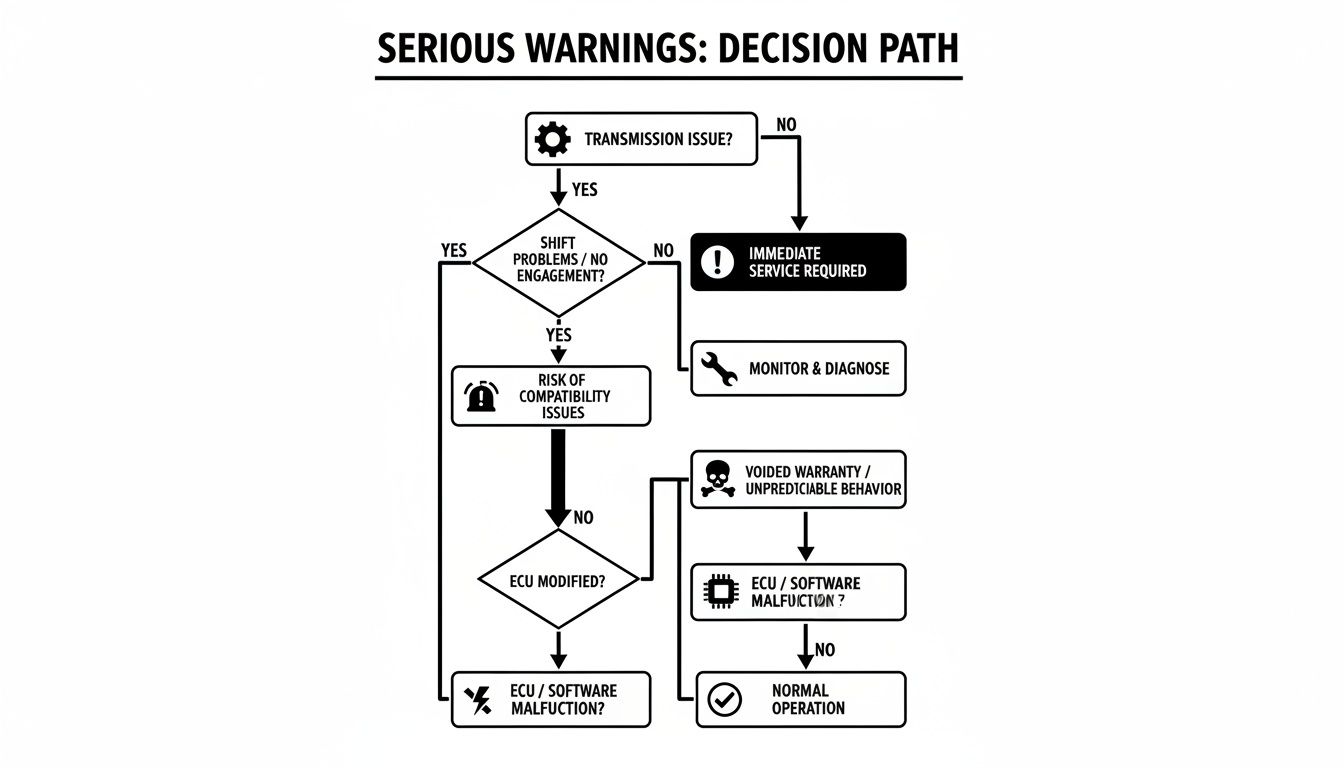
As this illustrates, a single warning can lead to multiple diagnostic paths, highlighting the importance of professional expertise. Proactive maintenance can help prevent many of these issues. For example, regular fluid checks are critical—our guide on how to check the oil on your car explains how this basic task contributes to overall engine health. Understanding the diagnostic process empowers you to make informed decisions for your vehicle.
Proactive Care to Keep Your Dashboard Light-Free
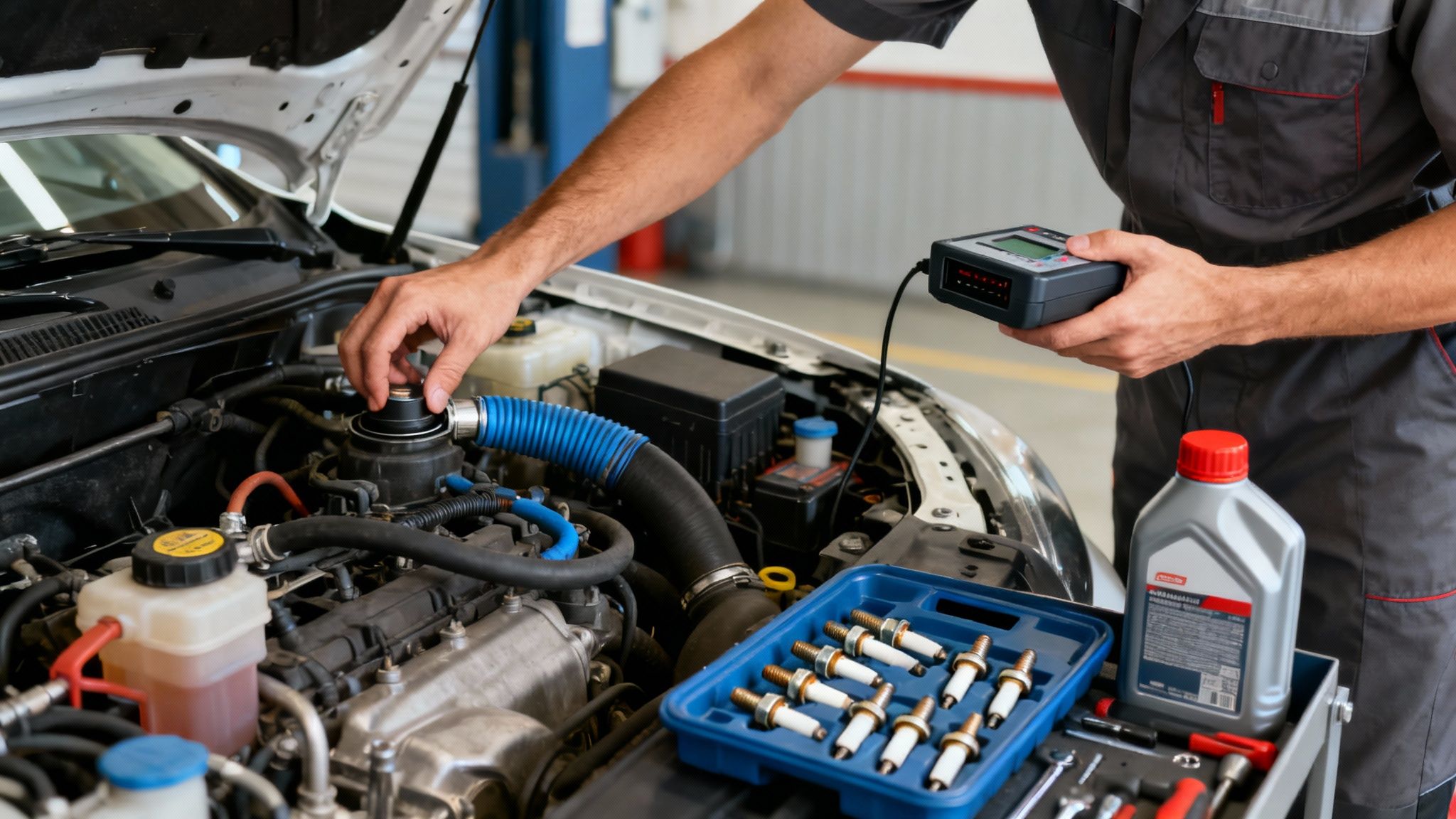
The most effective strategy for dealing with a check engine light is to prevent its illumination altogether. By viewing vehicle maintenance as a proactive investment rather than a reactive expense, you can avoid the common problems that trigger this warning.
Think of it as preventative healthcare for your vehicle. Adhering to a consistent maintenance schedule allows you to address potential problems long before they escalate into costly repairs that could leave you stranded on a Plano roadside.
The Power of Prevention
Your first line of defense is routine, scheduled service. Every maintenance task directly affects a system that is monitored by your vehicle's onboard computer.
For example, adhering to your oil change schedule is about more than just lubrication. Clean oil is vital for protecting sensitive engine components and sensors from sludge buildup that can cause them to malfunction. Similarly, replacing your spark plugs at the manufacturer's recommended interval is the best way to prevent engine misfires—one of the most common and damaging causes of a flashing check engine light.
Prevention is about identifying and addressing potential issues early. A quick visual inspection of hoses during a routine oil change can identify a deteriorating EVAP hose before it cracks and triggers an emissions code. This small step can prevent a significant diagnostic challenge later.
Even seemingly minor items can cause a major alert. For years, a loose or faulty gas cap was a leading cause of check engine lights by allowing small fuel vapor leaks that the onboard computer would instantly flag. While they've recently dropped out of the top five common causes, it remains a perfect example of how a simple check can make a significant difference.
Partnering with a trusted local shop like Express Lube & Car Care provides an extra set of expert eyes to spot these potential issues early. For a comprehensive overview of essential maintenance, review our routine car maintenance checklist and stay ahead of that warning light.
Burning Questions About the Check Engine Light
Even with a better understanding of what triggers the check engine light, some questions likely remain. Here are clear answers to the most common concerns we hear from drivers in the Plano area.
Can I Still Drive My Car with the Light On?
This depends entirely on the light's behavior and the vehicle's performance.
If the light is solid and steady and the car is driving normally, it is generally safe to continue to your destination or a nearby repair shop. Consider it a yellow caution flag—a warning that requires attention soon, but not an immediate crisis.
However, if the light is flashing or blinking, it indicates a severe problem. A flashing light almost always signifies an active engine misfire, which can destroy your catalytic converter in minutes. You should pull over as soon as it is safe, turn off the engine, and arrange for a tow. Driving further could save a little time but cost thousands in repairs.
Will the Check Engine Light Just Go Away?
Occasionally, but this is uncommon. If the issue was temporary or minor, such as a loose gas cap that has since been tightened, the light may turn off by itself after several drive cycles. This happens because the car's computer must complete a series of self-checks to verify the problem is resolved.
For nearly all other faults, the light will remain on until the underlying problem is repaired. A technician must then use a professional tool to clear the diagnostic trouble code from the vehicle's memory. Ignoring the light will not make the problem disappear; it only allows a small issue to potentially develop into a much larger one.
Is a Professional Scan Really Better Than a Cheap Code Reader?
Understanding this distinction can save you significant money and frustration. The inexpensive code readers available at auto parts stores typically only provide a generic trouble code, like "P0301" (Cylinder 1 Misfire). This code is merely a symptom, not a diagnosis.
A professional diagnostic service utilizes advanced scan tools that access detailed, manufacturer-specific data. More importantly, an ASE-certified technician uses their expertise to interpret this data, perform additional electrical and mechanical tests, and identify the true root cause. That professional expertise is the difference between replacing the correct part the first time and engaging in costly trial-and-error repairs.
Don't let a check engine light disrupt your day. For fast, accurate diagnostics and honest advice you can trust, bring your vehicle to Express Lube & Car Care. Our ASE-certified technicians will identify the real issue and get you back on the road safely. Stop by our Plano shop today—no appointment needed! Learn more at https://www.expresslubeplano.com.