

When considering vehicle maintenance, a common question arises: how much does an oil change cost? The answer isn't a single figure, as the price is influenced by several factors. On average, a standard oil change service can range from $35 to $75. For vehicles requiring full synthetic oil, the cost can increase to $125 or more.
The final price is determined by your vehicle's specific requirements, the type of motor oil used, and the service center you choose. This guide will provide a comprehensive breakdown of these factors to help you make an informed decision.
A Guide to Oil Change Pricing

Understanding the cost of an oil change is a fundamental aspect of responsible vehicle ownership. Much like gasoline, motor oil is available in different grades, each designed for specific engine types and performance needs.
Every engine is engineered with precise tolerances and operational requirements, which is why various types of motor oil exist. Each type offers distinct performance characteristics and comes at a different price point. Gaining a clear understanding of these tiers is the first step toward interpreting your service invoice and selecting the appropriate oil for your vehicle.
National Average Cost Analysis
Nationally, the average cost for a standard oil change is between $35 and $75. However, this is a general estimate. Variables such as your vehicle's engine size, oil capacity, and even your geographic location can affect this price.
Broader economic factors also influence costs. For example, the U.S. Energy Information Administration's forecasts on crude oil prices can have a downstream effect on the cost of motor oil. A decrease in crude oil prices can eventually lead to lower costs for petroleum-based products, including motor oil. You can learn more about these energy market trends.
The most significant variable determining the cost of your oil change is the type of motor oil selected. A conventional oil change represents the most economical option, whereas a full synthetic service is a premium investment in your engine's longevity and performance.
Whether your vehicle requires a basic fluid replacement or a high-performance synthetic oil change, knowing the typical price ranges helps in budgeting for routine maintenance. For those needing prompt service, understanding what a quick oil change near you entails is also beneficial. Next, we will examine the specific factors that influence the final cost.
Understanding the Key Factors That Influence Your Price
The reason there isn't a single, flat-rate answer to the question "how much does an oil change cost?" is that the final price is a composite of several key variables. Understanding these components allows you to comprehend the value and necessity of each part of the service.
The primary determinant of the cost is the type of oil your vehicle requires. Motor oils range from basic conventional formulas to advanced, high-performance full synthetic oils, each with a corresponding price. This choice alone can alter the final cost by $50 or more.
The Type of Oil Your Vehicle Needs
The distinction between conventional and synthetic oil is central to the cost of the service. A standard oil change using conventional oil is the most budget-conscious choice, typically priced between $35 and $50. This oil provides essential lubrication and is suitable for many older vehicles with less complex engine designs.
Conversely, a full synthetic oil change generally costs between $65 and $125. This is a laboratory-engineered lubricant offering superior engine protection, enhanced performance in extreme temperatures, and extended service intervals. For modern vehicles, particularly those with high-performance or turbocharged engines, synthetic oil is often a manufacturer requirement, not just an optional upgrade.
A synthetic blend serves as an intermediate option, combining conventional and synthetic base oils to provide improved protection and performance at a cost lower than that of full synthetic. The type of fluid selected is the most significant factor influencing the total service bill.
Your Vehicle's Make and Model
The specific vehicle you drive also plays a crucial role in determining the cost. A compact car with a four-cylinder engine typically requires four to five quarts of oil. In contrast, a large truck or SUV with a V8 engine might need eight quarts or more. A larger oil capacity naturally leads to a higher cost.
Luxury and European vehicles, such as those from Lexus, BMW, or Mercedes-Benz, often have specific requirements that increase the price. These vehicles may necessitate a particular brand-certified synthetic oil and a specialized, higher-cost oil filter to maintain peak performance and warranty compliance.
For instance, a professional synthetic oil change for a newer Lexus model can easily cost between $80 and $150. This price reflects the use of manufacturer-specified oil and filters essential for the vehicle's optimal operation and warranty preservation.
The Service Provider
Finally, the location where the service is performed significantly impacts the price. There are generally three types of service providers, each with a different pricing structure:
- Dealerships: Typically the most expensive option, as you are paying for brand-specialized technicians and original equipment manufacturer (OEM) parts.
- Independent Auto Shops: Local mechanics often provide a balance of quality service and moderate pricing, falling between dealerships and quick lube chains.
- Quick Lube Chains: Generally the fastest and most affordable option for a basic oil change, though the service may be less comprehensive than what a full-service shop provides.
Geographic location also matters. Labor rates and operational costs are typically higher in metropolitan areas compared to smaller towns. All these elements combine to determine the final cost of your oil change.
What a Quality Oil Change Service Actually Includes
When you bring your vehicle in for an oil change, you are receiving more than a simple fluid replacement. A professional oil change service functions as a preventative maintenance check-up, allowing technicians to identify potential issues before they escalate into costly repairs. It is an investment in your vehicle's long-term health.
Understanding the procedures involved helps you appreciate the full value of the service. A certified technician follows a systematic process to ensure your engine is properly protected until the next scheduled maintenance interval.
The Core Steps of Every Oil Change
At its foundation, every oil change service includes several essential steps. This is the baseline you should expect from any reputable service center.
First, the vehicle is securely elevated to allow a technician to completely drain the old engine oil. This critical step removes accumulated sludge, metal particles, and other contaminants that can cause significant engine wear over time.
Next, the technician will replace the old oil filter with a new one. The oil filter's function is to capture harmful debris and prevent it from circulating through the engine. Failing to replace the filter would contaminate the new oil, negating the benefits of the service. Finally, the engine is refilled with the correct type and volume of new, clean motor oil, strictly adhering to the vehicle manufacturer’s specifications.
The Multi-Point Inspection: Where the Real Value Is
The multi-point inspection is what elevates a basic oil change to a comprehensive maintenance service. A quality oil change always includes a complimentary multi-point inspection, which serves as a thorough wellness check for your vehicle.
A detailed multi-point inspection is a crucial preventative measure against unexpected mechanical failures. It helps detect safety concerns and maintenance needs early, which can save you money and enhance your safety on the road.
During this inspection, a technician checks and tops off other essential fluids, such as windshield washer fluid, power steering fluid, and engine coolant. You can find more details about what this includes in our full-service oil change guide.
A comprehensive inspection will also typically include:
- Checking tire pressure and condition: Ensuring tires are properly inflated for optimal safety, handling, and fuel efficiency.
- Inspecting belts and hoses: Examining for cracks, fraying, or wear that could lead to a breakdown.
- Checking exterior lights: Verifying the proper function of headlights, taillights, brake lights, and turn signals.
- Visual inspection of the battery and brakes: Checking for corrosion on battery terminals and assessing the remaining life of brake pads.
Comparing Oil Types: Conventional vs. Synthetic
Choosing the right motor oil involves a trade-off: a higher initial cost for enhanced long-term engine protection and performance. The primary options are conventional, synthetic blend, and full synthetic oil. Understanding their distinct properties is essential for determining the most appropriate and cost-effective oil change for your vehicle.
Conventional oil is refined from crude petroleum and has served as a reliable lubricant for decades. It provides adequate protection for many standard engines.
Full synthetic oil, in contrast, is chemically engineered in a laboratory. Scientists deconstruct and then reconstruct petroleum molecules, incorporating high-performance additives. This process creates a purer, more uniform lubricant that offers superior engine protection. This advanced engineering process is why it is more expensive, but the performance benefits often justify the cost.
Performance Under Pressure
The superior qualities of synthetic oil are most evident under extreme operating conditions. High temperatures can cause conventional oil to break down and form sludge, which compromises its ability to lubricate the engine. In cold weather, conventional oil can become too viscous, impeding its flow and making engine startup difficult.
Synthetic oil is engineered to maintain its viscosity and flow characteristics across a wide range of temperatures. This consistent lubrication is the best defense against engine friction, which is the primary cause of wear and tear.
Because full synthetic oil has a higher resistance to thermal and oxidative breakdown, it has a significantly longer service life. A conventional oil change is typically recommended every 3,000 to 5,000 miles. With full synthetic oil, the service interval can often be extended to 7,500 to 15,000 miles, depending on the vehicle and driving conditions.
This flowchart can help visualize the decision-making process for an oil change.
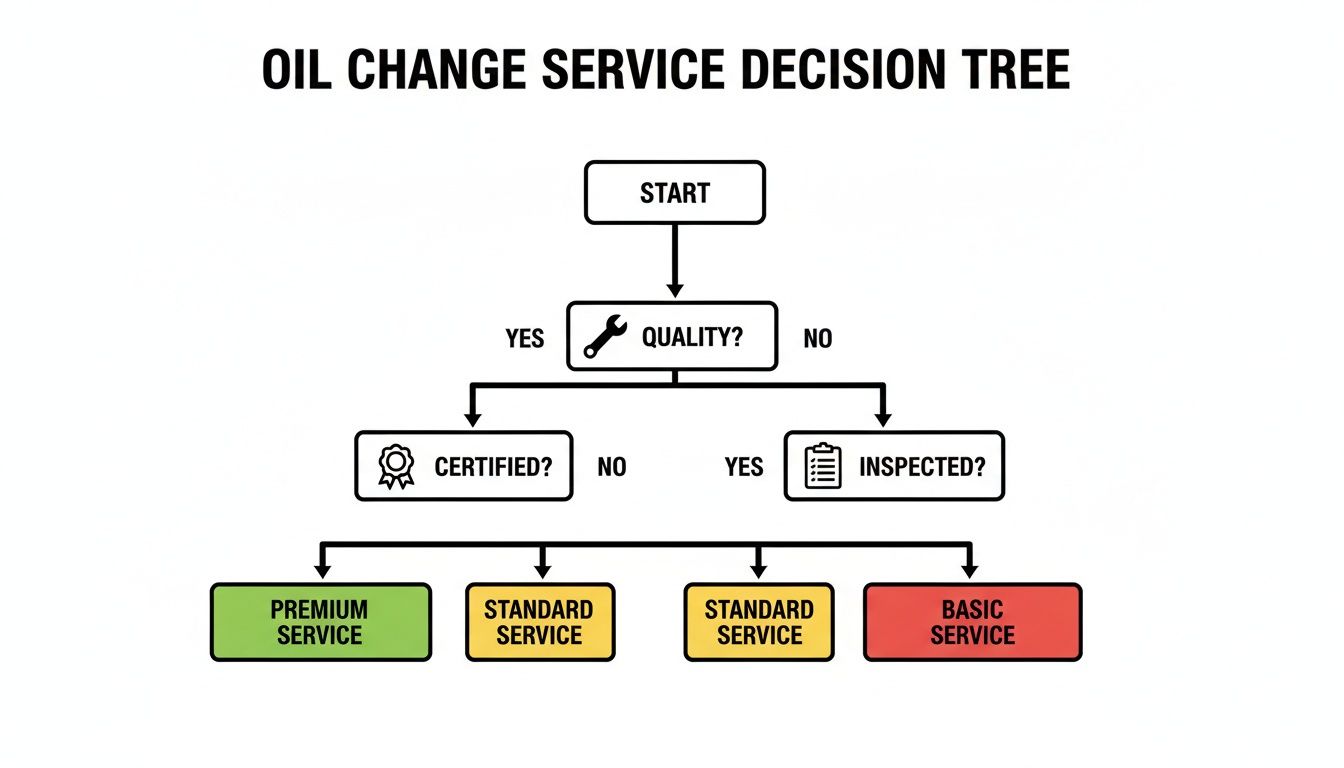
A valuable service is defined not just by the oil itself, but also by the quality of the products used, the expertise of the technicians, and the thoroughness of the vehicle inspection.
The True Cost of an Oil Change
The extended service intervals associated with synthetic oil can lead to long-term cost savings. You save money not only on the service itself but also on the time and inconvenience of fewer visits to the maintenance shop.
To aid in your decision, here is a comparison of the key attributes of each oil type.
Oil Type Cost and Performance Comparison
This table outlines the primary differences to help you make an informed choice based on your vehicle's needs and your budget.
| Feature | Conventional Oil | Synthetic Blend Oil | Full Synthetic Oil |
|---|---|---|---|
| Upfront Cost | Low (typically $35-$50) | Moderate ($50-$80) | High (typically $65-$125) |
| Engine Protection | Good | Better | Best |
| Change Interval | 3,000 – 5,000 miles | 5,000 – 7,500 miles | 7,500 – 15,000+ miles |
| Performance | Basic protection for older, simpler engines. | Improved resistance to heat and breakdown. | Superior performance in extreme temperatures and high-stress conditions. |
Ultimately, choosing full synthetic oil is an investment in the longevity of your engine. While the initial cost is higher, the benefits include superior protection, a cleaner engine, and fewer service appointments.
To learn more, you can explore the differences between synthetic vs. conventional oil in our detailed guide.
Smart Ways to Save Money on Your Next Oil Change

Managing vehicle maintenance costs effectively is a priority for every car owner. A quality oil change is a necessary investment, but there are often ways to reduce the expense without compromising on quality.
With proactive planning, you can significantly lower how much your next oil change costs. The key is to identify savings opportunities before you arrive at the service center.
Hunt for Coupons and Special Promotions
The most direct way to save money is to look for available discounts and promotions. Many local auto shops, including Express Lube & Car Care, offer regular specials.
- Online Coupons: Check the service provider's website for printable or digital coupons. We frequently offer deals such as $20 off an oil change or other maintenance services.
- Specialty Discounts: It is always worthwhile to inquire about discounts for specific groups. We are proud to offer specials for military personnel, first responders, and healthcare workers.
- Weekly Deals: Look for promotions offered on specific days of the week. For example, at Express Lube, every Wednesday is Ladies Day, which includes a $25 discount on oil changes.
These discounts can reduce the service cost by 20-30%, making high-quality maintenance more accessible.
The Power of Loyalty Programs and Bundled Services
Beyond single-use coupons, consider long-term savings strategies. Many service centers reward repeat customers through loyalty programs that offer points or exclusive discounts after a certain number of visits. This approach helps you build a trusted relationship with a service provider while saving money over time.
Another effective strategy is to bundle services. If you know your vehicle also needs a tire rotation or a new air filter, inquire about package deals. Performing multiple services during one visit is more efficient for the shop, and they often pass the resulting savings on to the customer.
Adhering to your vehicle's manufacturer-recommended maintenance schedule is the most effective long-term money-saving strategy. Preventing a major component failure is always less expensive than repairing one.
For local drivers, the cost of a conventional oil change—typically $35-$50—can be managed effectively with coupons and weekly specials. According to Consumer Reports, 75% of drivers delay maintenance due to cost concerns, but promotions can help alleviate this financial pressure.
Common Questions About Oil Change Costs
Now that we have examined the factors that determine how much an oil change costs, you may have additional questions. Addressing these common inquiries can help you apply this knowledge to your own vehicle maintenance decisions.
Let's clarify some of the most frequently asked questions regarding oil change services and pricing.
How Often Should I Really Get My Oil Changed?
The traditional "every 3,000 miles" guideline is outdated for most modern vehicles. The authoritative source for your vehicle's oil change interval is the owner's manual.
For modern cars using synthetic oil, the recommended interval can range from 7,500 to 15,000 miles. However, driving habits are also a factor. If your driving consists of frequent short trips, towing, or operating in extreme temperatures, you may need to change the oil more frequently. A qualified technician can provide a personalized recommendation based on your specific usage.
Is a Synthetic Oil Change Worth the Extra Cost?
For most modern vehicles, the answer is yes, particularly for those operated in high-temperature climates. Full synthetic oil provides superior engine protection, maintains its performance characteristics across a wide temperature range, and has a longer service life than conventional oil.
While the upfront cost is higher, the superior engine protection and extended drain intervals of synthetic oil often make it the more cost-effective choice for the long-term health of your engine.
Can I Bring My Own Oil and Filter to the Shop?
While some service centers may permit this, it is generally not recommended. Professional auto shops use high-quality, warranty-approved oils and filters that are specifically matched to your vehicle's requirements.
This ensures optimal performance and maintains the validity of your vehicle's warranty. Furthermore, when the shop supplies the parts, they can guarantee the entire service, providing you with greater peace of mind.
For professional service that keeps your car running like new, trust the ASE-certified technicians at Express Lube & Car Care. We give you honest advice, fair pricing, and fast, reliable maintenance—no appointment needed. Stop by our shop in Plano today and drive away with confidence. Learn more at https://www.expresslubeplano.com.