

When you invest in a new set of tires, you'll encounter two critical services: mounting and balancing. While they sound technical, the underlying principles are straightforward. Tire mounting is the physical process of fitting a tire onto the wheel (the metal rim). Tire balancing, on the other hand, is a precision process that ensures the weight of the tire and wheel assembly is distributed uniformly.
Together, these services are fundamental to ensuring your new tires perform safely, efficiently, and deliver a smooth driving experience.
Why Mounting and Balancing Tires Is Crucial for Vehicle Dynamics

If you've ever felt a distinct vibration in your steering wheel at highway speeds, you've experienced the most common symptom of an imbalanced tire. This isn't just a minor annoyance; it's a clear signal from your vehicle that its rotational dynamics are compromised.
To understand why, think of the two processes functionally: mounting creates the essential airtight seal between the tire and the wheel, enabling it to support the vehicle's weight. Balancing then neutralizes any weight imperfections, preventing harmonic vibrations that can destabilize the vehicle. Even a minor weight discrepancy—as little as half an ounce—can generate significant vibrations as rotational speed increases.
The Real-World Impact of Proper Tire Service
Neglecting a professional mount and balance service extends beyond ride comfort. It has measurable consequences for vehicle safety, the longevity of its components, and your operational costs.
The data highlights the importance of this service. Unbalanced tires are a contributing factor in over 11,000 traffic accidents annually in the U.S. Furthermore, improper tire maintenance, which includes neglecting balancing, leads to the kind of uneven wear responsible for a staggering 75% of all tire failures. This not only accelerates the need for costly replacements but also degrades your vehicle's handling and braking capabilities. You can explore more data on the tire industry at Maximize Market Research.
To illustrate the difference, here is a comparison of vehicle performance with and without this essential service.
Proper vs. Improper Tire Service at a Glance
| Metric | With Professional Mounting & Balancing | Without Professional Service |
|---|---|---|
| Ride Quality | Smooth and stable at all speeds | Vibrations, especially over 40 MPH |
| Tire Lifespan | Even tread wear, maximum mileage | Premature and uneven wear, early replacement |
| Safety | Optimal traction, predictable handling | Reduced grip, poor stability, risk of blowout |
| Vehicle Wear | Protects suspension and steering parts | Strains shocks, struts, and bearings |
| Fuel Economy | Efficient performance, better MPG | Increased rolling resistance, wasted fuel |
Ultimately, proper tire servicing is about preserving the engineering integrity of your vehicle and ensuring the safety of its occupants.
By investing in professional service, you ensure your tires wear evenly, your vehicle handles predictably, and you stay safer on the road. It’s a small investment that protects the larger one you've made in your car and its tires.
This essential service delivers several key benefits every driver should understand:
- Enhanced Safety: A perfectly balanced tire maintains an optimal contact patch with the road surface. This maximizes traction and stability, which is critical in adverse weather or during emergency braking maneuvers.
- Smoother Ride: Eliminating vibrations results in a quieter, more comfortable cabin environment and reduces driver fatigue.
- Longer Tire Life: Proper balancing is the most effective way to prevent scalloped or "cupped" tread wear, allowing you to achieve the full mileage potential of your tires.
- Better Fuel Economy: Smoothly rotating tires minimize rolling resistance, reducing the energy your engine must expend to maintain speed. This translates directly to fuel savings.
Understanding Tire Mounting vs. Balancing
Although they are almost always performed together, tire mounting and tire balancing are two distinct procedures. Differentiating between them helps you understand the value of each service and why both are necessary for your vehicle.
A helpful analogy: Mounting is like putting on your running shoes. Balancing is like lacing them correctly and ensuring they fit perfectly so you can run without stumbling. Both steps are required for optimal performance.
What is Tire Mounting?
The first step is tire mounting, the physical process of fitting a tire onto its metal rim.
Our technicians use a specialized tire mounting machine to carefully guide the tire’s inner edge—known as the "bead"—over the lip of the wheel. The primary objective is to create a perfect, airtight seal. If this seal is compromised in any way, the tire will not be able to maintain its specified air pressure. This step demands precision and specialized equipment to prevent damage to the tire's bead or the wheel itself.
Tire mounting is a mechanical process focused on the structural integrity of the wheel assembly. Its sole purpose is to join the tire and wheel into a single unit that can be inflated and hold pressure correctly.
This service is required whenever a tire is replaced or removed from the rim for a significant repair, such as an internal patch for a puncture.
What is Tire Balancing?
Once the tire is securely mounted, the crucial fine-tuning process of tire balancing begins. This is where the science of vehicle dynamics comes into play to ensure performance, safety, and comfort. No tire and wheel combination is perfectly uniform in weight distribution from the factory.
To correct these imperfections, the technician places the entire wheel assembly onto a high-precision spin balancer. This machine rotates the tire at high speed, and its sensitive electronic sensors measure weight imbalances down to a fraction of an ounce.
Based on the machine’s readings, the technician affixes small, precisely calibrated counterweights to the wheel rim. These weights counteract the heavy spots, ensuring the assembly's mass is distributed evenly around its rotational axis.
- Static Balancing: Corrects the vertical, up-and-down "hopping" motion caused by a simple weight imbalance.
- Dynamic Balancing: This more sophisticated method corrects both the vertical "hop" and the side-to-side "wobble," which is often felt as a shimmy in the steering wheel.
Without proper balancing, you will experience noticeable vibrations, particularly at highway speeds. This also causes uneven tire wear and places undue stress on your vehicle's suspension components. While mounting gets the tire on the rim, balancing is what makes it ready for a smooth, safe drive. You can learn more about how this connects to other vehicle issues in our guide on getting an alignment with new tires.
Recognizing the Telltale Signs of Unbalanced Tires
Your vehicle provides distinct feedback when something is mechanically amiss. Learning to interpret these signals allows you to address minor issues before they escalate into major, costly repairs. For tires, the indicators are typically quite clear.
The classic, unmistakable sign is a vibration in the steering wheel, particularly noticeable at highway speeds between 55 and 65 mph. It may begin as a subtle shimmy but can escalate into a more aggressive shake, making the vehicle feel unstable and uncomfortable to drive. This is your car's way of indicating that the front tires are out of balance.
Sensations Beyond the Steering Wheel
While your hands on the steering wheel are often the first to detect an issue, these vibrations can propagate throughout the vehicle's chassis. You might also feel a persistent shake or buzzing sensation through the floorboard or your seat.
If the vibration seems to emanate from the body of the car rather than being localized to the steering wheel, it's a strong indicator that the rear tires are the source of the imbalance. This sensation is caused by the tire and wheel assembly literally hopping and wobbling as it spins, transferring those jarring forces through the car’s suspension and frame. You can learn more about this in our guide on what causes steering wheel vibration for a deeper look.
Visual Clues and Performance Drops
Sometimes, the most telling evidence isn't felt while driving but is visible on the tires themselves. Conduct a close inspection of your tread for any signs of uneven or scalloped tire wear, a condition technicians refer to as "cupping." This pattern appears as if random patches of rubber have been scooped out, creating high and low spots across the tread. This occurs because the tire is bouncing erratically on the pavement instead of rolling smoothly.
Another indicator that is often overlooked is a sudden decrease in fuel efficiency. Unbalanced tires increase rolling resistance against the road surface. This forces your engine to work harder—and consume more fuel—to maintain the same speed.
An unbalanced tire can mask other dangerous issues. The constant vibration can distract you from noticing a developing tire bulge or dangerously low pressure, turning a maintenance issue into a safety crisis.
These warning signs are more than an annoyance; they are a direct call to action for your safety. In fact, unbalanced wheels are a contributing factor in 12% of U.S. tire-related accidents. Getting your tires professionally serviced can also reduce hydroplaning risks by as much as 25% because it ensures the tread stays in full, even contact with the road. This is a job that should always be entrusted to professionals.
The Professional Tire Mounting and Balancing Process
So, what exactly happens behind the service bay doors when you bring your vehicle in for new tires? The procedure is a meticulous combination of technician skill and advanced machinery, all designed to ensure your vehicle drives safely and smoothly. Let's walk through the steps our technicians follow.
The process begins with removing the wheel and tire assembly from your vehicle. Once it is on the bench, we use a specialized tire machine to safely separate the old, worn tire from its metal rim. This is known as dismounting, and the equipment is designed to apply force correctly, ensuring that neither the wheel nor the delicate Tire Pressure Monitoring System (TPMS) sensor is damaged.
From Old to New
With the old tire removed, the technician conducts a thorough inspection of the wheel rim. They check for corrosion, cracks, or bends—any deformity that could prevent the new tire from forming a perfect, airtight seal. This is a critical safety check, as a damaged rim can cause a slow leak or even lead to catastrophic tire failure under load.
Next, the new tire is fitted onto the rim. The technician applies a specialized lubricant to the tire’s "bead" to allow it to slide smoothly over the wheel's lip and seat properly. Once mounted, the tire is inflated to the precise pressure recommended by your vehicle’s manufacturer, which can be found on the tire information placard, usually located inside the driver's door jamb.
The following infographic illustrates the key problems a professional tire balance is designed to correct.
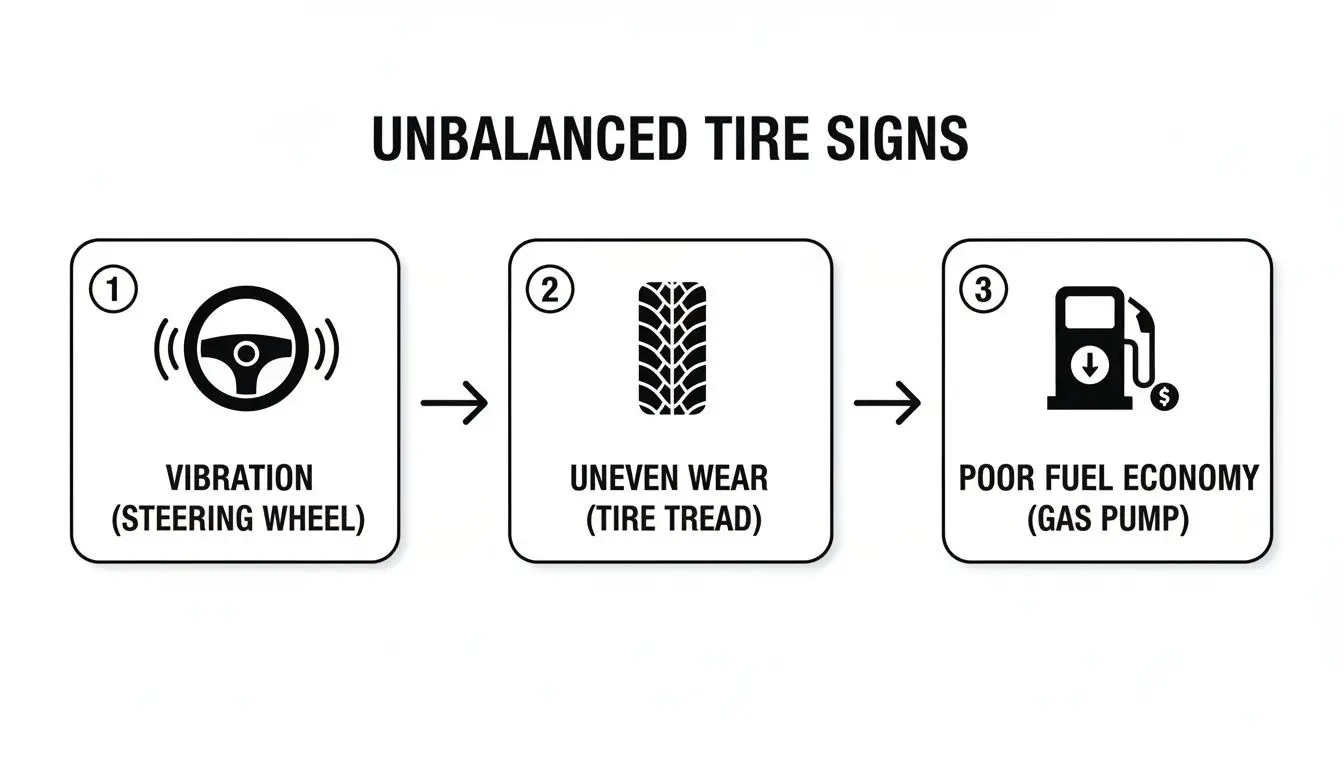
As you can see, problems like a shaky steering wheel, uneven tread wear, and a sudden drop in fuel economy are all classic signs that your tires need professional attention.
The Art of the Balance
Now for the high-tech component: balancing. The newly mounted wheel and tire assembly is secured onto a sophisticated machine called a spin balancer.
A modern spin balancer is incredibly precise. It can detect weight imbalances as small as a quarter of an ounce, ensuring the wheel assembly is perfectly calibrated for a smooth ride.
This machine spins the tire at high speeds to simulate its rotation on the road. Its internal sensors measure every minuscule "wobble" (dynamic imbalance) or "hop" (static imbalance) caused by uneven weight distribution. A computer then calculates the exact amount of counterweight needed and identifies the precise location on the rim where it must be placed.
Following the computer's guidance, the technician attaches small counterweights to the wheel to offset the heavy spots. This final, precise step is what eliminates the high-frequency vibrations you feel at highway speeds.
Once balanced, the wheel is ready to be reinstalled on your car, providing a safe, comfortable, and efficient ride.
How Imbalanced Tires Impact Your Wallet and Safety

That vibrating steering wheel isn't just an annoyance—it's an economic indicator. When a tire is out of balance, it does not rotate smoothly. Instead, it hops and wobbles, creating parasitic friction that forces your engine to work harder to maintain speed.
This phenomenon, known as increased rolling resistance, has a direct financial impact on your fuel budget. Studies from sources like global tire market insights indicate that imbalanced tires can increase fuel consumption by up to 4%. For an average driver, that can equate to an extra $150 to $200 per year in fuel costs. Tire balancing isn't an upsell; it's a maintenance task that improves fuel efficiency.
The Ripple Effect on Costly Components
The financial impact doesn't stop at the gas pump. The constant, high-frequency vibrations act like a tiny hammer, repeatedly striking your car's sensitive components with every rotation of the wheel. Over thousands of miles, this causes significant and expensive premature wear.
Think of it as a small, persistent problem cascading into a much larger one. This accelerated wear puts several key components at risk:
- Wheel Bearings: Forced to endure uneven loads, they wear out much faster and are costly to replace.
- Shocks and Struts: Your suspension system works overtime trying to dampen the constant shaking, which shortens its operational lifespan.
- Steering Components: Parts like tie rods and ball joints can fail prematurely under the added stress.
Investing a small amount in a professional tire balance is one of the smartest ways to avoid a much larger repair bill later. It protects your tires, your fuel budget, and your vehicle's most critical components.
This simple service pays for itself by extending the life of your tires and preventing bigger headaches. To round out your maintenance strategy, check out our guide on how often you should rotate your tires.
Your Tire Service Questions, Answered
Even with a detailed understanding, it’s natural to have a few more questions about tire service. Clear, factual answers help you make informed decisions about your vehicle's maintenance.
Here are the answers to some of the most common questions we hear from drivers about tire mounting and balancing.
How Often Should I Have My Tires Balanced?
As a general rule, it is best practice to have your tires balanced every 5,000 to 6,000 miles. A convenient and logical time to do this is during your regular tire rotation, allowing you to complete two key maintenance items in a single visit.
It is absolutely essential to balance your tires anytime you install a new set. Additionally, if you hit a significant pothole or curb, or if you begin to feel a new vibration, it is wise to have the balance checked immediately.
Can I Mount and Balance Tires Myself at Home?
While it is technically possible for an experienced DIY enthusiast to mount a tire with specialized lever tools, it is extremely difficult and carries significant risk. You can easily damage the tire bead, the wheel rim, or the TPMS sensor, or even cause personal injury. An improper mount can lead to a slow leak or a dangerous blowout on the road.
More importantly, balancing is impossible without a professional spin-balancing machine. This specialized equipment is the only way to accurately detect and correct the minute weight imbalances that cause high-speed vibrations. For reasons of safety, precision, and peace of mind, this is one job that is best left to trained professionals.
What Is the Average Cost to Mount and Balance Four Tires?
The cost can vary depending on your vehicle, tire size, and wheel type, but you can generally expect to pay between $15 and $45 per tire. This price typically includes the full service: dismounting the old tire, mounting the new one, installing a new valve stem, and performing a precision computer balance.
Many shops, including ours, offer package deals or special pricing when you purchase new tires from them. It never hurts to ask about current specials to get the most for your money.
For a full set of four standard passenger car tires, you are likely looking at a total cost between $60 and $180.
Does Tire Balancing Fix All Steering Wheel Vibrations?
In the majority of cases, yes. Balancing is the primary solution for steering wheel vibrations, especially those that occur in a specific speed range (typically 55-65 mph).
However, if a vibration persists after a proper balance, it indicates that another issue is present. Other potential culprits include:
- Improper wheel alignment
- A bent or damaged wheel
- Worn suspension components like shocks, struts, or ball joints
- Brake system issues, such as a warped brake rotor
A qualified mechanic can perform further diagnostics to pinpoint the true source of the problem and recommend the correct repair.
When it's time for new tires or you feel that telltale shake, trust the ASE-certified technicians at Express Lube & Car Care to get the job done right. We offer fast, professional tire mounting and balancing to keep your ride smooth and safe. Visit us today for reliable service with no appointment needed! https://www.expresslubeplano.com