

Most drivers still assume the spare tire is sitting where it has always been. Then they open the trunk, lift the floor panel, and find a compressor bottle, a foam insert, or nothing useful at all.
That's why buying a spare tire has become less of an old-school accessory purchase and more of a basic safety decision. If your vehicle didn't come with the right backup wheel and tire, you have to solve that problem yourself before a flat turns into a tow, a missed workday, or a dangerous shoulder-side stop.
Why You Suddenly Need This Guide to Spare Tires
Nearly one-third of new vehicles were being sold without a spare, according to reporting cited by AAA. That shift caught a lot of drivers off guard, and it still does.
A newer vehicle may have a compact temporary spare, a sealant and inflator kit, or no usable backup at all. I see the problem at the shop after the flat happens. A driver assumes the trunk is ready, then finds out the car was never equipped for the kind of failure they had.

Why automakers moved away from full spares
Automakers cut spares for two practical reasons. Weight affects fuel economy targets, and every wheel, tire, jack, and tool kit adds cost.
That decision makes sense for manufacturing. It creates more risk for the owner.
A repair kit only handles certain tread punctures. It will not fix a torn sidewall, a bent wheel, or the kind of pothole damage many North Texas drivers deal with. If your routine includes Plano commuting, tollway speeds, or weekend highway trips, the factory compromise may not match your real use.
Practical rule: Never assume a spare is included just because the trunk has a storage well for one.
The bigger change is responsibility. Drivers now have to confirm what their vehicle came with, whether a real spare can be added, and whether that setup makes sense for how the car is used.
That is where a local shop earns its keep. We can verify bolt pattern, brake clearance, tire diameter, load rating, storage fit, and jack compatibility before you spend money on the wrong wheel. For plenty of drivers, especially those who carry family, drive long suburban routes, or want a backup they can trust at night on the shoulder, professional verification is cheaper than buying the wrong spare once.
Match the Spare to Your Driving Style
The right answer changes with the way the vehicle is used. I wouldn't give the same spare recommendation to a daily highway commuter that I'd give to someone who only drives a few local miles each week.
The Plano commuter
If you spend most days on Central Expressway, the Dallas North Tollway, or long suburban routes, your backup tire needs to support a stressful situation, not just technically fit the vehicle.
A high-mileage commuter usually benefits most from a full-size spare. The reason is practical. You may be far from home, on a fast road, carrying work gear, and trying to get moving again without creating a second problem. A compact temporary spare can get you out of immediate danger, but it also turns the rest of the trip into a restriction-heavy limp to a repair shop.
Good fit for this driver:
- Full-size spare: Best when you need normal drivability after the change.
- Donut spare: Acceptable only if you stay close to service and understand the limits.
- Repair kit: Lowest-confidence option for long commutes.
The family road-tripper
Families doing weekend drives or longer trips need margin. More passengers, more cargo, and more distance make roadside failures harder to manage.
For that driver, I lean toward a full-size spare whenever the vehicle can store one safely. It reduces decision-making in a stressful moment. You don't have to wonder whether you can continue the trip, whether the route ahead has a tire shop nearby, or whether a temporary tire can handle the load comfortably. The whole point is to restore the vehicle to something close to normal until the damaged tire can be inspected properly.
If your driving regularly includes long stretches between easy service options, a full-size spare usually buys peace of mind that a compact spare can't.
The local errand runner
Some vehicles spend almost all their time within a few miles of home, work, school, and familiar repair shops. In that use case, a donut spare can make sense if storage is limited and the owner understands it's an emergency-only tool.
That driver can often live with the compromise. The key is honesty. If “local use” really means occasional highway runs, evening trips out of town, or driving with kids on board, the compact spare starts to look less convenient and more risky.
A repair kit fits this lifestyle only when the owner accepts its limitations and checks the kit's condition regularly. Too many people don't.
A simple decision filter
Ask yourself these questions:
- How far from help do you normally drive: Longer distance favors a full-size spare.
- How much cargo room can you give up: Smaller vehicles may push you toward a compact setup.
- How much inconvenience can you tolerate after a flat: If the answer is “almost none,” buy the most capable backup you can fit.
- Do you drive in conditions that damage sidewalls or wheels: Rough roads and debris make a repair kit less dependable.
There isn't one best spare tire. There's only the one that matches your actual routine.
Choosing Your Backup Full-Size, Donut, or Repair Kit
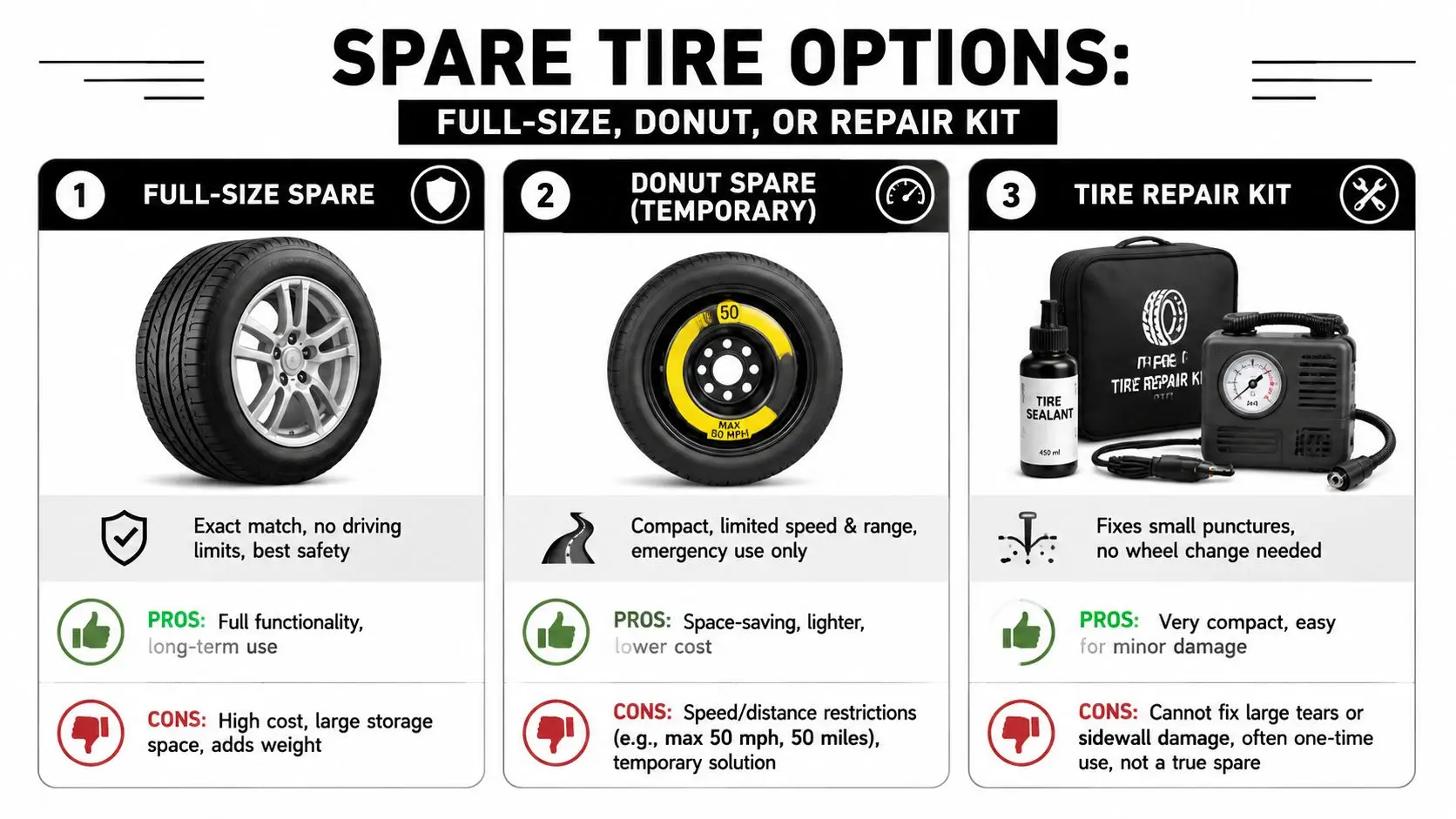
Three backup options cover almost every flat-tire situation. A full-size spare, a donut spare, or a repair kit. The right one depends on how you use the vehicle, how much space you have, and how much risk you are willing to accept on the side of the road.
Full-size spare
A full-size spare gives you the closest thing to normal driving after a flat. If the tire size, wheel specs, and load capacity are correct, it can get you back on the road with fewer speed and distance restrictions than a temporary spare.
That matters more than many drivers expect. A Plano commuter who spends time on Central Expressway or the Dallas North Tollway has a different risk profile than someone who stays within a few miles of home. The same goes for families heading out on weekend trips, work trucks carrying tools, or anyone who drives after hours when tire shops may be closed.
According to Acima's spare tire buying guide, a full-size spare might cost $250+ upfront, while a long-distance tow can exceed $100 for just the first 5 miles. For drivers who put in steady highway miles, the extra cost and cargo space often pencil out.
Best fit:
- Daily commuters with regular highway use
- Families who travel outside town
- SUVs and trucks with room to carry it
- Drivers who want the fewest limitations after a flat
Donut spare
A donut spare is a temporary tire for a short, controlled drive to a repair shop. It saves space. It costs less. It also asks the driver to follow strict limits.
In shop terms, that means slower speeds, shorter distance, and no treating it like a normal wheel and tire. If a customer tells me they only drive locally but then mentions school pickup, freeway merges, or evening trips across town, I do not count that as low-risk use. A donut can still work, but only if the driver understands what it can and cannot do.
What donuts usually do well:
- Fit small trunks and cargo areas
- Keep cost down
- Get the car off the shoulder and to service
What causes trouble:
- Drivers leave them on too long
- Drivers exceed the speed limit for the spare
- The temporary tire is old, underinflated, or never checked
A donut is a short-distance recovery tool. It should get you to repair, not carry your routine for the next week.
Repair kit
A repair kit takes up the least space, which is why many newer vehicles come with one instead of a spare. Usually that means sealant plus an inflator.
It can work for a small puncture in the tread area. It will not fix every flat. It does not help much with sidewall damage, a bent wheel, a larger puncture, or a tire that came apart from low pressure or road impact. If the tire was already worn thin, the kit may only delay the tow. Drivers who are unsure about remaining tread should learn the warning signs before they rely on sealant alone. Our tire tread depth chart and replacement guide helps with that check.
Consumer Reports' spare tire guidance also notes that these kits typically need replacement every 4 to 8 years. A lot of drivers never inspect the sealant expiration date until they need it, and by then the kit may not help.
Side-by-side trade-offs
| Option | What it does well | What usually goes wrong |
|---|---|---|
| Full-size spare | Lets the vehicle operate closer to normal | Takes up room, costs more, must be matched correctly |
| Donut spare | Saves cargo space and lowers upfront cost | Limited speed and distance, often misused |
| Repair kit | Small and easy to store | Only works on certain punctures, expires, does not replace a real spare |
What I recommend in the shop
If the vehicle has room and the driver spends much time on highways, a full-size spare is usually the safer buy.
If trunk space is tight and the vehicle stays close to home, a donut can be a reasonable compromise. It needs proper inflation, periodic inspection, and realistic expectations.
A repair kit works best as a limited emergency tool, not a full backup plan. If you are not sure which option fits your car, your wheel setup, or your driving routine, this is one of those cases where a local shop can save you money and trouble. We can verify fitment, check storage space, inspect the jack and tools, and make sure the backup you buy will work when you need it.
Decoding Your Car's Tire and Wheel Specifications
A lot of spare tire problems start before the tire is ever purchased. The mistake is ordering by year, make, and model alone, then assuming any wheel that looks close will work. In the shop, I see that with online bargain spares, used take-offs, and even parts a friend swore would fit.
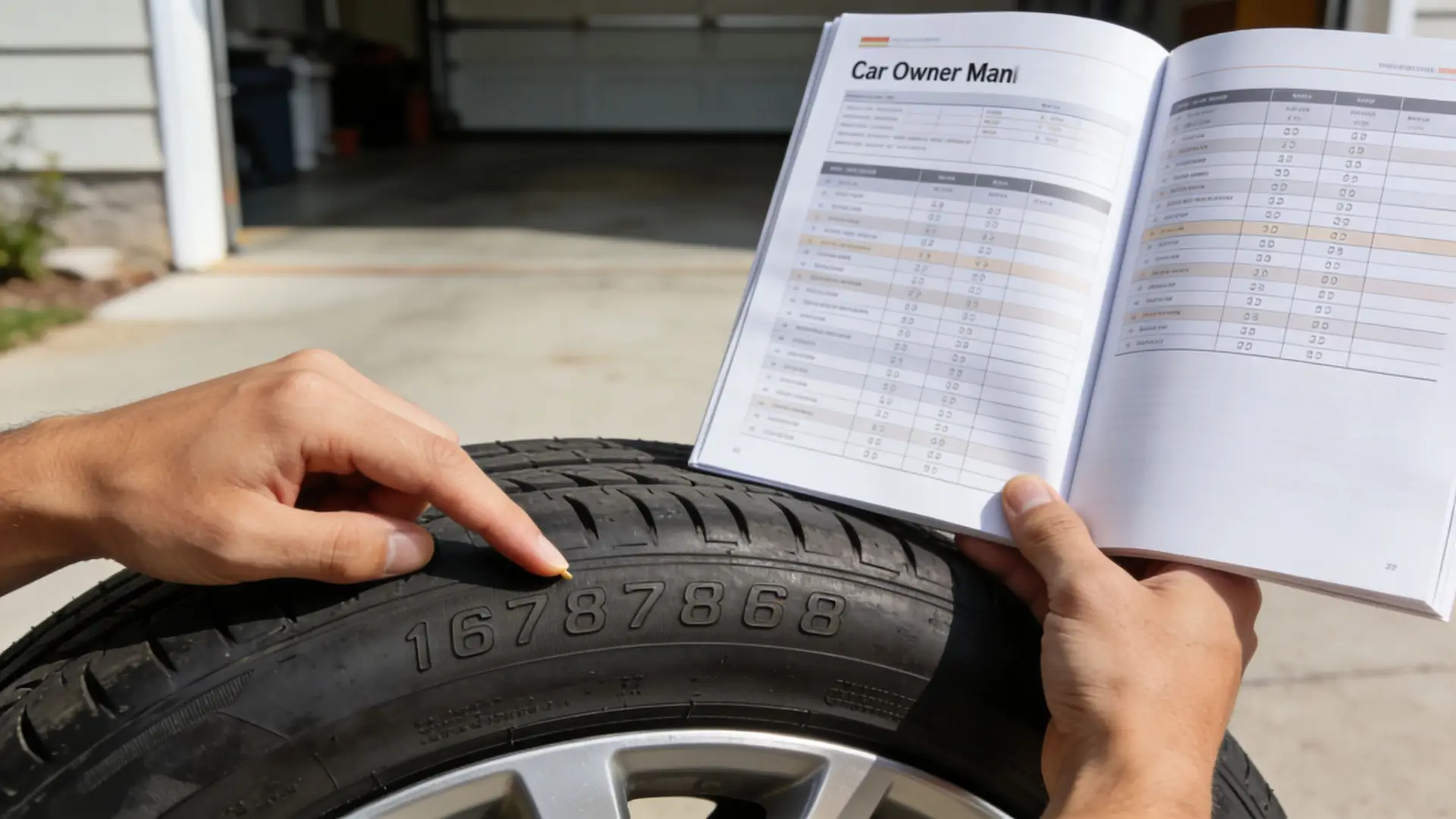
Start with the two sources the vehicle gives you. Check the owner's manual and the driver's door jamb placard. Those tell you what tire size, inflation pressure, and wheel setup the vehicle was designed to use. If the car has a factory temporary spare option, that information is usually there too.
Then verify the details that decide whether the spare can be used safely:
- Tire size
- Load rating
- Inflation pressure
- Wheel diameter and width
- Bolt pattern
- Center bore and brake clearance, if you are buying a wheel separately
That last point matters more than many drivers expect. A wheel can have the right bolt pattern and still hit the brake caliper or fail to sit properly on the hub.
Read the tire code before you buy
The tire sidewall gives you the working specs. A code such as 205/55R16 tells you the section width, aspect ratio, and wheel diameter. Those numbers affect ride height, clearance, and how closely the spare matches the other tires still on the vehicle.
Load rating matters too. I pay close attention to that on SUVs, minivans, and trucks that carry passengers, tools, or luggage every day. A Plano commuter who stays close to home may tolerate a compact temporary spare. A family heading out on a highway trip needs a backup that can support the vehicle safely and predictably if a tire fails far from home.
If you are already inspecting the damaged tire, it also helps to check a tire tread depth chart so you can decide whether replacing one tire, a pair, or the full set makes more sense.
Bolt pattern decides yes or no
This is the fitment check that stops the job cold.
The lug holes must match the vehicle's bolt pattern exactly. Close does not count. If the pattern is wrong, the wheel will not mount correctly, and forcing it can damage studs, prevent proper torque, or create a serious wheel retention problem. That is one reason I tell customers to verify the pattern on paper, then confirm it physically before spending money.
This walkthrough helps if you want to see the basics in action before you buy:
Modified vehicles need a hands-on check
Aftermarket wheels, lift kits, lowering springs, and oversized tires change the math. The original spare recommendation may no longer clear the brakes, match the rolling height well enough, or fit in the storage area.
That comes up often on trucks and crossovers. Owners install larger tires for appearance or ground clearance, then find out the spare will not fit under the rear carrier or into the cargo well. At that point, the right answer is not guessing. Measure the space, check the hub specs, and test-fit the assembly if possible.
A local shop earns its keep by verifying the wheel specs, checking brake and suspension clearance, confirming the spare fits the storage location, and making sure the backup matches how the vehicle is used. That step saves a lot of drivers from buying a spare that works on a product page but fails in a parking lot on the day they need it.
Where to Buy a Spare Tire and What to Inspect
Where you buy matters almost as much as what you buy. The source changes the risk.
The strengths and weaknesses of each buying option
A dealership usually gives you the best shot at OEM-correct parts and storage compatibility. The trade-off is price.
An online retailer gives you wide selection. The trade-off is that the fitment burden lands on you. If you miss a bolt pattern, load spec, or storage issue, the tire arriving at your door doesn't solve much.
A salvage yard or used wheel source can be a smart budget move, but only if you inspect carefully. A cheap spare becomes expensive fast if the tire is aged out, cracked, previously damaged, or mounted on the wrong wheel.
What to inspect before you hand over money
Use this checklist whether the spare is new or used.
- Check the DOT code: The DOT marking tells you the tire's manufacture date. Age matters because rubber degrades even when tread looks fine.
- Inspect the sidewalls closely: Look for cracking, dry rot, cuts, bulges, or signs the tire sat flat for a long time.
- Look for prior repairs: A used spare with plugs, patches, or mystery sealant residue deserves extra caution.
- Confirm wheel condition: Bent lips, elongated lug holes, and corrosion around the hub area can turn a “good deal” into a fitment or vibration problem.
- Verify storage fit: Make sure the assembly physically fits the trunk well, cargo compartment, or underside carrier.
- Ask how it was stored: Heat, sun exposure, and outdoor storage shorten trust in a tire, even when the tread looks decent.
If you're buying a full-size wheel and tire assembly and want to understand how proper service affects drivability, it helps to review what goes into mounting and balancing tires correctly.
A special warning for trucks and SUVs
For modified trucks and SUVs, the storage location can become the problem even after the spare itself is technically correct. In a Toyota 4Runner forum discussion about spare tire position, owners describe larger spares that tilt, hang low, or interfere with the bumper or hitch when mounted underneath. That's why a test-mount matters.
If the spare doesn't seat level, hangs too low, or crowds nearby parts, don't assume it's “close enough.” Underbody-mounted spares need to fit the carrier just as correctly as they fit the hub.
Installation and Maintenance for Total Peace of Mind
Buying the spare is only half the job. A spare that is stored loose, underinflated, or installed with the wrong hardware can leave you stranded just as fast as a damaged tire.
Why professional installation is often the safer call
I see this in the shop more than drivers expect. The spare itself is correct, but the setup around it is not. The wheel does not seat right, the lug hardware does not match the wheel, the tire is low before it ever goes into storage, or the carrier will not hold it securely.
A full-size spare should be mounted and balanced correctly if you expect normal road manners. A temporary spare needs the same fitment check, even if you only plan to use it for a short trip across Plano. If you commute daily on Central Expressway, a bad vibration or loose wheel is more than an annoyance. If you road-trip, a spare that was never test-fitted can become a major delay on the shoulder.
Keep the right tools with the tire. If you build your own roadside kit, confirm your lug tool fits the vehicle and the wheel you plan to run. This guide to socket sizes for cars and trucks is a good reference before you trust the kit in an emergency.
A shop should also verify these points before the spare goes into service:
- Correct lug nut or bolt seat type
- Proper torque specification
- TPMS sensor compatibility, if needed
- Clearance in the spare well or underbody carrier
- Inflation to the vehicle or tire specification
- Easy access to the jack, wrench, and lock key
That last point matters more than people think. A Plano commuter may be fine with a compact spare if it is inflated, secured, and ready for a short drive to a local shop. A driver who spends weekends on Texas highways is usually better served by a verified full-size assembly and a shop-installed plan that has already been checked for fit, pressure, and tool access.
The maintenance routine many drivers ignore
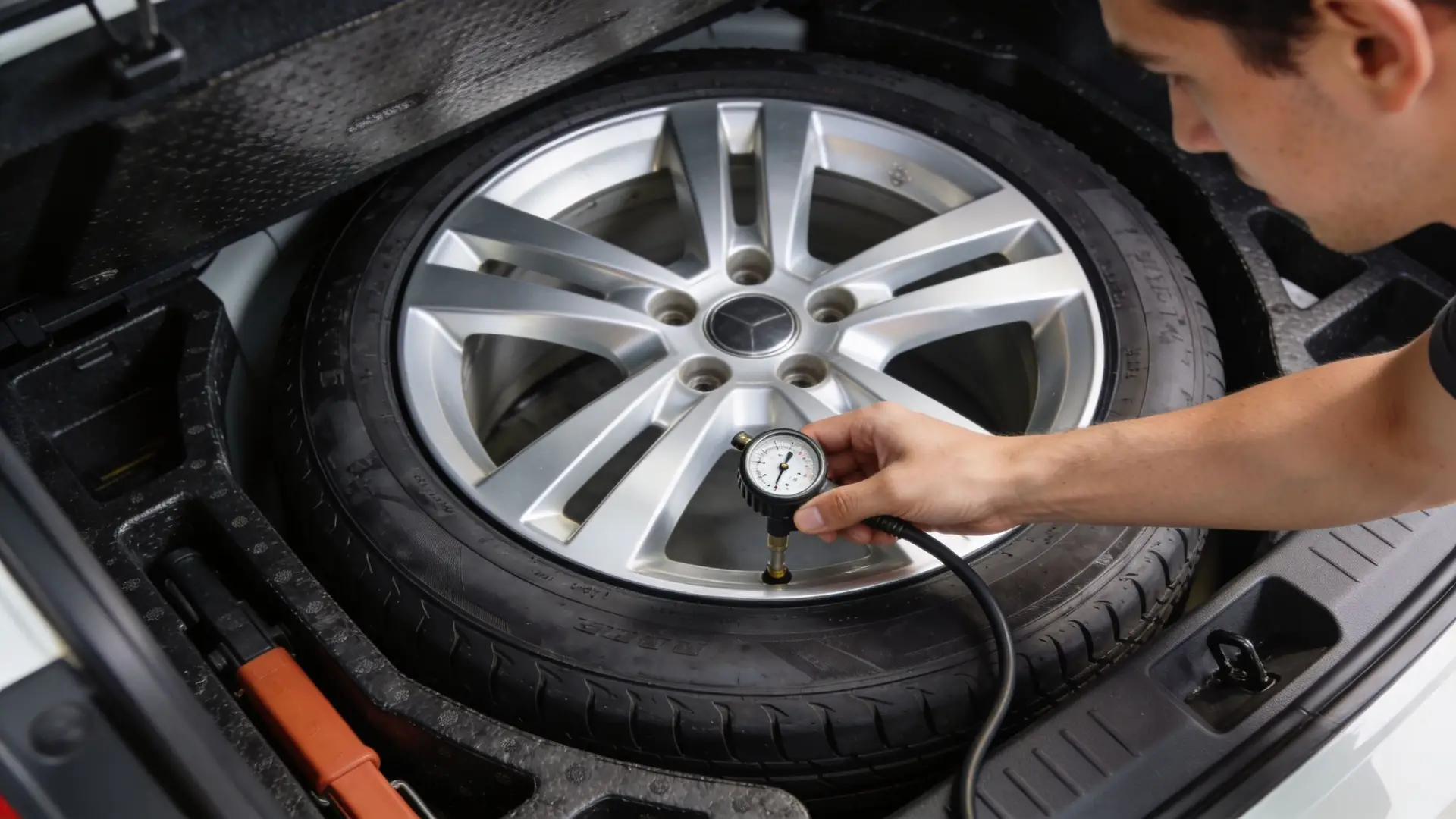
Spare tires age in storage. They also lose pressure while nobody is looking at them.
According to Commercial Tire's spare tire maintenance guidance, experts recommend a 6-year replacement cycle for all spare tires and note that tracking the DOT code and performing quarterly pressure checks can reduce emergency roadside failures by 40 to 60 percent.
Use that advice as a simple service schedule:
- Check pressure every three months: Match the spare to the sticker in the vehicle or the tire's listed requirement.
- Inspect the tire once a year: Look for cracks, bulges, punctures, dry rot, or tread separation.
- Read the DOT date code: Replace the spare based on age, not just tread depth.
- Inspect it after any use: A donut or full-size spare that has been driven on should be checked before it goes back into emergency duty.
If you need a refresher, this step-by-step guide on how to check tire pressure correctly covers the basics.
What drivers get wrong after a flat
The common mistake is putting the spare back and forgetting about it. Pressure is low, the valve stem is leaking, or the tire took damage during use and nobody checks it until the next roadside stop.
Another mistake is treating every spare the same. A temporary spare may be enough for a short local commute and same-day repair. It is a poor match for long highway trips, heavy cargo, or a truck and SUV that already pushes weight and clearance limits. That is where a local shop adds real value. We can confirm the fit, inspect the wheel hardware, set the pressure, and make sure your backup plan matches how you drive.
If your vehicle has aftermarket wheels, suspension changes, or a tight underbody carrier, guessing is a bad plan. Professional help is often the safer and cheaper choice than finding out on the side of the road that the spare fits the hub but not the vehicle.