

A cold Plano morning is a common way this starts. You back out of the driveway, glance at the dash, and there it is. The tire pressure light. By lunch, the weather feels totally different, and now you're wondering if you've got a leak, a sensor problem, or just Texas being Texas.
Checking tire pressure takes only a few minutes, but it prevents a long list of avoidable problems. Proper inflation helps your tires carry the vehicle the way they were designed to, keeps the ride more predictable, and helps you avoid wearing out a good set of tires early. It also saves you the hassle of chasing vibrations, warning lights, and uneven tread wear later.
Your Guide to Proper Tire Pressure
For most drivers, tire pressure gets attention only when the TPMS light comes on. That's understandable, but it's not the best way to stay ahead of tire problems. A statistical study found that only 42% of drivers regularly check their tire pressure, and fewer than 58% could correctly identify the TPMS warning symbol according to AAA Oregon's TPMS overview.
That gap matters because the warning system is a backup, not a maintenance routine. It helps alert you when something is off, but it doesn't replace a quick manual check with a gauge. In the shop, one of the most common patterns we see is simple neglect. Drivers rotate their tires, get oil changes on time, and still overlook inflation until a warning light forces the issue.
What proper inflation actually does
Three benefits make this worth your time:
- Safer handling: The tire keeps its intended shape and contact with the road.
- Longer tire life: You reduce the uneven shoulder wear that shows up when a tire runs low too often.
- Fewer surprises: You're less likely to deal with a sudden warning light before a commute or road trip.
If you're already thinking about overall tire care, regular inflation checks pair naturally with tire rotation timing. Pressure and rotation affect the same thing in the end. How evenly and how long your tires wear.
Practical rule: If you wait for the light every time, you're usually late.
A good tire pressure habit isn't complicated. Know your target PSI, use a decent gauge, and check the tires before a long drive or whenever weather shifts hard overnight. That's the routine that works in real life.
Why and When to Check Your Tires
Plano drivers deal with one issue that generic tire advice often glosses over. Temperature swings change the reading even when the tire isn't leaking. Cold air contracts, reducing pressure by about 1 PSI for every 10°F drop, and a tire set to 35 PSI in a 70°F garage can read as low as 28 PSI on a 30°F morning according to this temperature-related tire pressure explanation.
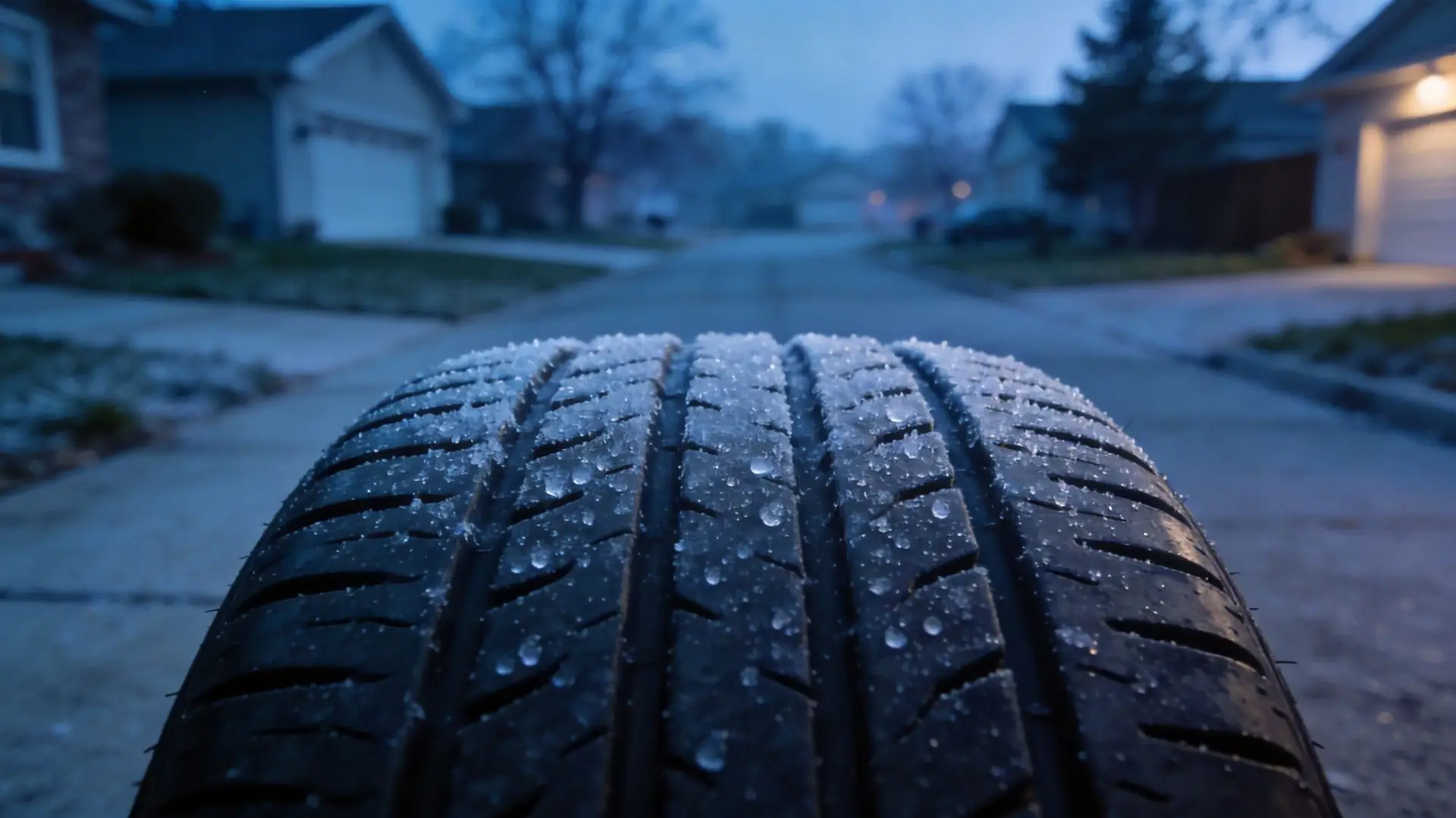
That's why a sudden light on a cold morning doesn't automatically mean you picked up a nail. It might just mean the temperature dropped enough to push the tire below the threshold that your vehicle monitors. On the other side of the year, checking after highway driving in summer heat can give you an inflated reading that makes the tire look fine when it isn't.
Check them cold, not convenient
The best time to check tire pressure is when the tires are cold, meaning the vehicle has been parked long enough for the tires to settle to ambient conditions. If you drive first and check later, the reading won't tell you what the tire pressure really is at rest.
For busy drivers, that means the easiest reliable windows are usually:
- Before the morning commute
- Before loading up for a weekend trip
- After the car has been parked for several hours
- Any time the weather shifts sharply overnight
If your dashboard light is on, it helps to understand what that symbol is trying to tell you. This quick guide to a TPMS warning light covers the basics in plain language.
A hot tire can fool you into thinking pressure is correct. A cold tire gives you the usable number.
How often is enough
A simple routine works better than waiting for symptoms. Check tire pressure monthly and before longer drives. Families running errands all week, commuters logging miles on Central Expressway, and drivers heading out of town all benefit from that schedule because tire pressure changes gradually and often without any obvious feel at the steering wheel.
Here's the practical trade-off:
| Situation | What works | What doesn't |
|---|---|---|
| Cold snap overnight | Check before driving | Assuming the light means a puncture |
| Summer afternoon | Wait until tires cool | Adjusting pressure right after a long drive |
| Road trip prep | Check all four tires before loading up | Trusting a visual glance |
| Normal monthly maintenance | Use the same gauge each time | Relying only on the dashboard |
A lot of tire headaches start with good intentions and bad timing. The driver checks after work, the tires are hot, and the numbers look close enough. Then the next morning the light comes back on.
Finding Your PSI and Choosing a Gauge
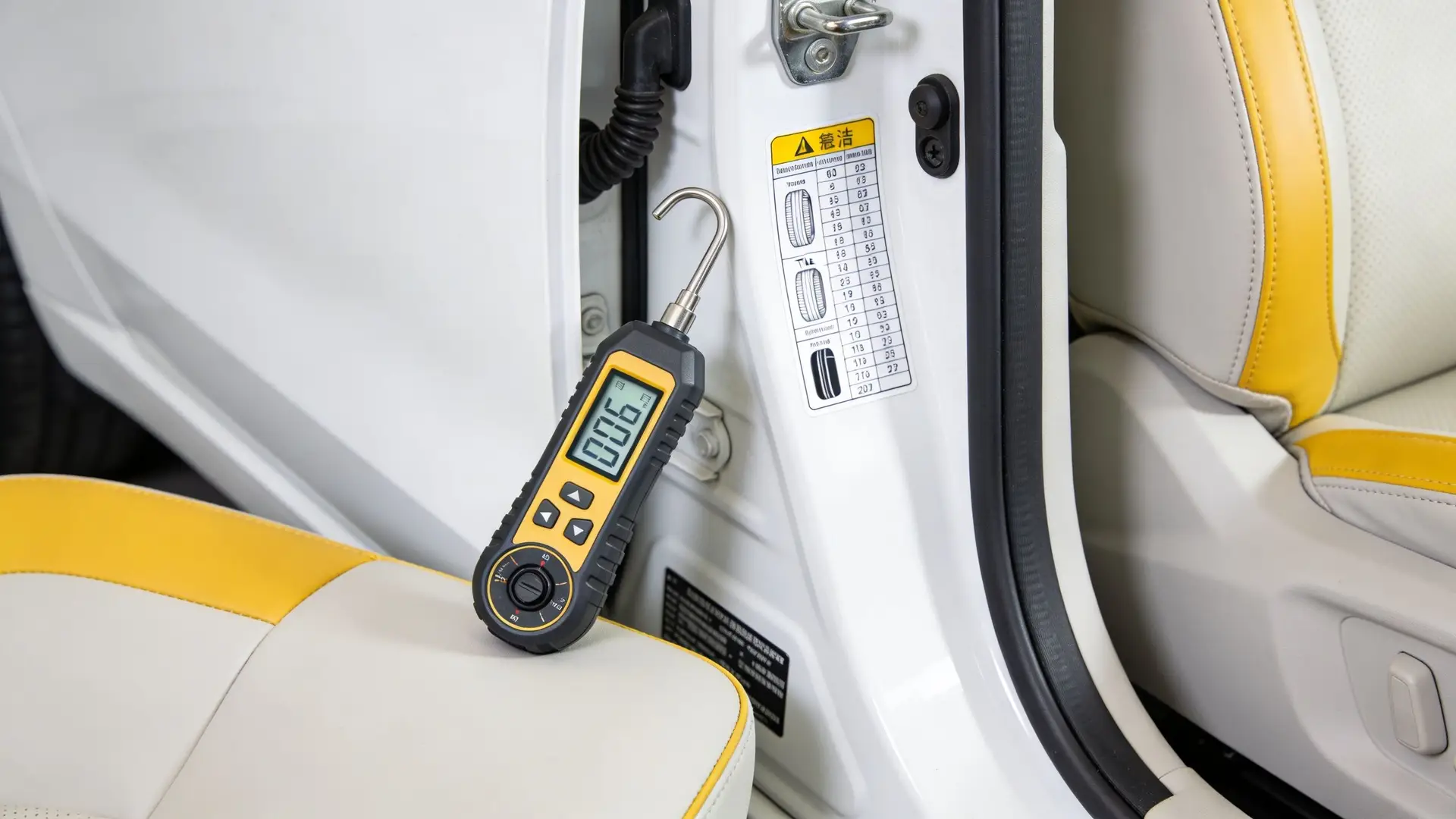
Before you check tire pressure, you need one thing more important than the gauge itself. You need the correct PSI for your specific vehicle. The right number is usually on the sticker inside the driver's door jamb.
That sticker is the reference point. Not the tire sidewall.
Use the door sticker, not the sidewall
The number molded into the tire sidewall is the maximum pressure for the tire, not the everyday operating recommendation for your vehicle. That's one of the most common mistakes DIYers make. They see the sidewall, fill to that number, and end up with a tire that rides harsher and doesn't match what the vehicle manufacturer intended.
If the door sticker is missing, check the owner's manual. If front and rear PSI are different, follow that exactly.
Shop note: Vehicle engineers set pressure for the car's weight, suspension, and tire size together. The tire sidewall only tells part of the story.
Which gauge makes sense
You don't need an expensive tool, but you do need one you will use. The best gauge is the one that lives in your glove box or console and gives repeatable readings.
| Gauge type | Best for | Drawback |
|---|---|---|
| Pencil gauge | Cheap, compact, easy to keep in the car | Harder to read quickly |
| Dial gauge | Clear reading, easy for most drivers | Bulkier than a pencil gauge |
| Digital gauge | Fast, easy-to-read display | Needs a working battery |
A digital gauge is usually the easiest choice for most drivers. A dial gauge is a solid second. Pencil gauges still work fine if you're comfortable reading them and the tool is in good shape.
What I'd avoid
Skip damaged gauges, bargain-bin tools that feel loose at the tip, or any gauge that gives a different number every time you touch the valve stem. Consistency matters more than fancy features. If you have to fight the tool, you're less likely to keep up with the routine.
The Perfect Tire Pressure Check in Under Five Minutes
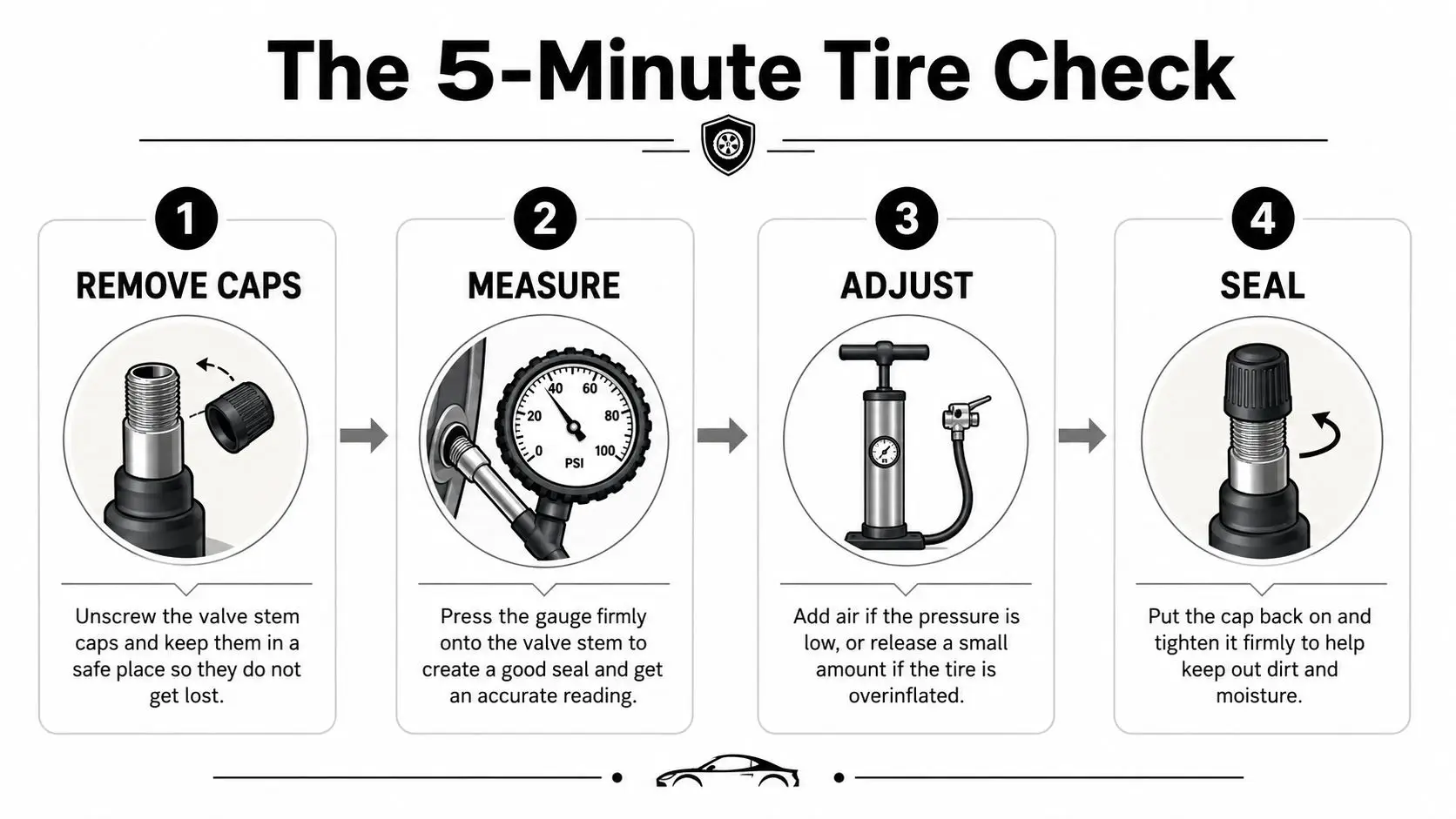
A clean tire pressure check is mostly about setup. If the tires have been sitting long enough to be cold, you're already halfway there. From there, the job is simple. Remove the cap, get a firm seal, read the number, and compare it to the door sticker.
Start at one tire and stay consistent
Pick one tire and work your way around the vehicle in the same order each time. That keeps you from losing track. Remove the valve cap and put it somewhere you won't drop it. A cupholder, your pocket, or your palm all work better than balancing it on the bumper.
Line the gauge up straight with the valve stem. Then press firmly enough to seal it.
A proper reading comes from a steady fit, not a quick jab. For an accurate reading, make sure the tires have been undriven for 3+ hours, seat the gauge firmly on the valve stem for 2 to 3 seconds until the hissing stops, and repeat the measurement 2 to 3 times per tire since single readings can vary by ±1 PSI, as explained in this step-by-step tire pressure guide.
What a good reading feels like
When the gauge hits the valve correctly, you'll hear little or no escaping air after the seal is made. If it hisses the whole time, pull off and try again. That usually means the gauge went on crooked.
Use this quick checklist while you work:
- Hold it straight: An angled gauge causes leaks during the reading.
- Pause for a moment: Give the tool time to settle instead of tapping and pulling away.
- Repeat the check: If one reading looks off, take another before adjusting pressure.
- Check every tire: Don't stop after finding one low tire. Pressure often changes across more than one.
If the first reading surprises you, trust the second and third reading more than the first contact.
Don't forget the spare if you can access it
A spare tire gets ignored longer than any other tire on the vehicle. Then you need it on the worst possible day. If your vehicle has an accessible spare, add it to your routine. You don't need to inspect it every week, but it shouldn't be a total mystery either.
Compare before you adjust
Once you have a stable reading, compare it to the PSI listed on the driver's door sticker. If the pressure is low, add air. If it's high, release a little and recheck. Keep the process calm and deliberate. Most mistakes happen when someone rushes and overshoots the target.
This whole check can take under five minutes once you've done it once or twice. The first time takes a little longer. After that, it becomes one of the easiest maintenance habits on the car.
How to Inflate Tires and Fix Common Issues
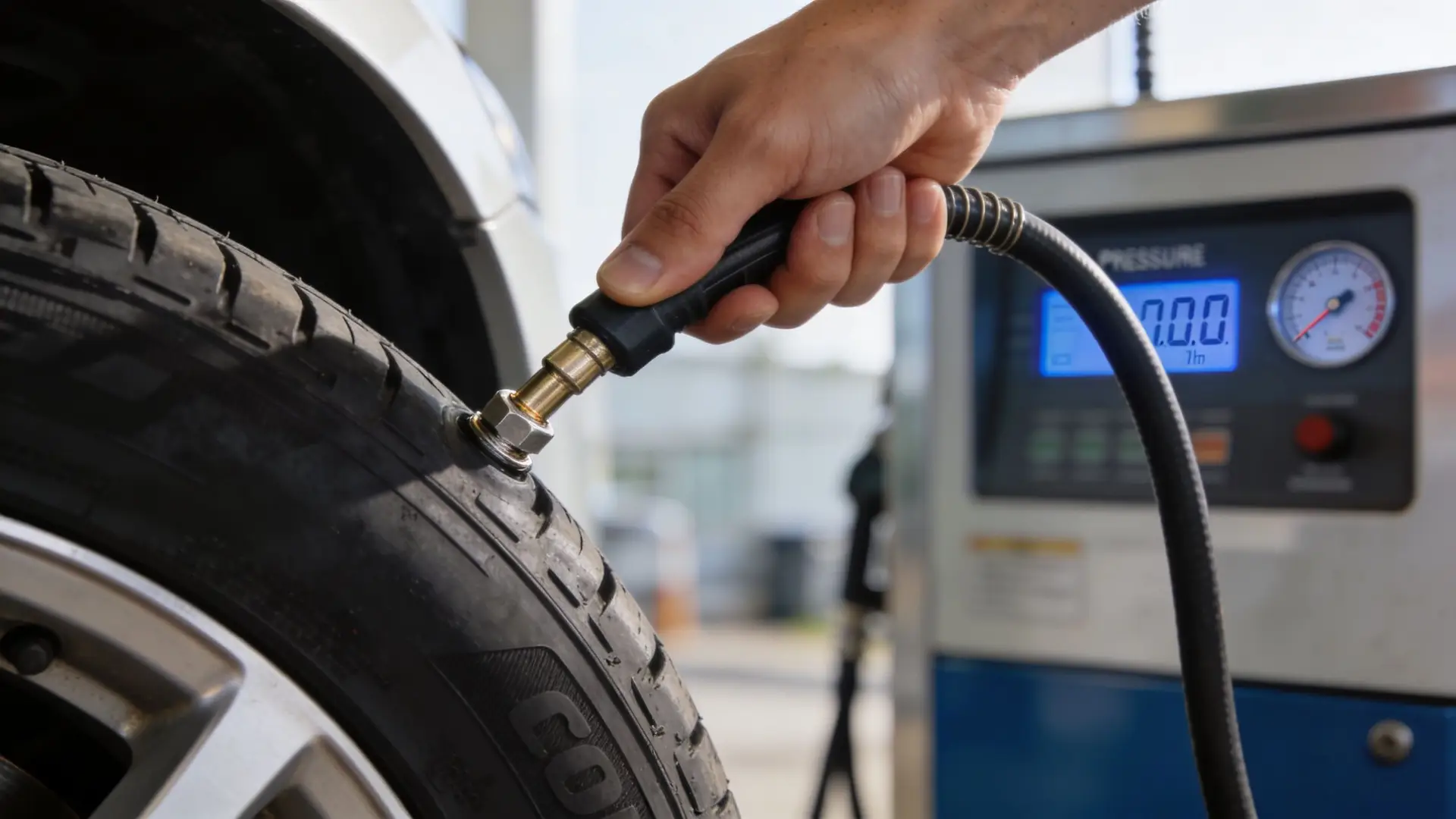
Inflating a tire isn't complicated, but rushing it creates mistakes. If you're using a gas station air pump, set the target pressure if the machine allows it. If it doesn't, add air in short bursts and check with your own gauge between bursts.
Adding air without overshooting
Remove the valve cap, attach the air hose firmly, and add air gradually. Don't assume the pump's display is more accurate than your gauge. Use your own reading as the final word.
A simple approach works best:
- Add in short bursts: A few seconds at a time is easier to control.
- Recheck often: It's faster to creep up on the right PSI than to overfill and start bleeding air back out.
- Match the placard: Aim for the pressure listed on the door sticker, not what feels right by guesswork.
If you go a little high, press the valve core briefly to release air, then recheck. Small corrections are normal. Big corrections usually mean the process got rushed.
When the light stays on
Sometimes the pressure is correct and the TPMS light still won't clear. That often confuses drivers, especially after tire service. One common reason is that after a tire rotation or sensor replacement, many vehicles, especially GM and some Honda models, need a TPMS relearn procedure so the system matches the new tire locations. This issue is explained in this TPMS relearn walkthrough.
That means the vehicle may know a sensor is reporting, but it may assign that sensor to the wrong corner of the car. Then the warning light or location display doesn't make sense.
If your car starts shaking or feels odd after tire service, low pressure isn't the only thing worth checking. This guide on steering wheel vibration causes helps sort out when the issue is inflation and when it may be balance, wear, or something else.
Here's a quick visual walkthrough that pairs well with the steps above:
When to stop DIY and get it inspected
Some situations call for more than just air:
- One tire keeps dropping repeatedly: That points to a leak, puncture, wheel sealing issue, or valve stem problem.
- The TPMS light stays on after proper inflation: The system may need relearn, diagnosis, or sensor service.
- The tire looks visibly damaged: Don't keep topping it off and hoping for the best.
- The car pulls or rides strangely: Pressure may be only part of the problem.
A tire that needs air once in a while is normal. A tire that keeps needing air is asking for an inspection.
Your Local Tire Pressure Experts in Plano TX
Checking tire pressure is one of the few maintenance tasks that gives you a quick payoff with very little effort. A few minutes with a gauge can help you avoid premature tire wear, a rougher drive, and the nuisance of a warning light showing up at the worst time.
Still, not every driver wants to keep a gauge in the console or stop at an air pump on the way to work. That's reasonable. Some people would rather have a technician verify the pressure, check for uneven wear, and make sure a stubborn warning light isn't tied to a sensor issue or a recent rotation.
When expert help makes sense
If you're dealing with repeat air loss, unusual wear, or a tire warning that doesn't line up with what you're seeing, a professional inspection saves time. It also helps catch the situations that a driveway check won't reveal. For broader context on how shops approach expert wheel and tire diagnostics, that resource gives a useful look at the kind of issues that can hide behind a simple pressure complaint.
Plano drivers also have one more challenge. The weather doesn't stay put. A tire can seem fine one week, then throw a warning after the next big temperature swing. That's why quick, accurate checks matter more here than they do in places with steadier conditions.
If you're busy, unsure what your PSI should be, or tired of guessing at a TPMS light, having an ASE-certified technician handle it is often the simplest path. It turns a small maintenance task into peace of mind, and it's easy to combine with routine service so you're not making a separate stop later.
If you'd rather have it checked professionally, stop by Express Lube & Car Care. Their ASE-certified team can check tire pressure, inspect for uneven wear, help with TPMS concerns, and take care of it while you're already in for maintenance. No appointment needed, which makes it easy for busy Plano drivers to get in, get answers, and get back on the road.