
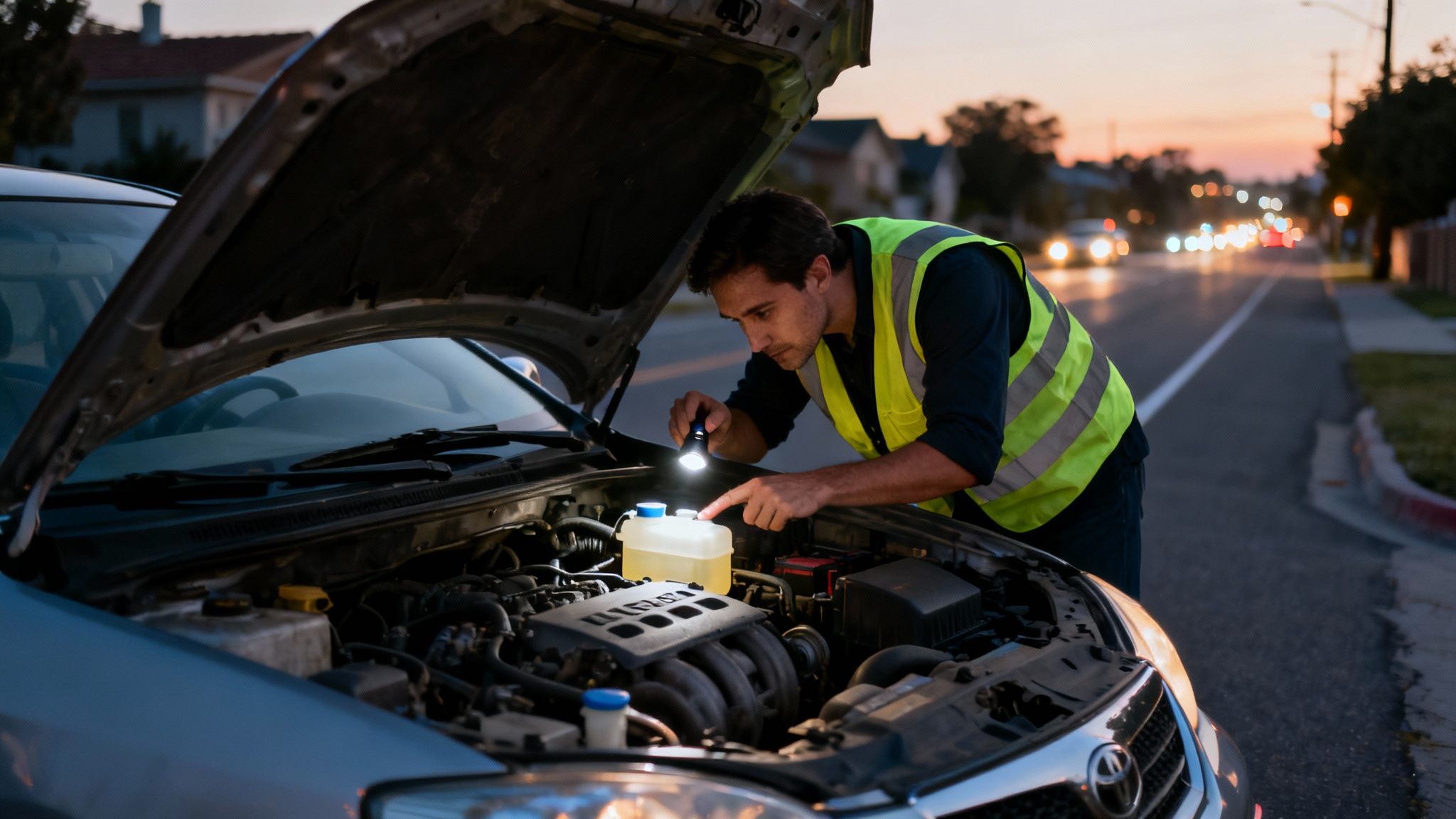
Performing a regular check of your brake fluid level and condition is one of the most fundamental yet critical safety procedures for any vehicle owner. This simple inspection, which takes only a few moments, allows you to assess the health of your car's hydraulic braking system. The process involves locating the translucent reservoir under the hood, verifying the fluid is between the 'MIN' and 'MAX' indicators, and observing its color. This is your primary method for early detection of potential brake system issues.
Understanding the Importance of This Critical Safety Check
The liquid within your car’s hydraulic braking system is not merely a fluid—it is the medium that transmits the force from your foot on the brake pedal directly to the wheels. If this fluid's integrity is compromised, your ability to stop safely is significantly diminished. Consequently, understanding how to check your brake fluid is a non-negotiable skill for any driver, particularly when navigating the demanding traffic of Plano's roadways, such as US-75.
Consider this scenario: while driving on a hot Texas day, traffic comes to an abrupt halt. You apply the brakes firmly, but the pedal feels unusually soft and sinks towards the floor. This alarming experience can be caused by something as fundamental as old, contaminated brake fluid.
The Scientific Principles Behind Fluid Degradation
A key property of most brake fluids is that they are hygroscopic. This scientific term means the fluid is engineered to absorb moisture from the surrounding atmosphere. Over time, this water contamination becomes the primary threat to your braking system, as it substantially lowers the fluid's boiling point.
When brake fluid boils, it transforms into a compressible gas, creating vapor bubbles within the brake lines. This phenomenon, known as "vapor lock," prevents the hydraulic system from generating the pressure required to engage the brakes. The result can be a sudden and complete loss of braking ability.
For anyone commuting or transporting family in Plano, neglecting this fluid can have severe consequences. Within just two years, brake fluid can absorb enough moisture to reduce its boiling point by 20-30%. This creates the ideal conditions for vapor lock, especially during periods of heavy braking. Notably, passenger cars constitute a significant 46.92% of global brake fluid consumption, with a typical service interval of every two years or 30,000 miles.
A brief inspection helps prevent these hazardous situations and is an essential part of routine vehicle maintenance. You can learn about other crucial inspections by reviewing our comprehensive vehicle safety inspection checklist.
If an inspection reveals that your fluid level is low or its color has become dark and opaque, this is a clear indication that professional service is required. Here at Express Lube & Car Care, our Plano-based team is equipped to diagnose and resolve issues identified during a routine fluid check, ensuring your vehicle remains safe for the road.
A Step-by-Step Guide to Inspecting the Brake Fluid Reservoir
To begin, let's proceed under the hood. The initial step in any automotive fluid inspection is to create the proper conditions for an accurate and safe assessment.
Before opening the hood, ensure your vehicle is parked on a level surface. A slope will cause the fluid to shift within the reservoir, resulting in an inaccurate reading.
It is also advisable to allow the engine to cool for approximately one hour. The engine compartment retains significant heat, and this precaution prevents accidental contact with hot components. It also allows the brake fluid to settle completely for a more precise measurement.
Locating the Brake Fluid Reservoir
Upon lifting the hood, the array of components can appear complex. However, the brake fluid reservoir is typically designed for easy identification. In most front-wheel-drive vehicles, it is situated at the rear of the engine bay, on the driver’s side.
Focus your search near the firewall—the metal barrier that separates the engine compartment from the passenger cabin. The reservoir is a small, semi-transparent plastic container. Its translucent design is intentional, allowing for a quick level check without needing to remove the cap.
Professional Tip: If you have difficulty locating it, trace an imaginary line from your brake pedal through the firewall. The reservoir is connected to the master cylinder, which is located precisely where that line would terminate.
Interpreting the Fluid Level and Type
Once you have located the reservoir, it is time to read the fluid level. The side of the container features clearly marked lines, similar to those on a coolant expansion tank. Their meanings are as follows:
- MAX Line: This indicates the maximum permissible fluid level. Never fill beyond this line.
- MIN Line: This represents the minimum safe operating level. Fluid at or below this mark requires immediate attention.
Ideally, the fluid level should be between the MAX and MIN indicators. It is normal for the level to decrease slightly over thousands of miles due to brake pad wear. However, a significant or abrupt drop below the MIN line is a strong indicator of a potential leak, which warrants a professional inspection.
Before considering opening the cap, examine it closely. The cap is imprinted with the required type of brake fluid for your vehicle, typically DOT 3 or DOT 4. This information is critical. Using an incorrect fluid type can cause severe damage to the seals and components of your brake system.
Finally, a crucial preparatory step: wipe the cap and the surrounding area with a clean cloth before opening it. The brake system is a sealed hydraulic circuit for a reason; it is highly sensitive to contamination. Even a small amount of dirt or debris can compromise the fluid and lead to costly repairs. This simple wipe-down is a vital step in protecting your vehicle’s most important safety system.
The Significance of Your Brake Fluid's Color
While the fluid level is an important metric, the true story of its condition is revealed by its color. Much like cooking oil that darkens with use, brake fluid changes appearance as it degrades. A simple visual inspection provides a clear understanding of the internal state of your hydraulic system.
New, healthy brake fluid should be nearly transparent with a light golden or amber hue. When you inspect the reservoir, this is the ideal appearance. It signifies that the fluid is clean, free from contaminants, and capable of effectively transferring force from the pedal to the brakes.
Over time, this pristine color will darken. As a hygroscopic fluid, it absorbs atmospheric moisture. It also accumulates microscopic particles from the natural wear of rubber hoses and seals. This contamination is the cause of the darkening.
This concise, visual inspection process helps you locate the reservoir, identify the cap, and read the fluid level with precision.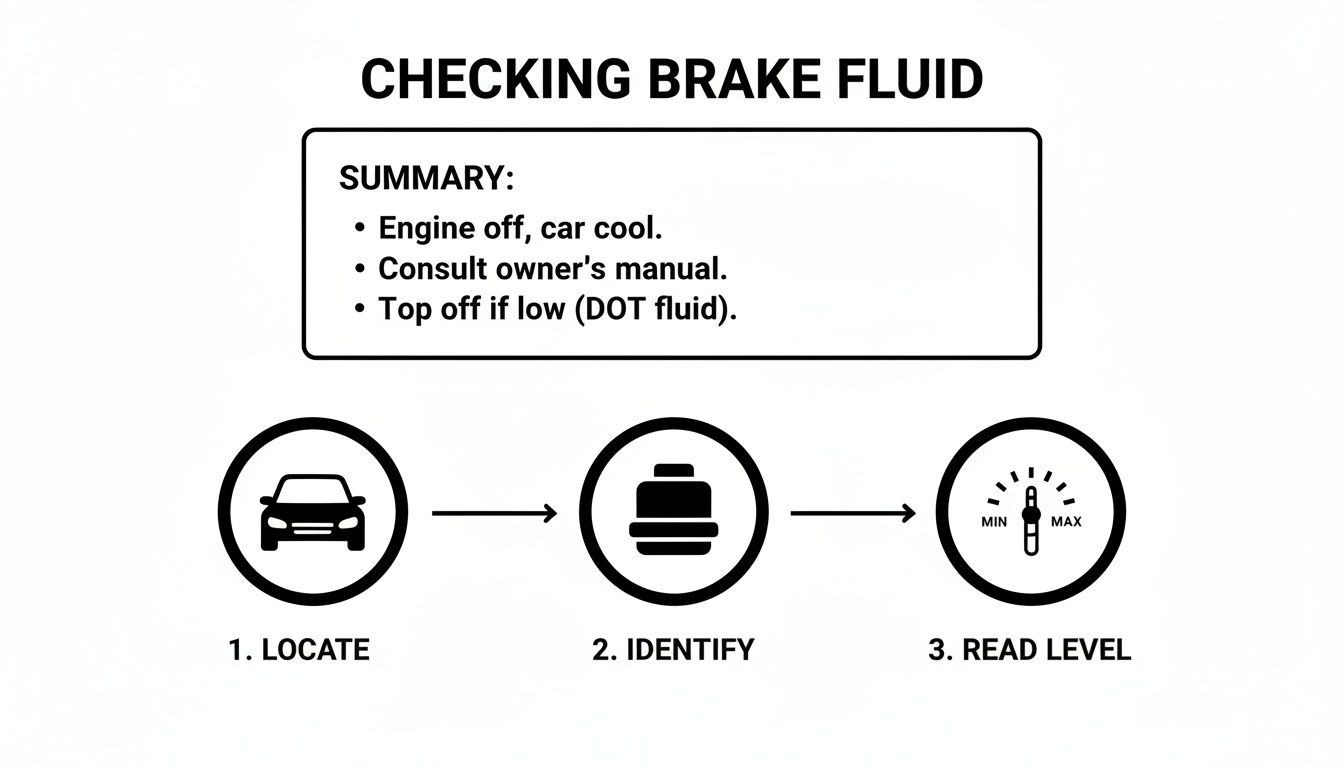
Adhering to these steps ensures you obtain an accurate reading each time you perform a check.
A Guide to Interpreting Brake Fluid Colors
If your fluid has become dark brown or black, this is a significant warning sign. This dark coloration indicates heavy contamination with moisture and particulate matter. This not only lowers the fluid's boiling point—dramatically increasing the risk of brake failure under demanding conditions—but can also cause gradual corrosion of expensive components like the master cylinder and the Anti-lock Brake System (ABS) module.
The remedy for old, dark fluid is not to simply add more. A complete brake fluid flush is required. This service involves removing all the old, compromised fluid and replacing it with fresh, new fluid, thereby restoring braking performance and protecting the system from internal damage. The impact of old fluid is substantial; after approximately three years, it can lead to a braking efficiency loss of up to 30%. With passenger vehicles accounting for nearly 47% of brake fluid demand, regular inspections are vital for the majority of cars on the road. You can learn more about advancements in fluid technology with industry research on the automotive brake fluid market.
Brake Fluid Condition Troubleshooting Guide
For a simple analogy: if your brake fluid has the appearance of fresh apple juice, its condition is excellent. If it begins to resemble dark coffee, it is time for a replacement. Ignoring this change can lead to a spongy brake pedal or, in a worst-case scenario, complete brake failure when it is most critical.
This table summarizes what you might observe in the reservoir and the appropriate course of action.
| Fluid Appearance | What It Means | Recommended Action |
|---|---|---|
| Clear to Light Gold | The fluid is in a healthy, clean state. | No immediate action is required. Continue monthly visual checks. |
| Light Brown or Tea-Colored | The fluid is aging and has begun to absorb moisture. | Schedule a brake fluid flush in the near future. |
| Dark Brown or Black | The fluid is heavily contaminated and its performance is compromised. | Schedule a professional brake fluid flush immediately. |
This straightforward color assessment provides direct insight into the health of your braking system.
Key Takeaway: The color of your brake fluid is a direct indicator of its condition. Dark fluid signifies that professional service is necessary to prevent component damage and ensure your safety on the road.
If you inspect your fluid and observe a dark, murky color, do not delay. Bring your vehicle to Express Lube & Car Care in Plano. Our ASE-certified technicians can perform a complete flush and restore your braking system to optimal condition.
How to Add Brake Fluid: A Procedure Requiring Precision
If your inspection reveals the fluid level is near the "MIN" line, a top-up is necessary. However, it is essential to understand that this is not like refilling windshield washer fluid. Brake fluid is a potent chemical—it is highly corrosive and can damage your vehicle's paint upon contact.
First and foremost, you must use the correct type of fluid for your vehicle. Open the hood and examine the cap of the brake fluid reservoir. It will almost always specify the required fluid, typically DOT 3 or DOT 4. If this information is not on the cap, consult your owner's manual.
Crucial Safety Note: Never mix different types of brake fluid. Introducing a glycol-based fluid (DOT 3, DOT 4) into a system designed for a silicone-based fluid (DOT 5) can cause the fluid to congeal, leading to a catastrophic loss of braking ability. Adhere strictly to the manufacturer's recommendation.
The Proper Method for Topping Up Fluid
Once you have the correct, factory-sealed bottle of brake fluid, the process is straightforward but requires careful execution. Precision is paramount, as minor errors can lead to significant problems.
Preparation and Pouring Technique
- Always use a new, sealed bottle. Brake fluid is hygroscopic, meaning it readily absorbs moisture from the air. A previously opened bottle has already begun this absorption process. Using it will introduce water into your sealed brake system, which is a primary cause of component failure.
- Clean the reservoir cap before removal. Wipe down the cap and the surrounding area to prevent dirt, dust, or other contaminants from entering the brake lines.
- Pour slowly and with control. If you are not confident in your ability to pour steadily, use a small, clean funnel. Add the fluid incrementally, monitoring the level closely to avoid overfilling.
- Stop at the "MAX" line. Do not fill the reservoir to the very top. Overfilling can create excessive pressure as the fluid heats up and expands during normal braking operation.
- Clean up any spills immediately. Keep a clean cloth ready. If any fluid drips onto a painted surface, wipe it away instantly and wash the area with soapy water to neutralize the corrosive chemical.
When Low Fluid Indicates a Systemic Issue
While topping up low brake fluid can be a temporary solution, it often points to an underlying issue. Your brake system is a closed hydraulic circuit; the fluid does not evaporate or get consumed like fuel. A very gradual decrease over tens of thousands of miles is normal and corresponds to brake pad wear.
However, a significant or sudden drop in the fluid level almost always indicates a leak.
The source could be a worn hose, a failing seal in a brake caliper, or a corroded fitting. A leak is a critical safety failure, as it means the system cannot maintain the hydraulic pressure necessary to stop your vehicle. If you find yourself needing to add fluid more than once, it is a clear signal to consult a professional. At Express Lube & Car Care, our ASE-certified technicians in Plano can accurately diagnose the source of the leak and ensure the integrity of your entire braking system.
Warning Signs That Indicate a Deeper Problem
Sometimes, a brake fluid inspection reveals more than just a low level. While a simple top-up may occasionally be the solution, certain symptoms are your vehicle's way of signaling a more serious underlying issue. When it comes to your braking system, these are signs that must never be ignored.
One of the most immediate indicators is a change in the feel of your brake pedal. If it feels soft, spongy, or sinks toward the floor upon application, this is a classic symptom of air in the brake lines. A hydraulic brake system relies on solid, incompressible fluid to function. Air, being highly compressible, severely diminishes stopping power.
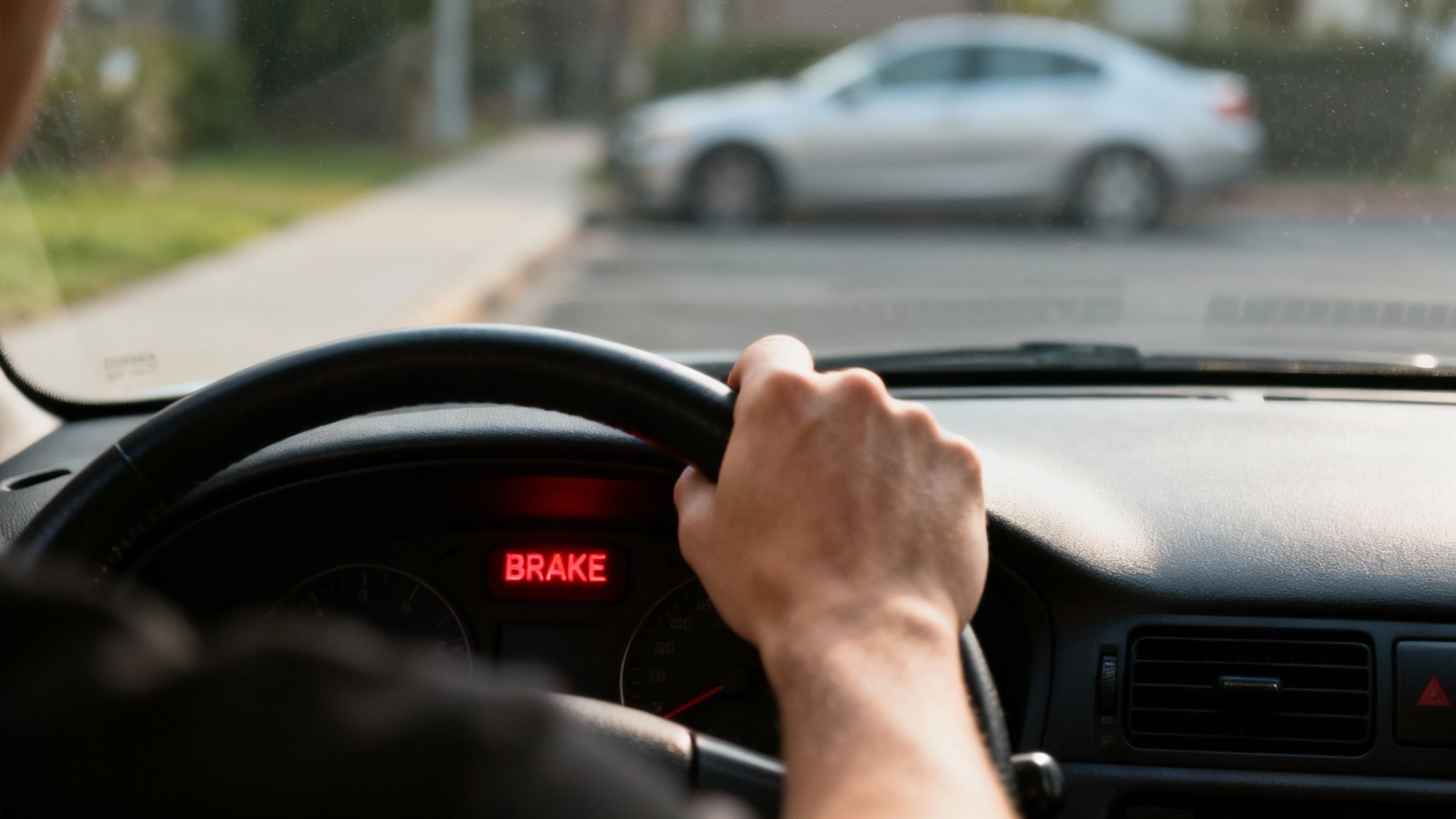
Another unmistakable warning is the illumination of the brake warning light on your dashboard. This is not a mere suggestion; it is a direct alert from your vehicle's diagnostic system. It can indicate low fluid, but it may also signal a failure in the master cylinder or a dangerous pressure imbalance within the system.
Identifying Physical Evidence of a Problem
The most conclusive sign of a problem is discovering a puddle of fluid under your vehicle. If you observe a patch of oily, slightly yellowish liquid near a wheel or beneath the engine bay, it is almost certainly a brake fluid leak.
This leak could originate from several points of failure:
- A cracked or brittle rubber brake hose
- A degraded seal on a brake caliper
- A loose or corroded fitting on a brake line
A leak constitutes a critical system failure. It means your brake system is actively losing the hydraulic pressure it needs to stop your vehicle. Consistently low fluid levels are a major contributor to braking issues and are a factor in 2-3% of all vehicle accidents worldwide, often pointing to a worn master cylinder or failing lines. Furthermore, moisture contamination is a significant risk, affecting as many as 25% of vehicles over five years old. You can review a detailed analysis of this topic from the automotive brake fluid market at Fortune Business Insights.
The Bottom Line: A spongy pedal, a dashboard warning light, or a visible fluid leak are not issues for DIY repair. These symptoms indicate a compromised braking system that requires professional diagnostic tools and expertise to be corrected safely.
These problems are far beyond the scope of a simple fluid check. Attempting to repair them without the proper equipment can exacerbate the danger. If you observe any of these warning signs, it is time to consult a professional. Our guide on brake repair in Plano, TX provides more information on what a professional service entails.
Here at Express Lube & Car Care, our ASE-certified technicians possess the diagnostic equipment to identify the root cause of the problem and restore your brakes to safe, reliable working order for Plano's roads.
Frequently Asked Questions About Brake Fluid
Even after mastering the process of checking your brake fluid, several specific questions often arise. Addressing these common inquiries will provide you with the comprehensive knowledge needed to confidently manage this aspect of your vehicle's maintenance.
How Often Should I Check My Brake Fluid?
It is best practice to visually inspect the brake fluid reservoir approximately once a month. This can be incorporated into your routine checks of the engine oil and tire pressure. This brief inspection is the most effective way to detect a potential problem early.
Regarding a complete fluid replacement, the service interval is different. Most vehicle manufacturers recommend a full brake fluid flush every two to three years, or approximately every 30,000 miles. This recommendation is not arbitrary; it is based on the chemical properties of the fluid and is critical for your safety.
Brake fluid is hygroscopic, meaning it absorbs moisture from the atmosphere, which lowers its boiling point. In a humid climate like North Texas, or for vehicles that experience frequent stop-and-go city driving, adhering to the two-year service interval is highly recommended. This is the most effective way to prevent a soft pedal or brake failure under high-stress conditions.
Top-Up vs. a Complete Flush: What Is the Difference?
This is a common point of confusion. A "top-up" involves adding a small amount of new fluid to the reservoir to bring the level back between the "MIN" and "MAX" lines. It should be considered a temporary measure to correct a minor decrease in fluid level.
A brake fluid flush, in contrast, is a comprehensive maintenance procedure. Our technicians drain all of the old, contaminated fluid from the entire hydraulic system—including the master cylinder, brake lines, and calipers at each wheel. The system is then filled with fresh, clean fluid. For a more detailed explanation, please see our guide on how often you need a brake fluid flush.
The purpose of a flush is not simply to refill but to purge the system of moisture, sediment, and microscopic metal particles that can cause internal corrosion.
The Importance of Correct Fluid and Low-Level Warnings
Can any bottle of brake fluid be used for a top-up? No, absolutely not. This is a critical rule. Always use the specific type of fluid recommended in your owner's manual, which is typically DOT 3 or DOT 4. Mixing different fluid types—especially glycol-based with silicone-based fluids—can have disastrous consequences, causing the fluid to gel and leading to catastrophic brake failure.
If the fluid is low, does that automatically indicate a leak? Not always, but it requires careful observation. It is normal for the fluid level to decrease very gradually over thousands of miles as brake pads wear. However, a sudden, significant drop in level is a strong indication of a leak. A leak is a serious safety hazard that requires immediate professional diagnosis and repair.
If you are experiencing any issues with your brakes, do not postpone service. The ASE-certified technicians at Express Lube & Car Care in Plano have the specialized tools and expertise to handle all brake-related services, from a fluid top-up to a complete system flush and leak repair. Visit us today, and let us ensure your vehicle is safe, reliable, and prepared for any driving condition. https://www.expresslubeplano.com