
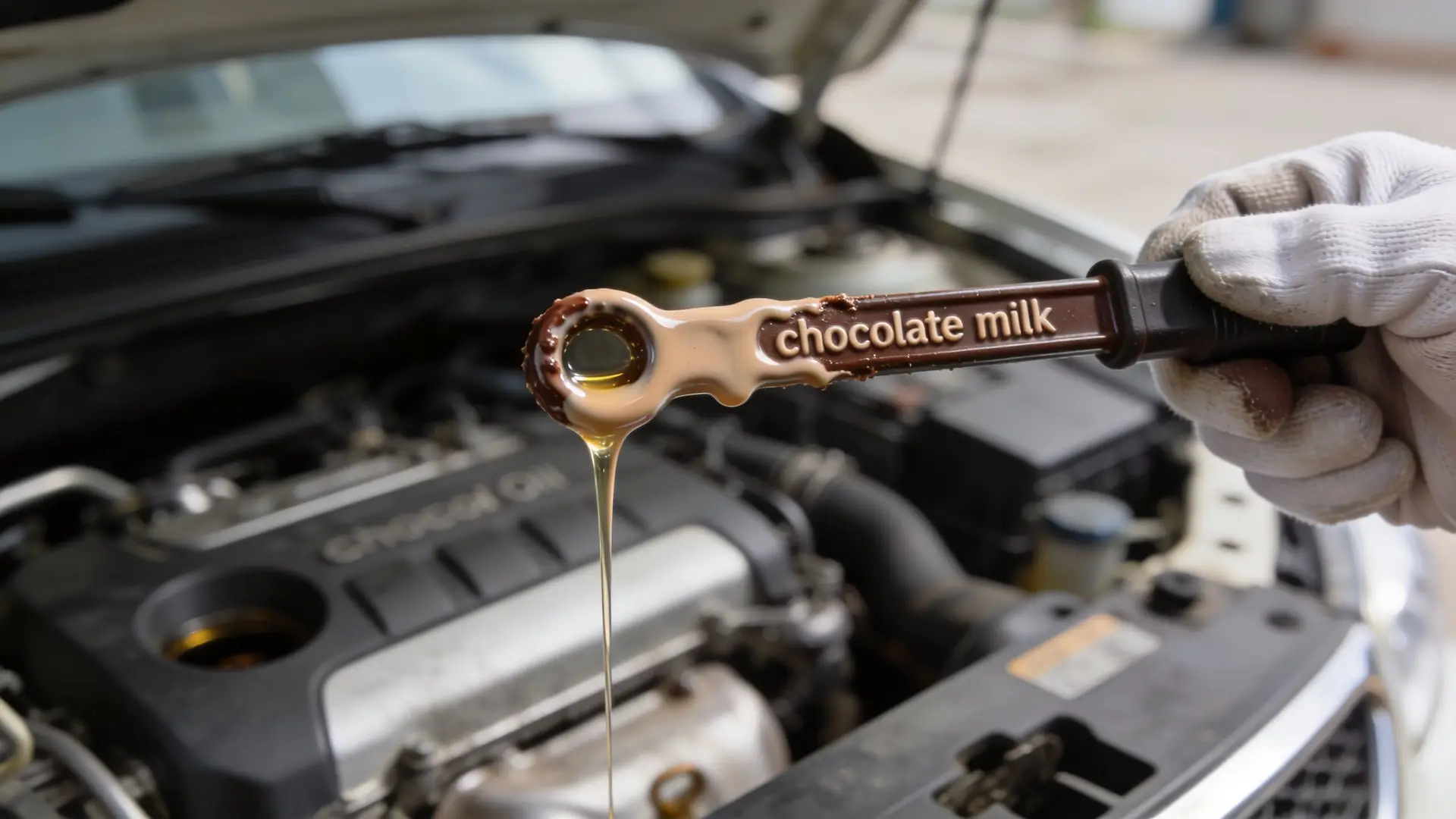
You pull the dipstick, expecting normal amber or dark brown oil, and instead you see something that looks like coffee with creamer, a milkshake, or beige mayonnaise. That moment gets your attention fast, and it should.
If you're dealing with coolant in engine oil, treat it like a serious warning, not a minor maintenance item. This isn't the kind of problem to “keep an eye on for a few days.” It means two fluids that must stay separate have likely found a path into each other, and that can damage an engine quickly.
The good news is that panic doesn't help, but a calm, fast response does. If you understand what you're seeing, what symptoms matter most, and when driving becomes too risky, you can make a smarter decision and avoid turning one repair into a much larger one.
What It Means When You Find Coolant in Your Engine Oil
A lot of drivers first notice this during a routine check. The car may have been running “mostly fine,” then the dipstick comes out with a tan, frothy film on it. Sometimes it's under the oil cap instead. Sometimes the oil level even looks oddly high.
That milky look usually means coolant has mixed with the oil. Engine oil is supposed to lubricate moving metal parts. Coolant is supposed to manage heat inside a separate system. When they meet, the oil can thicken into a gel or emulsion that some technicians call black mayonnaise, and one industry source estimates that 53% of all catastrophic engine failures are due to coolant leaks according to Fluid Life's explanation of coolant contamination in oils.
What that discovery really tells you
Think of your engine as having two different plumbing systems running close together. One carries oil under pressure. The other carries coolant through passages designed to control temperature. If coolant shows up in the oil, there is usually some kind of internal breach between those systems.
That doesn't automatically tell you which part failed. It does tell you the problem deserves immediate attention.
Practical rule: If your oil looks milky, foamy, or creamy, assume the engine needs diagnosis before more driving.
What drivers often get wrong
Many people hope it's “just condensation” from short trips. A little moisture can create light residue in some situations, especially under an oil cap. But a true coolant contamination problem usually shows up as a more obvious change in the oil's appearance and often comes with other symptoms.
The key is not guessing. Once coolant is in the oil, every minute of operation can add wear.
Key Symptoms of Coolant and Oil Mixing
The dipstick is the most obvious clue, but it usually isn't the only one. When coolant and oil start mixing, your car often gives you a pattern of warnings. The more of these you notice together, the more urgent the situation becomes.
What you can see
Start with the easy checks.
- Milky oil on the dipstick: Healthy oil shouldn't look like chocolate milk or whipped coffee.
- Creamy sludge under the oil cap: A beige or tan paste is a common red flag.
- Coolant level dropping for no clear reason: If the reservoir keeps losing fluid and you don't see an external leak, the engine may be consuming it internally.
- Oil sheen in the coolant reservoir: Sometimes contamination goes the other way and leaves a slick film on top of the coolant.
What you may notice while driving
The car may start acting differently before you ever open the hood.
- Rising temperature gauge: The engine may run hotter than usual or begin overheating.
- Rough running or misfire: If coolant reaches places it doesn't belong, combustion can become unstable.
- Sweet smell from the exhaust or engine bay: Coolant has a distinctive odor.
- White exhaust smoke: This can happen when coolant enters the combustion chamber.
Why these symptoms tend to show up together
Oil and coolant affect different systems, so contamination can create mixed signals. One symptom points to lubrication trouble. Another points to cooling trouble. Together, they tell a stronger story than either one alone.
For example, a driver might notice the coolant bottle needs topping off every week, then see tan foam on the dipstick, then watch the temperature climb in traffic. That combination is much more concerning than one isolated clue.
If you want a visual walk-through of what contaminated oil can look like and why it matters, this short video helps:
Don't focus on one symptom in isolation. Look for a pattern of fluid loss, contamination, and heat.
Why This Is One of Your Engine's Worst Nightmares
Coolant in oil isn't just messy. It's destructive.
Engine oil has one job above all else. It must keep a protective film between moving metal surfaces. Bearings, camshafts, lifters, timing components, and cylinder walls all depend on that film. Coolant has a different job. It absorbs and carries away heat. When coolant gets into the oil, both fluids stop doing their jobs properly.
The lubrication problem
Picture pouring syrup through a straw instead of water. That's a simple way to understand what can happen when coolant contamination thickens engine oil. Expert sources note that glycol contamination can thicken the oil, increase viscosity, and reduce flow through bearings and filters, which can force the system toward poor lubrication and leave abrasive particles circulating if the filter bypasses, as explained in this discussion of coolant contamination and engine performance.
Once oil flow drops, the engine can move from safe lubrication into metal-on-metal contact much faster than most drivers expect. Bearings are especially vulnerable because they need a steady oil film every second the engine is running.
The chemical problem
The damage isn't only mechanical. It's also chemical.
At high temperatures, the glycol in antifreeze can break down and form glycolic acid, which corrodes engine metals and can damage bearings and other internal parts before the engine even reaches a full seizure, as described in this coolant chemistry overview from Oilwise.
That means contamination can attack the engine two ways at once. First, it reduces lubrication. Second, it creates a corrosive environment inside parts that were never meant to see that chemistry.
Why a small leak can become a major repair
Drivers often get blindsided here. The leak that started the problem may be small. The damage it causes may not be.
A tiny breach can let in enough coolant to change the oil's behavior. Once the oil thickens or emulsifies, it doesn't flow the way the engine expects. Filters can load up sooner. Delicate surfaces lose protection. Heat rises. Wear accelerates.
A coolant leak into the oil system isn't dangerous because of how dramatic it looks. It's dangerous because the engine can still run while internal damage is already happening.
A simple analogy
If engine oil is like the blood supply for moving parts, coolant in that oil is like contamination in the bloodstream. The pump may still move fluid. That doesn't mean the fluid is still protecting what it needs to protect.
That's why mechanics take this problem seriously even when the vehicle still starts and drives.
The Most Common Causes of Coolant Contamination
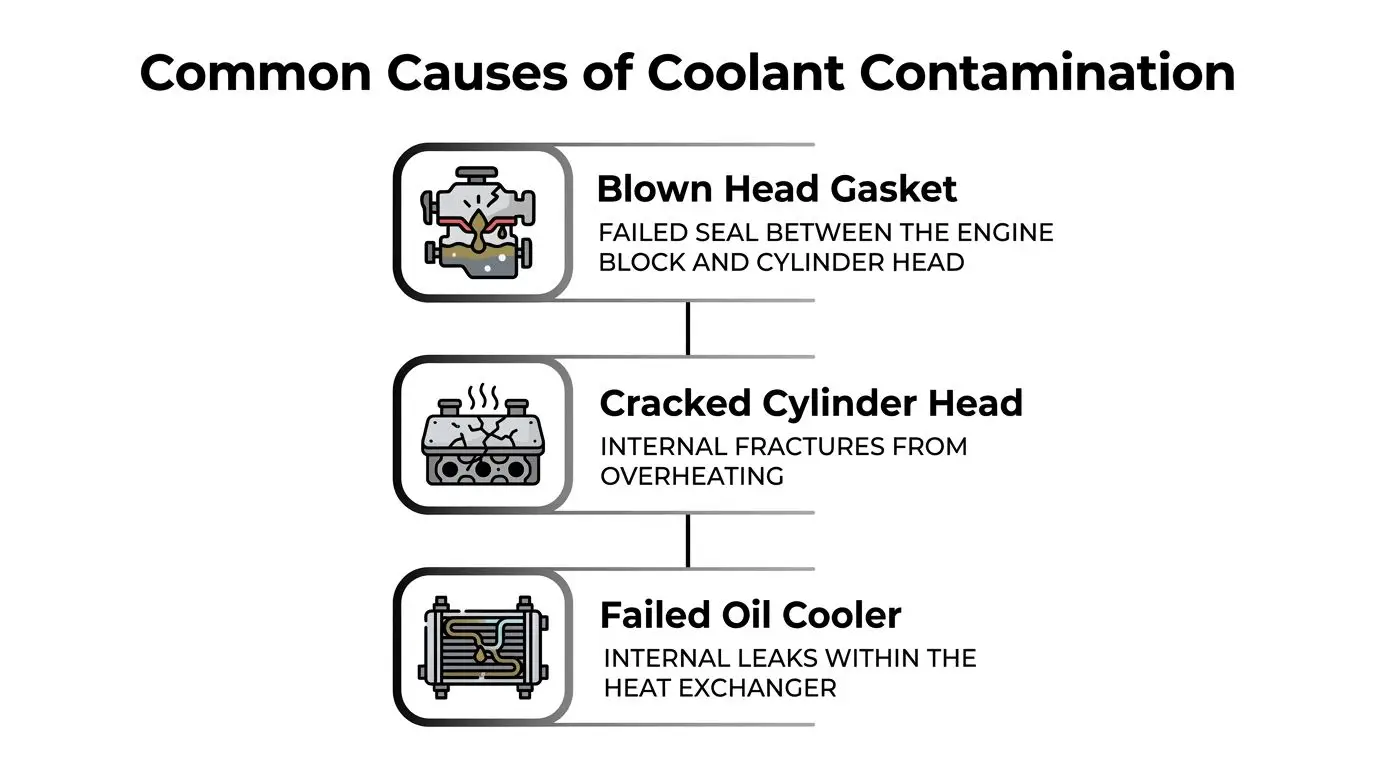
Most cases come down to one basic issue. A seal, gasket, casting, or cooler has failed somewhere between the cooling system and the lubrication system.
Failed head gasket
This is the cause most drivers have heard of, and for good reason. The head gasket seals the engine block to the cylinder head while keeping oil passages, coolant passages, and combustion pressure separated. If that seal fails, coolant and oil can cross paths internally.
A failed head gasket doesn't always produce an obvious puddle under the car. Since these passages sit next to each other under pressure, even a small breach can create contamination without much external evidence. If you want a plain-language explanation of that component, this guide to a bad head gasket is a helpful starting point.
Cracked cylinder head or cracked engine block
Heat and stress can damage metal castings. A crack in the cylinder head or the engine block can create an internal leak path that acts a lot like a gasket failure, but often with a more serious repair outlook.
According to Rislone's explanation of coolant mixing with oil, the most common causes are physical breaches between oil and coolant circuits, often from a failed head gasket, cracked cylinder head, or cracked engine block, and these failures can happen without visible external leaks because pressurized oil and coolant run through adjacent passages.
Faulty oil cooler
This one gets missed more often than it should. Some engines use an oil cooler that helps control oil temperature through a heat exchanger. If that cooler leaks internally, coolant and oil can mix even though the head gasket is still fine.
That matters because diagnosis changes the repair plan. A cooler problem may be much less involved than pulling the cylinder head.
Other sealing failures
Depending on engine design, other gaskets or seals can also create a path for contamination. The exact culprit varies by vehicle, which is why symptom spotting is only the first step.
A mechanic is trying to answer a few specific questions
- Is the leak internal or external: External leaks can create overheating without oil contamination.
- Are both fluids contaminated: That can point toward certain failure paths more than others.
- Is combustion pressure entering the cooling system: This often changes suspicion toward gasket or crack-related faults.
What to Do Immediately If You Suspect Coolant in Your Oil
This is the moment where the right decision saves an engine.
If you strongly suspect coolant in engine oil, the safest default answer is don't keep driving it unless a qualified mechanic has told you it's safe. Continued operation can turn a seal problem into bearing damage, cylinder scoring, or a full engine failure.

Pull over now and call for a tow if you notice any of these
These are the no-debate signs.
- Oil pressure warning light: The engine may already be losing lubrication.
- Overheating or steam: Heat damage can escalate fast.
- Knocking, ticking, or harsh mechanical noise: Internal parts may already be suffering.
- Misfire with heavy smoke: The problem may be affecting combustion as well as lubrication.
If any of those happen while driving, get somewhere safe and shut the engine off.
What if you only found milky oil during a routine check
Drivers often seek a definitive yes-or-no answer regarding whether they can safely drive to the repair shop. In real life, the decision depends on the level of oil contamination, current engine performance, and the presence of additional symptoms.
My advice is simple. If the oil clearly looks contaminated, arrange a tow whenever you can. The tow bill hurts less than an engine rebuild. If you're also chasing other problems and wondering whether a no-start or rough-running condition is related, this article on solving car starting issues in South Wales can help you think through symptom overlap before the vehicle gets inspected.
What not to do
Some drivers try an oil change and hope for the best. That usually isn't enough because it doesn't address the leak path that allowed coolant into the oil in the first place.
You also shouldn't keep topping off coolant and “seeing if it settles down.” If you suspect an external loss too, this guide on coolant is leaking can help you understand leak behavior, but contamination inside the oil system needs hands-on diagnosis.
If the engine is overheating, making noise, or showing an oil warning, towing isn't the cautious option. It's the correct one.
Repair Options and Potential Costs
Once the car is in a shop, the first priority is diagnosis. That's important because coolant in oil doesn't point to just one failure. A blown head gasket can do it, but so can a failed oil cooler, a cracked head, or another sealing issue.
A proper diagnosis can be the difference between a several-hundred-dollar repair for a cooler or seal and a multi-thousand-dollar repair for a cracked cylinder head, as noted in AutoZone's guide to coolant mixing with oil.
What a shop usually checks first
A technician will usually work through the problem in layers instead of guessing.
| Diagnostic step | What it helps reveal | Why it matters |
|---|---|---|
| Cooling system pressure test | Whether the system loses pressure | Helps uncover hidden leaks |
| Visual fluid inspection | Whether oil, coolant, or both are contaminated | Narrows the likely leak path |
| Combustion gas testing | Whether combustion pressure is entering the cooling system | Useful when head gasket failure is suspected |
| Component inspection | Whether a cooler, gasket, head, or block shows signs of failure | Confirms the actual repair |
Common repair paths
Some fixes are straightforward. Others require major disassembly.
Oil cooler or minor sealing repair
If the contamination comes from an internally leaking oil cooler or a less invasive seal, the repair is often more manageable. The failed part gets replaced, both systems get flushed, and the oil and filter are changed.
This is the repair everyone hopes for because it usually avoids deep engine teardown.
Head gasket repair
A head gasket job is more involved. The technician typically has to remove the cylinder head, inspect for warping or damage, replace the gasket, and service related parts. If overheating caused additional damage, the scope can grow.
The key point is that a head gasket repair isn't just about replacing one gasket. The shop has to verify that the sealing surfaces and surrounding components are still usable.
Cracked cylinder head or engine block
Repair decisions become harder at this stage. Depending on the severity and the vehicle, the solution may involve replacing the cylinder head, machining components if appropriate, or considering engine replacement.
At that point, labor, parts availability, and the overall value of the vehicle all matter.
Common repairs for coolant in oil
| Failure Point | Repair Complexity | Estimated Cost Range (Parts & Labor) |
|---|---|---|
| Oil cooler or seal | Lower | Several-hundred-dollar repair |
| Head gasket | Higher | Costly and labor-intensive |
| Cracked cylinder head | High | Multi-thousand-dollar repair |
| Cracked engine block | Very high | Often one of the most expensive outcomes |
Why guessing gets expensive
A driver hears “milky oil” and assumes head gasket. A rushed shop might do the same. But if the actual problem is a cooler, that wrong assumption can lead to unnecessary work and the wrong bill.
Good diagnosis protects your engine and your wallet. The symptom is contamination. The repair depends on where the breach actually is.
How to Prevent This and When to Call a Plano Pro
You can't prevent every internal engine failure, but you can improve your odds by catching cooling and lubrication problems early.
Most contamination cases don't begin as total disasters. They begin as a small leak, an overheating episode, neglected fluid service, or a warning sign that gets dismissed because the car still seems to run.
Habits that help catch trouble early
These are simple checks, but they matter.
- Check fluid appearance: Look at the dipstick and coolant reservoir once in a while, not just fluid levels.
- Pay attention to temperature changes: A gauge that starts creeping higher than normal deserves attention.
- Don't ignore coolant loss: If the reservoir keeps dropping, find out why.
- Stay on top of coolant service: Old or neglected coolant can contribute to larger cooling system problems. This guide on how often to change coolant is a useful maintenance reference.
Why routine service matters more than people think
Coolant contamination can rapidly thicken engine oil, reduce flow through bearings and filters, and trigger bypass flow that leaves abrasive particles circulating through the engine, according to this review of coolant contamination effects on engine performance.
That's why routine maintenance isn't just about keeping a sticker current. It's about spotting the small clue before it becomes an internal engine problem.
When professional help stops being optional
If you suspect coolant in engine oil, this is not a DIY guessing game. You need someone to determine whether the issue is a gasket, a cooler, a crack, or something else entirely. The same symptoms can come from very different repair paths.
A good local shop should explain what they found, what test confirmed it, and what repair options make sense for your vehicle. If you're the kind of driver who checks reviews before trusting a major repair recommendation, resources like Review Overhaul reputation services offer a helpful look at how auto shops manage customer feedback and trust signals online.
A calm rule to remember
If the oil looks contaminated, act early. If the engine is overheating, making noise, or showing an oil warning, stop driving it. Quick decisions make a big difference with this problem.
If you're in Plano and need a clear answer fast, Express Lube & Car Care can inspect the vehicle, diagnose the source of coolant in engine oil, and help you decide on the safest next step before more damage happens.