

Learning how to check your power steering fluid is a fundamental skill for any vehicle owner. The procedure is straightforward: locate the reservoir, remove the cap or dipstick, wipe it clean, reinsert it, and then check the level against the 'HOT' or 'COLD' markings. This simple inspection is a critical preventative measure that can help you identify low fluid levels before they lead to significant mechanical issues.
The Importance of Power Steering Fluid in Vehicle Operation
Neglecting your power steering fluid is a common but costly oversight. Many drivers mistakenly believe it is a "lifetime" fluid that never requires attention, but this is a misconception. This hydraulic fluid performs a vital function every time you operate your vehicle, lubricating the complex components of the steering system, including the pump, hoses, and steering rack.
Consider the physics involved in turning your vehicle. A healthy power steering system uses hydraulic pressure to multiply the force you apply to the steering wheel, allowing for smooth, effortless turns. This system relies entirely on having a sufficient volume of clean, effective fluid. Over time, the heat and pressure generated during normal operation cause the fluid to degrade, reducing its ability to lubricate and prevent friction-related wear.
A routine fluid check is a proactive diagnostic tool. Identifying issues like a slow leak or fluid contamination early can be the difference between a simple fluid top-off and a costly repair of the steering pump or rack, potentially saving you hundreds or even thousands of dollars.
The Consequences of Fluid Neglect
When the power steering fluid level is too low or the fluid becomes contaminated, the power steering pump is forced to work under excessive strain. This increased workload leads to overheating and, ultimately, premature component failure. The result is often an expensive and entirely avoidable repair.
Regular visual inspections are a cornerstone of responsible vehicle ownership. By understanding how to check power steering fluid, you are taking a direct role in preserving your vehicle's mechanical health and operational longevity. It is one of the most effective preventative maintenance tasks you can perform yourself. To learn more about other essential checks, see our detailed guide on what maintenance your car needs. A proactive approach is key to ensuring your vehicle remains reliable and safe.
A Step-by-Step Guide to Checking Power Steering Fluid
Let's begin the inspection. Learning how to check your power steering fluid is one of the simplest and most empowering maintenance tasks you can perform. The entire process requires only a few minutes and no specialized tools, yet it can prevent significant future complications.
For an accurate reading, park your vehicle on a level surface, as an incline can skew the fluid level measurement. Allow the engine to run for a few minutes to bring the fluid to its normal operating temperature, then turn the engine off.
Locating and Interpreting the Reservoir
With the hood open, your first task is to identify the power steering reservoir. It is typically a small, translucent plastic container situated near the front of the engine, often on the passenger side. The cap is usually labeled with a steering wheel icon or the words “Power Steering Fluid” for easy identification.
If the cap includes an attached dipstick, twist it counter-clockwise to open and remove it. For an accurate reading, wipe the dipstick thoroughly with a clean, lint-free cloth or paper towel. Reinsert it fully, then withdraw it again to observe the fluid level.
The dipstick will have markings to indicate the correct fluid level under different conditions:
- HOT (or FULL HOT): This is the appropriate reference line when the engine is warm, as in this procedure.
- COLD (or FULL COLD): This line is used for measurement when the engine has been off for an extended period.
As the engine is warm, the fluid level should align with the "HOT" mark. If the level is at or below the "ADD" line, the system requires more fluid.
This visual check serves as your first line of defense. A consistently low fluid level is a primary indicator of a leak within the system. Detecting this early can prevent a more severe and costly failure of the steering system.
This illustrates why preventative maintenance is so valuable.
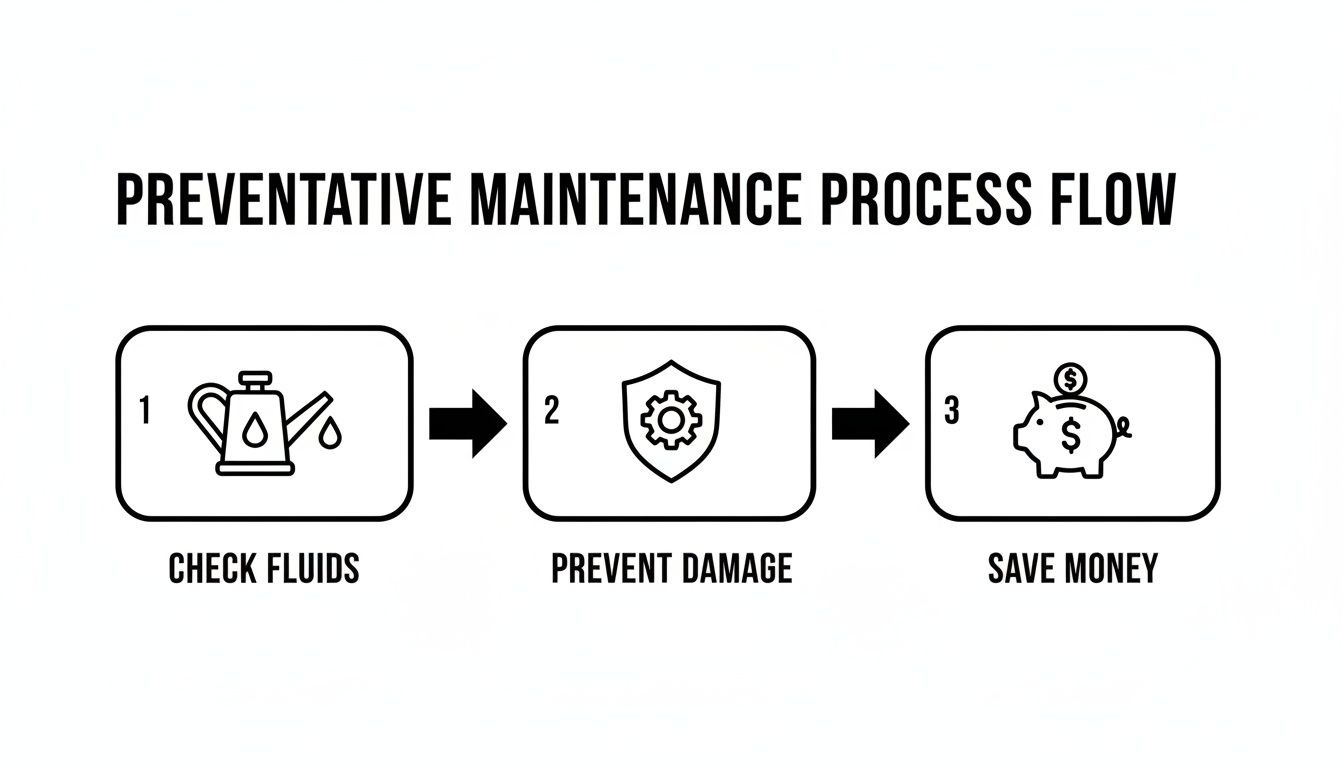
Simple inspections like this can prevent a significant percentage of steering-related mechanical failures, making it a high-impact use of your time.
Automotive technicians generally recommend checking power steering fluid at every oil change interval, which for most drivers is approximately 4-6 times per year. While performing this check, it is also wise to learn how to check brake fluid, another critical inspection for vehicle safety.
Interpreting the Condition of Your Power Steering Fluid
Assessing the fluid level is only the first step; the fluid's condition provides a deeper insight into the health of your steering system. The color, consistency, and odor of the fluid serve as important diagnostic indicators.
New, healthy power steering fluid is typically clear and has a reddish or light amber hue. Any deviation from this appearance suggests a potential issue, and simply adding more fluid will not address the root cause.
Visual Analysis: Identifying Contaminated Fluid
When you wipe the dipstick onto a clean cloth, take a moment to analyze the fluid itself. This is one of the most valuable diagnostic clues available to you.
Key warning signs include:
- Dark Brown or Black Color: This indicates old, oxidized fluid. It is likely contaminated with microscopic rubber particles from the degradation of internal hoses and seals.
- Milky or Foamy Appearance: A frothy or emulsified appearance signifies contamination, typically from air or water entering the system. Water is particularly damaging, as it can lead to internal rust and corrosion.
- Visible Metallic Particles: The presence of shimmering metallic specks is a serious concern. This suggests that metal components, such as the pump or steering gear, are experiencing excessive wear and shedding material. This condition requires immediate professional attention.
Olfactory Analysis: The Significance of a Burnt Odor
Your sense of smell can also be a useful diagnostic tool. Power steering fluid that has been subjected to excessive heat will emit a distinct burnt odor.
A burnt, acrid smell indicates that the fluid has undergone thermal breakdown. At this point, it has lost its lubricating properties and can no longer protect the system's components. Continuing to operate the vehicle with burnt fluid can lead to catastrophic pump failure.
This table provides a quick reference for assessing fluid health.
Power Steering Fluid Diagnostic Chart
| Symptom | Healthy Fluid | Contaminated Fluid (Service Required) |
|---|---|---|
| Color | Clear; reddish or light amber hue | Dark brown, black, or milky |
| Consistency | Smooth and transparent | Foamy, frothy, or thick |
| Contaminants | No visible particulates | Visible debris, grime, or metallic flakes |
| Smell | Mild, characteristic oily scent | Burnt, acrid odor |
If your fluid exhibits characteristics from the "Contaminated" column, it is imperative to seek professional service. These signs indicate that your steering system is under stress and at risk of more significant damage if the issue is not addressed.
Warning Signs of a Failing Power Steering System
Often, your vehicle will exhibit noticeable symptoms long before you perform a fluid check. Recognizing these early warnings is crucial for distinguishing between a minor adjustment and a major, expensive repair.

One of the most common initial indicators is an unusual noise. A distinct whining, groaning, or squealing sound when turning the steering wheel is a classic symptom of low fluid. This noise is caused by the pump struggling to circulate an insufficient amount of fluid and often intensifies during sharp turns, such as when parking.
Tactile Feedback from the Steering System
Beyond auditory cues, you may also perceive a change in the physical behavior of the steering wheel. A sudden increase in the effort required to turn the wheel, particularly at low speeds, is a direct result of the system lacking adequate hydraulic assistance.
Other physical indicators include:
- Delayed Steering Response: The vehicle feels sluggish or unresponsive to steering inputs.
- Vibration in the Steering Wheel: A noticeable vibration or shudder felt through the wheel can indicate air in the hydraulic lines or wear in other components.
Ignoring these symptoms is a significant financial risk. An analysis of over 1.2 million vehicle inspections revealed that 28% of vehicles with over 75,000 miles had power steering fluid issues, with an average repair cost of $650. The complete findings are available in this power steering fluid report.
When your steering becomes difficult or noisy, it is not merely an inconvenience—it is a critical safety concern. This indicates the system is under severe strain and requires immediate inspection to prevent complete failure.
When to Escalate to Professional Service
Understanding the limitations of a DIY inspection is as important as knowing how to perform one. While routine visual checks are ideal for maintenance, certain symptoms indicate a more complex underlying problem that requires professional diagnosis.
If you find yourself repeatedly adding fluid to the reservoir, a leak is the almost certain cause. This could be a minor seepage from an aging hose or a failing seal, but it will not resolve on its own. Continuing to operate with a leak forces the system to run on low fluid, placing excessive strain on the power steering pump.
The Necessity of a System Flush
If you observe any signs of contamination—such as milky, gritty, or burnt-smelling fluid—the system requires more than a simple top-off. Introducing clean fluid into a contaminated system will not solve the underlying problem.
In cases of severe contamination, a complete system flush is the only effective solution. This procedure removes all degraded fluid, abrasive metal particles, and other contaminants. It is a comprehensive service designed to protect expensive steering components from premature failure.
If you are experiencing grinding or whining noises, or if the steering feels heavy and unresponsive, it is time for a professional diagnosis. Our ASE-certified technicians have the specialized tools and expertise to accurately identify the root cause of the issue.
At this stage, your DIY inspection has successfully served its purpose: it has alerted you to a problem that requires expert intervention. Our team can perform a professional power steering fluid exchange, repair leaks, and restore your vehicle's steering to safe operating condition.
Frequently Asked Questions About Power Steering Fluid
We frequently address common questions from vehicle owners about power steering fluid. Understanding the correct answers can help you avoid costly mistakes and empower you to perform basic maintenance correctly.
Is It Acceptable to Simply Top Off Power Steering Fluid?
If the fluid level is only slightly low and the fluid itself appears clean and has the correct reddish/amber color, topping it off is generally acceptable as a temporary measure. However, if you need to add fluid between regular service intervals, it strongly indicates a leak somewhere in the system. Topping off the fluid in this case is analogous to applying a bandage to a wound that requires sutures; it does not address the underlying issue.
How Important is the Type of Power Steering Fluid?
It is critically important. Using the incorrect fluid can cause significant damage to the system's pump and seals. Vehicle manufacturers specify particular fluid types for their systems; some require synthetic formulas, while others may utilize a specific type of automatic transmission fluid (ATF).
Using a non-specified fluid can cause seals to swell, harden, or degrade, leading to leaks and eventual pump failure. Always consult your vehicle's owner's manual or a qualified technician to ensure you are using the correct product.
What is the Recommended Interval for a Power Steering Flush?
The general recommendation is to perform a complete power steering fluid flush approximately every 50,000 miles. However, severe driving conditions, such as the high ambient temperatures and frequent stop-and-go traffic common in Texas, can accelerate fluid degradation. Therefore, it is more effective to rely on the fluid's condition rather than mileage alone. If the fluid appears dark, smells burnt, or contains visible contaminants, it is time for a flush, regardless of the mileage. This service is crucial for removing accumulated debris and protecting the long-term health of your steering system.
If your inspection reveals contaminated fluid or you suspect a leak, do not delay service. The ASE-certified technicians at Express Lube & Car Care can accurately diagnose the issue and restore your vehicle's steering system to safe and smooth operation. Visit our facility in Plano for expert advice and professional service. https://www.expresslubeplano.com