

So, how often should you change the fuel filter?
There is no single, one-size-fits-all answer. The correct interval for changing your fuel filter depends on your vehicle’s age, the type of fuel it consumes, and your driving habits.
For older gasoline cars, a common recommendation is to change the fuel filter every 20,000 to 40,000 miles. Newer vehicles, conversely, often feature "lifetime" filters designed to last well over 100,000 miles.
Your Quick Guide To Fuel Filter Replacement Intervals
Consider your fuel filter as a specialized bodyguard for your engine. Its primary function is to intercept contaminants—such as rust, dirt, and other debris from the fuel tank—before they can reach and harm sensitive components like your fuel injectors or the fuel pump.
However, like any filter, it will eventually become clogged with the particles it has captured. When this occurs, it begins to restrict the flow of fuel, effectively "starving" your engine. This can lead to a range of issues, from sluggish performance and poor fuel economy to a complete breakdown. Understanding when to replace it is fundamental to maintaining a healthy and efficient engine.
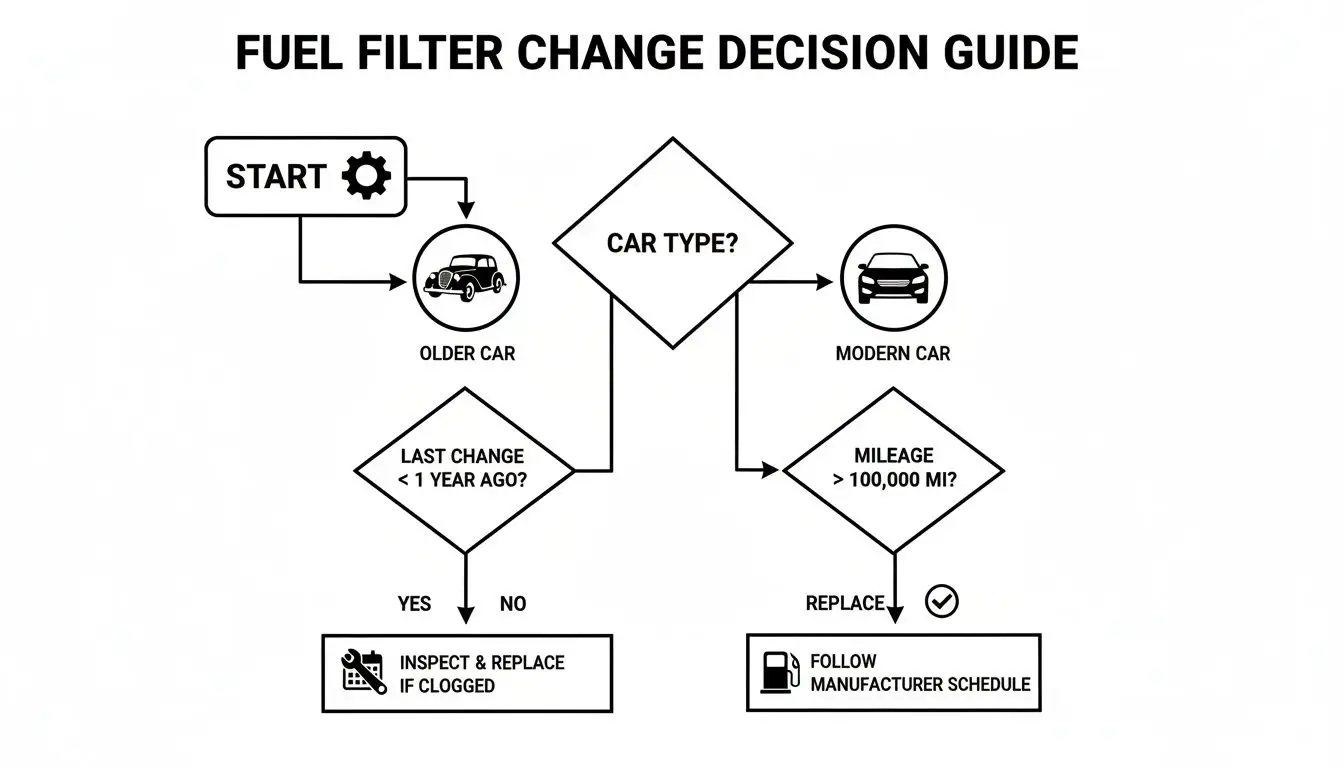
The key takeaway is that older cars generally require more frequent and proactive filter changes, whereas modern vehicles are equipped with more durable, though often more complex, filter systems.
A General Timeline For Filter Changes
While every vehicle is unique, we can follow some general rules of thumb. Older cars, particularly those manufactured before the 2000s, typically have an external fuel filter that is easily accessible and designed for regular replacement. For these models, adhering to a 30,000-mile interval is a wise, preventative measure.
The most significant evolution in fuel filter technology occurred when manufacturers began integrating the filter directly into the in-tank fuel pump assembly. Many modern cars feature this configuration, and the filter is often marketed as a "lifetime" part.
A word of caution: "lifetime" typically refers to the expected operational life of the fuel pump, not the entire vehicle. If the pump fails, the filter is replaced along with it, but this could occur long after engine performance has already begun to degrade due to a clogged filter.
To provide greater clarity, we've compiled a quick reference table.
Fuel Filter Replacement Intervals at a Glance
This table outlines the most common replacement schedules based on a vehicle's age and fuel type.
| Vehicle Type/Age | Typical Replacement Interval (Miles) | Key Considerations |
|---|---|---|
| Older Gasoline Cars (Pre-2000s) | 20,000 – 40,000 | Filters are typically external and easier to replace. |
| Modern Gasoline Cars (Post-2000s) | 60,000 – 150,000+ | Many have "lifetime" in-tank filters that are part of the fuel pump. |
| Diesel Vehicles | 15,000 – 30,000 | Diesel fuel is less refined and requires more frequent filtration. |
Following these guidelines is an excellent starting point for keeping your vehicle in optimal condition. For a more comprehensive overview of your car's needs, our guide on a car maintenance schedule by mileage details every major service milestone.
Why a Clean Fuel Filter Is Crucial for Your Engine
Before discussing when to change your fuel filter, it is essential to understand why this component is so critical. The fuel filter functions as a gatekeeper, protecting the most sensitive parts of your engine from harmful contaminants.
This small but vital part is positioned between your fuel tank and your engine. It serves as the final line of defense, ensuring that only clean, pure fuel reaches your fuel injectors and high-pressure fuel pump.
The Fuel's Journey and the Role of the Filter
Even the cleanest-appearing gasoline or diesel is not perfectly pure. During its journey from the refinery to the service station pump and into your vehicle, fuel can pick up various microscopic contaminants.
These contaminants often include:
- Rust particles from the large underground storage tanks at gas stations.
- Dirt and sediment that has settled over time at the bottom of your vehicle's own fuel tank.
- Water from condensation, which can be particularly problematic, especially for diesel engines.
Without a functional filter, this debris would flow directly into your engine. This scenario can lead to clogged fuel injectors, a damaged fuel pump, and a significant reduction in your vehicle's performance and fuel efficiency.
A healthy fuel filter acts as the guardian for thousands of dollars in engine components. It is a prime example of preventative maintenance, where a small, upfront investment can save you from a much larger repair bill in the future.
Connecting a Clean Filter to Engine Health
The relationship between a clean filter and a healthy engine is direct and simple.
When your filter is new, your engine receives the precise amount of fuel it needs to operate at peak efficiency. You will notice this in the form of smooth acceleration, consistent power delivery, and optimal MPG.
However, as the filter becomes clogged with debris, it begins to restrict fuel flow. Your fuel pump must work significantly harder to push fuel through the obstruction, which can cause the pump to fail prematurely—a costly repair you want to avoid. Ultimately, maintaining a clean fuel filter is a key factor in optimizing your vehicle's performance with professional fuel system service.
Recognizing the Symptoms of a Clogged Fuel Filter
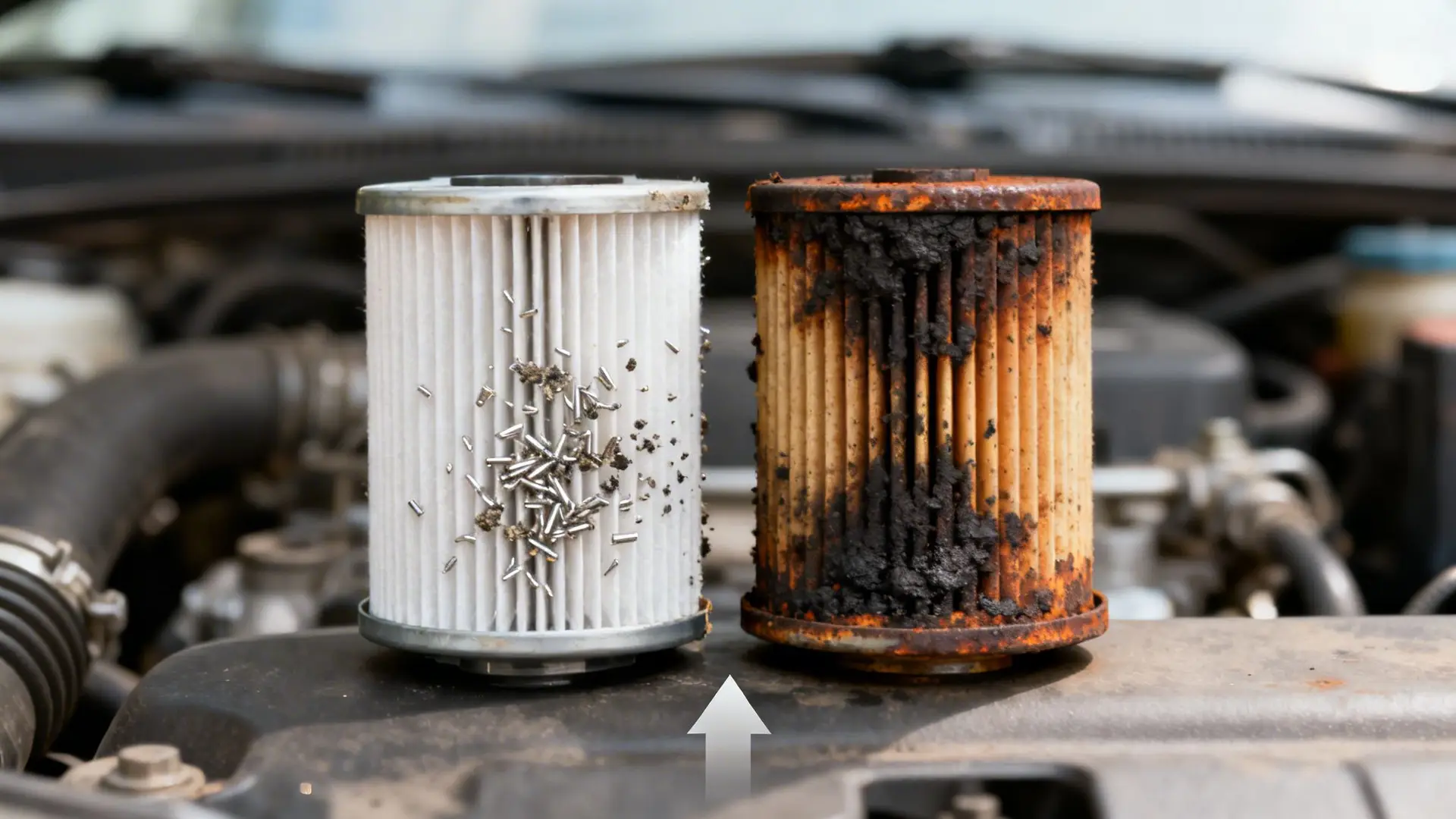
Long before a fuel filter fails completely, your vehicle will almost always exhibit warning signs. Consider these as early indicators—your vehicle's way of communicating that a small issue is developing before it results in a breakdown.
A clogged filter restricts the flow of fuel to your engine, a condition mechanics refer to as fuel starvation. The symptoms typically manifest when you place the greatest demand on your engine, such as during acceleration or when climbing a hill.
Poor Engine Performance and Sputtering
One of the most common signs you will notice is a significant drop in engine power. You might feel the engine hesitate or even sputter when you press the accelerator to merge onto a highway.
This occurs because the engine is demanding more fuel than the clogged filter can supply. Your fuel pump is working overtime to force fuel through the blockage, leading to an inconsistent supply. The result is a rough, chugging, or jerky ride. If you have experienced this hesitation, a restricted filter is a primary suspect.
Difficulty Starting the Engine
Is your car taking longer than usual to start? Or perhaps it turns over but fails to fire up? A severely clogged fuel filter can prevent the engine from receiving the initial surge of fuel required for ignition.
While a weak battery or a failing starter can cause similar issues, a blocked filter is a likely culprit if the engine sounds as though it is trying to start but will not catch. It is a clear signal that an insufficient amount of fuel is reaching the combustion chamber. For a deeper look at this and other symptoms, check out our complete guide on the signs of a clogged fuel filter.
The Dreaded Check Engine Light
Your vehicle’s onboard computer utilizes a network of sensors to monitor all systems. If the fuel pressure sensor detects that the engine is being starved of fuel, it will trigger the Check Engine Light on your dashboard.
Ignoring this warning light is a significant risk. One study by CarMD found that 15% of check-engine lights related to dirty filters led to an estimated $800 million in preventable repairs for drivers. This serves as a perfect example of how a simple, inexpensive part can protect you from a massive repair bill down the road.
If your car is displaying any of these warning signs, it is indicating a problem within the fuel system. Knowing the recommended replacement schedule is important, but listening to the immediate feedback from your vehicle is even more critical.
Gas vs. Diesel Fuel Filters and Their Timelines

When determining your fuel filter's replacement schedule, the most significant factor is the type of fuel your engine uses. The maintenance requirements for gasoline and diesel engines differ substantially, primarily because the fuels themselves have distinct properties.
Gasoline is a highly refined product, meaning it is much cleaner directly from the pump. While it can still accumulate some contaminants over time, the fuel filters in modern gasoline vehicles are often designed to last for tens of thousands of miles. Diesel, on the other hand, presents a different set of challenges.
Why Diesel Engines Need More Frequent Filter Changes
Diesel fuel is oilier, less refined, and far more susceptible to contamination from water and even microbes. Water can enter the system through simple condensation, and since diesel does not absorb water as effectively as gasoline containing ethanol, the water sinks and pools at the bottom of your fuel tank.
This creates an ideal environment for bacteria and fungi—what mechanics often refer to as “diesel algae.” These microorganisms feed on the diesel and produce a thick, slimy sludge that can clog a fuel filter rapidly. For a diesel engine, a clogged filter is not merely an inconvenience; it can starve the high-pressure fuel pump and lead to catastrophic engine failure.
For a diesel owner, the fuel filter is more than just a component; it is the primary line of defense for a very expensive and sensitive fuel injection system. Adhering to the manufacturer's recommended schedule is the most effective way to ensure your engine's longevity and avoid a massive repair bill.
Specific Timelines for Diesel Vehicles
Due to the high stakes involved, manufacturers of diesel trucks mandate much more frequent fuel filter changes. These are not merely suggestions; they are essential for protecting the high-pressure common rail fuel systems that power modern diesel engines.
For instance, Ford recommends replacing the filters on its 6.7L Power Stroke engines every 22,500 miles. RAM trucks equipped with the popular 6.7L Cummins engine require new filters every 20,000 miles, and the same interval applies to Volkswagen’s TDI diesel cars. This practice is not just about caution—it is based on proven results. One report noted that diesel owners who follow the schedule experience 40% fewer fuel system failures. You can read more about why diesel filter changes are so frequent on Jalopnik.com.
A side-by-side comparison clearly illustrates the difference.
Gasoline vs. Diesel Fuel Filter Recommended Intervals
| Vehicle Type | Recommended Interval | Primary Reason for Frequency |
|---|---|---|
| Gasoline Cars | 60,000 – 150,000+ miles | Fuel is highly refined; many filters are "lifetime" components. |
| Diesel Trucks/Cars | 15,000 – 30,000 miles | Fuel is less refined and prone to water and microbial growth ("algae"). |
This stark contrast highlights why the answer to "how often should I change my fuel filter?" is always dependent on the type of fuel you use. For diesel drivers, proactive filter changes are non-negotiable for ensuring a reliable vehicle.
The Technological Shift in Fuel Filter Design
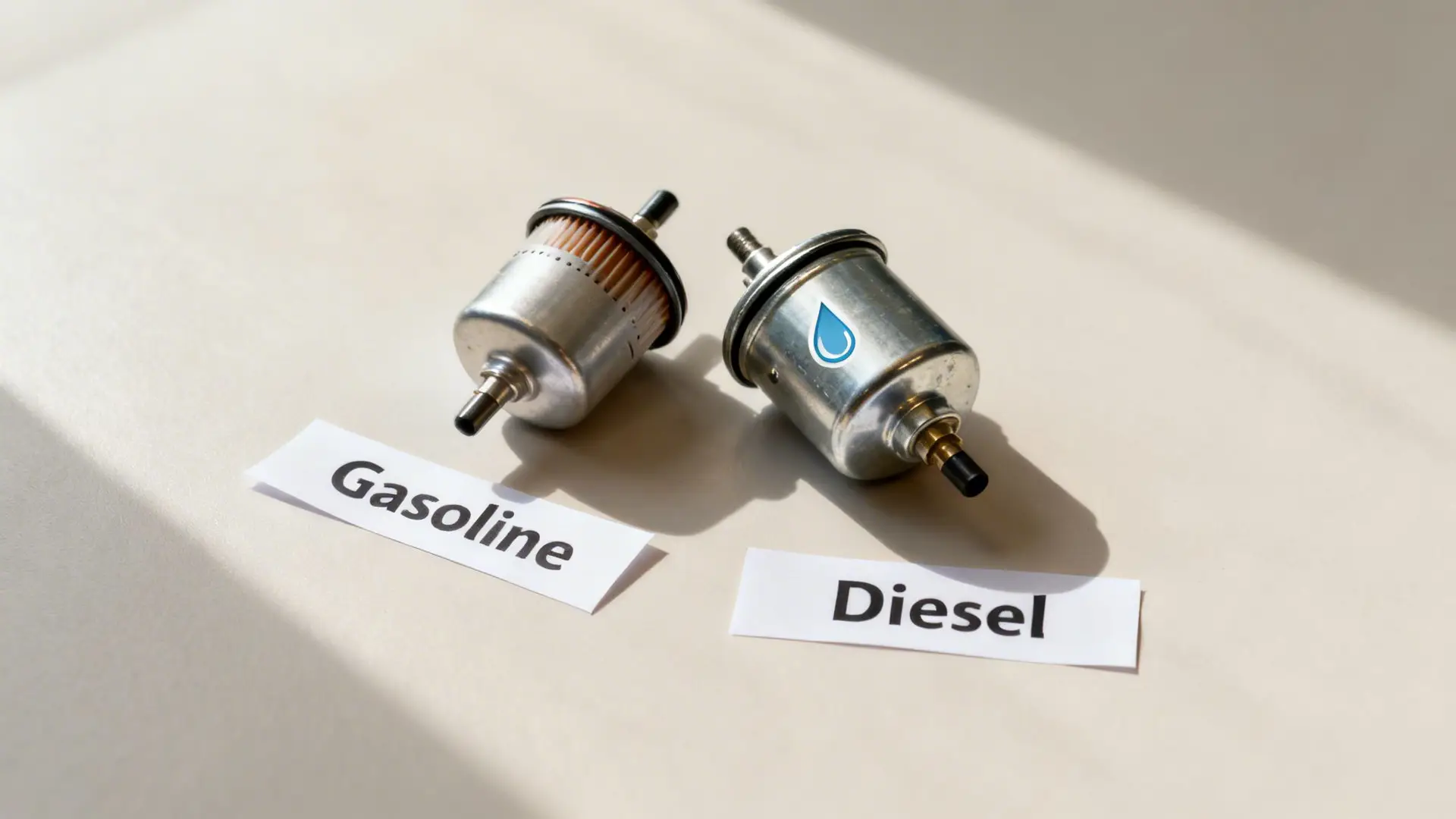
If you ask ten different people how often to change a fuel filter, you may receive ten different answers. The advice often depends on the era of the vehicle they are familiar with, as the technology has undergone a complete transformation over the last few decades.
Consider cars from the 1980s and 90s. They almost invariably had a simple, external fuel filter. It was typically a small metal canister that was easily identifiable along the fuel line, making replacement a relatively straightforward maintenance task.
The Era of Frequent Changes
For those older vehicles, replacing the fuel filter was a routine part of any tune-up. The filters themselves were less sophisticated, and the prevailing wisdom was to change them frequently to protect carburetors and early fuel injection systems.
At that time, if you owned a GM vehicle, replacing the filter every 30,000 miles was the standard recommendation. Fast forward to today, and you will find that manufacturers like Toyota and Honda now use "lifetime" filters integrated into the fuel pump, designed to last 150,000 to 200,000 miles. In fact, a recent survey indicated that 68% of vehicles from the 2010 model year and newer are equipped with these long-life filters, fundamentally changing the maintenance landscape for most drivers. You can find many mechanics and car owners discussing this evolution in fuel filter change discussions.
The Modern Transition to "Lifetime" In-Tank Filters
Beginning in the late 1990s, automakers started transitioning to a new design aimed at reducing maintenance. The most significant change was relocating the fuel filter from its traditional position under the car to inside the fuel tank, making it an integral part of the fuel pump assembly.
This modern design offers several key advantages:
- Enhanced Protection: Housed inside the tank, the filter is shielded from road salt, debris, and corrosion.
- Reduced Emissions: The sealed system is more environmentally friendly, helping vehicles meet stricter regulations.
- Incredible Lifespan: These filters utilize advanced materials and have a much larger surface area, allowing them to last significantly longer.
So, what does "lifetime" truly mean? It is not indefinite. It signifies that the filter is engineered to last for the expected service life of the fuel pump, which can be 150,000 miles or more.
Because these filters are integrated directly into the pump, they are no longer considered a routine service item. Replacing one is a complex procedure that requires removing the entire fuel tank—a task best left to a professional technician. Understanding this major technological shift is key to knowing why the old 30,000-mile rule no longer applies to most modern vehicles.
DIY vs. Professional Replacement: Factors to Consider
Once you have determined that your fuel filter needs replacing, the next important question is: should you attempt the job yourself or entrust it to a professional? The decision ultimately involves balancing cost against convenience and, most importantly, safety.
While the prospect of saving money with a DIY project is appealing, this is a task where you must be realistic about your skill level and preparedness. The risks can quickly escalate if you are not fully equipped.
The DIY Approach
Performing the replacement yourself can certainly save on labor costs. The filter part typically costs between $20 and $80. If you possess the right tools and considerable experience, completing the job in your own garage may be feasible.
However, it is crucial to understand that this is not a simple task like topping off your windshield washer fluid. You will be working directly with your car's fuel system, which is pressurized and highly flammable.
A small error can have serious consequences. Here’s what can go wrong:
- Fuel Spills & Fire Hazards: The moment you disconnect a fuel line, pressurized gasoline or diesel will be released. Any nearby spark—from a tool, a light, or static electricity—can cause immediate ignition.
- Difficult Access: On older cars, the filter may be easily accessible. On most modern vehicles, however, it is often integrated into the fuel pump assembly inside the gas tank. This requires removing the entire tank, a major undertaking that is both complex and physically demanding.
- Improper Sealing: If the new filter is not sealed perfectly, you risk dangerous fuel leaks, poor engine performance, and a persistent, hazardous smell of fuel.
The Professional Service Advantage
Hiring a certified technician eliminates these risks entirely. A professional understands precisely how to safely depressurize the fuel system, manage flammable liquids, and install the new filter with a perfect seal.
A professional replacement typically costs between $75 and $250+, depending on your vehicle model and the filter's accessibility.
What does that additional cost provide? Peace of mind. Our technicians possess the specialized tools, hands-on experience, and proper procedures to perform the job safely and correctly the first time. No leaks, no hazards, just a reliable vehicle.
Ultimately, the choice is yours. If you are a seasoned home mechanic with all the appropriate safety gear, a DIY replacement might be manageable. For most drivers, however, the safety and guaranteed results of a professional service are well worth the investment.
Keeping every part of your fuel system clean is key to performance, which you can learn more about in our guide on what a fuel system cleaning entails.
Frequently Asked Questions About Fuel Filters
We receive many questions about fuel filters at our shop. Let’s address a few of the most common ones to help you feel more informed about your vehicle's needs.
Can a Clogged Fuel Filter Cause My Car Not to Start?
Yes, absolutely. If a fuel filter becomes severely clogged, it can completely obstruct the flow of fuel to the engine. You may hear the engine cranking, but it will fail to start because it is being starved of fuel.
A vehicle that cranks but does not start is a classic symptom of a blocked filter. It should be one of the first components you or your mechanic inspects.
Is the Fuel Filter Changed During a Standard Oil Change?
Typically, no. A fuel filter replacement is not part of a standard oil change service. It follows its own unique service schedule as determined by your vehicle's manufacturer.
That said, an oil change appointment is an ideal time to ask us to inspect it. It provides a convenient opportunity to review your service schedule and determine if a replacement is due.
A proactive approach to your vehicle's maintenance is always the best strategy. Since your vehicle is already being serviced, inquiring about the fuel filter can save you a separate trip and help prevent future issues.
What Happens If I Never Change My Fuel Filter?
Neglecting this maintenance task is a recipe for trouble. Initially, you will notice a gradual decline in your engine's performance—sputtering, hesitation during acceleration, and poor fuel economy.
Eventually, the constant strain from the clogged filter will cause your fuel pump to fail. This is a much more significant and expensive repair than simply replacing the filter itself. In essence, you would be turning a simple maintenance item into a major breakdown.
Do Electric Vehicles Have Fuel Filters?
No, they do not. Since electric vehicles (EVs) operate entirely on electricity stored in a battery, they do not have a gasoline or diesel fuel system. No fuel means no need for a fuel filter.
For professional advice or a quick fuel filter inspection, the ASE-certified technicians at Express Lube & Car Care in Plano, TX are here to help. Visit us today for fast, reliable service and drive with confidence.