

Of all the sounds a vehicle can produce, a metallic grinding noise when braking is one of the most critical warnings a driver can receive. This sound is your car’s way of signaling a severe issue within its most important safety system. In most cases, it indicates that the brake pads have completely worn away, resulting in direct metal-on-metal contact.
This is a clear sign to stop driving and seek a professional brake inspection immediately.
Car Grinding Noise When Braking Causes: Decoding What It Means for Your Brakes
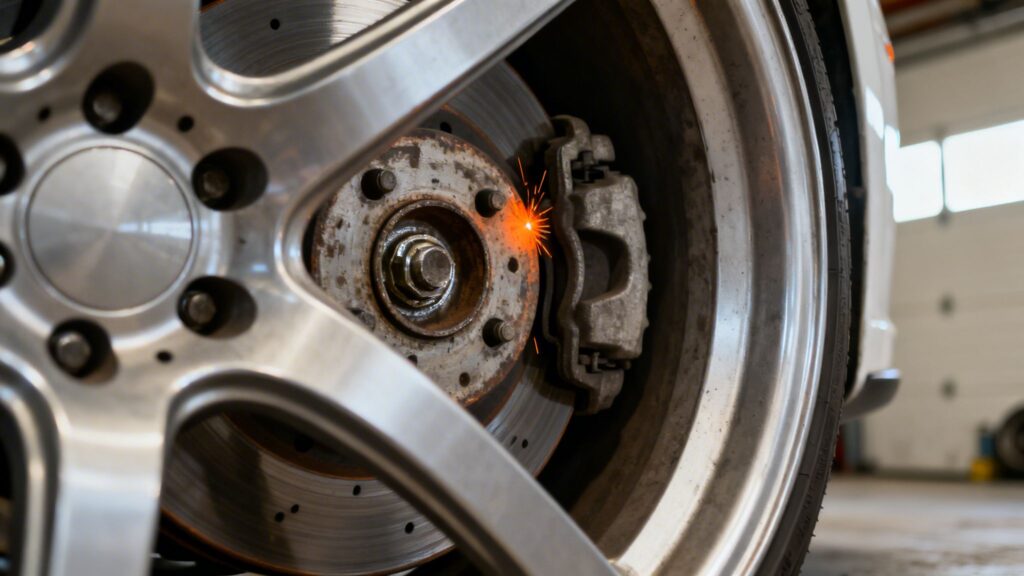
Hearing a grinding noise from your brakes is a clear indication that a key component has failed. Understanding the mechanics of your braking system helps explain why this sound is so serious.
Your car’s braking system operates on a principle of controlled friction. When you press the brake pedal, a component called a caliper squeezes brake pads—made of a specialized friction material—against a spinning metal disc known as a rotor. Brake pads feature a thick layer of friction material that grips the metal rotor to slow the vehicle down. This friction converts the car’s kinetic energy into heat, slowing the vehicle down. When the friction material is gone, the pad’s metal backing plate makes direct, damaging contact with the rotor. This is the harsh, grinding sound you hear. Checking pad thickness is important for diagnosing brake issues before they become severe.
Why This Warning Cannot Be Ignored
Postponing a brake inspection is not a viable option. Each application of the brakes with this condition exacerbates the damage, escalating a standard brake pad replacement into a much more comprehensive and expensive repair. Neglecting grinding noises can lead to expensive repairs and increased safety risks. The intense friction from metal-on-metal contact can destroy brake rotors, damage calipers, and, in the most severe cases, lead to complete brake failure.
When a car is making a grinding noise when braking, it signifies a critical component failure. This issue will not resolve on its own; it will only become more severe and hazardous with continued driving.
Brake pads have a finite lifespan, typically lasting between 30,000 and 70,000 miles. However, factors like stop-and-go city driving can significantly accelerate wear. According to the National Highway Traffic Safety Administration (NHTSA), brake-related problems are a contributing factor in over 2% of all vehicle accidents, with worn-out components being a primary cause. Routine brake maintenance, including regular inspections and timely replacement of worn parts, is the best way to prevent grinding and avoid costly repairs.
To better understand the health of your brakes, it’s helpful to learn the language of their sounds. Having your brakes inspected regularly as part of routine maintenance is essential to prevent grinding noises and expensive repairs.
Common Brake Noises and Their Meanings
This table provides a quick reference to help you identify potential issues based on the sounds your brakes are making. The most common reason for a car grinding noise when braking is worn brake pads, which can lead to metal-on-metal contact and serious damage if not addressed promptly.
Noise Type | Likely Cause | Urgency Level |
|---|---|---|
Grinding | Severely worn brake pads; metal-on-metal contact between the pad backing plate and rotor. Can also be caused by small stones, gravel, road salt, or rust flakes getting lodged between the brake pad and rotor, resulting in a scraping noise. | Immediate Action Required |
Squealing | Brake pad wear indicators are making contact with the rotor, signaling pads are low. Many pads are equipped with squealers that serve as early warning signs for worn brake pads. | High – Schedule inspection soon. |
Clicking | Loose brake pad, anti-rattle clip, or caliper hardware. | Medium – Inspect at your earliest convenience. |
Screeching | Often caused by new pads bedding in or moisture on rotors after rain or washing. | Low – Monitor; usually resolves on its own. |
Think of this as a preliminary diagnostic tool. While a squeal is an early warning—thanks to squealers on many pads—a grinding or scraping noise, often caused by small stones or debris, indicates the window for a simple fix has passed.
The Three Most Common Causes of Grinding Brakes
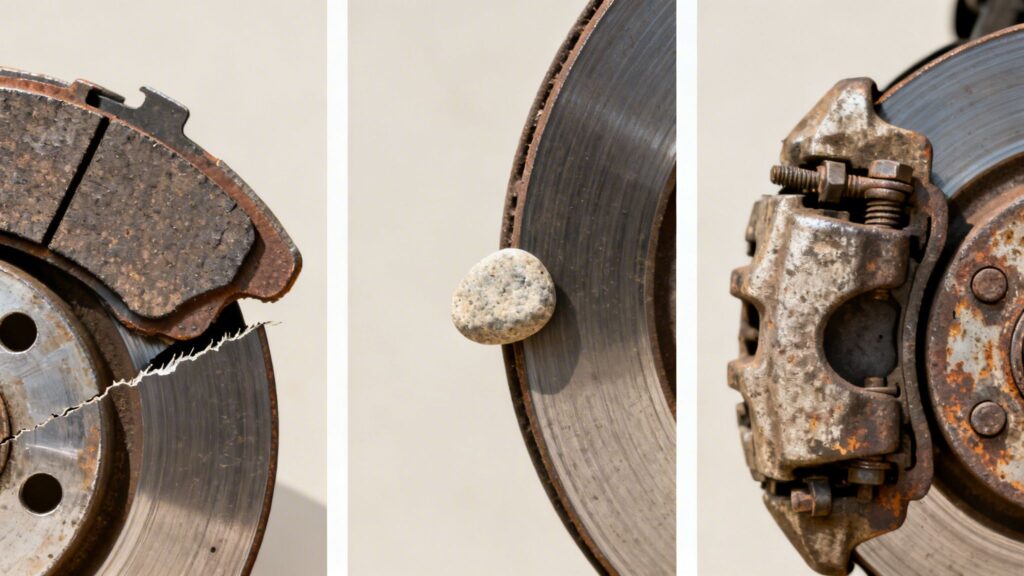
When you hear a grinding noise during braking, it’s an urgent call for attention. This noise is often caused by worn parts such as brake pads or rotors, which require timely replacement to ensure your safety and prevent further damage. The cause is almost always one of three primary issues. Identifying the specific culprit is the first step toward a proper and safe repair.
Let’s explore the most common reasons why a car makes a grinding noise when the brakes are applied. Complete brake inspections are necessary to identify and address all potential issues.
1. Worn-Out Brake Pads
The most frequent cause is brake pads that have reached the end of their service life. The friction material on brake pads is designed to wear down over time through normal use. Once this material is completely eroded, the metal backing plate of the pad is exposed. Worn pads can cause grooves, scoring, or warping on the rotor, leading to a loud grinding noise when braking—especially at low speeds—and can result in a loss of stopping power if not addressed.
When you press the brake pedal, this metal plate grinds directly against the metal rotor.
This metal-on-metal contact generates the deep, harsh grinding sound. It is a definitive sign that the braking system is not only failing to stop the car effectively but is also sustaining further damage with every use.
Most modern brake pads are engineered with a wear indicator—a small metal tab that contacts the rotor when the pad material gets low, producing a high-pitched squeal. This is the intended early warning. Replacing pads promptly when you hear this warning is crucial to prevent further rotor damage and maintain effective braking performance. To learn more about this safety feature, you can read our guide on the brake pad wear indicator.
2. Rust and Debris on Rotors
Sometimes, the grinding sound is not caused by worn components but by foreign material interfering with the braking surfaces. Since brake rotors are exposed to the environment, they are susceptible to a couple of common issues.
Surface Rust: A thin layer of surface rust can build up on iron brake rotors when a car sits idle for a few days, causing a light grinding sound when first driven. If a car sits for a while, rust can build up on the rotors; usually, this rust scrapes off after a few stops, but if the rotors become excessively pitted, it can cause constant grinding. This is normal unless the grinding persists.
Trapped Debris: A more persistent issue occurs when small stones, gravel, road salt, or rust flakes get lodged between the brake pad and the rotor, or between the rotor and the brake caliper. This can cause a consistent scraping noise or grinding sound that may be present even when not braking. A bent dust shield can also cause scraping or grinding noises and should be inspected if such noises persist.
According to U.S. DOT data, road debris is a contributing factor in 10% of cases of premature brake wear. This foreign object acts like an abrasive, scoring the rotor surface and requiring removal to prevent further damage.
3. A Damaged or Seized Brake Caliper
A less common but more severe cause is a malfunctioning brake caliper. The caliper is the hydraulic clamp that applies pressure to the brake pads. If it malfunctions, it can lead to grinding noises.
A caliper can “seize,” or get stuck, in the engaged position. This means it fails to release the brake pad from the rotor after you take your foot off the pedal. If a caliper fails to release properly, it can lead to uneven pad wear or keep a pad dragging constantly against the rotor. If the caliper slide pins freeze or the caliper piston gets stuck, the brake pad may remain constantly pressed against the rotor, causing noise and potential overheating. The continuous contact causes the pad to drag, generating extreme heat, a grinding sound, and often a noticeable burning smell. Proper lubrication of slide pins and other brake components with grease is essential to prevent sticking and ensure smooth operation. A seized caliper will also typically cause the vehicle to pull to one side. This is a significant mechanical failure requiring immediate professional service.
When a Grinding Noise Becomes a Serious Safety Risk
A grinding sound from your brakes is more than just an indicator of a mechanical problem—it’s a direct warning that your vehicle’s safety is compromised. Grinding noises can severely impair braking ability, making it dangerous to continue driving. The ability to stop effectively is paramount, and this noise signals that this ability is significantly diminished. A grinding noise when braking typically indicates friction between components that are not meant to rub together and requires immediate inspection and repair.
The most immediate danger is a substantial increase in your vehicle’s stopping distance. Brakes function by generating controlled friction. When the friction material is gone, the metal-on-metal contact is far less efficient at converting motion into heat, thus reducing your car’s stopping power.
From Controlled Stop to Uncontrolled Hazard
Consider this scenario: under normal conditions, your car might require 40 feet to come to a complete stop from a low speed. With grinding, ineffective brakes, that distance could increase by 15 to 20 feet or more.
This difference is greater than the length of a typical sedan and represents the margin between a safe stop and a collision. While your reaction time remains constant, your vehicle’s ability to execute a stop has been dangerously impaired. Warped or damaged brake rotors can also cause noticeable vibrations when braking, further reducing control and safety.
When you hear grinding, your car is communicating that its braking performance is compromised. Every press of the pedal becomes a risk.
Beyond increased stopping distances, continuing to drive with grinding brakes invites catastrophic component failure due to the extreme heat and stress on the system.
The Risks Escalate with Delay
Ignoring the grinding noise creates a cascade of mechanical failures, leading to more complex and costly repairs.
Destroyed Rotors: The metal backing plate of a worn pad will cut deep grooves into the rotor surface, rendering them irreparable. This necessitates a full rotor replacement instead of a less expensive resurfacing. Brake components can also wear unevenly due to lack of maintenance, which increases the risk of further damage and failure.
Damaged Calipers: The excessive heat can damage the rubber seals within the brake calipers, causing brake fluid leaks or causing the caliper pistons to seize.
Total Brake Failure: In a worst-case scenario, a component like a seized caliper or a fractured rotor can lead to a sudden and total loss of braking capability on one or more wheels, potentially causing a loss of vehicle control.
What begins as a car making grinding noise when braking can quickly evolve into a situation where you can no longer safely control your vehicle. Addressing this issue immediately is a non-negotiable aspect of responsible vehicle ownership and road safety.
How to Perform a Quick Visual Brake Check at Home
While a professional diagnosis is essential for a car making grinding noise when braking, a simple visual inspection can help you better understand the condition of your brakes. This allows you to communicate more effectively with a technician.
When inspecting, also check that brake pads and rotors appear to be properly installed, as improper installation can affect braking performance and safety.
This check is for informational purposes only and is not a substitute for a professional evaluation.
First, ensure your vehicle is parked on a flat, level surface with the engine off and the parking brake engaged. For this preliminary check, you will not need to remove the wheels.
Inspecting Components Through the Wheel
Using a flashlight, look through the openings in your wheel. You should be able to identify two main components: the shiny, disc-shaped brake rotor and the caliper that is mounted over it.
Inside the caliper, you will see the brake pad pressed against the rotor.
The primary objective is to estimate the thickness of the friction material on the brake pad. A new brake pad has a significant amount of friction material, while a pad nearing the end of its life will have very little. A good rule of thumb is to look for at least a quarter-inch (about 6-7mm) of pad material. If you see only a thin sliver remaining, you have likely found the source of the noise.
Next, examine the surface of the rotor. It should be smooth and uniform. If you observe deep grooves or concentric scoring marks, it is a strong indication that metal-on-metal contact has occurred.
Grinding noises can also be caused by failing wheel bearings, which may emit a humming or grinding noise that changes with vehicle speed or when turning. Inspecting wheel bearings is important for vehicle safety and maintenance, as worn bearings can lead to dangerous failures if not addressed.
This flowchart can help you visualize the appropriate response to brake noises.
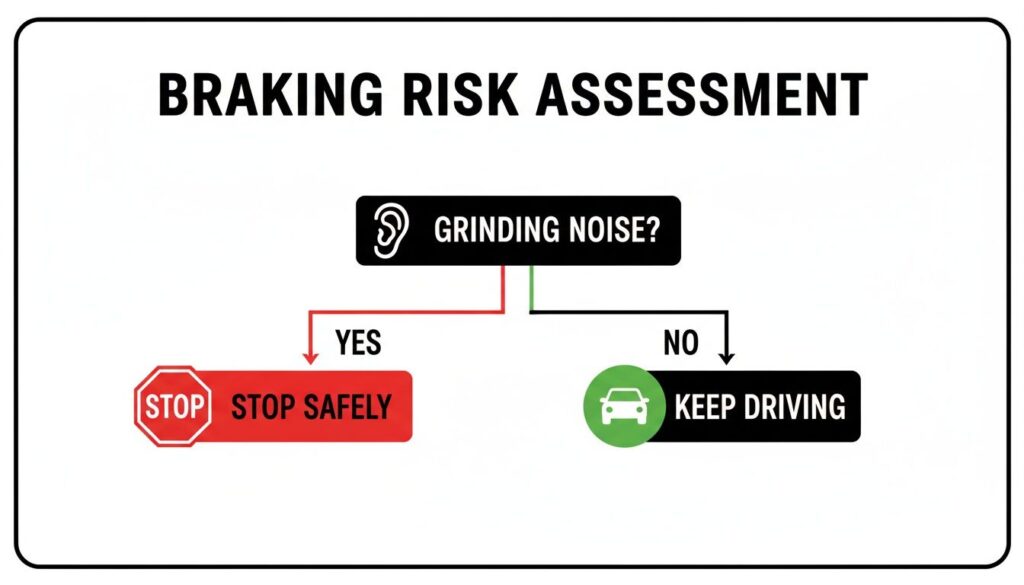
The guidance is unequivocal: a grinding noise warrants stopping the vehicle as soon as it is safe to do so and arranging for a professional inspection.
This visual check, along with ensuring your brake fluid is at the proper level, provides a basic assessment of your brake system’s condition. You can learn more about how to check your brake fluid in our related guide.
Remember, this inspection is for your own understanding. The necessary next step is to consult a qualified mechanic.
What to Expect on Your Brake Repair Bill
Understanding the potential costs associated with a brake repair can help alleviate the stress of an unexpected vehicle issue. When your car is making a grinding noise when braking, the final cost is directly related to the extent of the damage.
The repair can range from a relatively simple replacement to a more extensive overhaul of the braking system. The most important factor is timing: addressing the issue at the first sign of a problem is the most effective way to manage costs.
The principle is similar to home maintenance. Addressing a small leak is a minor expense, but waiting until it causes significant water damage results in a far more costly and complex project.
This logic applies directly to your brakes. An early warning squeal might only require new brake pads. By the time grinding occurs, the problem has advanced, and damage to the brake rotors is highly likely.
Breaking Down the Costs
A standard brake repair invoice consists of two primary components: parts and labor. The cost of parts varies based on the vehicle’s make, model, and the quality of the replacement components. Labor costs are determined by the time required for a certified technician to complete the repair to professional standards.
Here are the most common services associated with grinding brakes:
Brake Pad Replacement: This is the most basic brake service and the best-case scenario. If the issue is addressed at the early squealing stage, this may be all that is needed.
Rotor Resurfacing or Replacement: Once metal-on-metal grinding has occurred, the rotors are almost certainly damaged. If the damage is minimal, they can sometimes be resurfaced (machined smooth). However, if they are deeply scored or warped, they must be replaced.
Caliper Service or Replacement: If a caliper has seized or been damaged by excessive heat, it will need to be repaired or, more commonly, replaced. This is a more involved repair that will increase the total cost.
To gain a deeper understanding of what a comprehensive brake service entails, you can learn more about what’s involved in our detailed guide.
Estimated Brake Repair Costs
To provide a general idea of potential costs, the following table outlines typical price ranges for common brake services. This illustrates how early intervention is the most cost-effective approach.
Repair Type | Typical Cost Range (Per Axle) | Urgency |
|---|---|---|
Brake Pads Only | $150 – $300 | High (Address at first squeal) |
Pads & Rotors | $350 – $700+ | Immediate (Typical for grinding) |
Pads, Rotors & Calipers | $600 – $1,200+ | Critical (Severe grinding/seizure) |
These figures are estimates, but they clearly show that repair costs increase as the damage becomes more severe. A grinding noise signifies that the window for the most affordable repair has closed. A prompt professional inspection is the best way to mitigate further damage and control the final cost.
Why Professional Brake Service is Non-Negotiable
While the desire to perform one’s own vehicle maintenance is understandable, the braking system is one area where professional expertise is crucial. If your car is making a grinding noise when braking, it is a clear sign that a critical safety system has failed.
This is not a simple parts replacement; it requires a correct diagnosis and a precise restoration of your vehicle’s most important safety feature. ASE-certified technicians possess the specialized tools, equipment, and experience to accurately identify the root cause of the problem and ensure the repair is performed correctly.
The Value of Professional Diagnostics
An experienced technician can identify underlying issues an untrained individual might overlook. For example, a common cause of uneven brake wear leading to noise is a sticking caliper slide pin, which a professional will clean and lubricate as part of a standard brake service.
Professionals use precision instruments like a dial indicator to measure rotor runout (a measure of how true it spins) and a micrometer to measure rotor thickness. This data determines whether a rotor can be safely resurfaced or must be replaced, preventing future issues like brake pedal pulsation. Neglecting these details can lead to further problems, as noted in various insights from brake system analyses.
Trusting an expert isn't just about fixing the immediate problem—it's about ensuring the long-term safety and reliability of your entire braking system.
Ultimately, a grinding noise indicates that your safety is at risk. For a problem of this magnitude, you need a swift, accurate, and reliable solution from a qualified professional. Do not compromise on brake repairs; seek a professional inspection for your safety and peace of mind.
Your Top Questions About Grinding Brakes
Here are concise answers to the most common questions we receive from drivers experiencing a car grinding noise when braking
Is It Safe to Drive My Car If It's Grinding?
No, it is not safe. The grinding sound signifies a significant mechanical failure, typically direct metal-on-metal contact.
Continuing to drive not only risks causing more extensive damage to rotors and calipers but also severely compromises your vehicle’s stopping ability. The safest course of action is to pull over and arrange for an inspection.
What If the Grinding Sound Is Intermittent?
An intermittent grinding noise is still a serious warning sign. It could be caused by debris that is temporarily caught in the brake assembly or indicate that the brake pads are worn to the point of making occasional contact between the backing plate and rotor.
Even if the sound is not constant, the underlying problem persists. Ignoring it will eventually lead to continuous grinding and a more significant repair. An early inspection is the most prudent approach.
How Long Does a Brake Repair Take?
For a certified technician, replacing the brake pads and rotors on a single axle is a routine procedure.
At a properly equipped service center, this repair typically takes approximately one to two hours for most passenger vehicles. Professional shops are organized to perform these services efficiently to return your vehicle to you safely, often on the same day.
If you are hearing a grinding noise, do not delay. The ASE-certified technicians at Express Lube & Car Care are ready to provide a thorough, honest, and reliable brake inspection to ensure your vehicle is safe. Visit our Plano shop for prompt service and peace of mind—no appointment necessary.