

A complete brake service is a comprehensive maintenance procedure that extends beyond replacing brake pads. It involves a thorough inspection of the entire braking system, replacement of worn components like pads and rotors, and servicing of the hydraulic system, including the brake fluid. This process is one of the most critical safety services for a vehicle, ensuring it can stop safely and reliably under all driving conditions.
Understanding the Components of a Complete Brake Service
A vehicle's braking system is its most critical safety feature. It is the primary mechanism responsible for decelerating and stopping the vehicle, making its proper function essential for the safety of the driver, passengers, and others on the road. Understanding what a professional brake service includes allows vehicle owners to make informed decisions about maintenance and repair.
The process can be broken down into three core stages: a detailed inspection, the replacement of worn parts, and the final verification of system performance, all contributing to enhanced vehicle safety.
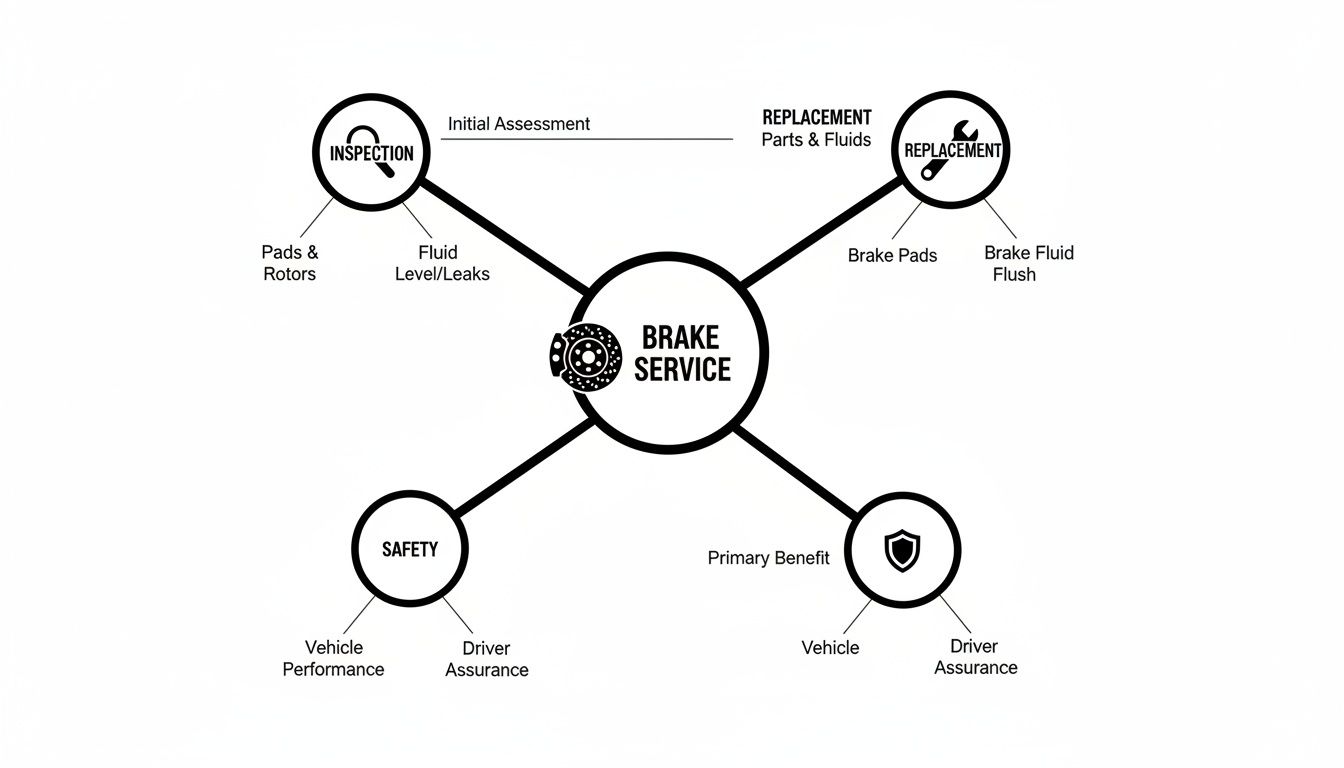
This systematic approach ensures that every component—from the brake pads making physical contact with the rotors to the hydraulic fluid that transfers force from the pedal—is functioning correctly as an integrated system to improve overall vehicle safety.
The Importance of Professional Brake Care
Regular brake service is a fundamental aspect of responsible vehicle ownership. Neglecting the braking system can lead to diminished stopping power, increased braking distances, and potentially complete brake failure in an emergency. A professional service addresses all aspects of the system, from replacing mechanical hardware to performing complex software calibrations required for modern vehicles equipped with Advanced Driver-Assistance Systems (ADAS).
A professional brake service is a proactive measure designed to identify and rectify minor issues before they escalate into dangerous and costly failures. It ensures the vehicle's braking system is prepared to perform optimally when it is most needed.
This level of detailed attention is increasingly important as vehicle technology advances. The global brake system market is projected to grow from USD 26.2 billion in 2025 to USD 43.3 billion by 2035, with passenger cars driving much of this expansion. This trend reflects the growing complexity of modern braking systems and underscores the need for professional maintenance to ensure their safety and reliability. You can explore more data on the growing brake system market for a deeper analysis.
Ultimately, the objective is to ensure every component works in perfect harmony to bring the vehicle to a safe, controlled stop. The following sections will detail each step of this critical service.
The Foundation: A Thorough Brake Inspection
Before any components are replaced, a proper brake service begins with a detailed inspection. This process serves as a comprehensive diagnostic evaluation of the vehicle's most critical safety system. A qualified technician does not begin by replacing parts; instead, they perform a series of visual and physical checks to gain an accurate understanding of the system's condition. This initial step is crucial for ensuring that only necessary repairs are performed.
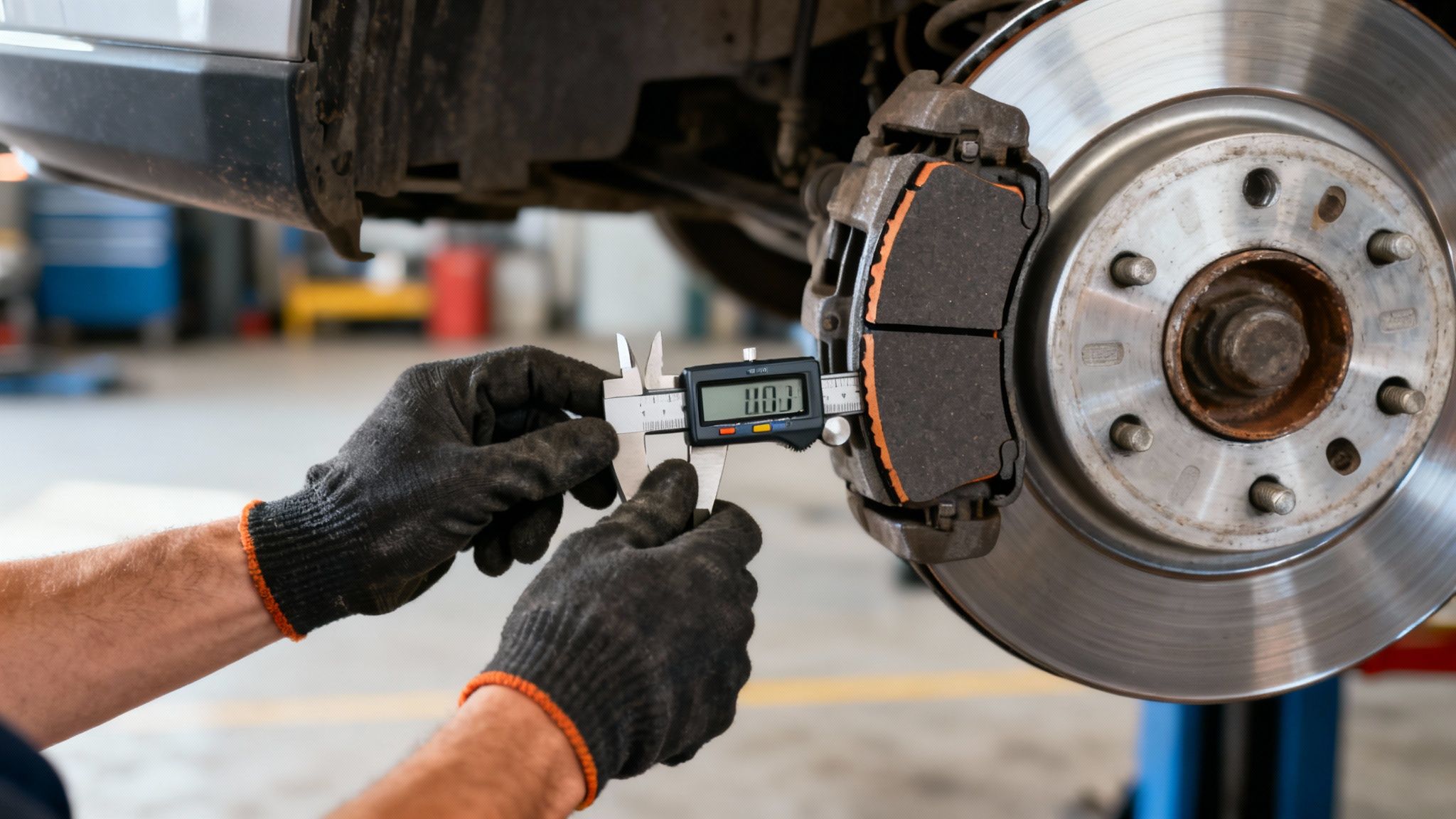
This is not a cursory glance. An ASE-certified technician will systematically examine the entire brake assembly at all four wheels. This includes precisely measuring the thickness of the brake pads and shoes—the friction materials responsible for stopping the vehicle.
A non-negotiable industry standard is that brake pads worn to a thickness of 3 millimeters or less are considered a significant safety hazard and require immediate replacement. Operating a vehicle with such thin pads can lead to severe rotor damage and dangerously compromise stopping ability.
This diagnostic approach ensures the root cause of any issue is identified, rather than merely addressing a symptom.
What Technicians Look for During a Brake Inspection
A complete inspection covers several key areas to build a full assessment of the brake system's health. Technicians are trained to identify subtle signs of wear and potential failure that might otherwise go unnoticed, allowing for preventative action before a dangerous situation arises.
The inspection process systematically includes these checks:
- Visual Check of Lines and Hoses: The technician examines all hydraulic lines and hoses for cracks, leaks, brittleness, or other signs of degradation. A minor leak in a brake hose can lead to a sudden and complete loss of braking pressure.
- Rotor and Drum Assessment: Technicians measure the thickness of the rotors and check for warping, lateral runout (a side-to-side wobble), or deep scoring. A warped rotor causes a pulsating or vibrating sensation during braking and can significantly increase stopping distance.
- Brake Fluid Test: The brake fluid is tested for moisture contamination. If the fluid contains over 3% moisture, its boiling point can decrease by as much as 50%. This can lead to a phenomenon known as "brake fade," where the pedal feels spongy and stopping power is drastically reduced during heavy use.
This detailed process is more important than ever, given that the average age of vehicles on U.S. roads has reached 12.5 years. It is estimated that 25% of vehicles require some form of brake service annually. With disc brakes being the predominant technology due to their efficiency and reliability, a proper inspection forms the foundation of vehicle safety. Learn more about automotive brake component trends to understand why these checks are so critical. This initial diagnosis sets the stage for an effective, honest brake service.
Replacing Brake Pads and Rotors
The core of most brake services involves two primary components: the brake pads and the rotors.
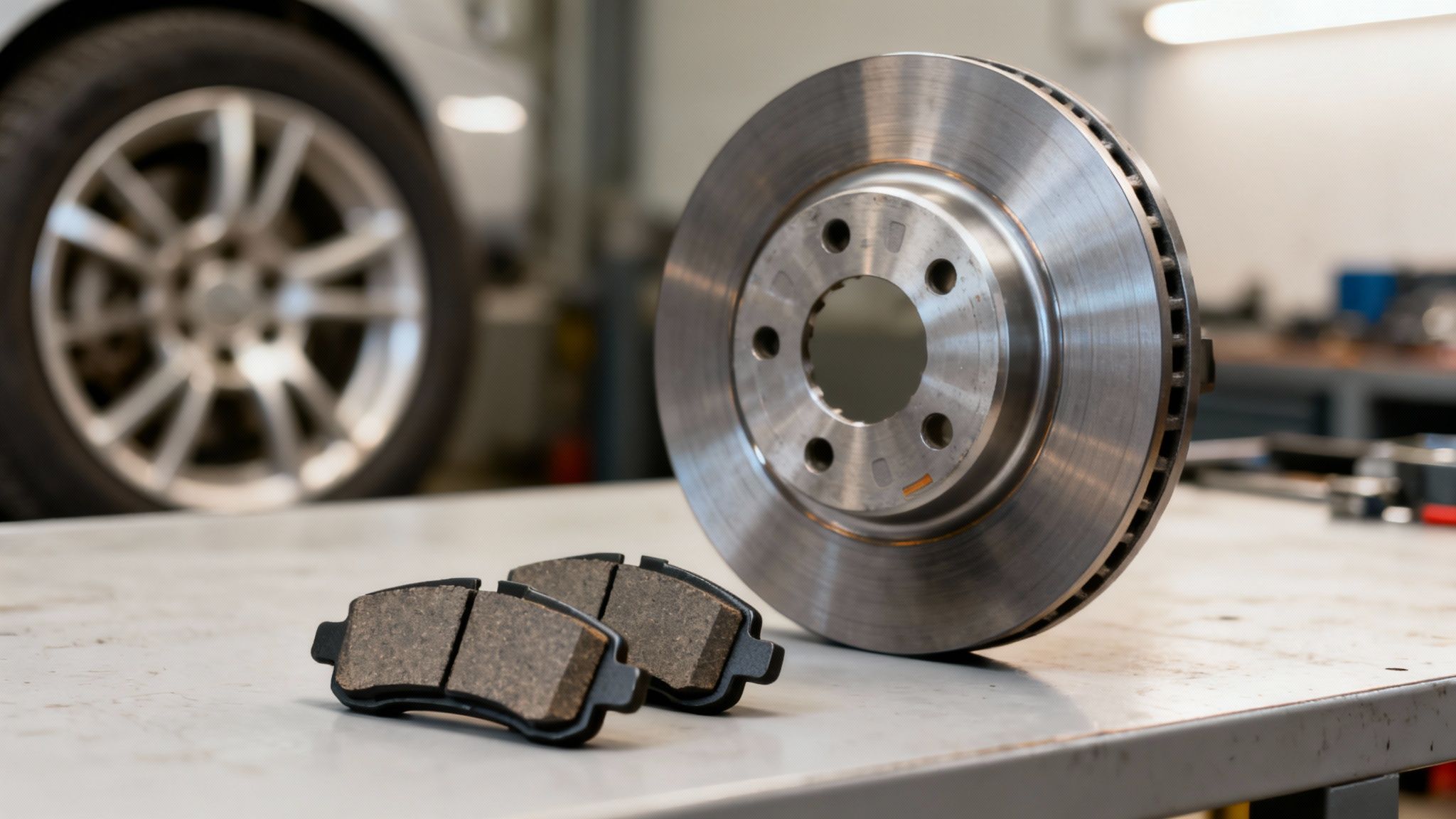
To visualize their function, consider the handbrakes on a bicycle. Squeezing the lever causes rubber pads to clamp down on the metal wheel rim, creating friction to stop the bicycle. A car's disc brake system operates on the same principle but on a much larger scale. The brake pads press against large metal discs called rotors, generating the immense friction required to stop a vehicle weighing thousands of pounds.
This intense friction means the pads are designed as consumable parts that wear down over time. Once their friction material becomes too thin, the vehicle's ability to stop effectively is compromised, making their replacement a non-negotiable part of vehicle safety. Understanding how these two components function together helps vehicle owners make informed maintenance decisions.
Brake Pads Explained
Brake pads are the components that directly apply force to the rotors. When the brake pedal is depressed, the calipers squeeze the pads against the rotors, converting the vehicle's kinetic energy into thermal energy and slowing it down. As they are designed to be sacrificial, selecting the appropriate replacement material is crucial for performance and longevity.
There are three primary types of brake pads, each with distinct characteristics:
- Semi-Metallic Pads: Composed of a mixture of metals like copper and steel, these pads offer excellent heat dissipation and strong stopping power. However, they can produce more noise and brake dust than other types.
- Ceramic Pads: Made from ceramic fibers and other filler materials, these are a popular choice for daily driving. They are known for being quiet, producing minimal dust, and providing smooth, consistent braking performance.
- Organic Pads: Composed of non-metallic compounds, these are the quietest and softest pads. They are gentle on rotors but tend to wear more quickly and may not perform optimally under high-heat conditions.
The ideal choice depends on the vehicle type and driving habits. The lifespan of brake pads can vary significantly based on these factors, which is why regular inspections are always recommended.
Rotors: Resurfacing vs. Replacing
Brake rotors are the heavy, smooth discs that the brake pads clamp onto. After thousands of miles of exposure to intense heat and friction, their surfaces can develop grooves, hotspots, or slight warping. When this occurs, there are generally two corrective options: resurfacing or replacement.
Resurfacing, also known as "machining" or "turning," is a process where a technician uses a specialized lathe to shave a very thin layer from the rotor's surface, restoring a perfectly flat and smooth finish. This is a cost-effective solution if the rotor's thickness remains above the manufacturer's minimum safety specification.
However, if a rotor is already worn below its minimum thickness, is excessively warped, or has deep grooves, it must be replaced. Machining an already thin rotor would compromise its structural integrity and ability to dissipate heat, creating a significant safety hazard known as "brake fade."
A properly executed brake service is one of the most impactful safety procedures for a vehicle. While worn brakes contribute to approximately 2% of crashes in the U.S., a well-maintained system can shorten stopping distances by as much as 30%. This represents a critical safety margin for any driver. You can learn more about these industry dynamics in the automotive brake systems market on Fortune Business Insights.
Understanding the Hydraulic Brake System
When a driver presses the brake pedal, they are initiating a hydraulic process that multiplies the modest force from their foot into a force sufficient to stop a multi-ton vehicle. A truly comprehensive brake service, therefore, must address the entire hydraulic system, not just the friction components like pads and rotors.
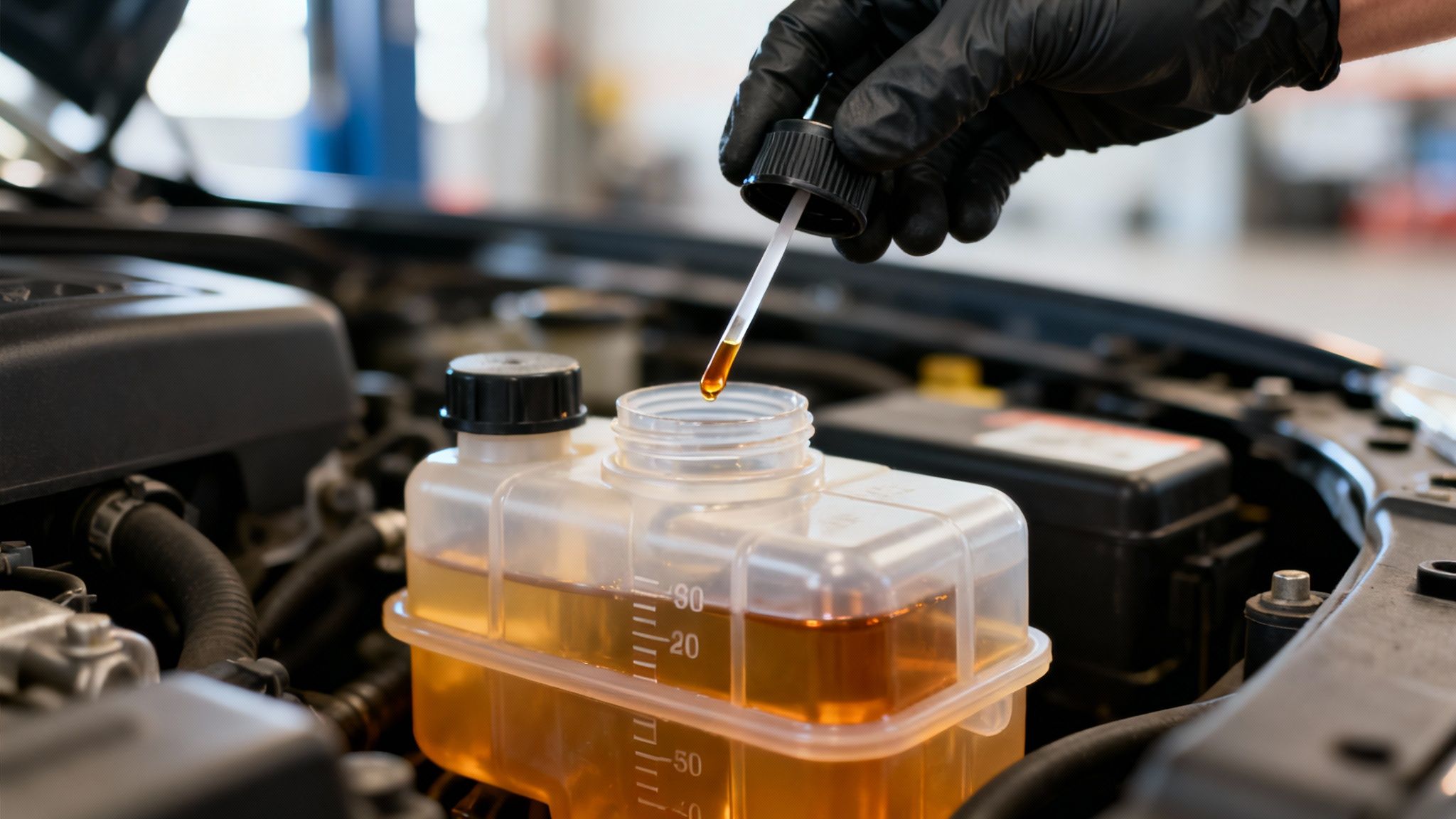
The master cylinder, brake lines, and calipers function as the control and delivery network of the braking system, while the brake fluid acts as the medium for transmitting force. Focusing solely on the friction components addresses only part of the system, leaving a critical safety network potentially vulnerable.
The Critical Role of Brake Fluid
Brake fluid is a specialized hydraulic fluid engineered to be non-compressible, which allows it to transmit force efficiently from the brake pedal to the wheels. However, it has one major vulnerability: it is hygroscopic, meaning it readily absorbs moisture from the atmosphere. Over time, this water absorption becomes a significant problem.
The absorbed water lowers the fluid's boiling point. Brakes generate substantial heat during operation, and if the water in the fluid boils, it turns into steam. Unlike the liquid fluid, steam is highly compressible. This creates air bubbles in the brake lines, resulting in a soft, "spongy" brake pedal and a dangerous reduction in stopping power.
A brake fluid flush is a maintenance procedure where the old, moisture-contaminated fluid is completely removed from the system and replaced with new, clean fluid. This service is analogous to an oil change for the braking system, as it prevents internal rust and corrosion while restoring a firm, responsive pedal feel.
This is considered an essential part of a thorough brake service. Neglecting it can lead to gradual degradation and eventual failure of the hydraulic system.
Servicing Calipers and Lines
Brake calipers are the hydraulic clamps that house the brake pads and press them against the rotors. A piston within the caliper, activated by hydraulic pressure, performs this action every time the brakes are applied.
As mechanical components, calipers are subject to wear. The seals around the piston can degrade, causing fluid leaks, while the slide pins that allow the caliper to move freely can seize due to rust and debris. A malfunctioning caliper can cause several issues:
- Uneven Pad Wear: One brake pad will wear down significantly faster than the other.
- Vehicle Pulling: The vehicle may pull to one side during braking.
- Overheating: A seized caliper can cause the brake pads to remain in constant contact with the rotor, generating excessive heat that can damage components.
During a professional brake service, a technician will inspect the calipers for leaks and ensure the slide pins are cleaned and lubricated for proper movement. If a caliper is leaking fluid or is seized, it must be replaced to ensure the new pads and rotors function correctly and wear evenly.
To learn more about proper service intervals, read our guide on how often you need a brake fluid flush.
Breaking Down Brake Service Costs
From a practical standpoint, it is important to understand the factors that determine the cost and duration of a brake service. The final price can vary significantly, as a simple repair can escalate into a more substantial investment depending on the condition of the system.
The primary driver of cost is the scope of the work required. Replacing a single set of front brake pads is a relatively minor job, whereas a complete system overhaul—including new rotors, calipers, and a brake fluid flush—represents a more significant undertaking. Furthermore, the vehicle's make and model play a crucial role in the final cost.
Factors That Influence Your Final Bill
Several variables can influence the cost of a brake service. For example, luxury brands and European vehicles often require specialized parts that carry a higher price point. The type of brake pads selected also matters; premium ceramic pads will cost more than standard semi-metallic pads.
Here are the main factors that affect the final estimate:
- Vehicle Make and Model: Parts for high-performance sports cars or heavy-duty trucks are typically more expensive than those for standard passenger sedans.
- Type of Parts: Customers can choose between Original Equipment Manufacturer (OEM) parts, which are identical to factory-installed components, and often more affordable aftermarket alternatives.
- Scope of Work: The total number of components needing replacement—from pads and rotors to calipers and hoses—directly impacts the final price.
- Labor Rates: Shop labor rates vary based on geographic location and the skill level of the technicians.
To avoid unexpected expenses, it is advisable to request a detailed, itemized estimate before authorizing any work. This ensures you understand exactly what services are being performed and why each is necessary.
Typical Brake Service Costs and Time Estimates
To provide a clearer understanding, the following table outlines common brake services with their typical cost and time estimates. Note that these are general figures; the final cost will depend on your specific vehicle and the extent of component wear.
| Service Type | Estimated Cost Range | Estimated Time |
|---|---|---|
| Brake Pad Replacement | $150 – $300 per axle | ~1 hour |
| Pads & Rotors Replacement | $400 – $700 per axle | ~2 hours |
| Brake Caliper Replacement | $500 – $800+ per axle | ~2 – 3 hours |
| Brake Fluid Flush | $80 – $150 | ~30 – 60 minutes |
More complex jobs, such as replacing seized calipers or corroded brake lines, will increase both the time and cost required.
Fortunately, there are ways to manage these expenses. Before committing to a service, check for a brake service coupon at Express Lube Plano to help reduce the final cost. Proper planning and asking informed questions can lead to a more transparent and satisfactory brake service experience.
Common Questions About Brake Service
Even with a detailed overview, specific questions often arise. The following are answers to some of the most common inquiries from vehicle owners, intended to provide clarity and build confidence regarding brake system maintenance.
How Often Should I Get My Brakes Checked?
There is no universal service interval, as the ideal frequency depends on the vehicle, driving habits, and the type of brake pads installed.
As a general guideline, a professional brake inspection is recommended annually or approximately every 12,000 miles. More importantly, drivers should be attentive to their vehicle's performance. Any unusual noises such as squealing or grinding, or any changes in brake pedal feel, warrant an immediate inspection.
Can I Just Replace the Brake Pads and Not the Rotors?
In some cases, yes. If the rotors are still thick enough to meet the manufacturer's minimum safety specifications and are not warped, they can often be resurfaced. This process removes a very thin layer of metal to create a perfectly smooth surface for the new pads to contact. A qualified technician will always measure the rotors first to determine if this is a viable option.
However, if the rotors are worn below the minimum thickness, are severely grooved, or are warped beyond correction, they must be replaced. Machining them further would compromise their ability to manage heat and pressure, creating a serious safety risk. A reputable repair facility will provide the measurements and explain why replacement is necessary.
Is a Brake Fluid Flush Really Necessary?
Yes, it is an essential maintenance task. Brake fluid is hygroscopic, meaning it absorbs moisture from the air. Over time, this moisture accumulation lowers the fluid's boiling point, which can lead to a spongy pedal feel and significantly reduced stopping power, particularly under demanding conditions.
This moisture also promotes internal corrosion of brake lines and calipers. Flushing the system every two to three years is critical preventative maintenance that preserves the integrity and performance of the entire hydraulic system.
Your safety on the road is our top priority. For an expert brake inspection and service you can depend on, visit us at Express Lube & Car Care in Plano—no appointment needed. Let our ASE-certified technicians give you the peace of mind you deserve. https://www.expresslubeplano.com