
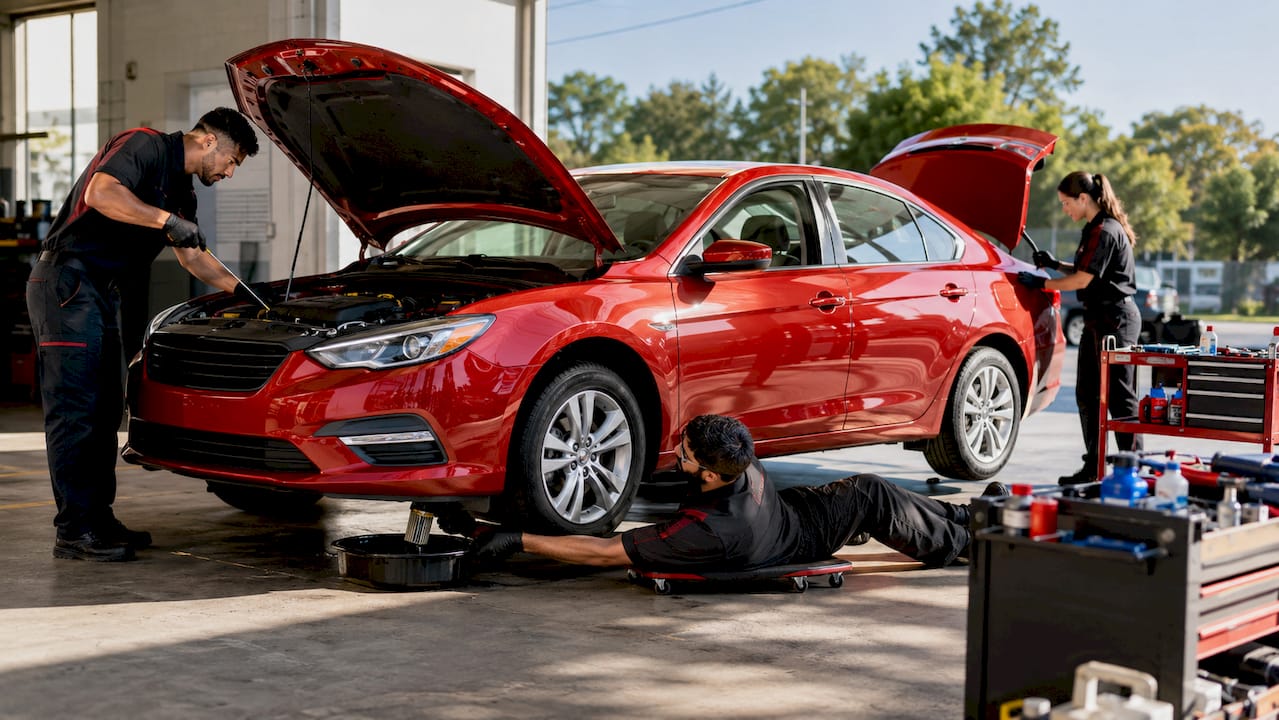
Express lube service is a quick turnaround maintenance procedure that changes your vehicle’s oil, replaces the filter, tops off key fluids, and performs a basic vehicle inspection in under 25 minutes. This is the industry’s standard answer to routine oil maintenance for drivers who cannot afford a half-day dealership appointment. Brands like Jiffy Lube built their entire business model around this concept, and shops like Express Lube & Car Care have refined it further with no-appointment-needed access. The express lube service process explained here covers every step, every fluid, and every check so you know exactly what happens to your car.
How does the express lube service process work?
The express lube service process follows a fixed sequence every visit. That consistency is what makes it fast and reliable. Think of it like a commercial kitchen: every station has a role, every technician has a task, and nothing gets skipped because the workflow is built around precision, not improvisation.
Here is the exact sequence performed during a standard visit:
- Vehicle assessment. The technician checks your current oil level and color, identifies the correct oil type for your make and model, and notes your mileage. This step determines whether you need conventional, synthetic blend, or full synthetic oil.
- Drain plug removal and oil drain. The technician removes the drain plug from the oil pan and lets the old oil drain completely. Used oil is disposed of responsibly using certified recycling methods to prevent environmental contamination.
- Oil filter replacement. The old filter is removed from the filter housing and replaced with a new one rated for your vehicle. This happens every visit without exception.
- New oil fill. The technician adds the manufacturer-specified oil type and volume. Getting this right matters because using the wrong viscosity, such as 5W-30 instead of 0W-20, can reduce engine protection.
- Fluid top-offs. A standard express oil change includes topping off coolant, brake fluid, power steering fluid, and windshield washer fluid to manufacturer-recommended levels.
- Tire pressure check. Each tire is checked and inflated to the PSI listed on your door jamb sticker, not the number printed on the tire sidewall.
- Belt and hose inspection. Technicians visually inspect serpentine belts and radiator hoses for cracking, fraying, or wear. This is not a full diagnostic, but it catches obvious problems.
- Final review and reset. The oil life monitor is reset, the drain plug is torqued to spec, and the technician reviews findings with you before you leave.
Most oil changes finish in 15 to 25 minutes at a quick lube shop using a pit crew-style workflow. That speed comes from having multiple technicians working simultaneously from above and below the vehicle.
Pro Tip: Ask the technician to show you the old oil on the dipstick before they drain it. Dark, gritty oil tells you the service was overdue. Clean, amber oil means you stayed on schedule.
Express lube vs. dealership service: what is the difference?
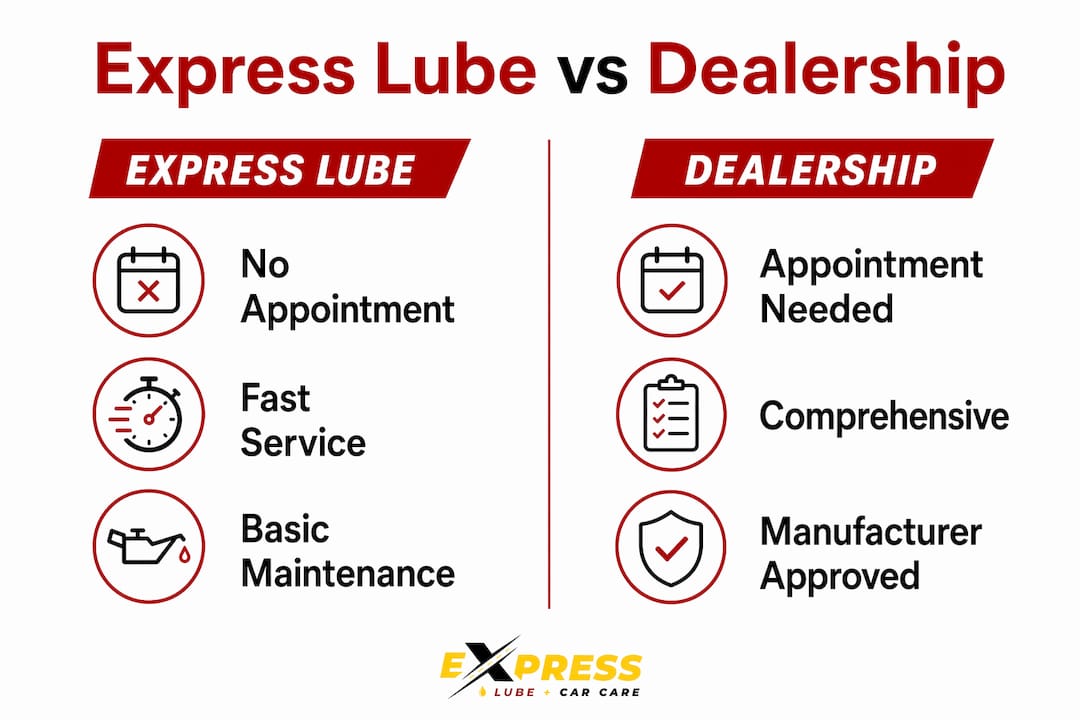
Express lube shops and dealership service departments solve different problems. Knowing which one fits your situation saves you time and money.
Drive-through pit models allow multiple technicians to work on a vehicle simultaneously, one from below in the pit and one from above under the hood. Dealerships use traditional lifts, which require one technician to complete tasks sequentially. The pit model is faster for routine work. The lift model is better for complex repairs that require full vehicle access.
| Service Element | Express Lube Shop | Dealership Service |
|---|---|---|
| Appointment required | No | Usually yes |
| Average service time | 15–25 minutes | 1–3 hours |
| Primary focus | Oil change and fluid checks | Full diagnostics and repairs |
| Technician model | Multi-tech pit crew | Single assigned technician |
| Pricing | Lower, standardized | Higher, variable |
| Tire rotation | Limited availability | Standard offering |
| In-depth diagnostics | Not included | Included |
Profit margins in quick lube facilities range from 15% to 40%, which supports high-volume, standardized procedures. That structure keeps prices lower than dealerships and makes express lube the practical choice for routine maintenance.
Express lube is the right call when you need an oil change, fluid top-offs, or a quick visual inspection. The dealership is the right call when your check engine light is on, you need a transmission rebuild, or your warranty requires dealer-documented service. For a deeper look at how these two options compare, the breakdown of quick lube vs. dealership differences covers pricing, scope, and when each makes sense.
- Express lube is ideal for oil changes on a tight schedule
- Dealerships handle warranty work, recalls, and complex repairs
- Express lube shops do not typically offer tire rotations or alignment checks
- Dealership service advisors may upsell services not yet due per your owner’s manual
What additional services come with an express lube visit?
The core express lube steps cover oil and fluids, but several complementary services extend your vehicle’s life significantly. Battery terminal cleaning, brake fluid and coolant flushes, air filter checks, and transmission fluid services are the four services most commonly recommended alongside a standard oil change.
Here is what each one does and why it matters:
- Battery terminal cleaning. Corrosion on battery terminals increases electrical resistance, which strains the alternator and can cause hard starts. Cleaning terminals takes minutes and prevents a roadside failure.
- Brake fluid flush. Brake fluid absorbs moisture over time, which lowers its boiling point and reduces stopping power. Most manufacturers recommend a flush every two years regardless of mileage.
- Coolant flush. Old coolant becomes acidic and corrodes aluminum engine components. A flush at the manufacturer’s recommended interval protects your water pump, radiator, and head gaskets.
- Engine and cabin air filter inspection. A clogged engine air filter reduces fuel efficiency. A clogged cabin filter degrades air quality inside the car. Both are inexpensive to replace and easy to check during a lube visit.
- Transmission fluid service. Transmission fluid breaks down under heat and friction. Neglecting it is one of the most expensive maintenance mistakes a driver can make, since transmission rebuilds cost thousands of dollars.
Vehicles reaching 200,000 miles almost always share one trait: their owners followed maintenance schedules consistently. Express lube visits serve as a natural checkpoint to stay on that schedule.
Pro Tip: Bring your owner’s manual to your next visit. Show the technician the manufacturer’s recommended service intervals. That single document tells you exactly which services are due and which ones can wait.
Express lube shops can perform many of these services, but not all locations offer every option. Ask before you arrive. If a service is not available on-site, a qualified mechanic can handle it separately. The goal is full coverage, not convenience alone.
How to get the most from every express lube visit
Preparation turns a routine oil change into a productive maintenance checkpoint. These steps help you walk in informed and leave with a complete picture of your vehicle’s condition.
- Know your oil type before you arrive. Check your owner’s manual or the sticker inside your driver’s door. Telling the technician upfront avoids delays and prevents the wrong oil from being used.
- Track your service history. Keep a simple log in your glove box or use an app like Carfax Car Care to record every service date, mileage, and fluid type. This log becomes your maintenance baseline.
- Ask about your oil life monitor. Most modern vehicles have an oil life monitoring system. Ask the technician to reset it after every change so your dashboard alerts stay accurate.
- Request a written inspection summary. Reputable shops provide a checklist of everything inspected. Review it before you leave and ask about anything flagged as worn or low.
- Watch for signs that require more than a lube visit. Persistent warning lights, unusual engine noises, fluid leaks under the car, or a burning smell after an oil change all require a full mechanic consultation.
Skipping maintenance intervals can increase long-term ownership costs by up to 75% over five years compared to staying on schedule. That number reflects the compounding cost of neglect: worn parts accelerate damage to adjacent components, turning a $60 oil change into a $2,000 repair.
The environmental benefit of professional service is also worth noting. Certified express lube shops use proper recycling channels for used oil, keeping it out of storm drains and soil. Doing an oil change at home and disposing of the oil incorrectly creates liability and environmental harm that professional service eliminates entirely. For more on why consistent oil changes protect your engine long-term, the connection between oil changes and engine longevity is worth reading before your next visit.
Key takeaways
Express lube service is the most efficient way to maintain your vehicle’s oil health, fluid levels, and basic mechanical condition without sacrificing your schedule.
| Point | Details |
|---|---|
| Defined service scope | Express lube covers oil change, filter replacement, fluid top-offs, tire pressure, and belt inspection. |
| Speed through teamwork | Multi-technician pit crews complete most visits in 15–25 minutes without an appointment. |
| Cost advantage | Quick lube profit margins of 15%–40% keep prices consistently lower than dealership service. |
| Maintenance cost savings | Staying on schedule reduces long-term ownership costs by up to 75% over five years. |
| Complementary services | Battery cleaning, coolant flushes, and transmission fluid services extend vehicle life beyond the oil change. |
What we have learned running express lube service day after day
The most persistent misconception we encounter at Express Lube & Car Care is that speed means shortcuts. Drivers sometimes arrive skeptical, assuming a 20-minute service cannot be thorough. That skepticism is understandable, but it misreads how the process works. Speed comes from specialization, not from skipping steps. Our technicians perform the same sequence hundreds of times per week. That repetition builds a level of proficiency that a general mechanic performing one oil change per day simply cannot match.
The real risk is not the quality of a quick lube visit. The real risk is the driver who skips the visit entirely because they think they can stretch an interval. We have seen engines with sludge buildup so severe the oil looked like tar. Every one of those cases involved extended intervals, not bad service. Consistent visits, even imperfect ones, beat infrequent perfect ones every time.
One thing we recommend to every customer: treat your express lube visit as a conversation, not a transaction. Ask what the technician noticed. Ask whether your air filter looked clean. Ask whether your brake fluid has been flushed recently. The information is there. You just have to ask for it. That habit, more than any single service, is what separates drivers who reach 200,000 miles from those who face a major repair at 80,000.
— Express Lube & Car Care
Fast, reliable oil changes in plano with no appointment needed
Express Lube & Car Care serves Plano drivers with quick oil changes, full fluid top-offs, and multi-point inspections performed by certified technicians. No appointment is required. You drive in, and our pit crew handles the rest.
Whether you drive a daily commuter or a high-mileage work truck, staying on your oil change schedule is the single most effective thing you can do for your engine. Express Lube & Car Care currently offers oil change specials and service discounts for all vehicle types, with additional savings for military personnel and healthcare providers. Check our current maintenance coupons before your next visit to make sure you are getting the best available rate. Pull in when it is convenient for you. We will take it from there.
FAQ
How long does an express lube service take?
Most express lube visits are completed in 15–25 minutes. The multi-technician pit crew model allows simultaneous work above and below the vehicle, which is what makes that timeframe possible.
What does an express oil change actually include?
A standard express oil change includes draining old oil, replacing the oil filter, adding new manufacturer-specified oil, topping off key fluids, checking tire pressure, and performing a visual inspection of belts and hoses.
Is express lube service lower quality than a dealership?
Express speed does not mean lower quality. Technicians specialize in routine maintenance tasks and perform them with high consistency. The main risk to vehicle health is skipping service altogether, not choosing an express shop over a dealership for an oil change.
How often should i use an express lube service?
Follow your owner’s manual interval, typically every 5,000–7,500 miles for synthetic blend oil or every 10,000 miles for full synthetic. Express lube shops make it easy to stay on that schedule without blocking out half a day.
Can express lube shops handle services beyond oil changes?
Many express lube locations offer battery terminal cleaning, air filter replacement, and fluid flushes in addition to oil changes. For services like brake repairs or engine diagnostics, a full-service shop or dealership is the appropriate choice.