

Understanding when to change your car's air filters is one of the most fundamental aspects of vehicle maintenance. Think of these filters as your vehicle's respiratory system—one is designed to protect the engine, and the other is for you and your passengers.
As a general guideline, your engine air filter should be replaced every 15,000 to 30,000 miles, while your cabin air filter typically requires replacement every 12,000 to 15,000 miles. A clean filter allows both your engine and your cabin's ventilation system to "breathe" more easily, ensuring optimal function.
A Quick Guide To Changing Car Air Filters
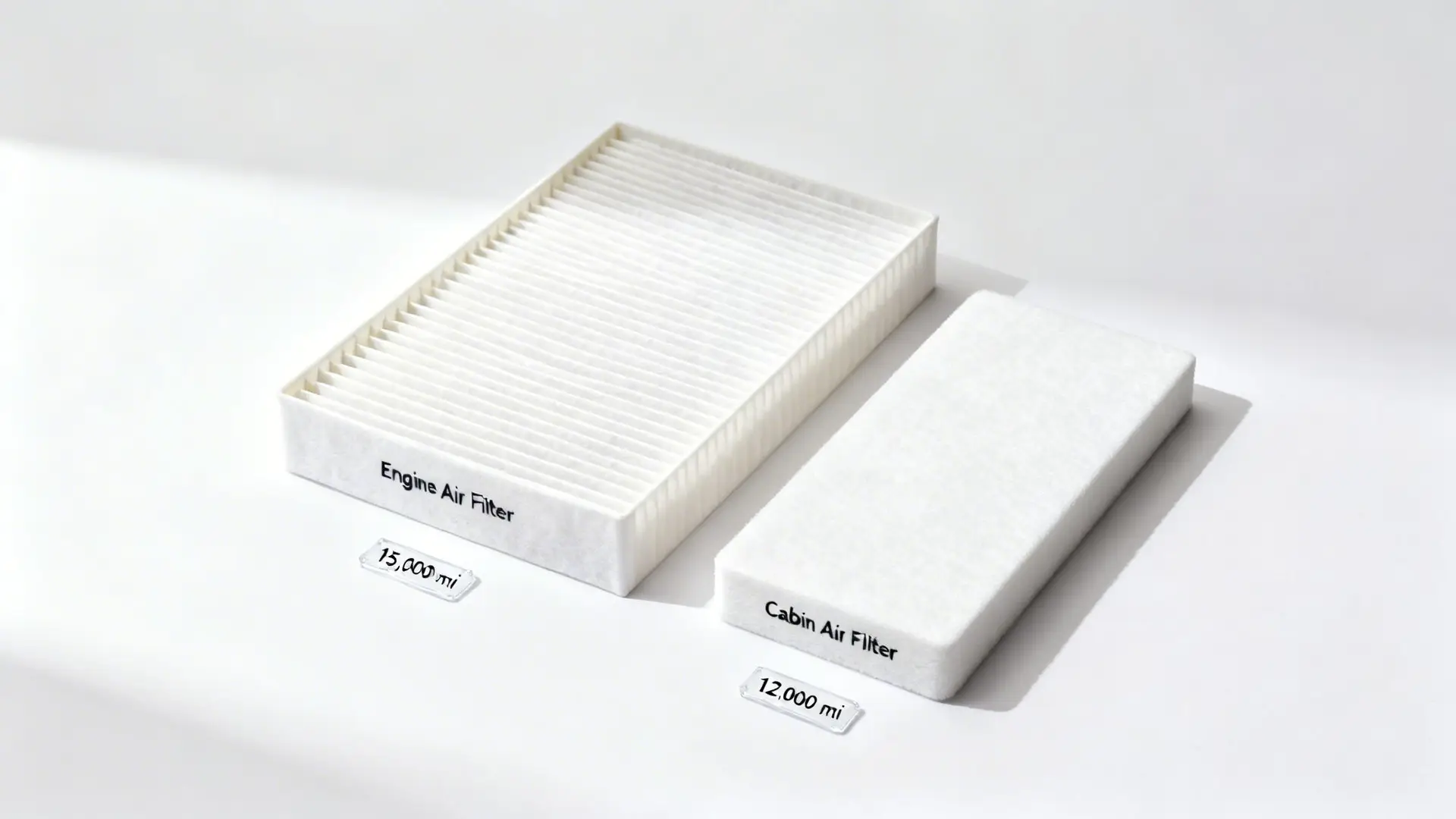
While the manufacturer's recommendation provides a solid baseline, your actual replacement schedule is heavily influenced by where and how you drive. Your car contains two distinct filters with very different functions, but both are critical to your vehicle's mechanical health and your comfort.
Let's examine the standard replacement timelines that are suitable for most drivers who primarily use paved roads in average environmental conditions.
Standard Replacement Timelines
Here are the typical intervals you should know for each filter:
- Engine Air Filter: Plan for a change every 15,000 to 30,000 miles. This filter's function is to protect your engine from abrasive particles like grit, dust, and other debris that can cause significant internal wear over time.
- Cabin Air Filter: This should be replaced every 12,000 to 15,000 miles. Its purpose is to clean the air you breathe inside the vehicle, effectively trapping pollen, dust, and other airborne pollutants.
Adhering to these timelines is an important component of responsible vehicle ownership. To understand how these services integrate into a comprehensive maintenance plan, you can reference our guide on following a car maintenance schedule by mileage.
Key Takeaway: Consistent filter changes help maintain fuel efficiency, protect your engine from premature wear, and ensure the air inside your vehicle remains fresh and clean.
However, conditions in and around Plano can be particularly harsh on filters. Factors like frequent construction zones on the Dallas North Tollway or the high pollen counts during Texas allergy season can clog filters much more quickly than the owner's manual might suggest. This means you may need to inspect and replace them more frequently.
Understanding The Two Essential Air Filters In Your Car
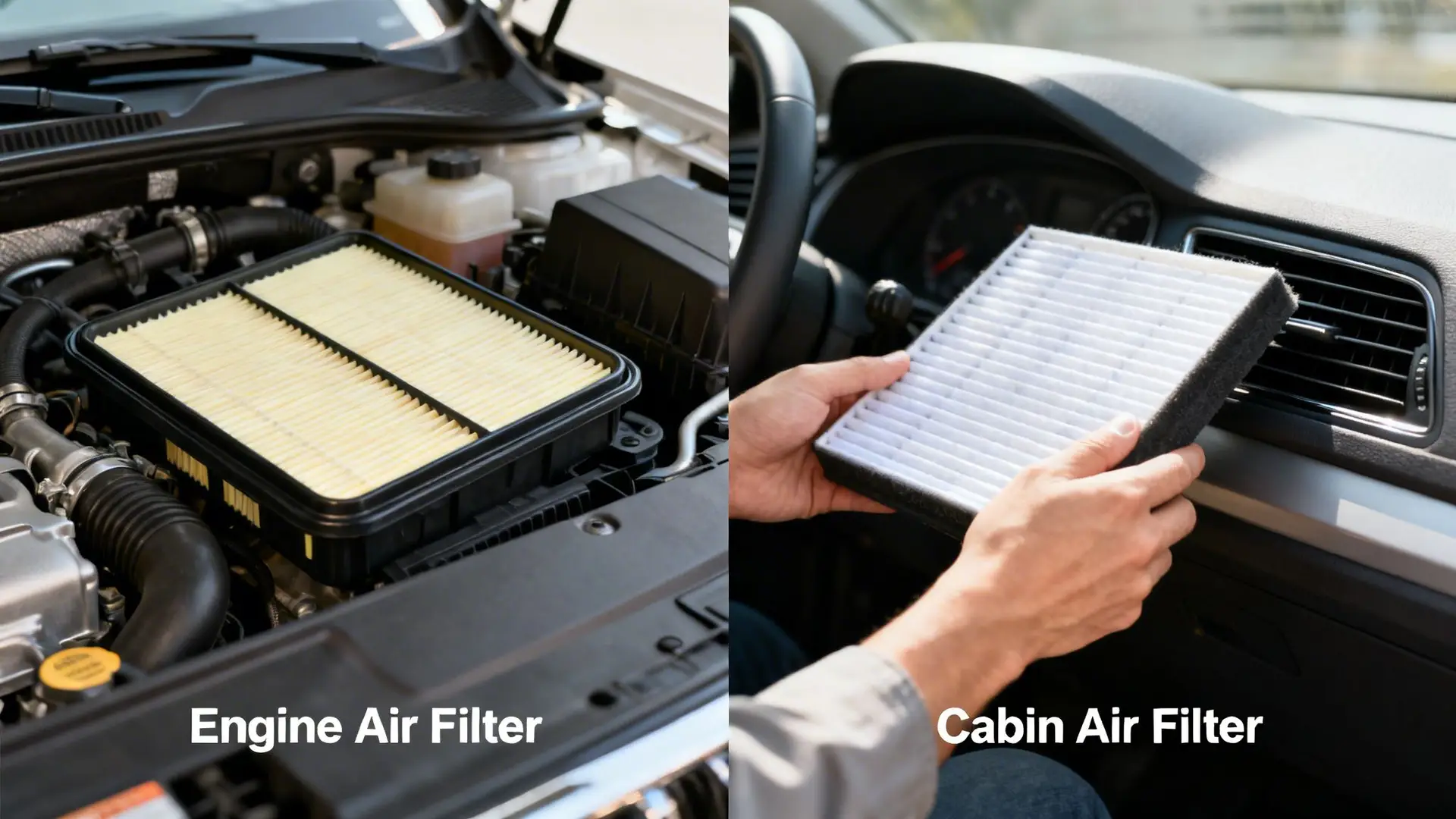
Many drivers are unaware that their car is equipped with two separate air filters, each working continuously while the vehicle is in use. It is a common point of confusion. Although their names are similar, one serves to protect your engine, while the other protects you.
Before you can determine the correct replacement frequency, it's essential to understand the specific role of each filter.
The Engine Air Filter: Your Engine's First Line of Defense
The engine air filter functions as a crucial barrier, safeguarding the engine's internal components. Its sole purpose is to block contaminants like dirt, dust, leaves, and other road debris from being drawn into the engine.
To generate power, an internal combustion engine must draw in a massive volume of air to mix with fuel. This filter ensures that the air is clean before it enters the delicate combustion chamber.
A clean engine air filter is vital for optimal performance. It allows the engine to aspirate freely, which directly contributes to better horsepower, responsive acceleration, and improved fuel economy. When the filter becomes clogged, it restricts airflow, forcing the engine to work harder. This leads to increased fuel consumption and a noticeable feeling of sluggishness.
The Cabin Air Filter: Keeping Your Air Fresh and Clean
The second filter, which prioritizes your well-being, is the cabin air filter. This component is entirely focused on the air quality inside the vehicle. It cleans all the air that passes through your heating, ventilation, and air conditioning (HVAC) system.
This filter effectively traps dust, pollen, smog, and other airborne pollutants before they can be circulated through your vents. Its importance becomes particularly clear during Texas allergy seasons or when driving in heavy traffic with high levels of exhaust fumes. A fresh cabin air filter contributes to a healthier and more pleasant driving experience.
We explore this topic in greater detail in our guide on how often to change your cabin air filter.
The principle is identical to the filter in your home's HVAC unit. As noted by home system experts at GoPaschal.com, a dirty filter can reduce airflow by up to 50%. The same effect occurs in your vehicle, where a clogged cabin filter can significantly weaken your A/C's performance and hinder its ability to defrost the windshield on a humid day.
Warning Signs You Need to Change Your Air Filter
Your vehicle is designed to provide feedback when a component is not functioning correctly, and a clogged air filter is no exception. While tracking mileage is a good practice, recognizing the physical symptoms allows you to address issues proactively. Think of these signs as your car's way of communicating a need for maintenance.
Ignoring a dirty filter is analogous to trying to run a marathon while breathing through a straw. Eventually, performance will suffer significantly. This applies to both your engine's efficiency and the air quality inside your cabin.
Engine Problems From a Clogged Filter
When your engine is deprived of sufficient clean air, it will exhibit several telltale signs. The symptoms may be subtle initially but become more pronounced over time. If you observe any of the following, a dirty engine air filter is a likely cause.
- Sluggish Acceleration: Does your car feel hesitant or unresponsive when you accelerate? A blocked filter restricts the oxygen supply needed for efficient fuel combustion. This forces the engine to work harder, resulting in a feeling of weakness, especially when merging onto a highway like the Dallas North Tollway.
- Worse Gas Mileage: An engine struggling for air often compensates by consuming more fuel to produce the same amount of power. If you find yourself visiting the gas station more frequently, a clogged air filter could be the culprit, directly impacting your fuel expenses.
- Check Engine Light: Modern vehicles are equipped with sophisticated sensors. A significant drop in airflow can disrupt the precise air-to-fuel ratio, which can trigger a sensor and illuminate the check engine light on your dashboard.
These symptoms are clear indicators that your engine is operating under unnecessary strain. A simple filter replacement can often restore its power and efficiency.
Signs Your Cabin Air Is Suffering
The indicators of a dirty cabin air filter relate more to your personal comfort than to vehicle performance. During a hot Texas summer, these signs can become particularly noticeable.
A musty, dusty odor emanating from your vents is the most common sign of a failing cabin filter. Over time, the filter accumulates moisture, dust, and pollen, creating an environment where mold and mildew can grow and be circulated throughout the cabin.
You should also be aware of weak airflow from your vents. If you set the fan to its highest speed but only receive a gentle flow of air, the filter is likely obstructed by debris. This not only impairs your A/C's ability to cool the car but also places additional strain on the blower motor, risking a more costly repair.
How Your Driving Conditions Impact Filter Lifespan
The "every 15,000 miles" recommendation in your owner's manual is an excellent starting point, but it represents an ideal scenario. It doesn't fully account for the varied real-world conditions encountered in places like North Texas.
Your local environment and driving habits are the most significant variables determining how long your air filters actually last. A vehicle driven on clean, suburban streets will experience less filter wear than one used for daily commutes through dust, construction, and heavy traffic around Plano. A personalized inspection schedule is always more effective than a generic guideline.
When a filter becomes excessively clogged, your car will exhibit common symptoms.
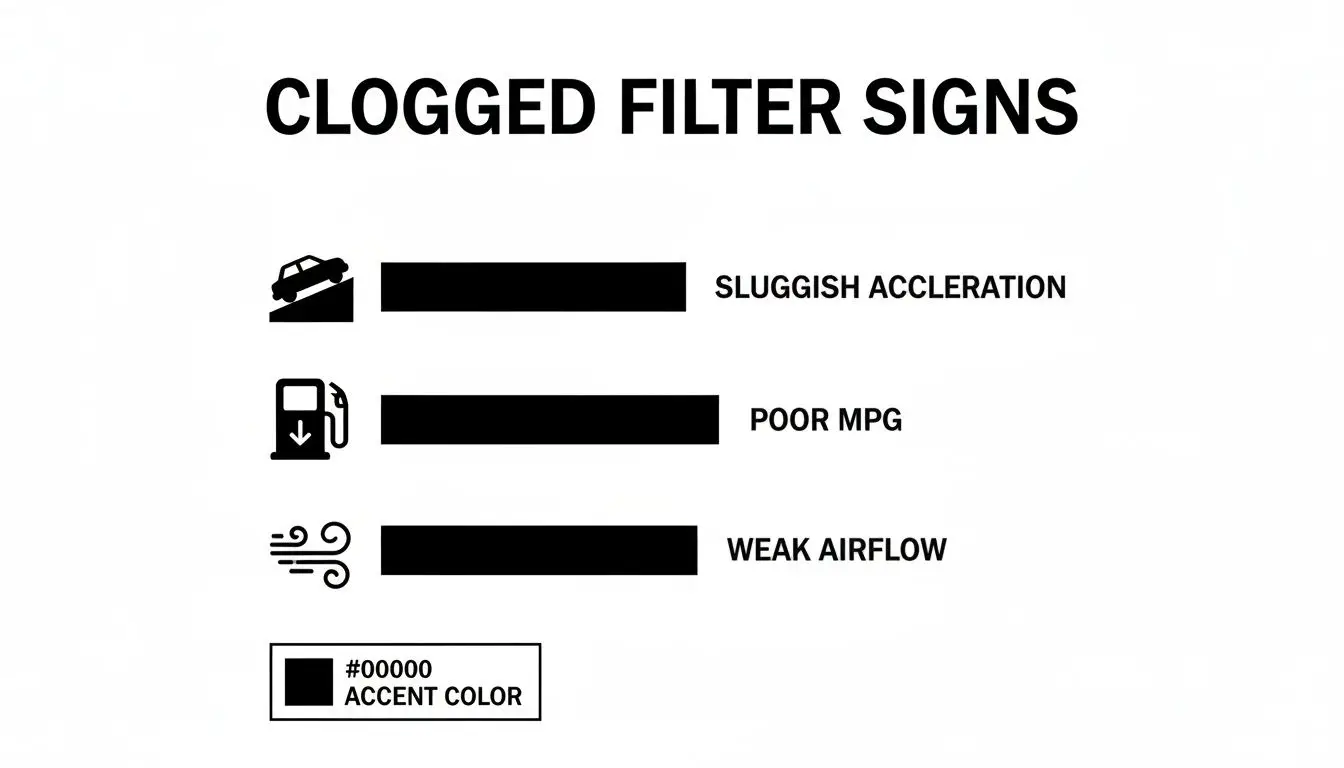
Each of these signs points to a filter that is restricting the airflow necessary for your engine or cabin HVAC system to function correctly.
How Your Local Environment Affects Filters
Your surroundings play a critical role in your filter's lifespan. Certain environments are particularly hard on filters, necessitating more frequent inspection and replacement.
- Dusty, Rural Roads: Driving on gravel or unpaved roads just outside Plano kicks up a significant amount of fine dust. Your engine filter can become clogged in as little as half the recommended interval as it works to prevent abrasive particles from entering your engine.
- Heavy City Traffic: Stop-and-go driving on congested roads like I-75 forces your engine to draw in air filled with exhaust fumes and road grime from surrounding vehicles.
- Construction Zones: North Texas is in a state of constant growth, and the resulting construction dust is a primary enemy of air filters. It contains fine concrete dust, dirt, and other particulates that can quickly saturate a filter.
To help you stay on top of maintenance, we've created a simple guide based on the driving conditions commonly observed around Plano.
Air Filter Replacement Frequency Guide
This table provides a more realistic framework for how often you should change your air filters based on your specific driving habits.
| Driving Condition | Engine Air Filter Change Interval | Cabin Air Filter Change Interval |
|---|---|---|
| Normal (Suburban/Highway) | Every 15,000–30,000 miles | Every 12,000–15,000 miles or annually |
| Severe (City Traffic/Dusty Roads) | Every 10,000–15,000 miles | Every 10,000 miles or every 6-12 months |
| Extreme (High Pollen/Construction) | Inspect every 5,000 miles; change as needed | Inspect every 5,000 miles; change every 6 months |
Remember, these are guidelines. The most accurate way to determine if a filter needs replacement is through a physical inspection during regular service appointments.
North Texas Challenges: Pollen and Particulates
Living in the Plano area presents a unique set of environmental challenges. During our intense pollen seasons, a cabin air filter can become yellow and completely obstructed with allergens. This is a primary cause of musty odors and forces your A/C to struggle just as the Texas heat arrives.
The combination of high pollen counts, urban pollution, and ongoing construction means that drivers in this region must be more proactive about filter maintenance than the average driver.
This issue is compounded by poor air quality zones, such as the areas near DFW Airport which produce an estimated 500 tons of particulates annually. Research indicates that while 82% of Americans neglect routine filter replacements, cabin filters that remain unchanged for over 6 months—a condition found in 60% of vehicles—can lead to a 300% increase in bacteria levels.
You can learn more about the study's air filter findings, but the data clearly shows that a universal approach is insufficient for maintaining your vehicle's—and your own—health.
Choosing The Right Type Of Air Filter
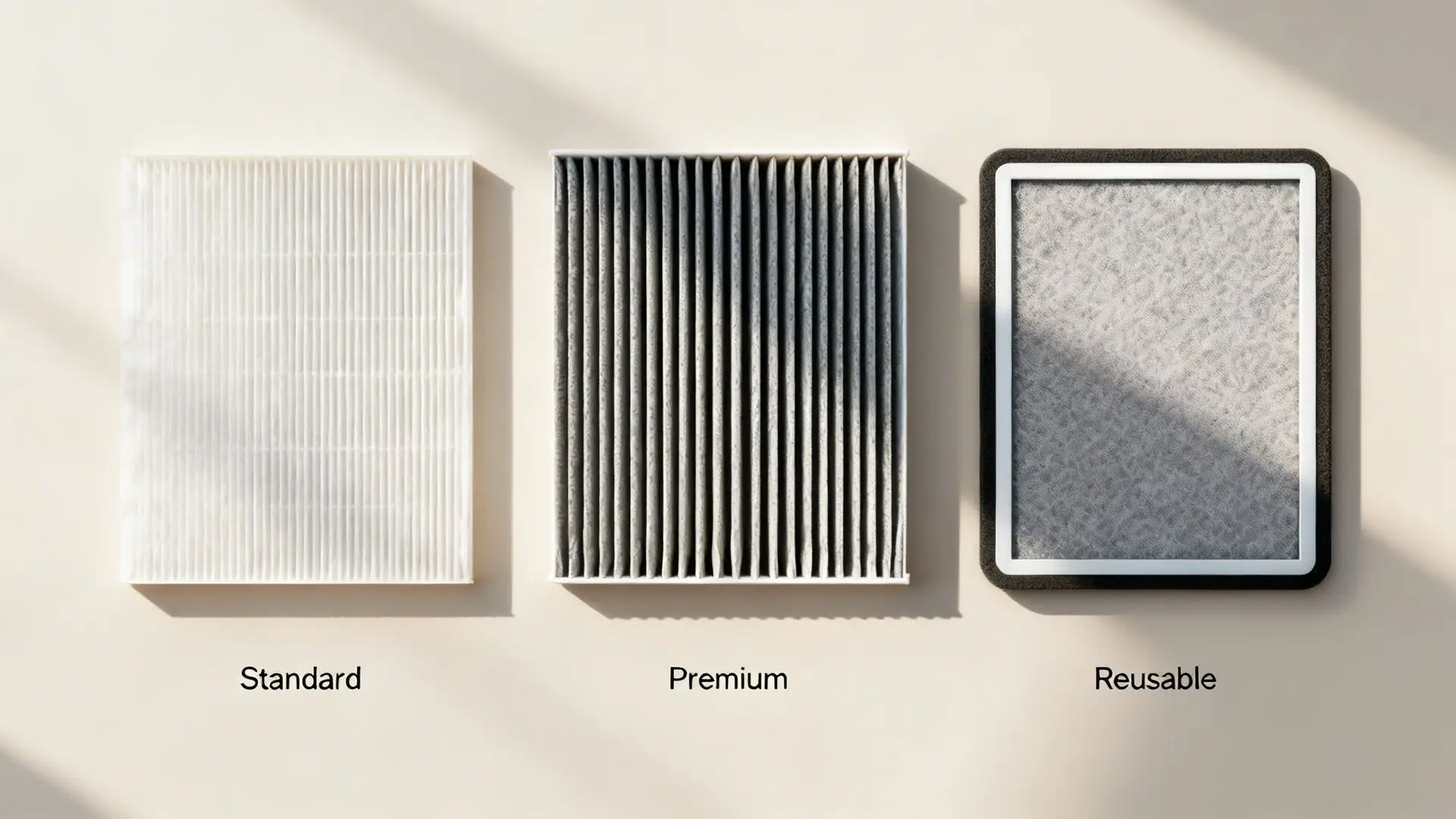
When you examine the options at an auto parts store, you will find that not all air filters are manufactured to the same standard. The type of filter you select has a tangible effect on your car’s performance, your budget, and the frequency of replacement.
The principle is straightforward: just as you would select appropriate protective gear for a specific task, you should match your air filter to your driving needs and environment.
Comparing Your Air Filter Options
Most filters available on the market can be classified into a few key categories. Understanding the differences will enable you to make an informed decision that balances cost, performance, and longevity.
- Standard Paper/Cellulose Filters: These are the most common and budget-friendly options. They are effective at capturing larger debris such as insects and road dust, making them suitable for typical daily driving.
- Premium Pleated Filters: Constructed from synthetic materials and designed with more folds (pleats), these filters offer a larger surface area to trap smaller, more harmful particles. They provide superior filtration and often have a longer service life, which is ideal if you frequently encounter dust or high levels of seasonal pollen.
- Reusable/Washable Filters: These filters are typically made from cotton gauze and can be cleaned, re-oiled, and reused for many years. Although they have a higher initial cost, they can offer long-term savings and may provide a marginal increase in airflow to the engine.
The materials and design directly influence a filter's durability and effectiveness. The performance difference can be substantial: a basic fiberglass filter might require replacement every 30 days, while a quality pleated filter can last up to 90 days and trap up to 85% more dust. For your cabin filter, this choice directly impacts the air you breathe—a clogged filter can increase in-cabin CO2 levels by 50%. You can explore more facts about filter efficiency and replacement to understand the significance of this decision.
Pro Tip: If you opt for a reusable filter, it is critical not to over-oil it after cleaning. Excess oil can be drawn into the engine and coat the mass airflow (MAF) sensor, a sensitive and expensive component to replace.
DIY vs. Professional Filter Service: What’s Right for You?
Now that you understand when to change your air filters, the final consideration is who should perform the service—you or a professional technician? For many vehicles, replacing the engine and cabin filters is a straightforward task that a confident DIYer can complete with basic tools.
However, what appears to be a simple 10-minute job can sometimes become unexpectedly complicated.
The Case for a DIY Filter Change
If you are comfortable working on your vehicle, changing your own filters can be a rewarding and cost-effective project. In most cases, the process involves opening the filter housing, removing the old filter, and inserting the new one.
With numerous video tutorials available online, this is a task that many drivers can manage. The advantages are clear: you save money on labor and gain a better understanding of your car's condition. It is a viable option if your filters are easily accessible and you are certain you have the correct replacement part.
The Clear Advantages of Professional Service
While the DIY approach is suitable for some, entrusting your vehicle to a reputable shop like Express Lube & Car Care provides something more valuable: peace of mind. It ensures the job is completed correctly and professionally.
Letting an expert handle the replacement offers several key benefits that can save you time and prevent future expenses.
- Getting the Exact Right Filter: It is surprisingly easy to purchase the wrong filter from a parts store. Our technicians ensure your vehicle is fitted with the correct, high-quality filter specified for its make and model, guaranteeing optimal performance and engine protection.
- Avoiding Costly Mistakes: A common DIY error is seating the filter incorrectly or breaking the plastic clips on the filter housing. A compromised housing allows unfiltered air to bypass the filter entirely, and the subsequent repair is far more expensive than the filter service itself.
- An Expert Eye on Everything Else: While our ASE-certified technicians are performing the service, they can identify other potential issues you might overlook, such as a worn belt or a minor fluid leak. This serves as a complimentary expert inspection.
You can bundle your air filter service with a routine oil change at Express Lube, addressing two essential maintenance items in a single, efficient visit. No appointment is needed—it's the simplest way to keep your car running smoothly.
For a more detailed look at the process, refer to our helpful article on changing your car's air filter. Our team in Plano is always ready to provide fast, reliable service, so you can drive with complete confidence.
Frequently Asked Questions About Air Filters
Even with a thorough understanding of the basics, you may still have some questions. Here are direct answers to some of the most common inquiries we receive from drivers.
What Happens If You Never Change Your Air Filter?
Neglecting to change an air filter will inevitably lead to problems. For your engine, a clogged filter restricts airflow, causing poor acceleration, decreased fuel economy, and significant strain that can damage critical engine components over time.
As for the cabin filter, you will be breathing in the dust, pollen, and pollutants that the filter is meant to trap. A clogged cabin filter also puts a heavy load on your A/C's fan motor, which can lead to premature failure and a more expensive repair.
How Much Does It Cost to Replace an Air Filter?
Fortunately, this is one of the most affordable maintenance services for your vehicle. A new engine or cabin air filter part typically costs between $15 and $50. Many drivers find it convenient to have this service performed during their regular oil change to consolidate appointments.
At Express Lube & Car Care, we view this as a high-value, low-cost preventative service. A small investment in clean filters provides significant long-term benefits for your engine and your health.
Do Electric and Hybrid Cars Have Air Filters?
Yes, they do. Every electric vehicle (EV) and hybrid vehicle is equipped with a cabin air filter to maintain clean air inside the passenger compartment.
Hybrid vehicles, which have both an electric motor and a gasoline engine, also have an engine air filter just like a conventional car. Some EVs even feature an additional filter for their battery cooling systems that requires periodic inspection.
Does Where You Live Matter?
Absolutely. Local driving conditions have a major impact. Residing in an area with high levels of dust and pollen—as we do in North Texas—means your filters are subjected to a heavier workload and will clog faster.
This principle is universal; for instance, articles about how often to change your AC air filter in Arizona highlight the constant battle against desert dust. The same logic applies directly to the environmental conditions here in Plano.
When you are ready for a fast, expert filter replacement, the ASE-certified team at Express Lube & Car Care is here to assist you. Drive in anytime—no appointment necessary—and we will ensure the job is done correctly. Visit us at https://www.expresslubeplano.com to learn more.