

No appointment auto service is defined as walk-in or same-day vehicle maintenance and repair without prior scheduling, giving drivers immediate access to certified technicians on their own timeline. For busy car owners, this model removes the friction of booking windows, waiting days for an open slot, or rearranging a workday around a service appointment. Retailers like AutoZone offer free walk-in diagnostics including OBD2 check engine scans, battery tests, and alternator checks with no purchase required. This no appointment auto service guide covers which services accept walk-ins, how shops prioritize customers, how to prepare for a visit, and when scheduling is still the smarter choice.
What services can you get without an appointment?
Walk-in auto service works well for a defined category of maintenance tasks. These are jobs that take under an hour, require no special parts ordered in advance, and do not depend on a specific technician’s expertise.
Common services available without an appointment include:
- Oil changes (conventional, synthetic blend, or full synthetic)
- Battery testing and replacement
- Tire pressure checks and air fill
- Wiper blade replacement
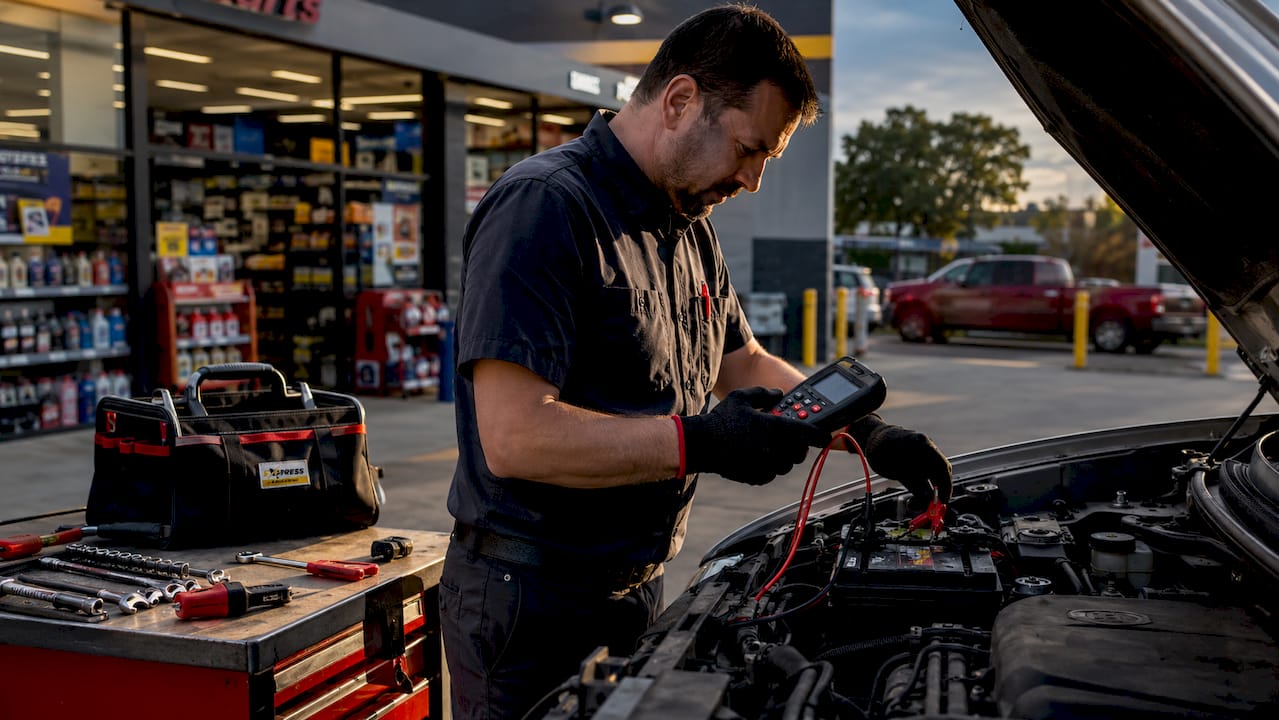
- Check engine light scans using OBD2 readers
- Fluid top-offs (coolant, washer fluid, power steering)
- Brake pad inspections (visual check, not full replacement)
- Air filter replacement
AutoZone and O’Reilly both provide free battery and alternator testing with no appointment, and these services typically take 5 to 15 minutes. That speed matters because it means you can get a reliable diagnosis before committing to any repair cost.
Complex repairs are a different story. Transmission rebuilds, timing belt replacements, suspension overhauls, and multi-system diagnostics require dedicated bay time, specialty tools, and often parts ordered in advance. Dealership service departments almost always require appointments for these jobs, and independent shops benefit from advance notice to prepare. The rule is straightforward: if the job takes more than 60 minutes or requires a specific part, call ahead or schedule.
How do walk-in auto repair shops prioritize customers?
Shop workflow follows a practical logic that favors waiting customers for quick jobs. Mechanics prioritize walk-in customers waiting on-site for minor repairs because completing a 20-minute oil change while a customer waits keeps the bay moving and the customer satisfied. That priority disappears the moment the job becomes complex.
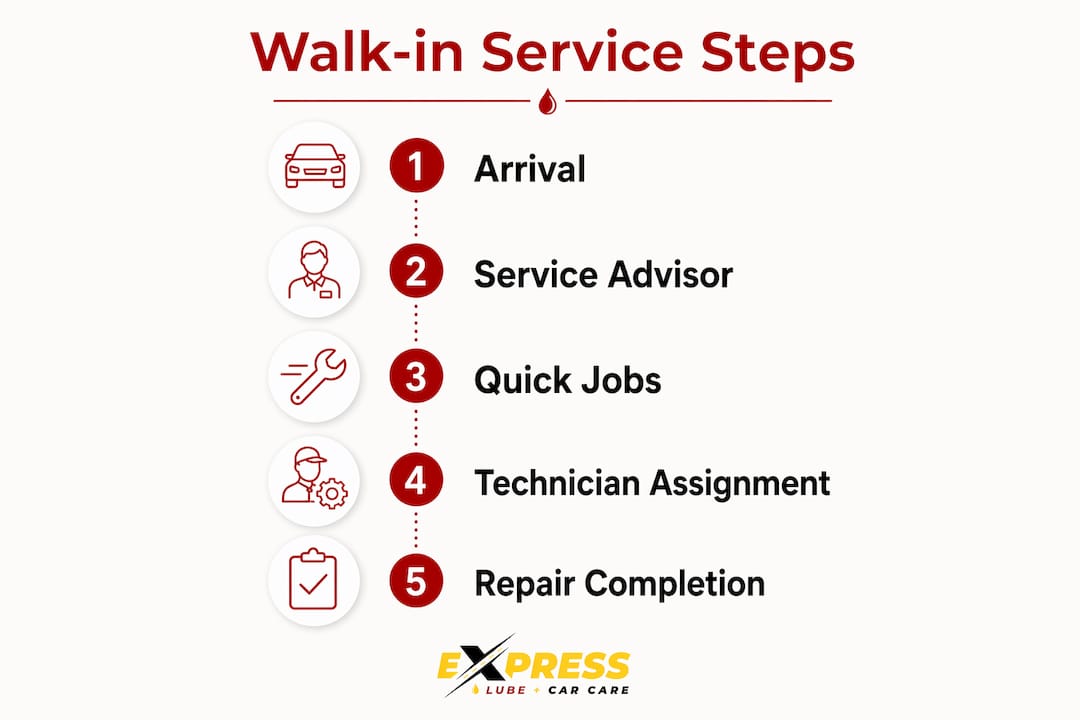
For multi-hour repairs, your physical presence at the shop does not speed up the work. Technicians report no incentive to rush a complex job because a customer is sitting in the waiting room. The repair takes as long as it takes, and rushing creates liability. Leaving your vehicle and returning later is the smarter move for anything beyond basic maintenance.
Realistic wait time ranges for common walk-in services:
- Oil change: 20 to 45 minutes
- Battery replacement: 15 to 30 minutes
- Tire rotation: 30 to 45 minutes
- Check engine scan at a parts store: 5 to 10 minutes
- Brake inspection (visual): 15 to 20 minutes
Shop capacity is the hidden variable most drivers overlook. A shop with four hoists and two technicians on duty can only run four jobs at once. If all four bays are occupied when you arrive, your wait begins when a bay opens, not when you walk in.
Pro Tip: Tell the service advisor exactly what you need and ask directly whether the shop can take you now. Advisors who know you are flexible and waiting for a quick job will fit you in faster than a driver who is vague about the service needed.
How to prepare for a no-appointment auto service visit
Preparation cuts your total time at the shop by 20 to 30 minutes on a typical visit. Most of that time is saved at the front counter, not in the bay.
Follow these steps before you drive in:
- Call ahead to confirm availability. Online hours and Google Maps listings are frequently outdated. A phone call takes 90 seconds and confirms the shop is open, not fully booked, and equipped for your service. Phone confirmation prevents wasted trips to closed or overbooked locations.
- Know your vehicle details. Have your make, model, year, mileage, and engine size ready. A 2021 Ford F-150 with a 3.5L EcoBoost takes a different oil specification than a 2021 Honda Civic. Knowing this prevents delays at the counter.
- Bring your owner’s manual or photograph the relevant pages. Fluid types, service intervals, and tire pressure specs are printed there. Quick-lube shops sometimes recommend service intervals shorter than what your manufacturer specifies.
- Describe your symptoms precisely. “It makes a grinding noise when I brake above 40 mph” gives a technician far more to work with than “something sounds weird.” Precise descriptions reduce diagnostic time.
- Run a free scan first if your check engine light is on. AutoZone’s free engine light scan uses advanced OBD2 scanners like the Innova 3160 and delivers printed error codes with explanations in 30 to 60 seconds. Walking into a repair shop already knowing your fault codes puts you in a stronger position.
Pro Tip: Visit on a Tuesday or Wednesday between 8 and 10 AM or between 1 and 3 PM. These are statistically the least busy windows for walk-in auto service, and shorter lines mean faster bay access.
What are the risks of relying solely on walk-in auto service?
Walk-in convenience carries real tradeoffs that experienced drivers learn to manage. Consumer Reports identifies quick-lube chains as the most likely source of unnecessary upsells, including oil changes and tire rotations recommended more frequently than manufacturer guidelines require. The fix is simple: check your owner’s manual before any service visit and decline anything not listed in your maintenance schedule.
The risks worth understanding before you rely on walk-in service exclusively:
- Upselling pressure. Chain shops generate revenue through add-on services. Knowing your vehicle’s actual service intervals protects your wallet.
- Limited diagnostic depth. A walk-in shop running six oil changes an hour does not have the time or incentive to perform a thorough multi-system diagnostic. Complex problems need dedicated attention.
- No service history continuity. A trusted independent shop that knows your vehicle’s history can spot patterns across visits. Walk-in chains rarely maintain detailed records accessible across locations.
- Warranty implications. Some manufacturer warranties require service at certified dealerships or shops using OEM-specified parts. Walk-in chains may not meet those requirements.
- Variable technician experience. Certification levels vary widely across walk-in chains. For complex repairs, independent shops consistently outperform chains on honesty, communication, and value.
The practical balance is to use walk-in service for routine maintenance and quick diagnostics, then rely on a trusted mechanic for anything that requires deeper investigation or carries warranty implications.
Comparing your no-appointment auto service options
Not all walk-in options are equal. The right choice depends on your vehicle type, the service needed, and how much time you have.
| Service type | Best for | Typical wait | Cost range | Limitations |
|---|---|---|---|---|
| Auto parts stores (AutoZone, O’Reilly) | Free diagnostics, battery tests | 5 to 15 min | Free | No mechanical repairs performed |
| Quick-lube chains | Oil changes, filters, fluid top-offs | 20 to 45 min | $40 to $120 | Upsell risk, limited diagnostics |
| Independent repair shops | Broader repairs, honest assessments | 30 to 90 min | Varies | May prefer appointments for complex jobs |
| Dealership service departments | Warranty work, EV service, OEM parts | 60 to 180 min | Highest | Appointments almost always required |
Independent shops score higher than chains for complex repairs and customer communication, while chains hold the advantage for speed and convenience on basic services. That distinction should guide your choice every time. For electric vehicles and luxury models, dealerships or certified independent shops are the only walk-in options worth considering, since these vehicles require brand-specific diagnostic software and trained technicians.
Understanding how shops prioritize walk-in versus scheduled customers also helps you set realistic expectations before you arrive. And if you are weighing a local independent shop against a national chain, the case for choosing a local shop comes down to accountability, service history, and community trust.
Pro Tip: If your check engine light is on, stop at AutoZone or O’Reilly for a free OBD2 scan before visiting any repair shop. Walking in with a printed fault code report gives you negotiating clarity and prevents unnecessary diagnostic charges.
Key takeaways
Walk-in auto service is most effective when you match the right service type to the right provider, prepare before you arrive, and time your visit to avoid peak hours.
| Point | Details |
|---|---|
| Match service to provider | Use parts stores for free diagnostics, quick-lube chains for oil changes, and independents for complex repairs. |
| Prepare before you arrive | Know your vehicle specs, symptoms, and service history to cut counter time and avoid upsells. |
| Time your visit strategically | Tuesday and Wednesday mornings between 8 and 10 AM deliver the shortest walk-in wait times. |
| Waiting helps only for quick jobs | On-site presence speeds up minor repairs but provides no advantage for multi-hour work. |
| Balance convenience with continuity | Use walk-in service for routine tasks and maintain a relationship with a trusted shop for complex care. |
What we have learned from years of walk-in service
At Express Lube & Car Care, we have seen the full range of walk-in experiences, and the pattern is consistent. Drivers who arrive prepared get in and out faster, pay less, and leave more confident in the work done. Drivers who arrive without knowing their mileage, oil type, or what the warning light actually means spend more time at the counter than in the bay.
The conventional wisdom that walk-in service is always inferior to scheduled service is wrong. For oil changes, battery replacements, brake inspections, and quick diagnostics, a well-run walk-in shop delivers results that match or exceed what a scheduled appointment provides, often in half the time. The key word is “well-run.” Not every shop that accepts walk-ins operates with the same standards.
What we recommend: use walk-in service as your first line of response for anything routine or urgent and minor. Build a relationship with a certified shop for the work that requires continuity, like tracking brake wear over multiple visits or managing a recurring electrical issue. That combination gives you speed when you need it and depth when the situation demands it. Expecting one type of shop to do both jobs equally well sets you up for disappointment.
— Express Lube & Car Care
Fast, reliable service at Express Lube & Car Care in Plano
Express Lube & Car Care in Plano is built around the no-appointment model, so you never have to plan your week around a service slot. Certified technicians handle oil changes, brake inspections, engine diagnostics, and more, with the same attention to detail whether you walk in at 8 AM or 3 PM.
Current oil change and service specials are available online, and walk-in pricing is transparent before any work begins. Military and healthcare providers receive dedicated discounts as part of Express Lube’s community commitment. If your check engine light is on, the engine diagnostics service in Plano gives you fast, accurate answers without scheduling. Stop in when it works for you.
FAQ
What is no appointment auto service?
No appointment auto service is walk-in or same-day vehicle maintenance performed without prior scheduling. It covers routine tasks like oil changes, battery tests, and check engine scans at shops or auto parts retailers.
Which auto parts stores offer free walk-in diagnostics?
AutoZone and O’Reilly both offer free OBD2 check engine light scans, battery charging, and alternator testing with no appointment and no purchase required. Results are typically delivered in 5 to 15 minutes.
Does waiting at the shop make my car get fixed faster?
Waiting at the shop speeds up minor repairs because technicians prioritize on-site customers for quick jobs. For multi-hour repairs, waiting provides no speed advantage and leaving your vehicle is the better option.
When should I schedule an appointment instead of walking in?
Schedule an appointment for complex diagnostics, transmission work, suspension repairs, warranty service, or any job requiring parts ordered in advance. Consumer Reports recommends trusted independent shops for these situations over walk-in chains.
What is the best time to walk in for auto service?
The least busy windows for walk-in auto service are Tuesday and Wednesday mornings between 8 and 10 AM and mid-afternoons between 1 and 3 PM. Avoiding Monday mornings and Friday afternoons cuts your wait time significantly.