

If you see dark oily puddles, a steady drop on the dipstick, or blue exhaust smoke you very likely have an oil leak. Check your oil level now and avoid long drives if it reads low. Causes range from a loose drain plug to a failing internal seal, and the sections below explain how to confirm what you’re seeing and what to do next.
TL;DR:
- Oil leaks often originate from valve cover gaskets, oil pan gaskets, or drain plugs, which usually leak slowly and can be confirmed by inspection and photographing the leak site.
- A rapid drop in oil level or thick exhaust smoke indicates internal engine issues like worn piston rings or valve seals, requiring more extensive repairs.
- Small, stable leaks may be safe for short drives, but active leaks with falling oil levels should only be topped off temporarily and require professional attention promptly.
- Checking for leaks involves placing cardboard underneath the vehicle overnight, inspecting the dipstick, and visually examining engine components with a flashlight, but severe or unsafe leaks need shop diagnosis.
- Professional testing includes dye or UV tracing and pressure assessments, with repairs ranging from gasket replacements to internal engine work, often completed faster when documented with photos and records.
Table of Contents
- Common symptoms of an oil leak
- How to check and confirm an oil leak at home
- Most common causes and what each usually looks like
- Is it safe to drive? Assessing risk and immediate actions
- What a professional diagnosis looks like and typical next steps
- Publisher perspective: practical maintenance priorities
- How Express Lube & Car Care can help
- Sources
- FAQ
Common symptoms of an oil leak
An oil leak rarely announces itself with just one clue. Most owners notice a combination of visual, olfactory, and dashboard signals before they connect the dots.
- Puddles or oily spots under the car: fresh oil looks amber and glossy; older oil darkens to brown or black and feels slick when you touch it.
- Visible oil on engine parts: greasy streaks along the block, oil pan, or undercarriage usually trace back to the leak’s origin.
- Dropping dipstick level or a dashboard warning: a low-oil light or falling pressure gauge means the system has already lost meaningful volume.
- Burning oil smell or blue exhaust smoke: this points to oil reaching hot engine surfaces or burning inside the combustion chamber.
Distinguishing oil from other fluids matters before you diagnose anything. Coolant runs thin and often green, orange, or pink; transmission fluid is typically red and slightly less viscous than engine oil; power steering and brake fluid tend to be lighter and less sticky. Oil stands apart because it is slick, dark, and hard to wipe off completely.
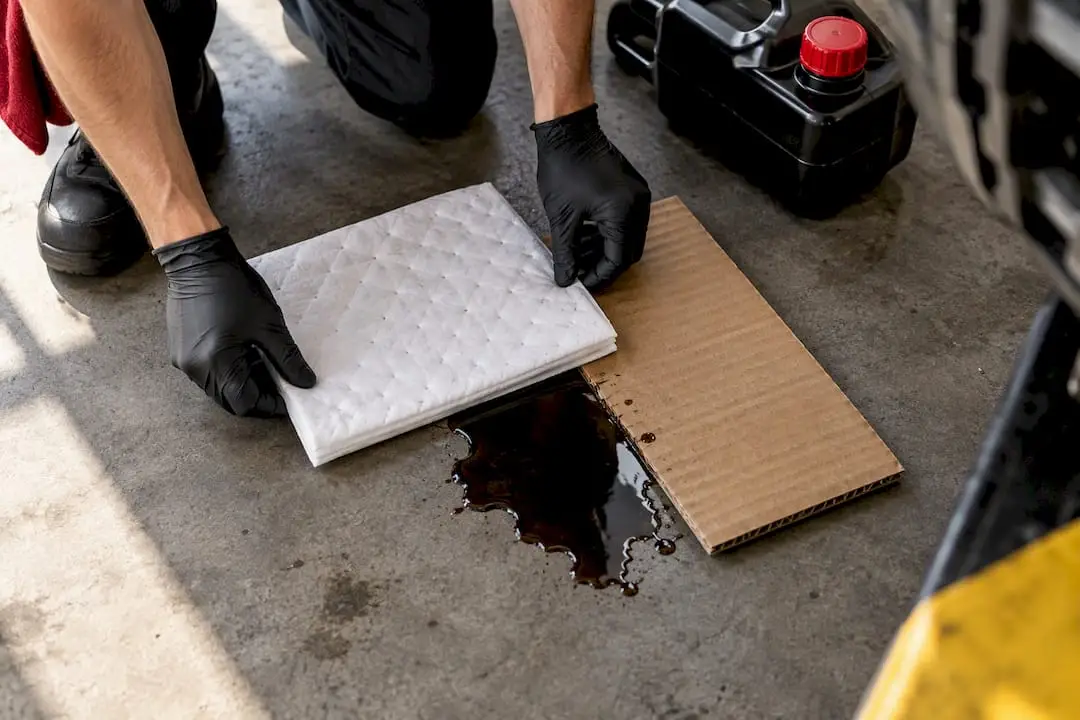
Used motor oil is toxic and persistent in the environment, according to the EPA’s guidance on managing used oil, which is why any spill, however small, should be contained on cardboard or absorbent material and taken to a recycling facility rather than left on pavement or washed into a storm drain.
How to check and confirm an oil leak at home
Before you inspect anything, let the engine cool, park on level ground, and chock the wheels if you plan to look underneath.
- Lay cardboard or clean paper under the car overnight to catch fresh drops and see roughly where they land, since the puddle’s position often lines up with the leak above it.
- Pull the dipstick and check both level and appearance, noting whether oil looks normal or unusually thin, milky, or gritty.
- Inspect the engine bay with a flashlight, looking along the valve cover, oil pan, filter housing, and drain plug for wet residue or crusted buildup, and only run the engine briefly with the hood open if you can safely stay clear of moving belts and hot surfaces.
If the leak is fast, the smell is strong, or you cannot locate the source safely, stop the DIY check and let a shop take over.
Pro Tip: Photograph the puddle, the dipstick reading, and any leak points you spot, and note when the symptoms started. That record helps a technician confirm the leak faster.
Most common causes and what each usually looks like
Symptoms usually trace back to a handful of failure points, and knowing which one you’re dealing with helps set expectations for repair complexity.
- Valve cover gasket, oil pan gasket, or drain plug: these external seals are the most frequent source of drips, often showing as a slow weep rather than a steady stream.
- Oil filter housing: a loose or cracked housing can leak after a recent oil change or from road debris impact.
- Crankshaft seals (front or rear): these tend to leave oil deeper in the engine bay or near the transmission, and they usually mean more labor to reach.
- Worn piston rings or valve stem seals: these internal issues cause burning oil and blue smoke rather than visible puddles.
- A clogged PCV system: blocked crankcase ventilation raises internal pressure and forces oil past gaskets that would otherwise hold, which is why a faulty PCV valve is often the real culprit behind a leak that looks like a gasket failure.
Rubber and cork gaskets degrade with heat and age, and gasket and seal failures commonly begin after about six to seven years of service. Repair severity generally falls into three tiers: minor gasket or drain plug fixes, moderate work like resealing an oil pan or replacing a front seal, and major internal repairs tied to worn rings or valve seals, which take longer and cost more.
Is it safe to drive? Assessing risk and immediate actions
A small weep with a stable dipstick reading is very different from a puddle paired with a level that keeps dropping.
- Minor, stable leaks usually allow careful short-distance driving while you arrange service, as long as you check the dipstick before each trip.
- Active leaks with falling oil levels call for topping off only as a temporary bridge to a shop visit, not a long-term fix.
- Puddles forming quickly or smoke from under the hood mean you should stop driving and call for a tow rather than risk the engine or a fire if oil contacts a hot exhaust component.
AAA advises monitoring oil consumption as closely as driveway stains, since steady, repeated loss is a stronger warning sign than a single spot on the pavement.
What a professional diagnosis looks like and typical next steps
A shop visit for an oil leak follows a more structured process than a driveway check, and knowing the steps helps you understand the quote you’ll receive.
- Visual inspection and shield removal: technicians pull off splash guards and skid plates to see the pan, seals, and housing directly.
- Dye or UV tracing and pressure testing: ASE’s diagnostic standards call for location tracking and pressure testing to confirm the exact source rather than guessing from a stain alone.
- Targeted repair: depending on findings, this might mean replacing a gasket, resealing the pan, swapping the drain plug, clearing the PCV system, or, for internal wear, a deeper diagnostic on rings or seals.
Bring your photos, oil-change history, and any notes on when the smell or smoke started. A shop that documents its findings with digital inspection photos gives you a clearer before-and-after picture of the problem. Minor fixes like a gasket or drain plug often wrap up the same day, while internal engine work requires more shop time.
Publisher perspective: practical maintenance priorities
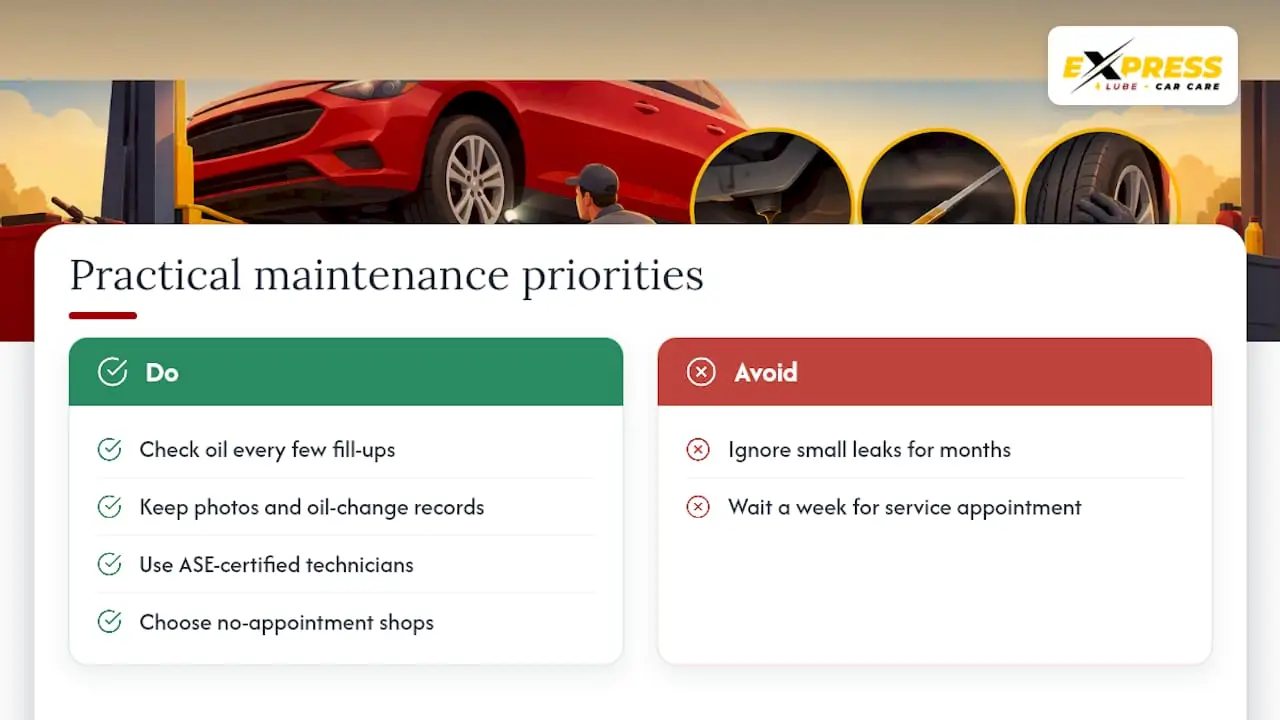
Express Lube & Car Care sees the same pattern again and again: small leaks caught early cost far less than the same leak ignored for months. Checking your oil level every few fill-ups takes under a minute and catches trouble long before smoke or a warning light does.
ASE-certified technicians matter here because a correctly diagnosed leak avoids unnecessary parts replacement, and a no-appointment shop means you don’t have to wait a week while a slow drip turns into a real problem. Keep your photos and oil-change records. They speed up an accurate diagnosis every time.
— Express Lube & Car Care
How Express Lube & Car Care can help
Catching an oil leak early is easier when you don’t have to schedule a week ahead just to get someone to look at it. Many service centers offer no-appointment-needed service, so you can bring your car in the same day you notice a spot in the driveway or a burning smell on the highway.
Certified technicians typically handle leak diagnosis and the repairs that typically follow it, including:
- Oil changes and fluid checks to establish a clean baseline before chasing a leak.
- Gasket and seal replacement for valve cover, oil pan, and drain plug issues.
- Engine diagnostics for cases where smoke or consumption points to something deeper than a surface leak.
Every visit includes a digital inspection with photos and technician notes, so you see exactly what we found and why we recommend a given repair. Schedule an appointment or browse our full service list to see what fits your situation. For readers who want a deeper local walkthrough, our guide to diagnosing and repairing engine oil leaks covers the process step by step.
Sources
- ASE G1 prep: gaskets and leak diagnostics — Tomorrow’s Technician
- Guide to automotive leaks — AAA
- Managing, reusing, and recycling used oil — EPA
- ASE Automobile Study Guide — ASE
FAQ
Can I still drive my car with an oil leak?
A small, stable weep may allow short careful drives while you arrange service, but a puddle paired with a dropping dipstick means you should limit driving or call for a tow. AAA recommends monitoring consumption closely rather than relying only on driveway appearance.
What are the most common causes of oil leaks?
The most frequent causes are worn valve cover or oil pan gaskets, a loose drain plug, a cracked filter housing, or a failing crankshaft seal. A clogged PCV valve can also raise crankcase pressure and force oil past seals that would otherwise hold.
Is it expensive to fix a car oil leak?
Cost depends heavily on severity: a gasket or drain plug repair is typically far less involved than internal engine work tied to worn piston rings. Express Lube & Car Care does not publish fixed leak-repair pricing since the scope varies by vehicle and cause, but a technician can quote your specific repair after diagnosis.
What can be mistaken for an oil leak?
Coolant, transmission fluid, power steering fluid, and brake fluid can all pool under a car and look similar to oil at first glance. Oil is generally darker and slicker to the touch, while coolant is thinner and often green, orange, or pink, and transmission fluid tends to run red.