
Plano auto repair service is defined as the full workflow a vehicle undergoes from the moment it arrives at a shop through diagnosis, authorized repair, and final documented billing. Understanding this process protects you from unexpected charges, helps you compare providers with confidence, and gives you the knowledge to ask the right questions before work begins. This guide covers every stage of that workflow, from the repair order to the final invoice, and explains how to choose between dealerships, independent shops, and quick lube centers in Plano. Whether you need a routine oil change or a complex engine repair, knowing what to expect makes every service visit less stressful and more productive.
What are the main steps in a Plano auto repair service visit?
Every professional auto repair visit follows a defined sequence. Knowing each step helps you stay in control of the process rather than simply handing over your keys and hoping for the best.
-
Vehicle intake and symptom description. The service advisor records your vehicle’s make, model, mileage, and the symptoms you describe. Be specific. “A grinding noise when braking at highway speed” gives a technician far more to work with than “something sounds wrong.” Shops that ask symptom-focused questions upfront deliver better diagnostics and fewer billing surprises.
-
Repair order creation. The shop generates a repair order, also called a work order, that lists every complaint, the authorized work, and the estimated cost. This document is the pre-work plan. The repair order is distinct from the final invoice. Any changes to scope require your approval before work proceeds.
-
Diagnostic procedures. A technician inspects the vehicle, runs electronic diagnostics, and identifies root causes. Complex issues may require a separate diagnostic labor charge, which should appear as its own line item on your invoice. Diagnostic labor billed separately prevents confusion about what you are actually paying for.
-
Authorization for additional work. If the technician discovers problems beyond the original repair order, the shop must contact you before proceeding. In Texas, repairs exceeding $100 over the original estimate require written customer approval. This is a legal protection, not a courtesy.
-
Repair completion and final invoice. Once work is finished, the shop prepares a final invoice itemizing all parts with part numbers and descriptions, labor hours, and total cost. You review and approve this document before payment.
-
Customer pickup and warranty information. A reputable shop explains any warranty on parts and labor at pickup. Keep your final invoice. It serves as proof of service history and is your primary document if a dispute arises later.
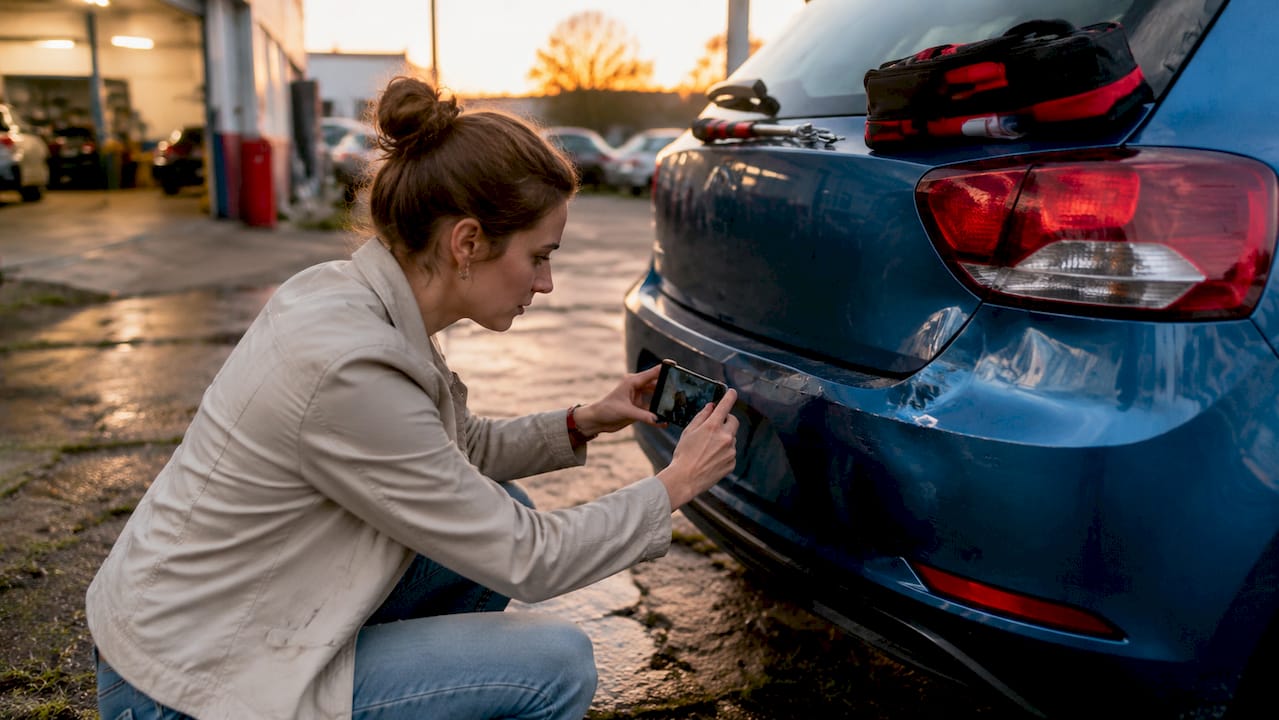
Pro Tip: Before dropping off your vehicle, take photos of existing damage and note your current mileage. This simple step protects you if questions arise about pre-existing conditions or unauthorized test drives.
How do local Plano auto repair providers compare?
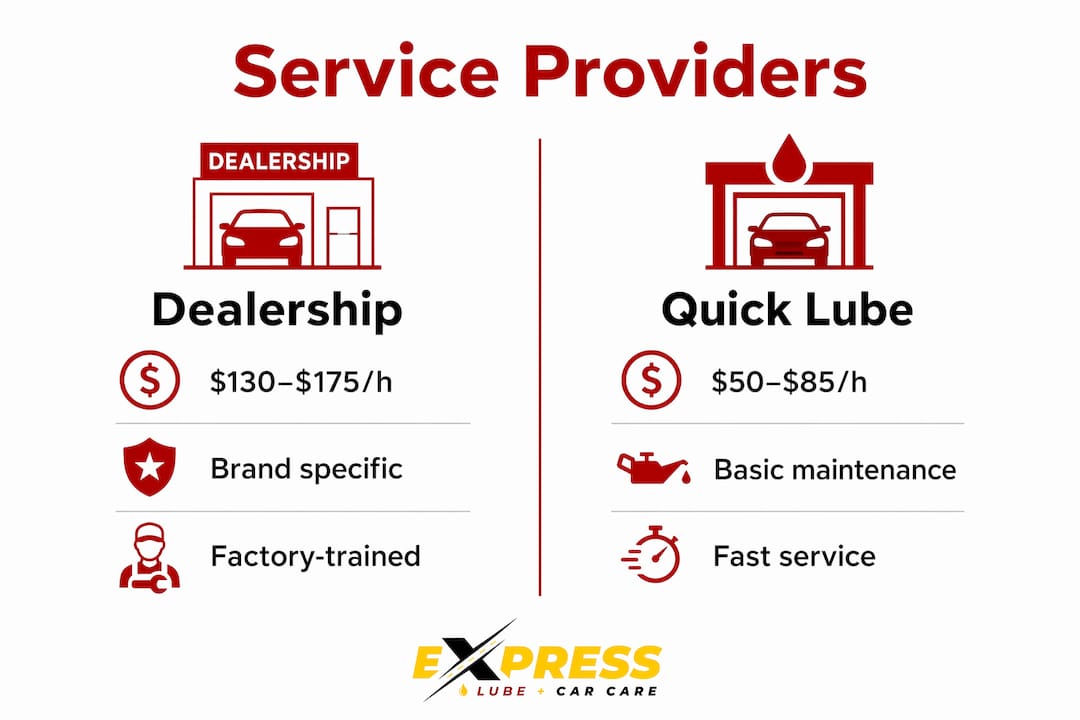
Plano drivers have four main categories of service provider to choose from. Each serves a different need, and the right choice depends on your vehicle, your budget, and the complexity of the repair.
| Provider type | Labor rate range | Best for | Key consideration |
|---|---|---|---|
| Dealership | $130–$175/hr | Warranty work, brand-specific repairs | Higher rates; may recommend extra services |
| Independent shop | $90–$130/hr | General repairs, cost-conscious drivers | Personalized service; quality varies by shop |
| Quick lube center | Flat-rate pricing | Oil changes, routine maintenance | Fast turnaround; limited repair scope |
| Specialty shop | Varies | Transmission, suspension, collision | Deep expertise in one area |
Dealerships carry brand-specific diagnostic tools and factory-trained technicians, which matters for complex powertrain issues or vehicles still under manufacturer warranty. The tradeoff is cost. Dealer labor rates run $130 to $175 per hour compared to $90 to $130 at independent shops. That gap adds up quickly on multi-hour jobs.
Independent shops in Plano offer a more personal relationship. A good independent mechanic remembers your vehicle’s history, which leads to faster diagnosis over time. The challenge is finding one you can trust before you need emergency repairs. Building that relationship early reduces stress and improves service value when something serious goes wrong.
When evaluating any shop, look for these markers of reliability:
- ASE (Automotive Service Excellence) certification displayed prominently
- RepairPal certification, which signals fair pricing and quality standards
- A pattern of positive reviews across Google and Yelp, not just a handful of five-star ratings
- Written estimates provided before any work begins
- Clear communication about parts sourcing, including whether OEM or aftermarket components will be used
Pro Tip: Check review patterns over 12 to 24 months rather than focusing on the most recent five-star rating. Consistent review patterns reveal long-term honesty and quality far better than a single glowing testimonial.
You can also read the quick lube vs. dealership breakdown from Express Lube & Car Care for a deeper look at how these provider types differ in practice.
What common services and costs should Plano car owners expect?
Auto repair services fall into two broad categories: routine maintenance and corrective repairs. Understanding both helps you budget accurately and recognize when a shop is recommending work you genuinely need.
Routine maintenance keeps your vehicle running within manufacturer specifications and prevents larger failures. Common services include:
- Oil and filter change: Typically $45 to $120 depending on oil type (conventional, synthetic blend, or full synthetic). Your invoice should specify the oil brand, viscosity grade, and the mileage at which your next service is due. Routine maintenance invoices that include product details and next-service intervals increase transparency and help you track your vehicle’s history accurately.
- Tire rotation: Usually $20 to $50. Often bundled with oil changes.
- Brake fluid replacement: Typically $80 to $130. Brake fluid absorbs moisture over time and degrades braking performance.
- Air filter replacement: $20 to $60 for cabin and engine filters combined.
Corrective repairs address failures or wear beyond normal maintenance cycles. These carry wider cost ranges because labor time and parts quality both vary significantly.
| Service | Typical cost range | Parts note |
|---|---|---|
| Brake pad replacement (axle) | $150–$300 | OEM pads recommended for safety-critical systems |
| Rotor resurfacing or replacement | $200–$400 per axle | Replacement preferred over resurfacing on high-mileage vehicles |
| Suspension component repair | $300–$900+ | Aftermarket acceptable for non-critical components |
| Engine diagnostic and minor repair | $100–$500 | Diagnostic fee often $75–$150, applied to repair cost |
| Transmission service | $150–$300 for fluid flush | Full rebuild ranges $1,500–$3,500 |
The OEM versus aftermarket parts decision deserves attention. OEM parts are best for safety-critical systems like brakes and steering components, as well as powertrain parts still under warranty. Aftermarket parts are often acceptable for less critical components like wiper blades, belts, or cabin filters, and they can reduce costs meaningfully. Always ask your technician which type of part they plan to use and why.
For a full picture of what your vehicle needs at each mileage milestone, the routine car maintenance checklist from Express Lube & Car Care covers 10 services worth scheduling proactively.
Why do repair orders and invoices matter for consumer protection?
The repair order and the final invoice are the two most important documents in any auto repair transaction. Treating them as optional paperwork is a mistake that costs Plano drivers money every year.
The repair order is created when your vehicle arrives. It records the symptoms you reported, the work the shop is authorized to perform, and the estimated cost. Think of it as a contract. Nothing beyond what is listed on that document should be done without your explicit approval. The distinction between repair order and invoice is critical. The repair order is the plan; the invoice is the result.
The final invoice documents what was actually done. A well-prepared invoice lists every part with its part number and description, the quantity used, the unit price, and the labor hours charged for each task. Vague line items like “miscellaneous parts” or “shop supplies” without itemization are red flags. You have the right to ask for a full breakdown before signing.
Texas law adds a specific layer of protection here. Written authorization is required before a shop can perform repairs that exceed the original estimate by more than $100. If a shop proceeds without that authorization, you have grounds for a dispute under the Texas Deceptive Trade Practices Act. Keep every document the shop gives you.
Shops that send invoices digitally before pickup give you time to review charges and ask questions without the pressure of standing at a counter. Digital invoice review before payment reduces disputes and improves customer satisfaction on both sides of the transaction.
A few practical steps to protect yourself:
- Read the repair order before signing it, not after
- Confirm the labor rate in writing before work begins
- Request that any additional findings be communicated by phone, not discovered at pickup
- Compare the repair order to the final invoice line by line before paying
For a broader look at the types of documents involved in auto service, the car service documents guide from CarJourney provides a useful reference.
Key takeaways
Plano auto repair service requires understanding the repair order, final invoice, provider types, and Texas authorization rules to protect your vehicle and your wallet.
| Point | Details |
|---|---|
| Repair order vs. invoice | The repair order authorizes work upfront; the invoice documents what was actually completed and billed. |
| Texas authorization rule | Repairs exceeding the estimate by $100 require written customer approval before the shop can proceed. |
| Provider cost differences | Dealership labor runs $130–$175/hr; independent shops charge $90–$130/hr for comparable work. |
| OEM vs. aftermarket parts | Use OEM for safety-critical systems; aftermarket is acceptable for lower-risk components to reduce cost. |
| Review patterns matter | Evaluate shops based on consistent review patterns over 12 to 24 months, not individual ratings. |
What we have learned from years of Plano auto repair
The single biggest mistake drivers make is treating the repair shop visit as a passive experience. They drop off the car, wait for a call, and pay whatever number appears on the invoice. That approach works fine when everything goes smoothly. It becomes expensive when it does not.
At Express Lube & Car Care, we have seen the full range of outcomes. Customers who arrive with a clear description of symptoms, ask for a written estimate before authorizing work, and compare the repair order to the final invoice almost never end up in disputes. Customers who skip those steps sometimes do. The paperwork is not bureaucracy. It is the mechanism that keeps both parties honest.
We are also skeptical of the idea that the most expensive provider is automatically the most trustworthy. Dealership labor rates are higher for legitimate reasons, including specialized tooling and factory training. But for routine maintenance and many common repairs, a well-reviewed independent shop or a certified quick lube center delivers equivalent quality at a lower price. The key word is “certified.” ASE certification and RepairPal certification are not marketing badges. They represent documented standards that technicians must meet and maintain.
One more thing worth saying plainly: build a relationship with a local shop before your car breaks down on the highway. Knowing your service provider, understanding their communication style, and having your vehicle’s history on file at one location makes emergency repairs faster and less stressful. That relationship is worth more than any single discount.
— Express Lube & Car Care
Trusted Plano auto repair from certified technicians
Express Lube & Car Care serves Plano drivers with ASE-certified and RepairPal-certified technicians who handle oil changes, brake repairs, engine diagnostics, and more. No appointment is needed, which means you can get reliable service on your schedule rather than waiting days for an opening.
Current oil change and service specials are available for all vehicle types, with additional discounts for military personnel and healthcare providers. If your vehicle needs brake work, the brake repair service page covers pads, rotors, and ABS diagnostics. For engine concerns, the engine diagnostics page outlines what to expect from a full inspection. Express Lube & Car Care is built for Plano drivers who want quality work done efficiently, without the guesswork.
FAQ
What is a repair order in auto service?
A repair order is the document created when your vehicle arrives at a shop, listing the reported symptoms, authorized work, and cost estimate. It serves as the binding agreement between you and the shop before any work begins.
How do I know if an auto repair shop in Plano is trustworthy?
Look for ASE certification, RepairPal certification, and a consistent pattern of positive reviews over at least 12 months. Shops that provide written estimates and itemized invoices without being asked demonstrate transparency by default.
What does Texas law say about auto repair authorization?
Texas requires written customer authorization before a shop can perform repairs that exceed the original estimate by more than $100. This protection applies to all licensed repair facilities in the state.
What is the difference between OEM and aftermarket parts?
OEM parts are made by or for the vehicle manufacturer and are recommended for safety-critical systems like brakes and steering. Aftermarket parts vary in quality and are generally acceptable for less critical components at a lower cost.
How much does a typical auto repair service cost in Plano?
Routine maintenance like an oil change runs $45 to $120 depending on oil type. Brake pad replacement typically costs $150 to $300 per axle, while engine diagnostics start around $75 to $150 before any repair work is factored in.