

Test your battery, check tire tread and pressure at the door-jamb spec, top off fluids, replace worn wipers, verify all lights, and confirm your A/C or heater blows at full strength. Do this now, not after something fails. Follow your owner’s manual or the automaker’s OEM schedule, and lean on AAA’s preventive maintenance guidance when your manual doesn’t cover a specific check. This matters more than most drivers assume: FMCSA research found carriers flagged for maintenance problems had a 65% greater future crash rate than the national average.
- Test the battery and clean corroded terminals
- Check tire pressure against the door-jamb sticker, not the tire sidewall
- Check tread depth on all four tires, including the spare
- Top off coolant, brake fluid, and washer fluid
- Replace wiper blades if they streak or skip
- Confirm headlights, brake lights, and turn signals work
- Run the A/C or heater to confirm full output
If you spot a warning light, a fluid leak, or a battery that struggles to turn over, book a multi-point inspection at Express Lube & Car Care before the problem strands you.
Key Takeaways
Following a seasonal checklist built on OEM intervals and AAA guidance is the single most reliable way to avoid preventable breakdowns and cut long-term repair costs.
| Point | Details |
|---|---|
| Battery testing | Test batteries annually once they hit three years old, and clean corroded terminals on sight. |
| Tire pressure source | Always set PSI to the door-jamb sticker number, never the tire sidewall maximum. |
| Seasonal timing | Do fall checks in early October, summer prep in late spring, before extreme temperatures hit. |
| Mileage checkpoints | Use the 30-60-90 rule as a guide, but defer to your owner’s manual for exact intervals. |
| Local option | Express Lube & Car Care offers no-appointment seasonal service backed by a 24-month/24,000-mile warranty. |
Table of Contents
- Plano Car Maintenance Seasonal Checklist: Summer Priorities
- Winter Checklist: Cold Starts and Traction
- Rainy and Fall Checklist for Wet-Road Safety
- What Year-Round Maintenance Habits Keep a Car Reliable?
- What Is the 30-60-90 Rule for Car Maintenance?
- What Should You Keep in Your Car for Seasonal Maintenance?
- When Should You Schedule a Professional Inspection?
- Where Can Plano Drivers Get Seasonal Service Done?
- Checklist for Seasonal Tire Changes and Tire Care in Plano
- How Plano’s Climate Affects AC and Heating Maintenance
- Sources
- FAQ
Plano Car Maintenance Seasonal Checklist: Summer Priorities
Texas summers punish cooling systems and tires harder than almost anything else on your car. Heat accelerates rubber degradation, thins out old coolant, and pushes tire pressure higher than the reading you got in a 60 degree garage. Start with the radiator: check coolant level and color, and look for the OEM-recommended flush interval in your owner’s manual since old coolant loses its ability to resist boil-over.
A/C performance check comes next. If the cabin takes longer to cool or the airflow feels weak, the cabin air filter is often the cheap fix, but a refrigerant leak or failing compressor needs a professional diagnosis before triple-digit afternoons arrive. Express Lube & Car Care’s A/C service guide walks through what a proper inspection covers.
Tire pressure needs monthly attention year-round, but summer heat adds a wrinkle: PSI climbs as the pavement heats up. Check pressure in the morning before the tires warm from driving, and always match the number on the driver-door jamb sticker rather than the maximum PSI molded into the sidewall.
- Inspect belts and hoses for cracking, glazing, or soft spots
- Check battery terminals for white or blue corrosion buildup
- Test the battery if it’s three years or older, per AAA’s guidance
- Confirm tire tread depth before any long summer drive
Pro Tip: If you’re planning a road trip out of Plano this summer, schedule a pre-trip multi-point inspection at least a week before you leave. That gives you time to fix anything the shop finds instead of discovering it on a highway shoulder.
Winter Checklist: Cold Starts and Traction
Plano winters rarely bring deep snow, but the occasional ice storm or hard freeze catches unprepared drivers every year. Cold weather is brutal on weak batteries because it thickens engine oil and slows the chemical reaction that produces starting current, so following practical tips to prevent battery drain during off-season can help maintain battery health. If your battery is three years or older, get it load-tested before the first cold snap rather than after a dead morning start.
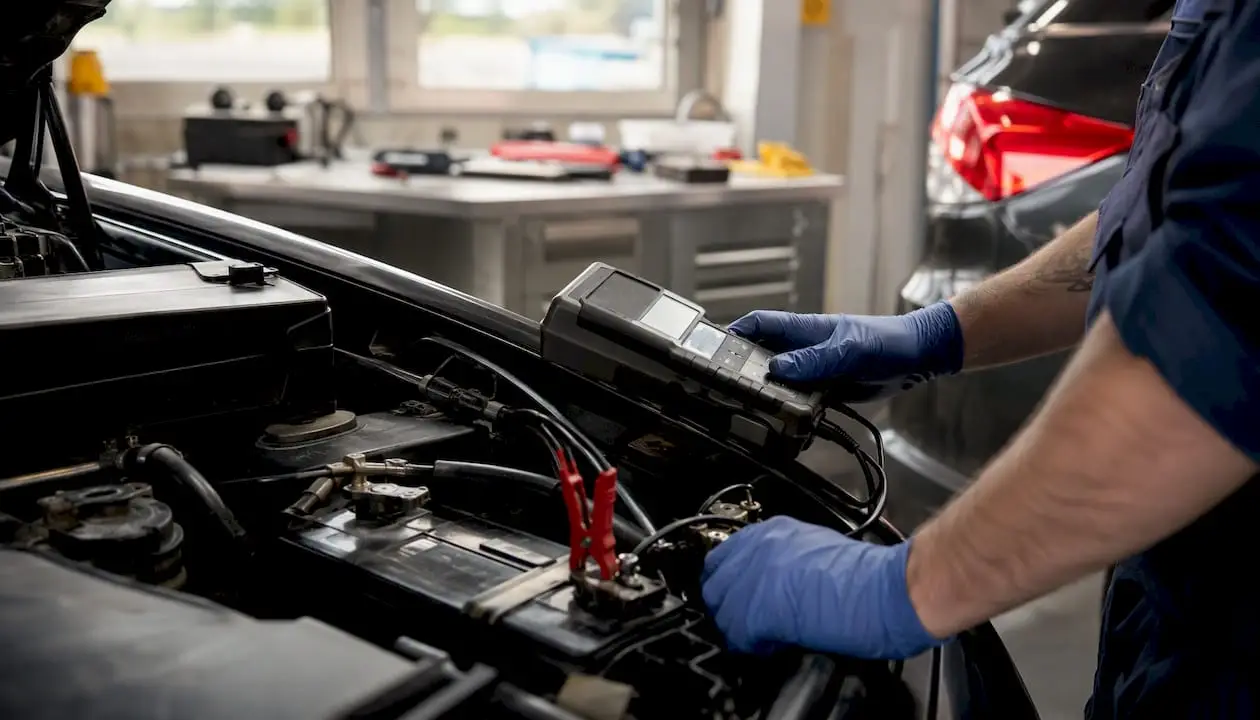
Corrosion on battery terminals creates resistance that mimics a weak battery, so a quick visual check matters as much as the test itself. Look for a chalky white or blue crust around the posts. If you see it, disconnect the terminals and clean them with a wire brush and a baking-soda solution, a five-minute job that prevents a surprising number of no-start calls, according to maintenance guidance from UTI.
Tire tread matters more when roads turn slick. Measure depth with a quarter, inserting it into the tread groove with Washington’s head down. Also confirm your spare is inflated and you know where the lug nut key lives before you need either in a hurry.
- Check coolant freeze protection rating for the coldest nights Plano sees
- Switch to a winter-formula washer fluid that won’t freeze in the reservoir
- Test defroster and heater output for foggy or icy mornings
- Replace wiper blades that have gone stiff from summer heat
A basic winter emergency kit for Plano drivers should include a blanket, water, a flashlight, jumper cables or a portable jump starter, and a phone charger. Ice events here are rare but sharp, and a stalled car on an overpass during a cold snap is not the time to discover you’re unprepared.
Rainy and Fall Checklist for Wet-Road Safety
Fall in Plano brings the year’s heaviest rain along with shortening daylight, a combination that punishes worn wipers and thin tire tread. October is recognized as Car Care Month by AAA for good reason: it’s the natural window to catch problems before winter compounds them. AAA’s fall checklist centers on battery and charging tests, hose inspections, tire checks, and lights.
Streaking or skipping wiper blades are not a minor annoyance during a downpour; replace them the moment they start smearing rather than waiting for a full failure. Top off washer fluid at the same time.
Tire tread reduces hydroplaning risk more than almost any other single factor. Run the quarter test across all four tires, and get an alignment check if the car pulls to one side, since misalignment accelerates uneven wear exactly when you need even contact most.
- Check underbody drains and seals for water intrusion
- Inspect brakes for wet-weather stopping performance
- Confirm headlights and taillights work as daylight shortens
- Replace wipers streaking or chattering across the glass
Vehicles that skip routine seasonal checks are far more likely to need a roadside tow. FMCSA’s safety research links poor maintenance directly to a higher crash rate, and a wet fall commute is exactly the kind of driving condition where a small deficiency turns into a real hazard.
What Year-Round Maintenance Habits Keep a Car Reliable?
Seasonal checklists matter, but the habits that actually prevent breakdowns happen every month, not just four times a year. Monthly, check tire pressure, glance under the car for fresh leaks, confirm all lights work, and test wiper performance with a squirt of washer fluid.
At every oil-change interval, whether that’s a fixed mileage number or your vehicle’s oil-life monitoring system, have the technician rotate the tires and run a multi-point inspection. This catches brake wear, belt cracking, and suspension issues before they become expensive. Consumer Reports’ maintenance checklist covers the same core categories: oil and fluids, filters and belts, battery, steering and alignment, brakes, tires, and lights.
Annually, test the battery once it passes the three-year mark, replace the cabin air filter, inspect brake pad thickness, and check coolant concentration. An A/C service belongs on this list too if performance has dropped, even outside summer.
| Task | How Often | Sign It’s Due |
|---|---|---|
| Tire pressure check | Monthly | Dashboard TPMS light or visibly low tire |
| Oil and filter change | Per OEM interval or oil-life monitor | Monitor alert or interval reached |
| Battery test | Annually once 3+ years old | Slow crank, dim lights |
| Brake inspection | Every oil-change visit | Squealing, grinding, soft pedal |
| Cabin air filter | Annually | Weak airflow, musty smell |
Skipping these small monthly habits is exactly how a $95 fix turns into a $474 repair bill down the road. Preventive care costs less than reactive repair almost every time.
What Is the 30-60-90 Rule for Car Maintenance?
The 30-60-90 shorthand refers to mileage checkpoints, roughly every 30,000 miles, where a car needs a deeper look than a routine oil change. At each checkpoint, technicians typically inspect brakes, check coolant and transmission fluid condition, examine belts, and rotate tires more thoroughly than a standard visit.
At the 30,000-mile mark, expect oil and filter service, tire rotation, brake inspection, and a check of the air filter and cabin filter. At 60,000 miles, add transmission fluid inspection, coolant system checks, and spark plug evaluation on many vehicles. At 90,000 miles, timing belts (on vehicles that use them), water pumps, and major belt and hose replacements often come due.
This rule is a helpful shorthand, but it’s not a replacement for your factory schedule. Ford’s owner documentation, for example, lists specific intervals like 7,500 miles for oil and filter changes, which may run tighter or looser than the generic 30-60-90 pattern depending on the model.
- 30,000 miles: oil, filter, tire rotation, brake inspection
- 60,000 miles: transmission fluid, coolant system, spark plugs
- 90,000 miles: timing belt, water pump, major hose replacement
Pro Tip: If you do a lot of short trips around Plano, frequent stop-and-go traffic, or tow a trailer, ask your shop about the severe-usage schedule in your owner’s manual. Short commutes in particular keep the engine from reaching full operating temperature, which accelerates wear faster than highway miles do.
What Should You Keep in Your Car for Seasonal Maintenance?
A short list of tools turns most roadside surprises into a five-minute fix instead of a tow call. Keep a tire pressure gauge, a small flashlight, spare fuses, a lug wrench, and either jumper cables or a portable jump starter in the trunk year-round. Add a basic emergency kit with water and a blanket for winter.
At home, a funnel, a drip pan, a battery terminal brush, a basic socket set, and a jug of washer fluid cover most simple checks.
- Check tire pressure cold, before driving, against the door-jamb PSI
- Check oil level on a level surface with the engine cold
- Glance under the car weekly for fresh fluid spots
- Test all exterior lights monthly with a helper or reflection
Build these into a rhythm and seasonal maintenance stops feeling like a chore.
When Should You Schedule a Professional Inspection?
Some warning signs demand a shop visit immediately rather than a wait-and-see approach. An illuminated check-engine or battery light, a visible fluid leak, grinding brakes, a burning smell, repeated battery failures, or a vibration and pull while driving all mean it’s time to get the car looked at.
A competent multi-point inspection covers battery health, brake condition, belts and hoses, coolant strength, tire wear, and A/C performance, backed by ASE-certified technicians and, ideally, a photo-based digital report you can review yourself.
Pro Tip: Ask any shop for a digital inspection report with photos and cost estimates before approving work. It’s the fastest way to know exactly what’s wrong and why.
Express Lube & Car Care runs digital inspections with no appointment required, and every repair carries a 24-month/24,000-mile warranty, a meaningful local trust signal when you’re deciding whether a noise is worth acting on.
When in doubt, defer to your owner’s manual and AAA’s safety guidance rather than guessing. A five-minute inspection is cheaper than a tow.
Where Can Plano Drivers Get Seasonal Service Done?
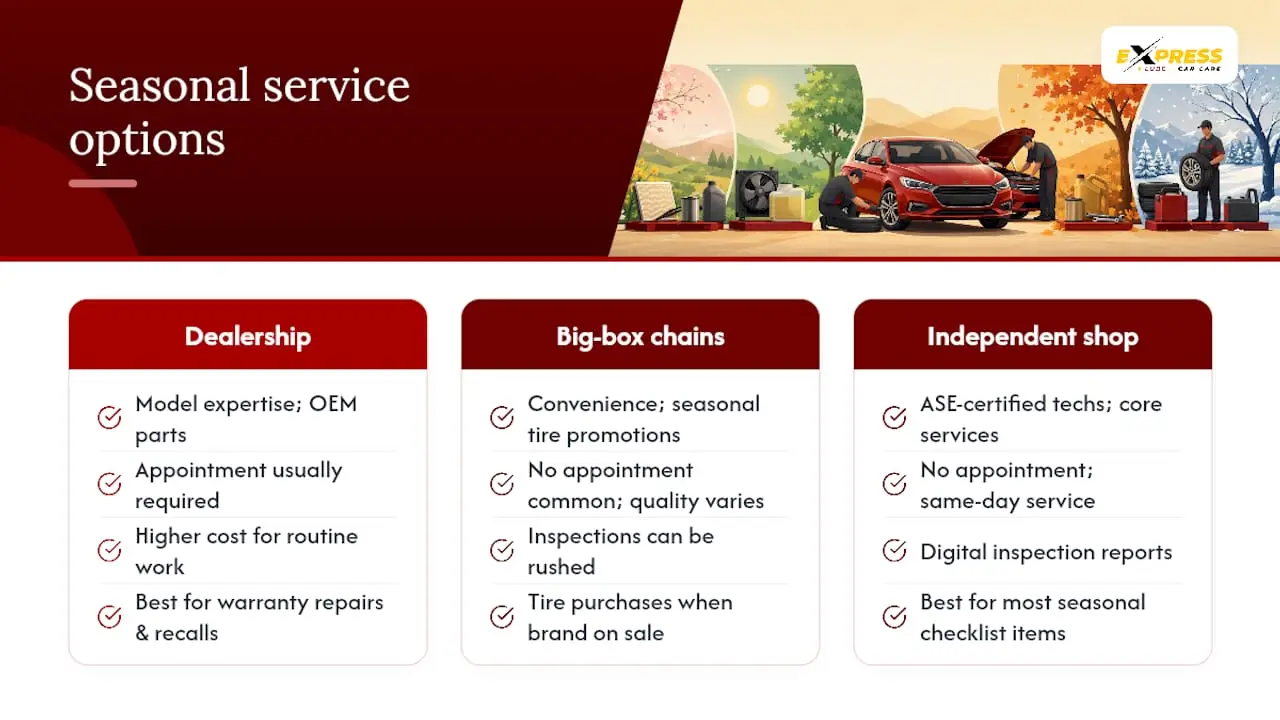
Plano drivers generally choose between three types of shops for seasonal maintenance: dealership service departments, big-box tire and lube chains, and independent quick-service shops. Each has tradeoffs worth understanding before your next visit.
Dealership service departments know your specific model well and stock OEM parts, but they typically require an appointment and often charge more for routine work like oil changes or wiper replacement. That works fine for warranty-covered repairs, less well when you need same-day service before a weekend trip.
Big-box chains offer convenience and often run seasonal tire promotions, but staffing and technician certification vary widely by location, and multi-point inspections can be rushed during peak hours.
Independent, no-appointment shops like Express Lube & Car Care fill the gap for drivers who need fast, thorough seasonal service without booking days in advance. ASE-certified technicians handle the same core tasks, battery testing, brake inspection, A/C service, tire checks, that a dealership performs, often with same-day turnaround and a digital inspection report you can review on your phone.
For most seasonal checklist items, tire pressure, fluid top-offs, battery tests, and wiper replacement, a quick-service shop covers the need efficiently. Save the dealership visit for warranty work or recalls, and reserve big-box chains for tire purchases when a specific brand or size is on sale. Local auto service guidance breaks down how busy Plano drivers typically balance these options across a year.
Checklist for Seasonal Tire Changes and Tire Care in Plano
Plano doesn’t require a hard seasonal tire swap the way northern climates do, but tire care still shifts with the calendar. Summer heat raises tire pressure and accelerates tread wear on long highway stretches. Fall rain increases hydroplaning risk on worn tread. Winter’s occasional ice makes tread depth and pressure accuracy matter more than usual, even without snow tires in the mix.
Run the quarter test each season: insert a quarter into the tread groove with Washington’s head down, and if you can see the top of his head, the tread is worn past a safe margin and it’s time to shop for replacements, per AAA’s guidance. Bridgestone’s maintenance guidance recommends rotating tires at manufacturer-specified intervals to even out wear patterns caused by front-wheel-drive layouts and daily commuting habits.
- Check pressure monthly, cold, against the door-jamb sticker
- Run the quarter test each season on all four tires plus the spare
- Rotate tires at the interval your owner’s manual specifies
- Inspect sidewalls for cracking or bulging after Texas heat exposure
- Get an alignment check if you notice pulling or uneven wear
Because Plano rarely sees snow, most drivers run a single all-season tire year-round rather than swapping to dedicated winter tires. That makes tread depth monitoring even more important heading into any forecast ice event, since there’s no seasonal swap acting as a backup safety net.
How Plano’s Climate Affects AC and Heating Maintenance
Plano’s climate asks a lot from both ends of a car’s climate control system, often within the same week. Summer highs regularly push past 95 degrees, which means the A/C compressor and refrigerant charge work at near-maximum load for months at a stretch. Weak airflow or slow cooling in July usually traces back to a clogged cabin air filter, a refrigerant leak, or a failing compressor, and catching it early avoids a complete breakdown on the hottest day of the year.
Winter cold snaps, while brief, hit hard enough that a heater or defroster failure becomes a real safety issue rather than just a discomfort. If the defroster struggles to clear the windshield quickly, that’s often a sign of low coolant or a failing heater core, and it deserves attention before the next freeze rather than after.
The swing between these extremes, sometimes 40 degree temperature shifts within a single week during spring and fall, stresses hoses, seals, and the refrigerant system more than a steady climate would. That’s part of why belt and hose inspection deserves a spot on every seasonal checklist here, not just in summer.
A cabin air filter change once a year handles most airflow complaints. Beyond that, a professional A/C service that checks refrigerant pressure and system performance catches the leaks and compressor issues a filter change can’t fix. Express Lube & Car Care’s A/C repair guide covers what that inspection typically involves and when it’s worth scheduling ahead of the first heat wave.
Publisher perspective: practical maintenance for busy Plano drivers
This checklist reflects what actually breaks down here: batteries stressed by summer heat, A/C systems working overtime, and the occasional ice morning nobody planned for. Following it consistently cuts your odds of a roadside breakdown and keeps repair costs closer to routine maintenance than emergency towing. That’s the same philosophy behind quick, warranty-backed service done right the first time.
How Express Lube & Car Care Helps
Every item on this checklist maps to something Express Lube & Car Care handles the same day, no appointment needed. That’s the real advantage here: you don’t plan your week around a service slot. Battery testing and replacement, A/C service, brake inspection, wiper replacement, and full multi-point inspections are all walk-in services performed by ASE-certified technicians, backed by a 24-month/24,000-mile warranty on the work.
If your battery is due for a test, your brakes need a second opinion, or you just want the peace of mind of a full inspection before a season changes, stop by or check the current oil change and service specials to bundle a few checklist items into one visit. Brake concerns can also start with the $30 off brake coupon if pad wear is on your radar. No appointment required, just drive in.
Sources
- The Impact of Vehicle Maintenance on Safety | FMCSA
- Preventive Maintenance Fact Sheet | AAA
- Prepare your vehicle for seasonal changes | AAA newsroom
- Consumer Reports’ Guide to Car Maintenance
FAQ
What is the 30-60-90 rule for car maintenance?
It’s a mileage shorthand for deeper service checkpoints roughly every 30,000 miles, covering oil, tires, brakes, and fluids, though your factory schedule always takes priority over the generic rule.
What are the essential elements of preventive maintenance?
Core elements include battery and charging system checks, tire pressure and tread inspection, fluid levels, brake condition, belts and hoses, lights, and filters, all checked on a regular schedule rather than after something fails.
What should be on a daily or basic maintenance checklist for your car?
Glance at tire condition, check for dashboard warning lights, and listen for unusual noises each time you drive; a monthly deeper check should add tire pressure, fluid levels, and wiper performance.
What does a full car service checklist include?
A full service typically covers oil and filter change, brake inspection, tire rotation and tread check, battery test, fluid top-offs, belt and hose inspection, and a multi-point visual inspection, the same scope Express Lube & Car Care runs on its digital inspections.
How often should Plano drivers check their tire pressure?
Check tire pressure regularly, preferably monthly, and always compare the reading to the door-jamb sticker rather than the tire’s sidewall maximum, since Texas heat swings can shift PSI significantly between seasons.