

Yes. Get an independent pre-purchase car inspection before you sign anything, and start by copying the 17-character VIN and running a recall check. The inspection fee is almost always smaller than the cost of a hidden transmission or engine problem. Once you have the VIN, pull a vehicle history report and book an independent inspection before you commit to the purchase. The findings give you real leverage to negotiate, request repairs, or walk away.
TL;DR:
- Independent pre-purchase inspections reveal hidden issues such as frame rust, leaks, or suspension wear that visual checks might miss.
- Using the VIN to check for recalls and history reports strengthens your negotiation position and uncovers safety or title concerns.
- A comprehensive inspection includes a cold start, lift inspection, road test, and OBD-II scan, with a detailed report separating safety hazards from routine needs.
- Inspection costs range from $100 to $250, with shop lift inspections offering deeper underbody checks compared to mobile assessments.
- Red flags like refusal for inspection, mismatched panels, or safety warning lights indicate you should pause or walk away from the deal.
Table of Contents
- What Does a Pre-Purchase Inspection Cover?
- How Do You Run a Pre-Purchase Inspection Step by Step?
- Should You Choose a Mobile Inspection or a Shop Lift?
- What Red Flags Mean You Should Pause or Walk Away?
- What Our ASE-Certified Technicians Add to Your Inspection
- Book Your Pre-Purchase Inspection at Express Lube & Car Care
- FAQ
- Sources
What Does a Pre-Purchase Inspection Cover?
A thorough pre-purchase inspection looks past the paint and interior to the systems that determine whether a car is safe and reliable to own. A qualified technician checks the frame and structure, engine and fluid condition, transmission behavior, brakes, tires, suspension and steering components, electrical systems, heating and air conditioning, and emissions performance through OBD-II diagnostic codes. The underbody and frame get a close look too, since rust or prior collision repair often hides underneath rather than on the surface.
The inspection itself combines a few standard techniques:
- A cold walk-around and cold start, which reveals leaks and startup noises that disappear once the engine warms up.
- A lift inspection to check the underside for leaks, rust, and suspension wear that is invisible from ground level.
- A road test that checks shifting, braking, steering response, and unusual noises under load.
- An OBD-II scan that pulls stored and pending trouble codes, including ones a seller may have cleared recently.
The written report that comes out of this process matters as much as the inspection itself. The FTC’s used car guidance recommends an independent mechanical inspection even when a dealer offers a warranty or calls a vehicle certified, and it advises getting the inspection results and repair estimates in writing. A thorough report identifies the vehicle by VIN, separates findings into safety-critical issues, near-term maintenance needs, and items to simply monitor, and includes realistic repair cost estimates for each category. That structure keeps you from confusing a worn wiper blade with a cracked frame rail.
How Do You Run a Pre-Purchase Inspection Step by Step?
A pre-purchase inspection works best as a sequence: you gather information first, inspect visually, drive the car, then hand it to a mechanic for the parts you cannot check yourself.
- Collect the basics. Get the 17-character VIN, photos of the vehicle, the seller’s contact information, the asking price, and any service records. Run the VIN through the NHTSA recall lookup to check for unrepaired safety recalls, and pull a history report through an NMVTIS-approved provider to check for title brands, salvage history, or reported insurance losses.
- Do a cold walk-around. Check fluid levels and color, look for leaks under the car, inspect panel gaps and paint consistency for signs of prior collision repair, smell for mustiness that suggests water damage, and check tire wear patterns and dashboard warning lights before the engine warms up.
- Take a guided test drive. Note how the engine idles and runs, how smoothly it shifts, how the brakes feel under moderate and hard stops, how the steering tracks, whether the HVAC system blows properly, and whether you hear clunks, squeals, or grinding at speed.
- Book an independent mechanic on a lift. A certified shop can run a full OBD-II scan, inspect the underside for leaks and rust, check belts and hoses for wear, and look for signs pointing to deeper engine or transmission problems in line with this pre-owned luxury car inspection checklist guidance. According to AAA’s buying guidance, this hands-on inspection stage is what turns a casual look-over into a real decision-support tool, especially for major systems like the engine or transmission.
Pro Tip: Insist on a written report that lists the VIN and separates findings by urgency, since a verbal rundown is easy to misremember once negotiations start.
Should You Choose a Mobile Inspection or a Shop Lift?
Timing and location decisions shape how useful your inspection turns out to be. Schedule the inspection before you sign anything or hand over payment, and keep any offer non-binding until the inspection is complete.
- Mobile inspections work well for out-of-area or online purchases, but AAA notes that you should still insist the inspector check the underside and run an OBD-II scan, not just look the car over in a parking lot.
- Shop lift inspections go deeper, since a lift and diagnostic equipment catch underbody rust, leaks, and suspension wear that a mobile check can miss.
- Buyers typically pay the inspection fee, and cost depends on scope and vehicle type rather than who requests it.
- Expect the fee to run roughly $100 to $250, with luxury vehicles, detailed diagnostics, or mobile travel pushing costs toward the higher end.
What Red Flags Mean You Should Pause or Walk Away?
Some findings are worth negotiating over, and some are worth walking away from entirely.
- Seller refusal to allow an inspection is one of the clearest warning signs you will encounter, since a seller with nothing to hide rarely objects.
- Milky or gray oil often points to coolant mixing with engine oil, a sign of a failing head gasket.
- Mismatched panels or inconsistent paint texture usually mean prior collision repair that was not disclosed.
- Major fluid leaks, frame damage, or flood and moisture evidence are all reasons to stop and reconsider the purchase.
- Illuminated check engine or safety warning lights need a diagnostic scan before you go any further.
The FTC’s guidance on independent inspections, drawn from its consumer advice on used car purchases, recommends that mechanics separate safety-critical defects from other findings so buyers can tell the difference between a cosmetic flaw and a hazard. Use that same priority order yourself: safety issues first, near-term maintenance second, monitor-only items last.
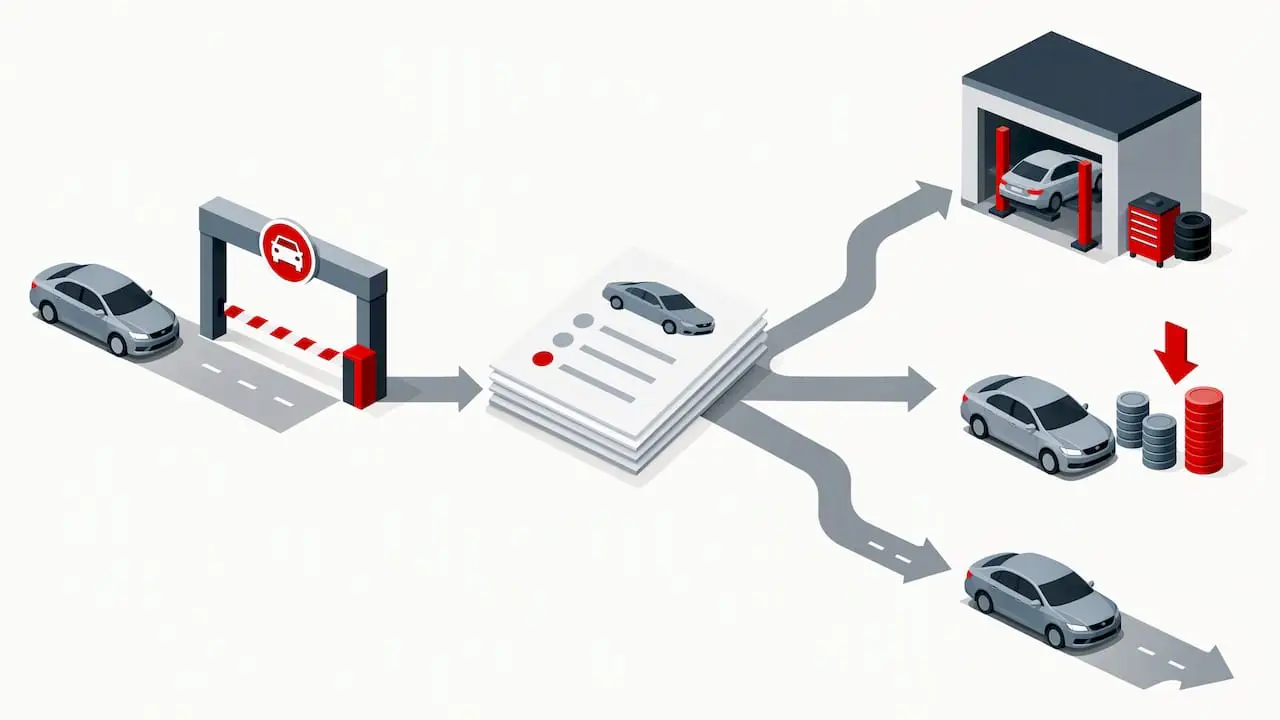
Once you have the report, you have three real options: ask the seller to complete repairs and provide receipts, negotiate a price reduction equal to the documented repair estimates, or walk away. Get any seller promises in writing rather than relying on a verbal agreement. If the vehicle has an open recall, confirm with the manufacturer or dealer that a remedy is actually available before you count on it being resolved quickly.
What Our ASE-Certified Technicians Add to Your Inspection
An independent inspection is only as good as the people performing it, and that is where a certified shop earns its keep. Our ASE-certified technicians put the vehicle on a lift to check the frame, suspension components, and fluid systems that a parking-lot walk-around simply cannot reach, then document what they find with digital photos and written notes you can take into a negotiation.
- We offer convenient service options to help you get a car inspected promptly so you can move forward without delay.
- Our reports separate safety-critical findings from routine maintenance items, which keeps the urgent issues from getting lost among smaller ones.
- You can use our findings three ways: as a repair cost estimate to negotiate against the asking price, as leverage to request seller repairs, or as a starting point for repairs scheduled at our shop after purchase.
If the inspection flags a coolant issue, our guide on signs of low coolant explains what that can mean for the engine underneath.
— Express Lube & Car Care
Book Your Pre-Purchase Inspection at Express Lube & Car Care
We make it simple to get a trustworthy second opinion before you commit to a used car. 
Bring the VIN, the seller’s contact information, the keys, and a copy of the listing when you come in, and our technicians will walk the vehicle through a full inspection on the lift. If the inspection turns up issues, you can move straight into the repair: our engine diagnostics service addresses check engine codes, our brake repair service covers worn pads and rotors, and our Texas state inspection station can confirm the vehicle’s inspection status in the same visit.
- Request a written report with the VIN and itemized repair estimates before you leave.
- Use that report in your negotiation with the seller, whether you are asking for repairs or a lower price.
- Browse our full services page to see what else we can check or repair once you own the car.
Start your visit through our appointment page and get the independent opinion you need before you sign.
FAQ
Is a pre-purchase inspection worth it?
Yes, a pre-purchase inspection is generally worth the fee because it can reveal safety defects or expensive repairs before you commit to buying. The FTC recommends an independent inspection even when a dealer offers a warranty, since inspection findings give you concrete leverage to negotiate or walk away.
How does a pre-purchase inspection work?
A pre-purchase inspection typically starts with a VIN and history check, followed by a cold walk-around, a test drive, and a hands-on inspection by a mechanic using a lift and an OBD-II scan. According to AAA’s buying guidance, this sequence catches problems that a visual check alone would miss, especially in the engine, transmission, and underbody.
Do states still require vehicle safety inspections?
Inspection requirements vary by state and change over time, so check your state’s current rules rather than relying on outdated information. A pre-purchase inspection is a separate, voluntary mechanical check and is not the same as a state-mandated safety or emissions inspection.
What are red flags during a pre-purchase inspection?
Major red flags include a seller refusing to allow an inspection, milky or gray oil suggesting coolant intrusion, mismatched panels pointing to undisclosed collision repair, and illuminated safety or check engine lights. The FTC advises separating safety-critical findings from routine maintenance items so you can judge how serious each issue really is.
What does a pre-purchase inspection typically cost?
A professional pre-purchase inspection typically costs roughly $100 to $250, depending on the vehicle type, the depth of diagnostics, and whether the inspection is mobile or performed in a shop. Luxury vehicles and inspections requiring travel tend to fall toward the higher end of that range.
Sources
- Buying a Used Car From a Dealer | Consumer Advice
- What To Look For When Buying A Used Car | AAA Club Alliance
- Check for Recalls: Vehicle, Car Seat, Tire, Equipment | NHTSA
- How to get a pre-purchase car inspection