

Expect to pay a few hundred dollars for a professional R1234yf recharge, varying by system capacity and whether a leak needs repair first. DIY kits run $60 to $120 but skip the vacuum and leak testing a real recharge requires, and federal law restricts who can legally buy and handle this refrigerant. Your best move: book a certified shop that includes evacuation, leak detection, and EPA-compliant recovery in the quote.
TL;DR:
- A full R1234yf recharge at a certified shop costs between $200 and $500, including evacuation, leak detection, and EPA-compliant recovery, depending on system capacity and repairs needed.
- DIY kits priced at $60 to $120 lack proper leak testing, vacuum procedures, and full recovery, which can lead to masking leaks and paying for repairs later.
- R1234yf refrigerant costs roughly $60 to $120 per can, with most vehicles requiring 1 to 2 pounds, making refrigerant expenses around $100 to $200 before labor.
- Higher costs for R1234yf are driven by complex manufacturing, fewer global producers, and the need for dedicated, costly recovery equipment due to its flammability.
- Always verify refrigerant type and system capacity before a recharge, and choose a shop that explains their process rather than relying solely on lowest-cost quotes.
Table of Contents
- R1234yf Recharge Cost: Shop, Dealership, or DIY Kit
- R1234yf Price Per Pound and How to Estimate Your Total Refill Cost
- Why R1234yf Costs More Than R134a
- EPA Rules, Venting Bans, and What A2L Means for Your Safety
- When a DIY Top-Up Makes Sense (and When It Doesn’t)
- How to Get an Accurate Quote and Avoid Surprise Charges
- What a Certified Shop Actually Does Differently
- Why the Cheapest Quote Is Often the Most Expensive One
- Book a Compliant R1234yf Recharge Without the Guesswork
- Where to Verify These Numbers Yourself
- Sources
- FAQ
R1234yf Recharge Cost: Shop, Dealership, or DIY Kit
The price you pay depends entirely on who does the work and what’s actually included in that number. A quote that looks cheap on paper often leaves out steps that matter, and a quote that looks expensive might include repairs you’d otherwise pay for separately.
Independent repair shops typically charge between $200 and $500 for a full R1234yf recharge, a range confirmed by recent 2026 price guides. That price usually covers refrigerant evacuation, a vacuum test to check for leaks, the recharge itself, and often UV dye to help spot future leaks. Ask what’s bundled before you agree to anything.
Dealerships tend to sit at the higher end of that range, sometimes above it, because their labor rates run higher and they often use OEM-specified refrigerant blends or proprietary diagnostic tools. You’re paying for brand-specific expertise, which matters more on newer European or hybrid vehicles with complex climate control systems.
DIY kits marketed at big box auto stores cost far less upfront, but they come with real gaps:
- No proper recovery of old refrigerant before recharging
- No true vacuum test, which means an existing leak often goes undetected
- Limited or no leak dye included
- Cans sized for partial refills, not a full system charge
A DIY top-up can mask a leak rather than fix it, which usually means paying twice: once for the kit, then again for a shop visit when the AC quits a few weeks later.
R1234yf Price Per Pound and How to Estimate Your Total Refill Cost
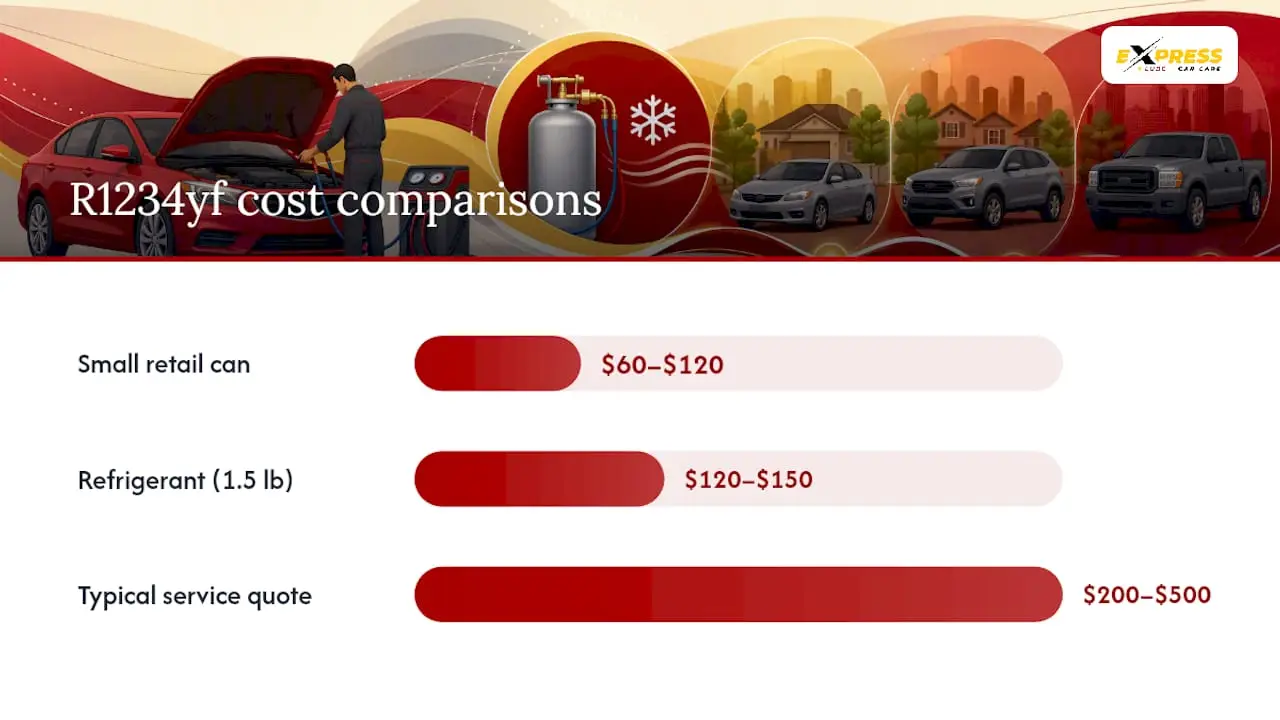
Retail R1234yf typically runs between $60 and $120 for smaller cans sold at auto parts stores, though pricing swings with supply and can size. Wholesale, per-pound costs run lower than retail can pricing, but individual consumers rarely get access to those rates without a Section 609 certification and a business account.
Here’s what that looks like in practice:
- 8 oz cans: common for small top-ups, priced toward the lower end of retail ranges
- 12 oz cans: the more standard size for a meaningful top-up, priced higher per can but often better value per ounce
- Full system capacity: most passenger vehicles hold roughly 1 to 2 pounds of refrigerant total
To estimate your own cost, check your vehicle’s underhood sticker for exact system capacity in ounces or pounds, then multiply by the per-pound or per-can price you’re quoted. A car holding 1.5 pounds at roughly $80 to $100 per pound in refrigerant costs alone lands you in the $120 to $150 range before labor, evacuation, and testing get added. That math explains why a “recharge” quoted at $250 isn’t padding, it’s the refrigerant plus the labor to do the job correctly, following the DPF calibration workflow that certified shops use to ensure compliance and proper service.
Why R1234yf Costs More Than R134a
R1234yf isn’t priced high out of habit. It comes down to how the refrigerant gets made and what shops need to service it safely.
R1234yf has a global warming potential of about 4, compared to roughly 1,430 for R134a, according to documented refrigerant properties. That massive drop is why regulators pushed the automotive industry to adopt it, but achieving that environmental performance requires a more complex manufacturing process. Chemours, the maker of Opteon YF, documents that production and validation steps for R1234yf go well beyond what R134a required, and fewer manufacturers globally produce it at scale.
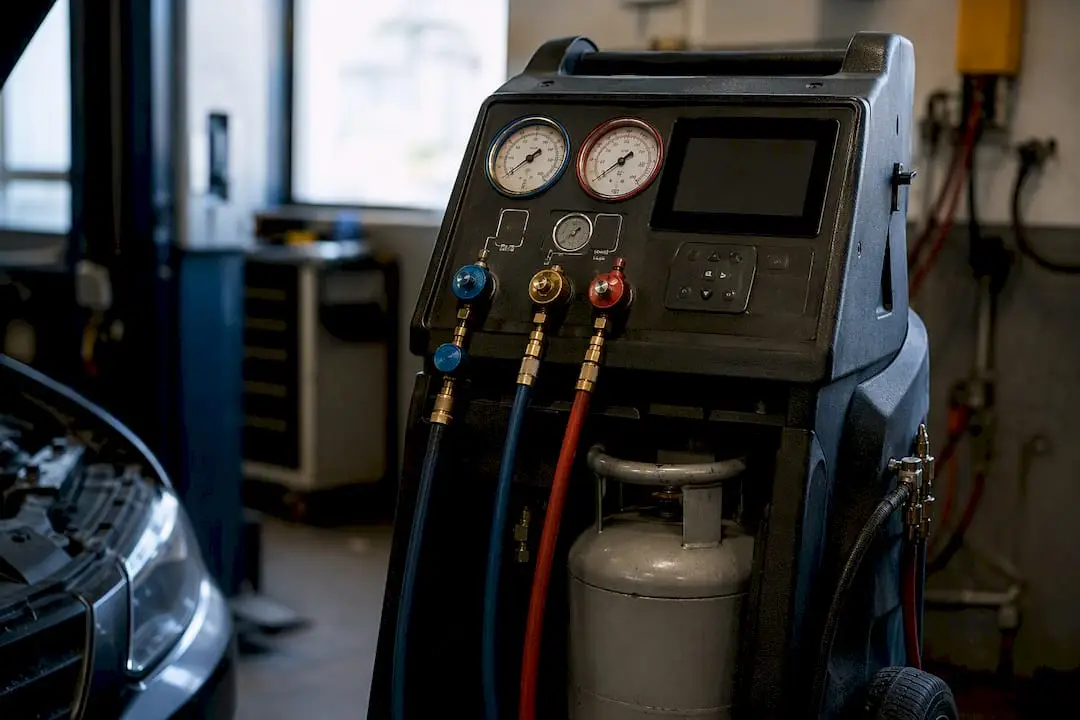
Shops face their own cost pressure too. R1234yf is classified A2L, meaning it’s mildly flammable, so certified recovery machines dedicated to this refrigerant can cost shops several thousand dollars. That capital expense gets built into what you pay per service, and it’s part of why a recharge that used to run $100 with R134a now runs several times that.
EPA Rules, Venting Bans, and What A2L Means for Your Safety
The federal government doesn’t leave refrigerant handling to guesswork. A few rules apply directly to you as a vehicle owner, whether you’re booking a shop visit or considering a DIY kit.
- EPA Section 609 certification is required to purchase or professionally service automotive refrigerants, and most retailers now require proof of certification before selling larger refrigerant containers to individuals.
- Venting refrigerant into the atmosphere is illegal under federal law, not just discouraged, and carries real legal liability for anyone who does it intentionally.
- A2L flammability classification means R1234yf requires different handling equipment than older refrigerants, which is exactly why shops invest in dedicated recovery machines rather than reusing R134a equipment.
- Mixing refrigerant types in one system is dangerous and will damage compressors and seals, so never assume “any can will do” if you’re unsure what your car uses.
These aren’t bureaucratic technicalities. They’re the reason a legitimate shop quote costs what it costs, and why an unlicensed backyard recharge can leave you exposed to fines.
When a DIY Top-Up Makes Sense (and When It Doesn’t)
DIY refrigerant kits still make sense for some drivers, just not most R1234yf owners. Here’s how to think through it:
- You own an older vehicle with an R134a system. These kits are widely available, legal for consumer purchase without Section 609 certification, and reasonably forgiving if you follow instructions.
- You own a newer vehicle with R1234yf. Retailers increasingly restrict sales to certified buyers, and the A2L handling requirements make a DIY approach both harder to execute safely and more likely to mask an underlying problem.
- Your AC has failed more than once in a year. Repeated refrigerant loss almost always points to a leak, not a simple low charge, and a top-up kit won’t fix that.
Watch for red flags that mean it’s time to call a shop rather than reach for a can: air that’s only cold at highway speeds, a compressor that cycles on and off rapidly, or unusual noise from under the hood when the AC kicks on.
Pro Tip: If your AC blew cold last summer and stopped working again this year, don’t recharge it again on your own. That pattern almost always means a leak, and a proper AC recharge starts with a vacuum test to find it before adding another dollar of refrigerant.
How to Get an Accurate Quote and Avoid Surprise Charges
A little prep work before you call around saves real money. Start under the hood: the refrigerant type and system capacity are printed on a sticker near the AC components, and having that information ready means a shop can quote you accurately over the phone instead of guessing.
- Confirm whether the quote includes vacuum testing, leak dye, and full recovery of old refrigerant, not just the refill itself.
- Ask directly whether the price covers a leak inspection, since an unfound leak means you’ll be back within months.
- Check for seasonal specials or loyalty discounts, and ask about military or healthcare provider discounts if you qualify.
Pro Tip: Fix any visible leak before paying for a recharge. Adding refrigerant to a system that’s actively leaking is money spent twice, once now and again in a few weeks.
What a Certified Shop Actually Does Differently
A real recharge follows a sequence, not a shortcut. Express Lube & Car Care’s ASE-certified technicians evacuate the system, run a proper vacuum test to expose hidden leaks, and only then recharge to the manufacturer’s exact specification using EPA-compliant recovery equipment. That process is exactly what separates a diagnosis from a guess.
Every visit runs on a no-appointment basis, backed by a 24-month/24,000-mile warranty on the work. Local customers watching their budget can pair a recharge with current specials or ask about discounts for military and healthcare workers to bring the total down.
Why the Cheapest Quote Is Often the Most Expensive One
The conventional advice on R1234yf pricing treats it like a commodity: find the lowest number and book it. That advice falls apart the moment you realize most “cheap” recharges skip the vacuum test entirely. A shop that charges $150 and doesn’t check for leaks isn’t actually cheaper than one that charges $350 and finds the problem, it’s just deferring the real cost to your next visit.
What the research on this topic actually supports is a shift in how you evaluate a quote. Stop asking “how much” first and start asking “what’s included.” A $200 quote missing leak detection and a $450 quote covering full diagnostics, recovery, and a warranty aren’t really comparable numbers, they’re different services wearing the same label.
Drivers should prioritize finding a shop willing to explain their process before price, not after. If a technician can tell you exactly how long the vacuum test ran and what the leak check showed, you’re paying for competence. If they can’t, you’re probably paying for a refill that won’t last.
— Express Lube & Car Care
Book a Compliant R1234yf Recharge Without the Guesswork
Express Lube & Car Care handles R1234yf recharges the way the system is designed to be serviced: full evacuation, vacuum testing, EPA-compliant recovery, and a recharge to factory spec, all without needing an appointment.
That matters most for drivers juggling a full schedule who can’t afford to bring a car back twice because a DIY kit missed a leak the first time. Current oil change and service specials can help offset the cost of a recharge when bundled with routine maintenance, and military and healthcare discounts apply where eligible. Bring your vehicle’s refrigerant type and any AC symptoms you’ve noticed, whether that’s warm air at idle or a compressor that cycles oddly, and a technician will walk you through exactly what your quote covers before any work starts. Stop by or check appointment availability to get your AC diagnosed and recharged the same day.
Where to Verify These Numbers Yourself
For federal rules on refrigerant handling, see the EPA’s Section 609 requirements. Manufacturer specifications come from Opteon’s product documentation, and current market pricing is tracked in this 2026 price analysis.
Sources
- EPA — Regulatory requirements for motor vehicle air-conditioning system servicing
- TireAdvise — R-134a vs R-1234yf
- The Daily Automotive — How Much Does Freon Cost for a Car? (2026 Price Guide)
FAQ
How much does it cost to recharge a 1234yf AC?
A professional R1234yf recharge typically costs between $200 and $500, depending on your system’s capacity, local labor rates, and whether a leak repair is needed alongside the refill.
How much does R1234yf cost per pound?
Retail pricing runs roughly $60 to $120 per can at auto parts stores, and most passenger vehicles hold 1 to 2 pounds of refrigerant total, so refrigerant alone often costs $100 to $200 before labor.
Why is 1234yf so expensive?
R1234yf requires more complex manufacturing to achieve its much lower global warming potential, comes from fewer producers, and its A2L flammability rating forces shops to invest in dedicated recovery equipment that costs several thousand dollars.
Where can I buy R1234yf refrigerant for a low price?
Retail cans are sold at major auto parts chains, but federal rules require EPA Section 609 certification to purchase larger quantities, and a certified shop like Express Lube & Car Care handles the recovery and vacuum testing that a can alone can’t provide.