

If your transmission is slipping, shifting hard, or leaking fluid, the right first step is a professional diagnostic scan, not a guess at home. We offer same-day transmission diagnostics and repair, with no appointment needed, so a small problem gets identified before it turns into a transmission replacement. Waiting on these symptoms is the most common way a $200 fix becomes a $3,000 one.
TL;DR:
- A thorough diagnostic combines a road test, OBD II scan, lift inspection, and fluid check; ask the technician to explain the trouble code before approval.
- Sealed transmissions may require specific fluid and scan tool procedures, so confirm your vehicle’s service requirements before approving a top off or fluid flush.
- Stop driving for grinding, burning smells, smoke, or lost gear engagement; for a slow leak or mild hesitation, seek a second written estimate.
- Request an itemized estimate and written warranty terms, checking whether parts and labor are covered; a rebuild or remanufactured unit may cost less than replacement.
Table of Contents
- Transmission service options explained, from fluid service to replacement
- Symptoms and quick checks that mean you need a shop visit
- Typical cost ranges and what changes the price
- What to expect during your shop visit
- How to choose a trustworthy transmission repair shop
- Express Lube & Car Care: what we do for transmission repair
- Warranty and guarantee options for transmission repairs
- Certifications and standards that matter in Plano
- Why reviews matter when picking a repair shop
- OEM versus aftermarket parts in transmission repair
- Aftercare for your transmission after repair in Plano’s climate
- When to act fast and when to get a second opinion
- Book your transmission diagnostic in Plano today
- FAQ
- Sources
Transmission service options explained, from fluid service to replacement
Not every transmission problem calls for the same fix, and understanding the ladder of options helps you follow a shop’s recommendation instead of wondering if you’re being upsold.
- Diagnostic scan: a technician connects an OBD-II scanner and road-tests the vehicle to pinpoint whether the issue is mechanical, electrical, or fluid-related.
- Drain and fill: removes and replaces a portion of old fluid through the pan, a routine service for vehicles on a normal maintenance schedule.
- Filter or gasket replacement: addresses a leaking pan gasket or a clogged filter, often paired with a drain and fill.
- Fluid flush: cycles out nearly all old fluid using specialized equipment, recommended more selectively depending on the transmission’s condition.
- Partial mechanical repair: replaces a specific worn part, such as a solenoid, clutch pack, or band, without rebuilding the whole unit.
- Rebuild: disassembles the transmission and replaces worn internal components while reusing the housing.
- Full replacement: installs a new or remanufactured unit, usually reserved for severe internal damage.
Consumer Reports notes that many modern automatics are sealed units requiring specific fluid types and scan-tool procedures, so a simple fluid top-off isn’t always possible or advisable on your make and model.
Symptoms and quick checks that mean you need a shop visit
Your transmission usually gives warning signs before it fails completely, and catching them early keeps repair costs on the lower end of the range.
- Delayed or rough shifting: a pause before the car engages gear, or a hard clunk between shifts.
- Slipping: the engine revs without a matching increase in speed.
- Grinding or whining noises: often points to worn internal components or low fluid.
- Fluid leaks: reddish or brown spots under the car, usually from a seal or pan gasket.
- Burning smell: a sign that fluid is overheating or breaking down.
- Warning lights: a check engine or transmission temperature light on the dashboard.
Before heading in, you can safely check the fluid level and color on the dipstick if your vehicle has one, and note when the symptom shows up, such as cold starts, highway speeds, or stop-and-go traffic. If you notice burning smell, smoke, or a complete loss of forward or reverse gear, treat that as urgent and avoid extended driving. Our guide to transmission failure signs covers these symptoms in more detail.
Typical cost ranges and what changes the price
Transmission repair costs span a wide range because the services themselves are so different in scope and labor.
- A drain and fill or filter and gasket job sits at the lower end of the spectrum.
- Clutch pack, band, or solenoid repairs cost more due to disassembly labor.
- A rebuild involves the most labor hours but reuses the existing housing.
- A full replacement, new or remanufactured, is the most expensive option and typically reserved for severe damage.
**A full transmission replacement can run into the thousands of dollars, which is why AAA points to rebuilds or remanufactured units as a cost-saving alternative for some vehicles when replacement isn’t strictly necessary. Several factors push quotes higher: foreign or high-end vehicles often require specialty fluids, such as the Volvo-specific transmission oils used in certain AWD systems, sealed transmission housings add labor time, and the extent of internal wear determines how many parts need replacing. Local labor rates also factor in. Ask any shop for an itemized estimate that separates parts, labor, and warranty coverage before authorizing work, and compare it against a tool like AAA’s Repair Cost Estimator to see if the quote lines up with typical ranges for your vehicle.
What to expect during your shop visit
A proper transmission diagnostic follows a consistent sequence, and knowing the steps helps you judge whether a shop is being thorough.
- A road test to reproduce the symptom under real driving conditions.
- An OBD-II scan to pull stored trouble codes and sensor data.
- A lift inspection to check for leaks, loose components, or damage.
- A fluid level and condition check, looking at color and smell.
- A second road test after initial adjustments, if applicable.
A diagnostic scan and inspection typically takes under an hour, a fluid service can often be completed same day, and more involved repairs or a rebuild may take longer depending on parts availability. Before you leave your car, ask for digital inspection photos, an itemized written estimate, and the warranty terms in writing.
Pro Tip: Ask the shop to show you the trouble code and explain it in plain language before you approve any repair.
Our guide to diagnosing transmission problems walks through what technicians look for at each stage.
How to choose a trustworthy transmission repair shop
The right shop will welcome questions rather than rush you to a decision, and a short checklist protects you from both overpaying and underdiagnosing the problem.
- Ask whether the diagnostic fee is waived or applied toward the repair if you move forward.
- Ask whether technicians hold ASE certification for transmission or drivetrain work.
- Ask what warranty applies to parts and labor, and get it in writing.
- Ask whether parts are OEM, remanufactured, or aftermarket, and why.
- Ask for a realistic timeline before work begins.
Red flags include a verbal-only estimate with no documentation, pressure to approve a full rebuild before a proper diagnostic, and refusal to show you inspection photos or trouble codes. Favor shops that document findings with digital photos, put warranty terms in writing, and explain the diagnostic in terms you can follow.
Express Lube & Car Care: what we do for transmission repair
We handle transmission fluid exchange, filter and gasket service, and diagnostic scanning, performed by ASE-certified technicians. Because we operate on a no-appointment, same-day basis, you can bring your car in as soon as a symptom shows up rather than waiting days for service. Every visit includes a digital inspection with photos and technician notes so you can see exactly what we found. We also offer discounts for military and healthcare workers as part of our community commitment, and our transmission work is backed by a 24-month/24,000-mile warranty.
Warranty and guarantee options for transmission repairs
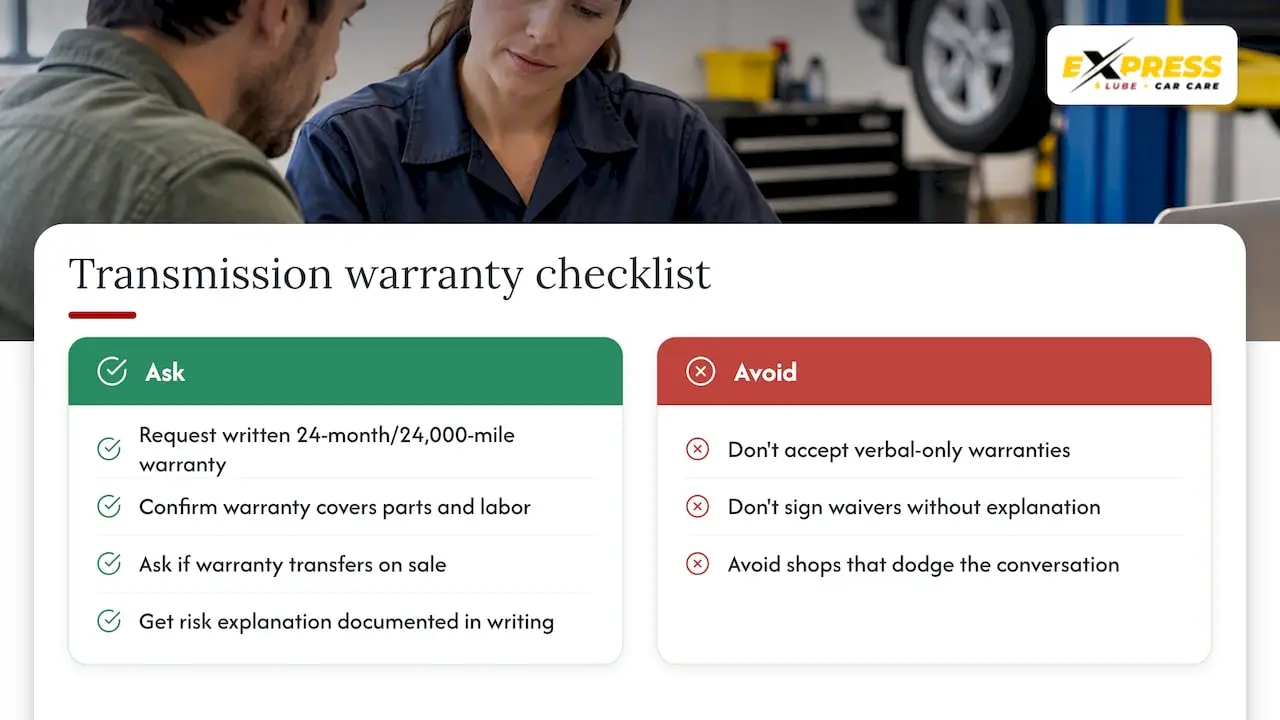
A written warranty is one of the clearest signs a shop stands behind its work, and it’s worth comparing terms before you commit to any repair. Our transmission repairs carry a 24-month/24,000-mile warranty as stated to clients, covering the parts and labor involved in the repair performed. When comparing shops, ask specifically whether the warranty covers parts only, labor only, or both, and whether it transfers if you sell the vehicle during the coverage period. Some shops also require a signed waiver before performing fluid service on an older, irregularly maintained transmission, since AAA cautions that a fluid change can sometimes worsen a transmission that already has internal damage. That isn’t a sign of a bad shop. It’s a sign the shop is being honest about risk rather than promising an outcome it can’t guarantee. Ask for that risk to be explained and documented in writing, along with the expected outcome of the service, before you sign off. A shop that avoids the conversation entirely is one to be cautious about.
Certifications and standards that matter in Plano
When you’re choosing a shop for transmission work, the most relevant credential to look for is ASE certification, which indicates a technician has met industry testing standards for a specific repair category such as automatic transmissions. Our technicians hold ASE certification, and we treat that as a baseline for anyone touching a transmission, not an upsell point. Beyond technician credentials, Texas vehicles are also subject to the state’s annual safety inspection program, though transmission function itself isn’t a line item on that inspection. A properly functioning transmission still matters for overall drivability and safety, which is part of why routine fluid checks belong in your regular maintenance plan even outside of inspection season.
Why reviews matter when picking a repair shop
Online reviews give you a window into how a shop handles the parts of a repair that don’t show up on an invoice: communication, timeline accuracy, and whether the final bill matched the estimate. When you’re reading reviews for any shop, look past the star rating and read a handful of the detailed ones, specifically searching for mentions of transmission or drivetrain work rather than oil changes or tires. A pattern of complaints about surprise charges or vague diagnostics is worth taking seriously, just as a pattern of praise for clear communication and documented findings is a good sign. Reviews are one input among several, alongside a shop’s certifications, warranty terms, and willingness to show you photos and codes directly. Taken together, they give you a more complete picture than any single factor on its own.
OEM versus aftermarket parts in transmission repair
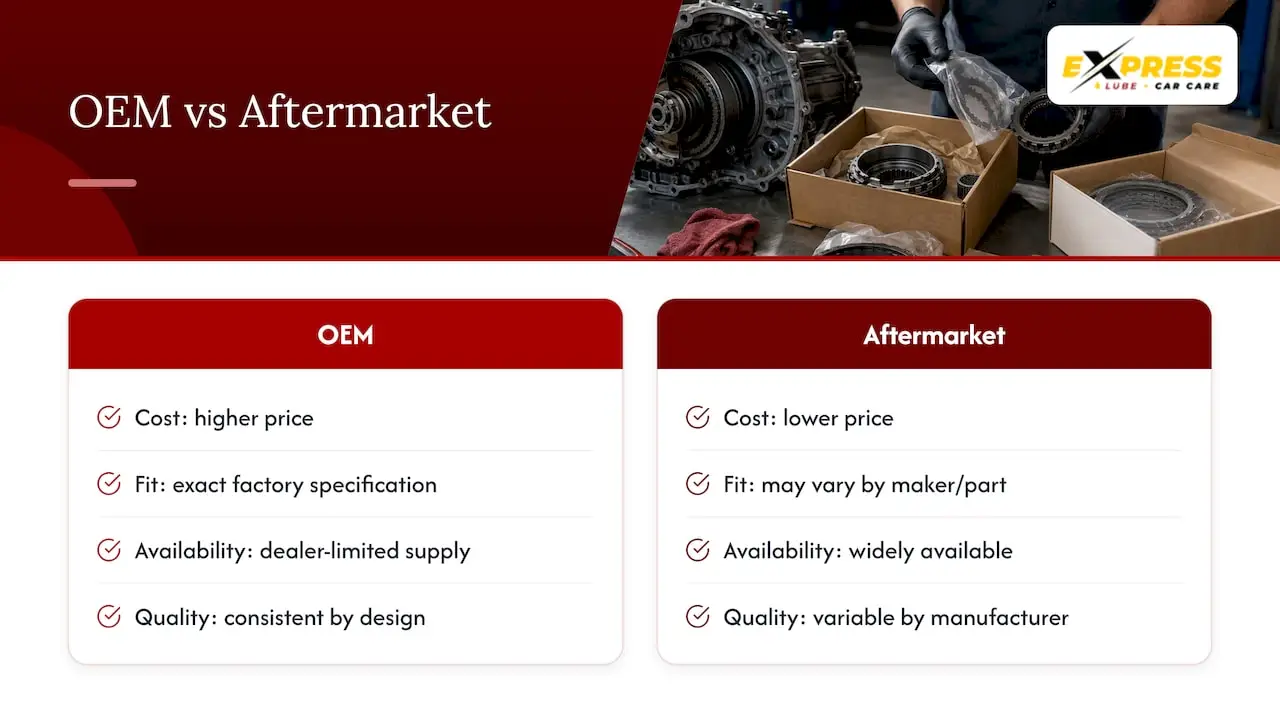
Whether a shop uses original equipment manufacturer (OEM) parts or aftermarket equivalents affects both cost and fit, and it’s a fair question to ask before approving a repair. OEM parts are made to the exact specification of your vehicle’s original components, which can matter more on complex or sealed transmission systems where tolerances are tight. Aftermarket and remanufactured parts are often more widely available and can cost less, and quality varies by manufacturer and part type. For vehicles with specialized fluid requirements, using the wrong type can cause shifting problems or damage over time, which is why brand-specific products, such as Volvo transmission fluid kits built for that platform’s AWD system, exist in the first place. A trustworthy shop will tell you which type of part it’s installing and why, rather than leaving that detail off the invoice.
Aftercare for your transmission after repair in Plano’s climate
Once your transmission is repaired, a few habits help protect that work, especially given Plano’s hot summers and stop-and-go commute patterns. High ambient heat combined with heavy traffic puts extra thermal strain on transmission fluid, so sticking to your automaker’s recommended fluid service interval matters more here than in milder climates. Avoid towing at or above your vehicle’s rated capacity in extreme heat, since that combination accelerates fluid breakdown. If you notice any return of the symptoms that brought you in originally, such as hesitation or a burning smell, don’t wait for your next scheduled visit. Bring the vehicle back in while the issue is still minor. Routine fluid checks between services, especially after a hot Texas summer, are a simple way to catch a developing problem before it becomes expensive.
When to act fast and when to get a second opinion
Grinding, burning smell, or a complete loss of gear engagement means stop driving and get it looked at now. A slow leak or minor hesitation gives you room to request a second written estimate. Either way, insist on documented photos and clear findings before approving major work.
— Express Lube & Car Care
Book your transmission diagnostic in Plano today
We know a transmission warning sign rarely waits for a convenient time, which is why our Plano shop runs on a no-appointment, same-day basis for diagnostics and repair.
Walk in or visit our transmission service page to see what’s included, and ask us for an itemized written estimate along with our warranty terms before any work begins. Our technicians are ASE-certified, and every visit comes with a digital inspection complete with photos and notes, so you’ll see exactly what we found and why we recommend it. If a transmission issue is giving you trouble right now, schedule your visit and we’ll get you in the same day.
FAQ
Is it cheaper to fix a transmission or replace it?
A repair, such as a fluid service or a partial mechanical fix, is almost always cheaper than a full replacement, since replacement involves installing an entirely new or remanufactured unit. The right choice depends on the extent of damage and your vehicle’s age, which is why AAA suggests a rebuild or remanufactured unit as a middle option worth asking about before agreeing to full replacement.
How much does transmission repair cost?
Costs vary widely depending on the service, ranging from a routine drain and fill on the low end to a full replacement in the thousands of dollars. Consumer Reports notes that costs depend heavily on vehicle type and the specific service required, so always ask for an itemized estimate before approving work.
Who is a good option for transmission repair in Plano?
We offer same-day transmission diagnostics and repair with no appointment required, performed by ASE-certified technicians and backed by digital inspection photos and a written warranty. That combination of speed, documentation, and credentialed technicians is worth looking for at any shop you consider.
What’s the average lifespan of a transmission?
Transmission lifespan depends heavily on maintenance habits, driving conditions, and vehicle type, with regular fluid service being one of the clearest ways to extend it. Following your automaker’s recommended service schedule, rather than skipping it or over-servicing a sealed system, is the guidance Consumer Reports recommends for protecting transmission longevity.
What are common warning signs of transmission trouble?
Common signs include delayed or rough shifting, slipping, grinding or whining noises, fluid leaks, a burning smell, and dashboard warning lights. Any of these warrants a diagnostic scan and inspection rather than continued driving, since catching the issue early typically keeps repair costs lower.
Sources
- Maintain Your Car’s Transmission and Avoid Costly Repairs – Consumer Reports
- Don’t Believe These Transmission Fluid Myths – Via (AAA)
- How Much Should You Budget for Car Repairs? – AAA