

A radiator flush is a vital maintenance procedure designed to clean and restore your vehicle's entire cooling system. Unlike a simple fluid drain, which only removes a portion of the old antifreeze, a flush is a comprehensive process that circulates a cleaning solution through the engine, radiator, and heater core to remove built-up rust, scale, and sludge.
This procedure ensures the system is free of contaminants before being refilled with fresh coolant, effectively resetting its ability to regulate engine temperature and prevent overheating.
Understanding the Function of a Radiator Flush
Your vehicle's cooling system functions like a circulatory system for the engine. The radiator acts as the heat exchanger, and the coolant (antifreeze) is the fluid that carries heat away from the engine. This fluid constantly circulates, absorbing thermal energy from the engine block and releasing it into the air as it passes through the radiator fins.
Over time, the protective additives in the coolant break down due to heat and chemical reactions. This degradation allows rust, scale, and other particulate matter to form and accumulate within the system. These contaminants can create a thick, abrasive sludge that obstructs the narrow passages in the radiator and engine, similar to how plaque can block an artery. When flow is restricted, the coolant cannot effectively dissipate heat, leading to elevated engine temperatures.
The Purpose of a Complete System Flush
A radiator flush is the definitive solution to this problem. It involves a multi-step process that forces a specialized cleaning agent through the entire cooling system under pressure. This solution is formulated to dissolve and dislodge the accumulated sediment and corrosion that a standard drain-and-fill procedure would leave behind.
After the cleaning agent has circulated, the system is thoroughly flushed with water to purge all loosened debris. Only when the system is verifiably clean is it refilled with new coolant that meets the specific requirements of your vehicle's manufacturer. This comprehensive cleaning ensures all components, from the water pump to the heater core, are clear and functioning optimally.
Key Distinction: A basic drain-and-fill can leave as much as 40% of the old, contaminated coolant and sludge in the engine block and heater core. This residual contamination immediately degrades the new fluid, reducing its effectiveness and lifespan. A professional flush removes nearly all of the old fluid and debris.
The Visible Transformation
The difference in system health before and after a flush is significant. A neglected system struggles to maintain proper temperature with contaminated fluid, while a properly flushed system operates efficiently and reliably.
This table illustrates the "before and after" state of a vehicle's cooling system.
Radiator Health Before vs After a Flush
| System Component | Before Flush (Neglected System) | After Flush (Maintained System) |
|---|---|---|
| Coolant Fluid | Brown, sludgy, and filled with rust particles. | Clean, brightly colored (green, orange, or pink), and free of debris. |
| Radiator Passages | Clogged with scale and sediment, restricting flow. | Clear and unobstructed, allowing for maximum heat dissipation. |
| Water Pump | Strained by thick, abrasive fluid, leading to wear. | Lubricated by clean coolant, ensuring smooth and efficient operation. |
| Engine Temperature | Tends to run hot, frequently approaching the upper limit. | Remains stable within the optimal operating range, even under load. |
As this comparison shows, a flush is not merely a fluid replacement—it is a restorative process that safeguards the health of the entire cooling system.
A Look Inside the Professional Radiator Flush Process
A professional radiator flush is a systematic procedure that extends far beyond a simple fluid exchange. It is a complete restoration of the cooling system's internal environment, more thorough than a gravity-based drain-and-fill that often leaves behind significant amounts of old coolant and sediment. Each step is precisely executed to restore optimal performance.
The process begins by draining the old, depleted coolant. Then, a powerful, specialized cleaning solution is introduced. This is not just water; it is a chemical agent specifically formulated to dissolve stubborn rust, scale, and sludge that have accumulated over thousands of miles of operation.
From Contamination to Cleanliness
Next, the engine is run for a specific duration, allowing the cleaning solution to circulate through every internal passage of the radiator, engine block, and heater core. This is a critical stage that a simple drain cannot replicate, as it actively breaks down years of hardened deposits.
This flowchart provides a clear overview of how the process transforms a cooling system from a state of inefficiency to one of peak performance.
This illustrates that the flush is not a dilution of the problem but a complete removal of the harmful buildup, thereby restoring the system's thermal efficiency.
Flushing and Refilling
Once the deposits are dissolved, the entire system is flushed with water to expel the cleaning agent and all the suspended debris. This ensures a completely clean environment for the new coolant. This step is vital—industry data suggests up to 40% of engine overheating incidents are linked to clogged cooling systems. A proper flush can improve a system's efficiency by as much as 25% by clearing these hidden obstructions.
Finally, the system is filled with fresh, high-quality antifreeze that meets the manufacturer's exact specifications. The process concludes by carefully bleeding any trapped air pockets from the system, a crucial step in preventing localized overheating. This is one of many comprehensive vehicle fluid exchange services designed to protect your engine.
Five Warning Signs Your Car Needs a Radiator Flush
Your vehicle provides several distinct indicators when its cooling system requires attention. Recognizing these signs can help you prevent a minor maintenance issue from escalating into a major and costly engine repair.
Observing the condition of your coolant and your vehicle's behavior is the first line of defense against overheating.
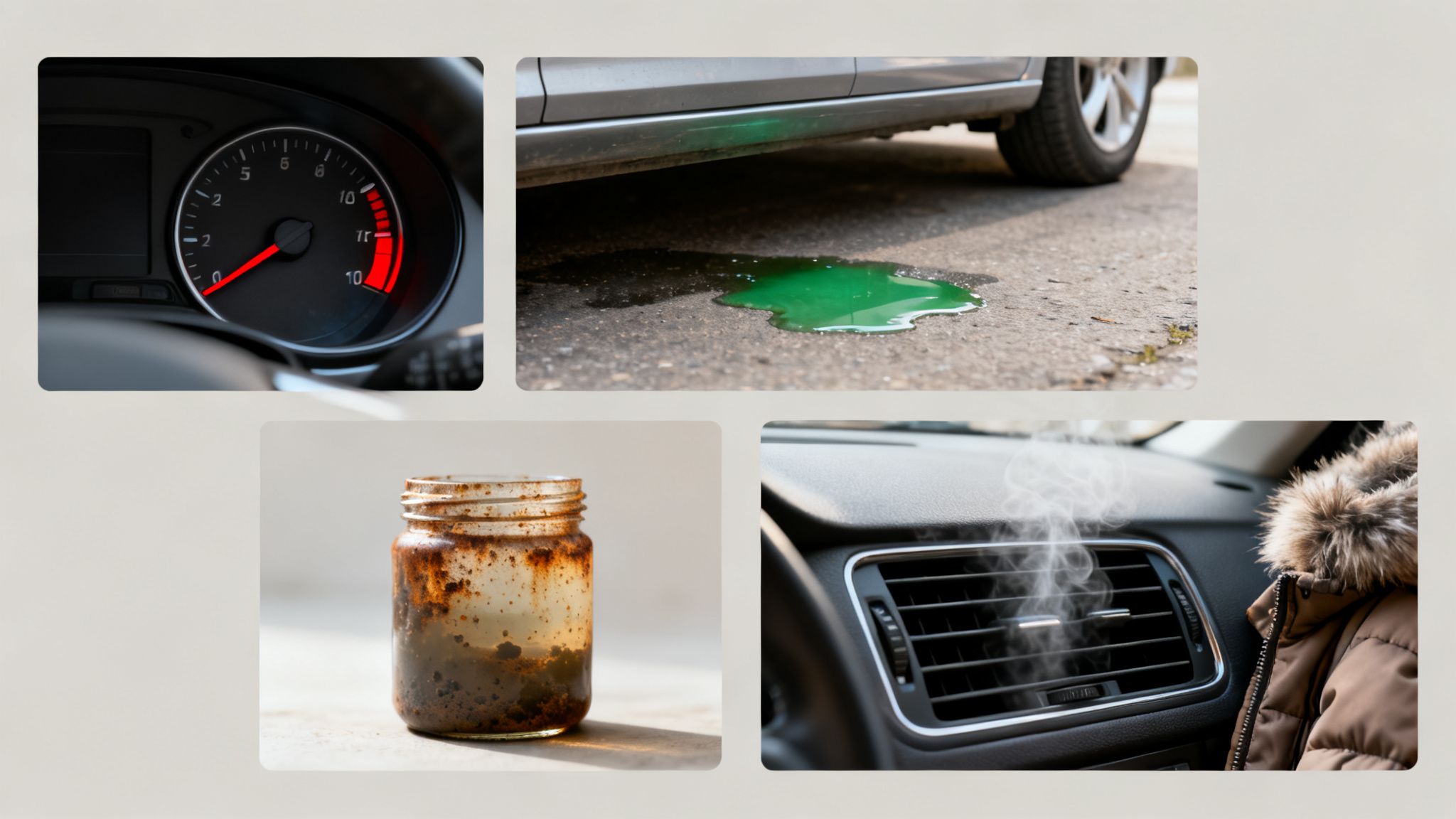
Addressing these issues promptly with a radiator flush can mitigate significant risks. Here are the five primary warning signs.
1. Your Temperature Gauge Climbs High
This is the most direct indication of a cooling system problem. If the temperature needle consistently rises toward the red zone, particularly during idling or in warm weather, the system is failing to dissipate heat effectively.
Degraded, sludgy coolant has a reduced capacity for heat transfer. This forces the engine to operate at higher-than-normal temperatures, accelerating wear on critical components.
2. Puddles of Fluid Under Your Car
Discovering bright green, orange, or pink fluid on the ground beneath your car is a clear sign of a coolant leak. Antifreeze has a uniquely slick texture and is usually easy to identify.
While the leak itself requires repair, its presence often points to a systemic issue. Over time, old, acidic coolant can corrode hoses, gaskets, and seals from the inside, causing them to fail. Following a repair, a flush is essential to remove the corrosive fluid that caused the leak in the first place.
A sweet, syrupy odor emanating from the engine bay or vehicle vents is another key symptom. This is the characteristic smell of ethylene glycol (a primary component of antifreeze) vaporizing on hot engine surfaces, confirming a leak.
3. Your Coolant Appears Dirty or Rusty
Healthy coolant should be translucent and brightly colored. When the engine is cool, inspect the fluid in the coolant reservoir. If it appears murky, brown, or contains visible particles of rust, it is well past its service life and requires a flush.
This discoloration indicates that the anti-corrosion inhibitors in the coolant have been depleted, allowing rust and other contaminants to circulate. This debris will eventually obstruct the narrow tubes within the radiator and heater core, leading to blockages. This is a fundamental concept discussed in our guide to understanding essential car maintenance.
4. The Heater Blows Lukewarm Air
A vehicle's cabin heater relies on hot engine coolant circulating through a small, radiator-like component called the heater core. If your heater is only producing lukewarm air on a cold day, the cause may not be the heating unit itself.
This symptom is often caused by a partial blockage in the heater core, where sludge and debris tend to accumulate due to lower flow rates. A thorough radiator flush is the most effective method for clearing this obstruction and restoring proper heater function.
5. You Hear Strange Engine Noises
An engine operating at excessive temperatures may produce a knocking or pinging sound. This is a harmful phenomenon known as detonation, where the air-fuel mixture ignites prematurely in the combustion chamber. This can cause severe damage to pistons and cylinder walls and requires immediate attention.
The Real-World Payoff: What a Radiator Flush Actually Does for Your Car
Viewing a radiator flush as routine maintenance overlooks its primary role as a preventative measure. It is not merely about managing the temperature gauge; it is a strategic investment in the long-term health and reliability of your vehicle's engine.
This procedure is a deep-cleaning regimen for one of the engine's most critical support systems, safeguarding expensive and often inaccessible components.
It Protects Your Engine’s Most Vulnerable Parts
Old, contaminated coolant acts as an abrasive liquid, accelerating wear on the internal components of the water pump—the heart of the cooling system. This abrasive sludge can damage the pump's seals and bearings, leading to failure. A clean system with fresh coolant provides proper lubrication, ensuring the pump operates smoothly and efficiently.
Similarly, the heater core, a small radiator located deep within the dashboard, is highly susceptible to blockages. Its narrow passages are a common collection point for sediment. A flush is the most effective way to keep these passages clear, preventing a loss of cabin heat and avoiding a complex, labor-intensive repair.
It’s Your Best Defense Against Catastrophic Failure
A poorly maintained cooling system is a leading cause of catastrophic engine failure, which can result in astronomical repair costs. A timely radiator flush is a simple procedure that can extend an engine's operational life by tens of thousands of miles.
For most vehicle owners, this single service can prevent future repairs, such as radiator or water pump replacement, which can easily cost over $1,500.
The economic principle is clear: a preventative service costing a few hundred dollars today can avert a repair bill in the thousands tomorrow. It is one of the most effective forms of financial risk management for any vehicle owner.
It Helps Your Car Last Longer, Period.
Fundamentally, an engine that operates at a stable, optimal temperature is an engine that endures. Overheating, even for brief periods, subjects head gaskets, seals, and metal components to extreme thermal stress, causing premature fatigue and failure.
By flushing out corrosive contaminants and restoring the system to peak efficiency, you ensure stable engine temperatures across all driving conditions. This operational consistency is the key to maximizing the lifespan and performance of your vehicle.
Learn more about maintaining these systems in our complete guide to heating and cooling services.
DIY vs. Professional Flush: What You Should Know
Vehicle owners often face the decision of whether to perform a radiator flush themselves or to entrust the task to a professional. While a DIY approach may seem cost-effective, it is important to weigh the potential savings against the significant technical risks and environmental responsibilities involved.
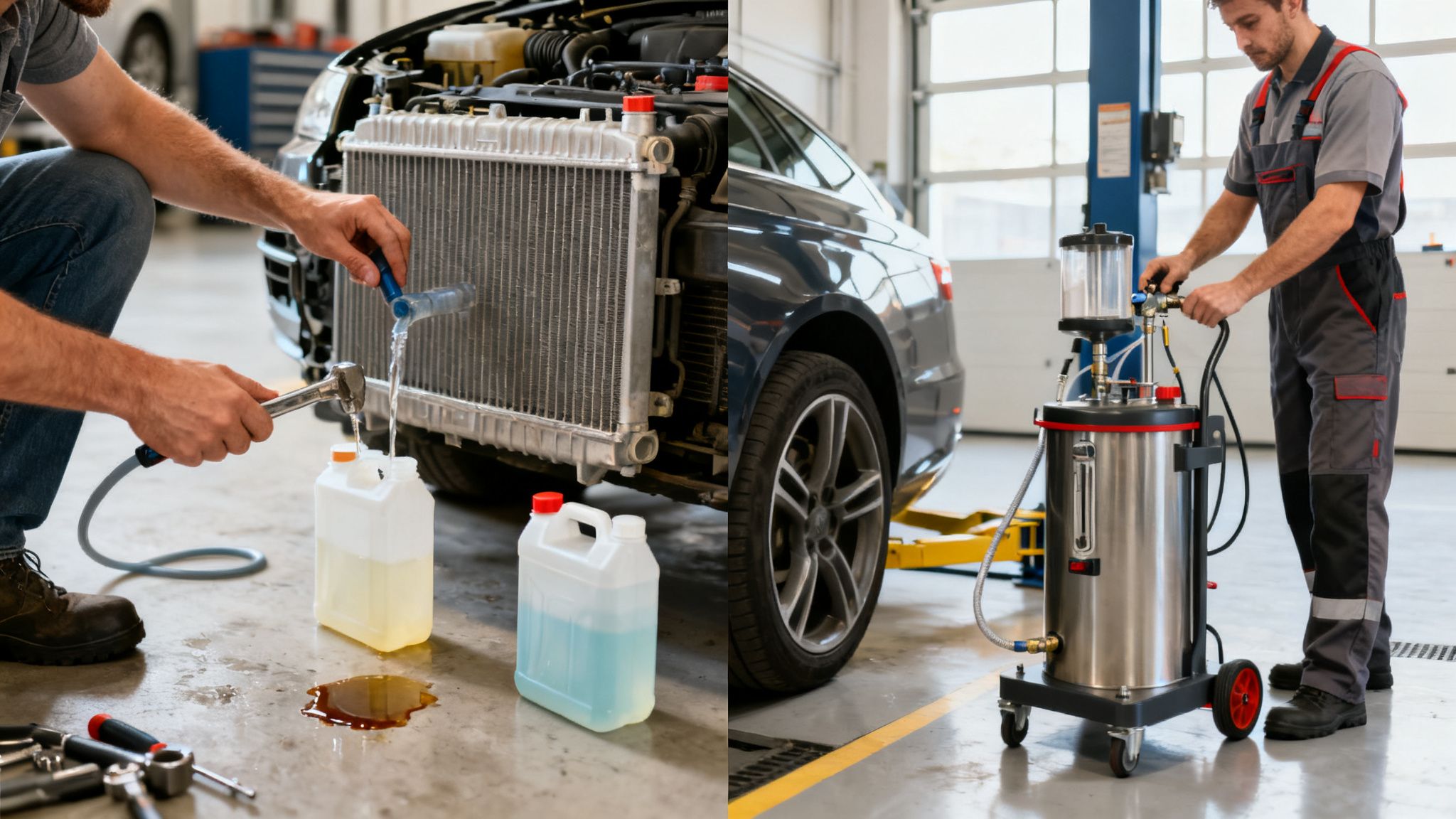
The primary appeal of a DIY flush is the reduced upfront cost. However, the procedure is more complex than a simple drain-and-fill, and errors can lead to serious and expensive consequences.
The Challenges of a DIY Radiator Flush
Attempting this service in a home garage presents several challenges that can easily overwhelm an amateur mechanic. Proper execution requires precision and an understanding of potential hazards.
Key risks include:
- Using the Wrong Coolant: Modern engines require very specific coolant formulations (e.g., OAT, HOAT, IAT). Using an incompatible type can trigger a chemical reaction that forms a thick gel, obstructing the entire cooling system and potentially causing severe engine damage.
- Improper Waste Disposal: Used antifreeze is a hazardous material, highly toxic to animals and harmful to the environment. It cannot be disposed of in household drains or trash. It must be collected and transported to a certified hazardous waste facility, a process that is often inconvenient.
- Trapping Air Pockets: After refilling, the system must be properly "bled" to remove all trapped air. An air pocket can prevent coolant from circulating correctly, creating a "hot spot" that can cause localized overheating and damage, even with a full radiator.
Ultimately, the value of a professional service lies in the assurance of a correct and complete job. It eliminates the risks of incorrect fluid application, improper disposal, and procedural errors that can lead to costly damage.
The Advantages of a Professional Service
Opting for a professional flush at a facility like Express Lube & Car Care provides benefits that extend beyond mere convenience. Our ASE-certified technicians possess the specialized equipment and expertise to perform a truly comprehensive service.
We utilize advanced pressure-flushing machines that force cleaning solutions through the entire system—including the radiator, engine block, and heater core. This method removes far more sediment and sludge than a passive gravity drain can achieve.
Furthermore, we manage the safe and legal disposal of all hazardous fluids, ensuring environmental compliance. You can drive away with the confidence that your vehicle’s cooling system has been restored to optimal condition, protecting your engine investment for years to come.
Common Questions About Radiator Flushes
Even with a solid understanding of the procedure, many drivers have additional questions. Here are answers to some of the most common inquiries we receive from our customers.
How Often Should I Really Get a Radiator Flush?
Your vehicle's owner's manual is the definitive source for maintenance intervals. Most modern manufacturers recommend a coolant flush every 5 years or 100,000 km.
However, this is a general guideline. Severe driving conditions, such as frequent stop-and-go traffic, towing heavy loads, or operating in the high ambient temperatures common in Texas, can accelerate coolant degradation. For vehicles in such environments, we often recommend a more conservative interval of every 3 years or 60,000 km to prevent potential issues.
What Should a Professional Radiator Flush Cost?
The cost of a professional radiator flush typically ranges from $120 to $300. The final price is influenced by several factors:
- Your Vehicle: Larger vehicles like trucks and SUVs have greater cooling system capacities, requiring more coolant and longer service times.
- Type of Coolant: Some vehicles require specific, premium antifreeze formulations to meet manufacturer warranty and performance standards.
- Shop Rates: Labor costs vary by region and facility.
While it is an expense, it should be viewed as a minor investment to prevent major engine repair costs in the future.
Isn't Topping Off My Coolant Good Enough?
No, topping off coolant is not a substitute for a flush. Adding new fluid to the reservoir is analogous to adding clean water to a muddy container—it does not remove the existing sediment. The old, contaminated fluid, laden with rust and scale, continues to circulate and cause damage.
Topping off is a temporary measure to address a low fluid level. It does not clean out the harmful deposits that lead to clogs, corrosion, and overheating. A complete flush is the only method to thoroughly clean the system and restore its protective qualities.
As vehicle lifespans increase, preventative maintenance becomes more critical. Neglecting the cooling system can raise the risk of overheating by as much as 28%, according to industry analysis, leading to expensive and avoidable breakdowns. You can find more information on the growing market for these services at OpenPR.com.
Ready to protect your engine from the Texas heat? The ASE-certified technicians at Express Lube & Car Care in Plano are here to help with a fast, professional radiator flush. Drive in today—no appointment needed!