

That inspection reminder tends to hit at the worst time. You're juggling work, school drop-off, traffic on Central, and now your car has to pass emissions too.
The good news is that most failures aren't mysterious. In the shop, the same patterns come up over and over. A monitor isn’t ready. A gas cap isn’t sealing. A check engine light got cleared too close to test day. Or a sensor has started drifting and the engine is running richer than it should.
If you want to know how to pass emissions in Plano without guessing, the smartest move is simple prep. A little work in the driveway, the right drive cycle, and a realistic sense of when to stop trying shortcuts can save a wasted trip.
Why Your Vehicle Might Fail Its Next Emissions Test
That notice in the mail makes a lot of drivers nervous for a reason. About 15% of vehicles fail their first emissions test, and the average repair cost after a failure is $1,200 according to Fleet Rabbit’s emissions guide.
That’s why I tell people not to treat emissions like a surprise event. Treat it like maintenance.
Small issues can trigger a big inconvenience
A failed test doesn’t always mean your engine is worn out. Sometimes the problem is basic.
- A check engine light is on: That’s often enough to stop the process right away.
- A recent battery disconnect wiped monitor status: The car may run fine and still not be ready for inspection.
- A simple EVAP issue exists: Something as small as a loose gas cap can start the whole chain.
A lot of drivers also lose time chasing the wrong fix. They clear a code, drive a few short trips around Plano, then head to the station thinking they’re good. The car feels normal, but the system still isn’t ready.
If your dash light has been on at all recently, it helps to understand what the warning points to. This breakdown of what causes check engine light problems is a useful place to start before test week.
The expensive part is usually the delay
The repair bill gets attention, but the hidden cost is the scramble afterward. You lose an afternoon at the station, then another trip to a repair shop, then another retest.
Practical rule: If your vehicle is due soon, don’t wait until the last week to think about emissions.
The best approach is boring on purpose. Check the obvious items early. Drive the car enough after any repair. Don’t clear codes just to make a light disappear. A clean first pass usually comes from preparation, not luck.
Your Driveway Pre-Test Checklist
A lot of emissions prep can happen before you ever leave home. You don’t need a lift, smoke machine, or scan tool to catch the most common problems.
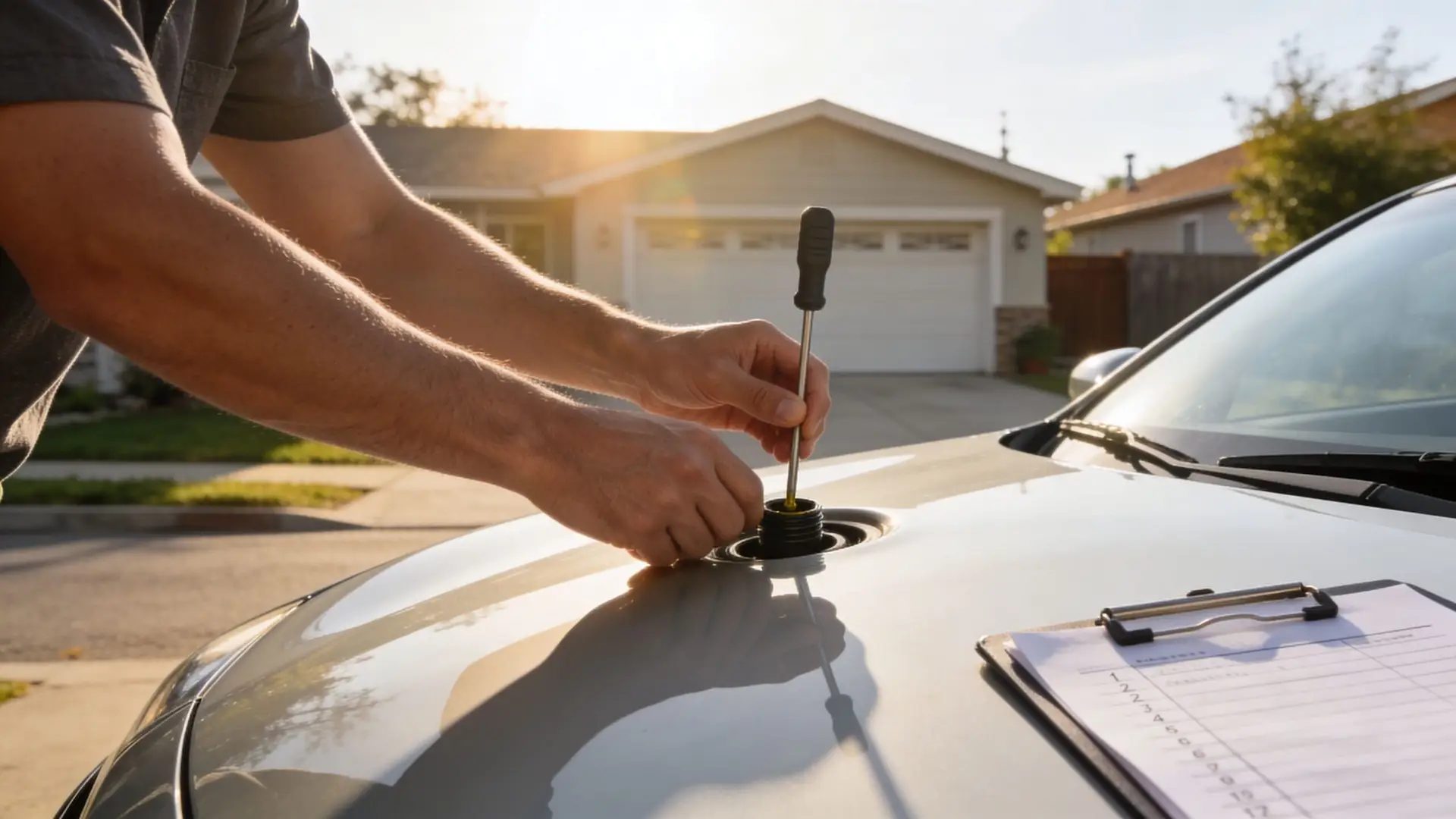
Start with the easiest visual checks
Walk around the vehicle and open the hood. Look for anything obviously out of place.
- Gas cap condition: Remove it, inspect the sealing surface, and tighten it fully when you reinstall it. If the cap feels loose, cracked, or won’t seat well, that matters because EVAP leaks are a common reason cars run into emissions trouble.
- Dashboard warning lights: If the check engine light is on, stop there and diagnose it first. Don’t assume the car will “probably pass anyway.”
- Exhaust smell or unusual noise: A strong fuel smell, a hissing leak, or a loud exhaust note can point to issues that affect test results.
Check fluids and the basics people skip
Dirty fluids don’t automatically mean failure, but neglected maintenance makes a vehicle less likely to behave well during testing.
- Engine oil: Old oil can contribute to higher emissions. If it’s overdue, change it before test time.
- Coolant level: If the engine can’t maintain normal operating temperature, the emissions system may not run correctly.
- Air filter: A restricted filter can affect the air-fuel mixture. If yours looks loaded with dirt, it’s worth replacing. If you’re not sure about service timing, this guide on how often should you change your air filter explains what to look for.
A car that gets regular oil changes, a clean air filter, and basic fluid checks usually gives fewer surprises on test day.
Don’t ignore tire pressure and seasonal prep
Tire pressure sounds like a safety item, not an emissions item, but it still matters. A vehicle that rolls properly and runs at normal load behaves more predictably during inspection.
This is especially important when weather swings hit North Texas. Cold snaps, hot pavement, and long idle times all change how a vehicle runs. Seasonal maintenance overlaps with emissions prep more than many drivers realize. If you’re tightening up your routine before inspection season, this guide on how to winterize your vehicle is a helpful refresher on cold-weather readiness.
What this checklist can and can’t do
This driveway check won’t diagnose a weak oxygen sensor or a lazy catalytic converter. It will catch the obvious stuff that wastes trips.
Use it if:
- Your car runs normally
- No warning light is on
- You haven’t recently cleared codes
- You want a quick confidence check before scheduling the test
Skip the guesswork and get proper diagnostics if the engine idles rough, fuel economy has dropped, or the dash light keeps coming back.
Common Failure Causes and When to See a Pro
Once the easy checks are done, the primary causes usually fall into two buckets. The engine is either producing dirty exhaust, or the computer doesn’t trust what it’s seeing.
Think of the emissions system like a conversation between sensors and the engine computer. If one sensor lies, even slightly, the computer makes bad decisions. Fuel delivery shifts. Combustion changes. Emissions climb.
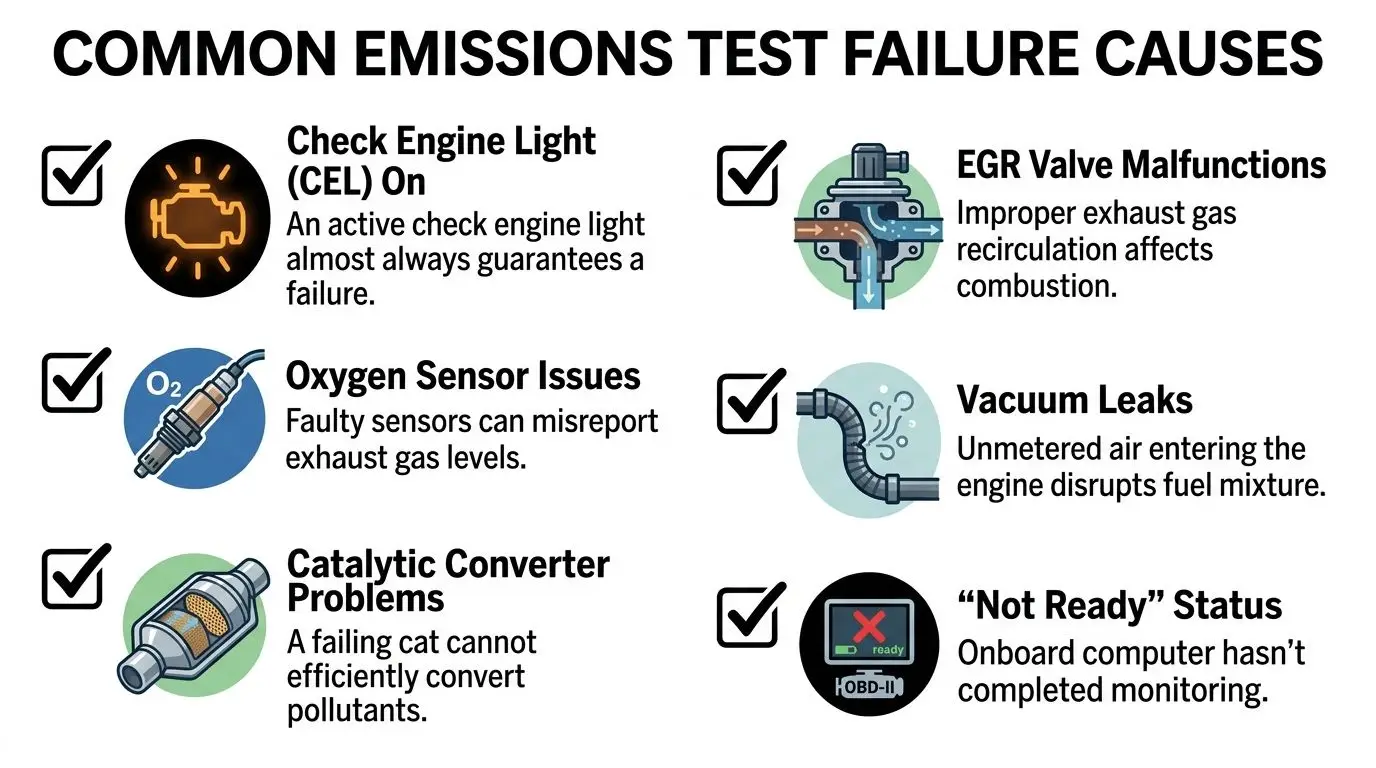
The usual mechanical culprits
Oxygen sensors are one of the biggest players here. Faulty O2 sensors cause 20% to 30% of failures, and cleaning the fuel system with polyether amine detergents can reduce hydrocarbon emissions by 15% to 25% according to Jiffy Lube’s emissions resource.
That doesn’t mean every rough-running car needs a sensor and a bottle of cleaner. It means those are common places to look.
Other repeat offenders include:
- Catalytic converter problems: The converter can’t clean up exhaust if it’s damaged or if another issue has contaminated it.
- Vacuum leaks: Extra air sneaks in, the fuel mixture shifts, and the engine may stumble or idle high.
- Misfires and ignition wear: Unburned fuel heads straight into the exhaust.
- EGR problems: Exhaust gas recirculation has to work correctly for stable combustion and lower emissions.
If you want a better feel for warning signs before the code sets hard, this article on bad O 2 sensor symptoms covers the behavior drivers usually notice first.
Additives can help, but they don’t perform miracles
I’m not against fuel additives. Used correctly, they can clean a dirty fuel system. They can also buy a borderline vehicle a little breathing room if carbon buildup is part of the issue.
What they won’t do is repair a broken part.
If the engine has a genuine sensor fault, an exhaust leak, or a failing converter, a fuel treatment might make you feel proactive without solving the underlying problem.
That’s the trade-off. A bottle of PEA cleaner is reasonable for a car that runs decently and just needs cleanup. It’s a waste of time if the vehicle has obvious drivability issues, active codes, or repeated failures.
Common emissions-related diagnostic trouble codes
| DTC Code | Common Meaning | Potential Solution |
|---|---|---|
| P0420 | Catalyst efficiency issue | Diagnose converter performance, check for upstream sensor or mixture problems |
| P0430 | Catalyst efficiency issue on the opposite bank | Inspect sensors, fuel control, and converter condition |
| P0171 | System too lean | Check for vacuum leaks, intake leaks, or fuel delivery issues |
| P0172 | System too rich | Inspect sensors, injectors, air filter, and fuel control |
| P0300 | Random misfire | Check plugs, coils, ignition, and compression-related causes |
| P0440 | EVAP system fault | Inspect gas cap, EVAP hoses, and leak-related components |
| P0442 | Small EVAP leak | Check cap seal and test EVAP system for minor leaks |
| P0455 | Large EVAP leak | Inspect for disconnected hoses, damaged cap, or major leak points |
Gas engines aren’t the whole story in Plano
For fleet owners and diesel drivers, emissions prep looks different. Short-trip diesel work is hard on DPF and EGR systems. Soot loads build up, regeneration gets interrupted, and DEF-related faults can turn into inspection trouble fast.
A diesel that never gets fully hot often needs a proper highway run so the system can complete regeneration. If that hasn’t happened in a while, DIY guessing usually stops being productive.
That’s when a professional scan matters. A technician can tell whether you’re dealing with a maintenance issue, a sensor fault, or a component that’s reached the end of its useful life.
The Important Drive Cycle to Get Your Car Ready
A lot of people hear “not ready” and think the shop is telling them their car failed mechanically. That’s not what it means.
It means the car’s computer hasn’t finished checking itself yet.

What readiness monitors do
Modern vehicles run internal self-tests called readiness monitors. These monitors check systems like the catalyst, oxygen sensors, EVAP, and EGR after specific driving conditions occur.
If you disconnect the battery or clear codes, those monitors reset. Then the car needs the right mix of conditions to run them again.
“Not ready” results account for up to 30% to 40% of initial test failures, and a full drive cycle with mixed city and highway driving for 30 to 60 miles after a cold start helps the vehicle’s 6 to 11 monitors complete their self-tests according to OBDeleven’s guide to passing emissions.
A drive cycle that works in real-world conditions
Here’s the plain-English version.
Start cold
Let the vehicle begin the day fully cooled down. A cold start matters because some monitors only begin from that condition.Idle until normal temperature
Don’t race the engine. Let it settle and warm up naturally.Drive mixed city traffic
Use normal acceleration, normal braking, and a few complete stops. This gives some monitors the stop-and-go patterns they need.Add steady highway driving
Get the vehicle up to speed and cruise smoothly. Avoid abrupt throttle changes if possible.Keep driving long enough
A short grocery run usually won’t do it. The computer needs time and variety.
The mistake I see most often is a driver clearing a light, taking three quick trips around town, and assuming the system has finished testing itself.
This walkthrough gives a decent visual if you want to see the concept in action.
What not to do before test day
Some habits make readiness harder to complete.
- Don’t disconnect the battery
- Don’t clear codes right before inspection
- Don’t rely only on short trips
- Don’t test immediately after repairs unless you know the monitors have run
If you have access to an OBD-II scanner, check readiness before heading to the station. That one step can save a wasted afternoon.
What to Expect at a Plano Texas Emissions Station
For most Plano drivers with a newer vehicle, the test feels less dramatic than people expect. You pull in, a technician gathers the basic vehicle information, and then the inspection process starts with the vehicle’s onboard computer.
For most vehicles, it starts at the OBD-II port
On model year 1996 and newer vehicles, the technician usually connects a scan tool to the OBD-II port, which is typically under the dashboard near the steering column.
That scan looks for two things first. Are there emissions-related trouble codes stored, and have the required monitors completed their self-checks.
If the vehicle reports a fault or too many systems are still not ready, that shows up right there on the test.
What the system is evaluating
The emissions system doesn’t just care whether the engine feels fine to you. It checks whether the vehicle’s control systems are behaving within acceptable limits.
According to CarParts.com’s emissions overview, the vehicle’s emissions monitoring system runs self-tests called monitors, those monitors reset when the battery is disconnected, and the vehicle must have the majority of them successfully completed to pass. That same overview notes threshold examples such as HC below 150ppm and CO below 1.50%.
Older vehicles or certain inspection scenarios may still involve a tailpipe-style procedure instead of, or along with, the computer-based check. In those cases, the equipment measures what’s coming out of the exhaust.
What your visit usually feels like
A normal visit goes something like this:
- Arrival and check-in: The technician confirms the vehicle information.
- Connection to the test system: The car is plugged in and scanned.
- Monitor and code review: The system checks readiness and fault status.
- Inspection result: You receive a Vehicle Inspection Report, often called a VIR.
If your car recently had a dead battery, alternator issue, or code reset, tell the technician before the test starts. That context matters.
Knowing the flow helps people relax. The inspection station isn’t trying to trick your vehicle. It’s asking the computer, “Have you checked yourself, and are you reporting clean operation?”
What to Do If Your Vehicle Fails the Test
A failed emissions result feels frustrating, but it’s useful information. The report tells you where to focus instead of leaving you to guess.
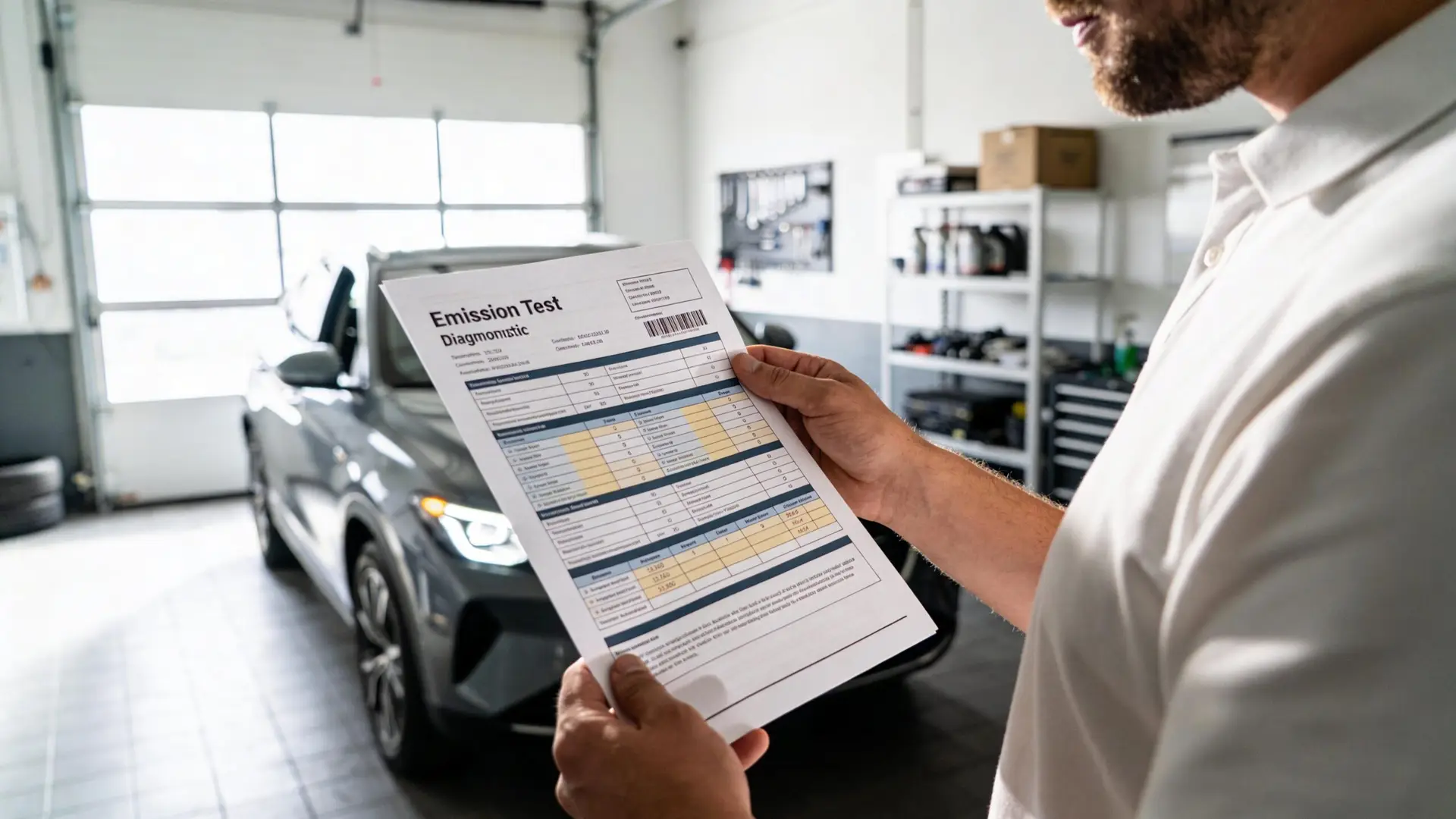
Read the VIR before buying parts
The first move is to study the Vehicle Inspection Report. Look at whether the failure came from an active code, a readiness issue, or measured emissions output.
Those are very different problems.
If the report says a monitor wasn’t ready, you may not need a repair at all. You may need the correct drive cycle and enough time for the system to finish its checks. If the report points to an emissions-related code, then diagnosis comes before parts replacement.
Don’t play parts darts
People often waste money here. They replace a gas cap, then a sensor, then maybe a converter, all because somebody online said it worked for them once.
That approach gets expensive fast. A good diagnostic process checks the code, live data, monitor status, and the engine’s actual behavior before anyone recommends a fix.
Use this quick decision guide:
If it failed for “not ready”
Complete a proper drive cycle and verify readiness before retesting.If it failed with a check engine light or code
Diagnose the code. Don’t clear it and hope.If it failed with high emissions on an older vehicle
Look at mixture control, ignition condition, fuel system cleanliness, and converter performance.
Keep records and ask clear questions
Good records help more than most drivers think. Save the VIR, repair invoices, and notes about when the battery was disconnected or when codes were cleared.
That also makes it easier to judge whether a shop communicates well. For drivers who want to know what strong customer communication looks like on the shop side, this piece on Auto Repair Reputation Management gives a useful look at why documentation and clarity matter.
Bring the failure report with you. It shortens the conversation and reduces guesswork.
Ask about retest timing and any relief options
Texas procedures can change, and eligibility depends on your exact situation, but if your vehicle fails, ask the inspection station or your local county office about retest rules, timing, and whether any waiver or extension path applies in your case.
The key is not to assume. Get the current answer tied to your registration and county requirements, then make repairs based on evidence instead of urgency.
Frequently Asked Questions About Emissions Testing
Does every vehicle in the area get the same emissions test
No. The process depends on model year, vehicle type, and the applicable inspection method. Many newer vehicles are checked through the onboard diagnostic system, while some older vehicles may follow a different testing path.
Will a check engine light always matter
Yes, in practical terms it matters immediately. If the light is on, diagnose the reason before heading in. Clearing the code without fixing the problem usually creates a second problem when monitors reset.
If I replaced my battery, should I wait before testing
Yes. A battery disconnect can reset readiness monitors. Drive the vehicle through normal mixed conditions and confirm the system is ready before you go.
Can I pass if the car seems to run perfectly
Not always. A car can feel normal and still fail because the computer hasn’t finished its checks or because a sensor is reporting bad data without obvious drivability symptoms.
Are fuel additives enough to get me through
Sometimes they help a borderline dirty system. They do not replace diagnosis or repair when a part has failed.
What if I’m out of town when inspection is due
Contact the appropriate Texas registration or inspection authority for the current process tied to your situation. Don’t wait until you’re already late. Rules and paperwork can depend on where the vehicle is and how long you’ll be away.
Is the emissions test the same as the general state inspection
They’re related, but they’re not the same thing. Emissions focuses on pollution-control performance. Other inspection items cover separate roadworthiness and compliance checks.
If your vehicle is due for inspection, has a check engine light, or keeps showing a not-ready status, Express Lube & Car Care can help you sort out the problem without the usual runaround. Their ASE-certified team in Plano handles routine maintenance, diagnostics, and repair work under one roof, so you can get the issue identified, fixed properly, and get back on the road with less stress.