

A commercial oil change service is a specialized automotive maintenance business that replaces engine oil, lubricates chassis components, and performs related preventive checks on passenger cars, trucks, and vans without offering full mechanical or body repairs. The industry operates under NAICS code 811191, which officially classifies these shops as providers of motor oil replacement and automotive chassis lubrication. Providers like Jiffy Lube and Amerit Fleet Solutions represent the two ends of this market: retail quick-lube shops serving individual drivers, and mobile service centers handling commercial fleets. Understanding exactly what this service covers, and what it does not, saves you time and sets the right expectations before you pull into a bay.
What is a commercial oil change service and what does it include?
A commercial oil change service is defined by its scope: routine lubrication and preventive maintenance, not mechanical diagnosis or repair. The Oil Change Services industry in the U.S. explicitly excludes full auto mechanics, electrical repairs, paint work, and body shop services. That distinction matters because many drivers arrive expecting a transmission check or brake repair, only to find those services require a different type of shop entirely.
Here is what a standard commercial oil change service typically covers:
- Motor oil replacement using conventional, synthetic, or semi-synthetic oil matched to your vehicle’s specifications
- Oil filter replacement to remove the old filter housing and install a new one rated for your engine
- Chassis lubrication on applicable vehicles, including grease fittings on suspension and steering components
- Fluid top-offs for windshield washer fluid, coolant, and power steering fluid as part of a courtesy inspection
- Tire pressure check and visual inspection of belts, hoses, and air filters
- Oil change reminder reset to clear the dashboard service light after the job is complete
What it does not include: engine diagnostics, brake pad replacement, transmission service, electrical repairs, or any form of body or paint work. Think of a commercial oil change shop the way you think of a commercial kitchen. It is purpose-built for one category of work, and that focus is exactly what makes it fast and reliable.
| Service Type | Commercial Oil Change Shop | Full-Service Auto Repair Shop |
|---|---|---|
| Motor oil replacement | Yes | Yes |
| Oil filter replacement | Yes | Yes |
| Chassis lubrication | Yes | Sometimes |
| Engine diagnostics | No | Yes |
| Brake repair | No | Yes |
| Transmission service | No | Yes |
| Body and paint work | No | Yes |
Pro Tip: If a technician at a quick-lube shop notices a brake issue during your visit, ask for a written note describing the concern. Take that note to a certified repair shop for a proper diagnosis. The two service types work best together, not as substitutes for each other.
How does a commercial oil change service work, step by step?
The process at a quick-lube shop is designed for speed without cutting corners on quality. Providers like Jiffy Lube advertise oil changes in 15 minutes or less, and that timeline is achievable because the workflow is standardized and the equipment is purpose-built for this single task.
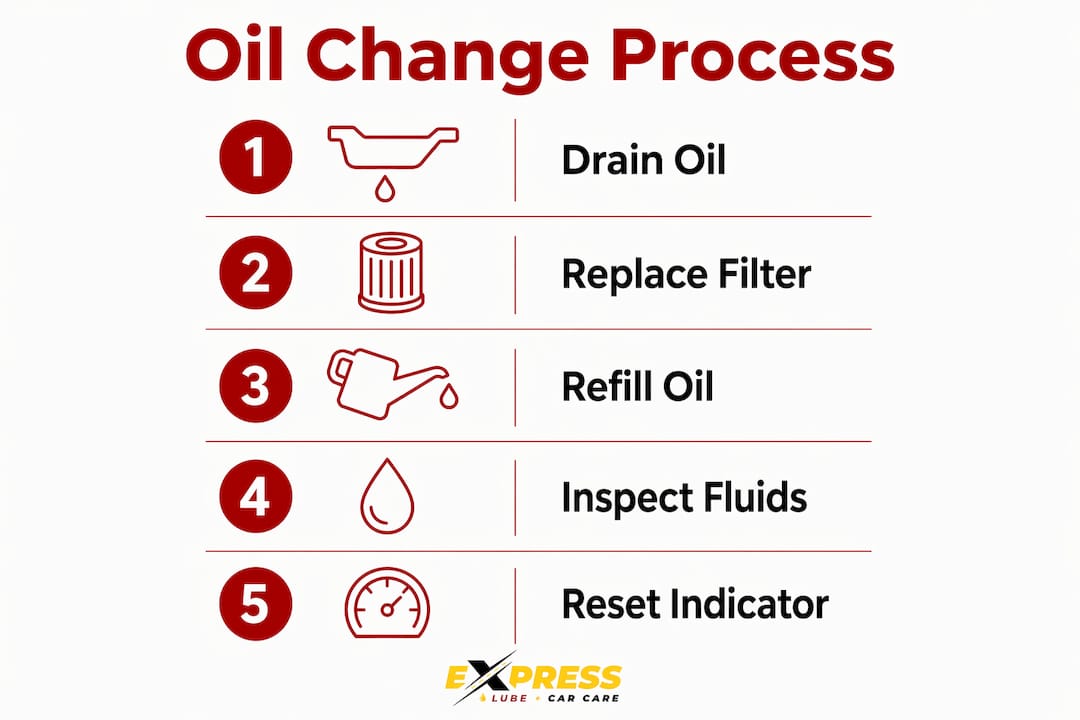
Here is the typical sequence from arrival to departure:
- Vehicle intake. A technician records your mileage, vehicle identification number, and current oil type. This creates a service record tied to your car.
- Oil drain. The technician removes the drain plug from the oil pan, drains the old oil completely, and inspects the drain plug for wear before reinstalling it with a torque wrench to the manufacturer’s specification.
- Filter replacement. The old filter housing is removed and replaced with a new filter rated for your engine type and oil viscosity. Skipping this step defeats the purpose of fresh oil, since a contaminated filter reintroduces debris immediately.
- Oil selection and fill. The technician selects the correct oil grade, whether conventional, full synthetic, or semi-synthetic, based on your owner’s manual and current mileage. The engine is filled to the manufacturer’s specified capacity.
- Fluid and component checks. Windshield washer fluid, coolant, and tire pressure are checked and corrected as needed. Belts and hoses receive a visual inspection.
- Oil change light reset. This step is more important than most drivers realize. Without resetting the service indicator, your dashboard will continue showing a service-due warning even after a completed oil change, causing unnecessary confusion and potential repeat visits.
- Final verification. The technician starts the engine, checks for leaks around the drain plug and filter, and confirms oil pressure reads correctly before returning the vehicle.
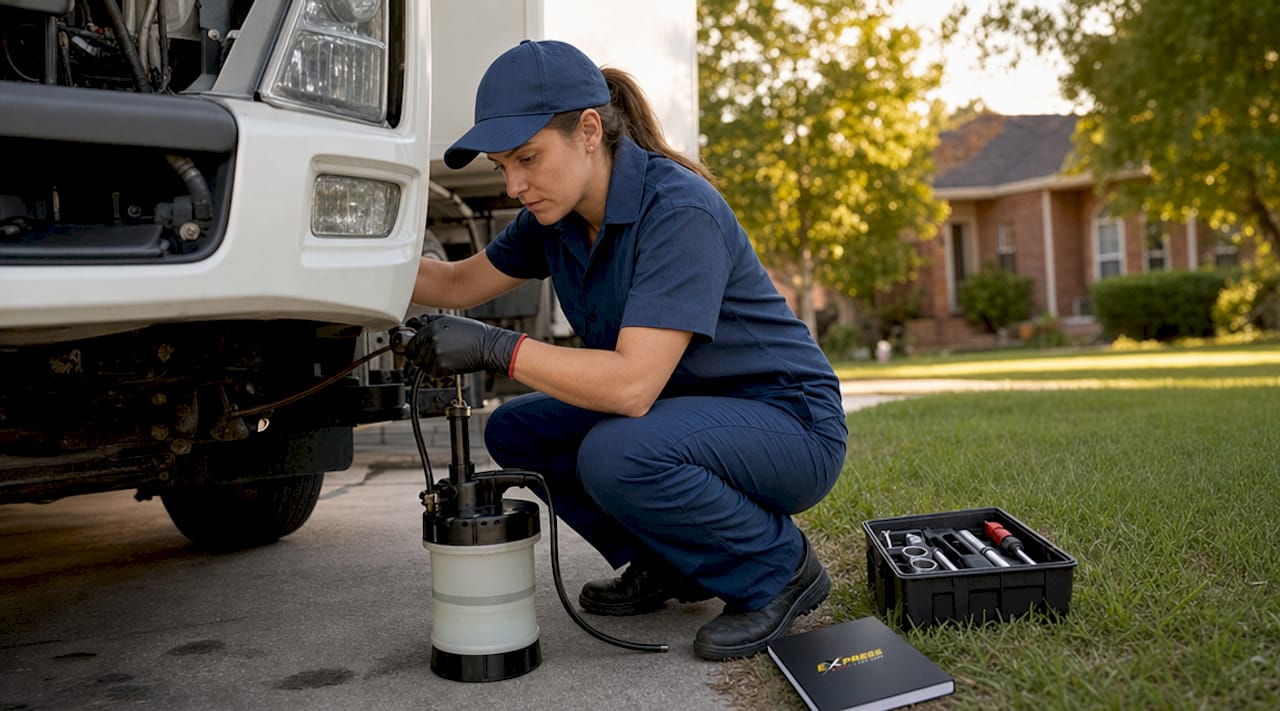
For fleet operators, Amerit’s Mobile Service Centers bring this same process directly to a fleet’s location, handling up to 90% of routine maintenance on-site during scheduled downtime. That model eliminates the time cost of driving each vehicle to a shop, which adds up quickly when you are managing dozens of units.
Pro Tip: Always ask for your oil change receipt and confirm the oil type used is recorded on it. If your vehicle requires full synthetic and the receipt shows conventional oil, address it before leaving the bay.
What determines the right oil change interval for your vehicle?
Oil change intervals are based on both time and mileage because oil degrades over time even when a vehicle sits unused. A car driven only 1,000 miles over six months still needs fresh oil, because heat cycling, moisture accumulation, and oxidation break down the oil’s protective properties regardless of how far the vehicle traveled.
For passenger cars, the standard recommendation is every 3 months or 5,000 miles, whichever comes first, for conventional oil. Full synthetic oil extends that window significantly, with many manufacturers approving 7,500 to 10,000-mile intervals. Heavy-duty commercial trucks operate on a different scale entirely. According to Rush Truck Centers, commercial trucks require oil changes every 10,000 to 25,000 miles depending on engine type, climate, and route conditions.
Fleet managers take interval management further than simple mileage tracking. The most effective programs track engine hours and idling time alongside mileage, because a truck that idles for four hours a day accumulates engine wear without adding miles to the odometer. Oil analysis, where a small sample is sent to a lab to measure contamination and viscosity breakdown, gives fleet operators precise data on when oil actually needs changing rather than relying on fixed schedules.
| Vehicle Type | Typical Oil Change Interval | Key Influencing Factors |
|---|---|---|
| Passenger car (conventional oil) | Every 3 months or 5,000 miles | Driving habits, climate, short trips |
| Passenger car (full synthetic) | Every 7,500 to 10,000 miles | Manufacturer spec, oil quality |
| Light-duty truck or SUV | Every 5,000 to 7,500 miles | Towing, payload, terrain |
| Heavy-duty commercial truck | Every 10,000 to 25,000 miles | Engine type, idling, route length |
Driving conditions also shift the math. Short trips under five miles, frequent stop-and-go traffic, and extreme heat or cold all accelerate oil degradation. Drivers in these conditions should follow the shorter end of any recommended interval rather than waiting for the maximum mileage.
What are the benefits of commercial oil change services for car owners and fleets?
The core oil change service benefit for any driver is engine protection. Fresh oil reduces friction between moving metal parts, carries heat away from the engine, and suspends combustion byproducts until the next drain. Neglecting this service is one of the most common causes of premature engine wear, and engine replacement costs dwarf the price of routine oil changes by a factor of hundreds.
Beyond engine protection, commercial oil change services deliver several practical advantages:
- Speed. A 15-minute service window means minimal disruption to your day. No appointment is needed at most quick-lube providers, including Express Lube & Car Care, which means you can stop in between errands rather than scheduling a dedicated service day.
- Preventive inspection. Technicians check fluid levels, tire pressure, and visible components during every visit. This creates a low-cost early warning system for issues that could become expensive if left unnoticed.
- Maintenance documentation. Commercial oil change providers record service history and fluid specifications for every visit. That paper trail supports warranty claims and helps you track your vehicle’s maintenance pattern over time.
- Cost efficiency. A routine oil change at a quick-lube shop costs a fraction of what a dealership charges for the same service, and the quick-lube vs. dealership comparison consistently favors independent providers on price and turnaround time.
- Fleet uptime. Mobile commercial oil change services perform post-service leak inspections and documentation on-site, reducing the number of vehicles pulled from service for repeat visits.
Regular oil changes are the single highest-return maintenance investment available to any vehicle owner. The cost of one engine replacement equals roughly 200 routine oil changes.
Key takeaways
A commercial oil change service delivers fast, focused engine lubrication maintenance that protects your vehicle, documents its service history, and costs far less than deferred engine repairs.
| Point | Details |
|---|---|
| Defined scope | Commercial oil change services cover lubrication and preventive checks, not mechanical or body repairs. |
| Fast turnaround | Most quick-lube providers complete the full service in 15 minutes or less. |
| Interval matters | Oil degrades by time and mileage, so follow both metrics, not just one. |
| Reset the light | Resetting the oil change indicator after service prevents false reminders and driver confusion. |
| Documentation adds value | Service records support warranty claims and help track long-term vehicle health. |
Why the scope of your oil change service matters more than most drivers realize
At Express Lube & Car Care, we see a consistent pattern: drivers arrive with a vague sense that their car “needs service” and leave surprised by how much a focused oil change visit actually covers. The inspection component alone, checking tire pressure, fluid levels, belts, and hoses, catches problems that would otherwise go unnoticed until they become expensive.
What we have learned from years of serving Plano drivers is that the biggest mistake people make is treating a commercial oil change as a lesser service because it is fast and affordable. Speed is the result of specialization, not shortcuts. A purpose-built oil change bay with the right lifts, drain equipment, and filter tools performs this specific job more reliably than a general repair shop that treats it as a low-priority task between bigger jobs.
The second mistake is waiting too long between visits. We regularly see engines with sludge buildup from extended intervals, and that damage is irreversible. If your vehicle spends a lot of time in stop-and-go traffic or makes frequent short trips, move to the shorter end of your recommended interval. Your engine will reflect that decision for years.
Choosing a reputable provider means looking for certified technicians, transparent pricing, and a clear service record at the end of every visit. Those three factors separate a professional commercial oil change from a rushed transaction.
— Express Lube & Car Care
Fast, certified oil changes at Express Lube & Car Care in Plano
Express Lube & Car Care in Plano offers no-appointment oil changes performed by certified technicians, with full service typically completed in 15 minutes. Whether you drive a daily commuter or manage a fleet of work vehicles, the team handles conventional, synthetic, and semi-synthetic oil changes with a thorough preventive inspection included at every visit.
Fleet operators can take advantage of dedicated fleet maintenance services designed to minimize vehicle downtime and keep maintenance records organized. Military personnel and healthcare providers receive special discounts as part of Express Lube’s community commitment. Check the current oil change specials before your next visit to find the best pricing on the service your vehicle needs.
FAQ
What is the difference between a commercial oil change and a regular oil change?
A commercial oil change service refers to a business category, defined under NAICS 811191, that specializes in motor oil replacement and chassis lubrication without full mechanical repairs. A “regular” oil change describes the same physical service, whether performed at a quick-lube shop, dealership, or independent mechanic.
How long does a commercial oil change service take?
Most quick-lube providers complete the full oil change process, including drain, filter replacement, fluid checks, and service light reset, in 15 minutes or less. Wait times may vary by location and traffic volume.
How often should I get a commercial oil change?
Passenger cars using conventional oil need a change every 3 months or 5,000 miles, whichever comes first. Vehicles running full synthetic oil can typically extend that interval to 7,500 to 10,000 miles, depending on the manufacturer’s specification.
Does a commercial oil change service reset the oil change light?
Resetting the oil change indicator is a standard part of professional service. Without this reset, the dashboard continues showing a service-due warning even after fresh oil has been installed, which causes unnecessary concern and potential repeat visits.
Can commercial oil change services handle fleet vehicles?
Yes. Providers like Amerit Fleet Solutions operate mobile service centers that perform oil changes and routine maintenance directly at a fleet’s location, handling up to 90% of scheduled maintenance on-site to minimize operational downtime.