

If your car’s AC is running but not cold, the most likely culprits are a refrigerant leak, blocked condenser airflow, a clogged cabin filter, or a compressor and control fault. Start by checking whether the compressor clutch actually engages with the AC on MAX. Never add refrigerant if it isn’t engaging. That single check tells you whether you’re dealing with an airflow problem or something electrical.
TL;DR:
- A compressor clutch that does not engage when the AC is on indicates a low refrigerant charge or electrical protection, not a simple recharge.
- Blocked condenser fins or a non-spinning condenser fan often cause warm air at idle while cooling may still occur at highway speeds.
- Replacing a dirty cabin air filter can improve airflow and perceived cooling, especially if airflow into the cabin feels weak even when refrigerant is sufficient.
- Proper diagnosis involves measuring vent temperatures, checking pressure levels, and inspecting for leaks, which cannot be reliably done with DIY recharge kits.
- If the compressor clutch never engages or if refrigerant leaks are suspected, professional pressure tests, vacuum hold, and dye tracing are necessary to accurately identify and fix the issue.
Table of Contents
- Why Is My Car AC Not Cold? Quick Checklist
- What Causes a Car AC to Blow Warm Air?
- How Do I Fix My Car AC When It’s Not Cooling?
- When Should You Take Your Car AC Not Cold Problem to a Shop?
- Our Take on Diagnosing a Car AC That Won’t Cool
- Ready to Get Your Car AC Cold Again?
- Sources
- FAQ
Why Is My Car AC Not Cold? Quick Checklist
Before you chase down a leak or assume the worst, run through this five-minute triage. It costs nothing and tells you which direction to go next.
- Set up the cabin correctly. Turn the AC to MAX, hit recirculate, and run the fan on high. Feel the vents. Weak airflow points to a blower or filter issue rather than a refrigerant problem.
- Watch for compressor engagement. Pop the hood with the engine running and AC on. You should hear or see the compressor clutch cycle on. If it never engages, refrigerant is likely too low, or a pressure switch or relay has cut power to protect the compressor.
- Check the condenser. Look at the front-most radiator-like unit behind the grille. Leaves, bugs, and road debris block airflow and choke cooling. Confirm the condenser fan spins once the engine warms up.
- Inspect the cabin air filter. A filter packed with debris or smelling musty restricts airflow into the cabin, even if the AC system itself is working fine.
- Look, don’t touch, for leak signs. Hissing near hoses or an oily film around fittings suggests a refrigerant leak. Leave the actual refrigerant leak diagnosis to a technician with recovery equipment.
Pro Tip: If the compressor clutch won’t engage at all, stop right there. Don’t add a can of refrigerant hoping it’ll kick the system back to life. A pressure switch cuts power on purpose when the charge is critically low, and forcing it can mask a bigger problem.
What Causes a Car AC to Blow Warm Air?
Car air conditioning issues rarely have one single cause. They tend to fall into a handful of buckets, and the symptom pattern usually tells you which one you’re dealing with.
- Low refrigerant. In a sealed system, refrigerant doesn’t simply run out over time. If the charge is low, a leak is almost always the reason, and recharging without finding that leak typically leads to the same problem returning within months.
- Condenser or heat-rejection failure. Blocked fins, a dead condenser fan, or heat soak from a struggling radiator can produce a very specific pattern: cold air while cruising, warm air sitting at a light. Moving air across the condenser at highway speed compensates for a fan that’s failing to do its job.
- Cabin airflow and blend-door problems. A clogged filter, a weak blower motor, or a stuck blend-door actuator can leave one side of the cabin cold and the other warm, even when the AC system itself is charged correctly.
- Compressor, clutch, or electrical faults. A bad relay, blown fuse, or failed pressure switch can prevent the compressor from ever engaging, which means no cooling regardless of refrigerant level.
- Expansion valve or orifice tube restrictions. These meter refrigerant flow into the evaporator. A clogged or malfunctioning one causes inconsistent cooling, cycling, or evaporator icing.
- Control logic protections. Many newer vehicles will intentionally limit or disable AC compressor operation if a sensor reads outside normal range, which can look like a random, intermittent failure.
Cold air at speed but warm air at idle is one of the more common patterns technicians see, and it almost always traces back to condenser airflow rather than the refrigerant charge itself. Warm air the moment you start the car, on the other hand, points more toward a compressor or control issue than a slow leak.
How Do I Fix My Car AC When It’s Not Cooling?
A handful of checks are safe to do yourself before paying for diagnostics. Others require equipment you won’t have in your garage.
- Measure vent temperature. Stick a thermometer in the center vent with AC on MAX and the engine at idle for a few minutes. A properly working system should drop vent air well below cabin ambient. If you don’t have a thermometer, the back-of-hand test still tells you a lot: air that feels merely “less warm” instead of genuinely cold is a red flag.
- Inspect the condenser with the engine off. Clear away leaves, bugs, and debris from the fins using low-pressure water or a soft brush, never a pressure washer aimed directly at the fins. Then start the engine and confirm the condenser fan actually spins.
- Swap the cabin air filter. This is the cheapest fix on the list, and a dirty filter can noticeably cut how cold the cabin feels even when the AC system is perfectly healthy. Replace it, retest, and see if airflow and perceived cooling improve.
- Consider the limits of a DIY recharge kit. These kits only make sense for slow, gradual R-134a loss, and only once you’ve confirmed the compressor engages. They won’t work on R-1234yf systems without the right fittings, and they skip the vacuum test entirely, which means a hidden leak stays hidden. If your car uses R-1234yf, a DIY can is the wrong tool from the start.
Never vent refrigerant into the air, never add refrigerant when the compressor isn’t engaging, and keep hands and tools clear of the condenser fan whenever the engine is running.
Pro Tip: On a healthy system, the suction line running back to the compressor should feel cold to the touch while the liquid line stays warm. If both lines feel roughly the same temperature, that’s a strong clue you’re dealing with a restriction or a low charge, not just a dirty filter.
When Should You Take Your Car AC Not Cold Problem to a Shop?
Certain signs mean it’s time to stop troubleshooting and book a diagnostic appointment. If the compressor clutch never engages, if you notice hissing or oily residue anywhere in the AC lines, if a recent recharge lost its cooling again within weeks, or if the AC is fine at highway speed but warm at idle, you’re looking at a problem that needs pressure gauges and proper equipment, not guesswork.
Here’s what a certified shop actually does that a DIY kit can’t:
- Recovers refrigerant properly. Under EPA Section 609, refrigerant must be recovered with certified equipment rather than vented, both for environmental reasons and to accurately measure how much charge the system actually had.
- Runs a vacuum hold test. Pulling the system down to a deep vacuum, close to 29.5 inches of mercury, and holding it there for a set period exposes slow leaks and residual moisture that a quick recharge would never catch.
- Uses UV dye and pressure readings. Technicians check high and low side pressures at a set rpm and use dye tracing to pinpoint exactly where a leak is coming from, whether that’s a hose fitting, an o-ring, or the condenser itself.
- Checks vent temperature against a known baseline, rather than relying on how cold the air “feels.”
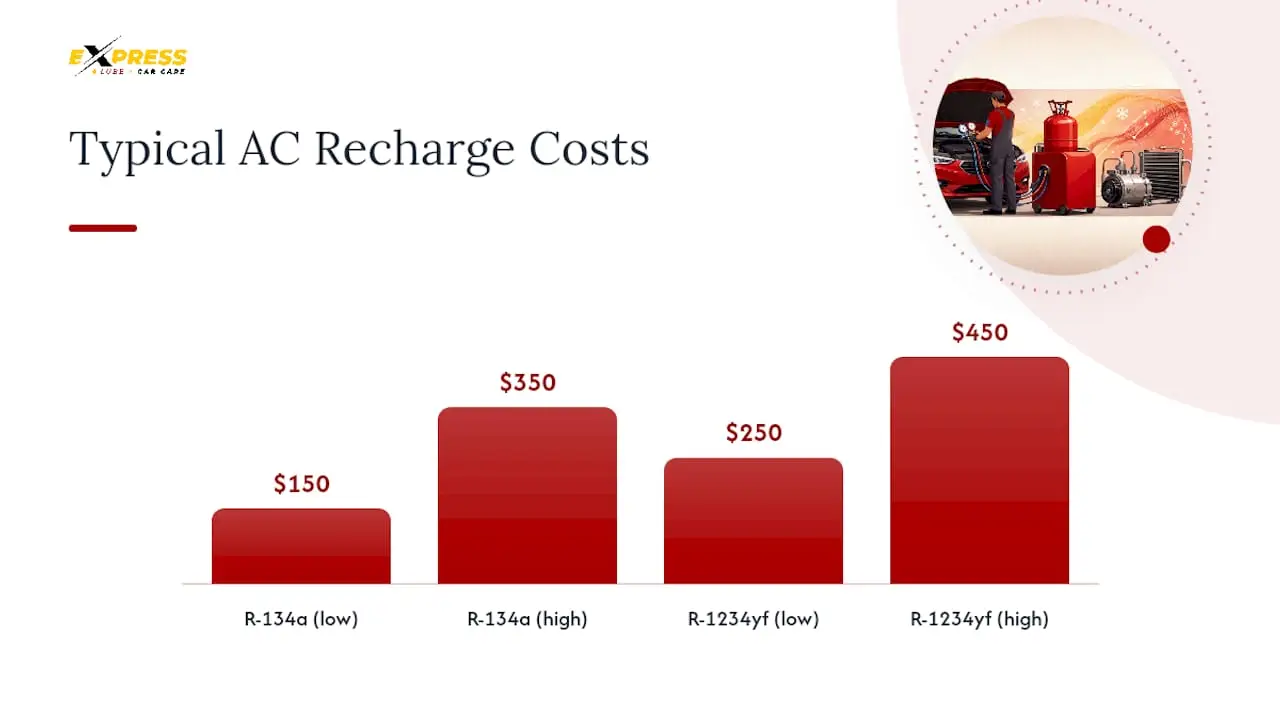
Cost and time depend heavily on what’s actually wrong. Refrigerant type matters. Refrigerant recharges typically run $150 to $350 for R-134a systems and $250 to $450 for R-1234yf systems, and that gap reflects the price difference in the refrigerant itself, not labor. A simple hose or o-ring repair is a different job entirely from replacing a failed compressor, so ask upfront which one you’re actually facing.
A technician who can show you the recovered refrigerant weight, the vacuum hold reading, and a visual leak location before recommending a repair is giving you proof, not a guess.
Ask any shop for those numbers before you approve work. Express Lube & Car Care runs AC repair diagnostics with no appointment required, using certified technicians and documented pressure and vacuum readings so you know exactly what you’re paying for.
Our Take on Diagnosing a Car AC That Won’t Cool
Quick checks matter, but they only get you halfway. A clogged filter or a dirty condenser is easy to spot and fix. What’s harder to eyeball is a slow leak or a marginal compressor, and that’s exactly where guesswork gets expensive. Measurement-based diagnosis, pressures, vent temps, vacuum hold, tells you whether a recharge will actually last or whether you’re paying to lose refrigerant again in three months. We’d rather show you the numbers than sell you a hope.
Ready to Get Your Car AC Cold Again?
If your AC has moved past the DIY stage, hissing, warm at idle, or a recharge that didn’t stick, it’s time for real diagnostics instead of another guess. Express Lube & Car Care runs AC diagnostics with no appointment required, using certified technicians who pull vacuum tests, trace leaks, and show you the actual pressure and vent temperature readings before recommending a repair.

That means you see what’s wrong before you pay to fix it, not after. Most AC diagnostic visits can be completed same-day, so you’re not left sweating through a Plano summer waiting on a callback. Book your visit through the AC repair service page and get a straight answer on what’s keeping your cabin warm.
Sources
- Kelley Blue Book — Automotive A/C repair & diagnostics guide
- Car AC recharge cost guide
- Professional Motor Mechanic — how to diagnose A/C problems
FAQ
Why Is My Car AC Running but Not Cooling?
The compressor may be running while a low refrigerant charge, a blocked condenser, or a failing blend-door actuator prevents cold air from reaching the vents. Checking compressor engagement and airflow at the condenser narrows down which one it is.
How Do You Make Car AC Cold Again?
Start with the cheap fixes: a fresh cabin filter and a clean condenser. If the compressor isn’t engaging or cooling doesn’t return, the system likely needs a professional leak check and vacuum test rather than a simple recharge.
How Can You Tell If a Car’s Refrigerant Is Low?
Warm air at idle that improves somewhat at speed, a compressor that engages only intermittently, or oily residue near AC fittings all suggest low refrigerant. A shop confirms it with gauge pressure readings rather than guesswork.
Why Is My Car AC Cool but Not Cold?
Partial cooling often points to a partially blocked condenser, a slightly undercharged system from a small leak, or a cabin filter restricting airflow enough to dull the effect. Express Lube & Car Care can pinpoint the exact cause with pressure and vent temperature checks the same day.