

That musty odor coming from your vents almost always means mold, mildew, or bacteria growing on the evaporator core, or a cabin air filter that’s overdue for a change. The fastest first move: swap the cabin air filter and run the fan (no A/C compressor) for a short period with the windows down. If the smell lingers after that, you’re likely dealing with a clogged drain tube or a contaminated evaporator that needs deeper attention.
TL;DR:
- Replacing the cabin air filter and clearing debris from the intake cowl can often eliminate musty odors caused by mold or bacteria growth.
- A clogged evaporator drain tube or standing water in the HVAC system can trap moisture and require professional cleaning or repair if DIY steps fail.
- Running the blower fan alone for a few minutes after turning off the AC helps dry the evaporator and prevent mold buildup.
- Signs like persistent odor despite filter replacement, reduced airflow, or water inside the cabin indicate a need for professional diagnosis and cleaning.
- Regular maintenance, including frequent filter changes and keeping the cowl intake clear, significantly reduces the risk of odors returning.
Table of Contents
- What Causes That Musty AC Smell in Your Car
- Step-by-Step DIY Checks Before You Call a Shop
- When a Musty AC Smell Needs a Professional
- Prevention Habits That Keep the Smell From Coming Back
- Why We Treat AC Odor Diagnosis Like Any Other Safety Repair
- Get Your Car’s AC Smell Diagnosed the Same Day
- Sources
- FAQ
What Causes That Musty AC Smell in Your Car
Your car’s air conditioner produces condensation every time it runs, the same way a cold glass of lemonade sweats on a summer porch. That moisture is supposed to drip harmlessly out through the evaporator drain tube and onto the pavement under your car. When it doesn’t drain properly, or when it lingers on the evaporator fins too long, it creates exactly the damp, dark environment mold and bacteria need to thrive.
A few specific culprits show up again and again in shop diagnostics:
- A saturated cabin air filter. This filter catches pollen, dust, and road grime, but it can also become a breeding ground for fungal growth if it sits wet or gets ignored for too long. Peer-reviewed testing on automobile cabin filters found fungal concentrations as high as 5.4 x 10^4 cfu/m2 in summer samples, mostly Aspergillus species, which is a serious contamination load for something six inches from your face on every drive.
- A clogged condensate drain tube. Debris, dust, and even small bugs can block this small tube, trapping water inside the HVAC housing instead of letting it drain outside.
- A blocked intake cowl. Leaves, pine needles, and grass clippings collect at the base of your windshield and get pulled into the fresh-air intake, adding organic material for bacteria to feed on.
- Standing water elsewhere in the cabin, from a leaking sunroof drain or a wet floor mat left too long, which adds moisture the HVAC system wasn’t designed to handle.
Here’s a detail most drivers don’t know: filter media doesn’t need airflow to grow mold. Research on cabin filter contamination shows static, no-airflow conditions actually allow more visible mold growth than filters in regular use, meaning a filter that looks clean on a shelf can still be seeding your musty smell in car AC systems parked for a few days.
For quick action right now: replace the cabin filter, clear visible debris from the cowl intake at the base of your windshield, and watch for water dripping under the car after you run the AC for a few minutes. No drip on a hot, humid day is a red flag for a clogged drain.
Pro Tip: Run your blower fan alone, with the compressor off, for two to three minutes before you shut the car off. This dries the evaporator core and starves the mold that causes most musty smell in AC complaints.
Step-by-Step DIY Checks Before You Call a Shop
Work through these in order. Each step rules out a cause before you move to the next, which saves you money and keeps you from spraying chemicals into a system that just needed a $15 filter.
- Locate and replace the cabin air filter. On most vehicles it sits behind the glovebox or under the dash on the passenger side. Pull the old filter out before you spray any disinfectant products; treating a dirty filter just masks the smell temporarily.
- Inspect the fresh-air intake cowl. Pop the hood and look at the base of the windshield where it meets the cowl panel. Clear out leaves, seed pods, or nesting material by hand or with a shop vacuum. Wear gloves if there’s evidence of rodent activity.
- Run the AC and watch for condensate. Idle the car with the AC on for five minutes, then check underneath for a small puddle of water forming near the firewall area. No water usually points to a clogged evaporator drain tube, which may need a shop visit to clear properly.
- Apply an automotive HVAC antimicrobial treatment. Follow the product label exactly: most require you to run the blower on high while spraying into the fresh-air intake or through the plenum, then let it sit for the recommended dwell time before driving.
A few safety notes matter more than the steps themselves. Never pour bleach or household cleaners into your vents. Bleach reacts poorly with HVAC plastics and can create fumes you don’t want circulating through a closed cabin. Always follow the ventilation and eye protection instructions on any commercial disinfectant spray. And skip consumer ozone generators inside your car. Ozone treatments can neutralize odor-causing microbes, but they require professional-grade equipment and controlled exposure times. Doing it yourself in an enclosed vehicle risks respiratory irritation for anyone who gets in the car too soon after.
Pro Tip: If you smell the odor strongest the second you start the car but it fades within a minute or two, that’s usually surface contamination on the evaporator, not a major mechanical failure. A fading smell is a good sign your fix will hold.
When a Musty AC Smell Needs a Professional
Some signs mean it’s time to stop troubleshooting in your driveway and get the car on a lift. Watch for:
- The odor persists after you’ve replaced the filter, cleared the cowl, and treated the system with a disinfectant spray.
- Airflow feels noticeably weaker than it used to, even on the highest fan setting.
- You notice a sweet coolant smell or anything electrical, which points to a different problem entirely.
- Water shows up inside the cabin, on the carpet or under the dash, rather than draining outside.
- Anyone riding in the car develops coughing, sneezing, or sinus irritation that eases once they’re out of the vehicle. Mold exposure can aggravate allergies and respiratory conditions, and kids, older adults, and anyone with asthma face higher risk from repeated exposure.
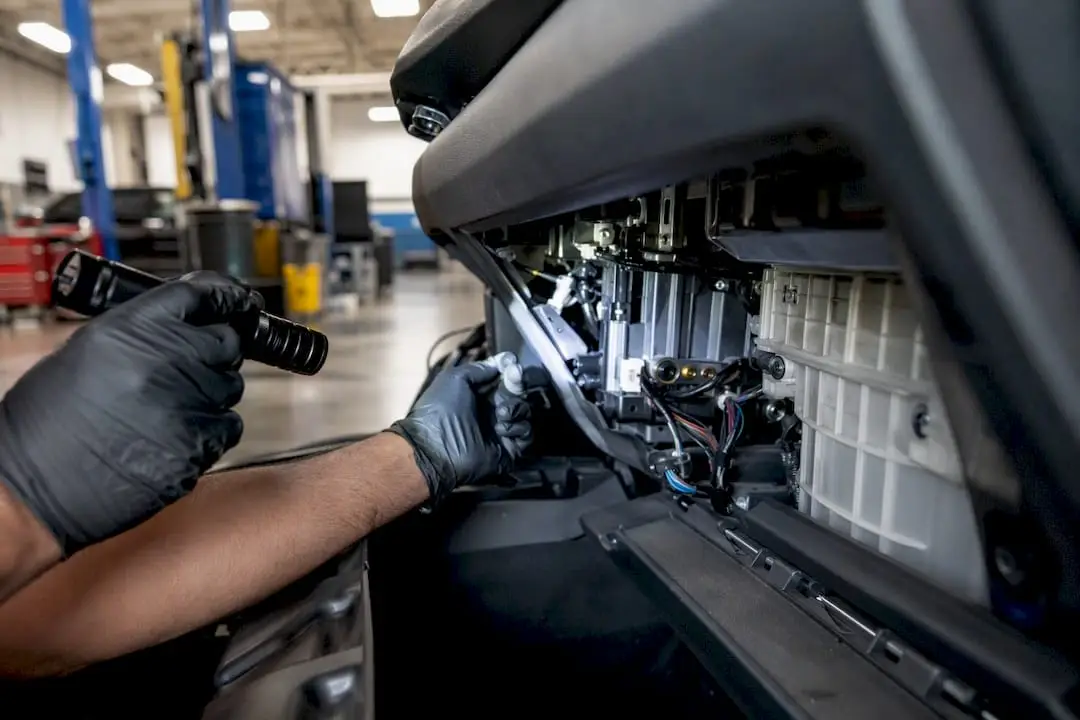
At this stage, a shop-level fix usually means direct access to the evaporator core for sanitizing, clearing or replacing the drain tube, cleaning the ductwork, or in stubborn cases, a professional ozone treatment that reaches every surface a spray bottle can’t. If a leak is letting water pool somewhere it shouldn’t, that gets repaired too.
Before you commit to any AC repair, ask for digital inspection photos so you can see exactly what the technician found, confirm the technician holds ASE certification, and get a written quote with a clear scope of work. Express Lube & Car Care runs HVAC diagnostics with no appointment needed, which matters when a smelly air conditioning unit is making every commute unpleasant and you don’t want to wait a week for a slot.
Prevention Habits That Keep the Smell From Coming Back
A little routine maintenance goes further than any single deep clean. Frequent filter replacement is the single highest-value habit you can adopt, since filters both trap contaminants and can grow their own microbial colonies if left in place too long.
- Replace your cabin air filter every 12,000 to 30,000 miles, and lean toward the shorter end if you live somewhere humid, dusty, or heavy with pollen. A visual check alone won’t catch fungal growth hiding inside the filter media.
- Make the fan-dry habit automatic: run the blower alone for two to three minutes before you park, especially after a long AC session on a hot day.
- Keep the cowl intake clear of leaves and debris, and don’t leave wet floor mats or damp gym bags sitting in the car for days.
- Run your AC periodically even in cooler months. A system that sits unused can develop its own stagnant moisture problems.
If you notice fewer drips under the car than usual on a hot day, that’s worth checking before it turns into a full-blown clog. Small habits like clearing the cowl and drying the evaporator regularly cut the odds of odors returning far more reliably than an occasional deep clean after the smell already shows up.
Why We Treat AC Odor Diagnosis Like Any Other Safety Repair
Express Lube & Car Care is staffed by ASE-certified technicians who treat a musty AC complaint with the same discipline as a brake job: diagnose before you spend money. We start with the cheapest likely fix, usually the cabin filter and drain tube, document what we find with digital photos, and only recommend evaporator cleaning or ozone treatment when the evidence supports it. Our no-appointment model means you don’t sit on a waitlist while mold keeps growing, and every repair carries our 24 month/24,000 mile warranty.
— Express Lube & Car Care
Get Your Car’s AC Smell Diagnosed the Same Day
A musty smell rarely fixes itself, and guessing at the cause usually means paying twice. Express Lube & Car Care handles the full range of fixes covered here, from a straightforward cabin air filter swap to evaporator sanitizing, drain clearing, and full HVAC diagnostics with photo-documented inspections, all with no appointment required.

Every job is backed by our 24 month/24,000 mile warranty, and we offer discounts for military, first responders, and healthcare workers who don’t have time to waste on a car that smells like a wet basement. If the smell has stuck around after you’ve tried the filter swap and fan-dry routine, stop guessing and get it looked at. Check our current service specials or head straight to our appointment page to get your AC diagnosed today.
Sources
- How to get rid of musty smell from a car air conditioner – Consumer Reports
- Mold and Health – U.S. EPA
- Filters of automobile air conditioning systems as in-car source of exposure to infections and toxic moulds – Europe PMC
- Your car’s AC stinks when you turn it on. Here’s why – Motor1
FAQ
Why does my AC smell musty only when I first turn it on?
The blower pushes air across the evaporator core first, releasing built-up odor from surface mold or bacteria that settled there while the car was off. If the smell fades within a minute or two, it’s usually surface contamination rather than a serious mechanical issue.
How often should I replace my cabin air filter to prevent odors?
Most vehicles need a new cabin air filter every 12,000 to 30,000 miles, but you should replace it more often if you drive in humid, dusty, or pollen-heavy conditions.
Can a musty AC smell make me sick?
Mold exposure can aggravate allergies and respiratory conditions, and children, older adults, and people with asthma face higher risk from prolonged exposure in an affected vehicle.
Is it safe to spray bleach into my car’s AC vents?
No. Bleach can react with plastic components in the HVAC system and release fumes into an enclosed cabin; use a labeled automotive HVAC disinfectant instead and follow its ventilation instructions.
When should I take my car to a shop instead of fixing it myself?
See a technician if the smell persists after replacing the filter and clearing debris, if airflow feels weak, if you notice water inside the cabin, or if passengers develop respiratory symptoms. Express Lube & Car Care offers same-day, no-appointment HVAC diagnostics with ASE-certified technicians to pinpoint the cause quickly.