

Learning how to check your vehicle's engine oil is a fundamental skill for any car owner. This simple, five-minute procedure is a critical preventative maintenance task that can help you avoid thousands of dollars in potential engine repairs.
The process involves parking on a level surface, ensuring the engine is appropriately warmed up, and using the dipstick to assess the oil's level and condition. Mastering this check provides you with a direct insight into your engine's health, allowing you to identify potential issues before they escalate into significant problems.
The Importance of Regular Oil Checks for Engine Longevity
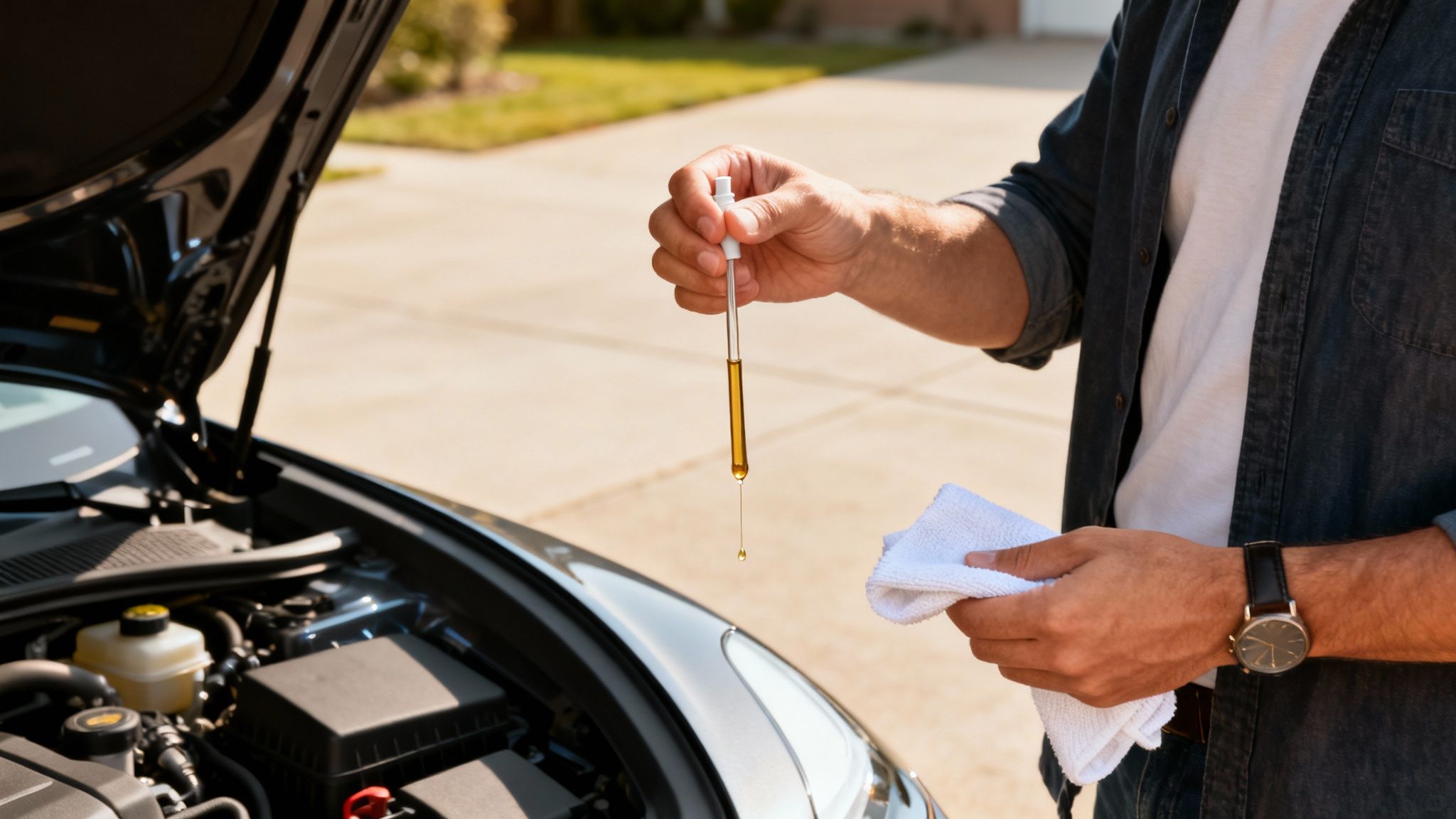
While modern vehicle dashboards provide numerous alerts, one of the most vital health assessments for your car requires a hands-on approach. Checking your engine oil is more than a routine task; it is your primary defense against catastrophic engine failure.
This is particularly relevant for vehicles operating in high-temperature environments, such as Plano, Texas. Elevated temperatures increase the thermal load on an engine, accelerating the breakdown of motor oil. As oil degrades, it loses its viscosity and ability to properly lubricate, cool, and protect critical moving components.
The Science of Prevention
Engine oil functions as the lifeblood of your vehicle's engine, circulating continuously to perform several essential tasks. A quick inspection of the dipstick provides a comprehensive snapshot of the oil's condition and helps you preemptively address potential mechanical issues.
- Prevents Overheating: A primary function of engine oil is to transfer heat away from high-temperature zones within the engine, like the pistons. Low or degraded oil cannot dissipate heat effectively, leading to engine overheating.
- Reduces Friction and Wear: Oil creates a hydrodynamic film between moving metal parts. Without this lubricating barrier, direct metal-on-metal contact occurs, causing rapid and severe wear that can destroy an engine.
- Keeps the Engine Clean: Modern oils contain detergent and dispersant additives designed to capture and suspend contaminants like sludge and carbon deposits. Examining the oil’s color and consistency reveals whether it is still capable of performing this cleaning function.
Neglecting this simple check is analogous to ignoring a small roof leak. While seemingly minor at first, it can quickly escalate into costly, extensive damage. Consistently operating a vehicle with low oil is a leading cause of preventable engine failure.
Ultimately, this educational guide is not about transforming you into an expert mechanic. It is about providing you with the knowledge and confidence to understand your vehicle's basic needs, empowering you to take proactive control of its health and avoid unnecessary expenses.
How to Prepare for an Accurate Oil Reading
Obtaining a precise oil reading begins with proper preparation. Following a few key steps will ensure accuracy every time, preventing a false reading that could lead to underfilling or, more damagingly, overfilling the engine.
First, park the vehicle on level ground. If your driveway is on an incline, find a flat surface. A slope causes the oil in the oil pan to collect on one side, resulting in an inaccurate measurement on the dipstick.
Next, consider the engine's temperature. You should not check the oil when the engine is completely cold, nor immediately after a long drive when it is extremely hot. The optimal time is after turning the engine off and waiting 5 to 10 minutes. This allows the oil to drain from the upper engine components back into the pan while remaining warm enough to provide an accurate viscosity reading.
Locating the Necessary Tools
Now, you will need to locate the oil dipstick under the hood. To facilitate easy identification, manufacturers almost universally use a brightly colored handle, typically yellow or orange. You will also need a clean, lint-free cloth or paper towel to wipe the dipstick.
A common error is using a contaminated shop rag. This can introduce dirt and debris directly into the engine through the dipstick tube. Always use a fresh, clean cloth to ensure no contaminants enter the system.
Understanding the specific type of oil your vehicle requires is also essential, especially if you need to add more. If you are unsure, our guide on synthetic vs conventional oil provides detailed information to help you make the correct choice.
How to Correctly Read an Oil Dipstick
With the preparation complete, we can proceed to the primary task: reading the dipstick. This calibrated metal rod serves as a diagnostic tool for your engine's health, and interpreting it is straightforward. We will utilize the standard "wipe, dip, and read" method employed by professional mechanics.
When you first withdraw the dipstick, disregard the oil present on it. Its purpose is to be cleaned. Using your lint-free cloth, wipe the entire metal end of the dipstick until it is completely clean of any oil residue. This step is mandatory for an accurate measurement.
Next, reinsert the clean dipstick fully into its tube until it is securely seated. Withdraw it again, but this time, hold it horizontally. This orientation prevents the oil from running and smearing, providing a clear, precise indication of the engine's oil level.
Understanding Dipstick Markings
While dipstick designs vary slightly between manufacturers, their function is universal. You are observing where the oil film terminates in relation to the markings at the end of the dipstick.
- Lines or Dots: Most dipsticks have two small lines or dots. The upper mark indicates 'FULL' and the lower mark indicates 'ADD'. A healthy oil level falls anywhere between these two points.
- Crosshatched Area: Some dipsticks use a textured or crosshatched pattern. For these designs, the oil level should be within this designated zone.
This infographic illustrates the preparatory steps required for a consistently accurate reading.
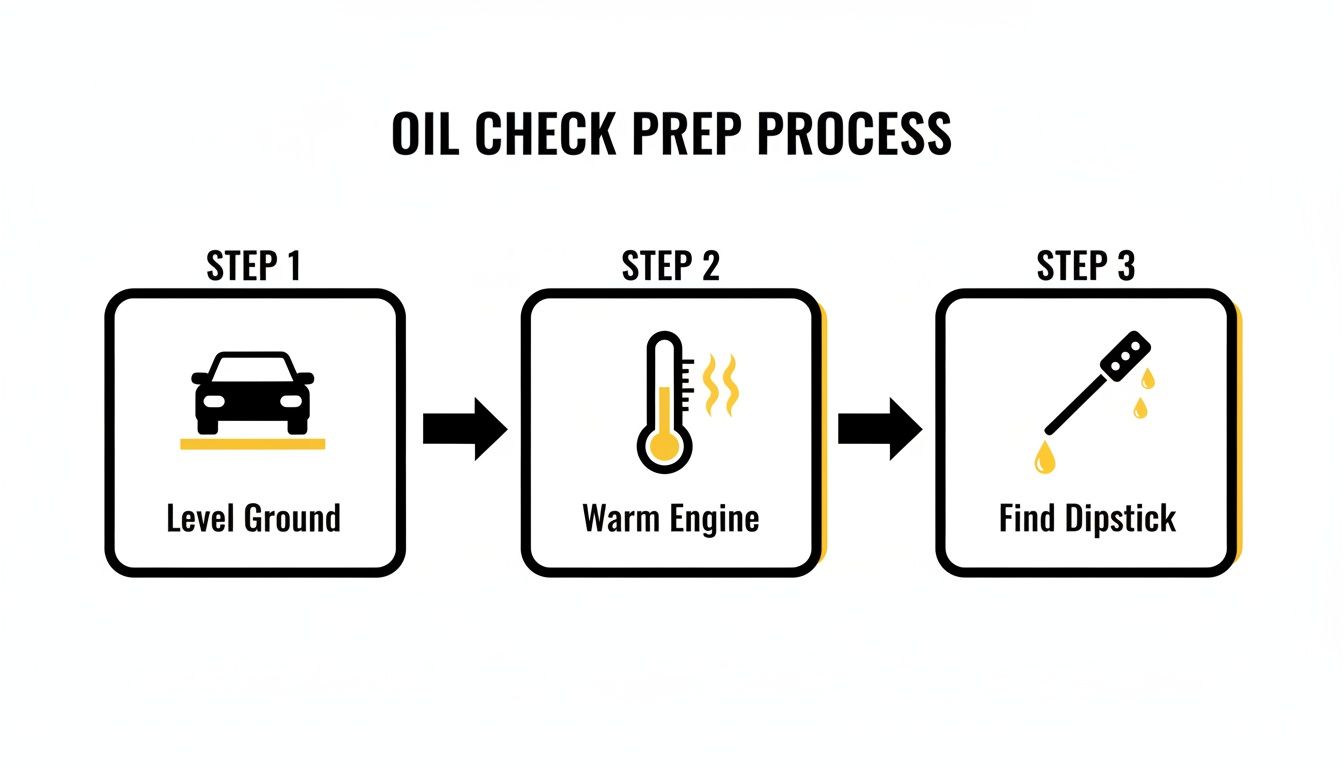
The process is simple: park on level ground and ensure the engine is warm (but not hot) to eliminate guesswork and achieve an accurate result.
This quick check is vital for extending your engine's service life, particularly as vehicles are being kept longer. The average vehicle age in the U.S. is projected to reach a record 13.6 years in 2025. This means many drivers in Plano, TX, are responsible for engines that require diligent maintenance. With over 41% of the global fleet—more than 530 million cars—exceeding a decade in age, regular oil checks are essential to prevent wear and damage. You can learn more about these automotive industry trends to understand the importance of consistent oil maintenance.
Interpreting Your Dipstick Reading
Once you have a clear reading, what does it signify? This table will help you interpret the results and determine the appropriate course of action.
| Oil Level on Dipstick | What It Means | Recommended Action |
|---|---|---|
| Above the FULL mark | The engine has been overfilled with oil. | Excess oil can be as harmful as insufficient oil. A professional may need to drain the surplus. |
| Between the FULL and ADD marks | This is the optimal operating range. | No action is required. Your oil level is correct. |
| At or slightly below the ADD mark | Your engine's oil level is low. | Add approximately half a quart of the correct type of oil, wait several minutes, and re-check. |
| Well below the ADD mark / No oil on dipstick | The engine is critically low on oil. | Add one full quart immediately. Do not operate the vehicle if you hear knocking sounds; have it inspected for leaks. |
This reference chart removes ambiguity, providing you with confidence in your assessment and subsequent actions.
A common misconception is that the oil level must be exactly on the 'FULL' line. As long as the oil is within the designated safe zone, your engine is adequately lubricated. The volume between the 'ADD' and 'FULL' marks typically corresponds to one quart of oil.
What Oil Color and Consistency Reveal About Engine Health

Evaluating the oil level is only part of the assessment. Analyzing the oil's color and consistency transforms this simple check into a powerful diagnostic tool.
New, fresh engine oil should have a translucent, amber hue, similar to honey. Over its service life, the oil will naturally darken as it suspends soot and other byproducts of combustion. This is normal and indicates the oil is performing its cleaning function correctly.
However, once the oil becomes thick, black, and opaque, its detergent additives are depleted. At this point, it can no longer effectively protect the engine, and an oil change is overdue. Operating an engine with dark, sludgy oil increases friction and heat, which are detrimental to engine health.
Identifying Warning Signs in Your Oil
Beyond the normal darkening process, certain changes in the oil's appearance are critical indicators of potential mechanical problems. Early detection during a routine check can mean the difference between a simple repair and a catastrophic failure.
Be vigilant for these significant warning signs:
- Milky or Frothy Appearance: If the oil on the dipstick resembles a coffee milkshake, this is a classic symptom of coolant mixing with the oil. This often points to a serious issue, such as a failed head gasket, and requires immediate professional diagnosis.
- Gritty Texture: Rub a small amount of oil between your thumb and forefinger. If you detect fine metal particles or a gritty feel, it may indicate excessive wear of internal engine components.
- Gasoline Odor: A strong smell of gasoline in the oil is a critical warning sign. This typically means fuel is bypassing the piston rings and diluting the oil, which severely compromises its lubricating properties.
Paying attention to these visual and tactile clues is what elevates a basic check to an informed diagnostic procedure. A quick inspection can tell you if a routine oil change is due or if it is time to consult a trusted mechanic for a more thorough examination.
When to Add Oil vs. When to Seek Professional Service
You have checked the dipstick and analyzed the oil's condition. What is the next step? The answer depends on whether a simple top-off is sufficient or if professional intervention is required.
If the dipstick indicates the oil level is at or just below the 'ADD' line, the solution is typically to add more oil. It is crucial to use the correct type and viscosity of oil specified for your vehicle, which can be found in your owner's manual.
A common mistake is to add an entire quart of oil at once. This can easily lead to overfilling, which creates its own set of mechanical problems. Instead, add approximately half a quart, wait a few minutes for it to settle into the oil pan, and then re-check the level.
When Adding Oil Is Not the Solution
Sometimes, the findings on the dipstick point to a more significant underlying issue that cannot be resolved by simply adding oil. These situations require the diagnostic expertise of a qualified mechanic.
Seek professional service if you observe any of the following:
- Continually Dropping Oil Level: If you must add oil frequently (e.g., every few weeks), your vehicle likely has an oil leak or is burning oil due to internal engine wear. Both scenarios require a professional diagnosis.
- Milky or Foamy Oil: As previously noted, this indicates coolant contamination, which can cause severe engine damage if not addressed promptly.
- Gritty Texture or Metal Shavings: The presence of metal particulates in the oil signifies internal engine wear and requires immediate professional inspection.
According to automotive service data, insufficient oil is a contributing factor in an estimated 36% of premature engine failures. Fortunately, regular checks virtually eliminate this risk by ensuring proper lubrication. For busy drivers in Plano, our no-appointment service at Express Lube and offers like $20 off for military members provide a convenient way to maintain vehicle health. This commitment to fast, high-quality service is why quick-lube facilities often receive high customer satisfaction ratings; we help you prevent costly future repairs. You can read the full analysis on auto service satisfaction trends.
Knowing how to add oil is a valuable skill, but recognizing when to consult a professional is even more critical. While you can learn how to properly change your oil at home for a deeper understanding of your car's maintenance, serious symptoms always warrant a professional opinion.
Frequently Asked Questions About Checking Engine Oil
Even with a solid understanding of the basics, specific questions often arise. We have compiled answers to some of the most common inquiries from drivers.
First, what is the recommended frequency for checking oil? A good rule of thumb is to check your oil once a month. It is also essential to check it before embarking on a long road trip. Older vehicles may consume more oil, so checking every two weeks is a prudent measure for high-mileage cars.
Addressing Common Concerns
Is it acceptable to simply top off the oil until it reaches the full mark? No. Overfilling the engine with oil is a significant error that can be as damaging as running it low. Excess oil can be whipped into a foam by the crankshaft, which aerates the oil and prevents it from lubricating engine components effectively. This can lead to serious damage. Always add oil incrementally.
Achieving an accurate reading is dependent on timing. The ideal condition is a warm engine—not cold, but also not immediately after a long drive. Turn the engine off and allow 5-10 minutes for the oil to drain back into the pan before checking.
What should you do if you cannot locate the dipstick? The dipstick is designed for easy access. Look for a brightly colored handle, typically a yellow or orange ring or a T-shaped grip. If you still cannot find it, your vehicle's owner's manual will contain a diagram indicating its precise location.
For more detailed information on maintenance intervals, our guide explains how often you should change your oil to ensure optimal engine performance.
When you need professional service you can trust, visit Express Lube & Car Care in Plano for a fast, expert oil change and a complimentary vehicle inspection. Get Directions