

Your vehicle's braking system is its most critical safety feature, yet the subtle warnings it provides are often overlooked. From a faint squeal during your morning commute to a slight change in how the pedal feels, these aren't just minor annoyances. They are direct communications from your car about its operational health and performance.
Ignoring these early alerts can lead to significantly more complex repairs and, more importantly, compromise your safety on the road. Understanding the most common signs you need new brakes is a fundamental aspect of responsible vehicle ownership.
This comprehensive guide breaks down the 8 most important warnings your car will give you. We'll go beyond the basics, explaining the mechanical principles behind each symptom, what it means for your vehicle's safety, and what immediate, actionable steps you can take. Our goal is to empower you with the knowledge to make informed maintenance decisions. You'll learn to recognize potential issues early, ensuring you and your family can drive with confidence, knowing exactly when it's time to seek a professional, thorough inspection. Let's explore the signals your brakes are sending.
1. Squealing or Screeching Noises When Braking
A high-pitched squeal or screech when you press the brake pedal is one of the most common and earliest signs indicating brake pad wear. This isn't just an incidental noise; it's a built-in safety feature designed to get your attention before more significant problems develop.
Why It Happens: The Built-In Wear Indicator
Most modern brake pads are equipped with a small, yet crucial, component called a "wear indicator." This is a simple metal tab strategically positioned to make contact with the brake rotor once the pad's friction material has worn down to a specific, minimum thickness.
The resulting metal-on-metal friction creates that unmistakable high-frequency sound. It’s an intentional, audible alert system telling you it’s time for a brake inspection. Ignoring this sound can lead to the wear indicator digging into your rotor, causing surface damage that could have been avoided.
How It Presents in Daily Driving
This sound often becomes most apparent in specific driving situations:
- Stop-and-Go Traffic: You might notice the squeal during frequent braking in heavy traffic.
- Neighborhood Driving: The sound can be audible during frequent, gentle stops, such as in a school zone or residential area.
- Fleet Vehicles: A report from a driver about screeching noises signals an urgent need for maintenance to keep a commercial fleet safe and operational.
What You Should Do
Once you hear a consistent squeal, it’s time to schedule a brake inspection. This early warning gives you a window of opportunity, typically around 500 to 1,000 miles, to have your brakes serviced before causing more damage.
Technical Note: It's important to distinguish the high-pitched squeal from the wear indicator from a deeper, more severe grinding noise. Grinding often means the brake pads are completely worn away, and the metal backing plate is now damaging the rotor. This is a far more dangerous and costly situation.
For a comprehensive evaluation, a professional inspection is recommended. Certified technicians can quickly determine the source of the noise and assess the condition of your entire braking system. Learn more about our brake pad services and how we keep drivers safe on the road.
2. Soft or Spongy Brake Pedal
If your brake pedal feels soft, spongy, or sinks toward the floor when you apply pressure, this is a critical warning sign that your braking system’s integrity is compromised. A properly functioning brake pedal should feel firm and provide immediate resistance. A spongy feel is one of the most serious signs indicating an immediate need for brake service.
Why It Happens: Compromised Hydraulic Pressure
Your vehicle’s brake system operates on hydraulic pressure. When you press the pedal, it forces brake fluid through sealed lines to apply pressure to the brake pads and rotors, stopping your car. A spongy pedal indicates that this hydraulic system has been compromised.
This usually happens for one of two reasons: air has entered the brake lines, or there is a brake fluid leak somewhere in the system. Air is compressible, unlike brake fluid, so it absorbs the force from the pedal instead of transferring it to the brakes. This severely reduces your stopping power and is a major safety hazard.
How It Presents in Daily Driving
A soft brake pedal can appear suddenly and poses an immediate risk in everyday driving situations:
- Post-Service Issues: A pedal might feel mushy after brake work, often a sign that the brake lines were not properly bled of air.
- System Checks: A pre-trip inspection on a commercial vehicle might reveal a soft pedal, grounding the vehicle for safety.
- Heavy Traffic: A driver navigating dense traffic might experience the pedal becoming progressively softer, a serious symptom of a potential fluid leak.
What You Should Do
A soft or spongy brake pedal is not a problem to postpone. Your vehicle's ability to stop is significantly reduced, and you should stop driving it as soon as safely possible. This is not an early warning; it's an alert that your brakes could fail completely.
Technical Note: Never attempt to "pump up" the brakes and continue driving for long distances if the pedal feels spongy. While pumping the pedal may temporarily build some pressure, it does not fix the underlying, dangerous issue of air in the lines or a fluid leak.
Due to the urgency, bring your vehicle to a service center immediately. Technicians will perform a comprehensive diagnostic to check for leaks, assess fluid condition, and bleed the system to restore firm, reliable braking power. Learn more about our brake repair services and how to handle brake system emergencies.
3. Grinding Metal Sound When Braking
If you hear a harsh, low-pitched grinding sound when you press the brake pedal, it's one of the most urgent signs your vehicle needs new brakes. This isn't a subtle warning like a squeal; it’s a clear indication that a critical part of your braking system has failed, and your vehicle's stopping power is severely compromised.
Why It Happens: Complete Pad Failure
The grinding noise signifies that your brake pads have worn down completely. The protective friction material is gone, and now the metal backing plate of the pad is being forced directly against the metal brake rotor. This metal-on-metal contact creates the jarring sound and is actively damaging your braking system with every stop.
This situation typically occurs when the earlier warning squeals from the wear indicator were missed or ignored. Continuing to drive with grinding brakes is not only unsafe but also guarantees a much more expensive repair bill, as the rotors are almost certainly being damaged beyond resurfacing or repair.
How It Presents in Daily Driving
This dangerous sound can appear in various situations, demanding immediate attention:
- Ignored Warnings: A driver who noticed screeching for weeks now hears a loud, abrasive grinding sound, signaling a critical failure.
- Fleet Vehicles: A report of grinding from a driver operating an older fleet vehicle indicates a long-overdue and now-urgent maintenance need.
- Used Car Inspection: A grinding noise during a test drive is a major red flag indicating immediate and costly repairs are needed.
What You Should Do
A grinding noise is a brake emergency. Stop driving the vehicle as soon as it is safe to do so. This is not a problem that can be put off. If you must drive to a repair shop, do so with extreme caution, increased following distance, and at reduced speeds.
Technical Note: When you hear grinding, the repair will almost certainly include replacing both the brake pads and the rotors. Informing the technician about how long the grinding has been happening can help them assess potential damage to the calipers and other system components.
For your safety, have your vehicle towed or drive very carefully directly to a qualified service center. Technicians will perform an immediate inspection to assess the damage and restore your vehicle's safety. Learn more about our brake rotor and caliper services to see how these critical repairs are handled.
4. Brake Warning Light Illumination
The illumination of your brake warning light is your vehicle’s most direct way of communicating a problem. This light, often a red circle with an exclamation point or the word "BRAKE," is a clear and urgent signal from your car's onboard diagnostic system that something in the braking system is not operating correctly. It’s a key sign that you need a professional brake inspection.
Why It Happens: The Onboard Diagnostic System
Modern vehicles are equipped with a complex network of sensors that constantly monitor the health of critical systems. For your brakes, these sensors track key metrics like brake fluid level, pressure within the brake lines, and, in many cars, the thickness of the brake pads via electronic wear sensors.
If the onboard computer detects a reading that falls outside of safe, pre-programmed parameters, it triggers the warning light on your dashboard. This could signal a simple issue like low brake fluid or a more complex problem like a hydraulic system failure or a faulty sensor.
How It Presents in Daily Driving
This warning light can appear unexpectedly, alerting drivers to a potential safety risk:
- During Errands: The light may turn on during normal driving, indicating a potential fluid leak that could compromise stopping power.
- Used Car Purchase: The brake light appearing during a test drive signals a pre-existing issue that needs immediate professional inspection.
- Commercial Fleet Alert: A driver reporting the light prompts an urgent service visit to prevent vehicle downtime and ensure safety.
What You Should Do
A brake warning light should never be ignored. Unlike a "check engine" light that can sometimes indicate a minor issue, a brake system warning demands immediate attention due to the critical role brakes play in your safety. Pull over when it's safe to do so and check your brake fluid level if you are comfortable doing so.
Technical Note: If the brake warning light is red and accompanied by a stiff or spongy brake pedal, stop driving immediately and call for a tow. This combination often points to a severe hydraulic failure, making the vehicle unsafe to operate.
For an urgent and accurate diagnosis, take your vehicle to a service center. Technicians use advanced diagnostic tools to read the specific error codes from your vehicle's computer, pinpointing the exact cause of the warning. Learn more about our brake diagnostic services and trust experts to keep you safe.
5. Brake Pedal Feels Hard or Requires Excessive Pressure
If you find yourself needing to apply significantly more force to the brake pedal than usual, it’s a critical sign that your brake system's power assist may have failed. This "hard pedal" feel is not only fatiguing but dangerously compromises your ability to stop quickly, making it one of the more urgent signs you need immediate brake service.
Why It Happens: The Brake Booster's Role
This problem almost always points to an issue with the brake booster. The booster is a round, black canister located behind the brake master cylinder in your engine bay. It uses engine vacuum to multiply the force you apply with your foot, making it easy to engage the brakes powerfully.
When the booster fails, either due to a vacuum leak or an internal diaphragm rupture, that power assistance is lost. You are left to apply all the necessary hydraulic pressure manually, which requires a surprising amount of leg strength and drastically increases your stopping distance.
How It Presents in Daily Driving
A hard brake pedal can manifest in various daily driving situations:
- Aging Vehicles: A driver in an older vehicle might notice the pedal getting progressively harder over time, especially during cold starts.
- Sudden Failure: A driver might suddenly experience a hard pedal, making it difficult to stop safely at intersections.
- Fleet Vehicles: A fleet manager might receive a report of a driver struggling with braking, indicating an urgent need to inspect the vehicle’s brake booster and vacuum lines.
What You Should Do
A hard brake pedal is not a symptom to ignore. Because it directly impacts your ability to stop, you should have the vehicle inspected immediately. Continuing to drive requires extreme caution, increased following distance, and anticipation of stops far in advance.
Technical Note: A common culprit for a failing brake booster is a cracked or disconnected vacuum hose. A technician can quickly test the booster's function with a vacuum gauge and inspect the lines for leaks, which can sometimes be a simpler fix than a full booster replacement.
Bring your vehicle to a professional for an immediate diagnosis. Certified technicians will test the brake booster, master cylinder, and associated lines to pinpoint the failure and restore your vehicle’s safe stopping power. Learn more about our brake pad services and how we ensure your braking system is responsive and reliable.
6. Brake Fluid Leaks Under the Vehicle
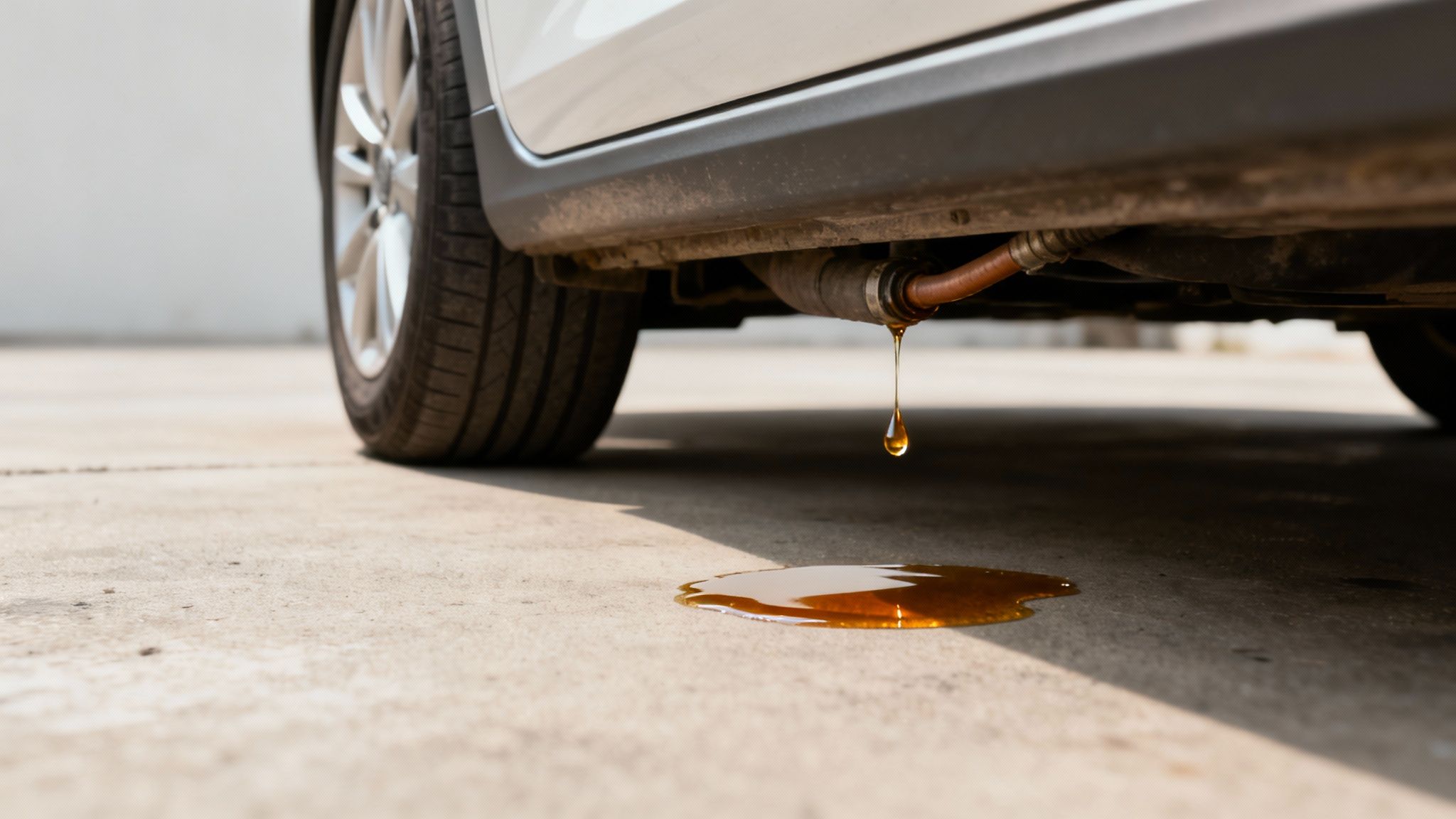
Spotting a puddle of fluid under your car is an immediate red flag, but if that fluid is brake fluid, it signifies a critical safety issue. This is one of the most urgent signs you need brake system repairs, as it indicates a breach in the hydraulic system that gives your vehicle its stopping power.
Why It Happens: A Compromised Hydraulic System
Your brake system operates under high hydraulic pressure. A leak, often from corroded brake lines, cracked rubber hoses, or failed seals in components like the master cylinder or wheel cylinders, allows this vital fluid to escape. Brake fluid is typically clear to amber in color with a slightly oily texture.
Losing brake fluid means losing the pressure needed to press the brake pads against the rotors. A small leak can quickly worsen, leading to a soft, spongy pedal and eventually a complete loss of braking ability. This is not a symptom to monitor; it requires immediate professional attention.
How It Presents in Daily Driving
A brake fluid leak can appear unexpectedly in various situations:
- Home Driveway: You might notice oily spots on your driveway where you park every day, signaling a slow but dangerous leak.
- Parking Garages: After parking, you might return to find a small puddle under your car, a clear sign of a system failure.
- Routine Checks: A pre-trip inspection may reveal low fluid in the reservoir, prompting a search that reveals a leak.
What You Should Do
If you suspect a brake fluid leak, do not drive the vehicle. The risk of complete brake failure is extremely high. The best and safest course of action is to have your vehicle towed to a professional repair shop for an immediate diagnosis.
Technical Note: Never top off brake fluid to compensate for a leak. This only masks the underlying problem and allows the leak to worsen. It’s crucial to find and fix the source of the leak to restore the integrity and safety of your braking system.
At a service center, technicians will perform a comprehensive inspection to pinpoint the source of the leak and recommend the necessary repairs. To better understand this vital component, you can learn more about how to check brake fluid and why its condition is so important. Learn more about checking brake fluid and let experts ensure your vehicle is safe.
7. Brake Pads Visibly Worn When Inspecting Wheels
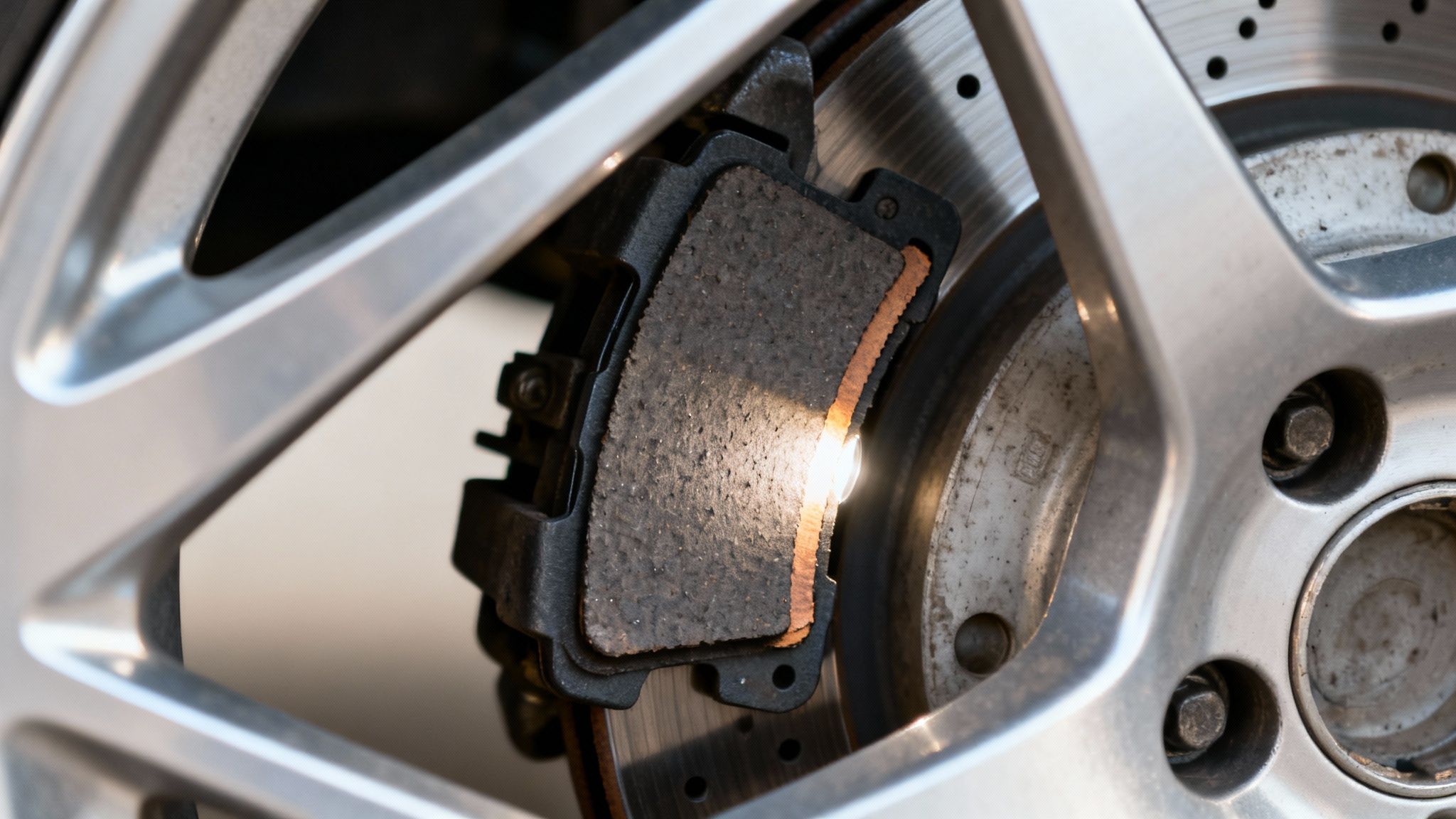
Sometimes, the most direct sign you need new brakes is one you can see with your own eyes. A quick visual inspection of your brake pads through the spokes of your wheels can provide a clear indication of their remaining lifespan, often before any audible or sensory warnings begin.
Why It Happens: The Physical Wear of Brake Pads
Brake pads are designed to wear down over time as part of their normal function. They are made of a friction material that presses against the metal brake rotor to slow your car. New pads typically have a thickness of about 10-12 millimeters (mm). For safety, replacement is recommended when this material wears down to 3-4mm.
Checking them visually allows you to catch this wear before it reaches a critical level. A pad that looks very thin (around a quarter-inch or less) is a clear sign that a replacement is imminent, preventing the potential for more severe damage to your rotors.
How to Perform a Visual Check
This proactive check is a simple habit for any safety-conscious driver:
- During a Car Wash: While cleaning your wheels, take a moment to look through the spokes at the brake components.
- Routine Maintenance: When checking tire pressure, also perform a quick visual brake check.
- Conscientious Ownership: Implementing monthly visual brake inspections can help you stay ahead of maintenance needs and avoid costly downtime.
What You Should Do
If you look through your wheel and see that the brake pad material is nearly gone, it’s time to schedule a brake service. Don't wait for the screeching or grinding to start. Being proactive not only keeps you safer but also helps you avoid the higher costs associated with rotor replacement or repair.
Technical Note: Use a flashlight to get a better view of the brake pad's thickness. You are looking at the friction material pressed against the shiny metal rotor. If you're unsure what you're seeing, a technician can provide a free, no-obligation inspection.
Encouraging these visual checks is part of responsible car care. A professional can quickly measure your pad thickness and provide an honest assessment of their remaining life. Understanding the factors that affect pad longevity can also help you plan for future maintenance. Learn more about how long brakes typically last and keep your vehicle in top condition.
8. Vehicle Pulling to One Side When Braking
When your car veers to the left or right as you press the brake pedal, it's a clear and dangerous sign that your braking system isn't applying force evenly. A properly functioning system brings your vehicle to a stop in a straight line. Pulling indicates a significant imbalance that compromises your control and safety.
Why It Happens: An Imbalance in Braking Force
This hazardous behavior is typically caused by a problem on one side of the vehicle that prevents it from braking as effectively as the other. Common culprits include a seized brake caliper that can't clamp down, a collapsed brake hose restricting fluid flow, or severely unevenly worn brake pads.
The result is that one wheel slows down more aggressively than its counterpart, causing the entire vehicle to be pulled in the direction of the stronger-working brake. This is one of the most serious signs your vehicle needs brake service because it directly impacts your ability to control the vehicle during a stop.
How It Presents in Daily Driving
This dangerous pull can manifest unexpectedly in everyday driving situations:
- Highway Exits: You might feel a sudden, sharp pull when braking from high speeds, making it difficult to stay in your lane.
- Sudden Stops: Needing to brake suddenly for a yellow light could cause a disconcerting lurch to one side, increasing the risk of a collision.
- Tire Wear: Uneven tire wear on one side can be a subtle clue pointing to a persistent brake pull issue.
What You Should Do
A vehicle that pulls to one side requires immediate professional attention. The problem will not fix itself and can become more pronounced during emergency braking when you need control the most. Don't delay a diagnostic inspection.
Technical Note: When you bring your car in, be specific. Tell the technician which direction the car pulls (left or right) and whether it happens during gentle stops, hard braking, or both. This information helps them pinpoint the root cause much faster.
For a comprehensive brake system diagnosis, visit a qualified service center. Certified technicians have the tools and expertise to identify the cause of the pull, from a faulty caliper to a hydraulic issue, and restore your vehicle's safe, straight stopping power. Learn more about our brake diagnostic services and ensure your vehicle stops true every time.
8-Point Comparison: Signs You Need New Brakes
| Issue | 🔄 Complexity | ⚡ Resource requirements | 📊 Expected outcome / impact | 💡 Ideal action / tips | ⭐ Key advantage |
|---|---|---|---|---|---|
| Squealing or Screeching Noises When Braking | Low–Medium — usually pad wear or glazing | Inspection; likely pad replacement; possible rotor servicing | Early warning; prevents rotor damage if addressed | Schedule service within 500–1,000 miles; inspect pads & rotors | Early audible alert enabling planned maintenance |
| Soft or Spongy Brake Pedal | High — air in lines or fluid leak | Bleeding, fluid top-off or line/component repair; diagnostic time | Serious safety risk until fixed; restores pedal firmness after repair | Stop driving; seek immediate professional bleeding and leak check | Clear indicator that immediate professional repair is needed |
| Grinding Metal Sound When Braking | High — pads worn to metal, rotor damage likely | Pad + rotor replacement; possible caliper or system repairs; higher cost/time | Severe damage and higher repair cost; urgent repair required | Drive minimally; get full brake job immediately | Unmistakable sign forcing immediate service before total failure |
| Brake Warning Light Illumination | Medium — electronic fault/low fluid/pressure issue | Diagnostic scan tool; possible fluid top-off or component repair | Variable severity — from minor to critical; offers early electronic detection | Get a diagnostic scan promptly; check fluid level visually first | Electronic detection can reveal problems before audible signs |
| Brake Pedal Feels Hard or Requires Excessive Pressure | Medium — brake booster or master cylinder / vacuum issue | Vacuum/gauge testing; possible booster or master cylinder replacement | Reduced braking responsiveness and driver fatigue until repaired | Note when it occurs (cold start, etc.); inspect booster and vacuum lines | Noticeable symptom that helps isolate booster/hydraulic faults |
| Brake Fluid Leaks Under the Vehicle | High — hydraulic leak, corrosion or failed component | Trace and replace lines/hoses/cylinders; fluid flush and proper disposal | Immediate safety hazard; system integrity compromised until fixed | Stop driving; identify leak location; repair/replace leaking parts | Visible evidence prompting immediate professional repair |
| Brake Pads Visibly Worn When Inspecting Wheels | Low — straightforward visual detection | Routine inspection; pad replacement during maintenance | Prevents grinding and rotor damage; allows planned service | Inspect every ~6 months; replace when pads <4–5 mm | Simple early detection during routine maintenance |
| Vehicle Pulling to One Side When Braking | Medium — uneven force, sticking caliper, warped rotor | Caliper inspection/cleaning or replacement; rotor and hose checks | Directional control compromised; corrects steering stability when fixed | Report pull direction; inspect calipers, hoses, and rotors | Obvious symptom that often localizes the problem to one side |
Your Next Step to Safer Driving
A reliable vehicle is essential, and its braking system is the single most important safety feature it has. Throughout this guide, we've detailed the critical signs you need new brakes, moving from subtle auditory cues to significant performance changes. Recognizing these signals is not just about vehicle maintenance; it’s about proactive safety for you, your passengers, and everyone else on the road.
You've learned to distinguish the high-pitched squeal of wear indicators from the destructive metal-on-metal grind of a compromised system. You now understand that a spongy or hard brake pedal isn't just an inconvenience but a direct message from your vehicle's hydraulic system demanding attention. By familiarizing yourself with these warnings, from dashboard lights to the simple visual check of your brake pads, you've empowered yourself to take control of your vehicle's health and your personal safety.
From Knowledge to Action: Don't Delay
Ignoring these symptoms is a gamble with serious consequences. What starts as a simple, affordable brake pad replacement can quickly escalate into a costly repair involving rotors, calipers, and even master cylinders if left unaddressed. Procrastination doesn't just impact your wallet; it compromises your vehicle's ability to stop effectively, turning a routine drive into a potential emergency.
The key takeaway is this: your brakes communicate their status clearly. Listening and responding promptly is the hallmark of a responsible vehicle owner. A quick, professional inspection can provide immediate peace of mind and a clear path forward, ensuring small issues are rectified before they become major failures.
Your Local Brake Service Partner in Plano
At Express Lube & Car Care, we understand that dealing with car repairs can be stressful. That’s why we’ve built our service around convenience, transparency, and expertise. Our ASE-certified technicians are equipped to quickly and accurately diagnose any brake issue, providing you with a clear explanation and honest recommendations. We believe in getting you back on the road safely and efficiently, with no appointment necessary. We are proud to serve our community, offering special discounts for military, first responders, healthcare workers, and our popular Ladies Day special every Wednesday. Don't let uncertainty about your brakes linger. Taking action today is the most valuable investment you can make in your safety and confidence behind the wheel.
Don't wait for a warning sign to become a roadside emergency. Visit Express Lube & Car Care in Plano for a fast, no-appointment-needed brake inspection from our trusted ASE-certified technicians. Schedule your visit or learn more about our services at Express Lube & Car Care and drive with confidence.