

Your vehicle's suspension system, particularly its shocks and struts, is fundamental to a safe and controlled driving experience. Its primary function is to absorb energy from road imperfections, maintain consistent tire contact with the pavement, and ensure stable vehicle handling. However, these critical components are subject to wear and will degrade over time. When they do, your vehicle will exhibit specific signs indicating a problem.
Ignoring these symptoms can compromise your vehicle's safety, potentially leading to more extensive and costly repairs, and can make your daily commute feel unpredictable. This guide is designed to provide an educational overview of these issues. We will explain the seven most common symptoms of bad shocks and struts, helping you understand the mechanical reasons behind each sign and what to look for.
From excessive bouncing to fluid leaks and unstable steering, we will cover the key indicators of a failing suspension. You will learn what each symptom means from a functional standpoint, how to perform simple diagnostic checks at home, and understand the safety implications of each issue. By recognizing these signs, you can take a more informed role in your vehicle's maintenance, ensuring a smoother, safer driving experience. This list provides the practical, educational information you need to identify potential issues before they become serious problems.
1. Excessive Bouncing and Bounciness After Bumps
One of the most classic and noticeable symptoms of bad shocks and struts is when your vehicle continues to oscillate after encountering a bump. Healthy shocks and struts function as hydraulic dampers; their purpose is to absorb the kinetic energy stored in your suspension springs after a compression, immediately stabilizing the vehicle. A properly functioning suspension will compress and rebound just once. When these components fail, they lose their damping ability, allowing the springs to oscillate uncontrolled, leading to prolonged bouncing.

This excessive movement is more than an issue of comfort; it presents a significant safety hazard. The continuous bouncing can cause your tires to lose consistent, firm contact with the road surface. This loss of traction reduces your ability to brake effectively, maintain precise steering control, and react safely to road hazards, especially on uneven surfaces or during sudden maneuvers.
What Excessive Bouncing Looks Like
- Plano Commuter Scenario: While driving on a road with minor potholes, a commuter notices their sedan continues to rock up and down long after passing the imperfection, feeling unstable even at a red light.
- Family Road Trip: A family with a loaded SUV experiences a floaty, boat-like ride on the highway. Every small dip in the road causes the vehicle to oscillate multiple times, making passengers feel queasy.
How to Check for Bounciness at Home
You can perform a simple "bounce test" to get a rough idea of your suspension's health.
- Find a Safe Spot: Park your vehicle on a flat, level surface.
- Push Down Firmly: Go to one corner of your car and push down on the fender or bumper with your full body weight.
- Release and Observe: Quickly release the pressure and watch how the vehicle reacts.
- Count the Bounces: A vehicle with healthy shocks will rebound once and settle. If it bounces two, three, or more times, the shocks or struts at that corner are likely worn and failing.
- Repeat for All Corners: Test each corner of the vehicle to isolate which components need attention.
If you observe more than a single rebound, it's a clear signal to seek a professional inspection. The expert technicians at Express Lube & Car Care can accurately diagnose the issue and ensure your vehicle is safe to drive.
2. Nose Diving During Braking
Another critical indicator among the symptoms of bad shocks and struts is "nose diving," where the front of your car dips sharply downward when you apply the brakes. Healthy front struts are crucial for managing the vehicle's weight transfer as it decelerates. When they function correctly, they absorb braking forces and keep the vehicle stable and level. However, when these components are worn, they can't control this forward momentum, causing the vehicle's front end to pitch forward excessively.

This forward dip is not just an unusual sensation; it's a significant safety concern. Nose diving can increase your braking distance because it shifts weight off the rear wheels, reducing their traction and braking effectiveness. This imbalance makes the vehicle less stable and harder to control during sudden or emergency stops, a common reality in busy Plano traffic.
What Nose Diving Looks Like
- Plano Rush Hour Scenario: A commuter driving on Legacy Drive notices their sedan's hood drops significantly every time they stop for a red light, making braking feel abrupt and uncontrolled.
- School Zone Safety: A parent in an SUV observes the vehicle lurching and pointing downward when braking firmly for the pickup line at a local school, creating an unstable feeling.
- Commercial Fleet Vehicle: A delivery van driver reports that their vehicle feels unstable and pitches forward heavily when braking along the Dallas North Tollway, especially when fully loaded.
How to Check for Nose Diving
While this symptom is often felt during normal driving, you can test for it more deliberately in a controlled environment.
- Find a Safe Area: Go to a large, empty parking lot where you can safely perform braking tests without endangering others.
- Accelerate Gently: Drive forward and get your vehicle up to a moderate speed, such as 15-20 mph.
- Brake Firmly: Apply the brakes firmly but not to the point of skidding. Pay close attention to the front of your vehicle.
- Observe the Hood: Watch how the hood behaves in relation to the horizon. A significant, quick dip is a clear sign of a problem.
- Assess Stability: Notice if the vehicle feels stable and balanced or if the braking action feels uneven and insecure.
If your car exhibits a noticeable nose dive, it's a strong indication that your front struts require immediate professional attention. The experienced technicians at Express Lube & Car Care can perform a thorough suspension inspection to diagnose the issue and restore your vehicle’s braking stability and safety.
3. Uneven or Cupped Tire Wear Patterns
Your tires often provide diagnostic clues about the health of your suspension system. One of the most telling symptoms of bad shocks and struts is a specific type of wear called "cupping" or "scalloping." This occurs when worn shocks can no longer keep your tires in firm, consistent contact with the road. As the tire bounces up and down, it scrubs against the pavement unevenly, scooping out patches of rubber and creating a distinctive pattern of high and low spots on the tread.
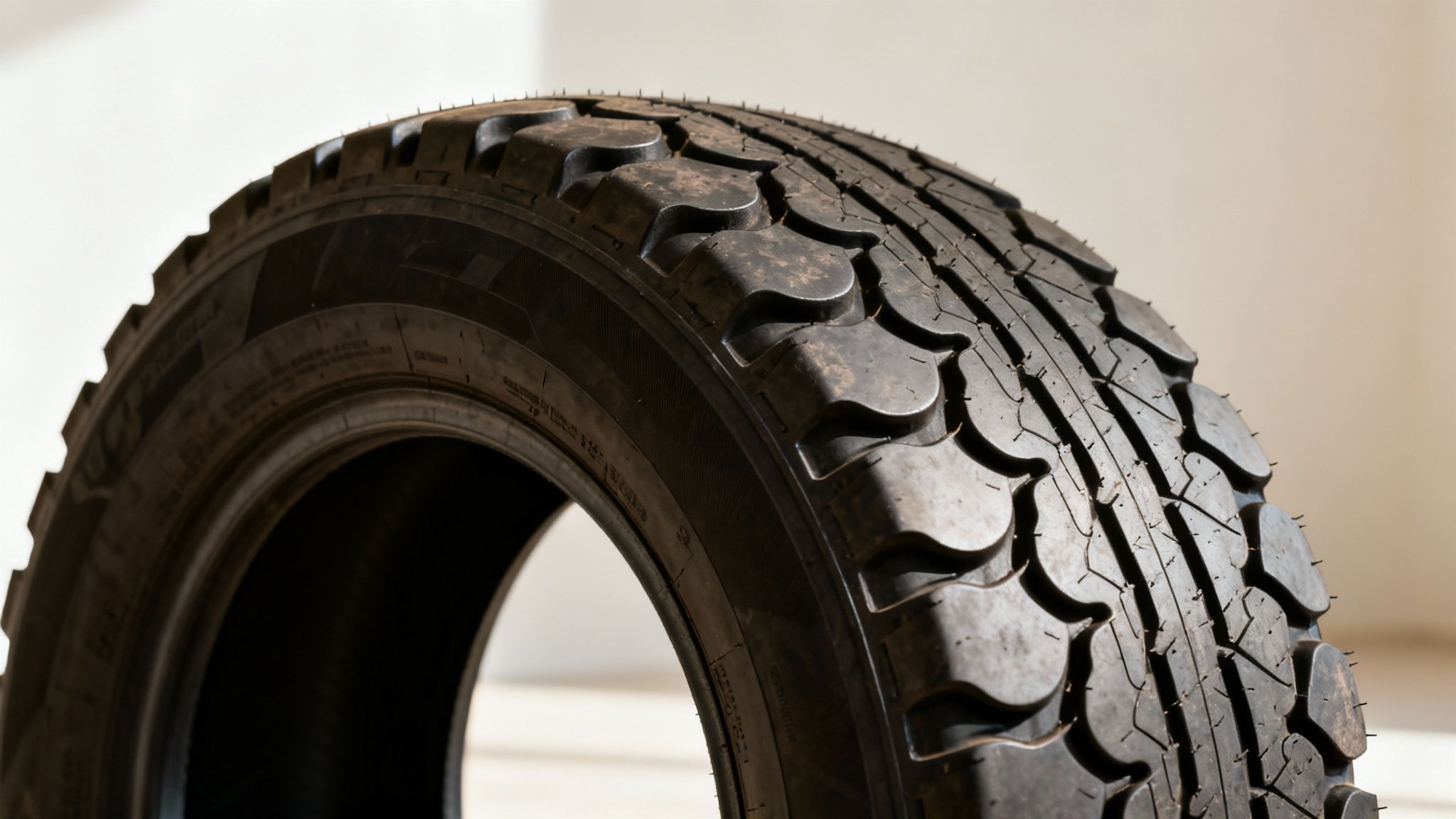
This pattern is different from wear caused by improper inflation or misalignment. Cupped tires create a rough, noisy ride and significantly shorten the lifespan of your tires. Ignoring this sign means you will not only be replacing your suspension components but also a perfectly good set of tires much sooner than expected. Addressing the root suspension problem is crucial for both safety and cost-effectiveness.
What Cupped Tire Wear Looks Like
- Plano Commuter Scenario: A driver taking their car for a routine oil change is shown that their tires have developed a scalloped pattern. The technician explains this is a direct result of failing struts causing the tires to bounce on the highway.
- Fleet Vehicle Issue: A local business manager notices that several company vans are going through tires at an accelerated rate. An inspection reveals widespread cupping, indicating a systemic suspension maintenance issue across the fleet.
How to Check for Uneven Tire Wear
You can often detect cupping before it becomes a major issue with a simple visual and tactile inspection. This is a great habit to develop alongside your monthly tire pressure checks.
- Park and Secure: Find a safe, level spot to park and ensure your vehicle is in park with the emergency brake engaged.
- Visual Inspection: Look closely at the tread of each tire. Search for a pattern of alternating high and low spots, which may look like small, repeating dips or scoops around the circumference of the tire.
- The Hand Test: Carefully run your open hand flat across the surface of the tire tread. Worn tires will often feel smooth, but a cupped tire will have a distinct, bumpy, up-and-down feel.
- Check All Tires: Be sure to perform this check on all four tires, as the wear may be more prominent on one or two depending on which shocks or struts are most worn. Keeping up with regular tire rotations can help you spot these issues early; you can learn more about the benefits of tire rotation on expresslubeplano.com.
If you feel or see this type of uneven wear, it’s a strong indicator that your suspension system needs professional attention. The team at Express Lube & Car Care can confirm the diagnosis and recommend the right repairs to protect your tires and your safety.
4. Vehicle Swaying or Leaning During Turns
Another critical indicator on the list of symptoms of bad shocks and struts is excessive body roll or swaying when you make a turn. A healthy suspension system is engineered to manage the vehicle's weight and counteract centrifugal force, keeping the car stable and level during cornering. When shocks and struts wear out, they lose their ability to provide this resistance. The result is a pronounced leaning or swaying motion to the outside of the turn, which can feel unsettling and dangerous.
This loss of stability is not just a comfort issue; it directly impacts your control over the vehicle. Excessive body roll shifts the vehicle's center of gravity, which can reduce tire grip and compromise your ability to steer accurately through a corner. In an emergency maneuver, this instability dramatically increases the risk of losing control or even a potential rollover, especially in taller vehicles like SUVs and vans.
What Excessive Swaying Looks Like
- Plano Commuter Scenario: A commuter feels their sedan lean heavily when taking the curved on-ramps for the Dallas North Tollway, forcing them to slow down more than usual to feel safe.
- Family SUV: A family in Plano notices their minivan feels unstable and leans dramatically even when making simple turns onto neighborhood streets, causing items inside the car to slide around.
- Delivery Van: A local delivery driver reports that their van sways significantly more than other vehicles in the fleet, making cornering feel unpredictable and sluggish.
How to Check for Body Roll
While a professional diagnosis is best, you can get a sense of your vehicle's body roll with a simple, safe test.
- Find a Safe, Open Area: An empty parking lot is an ideal location. Ensure you have plenty of space and there are no other vehicles, pedestrians, or obstacles nearby.
- Maintain a Low, Steady Speed: Drive at a consistent, moderate speed, around 20-25 mph.
- Make a Smooth Turn: Execute a wide, smooth turn as if you were navigating a large roundabout.
- Observe the Lean: Pay close attention to how much the vehicle's body tilts. A healthy suspension will keep the vehicle relatively flat, while worn components will allow for a noticeable and often uncomfortable lean.
- Listen for Noises: Listen for any clunking or creaking sounds during the turn, which can also indicate suspension problems.
If you feel a significant and uncontrolled sway, it's a strong sign that your suspension system needs immediate attention. For a precise evaluation, the technicians at Express Lube & Car Care can inspect your vehicle's suspension to ensure it provides the stability you need on Plano roads.
5. Clunking or Knocking Noises from Suspension
One of the most audible symptoms of bad shocks and struts is a distinct clunking or knocking sound coming from your vehicle's suspension. When these components are healthy, they operate silently. As they wear out, internal parts can break down or mounting hardware can loosen, leading to metal-on-metal contact that produces a sharp, unsettling noise, especially when driving over bumps, potholes, or uneven pavement.
These sounds are your car's way of telling you something is seriously wrong. The noise often originates from worn-out piston rod mounts, deteriorated bushings, or internal valve failures within the shock absorber. Ignoring this can lead to further damage to your suspension system and compromise vehicle safety, as a broken component could potentially lead to a loss of control.
What Suspension Noises Sound Like
- Plano Driver Scenario: While driving on city streets with frequent potholes, a driver hears a loud, jarring clunk from the front right wheel area every time they hit an imperfection in the road.
- Family Safety Concern: A parent hears a consistent knocking sound from the rear of their SUV while driving over speed bumps in a school zone, raising concerns about the vehicle's stability.
- Fleet Vehicle Issue: A local delivery van starts making a metallic banging noise over rough roads on its route, prompting the fleet manager to schedule an immediate inspection to prevent downtime.
How to Identify the Source of the Noise
While a professional diagnosis is essential, you can gather information to help technicians pinpoint the problem.
- Pay Attention to Triggers: Note exactly when the clunking happens. Does it occur only when hitting bumps, during turns, or while braking? This information is crucial for diagnosis.
- Isolate the Location: Try to determine which corner of the vehicle the sound is coming from. Having a passenger listen from inside can help confirm the origin.
- Perform a Visual Check: Safely park the car and look at the shock and strut assemblies. Check for any obviously loose or damaged mounting bolts and bushings, but avoid touching hot components.
- Record the Sound: If it's safe to do so, have a passenger record a short video of the sound as you drive over a bump. This can provide valuable context for the technicians at Express Lube & Car Care.
Any clunking or knocking is a clear sign that your suspension requires immediate attention. These are not normal operating sounds and indicate a failure that could affect your control over the vehicle.
6. Poor Steering Response and Unstable Handling
Another critical symptom of bad shocks and struts is a noticeable decline in steering precision and overall vehicle stability. Healthy suspension components are essential for keeping your tires firmly planted on the road and managing the vehicle's body weight during turns and maneuvers. When shocks and struts wear out, they can no longer control this weight transfer effectively, leading to a vague, disconnected feeling behind the wheel.
This lack of control isn't just a minor annoyance; it’s a direct threat to your safety. The vehicle might feel like it's wandering in its lane, requiring constant small corrections to stay straight. During turns or lane changes, the car may feel like it's swaying or leaning excessively, compromising your ability to react swiftly and safely in an emergency. This instability is a clear sign that your vehicle's core safety systems are compromised.
What Unstable Handling Feels Like
- Plano Commuter Scenario: A driver on the Dallas North Tollway notices their sedan requires constant, active steering adjustments just to stay centered in the lane, feeling unstable and less responsive than usual.
- Family Minivan: A family's minivan feels particularly unsteady and top-heavy when changing lanes on the highway, with a delayed reaction to steering inputs that makes the driver feel less confident.
- Business Fleet Vehicle: A business owner receives reports that one of their work vans feels unsafe and "drifts" on the road, prompting them to schedule a comprehensive suspension service.
How to Check for Poor Steering Response
You can often feel these symptoms during normal driving, but you can also pay special attention to the vehicle's behavior to confirm your suspicions.
- Find a Safe, Open Area: Choose an empty parking lot or a straight, low-traffic road where you can safely perform gentle maneuvers.
- Test Lane Changes: At a safe speed (e.g., 40-50 mph), make a smooth, deliberate lane change. Pay attention to how the vehicle's body reacts. Does it sway excessively or feel like it's lagging behind your steering input?
- Observe Straight-Line Stability: On a straight road, briefly relax your grip on the wheel (while maintaining full control). If the vehicle immediately starts to wander or drift to one side, it's a sign of a problem.
- Feel for "Play": While parked, turn the steering wheel slightly from side to side. Excessive "play" or a dead spot before the wheels respond can indicate worn suspension or steering components.
If your vehicle feels unstable, it is crucial to have it inspected immediately. Unstable handling is a key safety issue that should be addressed in any comprehensive vehicle safety inspection checklist. The team at Express Lube & Car Care can perform a thorough diagnosis to pinpoint the cause and restore your vehicle's stability and safety.
7. Visible Shock or Strut Leaking Fluid
While many symptoms of bad shocks and struts involve how the car feels, a visible fluid leak is the most definitive and undeniable sign of failure. Shocks and struts are hydraulic components filled with pressurized fluid that absorbs and dampens road impacts. When their internal seals fail or the housing is damaged, this essential fluid escapes, rendering the component useless. Even a light, oily film on the shock or strut body indicates that a complete failure is imminent.
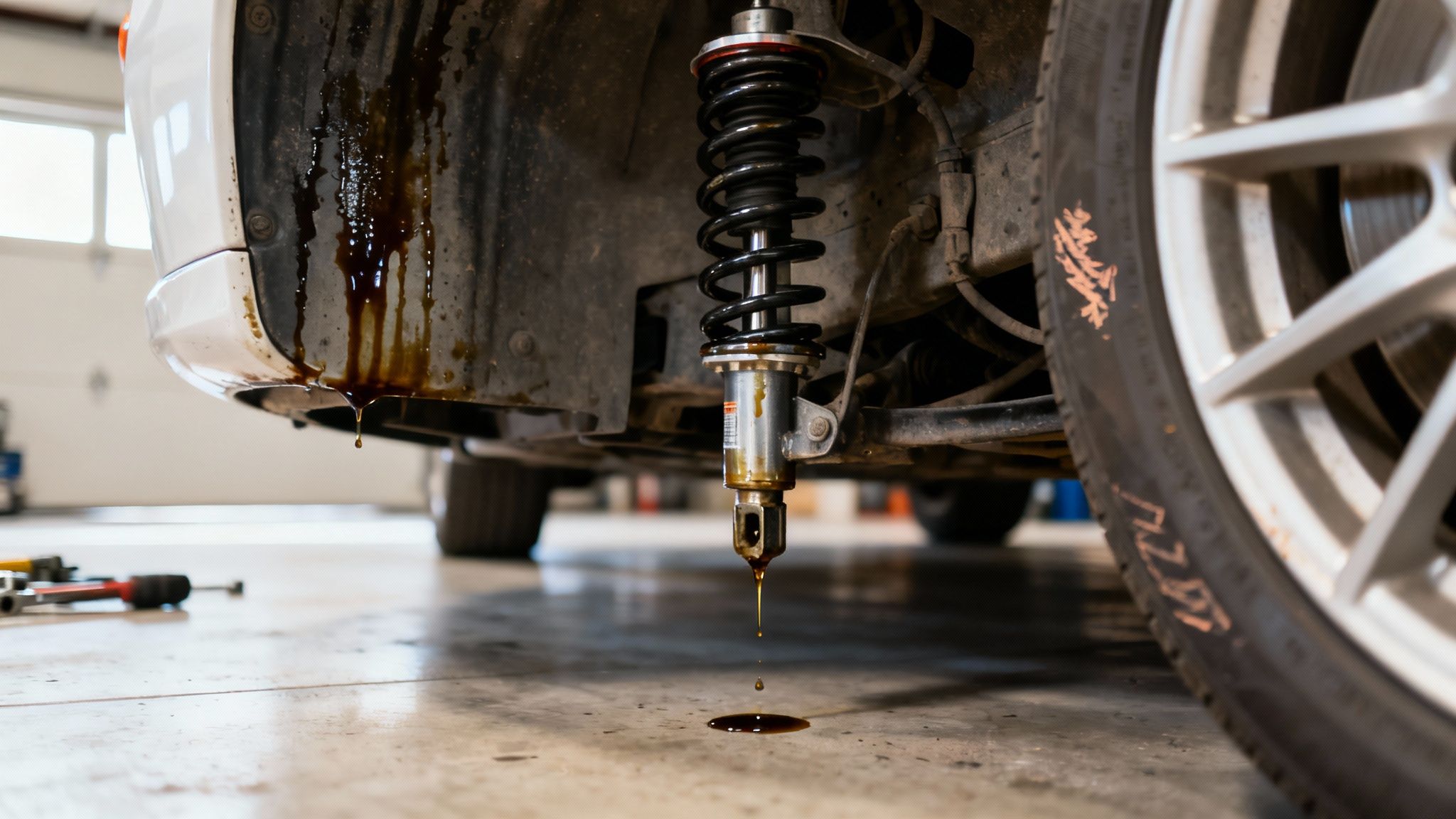
Unlike a bouncy ride that can degrade over time, a fluid leak signals a critical loss of function. The shock or strut can no longer control suspension movement, which severely compromises your vehicle's stability, braking, and steering. This is not a symptom to ignore; it’s a clear indication that immediate replacement is required to maintain vehicle safety on Plano roads.
What a Fluid Leak Looks Like
- Routine Maintenance Discovery: During a tire rotation, a Plano driver notices a greasy, oily residue coating the inside of their wheel well and running down the body of the strut, a tell-tale sign of a leak.
- Garage Spotting: A vehicle owner sees dark, oily drips on their garage floor directly under one of the wheels and brings their car in for an immediate inspection, correctly suspecting a suspension issue.
- Professional Inspection: An ASE-certified technician at Express Lube & Car Care, while performing a brake inspection, discovers a weeping shock absorber that is wet to the touch with hydraulic fluid.
How to Check for Leaks at Home
A quick visual inspection can often reveal a failing shock or strut before other symptoms become severe.
- Park Safely: Ensure your car is on a level surface with the parking brake engaged.
- Use a Flashlight: Take a bright flashlight and look behind each wheel at the shock absorber or strut assembly.
- Inspect the Body: Look for any oily fluid that appears to be running down the side of the component. A healthy shock should be dry and may have road dust, but it should not be wet or caked in oily grime.
- Check for Drips: Examine the ground below the suspension components for any fresh drips of fluid.
- Look for Damage: While inspecting, look for dents or significant physical damage to the shock or strut body, as this can cause seal failure.
If you spot any fluid, it's a clear sign of a problem that requires professional attention. Understanding more about the critical role of shocks and struts can help you appreciate the urgency. For safety, always replace leaking components immediately and in pairs (both front or both rear) to ensure balanced performance.
7-Point Comparison: Symptoms of Bad Shocks & Struts
| Symptom | 🔄 Diagnostic Complexity | ⚡ Resources & Speed | 📊 Safety Impact | ⭐ Diagnostic Certainty / 💡 Recommended Action |
|---|---|---|---|---|
| Excessive Bouncing and Bounciness After Bumps | Low — easy road test (count bounces) | Low — quick parking-lot test; brief technician check | High — reduces tire contact, braking and steering control | ⭐⭐⭐ — Test slowly over a speed bump; inspect and replace shocks/struts if >1 bounce |
| Nose Diving During Braking | Low–Medium — observable during braking, compare vehicles | Low–Medium — ride-height check, front strut inspection | Very High — impairs braking stability and weight transfer | ⭐⭐⭐ — Measure ride height; inspect/replace front struts; avoid heavy braking until fixed |
| Uneven or Cupped Tire Wear Patterns | Low — visual during tire rotation or inspection | Medium — tire replacement + suspension/alignment work may be needed | Medium–High — indicates ongoing suspension loss and affects handling | ⭐⭐⭐ — Photograph wear; replace tires and repair shocks/struts; check wheel alignment |
| Vehicle Swaying or Leaning During Turns | Medium — requires test drive at moderate speed | Medium — suspension inspection and possible strut replacement/alignment | High — increases rollover and handling risk in turns | ⭐⭐ — Test with controlled turns; schedule suspension/alignment service; avoid aggressive cornering |
| Clunking or Knocking Noises from Suspension | Medium — audible but source may need isolation | Medium — lift inspection of mounts, bushings, shocks | Medium–High — may indicate internal shock or mount failure | ⭐⭐⭐ — Record when/where noise occurs; inspect mounts, bushings, and shocks; limit high‑speed driving |
| Poor Steering Response and Unstable Handling | Medium–High — gradual, overlaps with alignment/tires | Medium–High — comprehensive suspension, steering and alignment diagnostics | Very High — critical for vehicle control, especially at speed | ⭐⭐ — Perform steering and suspension diagnostics immediately; check alignment and steering components |
| Visible Shock or Strut Leaking Fluid | Very Low — objective visual evidence | Medium — replacement required but confirmation is immediate | Very High — imminent loss of damping; safety compromised | ⭐⭐⭐⭐ — Photograph leak, replace shocks/struts immediately; inspect nearby brakes/wheels |
Don't Compromise on Safety: Your Next Steps for a Smoother, Safer Ride
Navigating the roads of Plano requires a vehicle that is responsive, stable, and above all, safe. Throughout this guide, we've explored the seven critical symptoms of bad shocks and struts, moving beyond simple descriptions to provide you with actionable knowledge. Recognizing these signs is the first and most important step in protecting your vehicle and ensuring your safety on the road.
From the unsettling "nose dive" during a sudden stop to the rhythmic cupping on your tires, each symptom is a direct communication from your vehicle's suspension system. It’s a warning that the components responsible for absorbing impacts and maintaining tire contact with the pavement are failing. Ignoring these signs doesn't just lead to a rougher ride; it actively compromises your car's core safety features, increasing braking distances and reducing your ability to steer effectively in an emergency.
Key Takeaways and Actionable Steps
Your journey toward a safer vehicle doesn't end with diagnosis. The true value lies in taking decisive action based on what you've learned. Here’s a summary of your most important next steps:
- Trust Your Senses: You are the person who drives your car every day. If you notice a change in handling, hear a new noise, or feel excessive bouncing, trust your intuition. These are often the earliest indicators of a problem.
- Perform Simple Checks: The bounce test and a thorough visual inspection for fluid leaks are powerful, no-cost diagnostic tools you can use right in your driveway. They can provide the concrete evidence needed to confirm your suspicions.
- Prioritize Professional Inspection: While at-home checks are useful, they are not a substitute for a professional evaluation. An ASE-certified technician has the expertise and equipment to accurately diagnose the health of your entire suspension system, identifying the root cause of the symptoms of bad shocks and struts.
- Understand the Broader Impact: Remember that failing suspension components create a domino effect. They accelerate wear on your tires, brakes, and other steering parts, turning a moderate repair into a much more costly one if left unaddressed.
Ultimately, being an informed vehicle owner means understanding that your car is a complex system where every part works together. A healthy suspension is the foundation of vehicle control and safety. By learning to identify these common symptoms, you empower yourself to act proactively, saving money, extending the life of your vehicle, and protecting yourself and your passengers. The goal is not just to fix a problem, but to restore your vehicle's intended performance and your confidence behind the wheel.
Don't let a failing suspension compromise your safety or comfort any longer. The ASE-certified technicians at Express Lube & Car Care in Plano specialize in comprehensive suspension diagnostics and repairs. Visit Express Lube & Car Care or stop by our shop today for an expert inspection and regain control of your ride.