

When your check engine light illuminates your dashboard, it's natural to feel a wave of concern. Is this a minor issue or a sign of a major mechanical failure? The most important first step is to remain calm, but don't ignore the warning. That light is your vehicle's primary method of communicating that something in its complex system requires professional attention.
How you respond in those initial moments can significantly impact the outcome, potentially making the difference between a simple, inexpensive fix and a costly, complex repair.
What to Do When the Check Engine Light Comes On
Imagine you're driving down the Dallas North Tollway when that small, amber engine symbol suddenly glows on your dashboard. Your car is sending you a message, and your first task is to interpret its urgency.
The key is understanding the two primary signals your car can send through this light: a steady illumination versus a flashing one. They signify very different levels of severity.
Steady vs. Flashing: The Critical Difference
A steady check engine light is the most common alert. It indicates that the vehicle's onboard computer has registered a fault, but it is not an immediate, catastrophic emergency. This can be triggered by a wide range of issues, from something as simple as a loose gas cap to a sensor that is beginning to malfunction. While you don't need to pull over immediately, it is crucial to have the vehicle diagnosed soon to prevent a minor issue from escalating into a more significant problem.
A flashing check engine light, conversely, is a critical alert. This is your car's signal for a severe problem that requires immediate action. It almost always indicates a significant engine misfire, a condition where unburned fuel is being sent into the exhaust system. Continuing to drive can cause rapid and irreversible damage to your catalytic converter, transforming a manageable repair into a thousand-dollar-plus expense.
Key Takeaway: Think of a steady light as a "schedule a check-up" notification. A flashing light means "pull over safely and shut off the engine as soon as possible."
This flowchart illustrates the decision-making process in a clear, logical sequence.
If you're experiencing this, you are far from alone. Recent diagnostic data reveals that approximately 20% of drivers have an illuminated check engine light at any given time, a figure that has nearly doubled in recent years. You can read the full research about these check engine light trends for more information.
To help you make a quick, safe assessment, we have developed this simple triage table.
Plano Driver's Quick Triage Guide
Use this table to quickly assess the severity indicated by your check engine light and determine the safest course of action for your vehicle.
| Symptom | What It Means | Immediate Action |
|---|---|---|
| Steady Light, No Other Symptoms | A non-critical fault has been detected (e.g., sensor, emissions). | Safe to continue driving. Schedule a diagnostic check within a few days. |
| Flashing Light | A severe engine misfire is occurring, risking major component damage. | Pull over immediately. Turn off the engine and call for a tow service. |
| Light On + Poor Performance | The issue is affecting driveability (e.g., bad ignition coil, fuel system problem). | Avoid high speeds and highways. Drive cautiously to a nearby mechanic if possible. |
| Light On + Strange Noises/Smells | A serious mechanical or system failure is likely in progress. | Pull over immediately. A new noise or smell signals a critical issue. |
Always prioritize safety. If the car feels unsafe or is behaving erratically, pulling over is the most prudent decision, regardless of the light's status.
Perform An Immediate Sensory Check
After observing the light itself, take a moment to engage your other senses. This can provide valuable clues about the underlying issue.
- Listen: Are there any new or alarming sounds? Knocking, loud hissing, or grinding noises are clear indicators of a mechanical problem requiring immediate attention.
- Feel: How is the vehicle operating? A noticeable loss of power, rough shaking while idling, or hesitation during acceleration could point to an engine misfire.
- Look & Smell: Do you see smoke from the tailpipe or under the hood? What about unusual odors? The scent of gasoline, burning oil, or a distinctively sweet smell (coolant) are all red flags that warrant stopping the vehicle.
If the light is steady and your sensory check reveals nothing unusual, you are likely safe to proceed to your destination. However, the presence of any of these other signs means it is best to err on the side of caution and have your vehicle inspected promptly.
Quick Driveway Checks Before You Call a Mechanic

Before scheduling a professional diagnosis, a few simple checks can sometimes resolve the issue or provide more information. These are often-overlooked items that can save you a trip to the repair shop.
Let’s rule out the most common and simple causes first.
Check The Gas Cap First
It may seem too simple, but a loose or faulty gas cap is a leading cause for an illuminated check engine light. Your vehicle's fuel system is designed to be sealed to prevent gasoline vapors from escaping into the atmosphere. A poor seal disrupts this system's pressure.
When the cap is not fully tightened, the evaporative emissions (EVAP) system detects this pressure leak and registers it as a fault, triggering the light.
Unscrew the cap and then retighten it until you hear it click several times. This clicking sound confirms a proper seal. If the cap appears cracked or the rubber O-ring is brittle and worn, it should be replaced. After tightening or replacing the cap, you may need to drive for a day or two before the system's computer resets and the light deactivates.
Inspect Key Fluid Levels
Your car relies on several critical fluids to operate correctly. If any of these fluids fall to dangerously low levels, a sensor will often trigger a warning to prevent severe engine damage.
Open the hood and inspect these two vital fluids:
- Engine Oil: Remove the dipstick, wipe it clean with a cloth, reinsert it fully, and then pull it out again to check the level. It should be between the "Full" and "Add" marks.
- Coolant: You can check this without opening the cap. Look at the translucent reservoir—the coolant level should be between the "Min" and "Max" lines. Low coolant can lead to engine overheating, a particularly high risk in the Texas climate.
While the hood is open, perform a quick visual scan. Is anything obviously amiss? A disconnected hose, frayed wiring, or significant corrosion on the battery terminals can cause electrical anomalies. If you notice heavy buildup on your battery, you can learn how to safely clean your car battery terminals with our guide.
Pro Tip: Engage your hearing. With the engine running, listen for any unusual hissing or sucking sounds. This often indicates a vacuum leak from a cracked or disconnected hose—another common check engine light trigger.
If you've completed these simple checks and the check engine light remains on, it is time for a professional diagnosis. The vehicle is signaling a more specific issue that requires expert attention.
Understanding Your Car's Diagnostic Codes

When a mechanic mentions "pulling the codes," they are referring to the process of communicating with your car's onboard computer. This system functions as the central brain of your vehicle.
Every car manufactured since 1996 is equipped with an On-Board Diagnostics II (OBD-II) system. This system acts as a built-in health monitor, continuously checking the performance of the engine, transmission, and emissions components. When it detects a deviation from normal operating parameters, it illuminates your check engine light and stores a corresponding fault code.
Decoding Your Car's Language
This stored fault is known as a Diagnostic Trouble Code (DTC). These alphanumeric codes are immensely valuable because they direct a technician to the specific system—and often the exact component—that is malfunctioning. They provide a level of detail far beyond a simple warning light.
For example, here are a few common codes we frequently diagnose in our Plano shop:
- P0420 (Catalyst System Efficiency Below Threshold): This code often points to a failing catalytic converter, a critical and expensive exhaust component. However, it can also be triggered by a faulty oxygen sensor providing inaccurate data.
- P0301 (Cylinder 1 Misfire Detected): This code precisely identifies which cylinder is misfiring. The cause could be a worn spark plug, a failing ignition coil, or a clogged fuel injector.
- P0171 (System Too Lean): This indicates that the engine is receiving too much air or not enough fuel. The root cause can range from a small vacuum leak to a weak fuel pump.
These codes provide our technicians with a crucial starting point for their diagnostic process.
A DTC is a starting point, not the final answer. It tells a technician where to begin their investigation, but professional expertise is essential to confirm the actual cause and ensure the correct repair is performed.
Why A Code Is Just A Clue
It can be tempting to use an inexpensive code reader, see a P0420 code, and assume the catalytic converter needs replacement. This is a common and potentially very costly error. The code identifies the symptom, not necessarily the root cause.
For instance, a faulty oxygen sensor might send incorrect data to the car's computer, making it appear as if the catalytic converter is failing, triggering the P0420 code. A professional technician will test both the sensor and the converter to identify the actual problem, which could save you from an expensive and unnecessary repair.
This is precisely why professional car diagnostics in Plano are so important. Our technicians utilize their experience and advanced scanning tools to perform tests, inspect related components, and verify the fault. We don't just clear a code; we solve the underlying issue.
Common Triggers And Typical Repair Costs In Plano
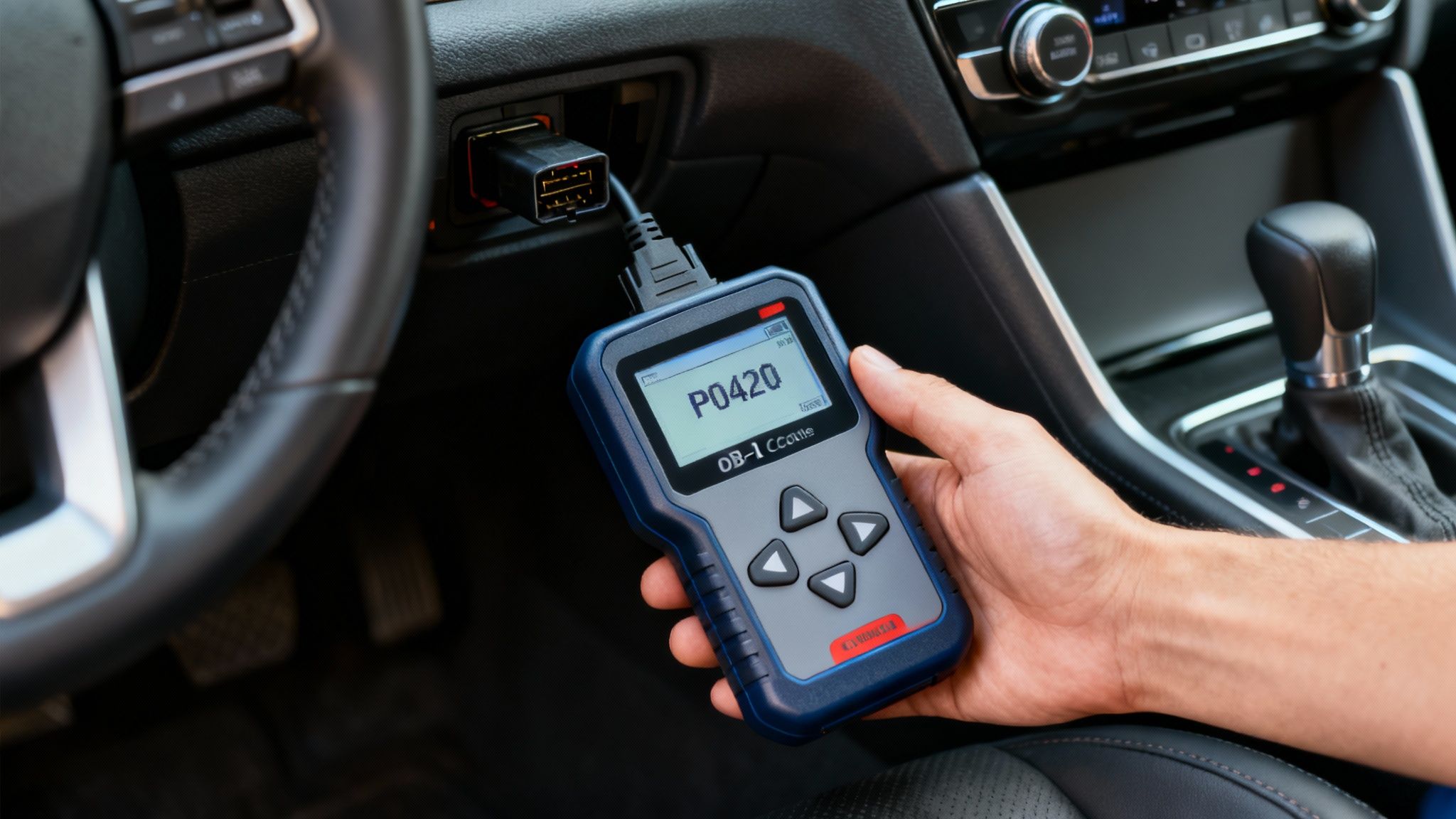
Once your car's computer has flagged an issue, the primary questions are always: what is the specific problem, and what will it cost to resolve?
While the light can signify dozens of different faults, our technicians in Plano consistently encounter a few common culprits. Understanding what these are—and their typical repair costs—can help demystify the situation, transforming a vague warning light into a specific, manageable issue.
Oxygen Sensor Replacement
One of the most frequent causes of a check engine light is a failing oxygen (O2) sensor. This small but vital component measures the amount of unburned oxygen in your exhaust, providing data to the engine's computer to optimize the air-fuel mixture for maximum efficiency. The first symptom drivers often notice is a sudden decrease in fuel economy.
When the sensor provides inaccurate readings, your engine may burn excessive fuel. Over time, this can damage expensive components like the catalytic converter. Replacing a faulty O2 sensor is not just a repair; it is preventative maintenance that can save you money on fuel and protect your entire exhaust system. You can read more about the tell-tale signs in our guide to bad O2 sensor symptoms.
Worn Spark Plugs Or Ignition Coils
Your spark plugs and ignition coils work in tandem within your ignition system. The ignition coil generates a high-voltage spark, and the spark plug delivers it to the combustion chamber. When either component wears out, it can lead to an engine misfire—a common cause of a flashing check engine light.
Symptoms are typically easy to notice and may include a rough idle, sluggish acceleration, or a general loss of engine power, accompanied by reduced fuel efficiency. As these parts are fundamental to proper engine operation, addressing them promptly is essential.
Failing Catalytic Converter
This represents one of the more serious—and costly—repairs associated with a check engine light in Plano. The catalytic converter is a critical part of your vehicle's emissions control system, converting harmful pollutants into less harmful gases.
Crucially, catalytic converters rarely fail without an underlying cause. They are often damaged by another issue that was not addressed, such as a faulty O2 sensor or a persistent engine misfire. Key symptoms include a sulfurous (rotten-egg) smell from the exhaust and a significant loss of engine power. Since a functioning catalytic converter is required to pass a Texas state inspection, this repair cannot be postponed.
It is crucial to remember that a code points to a symptom, not necessarily the root cause. For instance, a P0420 code for the catalytic converter might actually be triggered by a faulty sensor upstream. Professional diagnostics are key to avoiding the replacement of the wrong—and often much more expensive—part.
To provide a clearer financial picture, we've compiled a guide to the most common issues we diagnose and their typical repair costs in the Plano area.
Common Codes And Estimated Plano Repair Costs
This table outlines common OBD-II codes, the problems they indicate, and a general cost range for repairs.
| Common Code | Potential Problem | Estimated Repair Cost Range |
|---|---|---|
| P0135 – P0161 | Faulty Oxygen (O2) Sensor | $150 – $450 |
| P0300 – P0308 | Bad Spark Plugs / Wires | $100 – $350 |
| P0350 – P0358 | Failing Ignition Coil(s) | $200 – $600 (Varies by engine) |
| P0440 – P0457 | Loose Gas Cap / EVAP Leak | $20 – $500 (Cap vs. system leak) |
| P0420 – P0430 | Failing Catalytic Converter | $900 – $2,500+ |
Note that these price ranges include both parts and labor and can vary significantly based on your vehicle's make and model. A professional diagnostic service is the only way to get a precise quote for your specific situation.
Why Professional Diagnostics Are Non-Negotiable
You've completed the driveway check. You tightened the gas cap, inspected the fluids, and the amber light remains. When these simple steps don't resolve the issue, it is a clear signal from your vehicle that it's time to consult a professional.
This is where a consumer-grade code reader falls short. Ignoring a persistent check engine light is a significant gamble—what seems like a minor annoyance could be an early warning for a much larger, more expensive problem. Bringing your car to a trusted Plano shop ensures you find the root cause and receive the correct repair the first time.
Why an ASE-Certified Technician Makes All the Difference
The most important element of any diagnostic service is not the equipment, but the expertise of the person operating it. Our technicians are not just mechanics; they are ASE-certified professionals. This certification is a benchmark of quality, signifying that they have passed rigorous exams and possess proven expertise in modern engine electronics and complex performance issues.
They utilize advanced diagnostic tools that provide far more data than a basic handheld scanner. These professional-grade systems allow our technicians to view live data streams, test individual components, and pinpoint the exact source of the fault. A trouble code is merely a clue; our technicians use it as the starting point for a comprehensive investigation.
Our Promise: No Jargon, No Surprises
We understand the frustration of feeling uninformed about your own vehicle's health. Once we identify the problem, we will explain it to you in plain, understandable English. We believe in clear communication, not confusing technical jargon.
You’ll always get a detailed, itemized estimate before we do any work. No pressure, no surprises—just the information you need to make a confident decision for your vehicle.
This transparent approach is more important than ever. As vehicle technology becomes more complex, the global market for check engine light services is projected to reach $3,770 USD million, driven by stricter emissions standards. This trend highlights the growing need for reliable, expert diagnostics. You can discover more insights about the diagnostic service market to understand why professional expertise is so critical today.
An accurate diagnosis is the most critical part of any repair. It saves you time, prevents unnecessary spending on parts you don't need, and ensures you get back on the road safely. When that check engine light in Plano comes on, our goal is simple: to provide a precise solution and complete peace of mind.
A Few Common Questions We Hear in the Shop
We've explored the what, why, and how of the check engine light. To conclude, let's address a few of the most common questions we hear from drivers in and around Plano. This FAQ section aims to resolve any remaining uncertainties.
Can I Pass a Texas State Inspection With the Light On?
This is a very common and important question. The answer is an unequivocal no.
A vehicle with an active check engine light will automatically fail the emissions portion of the Texas state inspection. The light signifies a fault within a system that state regulations require to be fully operational. Before your car can pass, the underlying issue must be repaired and the corresponding code must be permanently cleared from the vehicle's computer.
Will the Check Engine Light Just Go Off By Itself?
While it is possible, it is uncommon and typically only occurs with minor, temporary issues. For example, if the light was triggered by a loose gas cap that you have since tightened, it may deactivate on its own after a few drive cycles.
However, for the vast majority of problems—such as faulty sensors, worn spark plugs, or catalytic converter issues—the light will remain illuminated until the defective component is repaired or replaced. It is never a sound strategy to wait and hope the problem resolves itself. Ignoring a persistent light can allow a minor, inexpensive fix to evolve into a major, costly repair.
A Quick Note on Plano's Weather: Yes, the intense Texas heat can absolutely play a role here. High temperatures put extra strain on just about everything under the hood, from your cooling system to sensitive engine sensors. A component that was already on its last leg might finally give out on a hot summer afternoon, triggering that check engine light.
How Long Does a Professional Diagnostic Really Take?
This is a key distinction. Using a basic, consumer-grade code reader takes only a few minutes, but this is not a true diagnosis—it merely retrieves the initial trouble code.
A thorough, professional diagnostic service designed to identify the root cause of the problem typically takes between 30 and 90 minutes. This allows our ASE-certified technicians sufficient time to run targeted tests, visually inspect related components, and confirm the exact fault. This meticulous process ensures that we recommend the correct repair the first time, saving you time and money by avoiding guesswork based solely on a code.
Don't let a check engine light cause you unnecessary stress. For fast, accurate, and honest diagnostics, you can count on the team at Express Lube & Car Care. We will pinpoint the problem and get you safely back on the road, no appointment needed. Learn more about our services or just stop by our Plano shop today!