
When you search for "transmission service plano," you're not just looking for a mechanic's address. You're seeking assurance that your vehicle's most complex system is in good hands. A professional transmission service is a critical piece of preventative maintenance designed to keep the component responsible for shifting gears—your transmission—properly lubricated, cool, and functioning correctly. This proactive step is the key to avoiding costly, complex repairs in the future.
The Importance of Transmission Health on Plano Roads
To understand the need for service, let's first clarify what your transmission does. It's an intricate gearbox that translates the engine's power into momentum, allowing the wheels to turn at the appropriate speed. It ensures that your drive feels smooth and controlled. However, daily driving conditions in and around Plano place significant stress on this vital system.
The cycle of accelerating onto the Dallas North Tollway and then slowing for stop-and-go traffic on Preston Road forces the transmission to work continuously. This constant shifting generates a substantial amount of heat, which is the primary adversary of transmission fluid. Over time, high temperatures cause the fluid to degrade, losing its essential properties for lubricating and protecting the hundreds of moving parts inside.
When the fluid's integrity is compromised, a cascade of issues can begin.
- Increased Friction: Degraded fluid can no longer create an effective barrier between metal components, leading to grinding and accelerated wear.
- Overheating: The transmission's temperature can rise beyond its normal operating range, damaging sensitive seals, gaskets, and electronic components.
- Reduced Performance: You'll notice a decline in your vehicle's responsiveness. It may hesitate during acceleration, struggle to shift gears smoothly, or feel generally sluggish.
Neglecting transmission service is akin to asking a high-performance engine to run without oil. The system will eventually overheat and fail due to internal friction and stress, leading to a significant and expensive breakdown.
This guide aims to demystify the process. We will provide a clear, educational overview of what a transmission service entails, how to recognize warning signs, and why proactive maintenance is the most effective strategy for preventing unexpected failures. A foundational understanding of these concepts empowers you to be a more informed vehicle owner. For more insights into overall vehicle care, our routine car maintenance checklist is an excellent resource.
Recognizing Common Transmission Warning Signs
Your vehicle often communicates issues through subtle changes in its performance. Learning to interpret these signals is crucial for early detection of transmission problems, which can be the difference between a routine service and an expensive overhaul. The key is to pay attention to how your car feels, sounds, and smells during your daily drives around Plano.
Consider your last drive on the President George Bush Turnpike. When you accelerated to merge, did you notice a slight delay before the car responded, followed by a sudden lurch? This hesitation is a classic symptom of a transmission struggling to function correctly. These are not minor quirks to be ignored; they are direct indicators that your transmission requires professional attention before a small issue escalates.
Here is a reference table to help you understand what your vehicle may be telling you.
Quick Guide to Transmission Warning Signs
| Symptom You Notice | What It Could Mean for Your Car | Recommended Next Step |
|---|---|---|
| Hesitates or lags when accelerating | The transmission is having difficulty engaging the proper gear due to low fluid pressure or worn components. | Schedule a professional diagnostic test immediately. |
| Whining, humming, or clunking noises | Internal components, such as bearings, planetary gears, or the torque converter, may be damaged or worn. | Do not ignore these sounds; they indicate ongoing mechanical damage. |
| A distinct burning smell | Transmission fluid is overheating, breaking down, and losing its lubricating properties. | Stop driving as soon as it is safe and schedule an immediate inspection to prevent catastrophic failure. |
| Gears slip or shift unexpectedly | This often points to insufficient fluid levels, worn-out clutch packs, or faulty solenoids. | This is a significant safety hazard. Have the vehicle inspected without delay. |
| Shifting feels rough, jerky, or delayed | This can be caused by degraded fluid, failing electronic sensors, or solenoid issues. | A fluid exchange may resolve the issue, but a diagnostic check is necessary to confirm the cause. |
| Bright red or brown fluid puddle under the car | There is an active leak from a seal, gasket, or line in the transmission system. | Identify the source of the leak and have it repaired to prevent running the transmission low on fluid. |
Identifying these signs early is your most effective defense against major, costly repairs. If your vehicle feels different, trust your intuition and have it checked.
Sounds and Smells to Watch For
Often, the first clues are auditory or olfactory. A properly functioning transmission operates quietly. Any new whining, clunking, or humming sound that changes in pitch with your engine's speed warrants immediate investigation.
Even more critical is the presence of a burning smell. Healthy automatic transmission fluid (ATF) has a mildly sweet aroma. If you detect an odor similar to burnt toast, it is a serious red flag. This indicates the fluid has overheated to a dangerous degree and is no longer capable of protecting the transmission's internal components. This situation requires immediate attention to prevent irreversible damage.
Performance and Fluid Issues
Beyond sounds and smells, you will feel problems in the vehicle's driving dynamics. The two most significant indicators are how the transmission shifts gears and whether it is leaking fluid.
One of the most frequently reported issues is slipping gears. This occurs when the engine RPMs increase, but the vehicle fails to accelerate accordingly, as if it briefly shifted into neutral. Another common symptom is rough or delayed shifting, where each gear change feels harsh, jarring, or takes an unusually long time to complete. If you are experiencing these issues, our detailed guide on the signs of transmission failure can offer more information.
It is critically important to heed these warning signs. A transmission that hesitates or shifts poorly is operating under extreme internal stress. Every mile driven in this condition increases the likelihood of a catastrophic failure. Ignoring these symptoms is a risk that rarely has a positive outcome.
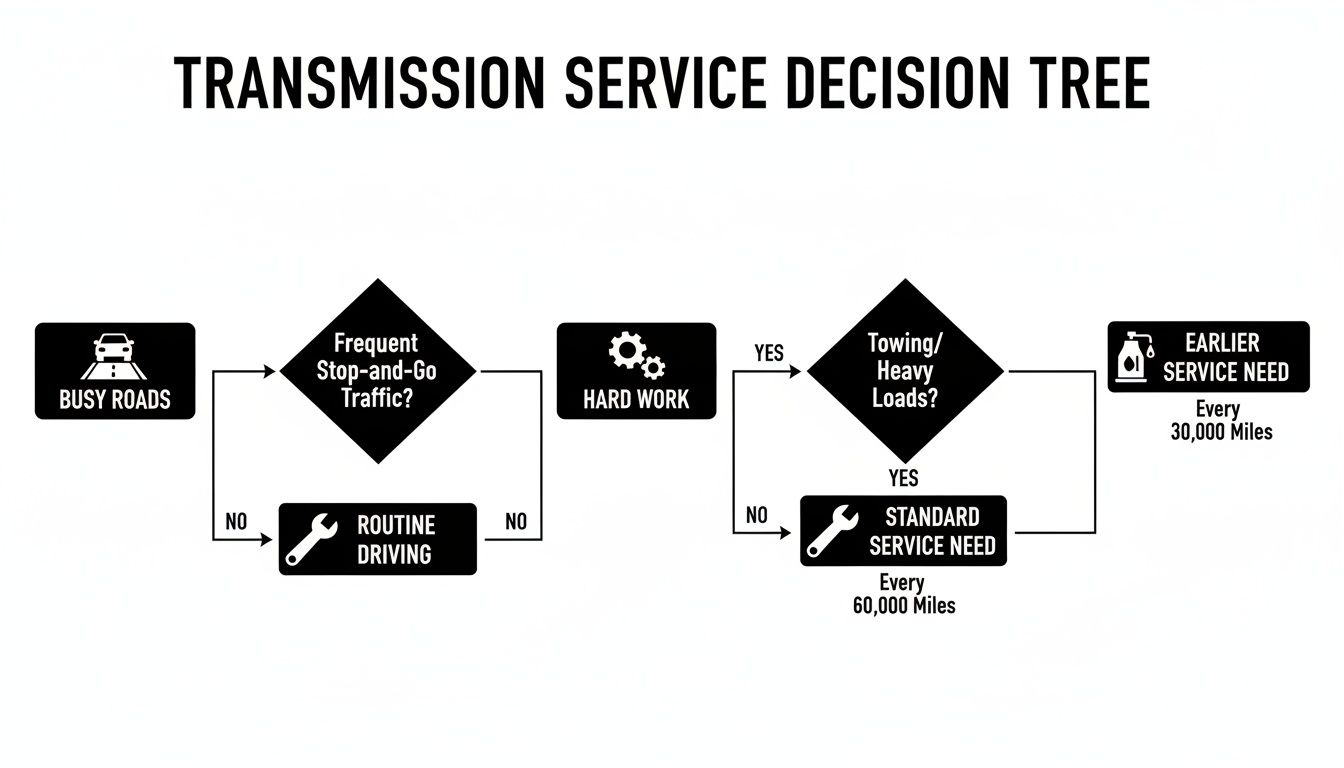
This decision tree illustrates how demanding driving conditions common in Plano—such as frequent stop-and-go traffic and navigating congested roads—accelerate fluid breakdown and necessitate regular service.
Finally, be observant of the ground where you park. Transmission fluid is typically a bright, translucent red. A puddle of this fluid under the front or middle of your vehicle indicates a leak. Your transmission is losing its essential fluid, which will rapidly lead to overheating and severe internal damage if not addressed.
Fluid Change vs. Flush vs. Repair: What You Actually Need
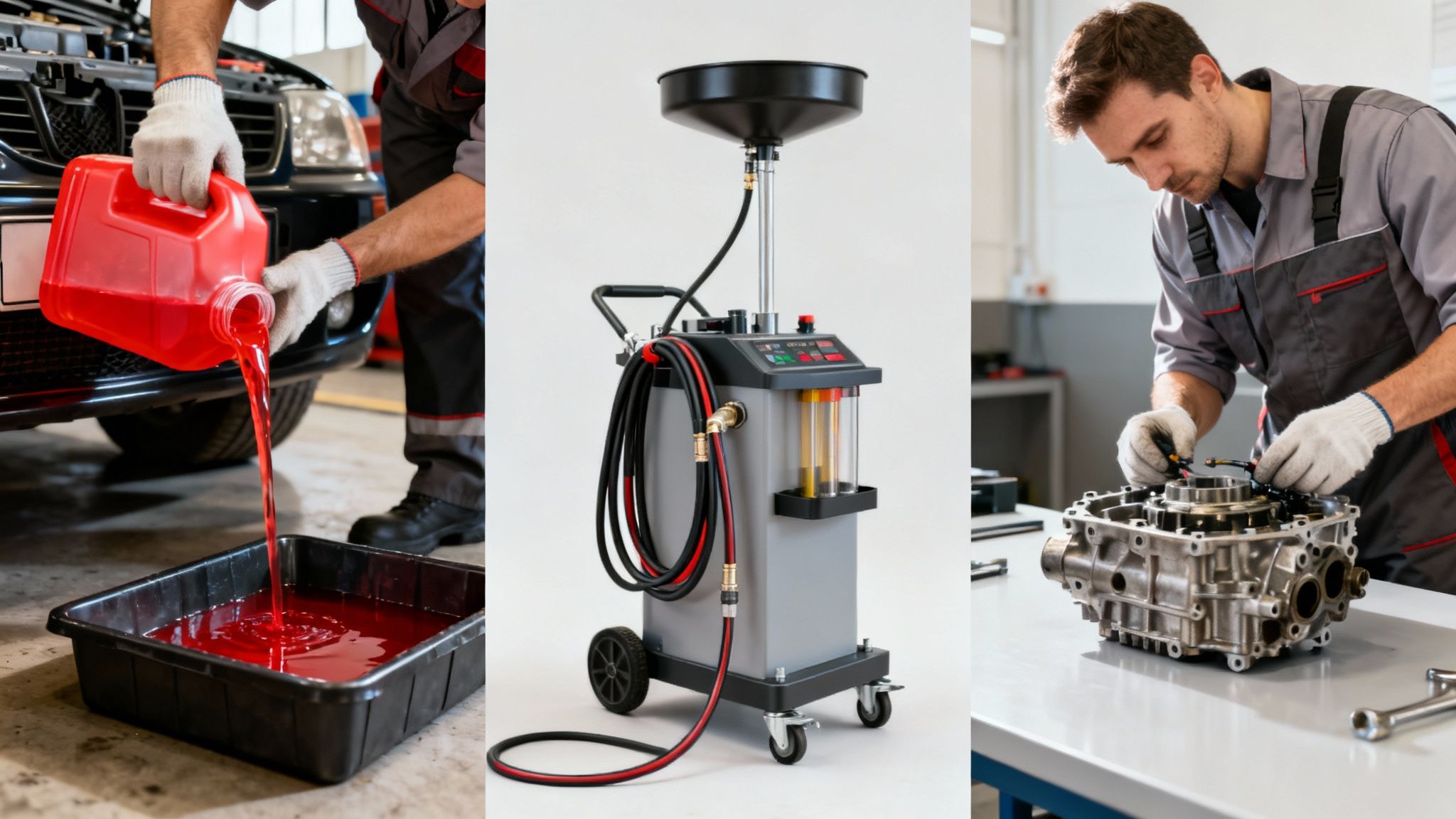
When a technician recommends a transmission service in Plano, understanding the terminology is essential. "Fluid change," "flush," and "repair" refer to distinctly different procedures. Knowing the difference empowers you to make an informed decision for your vehicle's health and your budget.
Let's use an analogy: cleaning a used cooking pan.
A standard fluid change (or "drain and fill") is like pouring out the old oil, wiping the pan clean, and refilling it with fresh oil. This is a basic but crucial maintenance task that removes a significant portion of the old, degraded fluid from the transmission pan. It is the most common and vital service for maintaining a healthy transmission.
A transmission flush, in contrast, represents a more thorough cleaning. This is like pressure-washing the pan to remove all stubborn, burnt-on residue. A specialized machine connects to the transmission cooler lines and uses the transmission's own pump to exchange virtually all of the old fluid—along with suspended sludge and metal particles—with new fluid.
Choosing the Right Service for Your Vehicle
The appropriate service depends on your vehicle's maintenance history and its current condition.
If you have followed a consistent maintenance schedule, a standard fluid and filter change is typically sufficient. This procedure aligns with most manufacturers' recommendations for keeping a healthy transmission in optimal condition.
A flush is often better suited for a vehicle that is overdue for service or is showing early signs of sluggishness due to contaminated fluid. The comprehensive cleaning can help restore crisp shifting and responsive performance.
A word of caution: a flush is not a universal solution. In a high-mileage vehicle with a history of neglected maintenance, a simple fluid change is often the safer option. A powerful flush could dislodge large sediment deposits, which might then clog narrow fluid passages and create more significant problems. A reputable technician will evaluate the vehicle's condition before recommending a flush.
When a Repair Becomes Necessary
A transmission repair is an entirely different category of service. Returning to our analogy, this is not about cleaning the pan; it's about fixing a structural crack in the pan itself.
Repairs address mechanical or electrical failures within the transmission. This could involve replacing a leaking gasket, a faulty solenoid or sensor, or even rebuilding entire clutch packs. You are in repair territory when dealing with severe symptoms like persistent gear slipping, loud mechanical noises, or a significant fluid leak that a service cannot fix.
Understanding when to change transmission fluid is your best strategy to avoid the need for these more extensive and costly repairs.
This focus on prevention is a growing trend among car owners. The realization that regular fluid services are essential for preventing breakdowns has shifted the market. Individual vehicle owners, particularly those no longer covered by a warranty, now represent the largest segment of the transmission repair market, underscoring the value of proactive care.
Understanding the Cost of Transmission Service in Plano
Budgeting for automotive maintenance, particularly for a major component like the transmission, can feel daunting. Fortunately, the cost for a transmission service in Plano is often more predictable than many drivers assume, especially for routine maintenance.
Let's start with the most common procedure: a standard transmission fluid and filter change. For the majority of sedans, SUVs, and light trucks common in the Plano area, you can typically expect this service to cost between $150 and $350. This price range generally includes the new transmission fluid, a replacement filter and gasket, and the labor required for the service.
Factors That Influence the Final Price
This range serves as a baseline, and several factors can influence the final cost. Consider it like ordering a custom product—the base price is fixed, but the final total depends on the options you select.
The most significant variable is often the type of transmission fluid required by your vehicle. Modern transmissions, especially in performance or European vehicles, frequently specify proprietary synthetic fluids. While these advanced fluids offer superior protection against heat and wear, they are also more expensive, potentially adding $50 to $150 or more to the total cost.
Your vehicle's specific make and model also contribute. The physical location and accessibility of the transmission can affect labor time. A transmission that is easy to access may require only an hour of labor, while a more complex design that requires removing other components for access could take two to three hours, increasing the labor portion of the bill.
The cornerstone of a positive service experience is transparency. A reputable auto shop will always explain these cost factors clearly, detailing precisely what your vehicle requires and why, ensuring there are no surprises on the final invoice.
Finally, the type of service selected will alter the cost. A complete transmission flush uses specialized equipment to exchange nearly 100% of the old fluid. While more thorough than a standard drain-and-fill, this process is more involved and uses more fluid, placing it in the $250 to $500 price range. A qualified technician can help you determine which service offers the best value based on your vehicle's condition and maintenance history.
Choosing the Right Local Expert for Your Transmission
When your vehicle's transmission requires service, selecting the right mechanic in Plano is paramount. This decision goes beyond a simple transaction; you are entrusting a professional with the safety and reliability of your transportation.
A true local expert possesses a deep understanding of the challenges our vehicles face daily. They are familiar with the high-stress conditions of stop-and-go traffic on the Dallas North Tollway and the intense Texas summer heat, both of which accelerate wear on a transmission. This localized knowledge is invaluable.
The Value of ASE-Certified Expertise
One of the most critical credentials to look for is ASE certification. This is not merely a promotional decal; it is a mark of professional distinction, indicating that the technicians have passed rigorous national examinations and are proficient in modern diagnostic procedures and equipment.
An ASE-certified technician has the expertise to accurately diagnose the root cause of a problem, distinguishing between a minor sensor malfunction and a severe internal failure. This precision can save you significant money by preventing unnecessary repairs. They bring a level of skill and knowledge that ensures the job is done correctly the first time.
As automatic transmissions become increasingly prevalent in vehicles worldwide, the demand for skilled repair services is rising. This global trend, detailed in this transmission repair market report on StraitsResearch.com, highlights the growing importance of finding a qualified shop for your transmission service in Plano.
More Than Just a Repair Shop
The best automotive service centers are built on a foundation of trust and customer convenience. The goal is to feel like a valued client, not just another repair order. You should seek a shop that respects both your time and your financial constraints.
A great local shop serves as a partner in your vehicle's care. They provide honest, transparent advice that prioritizes the long-term health of your car and your financial well-being, transforming a potentially stressful situation into a manageable one.
Here are the qualities that distinguish a top-tier local expert:
- No-Appointment Convenience: Automotive issues rarely align with a convenient schedule. A shop that welcomes walk-ins demonstrates an understanding of the real-world needs of commuters and families.
- Honest Recommendations: A trustworthy mechanic will clearly differentiate between urgent repairs and maintenance that can be scheduled for a later date, helping you budget and plan without pressure.
- Community Trust: A local business's reputation is its most valuable asset. Choosing a shop trusted by your neighbors means you are supporting an establishment that is invested in the well-being of the community.
Ultimately, finding the right expert provides one essential thing: peace of mind. It is the confidence that comes from knowing your vehicle is in capable, professional hands, allowing you to return to the road safely.
Simple Habits to Extend Your Transmission's Life
While professional service is non-negotiable, your daily driving habits significantly influence your transmission's longevity. Adopting a few simple practices can protect this complex system from unnecessary wear and tear, potentially saving you thousands of dollars in future repairs.
These are not complex technical skills but rather mindful adjustments to how you operate your vehicle. The objective is to minimize stress on the intricate system of gears, clutches, and hydraulic fluids that work in concert every time you drive.
Smart Driving Tips for a Healthier Transmission
One of the most beneficial habits is to allow your vehicle to warm up, especially on cool mornings. Letting the engine idle for just 30 to 60 seconds before shifting into gear gives the transmission fluid time to circulate properly. This is analogous to stretching before exercise; it prepares the system for the demands of driving.
Another highly effective yet simple technique involves using your parking brake correctly. When parking on an incline, always engage the parking brake before shifting the transmission into "Park." This ensures that the vehicle's weight is held by the robust braking system, not by the small metal pin inside the transmission known as the parking pawl.
Relying solely on the parking pawl to hold a vehicle on a hill places immense strain on a component not designed for that load. Making a habit of using the parking brake first takes only a moment and can prevent a very costly component failure.
Finally, your driving style is a major factor. Aggressive maneuvers, such as rapid acceleration from a stop and abrupt braking, force the transmission to work harder, generating excess heat and mechanical stress. A smooth, consistent driving style promotes longevity for all drivetrain components.
Know Your Limits and Stick to the Schedule
Beyond driving habits, two other factors are critical: respecting your vehicle's operational limits and adhering to its maintenance schedule. Every truck and SUV has a manufacturer-specified towing capacity for a reason. Exceeding this limit overloads the transmission, causing it to overheat and leading to premature failure.
Most importantly, follow the service intervals outlined in your owner’s manual. Regular fluid changes are the single most effective action you can take to preserve your transmission's health. Proactive maintenance is always more cost-effective and less stressful than reacting to a major failure, making a scheduled transmission service in Plano one of the wisest investments in your vehicle's long-term reliability.
Your Transmission Service Questions Answered
Transmissions are complex systems, so it's natural to have questions. Here are clear, straightforward answers to some of the most common inquiries from drivers in Plano, designed to help you make informed decisions about your vehicle's care.
How Often Do I Need a Transmission Service?
There is no universal interval that applies to all vehicles. As a general guideline, a transmission fluid change is recommended every 30,000 to 60,000 miles. However, your vehicle's owner's manual is the definitive source for the manufacturer's specific recommendation.
Driving conditions are also a critical factor. If your routine involves towing, carrying heavy loads, or frequent stop-and-go traffic in Plano, your transmission operates under greater stress, and more frequent service may be necessary.
Is a Transmission Flush Safe for My Car?
For most vehicles with a consistent and well-documented service history, a transmission flush is a safe and highly effective method for cleaning the entire hydraulic system.
However, for an older, high-mileage vehicle with a lapsed or unknown service history, a powerful flush could dislodge accumulated sludge, potentially causing blockages in narrow passages. In these cases, a more conservative fluid and filter change is often the safer and more prudent choice.
Key Takeaway: Healthy transmission fluid should be bright red and translucent. If you check the fluid and find it is dark brown, black, or has a burnt odor, it is a clear indication that the fluid has thermally broken down and must be replaced immediately to prevent damage.
It is also important to note that simply adding fluid is not a solution for a low level. A transmission is a sealed system; a low fluid level almost always signifies a leak that requires professional diagnosis and repair.
Modern vehicle transmissions are more sophisticated than ever, encompassing standard automatics, Continuously Variable Transmissions (CVTs), and dual-clutch systems. Each type demands specific fluids and specialized knowledge to service correctly, contributing to the complexity and cost of repairs. You can explore the evolution of this technology further at gearsmagazine.com.
For a professional diagnosis and honest advice on the right transmission service plano for your vehicle, trust the ASE-certified technicians at Express Lube & Car Care. Stop by anytime—no appointment needed! Learn more at https://www.expresslubeplano.com.