
When a mechanic suggests a "transmission service," they aren't just trying to upsell you. It's one of the most important preventative maintenance tasks you can do, protecting a component that can cost thousands to replace. This service is all about keeping your gearbox healthy.
So, what exactly are you paying for? This guide will break down the entire process, explaining what a transmission service includes, why each step is critical, and how it protects your vehicle.
What Does a Transmission Service Include?
Think of your transmission fluid as the lifeblood of your automatic transmission. It’s not just a lubricant; it’s a hydraulic fluid that cools moving parts and creates the pressure needed to shift gears. Over time, that fluid breaks down from heat and gets contaminated with tiny metal shavings.
A transmission service is a maintenance procedure designed to combat this degradation. It involves replacing old, worn-out fluid and ensuring the system is clean and functioning correctly. It’s proactive care that keeps your car shifting smoothly for the long haul.
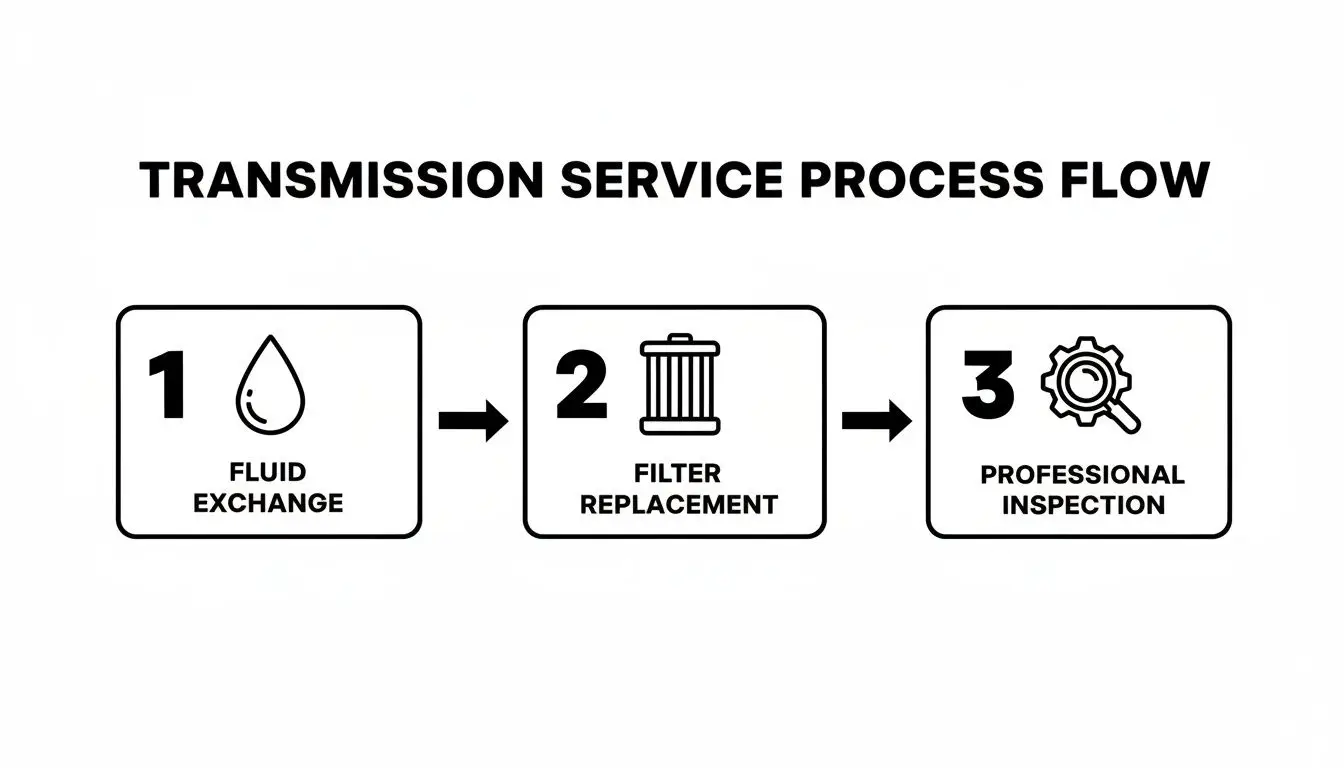
At its core, a complete service involves three key steps: a fluid exchange, filter replacement, and a thorough professional inspection.
Here’s a quick look at what's typically included in a standard vs. comprehensive transmission service.
Core Components of a Transmission Service
| Service Component | Standard Service | Comprehensive Service |
|---|---|---|
| Fluid Exchange | A "drain and fill" that replaces about 40-60% of the old fluid. | A full "fluid flush" using a machine to replace 90-100% of the old fluid. |
| Filter Replacement | The transmission pan is dropped to replace the old, clogged filter. | Same as a standard service; the filter is always replaced. |
| Pan Gasket | A new gasket is installed to ensure a leak-free seal. | Same as a standard service; a new gasket is essential. |
| Inspection | A technician inspects for leaks, checks fluid condition, and road tests the vehicle. | Includes all standard checks plus a more in-depth inspection of seals and connections. |
While a basic "drain and fill" is better than nothing, a comprehensive flush provides a more thorough cleaning for many vehicles, removing contaminants and protecting the transmission.
Why it's important: A transmission service is an investment in your vehicle's longevity. By swapping out the fluid and filter, you're removing the harmful debris and degraded fluid that cause grinding, slipping, and eventually, catastrophic failure.
The immediate benefits are hard to miss:
- Smoother Shifting: Fresh fluid restores the hydraulic properties needed for crisp, clean gear changes. No more hesitation or clunking.
- Better Cooling: New fluid is much more effective at dissipating heat from the transmission—a major cause of wear and failure.
- Longer Lifespan: This routine service is the most effective defense against a multi-thousand-dollar transmission replacement bill.
Understanding what a transmission service includes helps you ask informed questions at the repair shop and ensure your vehicle receives the proper care it needs.
The Role of Transmission Fluid and Why It Matters
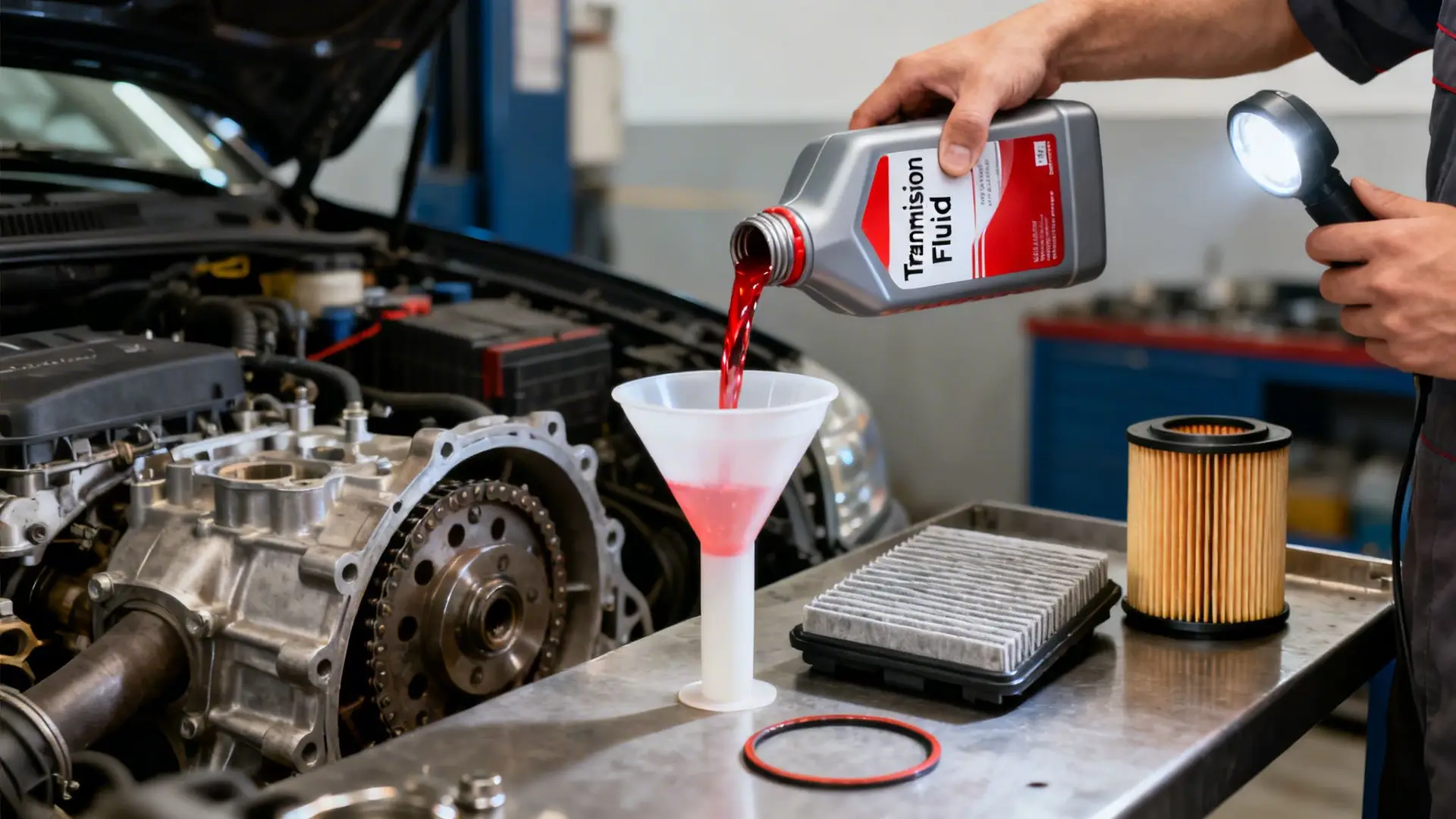
To understand what a transmission service includes, it's essential to first understand the role of transmission fluid. It is arguably the single most important component in this complex system. It's not just oil; it’s a highly engineered fluid that performs several critical jobs simultaneously.
Without healthy fluid, even the most robust transmission is susceptible to failure. Its condition directly impacts how your car shifts, performs, and ultimately, how long it lasts.
The Three Critical Jobs of Transmission Fluid
Fresh, clean automatic transmission fluid (ATF) is a multi-purpose workhorse. It’s constantly performing three key functions to keep your gearbox running smoothly.
Lubrication: Your transmission is a complex assembly of gears, clutches, and bearings. ATF creates a thin, protective film over all of them, preventing the kind of metal-on-metal friction that leads to premature wear and failure.
Cooling: The internal friction of a transmission generates immense heat, often pushing temperatures well over 200°F. ATF absorbs that heat and carries it to the transmission cooler, preventing critical parts from warping or breaking down.
Hydraulic Pressure: In an automatic transmission, shifting is not manual—it's hydraulic. The fluid creates the precise pressure needed to engage clutch packs and change gears. When your car shifts smoothly, you can thank the transmission fluid for it.
Every complete transmission service prioritizes the fluid. Why? Because industry data consistently shows that old, degraded fluid is a primary contributor to a high percentage of transmission failures. After 30,000 to 60,000 miles, its protective additives break down, leaving your gearbox vulnerable.
Drain and Fill vs. Full Fluid Flush
You will encounter two main types of fluid service, and it's important to know the difference. A basic "drain and fill" is just what it sounds like—a technician drains the fluid from the pan and refills it. The limitation is that this only replaces about 40-60% of the fluid, leaving old, dirty fluid trapped in the torque converter and cooler lines.
An important distinction: A drain and fill is like changing only half the oil in your engine. It's better than nothing, but it does not constitute a complete fluid replacement.
A "full fluid flush," however, is a more comprehensive process. It uses specialized equipment to exchange nearly 100% of the old, contaminated fluid with fresh, manufacturer-approved ATF. This process cleans out the entire system, ensuring harmful debris and microscopic metal shavings are removed.
To figure out which service is right for your vehicle, check out our guide on whether to flush your transmission fluid. Choosing the correct procedure is a key part of what a proper transmission service truly includes.
Inspecting Filters, Gaskets, and the Transmission Pan
While fresh fluid is the main event, a proper transmission service goes far beyond a simple fluid swap. The process involves a hands-on inspection of the filter, the gasket, and the transmission pan itself.
This isn’t just about replacing old parts—it's a crucial diagnostic check for your entire transmission.
Think of the transmission filter as your car’s kidney. Its sole job is to trap contaminants—tiny metal shavings, clutch material, and other debris—that naturally wear off the internal parts over time. If that filter becomes clogged, it can no longer protect the system, and those contaminants will circulate and cause abrasive wear on sensitive components.
To access the filter, a technician must perform a "pan drop." This means unbolting and carefully removing the large metal pan on the bottom of the transmission. For a skilled mechanic, this is where the real diagnostic work begins.
What Mechanics Look for in the Pan
Once the pan is removed, a professional technician doesn’t just wipe it clean. They are looking for diagnostic clues about your transmission's internal health.
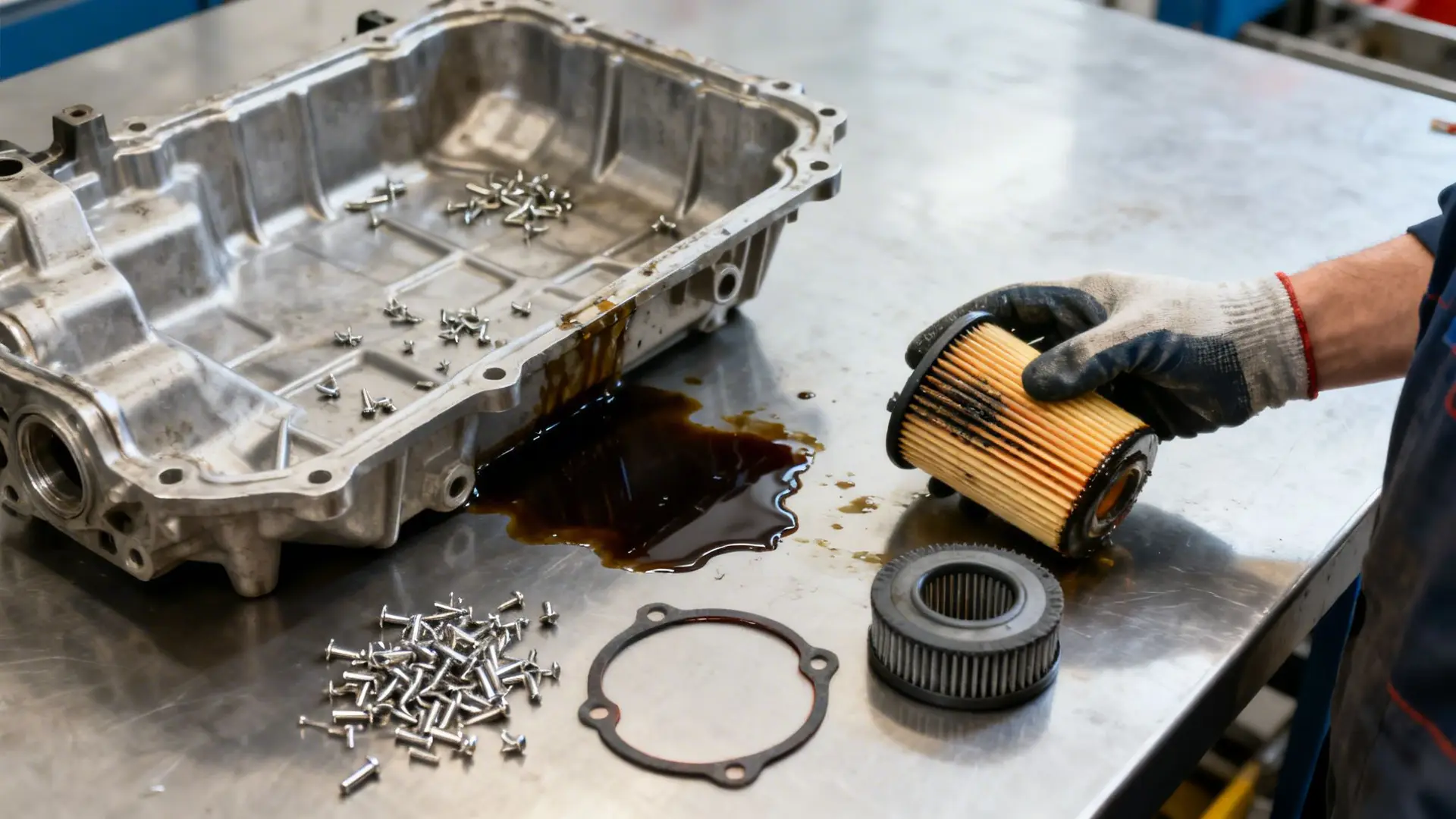
A small amount of fine, metallic dust clinging to the magnet in the pan is considered normal wear and tear. However, finding larger metal shavings or chunky debris is a serious red flag. These fragments indicate that a component, such as a gear or bearing, is wearing down excessively, and it needs to be addressed before a catastrophic failure occurs.
A diagnostic opportunity: Dropping the pan provides a direct window into the transmission's condition. What a technician finds inside—or doesn't find—offers a clear forecast of its future reliability and helps prevent surprise breakdowns.
A complete service uses this inspection to catch significant problems early. A look inside the pan can reveal signs of gear wear, a condition that affects a notable percentage of vehicles over 100,000 miles.
This is about more than just cleaning the pan. A technician also performs a visual check on accessible components for any scoring or cracks. In fact, industry data shows these detailed inspections can help prevent a majority of major transmission failures, saving drivers from a rebuild that can cost thousands. You can read more about detailed transmission inspections to see how in-depth these services can be.
Why a New Gasket Is Non-Negotiable
After the pan is cleaned and the new filter is installed, there's one last critical step before reassembly: installing a new pan gasket. This component creates the seal between the pan and the transmission body, preventing the new fluid from leaking.
Reusing the old gasket is a common cause of post-service leaks. Over thousands of miles and countless heat cycles, the original gasket becomes compressed, hard, and brittle. It simply cannot create a reliable seal a second time.
A new gasket is a small, inexpensive part, but it’s absolutely essential for ensuring the job is done correctly and your transmission remains sealed tight.
Warning Signs Your Transmission Needs Service
Your vehicle is designed to provide feedback when something is amiss, especially with the transmission. Learning to recognize these signals can be the difference between a routine service and a costly, complex repair.
Ignoring warning signs often allows a small issue to escalate into a major failure. Pay attention to how your car feels, sounds, and shifts. If something feels off, it likely warrants an inspection.
Common Symptoms to Watch For
Does your car seem to hesitate before shifting? Or perhaps you’ve started feeling a hard "clunk" when it changes gears. These are classic symptoms indicating that your transmission fluid has degraded or that internal parts are beginning to wear out.
Here are a few specific warning signs you should never ignore:
- Slipping Gears: The engine revs up, but the car doesn't accelerate accordingly. It might feel as if the transmission briefly shifted into neutral.
- Rough or Delayed Shifting: You feel a noticeable lag or a jarring impact as the transmission moves from one gear to the next.
- Whining or Grinding Noises: Any unusual humming, whining, or grinding sounds that change in pitch with acceleration are a strong indicator of transmission trouble.
- Burning Smell: A sharp, acrid smell often means the transmission fluid is overheating and breaking down, losing its ability to cool and lubricate.
- Leaking Fluid: Discovering bright red or dark brown puddles under your car is a clear sign of a leak. If you see one, our guide on a car leaking transmission fluid can help you determine the next steps.
The takeaway: A proactive approach is always more effective than a reactive repair. Responding to these early warning signs is key to avoiding a breakdown and a much larger repair bill.
Service Intervals and Driving Conditions
The most effective way to prevent problems is by following your car manufacturer’s recommended service schedule. For most vehicles, this means a transmission service every 30,000 to 60,000 miles.
However, mileage is not the only factor. Your driving habits play a significant role. Certain conditions place additional stress on your transmission, requiring more frequent service to prevent damage.
Consider servicing your transmission more often if you frequently:
- Tow trailers or haul heavy loads.
- Drive in stop-and-go urban traffic.
- Operate your vehicle in extreme heat.
These demanding conditions generate extra heat, and heat is the #1 enemy of transmission fluid. Adhering to a proper service schedule ensures your vehicle remains reliable for daily commutes and long journeys alike.
The Cost of Service Versus the Price of Neglect

When it comes to transmission maintenance, the financial equation is straightforward. You can pay for a routine service now, or you can risk one of the most expensive repair bills a car owner can face.
It’s best to view a transmission service not as a cost, but as an investment in your vehicle's mechanical health. It is a small, proactive step to protect a major system that can easily cost thousands to replace. The price of prevention will always be a fraction of the price of a catastrophic failure.
Comparing Service and Repair Costs
A standard transmission fluid change or even a full flush is a minor line item in your overall vehicle maintenance budget. These services have a predictable cost, making them easy to plan for.
A complete transmission replacement, on the other hand, can be a major financial burden.
Consider this: The cost of a single transmission replacement could easily pay for a lifetime of routine transmission services for your vehicle.
This stark contrast highlights the value of preventative care. While a service might seem like an expense today, it's actively protecting you from a massive, unexpected bill in the future. For a closer look at just how high those bills can get, check out our breakdown of the cost to replace a transmission.
The High Price of Putting It Off
Postponing service allows small, manageable issues to spiral out of control. Old, contaminated fluid leads to overheating and excessive wear, grinding down the complex inner workings of your transmission until it fails completely. What could have been resolved with fresh fluid and a new filter becomes a total breakdown.
The consequences of neglect are severe:
- Massive Repair Bills: A transmission rebuild or replacement often costs between $2,500 and $5,000—and can be significantly more for certain vehicles.
- Towing Fees and Downtime: A failed transmission rarely happens in your driveway. It often leaves you stranded, adding towing costs and the inconvenience of being without your vehicle.
If you're buying a used car, you don't want to inherit someone else's neglect. An ultimate pre-purchase car inspection guide can help you spot hidden transmission problems before you buy. It’s one more example of how a small, proactive check can save you a fortune.
Your Top Transmission Service Questions, Answered
Let's clarify a few common questions vehicle owners have about transmission service. Getting straight answers will help you make informed decisions for your car and understand exactly what you’re paying for.
Here are the straightforward, no-nonsense answers you need.
Is a Transmission Flush Better Than a Drain and Fill?
For most modern cars in good condition, a full fluid flush is the superior service. It uses specialized equipment to exchange nearly 100% of the old fluid from the entire system, including the torque converter and cooler lines where contaminants accumulate.
However, on some older, high-mileage vehicles that have missed service intervals, a simple drain and fill is often considered the safer approach. A powerful flush could potentially dislodge large sediment deposits in a well-worn transmission, which might clog narrow fluid passages. A drain and fill is a gentler method in these specific cases.
The expert take: A flush offers the most complete cleaning for healthy, properly maintained transmissions. For older, neglected units, a drain and fill is a lower-risk way to improve fluid quality. An experienced technician can recommend the best option.
Should I Really Trust "Lifetime" Transmission Fluid?
The term "lifetime" is often a source of confusion. It typically refers to the "lifetime" of the vehicle's warranty period, not the operational life of the vehicle itself. No fluid can last forever—heat, pressure, and contamination will eventually degrade it.
Even transmissions with so-called "lifetime" fluid benefit from service. We find that servicing these units around the 100,000-mile mark is a wise preventative measure that helps owners avoid much costlier repairs down the road.
What Happens If the Wrong Fluid Is Used?
Using the incorrect fluid is one of the most damaging mistakes one can make. Each manufacturer engineers its transmissions to operate with a very specific fluid type, each with a unique formula of additives and frictional properties.
The wrong fluid can cause shifting problems, overheating, seal degradation, and, ultimately, complete transmission failure. Always insist on the exact OEM-specified fluid or an approved equivalent for your vehicle. It is a simple step that prevents catastrophic damage.
For professional advice and expert service you can trust, visit Express Lube & Car Care. Our ASE-certified technicians in Plano, TX, are ready to help you maintain your vehicle's health and keep you driving safely. Schedule your service today at https://www.expresslubeplano.com