
A flush transmission fluid service is a comprehensive maintenance procedure that involves the complete replacement of the old, contaminated fluid within your vehicle's transmission system. Unlike a standard drain-and-fill, this process utilizes specialized equipment to exchange nearly 100% of the fluid, thoroughly cleansing the entire system of harmful deposits and ensuring it is protected by fresh fluid. Understanding this service is a critical part of vehicle ownership, as it helps prevent costly, premature transmission failure.
Understanding a Transmission Fluid Flush and Why It Matters
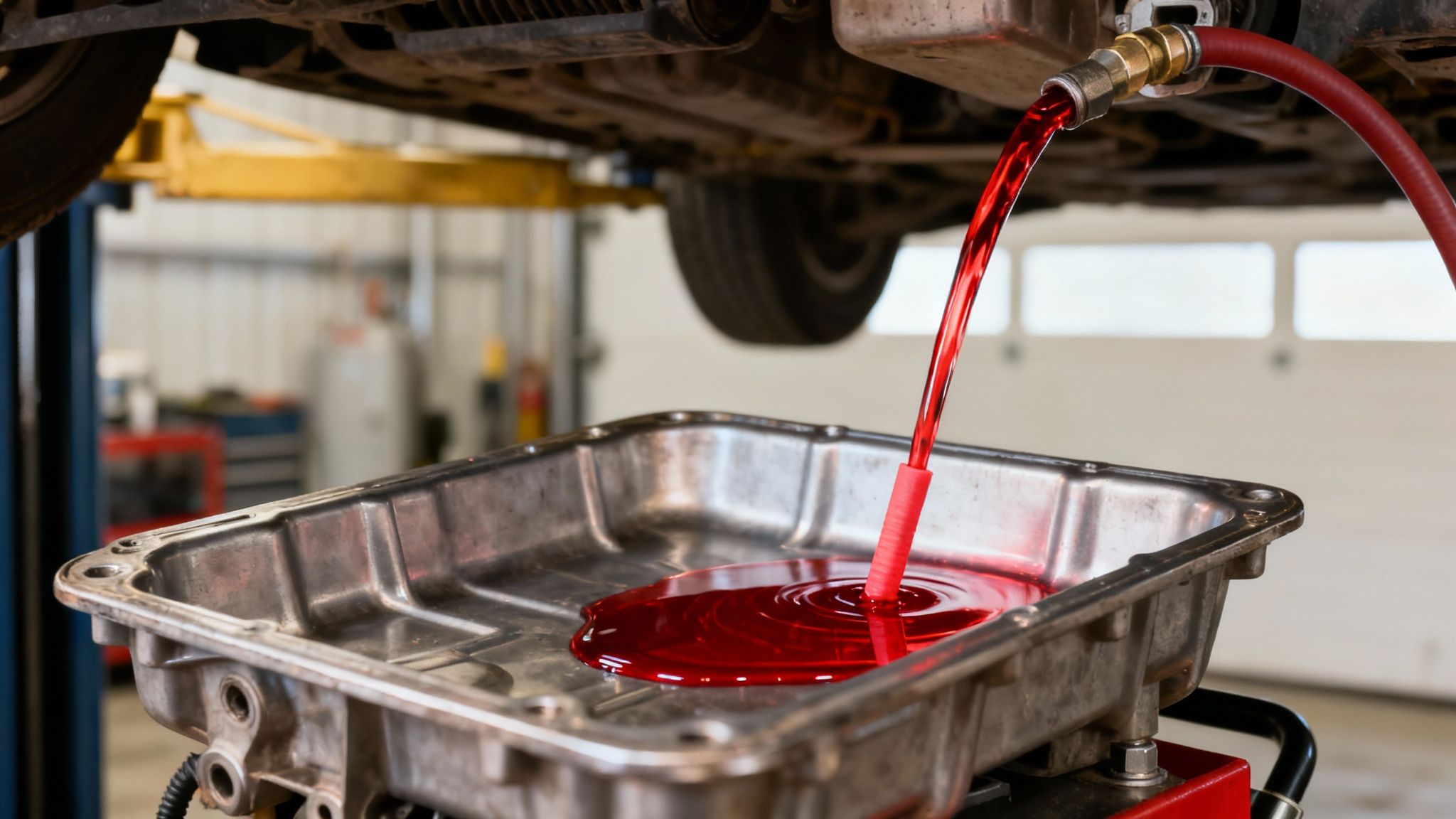
Transmission fluid, also known as Automatic Transmission Fluid (ATF), is one of the most complex fluids in a vehicle. Its primary functions include lubricating moving components, cooling the transmission, and acting as a hydraulic fluid to enable smooth gear shifts. It contains a sophisticated blend of base oils and additives, including detergents, anti-wear agents, and viscosity modifiers, that allow it to perform under immense heat and pressure.
Over time, this fluid degrades due to thermal breakdown. The constant exposure to high temperatures and mechanical stress causes the additives to deplete and the fluid to oxidize. Concurrently, microscopic metal particles from normal wear on gears and clutches accumulate, contaminating the fluid. This degraded, contaminated fluid can no longer effectively dissipate heat, leading to overheating—the primary cause of transmission failure.
The Problem with Old Transmission Fluid
The condition of transmission fluid is a direct indicator of its health. New fluid is typically a translucent, bright red. As it ages, it darkens to a murky brown or black and may emit a burnt odor. This change signals that the fluid has lost its protective properties.
This chemical breakdown leads to several mechanical problems:
- Sludge Buildup: Oxidized fluid and suspended contaminants form a thick sludge that can obstruct narrow hydraulic passages within the transmission's valve body, leading to lubrication starvation in critical components.
- Jerky Shifting: Worn fluid loses its ideal viscosity and friction characteristics, compromising its ability to generate the precise hydraulic pressure needed for gear engagement. This results in hesitation, rough shifting, or a noticeable "clunk" between gears.
- Overheating: Degraded fluid cannot transfer heat efficiently, causing operating temperatures to rise. This accelerates the wear of seals, clutches, and other internal metal parts, leading to irreversible damage.
For vehicles operating in demanding conditions, such as the stop-and-go traffic common in Plano, the transmission is subjected to increased thermal stress, which accelerates fluid degradation.
A transmission fluid flush is preventative maintenance, not a corrective repair. Its purpose is to remove harmful contaminants before they cause permanent mechanical wear, thereby extending the transmission's operational lifespan.
To fully appreciate its benefits, it is important to distinguish a flush from a simple drain-and-fill. While the latter is a beneficial service, it only removes a fraction of the old fluid.
Transmission Flush vs Drain-and-Fill Key Differences
| Feature | Transmission Flush | Drain-and-Fill |
|---|---|---|
| Fluid Replaced | ~95-100% | ~30-50% |
| Method | Utilizes a machine that connects to the cooler lines, pushing out old fluid while simultaneously introducing new fluid. | Relies on gravity to drain fluid from the transmission pan only. |
| Contaminant Removal | Cleanses the entire system, including the torque converter, valve body, and fluid lines. | Leaves a significant volume of old fluid and contaminants trapped in the torque converter and other components. |
| Effectiveness | Restores the system to optimal condition with completely new fluid, offering maximum protection. | Offers limited improvement as the new fluid is immediately diluted by the old fluid left behind. |
As the comparison shows, a flush is the only method that guarantees the transmission operates on entirely clean, effective fluid.
The High Cost of Neglect
Neglecting this critical service can lead to significant financial consequences. The Car Care Council has reported that a staggering 78% of vehicles in the U.S. are overdue for essential maintenance, with transmission fluid often being overlooked. For Plano commuters who rely on their vehicles daily, degraded fluid can reduce a transmission's efficiency by up to 15-20% due to increased internal friction and heat.
A timely fluid flush can extend the life of a transmission by 50,000 miles or more, helping vehicle owners avoid a potential $2,500-$4,000 rebuild. The growing complexity of modern transmissions underscores the importance of proper maintenance, a trend reflected in the global transmission fluids market research.
In summary, performing a transmission fluid flush at the recommended interval is a sound investment. It is a methodical service that purges the entire hydraulic circuit, restores performance by re-establishing proper fluid properties, and protects against the leading cause of automatic transmission failure: overheating.
Key Warning Signs Your Transmission Needs Attention
Your vehicle often provides distinct sensory cues when its transmission requires service, well before a malfunction indicator lamp illuminates. Recognizing these early warning signs can prevent minor fluid issues from escalating into major mechanical failures.
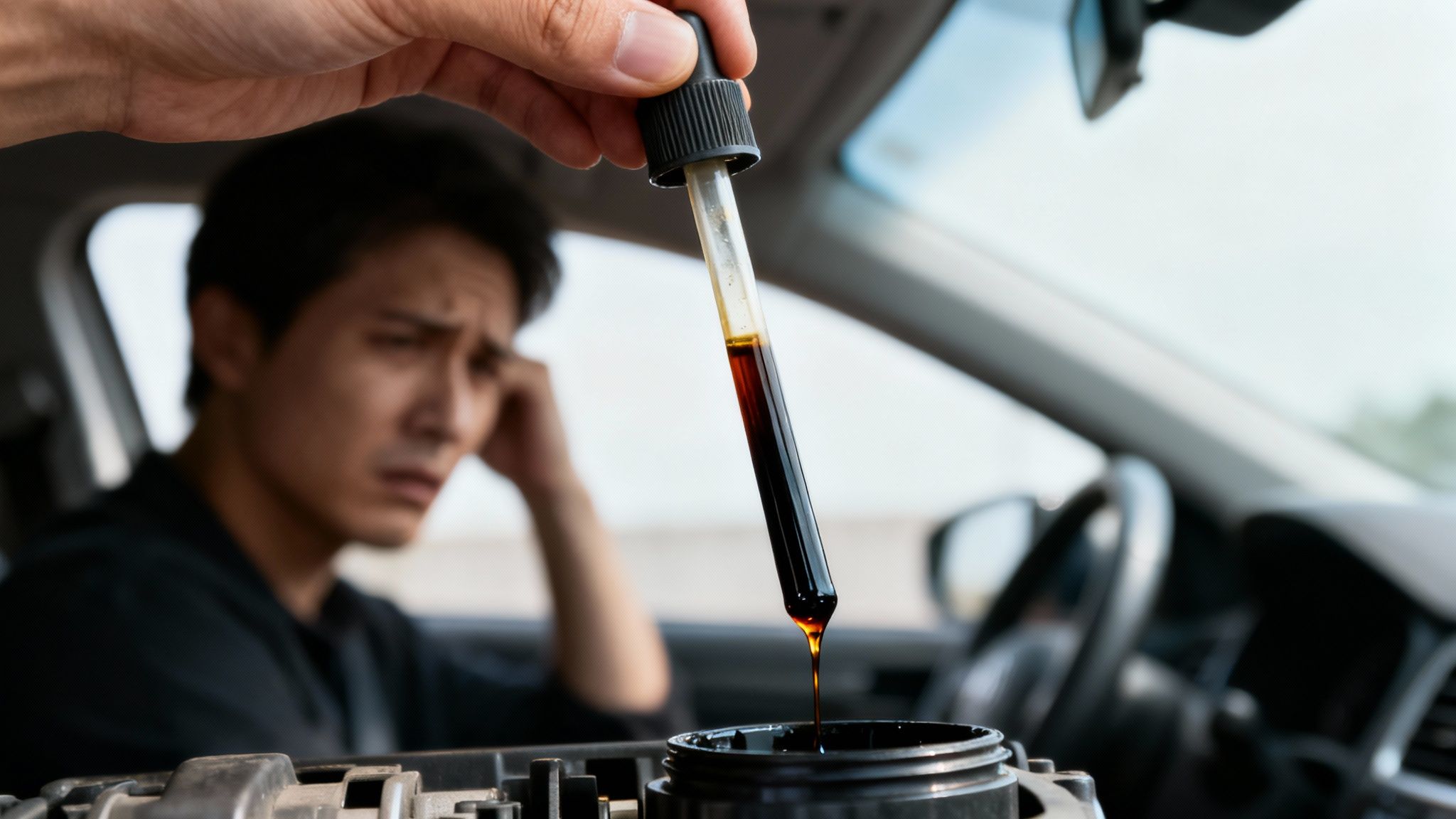
The most direct evidence is the fluid itself. Healthy automatic transmission fluid (ATF) is a bright, translucent red. If a check of the dipstick reveals fluid that is dark brown, black, or opaque, it is a clear indication of contamination and thermal breakdown.
The fluid’s odor is another critical indicator. Fresh ATF has a slightly sweet, distinct smell. An acrid, burnt odor—similar to burnt toast—is a serious warning sign. This smell signifies that the fluid is overheating and has lost its ability to lubricate and cool the transmission's internal components.
Performance Problems You Can Feel
Beyond visual and olfactory checks, the vehicle's driving characteristics provide significant clues. Worn-out fluid loses its specific hydraulic properties, impairing its ability to facilitate smooth gear changes.
One common symptom is a noticeable delay or a harsh "clunk" when shifting from Park to Drive or Reverse. This hesitation occurs when the transmission struggles to build sufficient hydraulic pressure to engage the gear, a problem often caused by old, sludgy fluid.
Pay close attention to the transmission's behavior during acceleration:
- Slipping Gears: This condition is characterized by the engine's RPMs increasing without a corresponding increase in vehicle speed. It indicates that the internal clutches are not engaging properly, often due to degraded fluid.
- Erratic Shifting: The transmission may shift at inappropriate times (too early or too late) or "hunt" between gears. This results in a jerky, unpredictable driving experience and places undue stress on the entire drivetrain.
- Refusal to Shift: In more advanced cases of fluid degradation or low fluid levels, the transmission may fail to upshift, causing the engine to operate at excessively high RPMs at normal driving speeds.
Identifying these performance issues early can mean the difference between a routine flush transmission fluid service and a costly transmission rebuild. The moment you notice any abnormal shifting behavior, a professional inspection is warranted.
Strange and Unusual Noises
A healthy automatic transmission operates almost silently. Therefore, the emergence of new whining, buzzing, or clunking sounds should be investigated immediately.
For instance, a whining or buzzing noise that changes in pitch with engine speed can indicate a clogged transmission filter or a failing fluid pump, both of which restrict fluid flow. These noises are often most pronounced when the vehicle is in gear but stationary.
A clunking or thudding sound during gear shifts suggests that the degraded fluid is no longer providing an adequate hydraulic cushion for the engaging metal components. Low fluid levels can also be a cause; if you suspect a leak, it is essential to understand the signs of a car leaking transmission fluid. Promptly addressing leaks is crucial to preventing permanent damage.
DIY Flush vs. Professional Service: Which Is Right for You?
When considering a transmission fluid flush, vehicle owners face a choice: attempt the procedure themselves or entrust it to a professional technician. While the DIY approach may seem cost-effective, a transmission fluid flush is a complex task where minor errors can result in catastrophic and expensive damage.
A DIY flush requires specialized equipment beyond a basic toolkit, including a fluid transfer pump, a comprehensive socket set, large-capacity drain pans, and a safe method for elevating the vehicle. The process is inherently messy, and ATF is difficult to clean from surfaces.
However, the primary risks extend far beyond inconvenience and mess.
The Dangers of a DIY Transmission Flush
The most significant risk is using the incorrect type of transmission fluid. The automotive market includes dozens of specific fluid formulations, such as DEXRON, MERCON, ATF+4, and various CVT fluids, each engineered for specific transmission designs. Introducing the wrong fluid can lead to improper clutch engagement, overheating, and irreversible damage to internal components.
Another critical risk is the introduction of air into the hydraulic lines. An airlock can form if the system is not properly bled, starving crucial components of lubrication and leading to rapid mechanical failure. This single mistake can escalate a maintenance task into a repair costing several thousand dollars.
When these risks are considered, the potential savings of a DIY kit diminish.
- Wrong Fluid Amount: Overfilling or underfilling the transmission can cause problems ranging from gear slippage to blown seals and overheating.
- Incomplete Flush: Without professional-grade flushing equipment, a significant amount of old, contaminated fluid will remain in the torque converter and cooler lines.
- Missed Diagnostics: A professional technician performs an inspection as part of the service, identifying early signs of leaks, worn seals, or other potential issues that a DIYer might overlook.
The Advantages of a Professional Service
Opting for a professional service transforms this high-risk task into a safe, routine maintenance procedure. The cornerstone of a professional flush is the specialized equipment used. These machines connect directly to the transmission's cooler lines, establishing a closed-loop system for fluid exchange.
This method allows for the removal of nearly 100% of the old fluid while simultaneously replenishing the system with fresh fluid. This process ensures a complete exchange, cleanses the entire system (including the torque converter), and crucially, prevents air from entering the hydraulic circuit.
Furthermore, a professional service provides the expertise of a trained technician. They have access to vehicle-specific databases to identify the precise OEM-spec fluid required, eliminating guesswork. During the service, they also conduct a visual inspection of the system for any signs of developing problems.
Ultimately, the primary benefit of a professional service is peace of mind. The assurance that the job was performed correctly with the proper fluid and equipment is invaluable.
The transmission fluids market is projected to reach USD 19.70 billion by 2029, highlighting the industry's complexity. With over 90 million automatic transmission vehicles in the U.S., degraded fluid can decrease fuel efficiency by 10-15%, costing the average driver $200-$300 annually. Adhering to the recommended 30,000-60,000 mile flush interval is associated with 30% fewer transmission failures—a vital statistic for families managing vehicle expenses. You can learn more about the importance of quality transmission fluids on MarketsandMarkets.com.
For most drivers, the precision, safety, and thoroughness of a professional flush represent a logical and prudent investment in their vehicle's long-term health.
What to Expect During a Professional Transmission Flush
Choosing to have a professional transmission fluid flush is a wise decision for your vehicle's longevity. Understanding the step-by-step process can provide confidence that your vehicle is receiving the highest standard of care. It is a meticulous procedure designed to completely rejuvenate the transmission's hydraulic system.
The Initial Inspection
The service begins not with the machine, but with a diagnostic inspection. A qualified technician will first check the transmission fluid level and condition via the dipstick. They will assess its color, clarity, and odor to identify signs of severe degradation or potential underlying mechanical issues. This initial evaluation helps determine if a simple flush is appropriate or if further diagnostics are needed.
Hooking Up the Flush Machine
Following the inspection, a specialized transmission flushing machine is connected to the vehicle. The technician accesses the transmission's cooler lines, which circulate fluid to and from the radiator or an external cooler to regulate temperature. By tapping into these lines, the machine gains access to the entire fluid circuit.
This professional equipment is the key differentiator from a DIY attempt. It creates a closed-loop system, which is essential for preventing air from being introduced into the transmission's sensitive hydraulic components. Air bubbles can disrupt normal operation and cause significant damage.
The infographic below illustrates the fundamental differences in approach and outcome between a DIY method and a professional service.
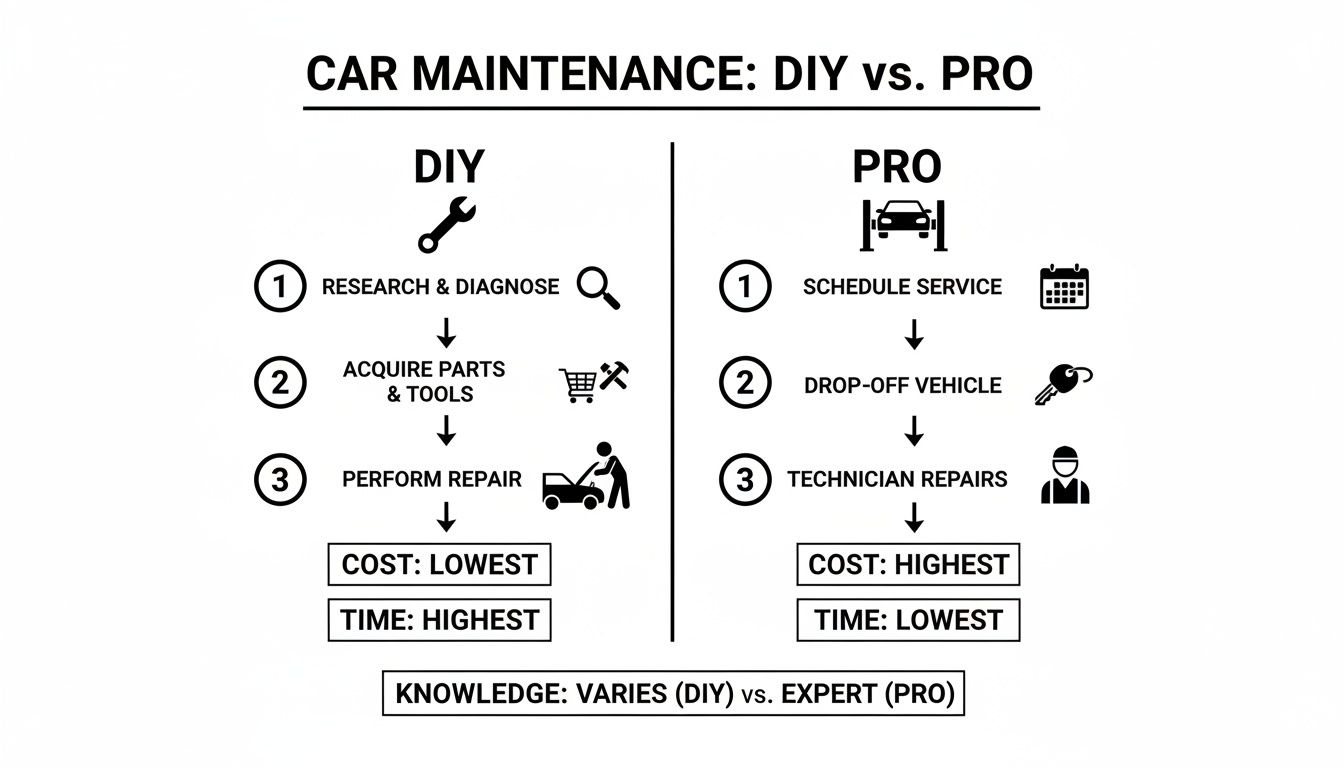
The use of professional equipment ensures a safe, complete, and efficient fluid exchange that is virtually impossible to achieve with DIY methods.
The Fluid Exchange Process
With the machine connected, the fluid exchange commences. The machine's internal pumps work in tandem with the vehicle's own transmission pump. As the engine runs, old, contaminated fluid is drawn out and directed to a waste reservoir in the machine, while an equal volume of fresh, manufacturer-specified fluid is simultaneously pumped into the system.
The technician monitors this process through clear sight glasses on the machine, which show the color of the fluid being extracted alongside the color of the new fluid being introduced. The exchange continues until the fluid exiting the transmission is identical in color and clarity to the new fluid. This confirms that nearly 100% of the old fluid and its suspended contaminants have been purged.
A key technical aspect of this process is that the fluid exchange occurs at the transmission's normal operating pressure. This is a safe and gentle method, unlike systems that might force fluid through at high pressure, which could potentially damage seals.
Depending on the transmission's condition, the technician may also introduce a cleaning additive during the flush to help break down stubborn sludge and varnish deposits. For more details on various fluid services, our comprehensive guide on fluid exchanges offers further information.
Final Checks and a Test Drive
Once the fluid exchange is complete, the machine is disconnected, and the cooler lines are securely reconnected. The technician then performs a final check, ensuring the fluid is at the precise level specified by the manufacturer.
The final and most important step is a road test. The technician drives the vehicle, cycling it through all gears to confirm that shifts are smooth, quiet, and responsive. This verifies that the service was successful and the transmission is operating at peak performance.
In Texas, where 85% of new cars sold have automatic transmissions, this service is particularly crucial. Transmission fluid can begin to break down in as little as 20,000 miles under severe conditions, leading to 25% higher wear rates. A single flush can prevent over $3,000 in potential repairs, as flushed systems demonstrate 40% better thermal stability—a significant advantage in our hot climate.
How Often Do I Need a Transmission Flush and What Does It Cost?
Two practical questions are central to planning for a transmission flush: "What is the correct service interval?" and "What is the expected cost?"
The answers are crucial for proper vehicle maintenance budgeting. While there is no universal schedule, manufacturer guidelines and driving habits provide a clear framework.
Most vehicle manufacturers recommend a transmission fluid exchange between 30,000 and 100,000 miles. This wide range exists because the recommendation is based on "normal" driving conditions. It is essential to consult your owner's manual for the specific interval for your vehicle.
However, this baseline recommendation should be adjusted based on how the vehicle is used.
Your Driving Habits Change Everything
Certain driving conditions place significantly more thermal and mechanical stress on the transmission, accelerating the degradation of the fluid.
You should consider shortening the manufacturer's recommended service interval if you frequently:
- Tow or Haul Heavy Loads: This activity dramatically increases transmission operating temperatures.
- Sit in Stop-and-Go Traffic: The constant shifting and lack of airflow in dense traffic prevent the transmission from cooling effectively.
- Drive in Extreme Heat: High ambient temperatures, like those common in Texas summers, increase the baseline operating temperature of all vehicle components.
- Engage in Aggressive Driving: Hard acceleration and deceleration place high stress on internal clutches and gears.
If your driving patterns fall into any of these "severe use" categories, a prudent rule of thumb is to halve the manufacturer's recommended service interval. For example, if the manual suggests a 100,000-mile interval, a flush at 50,000 miles is a wise preventative measure.
Breaking Down the Cost of a Professional Flush
The cost of a professional transmission flush typically ranges from $150 to $400. The final price is influenced by several variables.
Key factors that determine the cost include:
- Your Vehicle: Luxury vehicles, sports cars, and heavy-duty trucks often have more complex transmissions that hold a larger volume of fluid, increasing both labor time and material costs.
- The Fluid Itself: The type of fluid required is a major cost driver. While some vehicles use conventional ATF, many modern transmissions require specific, more expensive synthetic fluids (e.g., CVT or DCT fluid). Using the correct fluid is non-negotiable for transmission health.
- Labor Rates: Rates vary by geographic location and the repair facility. An ASE-certified technician may command a higher labor rate, but this cost reflects a higher level of expertise and assurance of a job done correctly.
A comprehensive quote should include the cost of the new fluid, labor, and any associated shop supplies. While the upfront cost may seem significant, it is minor compared to the $4,000+ expense of a complete transmission replacement.
To learn more about what is involved in comprehensive transmission care, please see our guide on transmission service in Plano. Proactive maintenance is the most effective strategy for avoiding catastrophic repair costs.
Common Questions About Transmission Flushes
Even with a thorough understanding of the process, specific questions often arise. A transmission flush is a significant maintenance item, and clarity on the details is essential for making an informed decision. Here are answers to some of the most frequently asked questions.
Can a Transmission Flush Fix My Shifting Problems?
This is a common misconception. A transmission fluid flush is a preventative maintenance service, not a corrective repair. Its purpose is to prevent wear and damage from occurring in a healthy transmission.
If your vehicle is already exhibiting significant symptoms like shuddering, slipping gears, or making grinding noises, these are typically signs of existing mechanical wear. In such cases, a fluid flush is not a solution. On a high-mileage transmission that has been severely neglected, a flush can sometimes exacerbate an underlying issue. For example, fresh fluid with new detergents can wash away sludge that may have been plugging a worn-out seal, revealing a pre-existing leak.
The bottom line: If you are experiencing serious transmission problems, the first step should be a professional diagnostic inspection. A flush helps a good transmission stay healthy; it cannot repair a failing one.
What Kind of Transmission Fluid Does My Car Need?
Using the correct fluid is absolutely critical. Transmission fluids are not universal. They are complex chemical formulations engineered for the specific friction materials, hydraulic pressures, and operating temperatures of a particular transmission type.
The various fluid types are not interchangeable:
- ATF Specs: Different manufacturers have proprietary specifications, such as GM's DEXRON and Ford's MERCON, each with multiple evolving versions.
- CVT Fluid: This is specifically designed for Continuously Variable Transmissions and has unique frictional properties to prevent belt or chain slippage. Using standard ATF in a CVT will cause catastrophic failure.
- DCT Fluid: Dual-Clutch Transmissions require a special fluid that can handle the high pressures and temperatures of their wet clutch systems.
Using the wrong fluid will lead to poor shift quality, overheating, and ultimately, severe mechanical damage. A professional service eliminates this risk, as technicians consult manufacturer databases to ensure the exact fluid specified for your vehicle's make, model, and year is used.
How Long Does a Professional Flush Take?
A professional transmission flush is an efficient service. Despite its thoroughness, it does not require leaving your vehicle at the shop for an extended period.
For most passenger cars, SUVs, and light trucks, the entire service typically takes between 45 and 90 minutes. This timeframe includes the initial inspection, the connection of the machine, the fluid exchange process, and a final road test to confirm proper operation.
Can't I Just Top Off the Fluid?
Topping off low fluid is a temporary fix for a symptom, not a solution to the root problem. If your transmission fluid is low, it indicates a leak that must be diagnosed and repaired.
More importantly, adding new fluid to old, contaminated fluid does not restore the system's health. The small amount of new fluid is immediately contaminated by the old fluid, which is saturated with metal particles and depleted of its protective additives. This diluted mixture cannot properly lubricate, cool, or protect your transmission.
A complete fluid flush is the only method that removes nearly 100% of the old, damaging fluid, replacing it with a full supply of fresh fluid engineered to protect your transmission effectively.
Ready to give your transmission the care it deserves? The ASE-certified technicians at Express Lube & Car Care have the expertise and equipment to perform a professional transmission fluid flush that protects your vehicle and keeps it shifting smoothly. Visit us in Plano today for fast, reliable service—no appointment needed.