

A brake fluid leak is a critical safety issue for any vehicle. As the essential lifeblood of your car's hydraulic braking system, this fluid is responsible for turning your foot's command into stopping power. If it begins to leak, your ability to slow down or stop can be severely compromised, potentially leading to complete brake failure. This isn't a maintenance task you can postpone—it's a direct threat to your control over the vehicle and requires immediate professional diagnosis.
Why Your Brakes Depend on a Perfectly Sealed Hydraulic System
To understand the danger of a leak, we first need to explore the scientific principle that makes your brakes work: hydraulics. Imagine a sealed water bottle. If you squeeze it, the pressure you apply is instantly distributed throughout the water, creating firm resistance. This happens because water, like brake fluid, is non-compressible. This fundamental concept is the powerhouse behind your car's brakes, transforming the light push from your foot into enough force to halt thousands of pounds of moving metal.
The entire braking system is a closed network filled with a specialized, non-compressible brake fluid engineered to withstand the extreme heat generated during braking. It functions as a liquid lever, instantaneously transmitting force from your brake pedal directly to the wheels.
How Hydraulic Pressure Translates Pedal Push to Stopping Power
When you press the brake pedal, you're not physically squeezing the brake pads against the wheels. Instead, your action moves a piston inside a component called the master cylinder. This piston pushes brake fluid through a sealed network of metal lines and flexible hoses.
This pressurized fluid travels to each wheel, activating a caliper (in a disc brake system) or a wheel cylinder (in a drum brake system). The caliper then squeezes brake pads against a spinning disc (rotor), or the wheel cylinder pushes brake shoes against a spinning drum. This friction is what slows your car down. It’s a brilliant example of force multiplication.
A small amount of pressure applied by your foot is magnified into a powerful clamping force at the wheels, but this is only possible because the fluid is contained within a perfectly sealed system.
Why a Leak Invalidates the Entire System
The critical term here is sealed. If our water bottle analogy had a tiny crack, squeezing it would simply cause water to squirt out. No internal pressure could build. A brake fluid leak has the exact same effect on your car. As fluid escapes, something even more problematic enters: air.
Here is the science behind why this is so dangerous:
- Loss of Hydraulic Pressure: Air is highly compressible, whereas brake fluid is not. When air enters the brake lines, pressing the pedal no longer transmits force effectively. Instead, it just compresses the air bubbles. This is the direct cause of a "spongy" or "soft" pedal feel.
- Diminished Stopping Power: With less hydraulic force reaching the wheels, your car will not stop as quickly or efficiently. Your stopping distance will increase dramatically, turning a routine stop into a potential collision.
- Catastrophic Brake Failure: A significant leak can drain enough fluid to create a void in the system, resulting in zero hydraulic pressure. In this scenario, the pedal may sink directly to the floor with no braking effect whatsoever, leading to a complete loss of control.
A brake fluid leak isn't a minor inconvenience; it signifies a critical failure in one of your vehicle's most essential safety systems. Recognizing the symptoms we'll discuss next is a vital skill for any driver.
How To Spot the Telltale Signs of a Brake Fluid Leak
Identifying a brake fluid leak early is one of the most important diagnostic skills you can develop as a driver. Your vehicle often provides clear signals when the brake system is compromised, but you must know how to interpret them. These are not minor quirks—they are urgent warnings demanding your immediate attention.
So, what are the indicators? Fresh brake fluid is a slick, oily liquid, typically clear or light yellow. Over time, it absorbs moisture and contaminants, turning a darker brownish color. Discovering a puddle with this appearance under your car is a definitive red flag.
The Spongy Pedal: Your First Tactile Clue
The most common—and arguably most disconcerting—symptom of a leak is a noticeable change in the feel of your brake pedal. If it suddenly feels soft, mushy, or "spongy" underfoot, this is the classic indication that air has infiltrated your brake lines.
Your hydraulic brake system is engineered as a closed loop, filled exclusively with non-compressible fluid. A leak creates an entry point for air. When you apply the brakes, your force is wasted compressing these air bubbles instead of generating the solid hydraulic pressure needed to engage the brake pads. The result is a weak, delayed, and unreliable braking response.
A firm, responsive brake pedal indicates a healthy, properly sealed system. A spongy or soft pedal that sinks toward the floor is a direct warning that the hydraulic integrity has been compromised, most likely by a brake fluid leak.
Ignoring a spongy pedal is a significant risk, as it means your stopping power has already been seriously reduced.
This flowchart illustrates how a properly sealed system converts your foot's pressure into stopping power—and what happens when a leak breaks that chain of events.
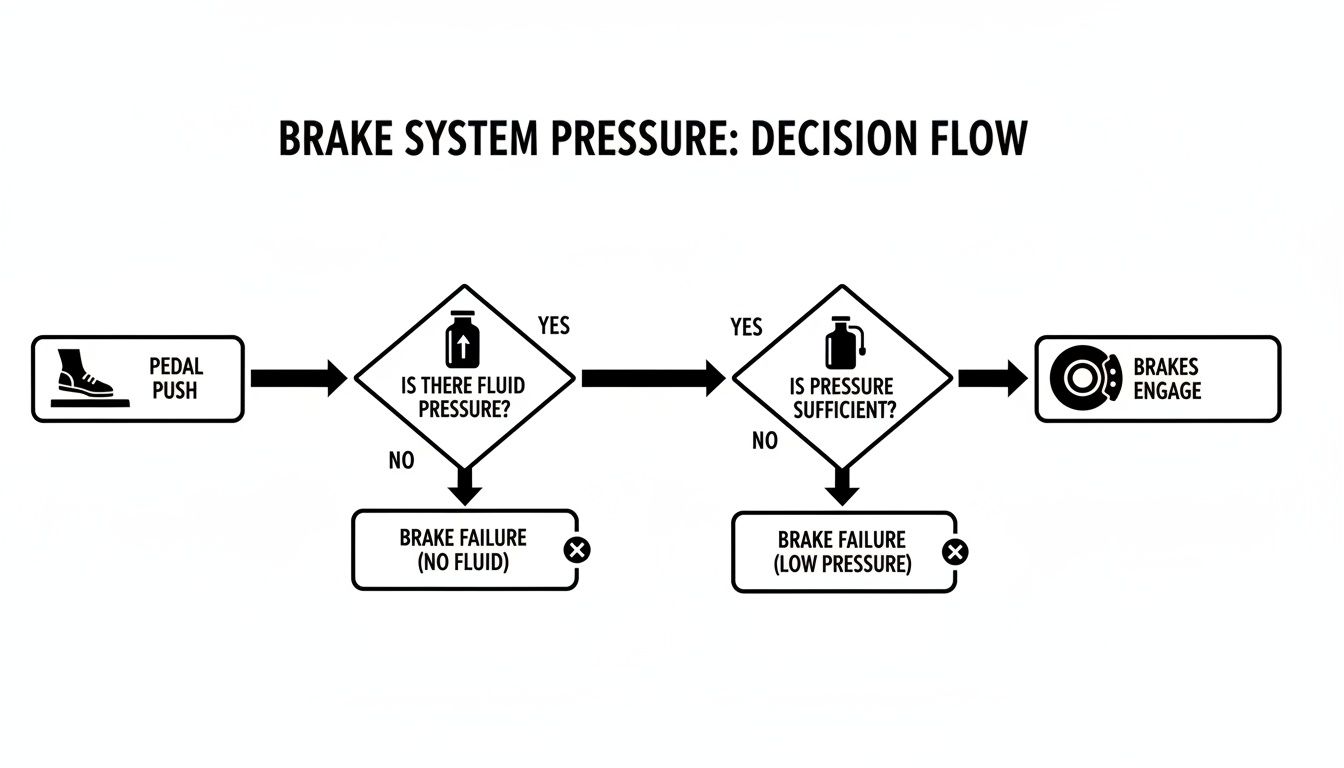
As the diagram shows, the integrity of the sealed system is paramount. Without it, the pressure required to stop your vehicle safely cannot be generated.
Visual Clues and Dashboard Alerts
Beyond pedal feel, there are other clues you can identify with a simple visual inspection. A proactive approach here can help you catch a problem before it escalates into an emergency.
- Puddles Under the Car: This is the most direct evidence. Look for small, oily puddles near any of the four wheels or along the underside of the vehicle. If you're unsure, place a clean piece of cardboard under the car overnight to catch any drips for a clearer assessment.
- Low Fluid in the Reservoir: Open the hood and locate the brake fluid reservoir—it’s a small, translucent plastic tank typically near the firewall on the driver's side. If the fluid level is below the "MIN" line, that fluid has escaped, and a leak is the most probable cause. Our guide on how to check your brake fluid provides more detailed instructions.
- Dashboard Warning Lights: Your car's onboard computer constantly monitors key systems. If the brake warning light (usually red, with an exclamation point in a circle) or the ABS light illuminates, it could be signaling low fluid pressure caused by a leak.
A brake fluid leak is a stealthy danger, often remaining unnoticed until the situation becomes critical. Industry reports show that hydraulic system leaks are a primary cause of brake failure, with some estimates suggesting that 20-25% of all brake-related incidents can be traced back to fluid loss. A single leak can dramatically reduce stopping power and increase stopping distances—sometimes by up to 30% in an emergency.
To simplify diagnosis, here’s a quick-reference checklist of common symptoms and their meanings.
Brake Fluid Leak Symptom Checklist
| Symptom | What It Looks/Feels Like | What It Means |
|---|---|---|
| Spongy Brake Pedal | The pedal feels soft or mushy and sinks toward the floor when pressed. | Air has entered the hydraulic system, likely through a leak, reducing braking force. |
| Visible Puddles | Oily, yellowish, or brownish fluid found on the ground near the wheels or under the engine. | There's an active leak from a brake line, caliper, or master cylinder. |
| Low Reservoir Fluid | The fluid level in the brake fluid reservoir under the hood is below the "minimum" line. | Fluid is escaping from the system; a top-off won't fix the underlying leak. |
| Brake Warning Light | A red or yellow light on your dashboard (often a "BRAKE" or "(!)" symbol) is on. | The car's sensors have detected a problem, such as low fluid pressure or a fault in the system. |
| Squealing or Grinding | Unusual noises when braking that are different from normal brake pad wear sounds. | While often a pad issue, it can also happen if a leak causes calipers to function improperly. |
Each of these signs is a piece of a larger puzzle. Observing one should prompt you to look for others. A combination of a soft pedal, a visible puddle, and a dashboard warning light is a clear signal of a serious brake fluid leak that requires immediate professional inspection.
Understanding What Causes a Brake System to Fail
Your car's brake system is robust, but it operates under extreme conditions of heat and hydraulic pressure, leading to eventual wear and tear. A brake fluid leak is almost always the result of a single component failing, much like a worn-out washer causes a faucet to drip.
Understanding these common failure points is key to appreciating why regular brake inspections are essential for preventative maintenance.
The most common culprits are flexible rubber hoses and seals. These components are designed to be pliable to accommodate suspension movement and vibrations, but this constant flexing degrades the material over time. After thousands of miles of exposure to road debris, moisture, and temperature fluctuations, the rubber becomes brittle, cracks, and eventually allows pressurized brake fluid to escape.
The Gradual Effects of Corrosion and Wear
While rubber components fail from fatigue, metal parts face a different adversary: corrosion. The rigid brake lines are typically made of steel and run along the undercarriage, exposing them to water, road salt, and dirt.
Over time, rust can corrode the metal, creating a tiny pinhole leak. This type of brake fluid leak is particularly insidious because it often begins as a slow seep that is difficult to detect until the corrosion worsens and the leak becomes significant.
Beyond the lines, the major hardware components can also fail. These are the workhorses of your brake system:
- Brake Calipers: These devices house pistons that clamp the brake pads onto the rotors. They contain rubber seals that can dry out, tear, and cause fluid to leak directly at the wheel.
- Wheel Cylinders: Found in vehicles with rear drum brakes, these perform a similar function to calipers and can leak when their internal seals wear out.
- Master Cylinder: As the heart of the hydraulic system, this component generates the initial pressure when you press the pedal. Its internal seals can fail, causing fluid to leak into the attached brake booster or even into the vehicle's cabin.
Conceptualize your brake system like the plumbing in a house. It has a network of pipes (brake lines), flexible hoses, and valves (calipers). A leak can develop at any connection or weak point, and once it does, the entire system loses its ability to maintain pressure.
The Hidden Danger of Overheating Brakes
A leak does more than just lower the fluid level—it introduces a significant risk of brake overheating. As fluid escapes, air and moisture are drawn into the system. This contamination drastically lowers the boiling point of the brake fluid. Under heavy braking, the fluid can boil, creating vapor pockets (air bubbles) in the lines, which is a primary cause of that terrifying "spongy" pedal feel.
Overheating is a contributing factor in up to 15-20% of brake system failures globally. Here in Plano, Texas, where summer temperatures frequently exceed 100°F, a small leak can rapidly compromise the fluid's thermal stability, turning a normal stop into a dangerous failure. You can find more insights on why brake fluid integrity is so crucial in industry market reports.
Even a minor fluid loss can cause components to malfunction, generating excess friction and heat. This is why any sign of a brake fluid leak cannot be ignored. Pinpointing the cause—whether a cracked hose or a corroded line—is the first essential step a professional technician will take to restore your vehicle's most critical safety feature.
The Unmistakable Dangers of Driving with a Leak
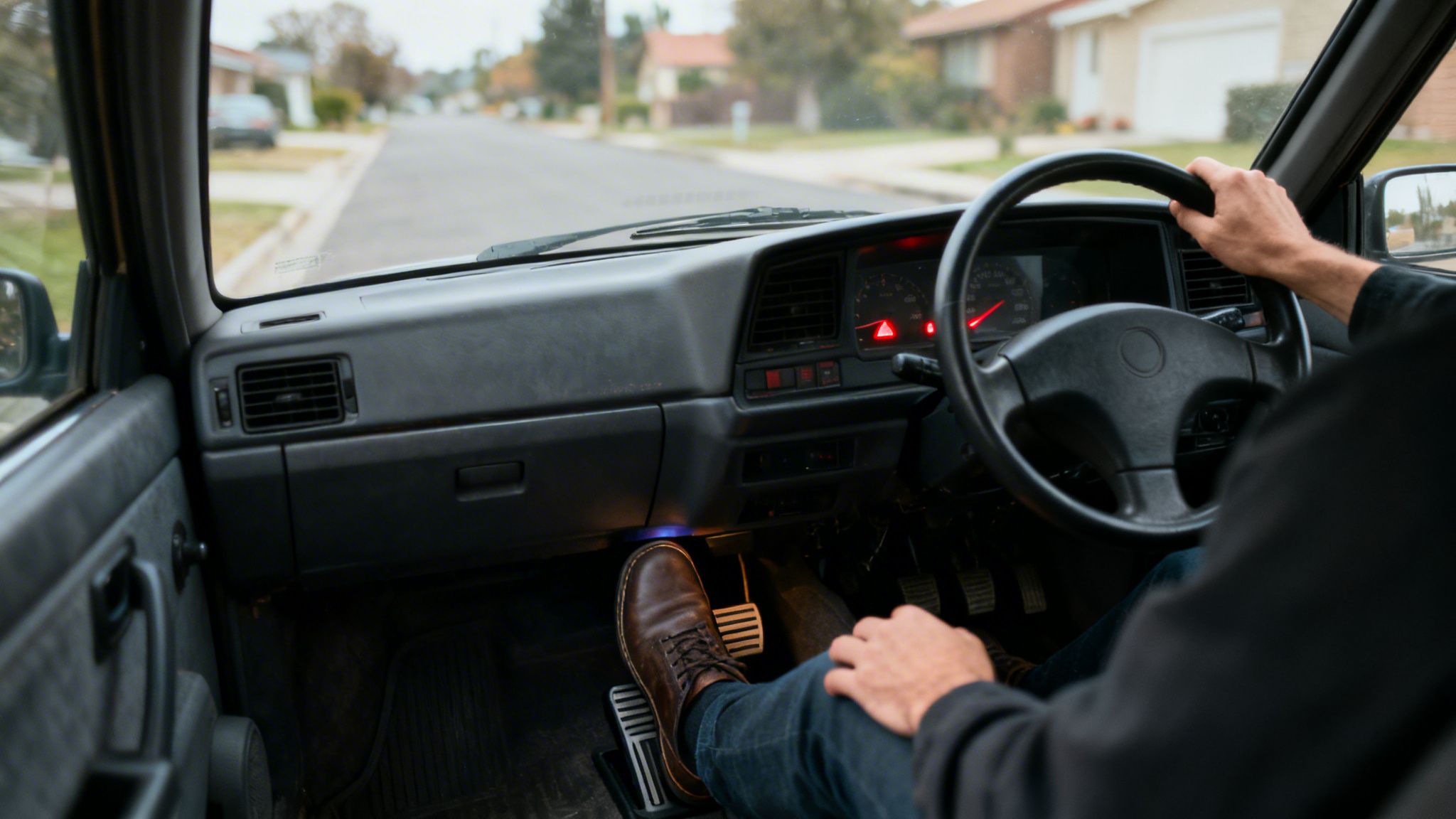
It is one thing to know what a brake fluid leak is; it is another to fully grasp how dangerous it is to operate a vehicle with one. This is not a typical mechanical issue; it is a direct and immediate threat to you, your passengers, and everyone else on the road.
When fluid is leaking, your car’s ability to stop becomes dangerously unreliable. The firm, responsive feel you expect from the brake pedal is replaced by a soft, unpredictable sensation. This is the reality of a failing hydraulic system, and understanding the stakes is crucial for making the only safe decision.
From a Spongy Pedal to Total Brake Failure
The progression from initial symptom to failure is often swift. It usually begins with the pedal feeling slightly "spongy" or requiring more travel to the floor to initiate braking.
As more fluid leaks and more air enters the lines, the situation deteriorates rapidly. Your stopping distance—the total distance your car travels from the moment you apply the brakes to a full stop—increases dramatically. A routine stop in Plano traffic can suddenly become a near-miss or, worse, a collision. The gravest danger is that you may not realize the full extent of the degradation until an emergency requires maximum braking force, and the brakes fail to respond.
The worst-case scenario is catastrophic brake failure. A severe leak can empty the system of fluid entirely. When this occurs, the brake pedal will go straight to the floor with zero resistance and, more critically, provide zero stopping power. This is the ultimate, terrifying outcome of an ignored brake fluid leak.
Real-World Consequences
Driving with compromised brakes places you in scenarios where you have no safe options. Consider these everyday situations where you rely on your brakes to function perfectly:
- Sudden Stops: A car merges unexpectedly on the Dallas North Tollway, or a child runs into the street. With a leak, your vehicle simply will not be able to stop in time.
- Highway Driving: Exiting a highway requires controlled, predictable deceleration. A faulty system could cause you to miss your exit or, more dangerously, lose control of the vehicle.
- Inclement Weather: Rain or ice already reduce tire grip and increase stopping distances. Adding unpredictable braking to this equation is a formula for disaster.
The only safe course of action upon suspecting a brake fluid leak is to stop driving immediately. Do not attempt to "limp" the vehicle home or to a repair shop. Pull over to a safe location, turn off the engine, and call for a tow. Your safety is not worth the risk. If you're noticing any braking issues, it's wise to understand all the signs you need new brakes so you can take prompt action.
What to Expect for Repairs and Costs
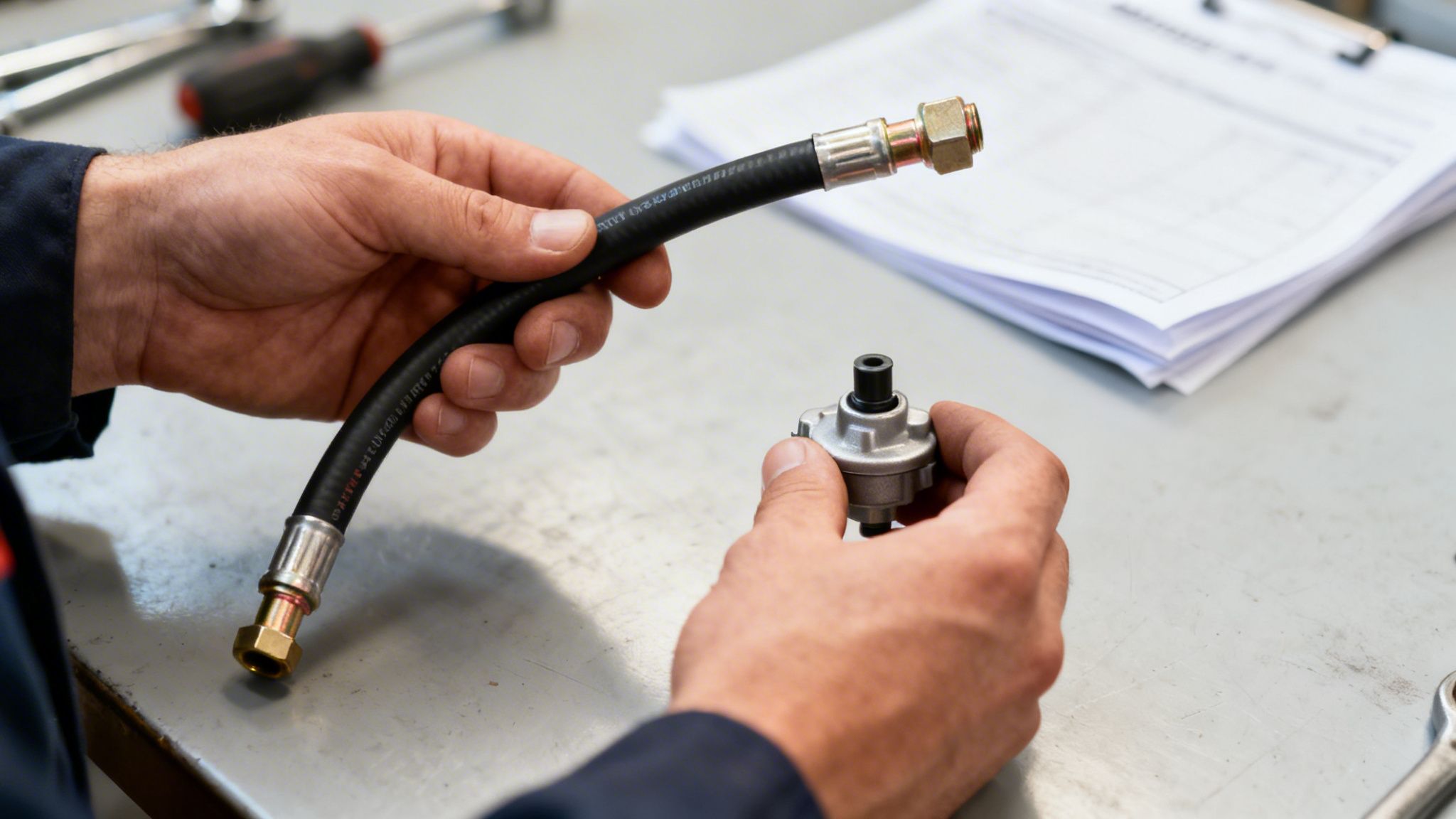
So, you have identified a brake fluid leak. The positive news is that you've caught it, and the repair process is typically straightforward for a qualified technician. When you bring your vehicle to a professional shop, the first step is a thorough diagnosis to pinpoint the exact source of the leak.
Our technicians don't rely on guesswork. They place your car on a lift for a comprehensive inspection of the entire hydraulic system—from the master cylinder down through the lines, hoses, and calipers at each wheel. They look for the telltale signs: fluid stains, corroded lines, or physical damage that reveals the point of failure.
Common Brake Fluid Leak Repairs
Once the source is identified, the repair can begin. The specific solution depends entirely on which component has failed. Some repairs are quick and relatively simple, while others are more involved.
Here are some of the most common repairs associated with brake fluid leaks:
- Brake Hose Replacement: This is one of the most frequent fixes. Rubber hoses deteriorate, crack, and become brittle over time. The failed hose is simply replaced with a new one to restore a perfect seal.
- Brake Line Replacement: If a metal line has corroded and perforated, it must be professionally replaced. This is not a DIY task, as these lines must be custom-bent and flared to withstand immense hydraulic pressure.
- Caliper or Wheel Cylinder Repair: A leak originating near a wheel often points to a failed seal within the caliper (for disc brakes) or the wheel cylinder (for drum brakes). While rebuilding these components is sometimes possible, replacement is often the most reliable and long-lasting solution.
- Master Cylinder Replacement: As the heart of the brake system, a failing master cylinder is a significant repair, but it is absolutely essential for restoring proper hydraulic pressure.
A professional repair for a brake fluid leak is non-negotiable. This process is about more than just stopping a drip; it’s about restoring the complete integrity of your vehicle’s most vital safety system.
As cars remain on the road longer, the demand for brake service has increased significantly. In the U.S., AAA reports that a staggering 12 million drivers encounter brake problems annually. For Plano commuters, addressing a leak early can mean a $200-$400 repair—a smart investment when delaying could lead to component failure and subsequent damage costing $2,000+.
The Final, Essential Step: A Brake Fluid Flush and Bleed
Regardless of which part is replaced, the repair is not complete until a full brake fluid flush and bleed is performed. This is a critical final step that removes all old, contaminated fluid and, most importantly, purges any air bubbles that entered the lines through the leak.
Consider it a complete reset for your brake system. Fresh, clean fluid provides maximum performance and corrosion protection, while bleeding the lines ensures a firm, responsive pedal you can depend on. Our guide on how often you need a brake fluid flush delves deeper into why this service is so vital for your safety.
Brake Fluid Leak FAQs
Even with a thorough understanding, you might still have some questions. Here are answers to the most common queries we receive from drivers, designed to clarify exactly what you should do if you suspect a brake fluid leak.
Can I Just Top Off My Brake Fluid if It’s Low?
No, you should never simply top off your brake fluid. While it may seem like a logical quick fix, adding fluid is one of the most dangerous actions you can take. A low fluid level is a symptom of a larger problem: either there is a leak in the system, or your brake pads are worn to their service limit.
Adding more fluid masks the underlying issue and creates a false sense of security. If a leak is present, the new fluid will simply escape, allowing more air to enter the lines. You have not solved the problem and are still operating a vehicle with a compromised braking system. Always have a low fluid level investigated by a professional to diagnose and repair the root cause.
Think of it this way: topping off brake fluid is like putting a bucket under a leaky ceiling pipe. It doesn’t fix the hole. The only correct solution is to find and repair the source of the leak.
How Do I Know if It’s Brake Fluid or an Oil Leak?
Differentiating between fluid leaks is a key diagnostic skill. Brake fluid is typically clear to yellowish-brown and has a thin, slick consistency—much less viscous than motor oil. Engine oil, in contrast, is usually amber to dark brown or black and is significantly thicker and greasier to the touch.
The location of the puddle provides another crucial clue. A brake fluid leak will generally appear near one of the wheels or along the path of the thin metal brake lines under the car. An engine oil leak is almost always located directly beneath the engine block. However, any unexplained fluid puddle under your vehicle warrants immediate professional inspection.
Is a Brake Fluid Leak an Emergency?
Yes, unequivocally. A brake fluid leak is a critical automotive emergency. It represents a severe safety failure that requires immediate action, without exception. Your brakes depend entirely on hydraulic pressure to function, and a leak fundamentally undermines that principle.
Even a slow, minor leak can escalate into a sudden and total loss of braking power when you least expect it. Do not attempt to drive a vehicle if you suspect it has a leak. The risk of the brake pedal failing in a critical moment is too great. The only safe response is to pull over, shut off the car, and arrange for it to be towed to a trusted repair facility.
If you’ve spotted any of these signs, don't wait and hope the problem resolves itself. Protect yourself, your family, and other drivers by bringing your vehicle to the experts. The ASE-certified technicians at Express Lube & Car Care in Plano will diagnose the problem quickly and perform the correct repair, restoring your peace of mind. Drive in today—no appointment needed—for service you can count on. Learn more at https://www.expresslubeplano.com.