

Clear visibility is non-negotiable for safe driving, yet windshield wipers are often overlooked until they fail during a sudden downpour. When a clear sweep is replaced by a smeary, chattering mess, it's not just an inconvenience—it's a significant safety hazard.
Understanding how to identify worn-out wipers, select the correct replacements, and install them properly is a fundamental aspect of vehicle maintenance. This guide provides the knowledge you need to perform this essential task correctly.
Knowing When to Replace Your Windshield Wipers
Windshield wipers are consumable parts exposed to harsh environmental factors, from intense solar radiation to abrasive road debris. Regular inspection is critical to identify signs of degradation before they compromise your visibility in adverse weather.
Auditory and Visual Inspection
Your senses are the primary tools for diagnosing wiper health. A new, effective wiper operates almost silently. A worn-out one, however, will produce distinct sounds.
Listen for:
- Chattering: A skipping or juddering sound indicates the rubber has hardened and lost its flexibility, preventing it from gliding smoothly across the glass.
- Squeaking: A high-pitched noise often means the rubber wiping edge has completely worn away, allowing parts of the wiper's support structure to scrape against the windshield.
Next, conduct a tactile and visual inspection. Lift the wiper arm away from the windshield to examine the rubber blade insert closely. The intense Texas sun, in particular, accelerates the degradation of rubber components.
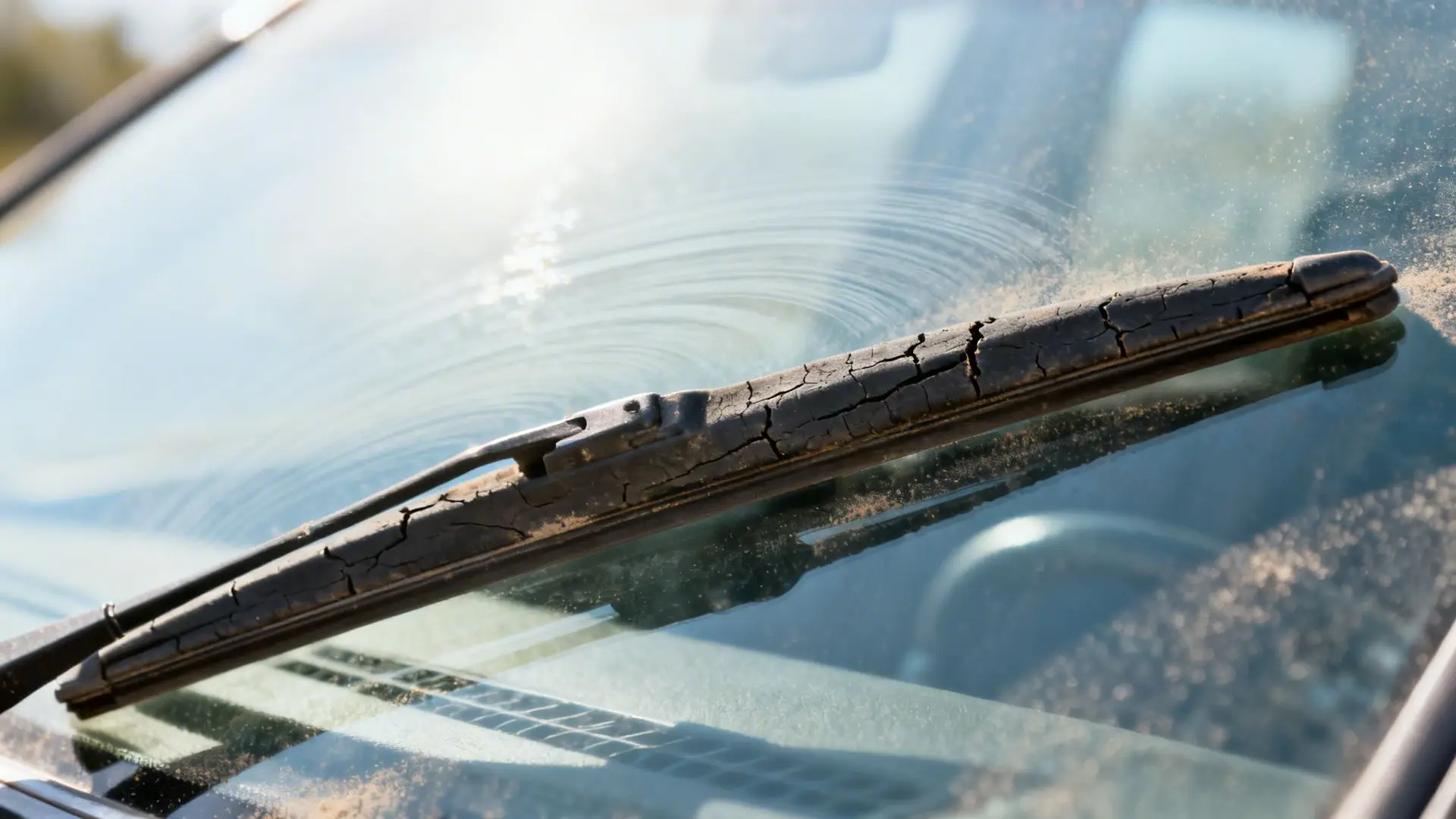
Look for obvious signs of failure such as cracked or splitting rubber. A new blade features a sharp, uniform edge. An old blade will appear rounded and deteriorated, which is a primary cause of streaking.
Wipers are your vehicle's first line of defense against precipitation and road spray. A monthly visual inspection can be the difference between a clear field of vision and a hazardous drive.
A Diagnostic Guide to Wiper Problems
To simplify troubleshooting, this table correlates common symptoms with their underlying causes and associated safety risks.
| Symptom | Description | Safety Risk |
|---|---|---|
| Streaking | Thin lines or bands of water left behind after each wipe. | Reduces optical clarity, creating a "film" effect that is especially dangerous with oncoming headlights at night. |
| Chattering | The wiper blade skips and bounces across the windshield. | Creates uneven clearing, leaving large, un-wiped patches that obstruct the driver's view. |
| Squeaking | A high-pitched sound as the wiper moves. | Indicates improper blade-to-glass contact, resulting in poor water removal and potential glass scratching. |
| Split Rubber | Visible cracks, tears, or missing sections of the blade. | A definitive sign of material failure; the blade is structurally incapable of clearing water effectively. |
Early recognition of these symptoms is a key component of proactive vehicle safety.
While industry data suggests 60-70% of drivers replace wipers annually, the intense Texas climate often necessitates a shorter interval. We recommend an inspection every six months as part of your vehicle's comprehensive car maintenance schedule by mileage.
How to Choose the Right Wiper Blades for Your Car
Selecting the correct wiper blades from the vast array of options can seem daunting. However, the process is straightforward when broken down into three key criteria: type, size, and material.
As a critical safety component, the right wiper blade ensures maximum visibility, which is essential for reacting to the dynamic weather conditions common in our region.
The Three Main Types of Wiper Blades
Wiper blade technology has evolved, offering three primary designs. Each has distinct performance characteristics, and the optimal choice depends on your vehicle, environment, and budget.
- Conventional Blades: This traditional design uses an external metal frame with multiple pressure points to hold the rubber blade against the windshield. While cost-effective, their articulated frame can accumulate ice in winter and may be susceptible to wind lift at high speeds.
- Beam Blades: A modern, frameless design that features an integrated steel "beam" to distribute pressure uniformly across the entire length of the blade. This design offers superior high-speed performance and resistance to icing, making it an excellent all-weather option.
- Hybrid Blades: This design combines the uniform pressure distribution of a beam blade with the protective outer shell and multiple pressure points of a conventional blade. They offer a balance of durability, aerodynamics, and all-season performance.
For Texas drivers who contend with intense sun, heavy rain, and high-speed highway driving, beam or hybrid blades are superior choices. Their aerodynamic design prevents wind lift, and their uniform pressure ensures a consistent wipe across the curvature of modern windshields.
Determining Your Car's Exact Blade Size
Wiper blades are not universal. Most vehicles require two different lengths—a longer blade for the driver’s side to maximize the primary viewing area and a shorter one for the passenger's side. Using an incorrect size can result in un-wiped areas or mechanical interference.
Follow these steps to ensure you acquire the correct sizes:
- Consult Your Owner’s Manual: The vehicle manufacturer's manual is the definitive source for the exact wiper lengths specified for your year, make, and model.
- Measure the Existing Blades: Use a tape measure to determine the length of the rubber element on each blade from end to end.
- Utilize In-Store Fitment Guides: Automotive retailers provide catalogs or electronic lookup systems. By entering your vehicle's information, you can access a list of all compatible wiper blade options.
Correct sizing is the most critical step in wiper selection. This simple verification prevents the frustration of incorrect parts and ensures maximum coverage for safe visibility.
The global automotive wiper market is projected to reach USD 10.37 billion by 2034, a testament to the universal need for reliable visibility in unpredictable weather. This growth reflects the importance of high-performance components capable of withstanding diverse climates like ours. You can read the full market analysis from Fortune Business Insights for more details.
Swapping in Your New Wiper Blades
With the correct replacement blades in hand, the installation process is a straightforward mechanical task. This procedure typically takes less than 15 minutes and provides the immediate reward of a streak-free, unobstructed view.
Before beginning, place a thick towel or a piece of cardboard on the windshield beneath the wiper arm. This is a crucial precautionary step. The wiper arm is spring-loaded; if it accidentally retracts without a blade attached, the impact of the metal arm can easily chip or crack the windshield.
Safety Protocol: Always protect the windshield glass during wiper replacement. A towel acts as a buffer, preventing costly damage from the spring-loaded wiper arm.
Removing the Old Blade
First, lift the wiper arm up and away from the windshield until it locks in a service position, typically perpendicular to the glass.
Next, identify the attachment mechanism where the blade connects to the arm. While several connector types exist, focus on the release mechanism.
- J-Hook: The most prevalent type. The arm curves into a "J" shape that cradles the blade connector. A small release tab must be depressed to disengage the blade.
- Side Pin: The arm has a small pin that inserts into a hole on the side of the blade connector. Press a release button on the connector assembly to slide the blade off the pin.
- Bayonet: A narrow, flat arm style. A small release tab, sometimes requiring gentle prying with a small flathead screwdriver, unlocks the blade from the arm.
Once the release tab or button is activated, the old blade will slide off the arm, usually in a downward motion. If it feels stuck, a gentle wiggling motion while maintaining pressure on the release should free it.
A Visual Guide to Your Wiper Options
Selecting the ideal wiper blade involves a synthesis of three factors: size, type, and material. This visual reference simplifies the decision-making process.
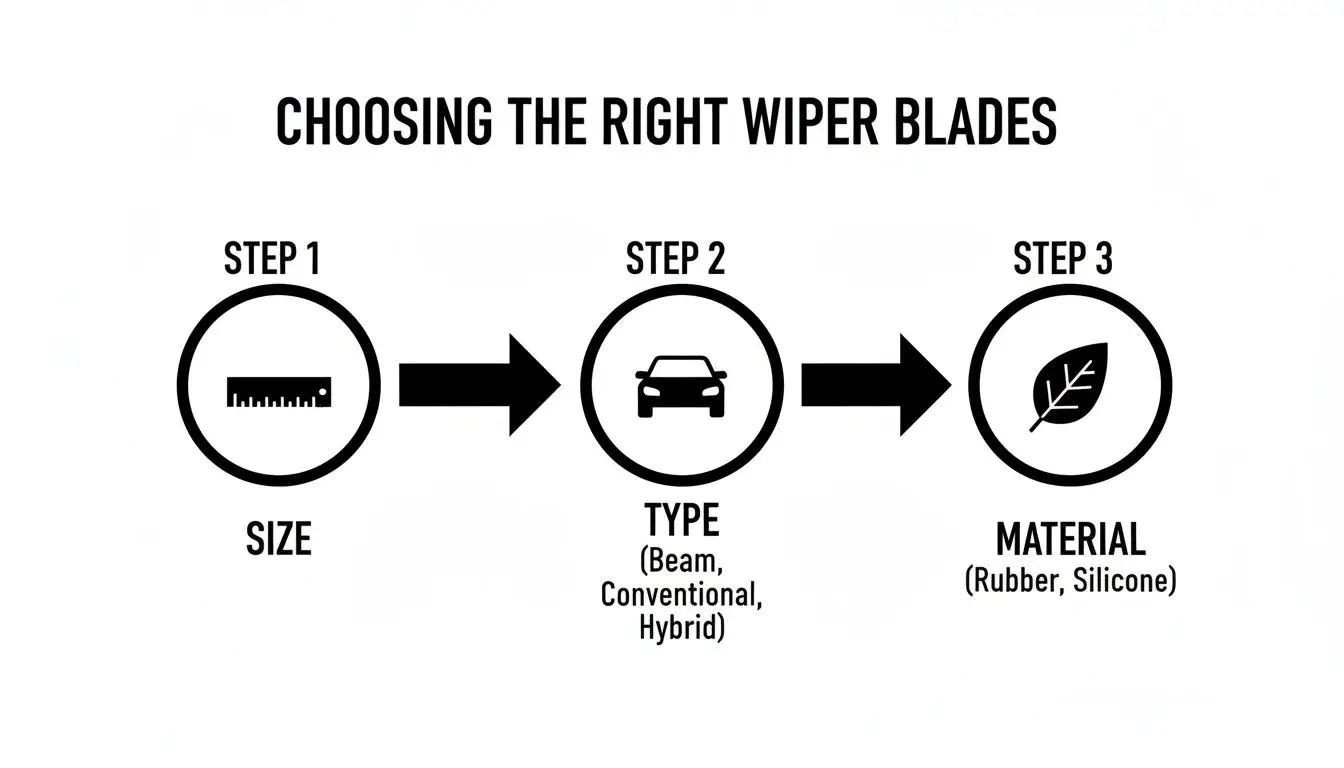
Matching these three elements ensures optimal performance tailored to your vehicle and the demands of our Texas climate.
Installing the New Blade
Your new wiper blades will either have a pre-installed connector or include a set of adapters. In over 90% of cases, the pre-installed connector is the correct one for a J-hook arm. Always visually confirm that the new connector matches the one on the old blade.
To install, reverse the removal process. Slide the new blade's connector onto the wiper arm until you hear and feel an audible "click." This click confirms that the locking mechanism is securely engaged.
Gently tug on the blade to verify it is firmly attached. If secure, carefully lower the arm back down onto the protected windshield. Repeat the entire process for the opposite side.
As you become more comfortable with basic vehicle maintenance, learning how to disconnect a car battery is another valuable skill. Once both wipers are installed, remove the protective towel from your windshield.
Troubleshooting Common Wiper Installation Problems
Even a seemingly simple DIY task can present challenges. If you encounter difficulty during installation or if the new blades perform poorly, do not resort to force. Most issues are common and have a logical solution.
The most frequent problem is the inability to attach the new blade. If it does not lock into place easily, you risk damaging the blade or the wiper arm.
The cause is almost always an incorrect adapter. Your new blades likely included a small bag of plastic adapters for different arm types. Compare the connector on your old blade to the one pre-installed on the new blade. If they do not match, select the correct adapter from the provided kit and replace the one on the new blade.
Solving Streaks and Skips with New Blades
It is disheartening when brand-new wipers streak or chatter. This is rarely due to a defective blade; it typically points to issues with the windshield surface or blade contact angle.
Before returning the blades, attempt these diagnostic steps:
- Perform a Deep Windshield Cleaning: Contaminants like road grime, wax, or rubber deposits from old blades can create an invisible film. Clean the glass thoroughly with a microfiber cloth and isopropyl (rubbing) alcohol to create a pristine surface.
- Clean the New Blade Edge: New blades often have a protective coating from the manufacturing process. Wiping the rubber element with a damp cloth removes this coating and ensures proper function.
If cleaning does not resolve the chattering, the issue may be the wiper arm's angle of attack. An arm that is not perfectly perpendicular to the glass will cause the blade to drag or shudder instead of flipping smoothly with each change in direction.
A new wiper blade that chatters often indicates improper arm pressure or angle, not a defective product. A minor adjustment can significantly improve performance and eliminate noise.
The correction is simple: carefully twist the metal wiper arm (not the blade assembly) to adjust its resting angle on the glass. It is advisable to use pliers wrapped in a cloth to prevent scratching the arm's paint. A very slight twist is usually sufficient. This adjustment resolves the issue in over 80% of cases.
Expert Tips to Make Your New Wipers Last Longer
Proper installation is the first step; preventative maintenance is the key to maximizing the service life of your new wiper blades. A few simple practices can significantly extend their effectiveness, ensuring clear visibility and reducing replacement frequency.
The primary adversaries of wiper blades are abrasive dirt, UV radiation, and improper use.

Adopt These Simple Wiper Care Habits
The longevity of a wiper blade depends on preserving the integrity of its fine rubber edge. Maintaining this edge is crucial for a clean, streak-free wipe.
Clean the Blades Weekly: Use a damp cloth to gently wipe down the rubber element on each blade. This removes accumulated grit and pollutants that abrade the rubber, leading to streaking and premature wear.
Avoid Dry-Wiping: Activating wipers on a dry windshield causes excessive friction, which can rapidly degrade the rubber edge and potentially etch fine scratches into the glass. Always use washer fluid if it is not raining.
Mitigate Sun Exposure: The intense UV radiation in Texas causes rubber to become brittle and crack. Whenever possible, park in a garage, carport, or shaded area to slow this photochemical degradation.
Maintaining a clean windshield is equally important. Hardened insect residue and tree sap act as abrasives against the blade edge. Understanding the dangers of bug damage on car paint and glass highlights the importance of regular cleaning for component preservation.
Manage Ice and Grime Effectively
Winter conditions and road trip debris present unique challenges. Never use your wipers as an ice scraper; this action can tear the rubber edge of a new blade in a single use. Always clear ice and frost with a designated ice scraper first.
The lifespan of a wiper blade directly reflects its operating environment and the care it receives. While most blades are engineered for 6-12 months of service, diligent maintenance can often extend their effective life toward the upper end of that range.
Make liberal use of your windshield washer fluid. A quality washer fluid formulated to remove insects is invaluable during summer months, as it dissolves contaminants before the blades must physically scrub them away. A clean blade and a clean windshield are the formula for maximizing the return on your windshield wiper replacement.
When a Professional Wiper Service Is the Smarter Choice
While this guide equips you with the knowledge for a DIY replacement, we recognize that time and convenience are valuable. In many situations, opting for professional installation is a more efficient and reliable solution.
Entrusting this task to an automotive service center eliminates all guesswork. Technicians have the expertise and resources to select the exact size and type of blade for your vehicle, ensuring compatibility and avoiding the hassle of incorrect parts or confusing adapters.
Furthermore, professional installation negates the risk of accidentally damaging your windshield—a costly mistake that can occur when a bare metal wiper arm snaps back against the glass.
Professional installation provides certainty. It ensures your wipers are fitted correctly for optimal function and safety, offering peace of mind regardless of what the Texas weather may bring.
There is also the benefit of efficiency. A wiper blade replacement can be seamlessly integrated into a routine oil change service, accomplishing two essential maintenance tasks in a single visit.
For those who prioritize guaranteed results and time savings, our team at Express Lube & Car Care is ready to assist. Learn more about our efficient and dependable professional wiper blade services in Plano and drive away with the confidence of clear vision.
Got Questions About Your Wipers? We've Got Answers.
Even with a detailed guide, specific questions may arise. Below are answers to common inquiries we receive from drivers, designed to provide further clarity on this essential maintenance task.
How Often Should I Replace My Wipers?
The standard recommendation is every 6 to 12 months. However, in a climate like ours in Plano, this should be considered a baseline. Intense sun exposure and airborne dust can significantly shorten blade life. A biannual inspection is a sound practice.
Technical Tip: Test your wipers proactively; do not wait for rain. Activate your washer fluid. If you observe streaking, hear chattering, or see missed spots, it is time to replace the blades, regardless of their age.
What If My New Wipers Still Streak?
This is a common and frustrating issue, but it is rarely caused by a defective blade. The most probable cause is a contaminated windshield.
- Deep Clean the Glass: Use a clean microfiber cloth and isopropyl alcohol to remove residual films of road grime, wax, or deposits from the previous blades.
- Prep the New Blade: Before installation, gently wipe the new rubber edge with a clean, dry cloth. This removes any factory-applied protective coatings and ensures a clean contact surface.
Can I Replace Just One Wiper Blade?
While technically possible, it is strongly discouraged. Both wiper blades have been subjected to the same environmental conditions and wear factors. If one has failed, the other is likely near the end of its service life. Always replace wipers in pairs to ensure balanced, reliable, and safe performance. Replacing only one compromises the integrity of the system.
If you require assistance with your wiper installation, the ASE-certified technicians at Express Lube & Car Care can perform the service for you in minutes. Visit our Plano shop for quick, expert service that ensures you maintain a clear view of the road ahead. Visit us today