

Your car felt normal last week. Today it hesitates leaving a light on Preston Road, idles a little rough in the drive-thru, or seems sluggish merging onto the Dallas North Tollway. Nothing dramatic, just enough to make you wonder if something’s off.
A lot of Plano drivers assume that kind of change has to be a major engine problem. Often, it doesn’t. Sometimes the issue starts with a small part drivers often overlook until the engine starts complaining: the spark plug.
Spark plugs are tiny, but they do a heavy job every time you drive. When they wear out, your engine can lose smoothness, power, and efficiency. The tricky part is that how often to change spark plugs isn’t the same for every car. It depends on the plug type, the vehicle, and how you drive in real North Texas conditions.
Your Guide to Spark Plug Replacement in Plano
A spark plug problem rarely announces itself all at once. More often, drivers notice a collection of small changes. The engine takes a little longer to start. The idle feels shaky at a red light. Acceleration isn’t crisp on a hot afternoon with the A/C running.
That pattern matters because spark plugs wear gradually. Most drivers don’t wake up one day with a completely dead plug. They drive for weeks or months with performance getting just a bit worse, and that makes the problem easy to ignore.
In Plano, that gradual wear can be harder to catch because local driving is tough on engines. Short errands, school pickup lines, commuting traffic, and long summer heat all add stress. A plug that still “works” may not be working well.
Why drivers get confused
Many people learned maintenance rules from older vehicles. Their memory says spark plugs belong in the “tune-up” category and should be changed often. Others have heard the opposite and think modern plugs last so long that they can forget about them completely.
Neither idea tells the whole story.
A spark plug is like the match that lights the burner. If the flame is weak or inconsistent, the whole cooking process suffers.
That’s why replacement timing matters. You want to catch worn plugs before they trigger rough running, hard starts, or more expensive ignition problems. The rest of this guide breaks it down in plain language so you can tell what your engine likely needs, what symptoms matter, and when it’s time to have a technician take a closer look.
What Spark Plugs Do and Why They Matter
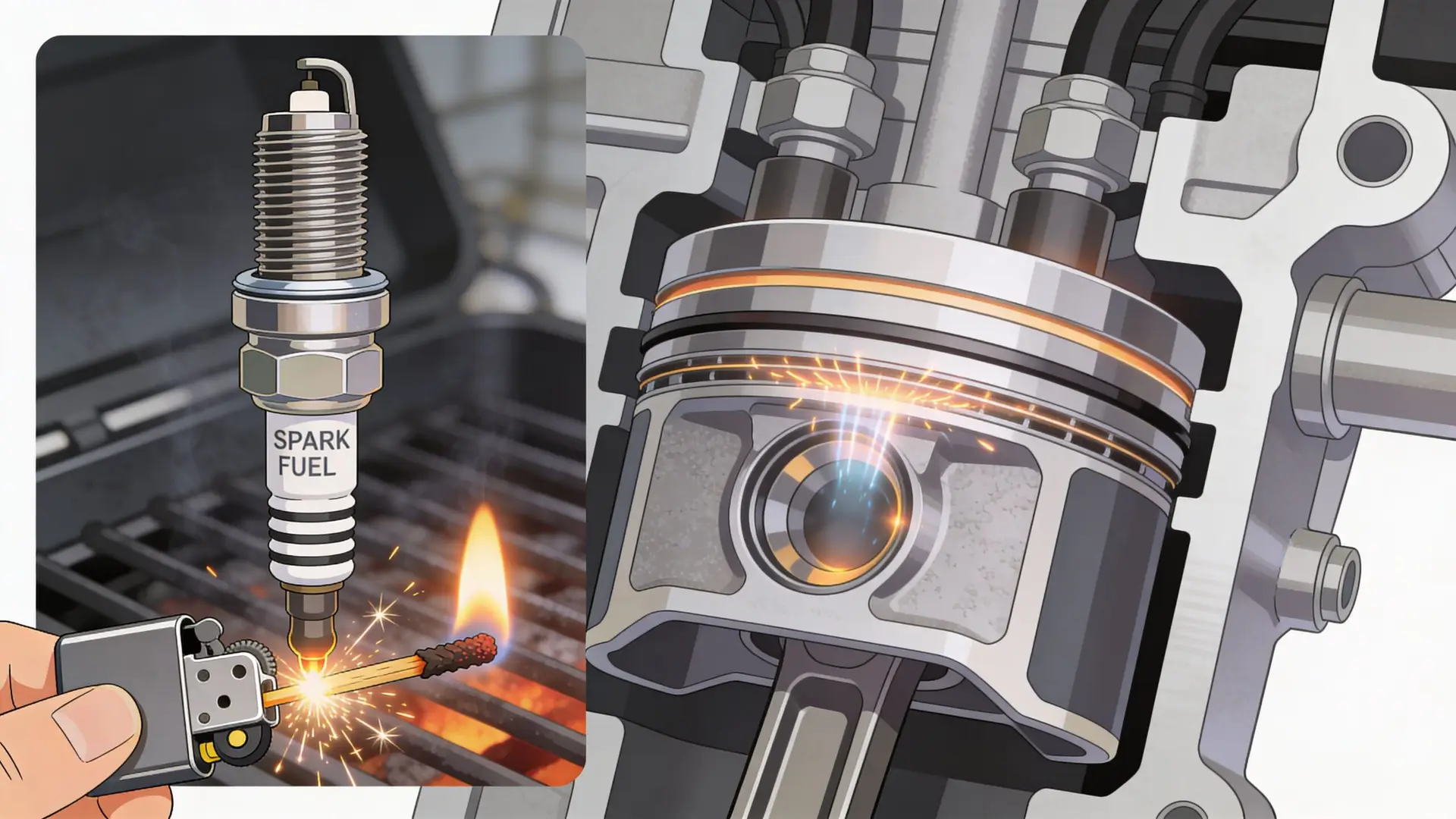
A gasoline engine runs on controlled combustion. Air and fuel enter the cylinder, the piston compresses that mixture, and the spark plug delivers the tiny electrical spark that starts the burn. That burn pushes the piston down and creates power.
A simple way to picture it is a grill igniter or the flint in a lighter. You press the button, a spark jumps, and fuel lights. Your engine does the same basic job over and over, only much faster and under much more heat and pressure.
What happens when a plug wears out
As a spark plug ages, the tip wears and the gap changes. The plug can still fire, but not as cleanly or as consistently. That’s when you start to feel rough idle, hesitation, or a lack of response when you press the gas.
The engine doesn’t stop understanding what to do. It just has a harder time doing it efficiently. One weak spark can upset the rhythm of the whole engine.
Why old advice and new advice sound so different
Confusion often arises concerning spark plug replacement schedules. Historically, spark plugs in carbureted vehicles (pre-1990s) were replaced every 10,000 miles. This was a standard part of a routine tune-up, necessary due to simpler materials that wore out quickly. In contrast, modern platinum and iridium plugs, common in post-2005 vehicles, can last up to 100,000 miles, which cuts maintenance frequency for drivers, as explained in this AutoZone spark plug replacement guide.
So if your parents changed plugs constantly, they probably weren’t wrong. They were following the needs of older engines and older plug materials. Your current vehicle likely follows a very different schedule.
The car itself tells part of the story
A classic vehicle and a late-model commuter don’t ask for the same maintenance rhythm. If you enjoy older cars, this classic Chrysler Imperial guide is a useful reminder that older designs often need a different maintenance mindset than modern daily drivers.
Practical rule: Spark plugs are small parts with big consequences. If the spark is weak, combustion is weak, and the engine tells you through drivability problems.
That’s why replacement timing shouldn’t come from guesswork or old habits. It should come from the plug type your engine uses and the way your vehicle is driven.
Comparing Spark Plug Types and Lifespans
Not all spark plugs wear the same way. The center electrode material has a lot to do with service life. That’s the reason one car may need plugs sooner while another can go much longer before replacement.
The three names most drivers hear are copper, platinum, and iridium. Those labels sound simple, but they point to real differences in durability and use.
Copper plugs
Copper plugs are good conductors and often cost less up front. They’re common in older applications and some engines designed around that style of plug. The tradeoff is wear. The electrode doesn’t hold up as long under repeated heat and firing cycles.
If your vehicle was built for copper plugs, using the correct replacement matters more than chasing the fanciest part on the shelf.
Platinum and iridium plugs
Platinum and iridium plugs are built for longer service life. They resist erosion better, which helps them keep a more stable spark gap over time. That’s especially useful in modern engines where consistent ignition matters for smooth performance and emissions control.
According to this NGK service interval reference, modern iridium spark plugs are engineered for service intervals of 60,000 to 100,000 miles under normal conditions, more than double the 30,000-mile lifespan of traditional copper plugs. The same source notes that iridium’s high melting point, over 2,400°C, helps resist electrode erosion and maintain a precise gap for consistent ignition.
That’s the big idea in plain English. Harder, more heat-resistant material lasts longer.
Spark Plug Comparison Guide
| Spark Plug Type | Typical Lifespan (Miles) | Relative Cost | Best For |
|---|---|---|---|
| Copper | 30,000 | Lower | Older vehicles and engines designed for traditional plugs |
| Platinum | Longer than copper | Mid-range | Many newer vehicles needing longer service intervals |
| Iridium | 60,000 to 100,000 | Higher | Modern engines that benefit from long life and stable ignition |
How to think about the trade-off
Drivers often focus too much on shelf price and not enough on fit. That’s backwards. The best spark plug is the one your engine was designed to use, installed correctly, at the right interval.
A few practical examples help:
- Older sedan with original-style ignition needs. Copper may be the right choice because the engine was designed around that plug type.
- Late-model daily driver with factory iridium plugs. Switching to a cheaper plug can shorten service life and change how the engine performs.
- Family vehicle with lots of local trips. A long-life plug may still be the correct part, but the vehicle may need inspection sooner because driving habits can foul plugs before the theoretical lifespan is reached.
Why the owner’s manual wins
If there’s one place drivers should trust first, it’s the maintenance schedule from the manufacturer. Plug material, heat range, and service interval are all tied to engine design. Two vehicles parked side by side can need completely different spark plugs.
The spark plug isn’t a universal “better is better” part. It’s a matched component, more like the right shoe size than an upgraded phone accessory.
That’s why how often to change spark plugs starts with knowing what’s installed from the factory. From there, you adjust for symptoms and driving conditions.
Warning Signs Your Spark Plugs Are Failing
Worn spark plugs usually make themselves known through feel. The car tells you before a plug fails completely. The problem is that the signs can be subtle at first, and many drivers chalk them up to “my car’s getting older.”
That’s risky, because ignition problems tend to spread stress to other parts when they’re ignored.

What rough idle feels like
At a stoplight, the engine should feel steady. If the steering wheel, seat, or dash has a shiver that comes and goes, one cylinder may not be firing cleanly every time. Drivers often describe it as the car “not sitting still right.”
That uneven feel happens because the engine is losing its normal rhythm.
Hesitation and weak acceleration
Press the gas and the vehicle responds late. It may feel lazy leaving a stop or flat when merging. You’re asking for power, but combustion isn’t happening as smoothly as it should.
A worn plug can do that even when the engine still starts and runs.
Hard starts and misfires
If the engine cranks longer than usual before starting, spark quality is one possible cause. Misfires can feel like a stumble, buck, or brief skip. Sometimes it happens at idle. Sometimes it shows up under load, like climbing a hill or accelerating with passengers and A/C running.
For a deeper look at symptom patterns, this guide to signs of bad spark plugs breaks down what drivers commonly notice.
Check Engine Light matters
A Check Engine Light doesn’t automatically mean spark plugs are the problem, but ignition issues are one of the common reasons a light comes on. If the light appears along with rough running, don’t wait it out and hope it disappears.
A flashing light is especially important because it can point to an active misfire that needs prompt diagnosis.
Here’s a visual overview of the kinds of symptoms drivers often notice when ignition trouble starts showing up:
Common signs to pay attention to
- Shaking at idle. The engine feels uneven while stopped.
- Slow response. The car doesn’t pull as smoothly when you accelerate.
- Hard starting. The engine takes longer to fire up.
- Misfire sensation. You feel a skip, stumble, or sudden hiccup.
- Dashboard warning. The Check Engine Light appears with drivability changes.
If your vehicle feels different in more than one way at the same time, don’t treat those signs as unrelated. Rough idle plus hesitation plus a warning light often points to one root problem that needs diagnosis.
Factors That Shorten Spark Plug Life
Mileage intervals are useful, but they aren’t the whole story. Two drivers can own the same model, use the same plug type, and still get very different results. Real-world driving changes spark plug life.
That matters in Plano, where many vehicles spend their time in stop-and-go traffic, short-trip errands, summer heat, or heavier family use.
Driving habits change the timeline
A car that gets regular highway runs tends to let the engine reach stable operating conditions. A car used for short errands may never settle into that rhythm. Repeated short trips can leave deposits behind and wear plugs differently than steady cruising.
Heavy towing or hauling also raises engine load and heat. Even if your manufacturer lists a long interval, hard use can justify earlier inspection.
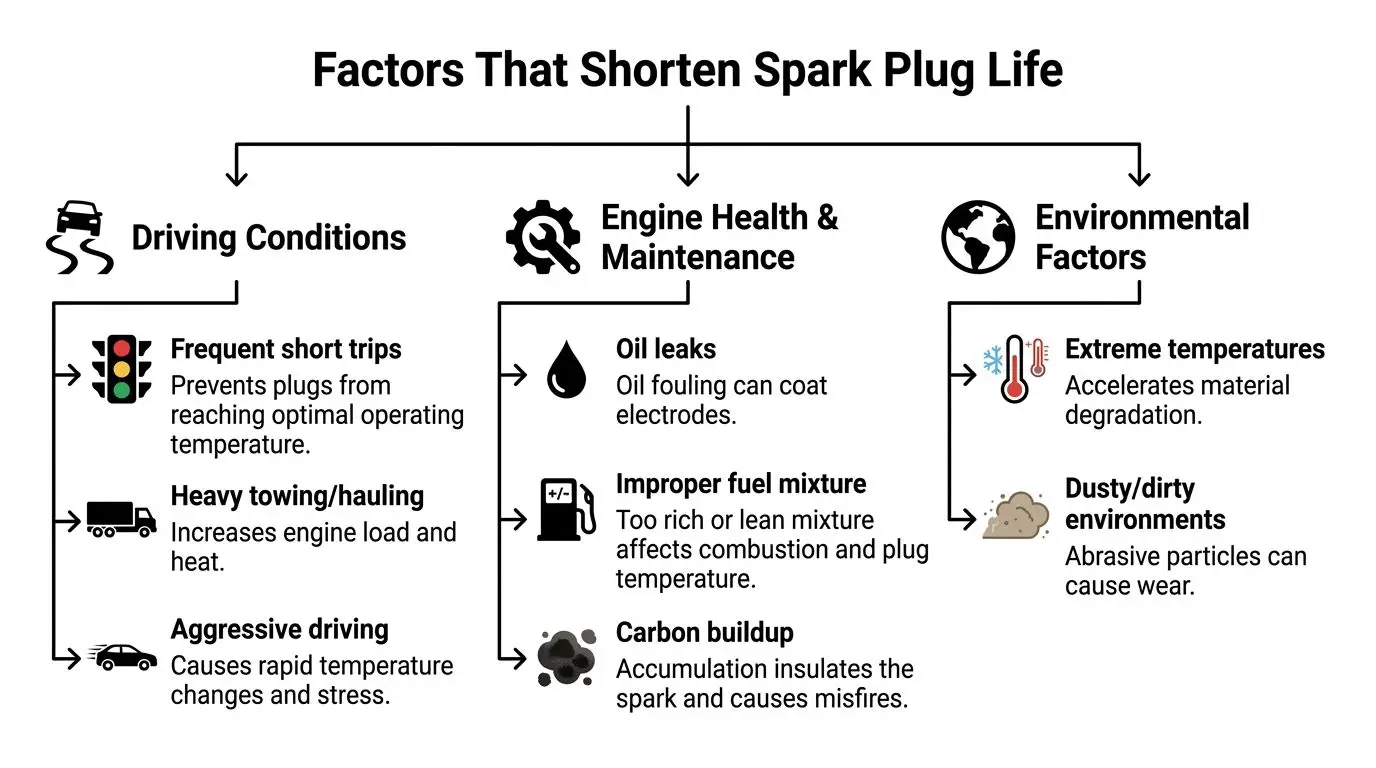
Factors That Shorten Spark Plug Life
Driving conditions
- Frequent short trips. The engine may not stay hot long enough for ideal combustion conditions.
- Heavy towing or hauling. More load means more heat and stress.
- Aggressive driving. Rapid temperature swings can be harder on ignition parts.
Engine health and maintenance
- Oil leaks. Oil contamination can foul the plug tip.
- Improper fuel mixture. Combustion quality changes when the engine runs too rich or too lean.
- Carbon buildup. Deposits can interfere with a clean, reliable spark.
Environmental factors
- Extreme temperatures. Heat puts extra stress on engine components.
- Dusty conditions. Dirt and debris can contribute to wear and contamination over time.
Expensive plugs aren’t always the smart buy
This is one area where drivers often overspend. According to this J-Tech discussion of spark plug intervals and value, advanced iridium-platinum plugs can last 120,000+ miles, but their higher cost is 2x copper and the return on investment becomes clear only after 60,000 miles. The same source notes that for low-mileage drivers or older vehicles, high-end plugs may not provide a benefit, because short trips can still cause fouling regardless of potential lifespan.
That’s a practical point. If you drive short local routes and rack up mileage slowly, paying more for the longest-life plug doesn’t always mean you’re making the best maintenance decision.
A better question is this: does your vehicle need that plug type, and does your driving pattern let you benefit from it?
Why inspection beats guessing
A driver may assume, “These are long-life plugs, so I’m good.” But if the engine has carbon buildup, oil contamination, or harsh driving conditions, the plug’s theoretical lifespan doesn’t tell the whole story.
If you’ve had a plug break during removal before, or you’re worried about damage in an older engine, this overview of broken spark plug issues is worth reading before the job gets forced.
Long-life doesn’t mean no-check. It only means the plug was built to last longer under the right conditions.
Your Local Spark Plug Service in Plano TX
Drivers don’t need to become ignition specialists to make good decisions about spark plugs. They need an accurate inspection, the correct replacement part, and a technician who won’t treat every rough idle like a mystery.
That’s especially important with modern engines. Access can be tighter, symptoms can overlap with coil or fuel issues, and choosing the wrong plug can create new problems instead of solving the old one.
What a proper spark plug service should include
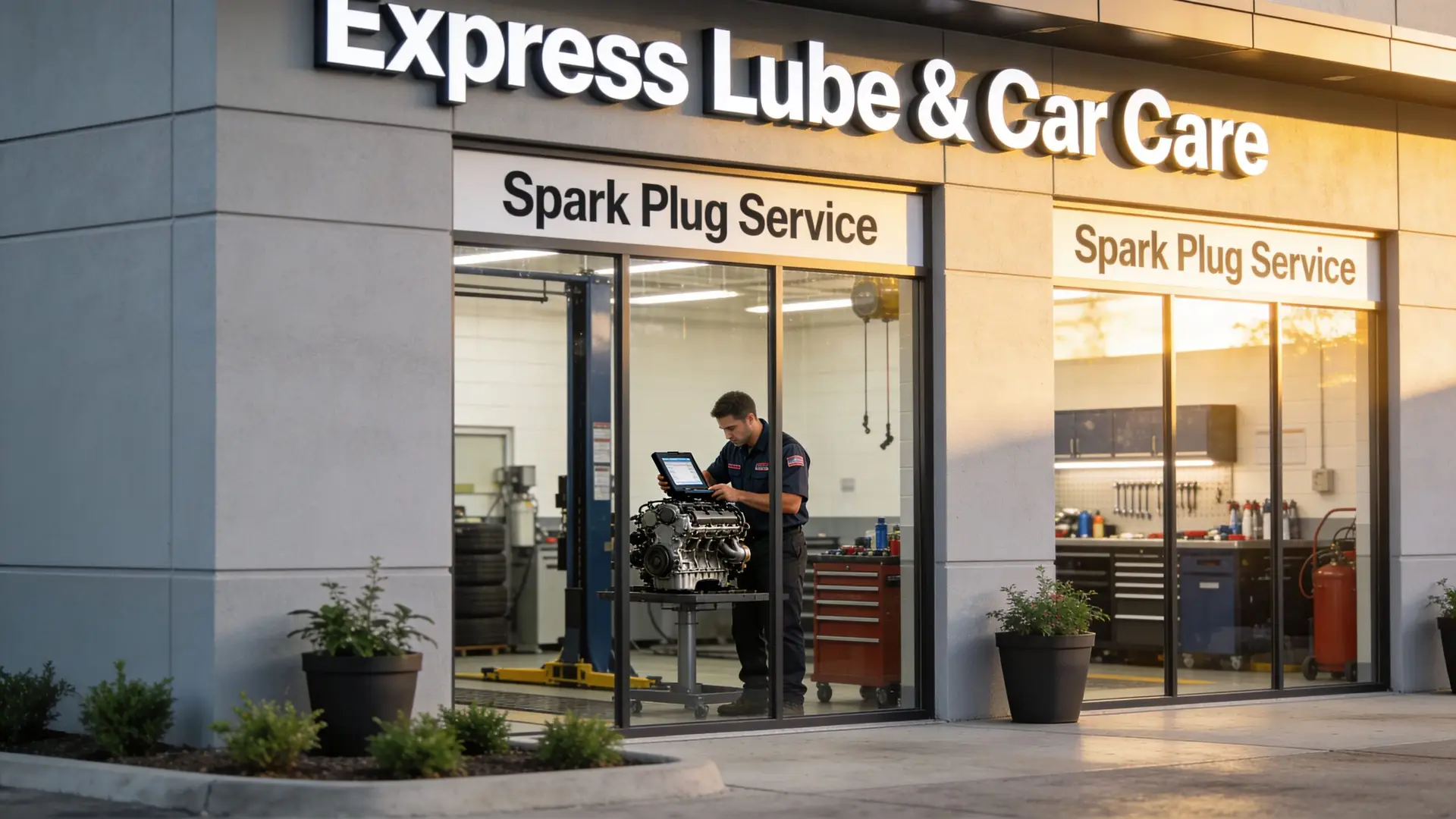
A quality spark plug visit isn’t just “swap parts and move on.” A technician should look at the condition of the old plugs, check for signs of oil fouling or carbon deposits, confirm the correct plug specification, and install them carefully. Thread damage, improper torque, and wrong-fit plugs can turn simple maintenance into an avoidable repair.
For many drivers, the best time to have plugs checked is during other routine service. If the hood is already open and the vehicle is already being inspected, it makes sense to ask about ignition condition rather than waiting for a symptom.
Why local driving matters
Plano vehicles see a mix of commuter miles, school runs, weekend errands, and hot-weather operation. That mix is exactly why a generic interval sticker isn’t always enough. A local shop that sees these patterns every day can spot when “normal” service intervals don’t match real use.
Some drivers also need practical convenience. No-appointment-needed service matters when you’re juggling work, family, and a vehicle that suddenly starts acting up.
What to look for in a shop
Choose a shop that offers these basics:
- ASE-certified technicians who can separate spark plug issues from coil, fuel, or sensor problems.
- Access to the right parts, whether your vehicle calls for copper, platinum, or iridium.
- Modern diagnostics so warning lights and misfires get tested, not guessed at.
- Clear pricing and honest recommendations instead of replacing parts that still have life left.
- Convenient service options for busy Plano drivers who can’t plan around a major downtime window.
Good spark plug service should feel straightforward. You bring in a vehicle with symptoms or a maintenance question, and you leave with a clear answer about what the engine needs now, what can wait, and what interval makes sense going forward.
Keep Your Engine Running Smoothly
Spark plug replacement sounds simple, but the timing behind it isn’t one-size-fits-all. How often to change spark plugs depends on the plug material, your vehicle design, and the way you drive every week. A late-model engine with iridium plugs won’t follow the same rhythm as an older vehicle with copper plugs.
The smartest approach is to combine three things. Know what type of plugs your engine uses. Pay attention to symptoms like rough idle, hesitation, hard starts, or a Check Engine Light. Adjust your expectations if your car spends a lot of time in short-trip traffic, Texas heat, or heavier-use conditions.
The takeaway most drivers need
Don’t wait for complete failure.
Spark plugs usually give warnings before they quit doing their job well. If you catch the issue early, you can often restore smooth performance with routine maintenance instead of waiting until misfires create bigger headaches.
A simple maintenance habit that pays off
Ask for spark plug inspection when your vehicle is already in for regular service. That gives you a better chance of finding wear before drivability gets noticeably worse. It also gives the technician a chance to spot related issues like carbon buildup or contamination.
If your engine has been running rough and you’re also thinking about overall combustion health, this explanation of fuel system cleaning can help you understand how spark, fuel, and drivability often overlap.
Stay ahead of ignition problems and your engine will usually reward you with easier starts, smoother idle, and better day-to-day reliability.
The bottom line is simple. Spark plugs aren’t “set it and forget it” parts. Even long-life plugs deserve attention, especially in North Texas driving conditions. If your vehicle feels off, or if you’re not sure where you are in the service interval, it’s a good time to have it checked by a professional.
If your car is hesitating, idling rough, or due for a maintenance check, visit Express Lube & Car Care. Their ASE-certified technicians can inspect your spark plugs, confirm the right replacement for your vehicle, and handle the work without the hassle of a long appointment process. It’s also a smart time to take advantage of local savings, including $20 off oil change and additional services, $20 off batteries with the Express Lube Signature battery service, plus $25 off oil changes on Ladies Day every Wednesday. Drivers in military, first responder, and healthcare roles can also ask about available discounts.